The Alter Rebbe Fights The Black Magic (2)
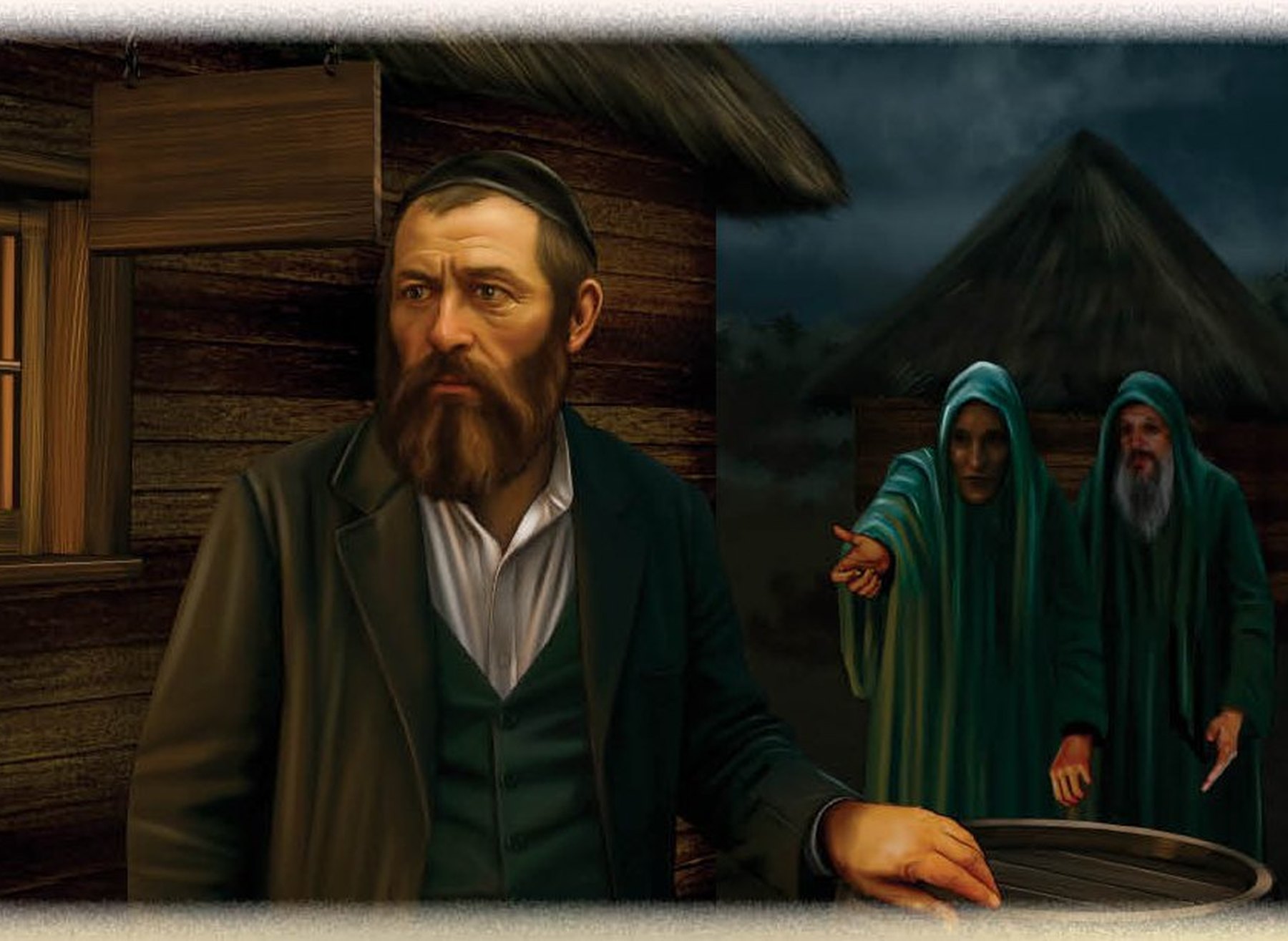
Previously: Michoel, a young Jew from France, gets involved with an African tribe that practices black magic. He regrets it and leaves the tribe, but they are after him with their impure powers
From the TzaddikStory.org collection
Back in France, Michoel looked lost. He barely spoke. He barely ate.
His father didn’t know what had happened in Africa, but he knew his son needed help. He took him to a mekubal—a rabbi who studied Kabbalah and knew about deep spiritual things.
But the moment Michoel mentioned witchcraft, the mekubal jumped up in fear.
“You were with them?” he shouted. “Everyone—come quickly!”
His family rushed in and surrounded Michoel, holding hands.
“Don’t leave him alone!” the rabbi cried. “Not for a second!”
Then he turned to Michoel.
“You must Leave. Now.” you must
They didn’t even walk him to the door.
Outside, Michoel stood in the cold. If even he’s afraid… who can help me now?
* * *
Years before the jungle, Michoel had found himself at a farbrengen in a Chabad House near Paris. That’s when he started keeping Shabbos, wearing a yarmulke… and even joined a trip to see the Lubavitcher Rebbe in New York.
He remembered standing before the Rebbe. Just one look—and he felt completely seen. Not judged. Just understood.
The Rebbe gave him a dollar and a blessing. Michoel didn’t remember the words. But he never forgot the feeling: peace. Power. Something real.
Now, years later, broken and scared, that memory came back.
“If anyone can help me now,” Michoel whispered, “it’s the Rebbe.”
So in the winter of 5749 (1989), Michoel flew to New York.
He wrote down everything—Africa, the tribe, the fear—and gave the note to the Rebbe’s secretary.
When the answer came back, it was short—but very clear:
“Speak to Rabbi Pevzner in France.”
Michoel didn’t argue.
If the Rebbe said to go to Rabbi Pevzner… then that’s what he would do.
* * *
Rabbi Pevzner picked up the phone and heard Michoel’s voice—shaky, scared, and full of things that didn’t seem real. It was almost impossible to believe. When the call ended, Rabbi Pevzner sat quietly, thinking.
How can I help Michoel? I’ve never broken spells. I’m no expert in witchcraft. I don’t even know where to begin.
But then he reminded himself: he was the Rebbe’s shliach. If the Rebbe said he could help—then somehow, he could.
The Rebbe said. The Rebbe will help, he told himself. But how?
It was then he recalled a story of the Alter Rebbe that is mentioned in a sefer called Sippurim Noraim.
* * *
The yungerman was shtark. He was learning Torah day and night. His father-in-law, a wealthy man, paid for everything. Life was good! And best of all? He was a talmid of the Alter Rebbe, the Baal HaTanya, Rebbe Shneur Zalman of Liadi.
But then came a nisayon—a big test.
His shver lost all his gelt. No more support. The yungerman had no choice—he had to go into business to support his family.
Before Shavuos, he loaded up a wagon with expensive goods and traveled to the big city to sell. But when it was time to come home, the wagon driver got sick. What could he do? He had to drive the wagon himself.
Through the forest he went. The trees were tall, the road was quiet—and his heart was heavy.
“It’s almost Shavuos,” he muttered to himself. “I always spend Yom Tov by the Rebbe… and now look at me. I’m schlepping merchandise like a goy. Oy, what’s happened to me?”
He gave a deep sigh. His hands held the reins tighter. And then—he stopped the wagon.
“That’s it,” he said out loud. “I can’t. I just can’t. I need to be by the Rebbe.”
He jumped off the wagon, right there in the middle of the forest. He left everything behind—all the expensive merchandise for selling in the market—and started walking. All the way to Liadi. To be with the Rebbe.
When he stepped into the Beis Medrash, dusty and out of breath, the Alter Rebbe turned to his son, the Mitteler Rebbe, and said:
“Der yungerman vos kumt yetzt—er iz a Chossid mit mesiras nefesh.” (“This young man who just arrived—he’s a Chossid, with self-sacrifice.”)
After Yom Tov, the yungerman had tears in his eyes when he spoke.
“Rebbe,” he said quietly, “I don’t want to be in business. It’s pulling me away from avodas Hashem. I feel like I’m losing who I really am.”
The Rebbe gave him a kind smile. “Open an inn,” he said. “It’s a calmer thing. Your rebbetzin will help. You’ll still have time for davening b’arichus and learning. It won’t be so bad.”
The yungerman returned to the forest path where he’d abandoned his wagon. And what did he see?
His wagon. Untouched. Not a single item missing. Open Hashgacha Protis!
Just then, a poritz on horseback rode over with his servants.
“You left this wagon here?” he asked. “I watched it for three days, waiting to see who it belonged to. You must be a very honest man.”
The poritz was so impressed, he offered the yungerman a deal: “Come to my village. Run the inn there. First year rent-free. I’ll even pay to fix it up. You’ll do well, I can feel it.”
The yungerman saw the Rebbe’s bracha coming to life before his eyes.
But when he moved in, the local Yidden whispered nervously:
“Don’t do it! That inn is next to kishuf machers—real-life witches and wizards! Everyone who’s lived there had horrible tzaros. Some didn’t even survive the year.”
But the Chassid stood tall.
“Ich bin gekumen mit a tzavaah fun mein Rebbe.” (“I came with an instruction from my Rebbe.”)
“I’m not afraid.” At first, things went well. But then—his legs started to hurt. It got worse and worse. He couldn’t walk. He felt weak, broken. He knew it was the kishuf from the neighbors.
With the last kochos he had, he made the long journey back to Liadi.
He arrived for Shabbos Parshas Balak.
Friday night, he couldn’t even get out of bed. But Shabbos morning, he pushed himself with all his strength and made it to the Alter Rebbe’s Beis Medrash. He sat quietly in the corner.
Usually, the Rebbe didn’t pick who got aliyos. But when they reached Chamishi, the Rebbe told the gabbai:
“Call up the visting Chassid”
As the Rebbe read the words:
“כי לא נחש ביעקב ולא קסם בישראל” “Ki lo nachash b’Yaakov, v’lo kesem b’Yisrael” (“There is no sorcery in Yaakov, and no magic in Yisrael”),his voice burned with dveikus. The Rebbe’s face glowed like fire. He repeated the pasuk again and again, louder and louder. The whole room held its breath. No one had ever seen the Rebbe like this.
After Shabbos, the yungerman already felt stronger.
He went to the Rebbe and poured out his heart.
The Rebbe looked into his eyes and said:
“Du zolst nisht zorgen.” (“You shouldn’t worry.”)
“You’ll be gezunt. You’ll be safe.
“Ki lo nachash b’Yaakov…”
And again, the Rebbe repeated the pasuk, his voice full of fiery kavana.
When the Chassid returned to the village, the Yidden came running, breathless:
“Did you hear? The witches and wizards they are—gone – dead ! Mysteriously! Shabbos morning—it all happened!”
And when exactly? The moment the Alter Rebbe stood and declared that pasuk.
* * *
Rabbi Pevsner wasn’t a big Rebbe like the Alter Rebbe, and he didn’t know how to break magic spells. But it says in sefarim that even if a person doesn’t know the deep thoughts that go along with a holy mitzva, just doing the mitzva with a good thoughts and asking Hashem for help can still bring big bracha—especially if you connect your actions to great tzaddikim who do know those secrets.
So Rabbi Pevsner sat at his desk in Paris, pulled out a small piece of parchment—the kind used for writing Torah scrolls—and carefully wrote the special pasuk that the Alter Rebbe had once used to cancel magic: “כי לא נחש ביעקב ולא קסם בישראל” (“There is no sorcery in Jacob and no magic in Israel”).
Michoel stepped inside. His eyes looked heavy, like he hadn’t slept in days. His hands were shaking a little.
Rabbi Pevsner smiled softly and handed him the small writing.
“Take this,” he said. “Keep it on you—always. Don’t take it off, not even for a minute. It’s like a shemira, holy protection. It’ll help keep you safe from anything they try.”
Michoel clutched it tightly and nodded.
“Thank you, Rabbi… really. Thank you.”
“Thank you, Rabbi,” Michoel said gratefully. “Thank you so much.”
* * *
Every single day, Michoel walked around with a knot in his stomach.
What if they were still watching him? What if the magic people from Africa were trying to hurt him… from far away? For six weeks, nothing happened. He carried the parchment like a shield, like armor. He barely took it out of his pocket.
But then—in the middle of Shevat—everything changed.
Michoel was riding his motorcycle on a quiet road. It was just supposed to be a short drive. The streets were clear, the weather was calm, and Michoel was a careful driver.
But then, without warning—without even knowing why—his hand moved the handlebars sharply to the side. Straight into the other lane. A very dangerous thing to do. He could not stop himself. Straight into an oncoming truck.
CRASH.
The sound was deafening. Metal twisted. Tires screeched. People screamed. Within minutes, sirens were wailing and flashing lights surrounded him. Michoel was rushed to the hospital. They took x-rays and hooked him up to machines.
“Michoel is always so careful,” someone whispered. “This doesn’t make sense,” said another. “Something’s not right…”
Finally, the doctor came out. “His arm is broken,” he said. “He’ll need time to heal.”
Back in the hospital bed, Michoel wiped his eyes. He couldn’t stop shaking. The magic… it must be them. I didn’t crash. My arm was under some kind of spell! The ones who told him, “You leave—you pay.” The ones who had gotten others who tried to escape.
Now, they were coming for him. Michoel was scared. Really scared.
* * *
When he got home thick, terrifying envelopes sitting on the welcome mat outside the apartment door. No return address. Just his name. Written in those strange, twisty letters that made your stomach turn just looking at them.
Almost every day, more letters came from the tribe. Fat, heavy ones filled with threats… promises… creepy messages telling Michoel to come back. That he belonged to them. That he couldn’t escape. You can run but you can’t hide – we see you.
And if he didn’t? The letters were clear.
They would find him. They would punish him. They would make him regret ever leaving. Michoel’s father didn’t even blink. He scooped them up with two fingers, like they were poisonous. Maybe they had magic on them.
“We already asked Rabbi Pevsner what to do,” he told his son. “These letters? They don’t belong in our home.” His mother nodded.
“Not even one word should cross this doorstep,” his father added.
And just like always, they walked the letters straight to a public trash can, tore them into tiny pieces, and dumped them in.
Gone.
* * *
It was around Purim when the phone rang. Rabbi Pevsner picked up—and right away he heard panicked voices shouting on the other end.
“They have him! They got to our son! Oy, they’re going to take him!”
“Whoa, whoa—slow down,” said Rabbi Pevsner, trying to calm them. “What happened?!”
“It’s Michoel!” his father said, breathless. “Something happened this Shabbos—we don’t know what got into him!”
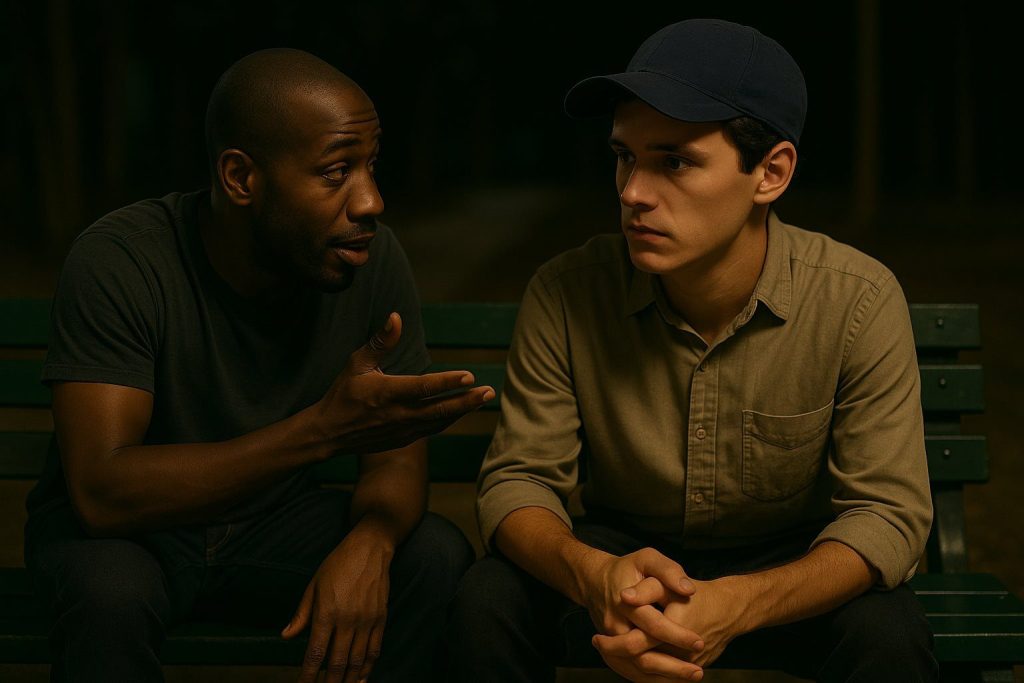
“Start from the beginning,” Rabbi Pevsner said gently.
“This Friday afternoon, another one of those letters came.”
“From the African tribe?” the Rav asked.
“Yes! But it was already Shabbos—we couldn’t rip it up!”
“Oh no…” Michoel’s mother moaned. “We left it on the porch because we didn’t want to bring it into the house… but we couldn’t destroy it!”
“What happened next?” Rabbi Pevsner pressed.
“That night, after shul, Michoel walked in… and something was off. His face was pale. His eyes were glassy. Then he just started crying. ‘I have to go back… I need to go back to Africa!’ He said they were calling him. He sat down in the kitchen—right there—and started singing their creepy songs. We didn’t even know he remembered them!”
The father cut in. “He said we’re all in danger. That if he doesn’t go back, something terrible will happen. It wasn’t him, Rabbi—it was like he was hypnotized!”
“And the next morning?” Rabbi Pevsner asked.
“He left!” they both said at once. “He went to the airport!”
“He bought a ticket! He was ready to board a plane, but we stopped him just in time!” The father’s voice cracked. “What do we do now?”
– To be continued —
Beis Moshiach #1467 • pp. 54-59
© 2026 Beis Moshiach Magazine. All rights reserved.
This article originally appeared in Beis Moshiach #1467. You are welcome to share it with friends and family by email or in print, provided that you do not change, add to or omit any part of it, you credit the author and Beis Moshiach, and you include a link to archive.bmoshiach.org (written out in full in printed copies).
To republish this article in a newspaper, magazine, book or website, please request permission in advance at [email protected].