Cracking The Chassidishe Dress Code
What does it truly mean to dress as a Tamim in today’s world? How do we balance the timeless traditions of Jewish dress with the practical realities of modern life? From the subtle details of Shabbos and Yom Tov clothing colors to the inner mysteries of wearing a gartel, from the proper way to button right over left to the choice between a long or short jacket – this comprehensive guide illuminates the path of authentic Chassidishe dress as transmitted through our holy Rebbeim. Compiled by Rabbi Shneur Zalman Hertzel from the Rebbe’s letters, sichos, and private conversations during yechidus, this feature makes the guiding principle refreshingly clear: maintain the traditional Jewish dress that has been our way since time immemorial – clean, proper, and dignified – while never becoming preoccupied with style for its own sake.
When addressing other topics related to the expectations demanded of a student of Tomchei Tmimim (a ‘tamim’), one can often find more than one side to an issue. However, regarding the topic of this overview (except for a few places) the matter is quite clear. One can summarize and say, in a few words, the principle that runs throughout the entire article: one must be careful about traditional Jewish dress that has been accepted from time immemorial, which should indeed be clean and neat, and particularly when going out in public, but under no circumstances should one be occupied with the beauty of the garment, its style, etc.
Type of Dress and Its Effects
Clean Garments
One of the things the “Menahel Poel” of the original Tomchei Tmimim – the Rebbe Rayatz – demanded from the yeshiva students was adherence to cleanliness of garments. In a letter to the head mashpia of Tomchei Tmimim in Brunoy, Rabbi Nissan Nemanov, he demanded among other things (Igros Kodesh Rebbe Rayatz, vol. 9, p. 450):
“To supervise well and precisely the cleanliness of the body through washing and combing, cleanliness of garments…”
Care With External Garments Helps Internal Garments
In a yechidus that the tamim Y.K. had on 14 Shevat 5713, the Rebbe demanded several things from him, including study of Nigleh and study of Chassidus with abundance, and afterward he said (Sichos Kodesh 5713, new edition, vol. 4, p. 593):
“There are also levushim in chitzoniyus, I mean simply physical garments” and he spoke about being careful with garments, polishing shoes, and concluded: “And this will also help with the internal garments [i.e. thought, speech and action of holiness].”
Desired Dress Protects from Meeting with Undesirable Youth
To a mother who wrote about her son’s spiritual situation, as he was meeting with undesirable youth, etc., and added that her husband’s opinion was that the son should not change his Chassidic garments because this itself would help his situation, the Rebbe wrote (Igros Kodesh, vol. 12, p. 535):
“In response to her letter… in which she writes about her son, may he live long. …And regarding dress, it is understood that her husband the rabbi is correct in his claim that the more his dress will be as it was previously, this itself will reduce the temptations he faces, because through the dress he will not meet at all, or at least not meet frequently, with undesirable youth.”
Dress Suitable for Shlichus
On Gimmel Tammuz 5716, the Rebbe said a sicha for a group of talmidim who he sent to Eretz Yisrael on a special mission to strengthen the residents of Kfar Chabad after the terrorist attack that occurred there that year. The Rebbe gave them various instructions and among other things drew their attention to the clothes they would wear during the shlichus (Sefer HaShlichus p. 575):
“Since you are traveling as talmidei chachamim, therefore one must also pay attention to external matters: appropriate dress… so that also the chitzoniyus matters will suit the shlichus.”
Jewish Appearance Influences and Inspires
Parshas Mattos-Masei 5712, the Rebbe spoke at length about the obligation and privilege to take part in the shlichus of Merkos L’Inyonei Chinuch to out-of-town communities during the summer. Among other things, the Rebbe addressed the claim that there are bachurim who think their entire trip was in vain, since they didn’t see any result from their actions. About this the Rebbe said that through their very external, Jewish-authentic appearance, they succeed in awakening Jewish souls (translated from Likutei Sichos, vol. 2, p. 963 and on):
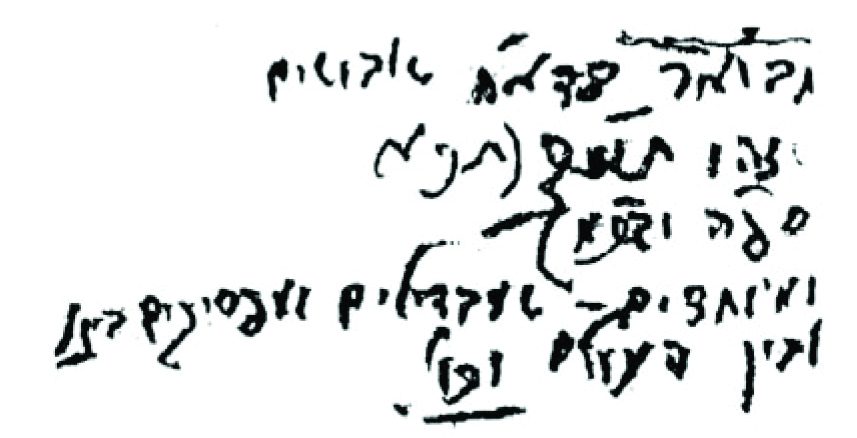
“Despite the fact that he thinks he didn’t help at all… in truth he brought benefit, except that he himself doesn’t know about it. Since he took action – certainly it was helpful… also in the purpose of his shlichus:
“When a Jew sits in his house and sees through the window a bachur with a beard running in the street, he remembers that his father also looked like this, and his father instructed him: ‘Every day when you rise you must say Modeh Ani, and when you lie down to sleep say Shema Yisrael.’ In the meantime, this Jew repeats in his thought or with his mouth the verse Shema Yisrael and Modeh Ani and he is inspired.”
It’s Reasonable to Assume the Bachur Himself Doesn’t Know To This Day!
The Rebbe told another story about a bachur’s influence without his knowledge, with more details, at the Yud-Gimmel Tammuz farbrengen 5715 (Hisvaaduyos 5715, part two, p. 291 and on):
“The story is known about what was accomplished with a Jew who lived in an American town, as a result of a bachur passing by there adorned with beard and peyos and his tzitzis visible, and when the former inquired about the origin of this bachur, whether he was from Poland, Galicia, or Ukraine, they told him that he was one of the ‘Bostonians’ [born and bred in Boston].
“In this state, the ‘Bostonians’ are considered of the highest standing, like among Bnei Yisrael, l’havdil, there is the inyan of ‘and He separated… to sanctify him.’ – And how great was his surprise to hear that this bachur too was a ‘Bostonian’ and nevertheless, he walks adorned with peyos and a full beard, and his tzitzis visible, and he speaks – in fluent English… – about matters of the ‘higher unity’ and ‘lower unity’!…
“…This matter affected him… so that afterward they were able to influence him regarding kashrus, and afterward – ‘bit by bit, I will banish them…’ – also regarding additional inyanim of practical mitzvos.
“And it’s reasonable to assume that the aforementioned bachur who caused all this – doesn’t know about it to this day!”
‘Gevald R’ Shmuel Michel, What Are You Immersed In?!
Following this, the Rebbe noted that the bachur actually went about in a disorderly manner and nevertheless his influence on others was great (the aforementioned sicha):
“The aforementioned bachur who walked in the street in a disorderly manner – apparently because it was hot, and also wind blew that scattered his peyos and tzitzis, etc. – this was the case with him due to batlanus…”
[Here the Rebbe told with a smile:]
“My father-in-law the Rebbe said that in the city of Petersburg there lived a very wealthy man, and his name was Shmuel Michel Treinin. He had business with government ministers, and in general he was orderly by nature, and in addition he was a mara shechora (melancholic), and therefore, he was particular that his clothes should be buttoned, every button in the hole appropriate to it…
“Once Reb Michoel Bliner (‘Michoel der Alter’) arrived there, to intercede for a bachur who needed to be released from military service (‘priziv’), so that instead he could study Torah, and therefore, he needed R’ Shmuel Michel Treinin to go with him to one of the nobles who could take care of this.
“In going they had to pass through the main street of Petersburg-Leningrad. Reb Michoel walked in Petersburg in the same way as he walked in Lubavitch… and apparently he was still before davening, and had just finished fulfilling what is said in the Shulchan Aruch regarding preparation for prayer, and therefore, the buttons were not fastened properly.
“Treinin turned to him and said to him – out of caution, since he feared that he should not ‘take him down’… – Reb Michoel! Since we are walking on the main street (which was called ‘Nyevsky Prospect’), perhaps it would be worthwhile for you to fasten the buttons.
“Reb Michoel fixed his gaze on him, and exclaimed: ‘Gevald R’ Shmuel Michel, what are you immersed in?!’…
“The aforementioned bachur who walked in the street was not concerned with these matters, he thought about other things, and that Jew who looked from the window didn’t know about anything else, and what was perceived by him – this is what was connected to the thoughts of teshuva that affected him on that day, and thus the bachur merited to influence a Jew without knowing it!
“And in the manner that we find in physical tzedaka that there is an extra advantage when ‘he didn’t know to whom he gave, and the poor person didn’t know from whom he received,’ and so it is also in spiritual tzedaka.”
Changing Dress
As Per the Advice of the Rav
To a yeshiva bachur who asked the Rebbe in the year 5740 whether to change his dress from long to short (apparently the intention was to change from a long suit to a short one as the students in Chabad yeshivos wear), the Rebbe replied in a letter (from 16 Kislev 5740, printed in Askilah B’Derech Tamim p. 971):
“…To his question about changing his dress, etc. – as advised by a rav moreh horaah.”
A similar answer was received by Rabbi Nachman Yosef Twersky. His question was in connection to the style of dress his sons would wear: whether to continue according to family tradition in long Chassidic dress, round hat, etc., or they should dress in the style of Chabad yeshiva students. The Rebbe’s answer was:
“Ask a rav.”
Not to Hurry to Change to ‘Black Garments’
In response to a question whether to change the garments to a long jacket and black hat, the Rebbe replied (printed in Igros Kodesh, vol. 12, p. 535):
“In response to his letter from 24 Shevat, in which he writes that he is in doubt whether to change his garments to long dress and black hat, and particularly since his family members oppose this.
“Being that for now he is doubtful about this himself, there is no need to hurry with a positive decision in the matter, and presently he should add in study with hasmada and shekida in general and particularly in learning Toras HaChassidus which strengthen fear of Heaven and love of G-d, and after some time he should again judge the aforementioned question according to his situation then. [This is] because changing garments in such a case needs to be done in a state of mind where the decision is solid, in order to preclude the possibility of returning to previous dress due to shame from those who mock, and indeed we see clearly that this is one of the great trials, as hinted also in the order of all four parts of Shulchan Aruch that their beginning is, ‘and let him not be ashamed before those who mock.’ See there.”
One Should Not Change Dress for the Sake of a Shidduch
Even when it concerns a shidduch, the Rebbe says not to reduce the level of Jewish dress. The Rebbe’s words were written in response to a question whether to agree to the demand of the prospective match that the bachur change his dress to something more modern. Later the Rebbe adds that there is nothing to fear since certainly he will be able to find a shidduch among those who “maintain the traditions of their fathers” [minhag avoseihem b’yedeihem] (Igros Kodesh, vol. 17, p. 146):
“Regarding what was written about a prospective match that there are those who are interested that he change the garments to more modern ones – it is understood that there is no place to fulfill such a demand, since it shows the workings of the psyche of the spoken one or her family or both together. And if at the beginning of the matter they set the aforementioned conditions, it is understood what can grow from this in the near future and after it.

“Also, entry into a shidduch is not to go look for battle conditions over matters of Torah and mitzvos, as in battle, no matter who is the actual victor, it’s impossible not to cause harm to both sides. [This is] especially so regarding the aforementioned [i.e. a battle of spiritual matters] about which is said ‘and one nation shall [struggle to] be ascendant over the other nation,’ sometimes this one rises and sometimes that one, etc.
“But I must say that it is wondrous in general about the question, since there are many who are G-d-fearing in the Holy Land, may it be built and established – may they increase – and certainly it’s possible to find among them those who would be interested specifically in the opposite, that is, that they maintain the traditions of their father, because this tradition is itself Torah.”
Manner of Dress
Right Over Left
It is known how much the Rebbe urges to be careful about “right over left.” That is, that the upper part of the garment, the suit and the like, should be closed in a way that the right side will be over the left side.
In connection with this it is told that once one of the tmimim entered for yechidus when he was wearing a suit that closed left over right. The Rebbe told him (printed in a “Teshura” published in the early ‘samechs’):
“Tell your mother to sew a (additional) button on the inner side of the suit so that you can fasten it right over left.”
The Rebbe also alerted to this on other occasions. At the farbrengen of Shabbos Parshas Shemini 5712, which was known as a farbrengen in which there were great giluyim, there were many things said to individual people. Among other things it is told (Sichos Kodesh, new edition, vol. 3, p. 382):
“He spoke to several bachurim about matters of conduct… to some he noted that the garments need to be in a way that the right side will be over the left side.”
The Button on the Left and the Hole on the Right…
While from here it emerges that the main thing is that the right should be over the left, that is, that the right side of the garment should be over the left side of the garment, on other occasions the Rebbe alerted to the idea that not only this, but the button should be on the left side of the garment while the hole should be on the right side of the garment. And thus the Rebbe said in the sicha of Parshas Emor 5744 (Hisvaaduyos, vol. 3, p. 2761):
“A button is to connect the two parts of the garment… And, the manner of use of the button is – through sewing the button on the left side of the garment, and on the right side making a ‘hole,’ and through this connecting the left side with the right side, in a way that the right side is over the left, that is, connecting the matters of the left side so that they too will be bound with the right side – the side of holiness. And in order that this connection can be – there is a need to make a ‘hole’ on the right side, etc., according to all the explanations in this.” [The Rebbe went on to elaborate on the connection to the avoda of ‘polishing the buttons,’ see there.]
[Author’s note: Perhaps one can say that the above is the preferred mode (l’chatchila), however, b’dieved one can suffice with an additional button sewn underneath the the right side.]
Kippah/yarmulka
Two Coverings
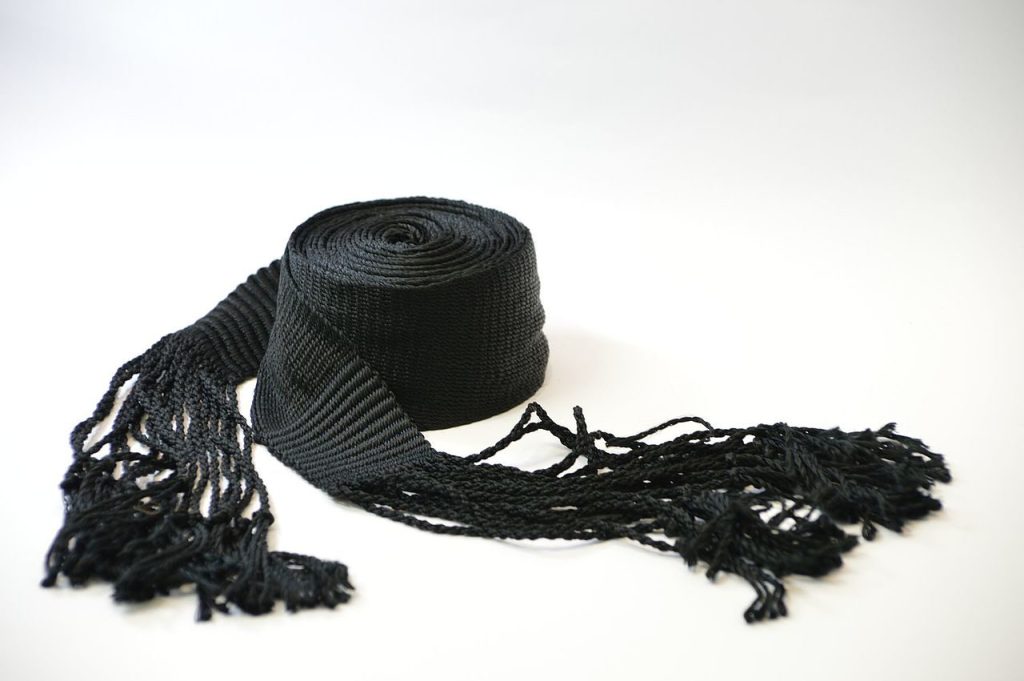
In one of his letters, the Rebbe mentions the custom to wear two coverings. Indeed, the letter as a whole speaks about wearing a gartel (and will come below in full) but while writing about the “custom to wear two gartels” he immediately notes the custom of wearing “a yarmulka under the hat” (Igros Kodesh, vol. 10, p. 494):
“The custom is brought to wear two gartels (in the sefer Menachem Zion. Also cited in the sefer Taamei HaMinhagim, part three, and see also Shabbos perek 16, Mishna 4 (from there is also the source for the custom of Chassidim to wear a yarmulka under the hat. And to note from Chullin 138a: kippah, etc.)).”
Coat/suit
A Coat is Meant to be Useful
Once when the Rebbe was going home, he saw a bachur outside walking without a coat. The Rebbe asked him: “Where is your coat?”
The bachur answered: The coat is in the car.
The Rebbe told him: “A coat is not meant to lie in a car!”
(Printed in a “Teshura” published in the early ‘samechs’)
Private Coat
To one of the bachurim who didn’t have a coat, the Rebbe gave him his coat and said:
“A makif (coat) one must have of one’s own.”
(Printed in a “Teshura” published in the early ‘samechs’)
In the Street – With a Suit
Once the Rebbe saw a tamim who went out to the street without a suit jacket to buy something, and was dressed in a strange shirt, the Rebbe told him (the content approximately):
“The shirt – fine, but without a jacket?!…”
(From Dem Rebbin’s Kinder p. 191)
Gartel
Gartel Before Marriage
Regarding girding with a gartel we find various references from the Rebbe, here are some of them:
Although in general our custom is not to wear a gartel before marriage, when a certain bachur already practiced this for whatever reason, the Rebbe instructed him not to discontinue his previous custom, but the Rebbe added to write to him a certain reservation while explaining the source for the Chassidim’s custom in this (Igros Kodesh, vol. 10, p. 493 and onward):
“Regarding what was written about girding the gartel during tefilla – although Anash practice this after marriage, but after he already practiced for whatever [reason] it may be until now, it’s questionable as to why he should discontinue his custom, and even though it is necessary as mentioned that there should not be conspicuousness in this (‘blitos’), and particularly that he should not be different from the rest of Anash. In fact, he can gird the gartel under his upper garment, and if he already discontinued his custom in the past – then at least he needs to have it annulled by three. And like every good custom that one practiced three times (see Shaar HaKollel ch. 41 (Erev Rosh Hashana) seif 3).
“Regarding the question of the reason to begin wearing a gartel for davening only after marriage: Although I have not found this explicitly stated, it can be said that since this is a custom of Chassidim (see the elaboration on this in Tur and Shulchan Aruch Orach Chaim 91, and commentaries), and its inyan is ‘prepare to meet your G-d, Yisrael,’ which is similar to wrapping oneself in a tallis – the ‘canopy of a mitzva’ to draw down upon oneself His kingship (see Tanya, beginning of chapter 41) – because of the common aspect in the above, they begin both at the same time. And this is after marriage, as alluded to regarding the tallis in Kiddushin 29b. And other reasons can be given for this, but this is not the place.
“It should be noted that in several places in Poland they had the custom of wearing a gartel even before the wedding, and likewise the custom is brought to wear two gartels (in the sefer Menachem Zion. Also cited in the sefer Taamei HaMinhagim part three, and see also Shabbos chapter 16 Mishna 4 – from there is also the source for the Chassidic custom to wear a yarmulka under the hat. And to note from Chullin 138a: kippah etc.) – but Anash do not practice these two customs.”
Polish Customs in Chabad?!
From the above it emerges that this is not the custom of Anash at all, but it would be interesting to know what the Rebbe said in yechidus in the year 5713, where he said (printed in Dem Rebbin’s Kinder page 192):
“…So too – it would have been proper to institute wearing a gartel even before the wedding, but they would say that I am introducing Polish customs, therefore I will not insist on this.”
Gartel When Entering for Yechidus
While during davening it is not our custom to wear a gartel, regarding the conduct when entering for a yechidus, the Rebbe expressed himself differently (printed in Kfar Chabad magazine page 887):
“There is a place for entering a yechidus with a gartel, even a bachur.”
Such a reference to wearing a gartel in yechidus was heard from the Rebbe even before accepting the nesius. It is told that on 4 Shevat 5710 – several days before the passing of the Rebbe Rayatz – a group of bachurim who came from Russia had yechidus. Before their entrance they went to consult with the Rebbe on several details concerning the yechidus. Among other things they asked him whether to wear a gartel to which the Rebbe answered (printed in Yemei Bereishis page 55):
“In my opinion one should wear a gartel, but there is no need for it to be specifically over the clothing in a conspicuous manner, and they can wear it also under the jacket.”
Hidden Gartel
In the above-mentioned letter written in the year 5715 (Igros Kodesh vol. 10 page 393 and on), the Rebbe writes: “In many places in Poland they have the custom of wearing a gartel even before the wedding, and likewise the custom is brought to wear two gartels… but Anash do not practice these two customs.”
On this it should be noted that in later years the Rebbe referred favorably to this custom of wearing a hidden gartel, and this time did not categorize it as something “Anash do not practice,” and on the contrary, for example, in the sicha of Parshas Bereishis 5751 (1991), the Rebbe said (Roshei Devarim 5751 page 39):
“…Then all doubts will be resolved, including also the doubt whether the coming of Moshiach Tzidkeinu will be delayed for the time needed to put on a gartel, in order to be ready for his coming, or at least to borrow from a friend. And especially since there are those who have two gartels because they are girded all the time with a gartel over their inner garments because of concerns over appearances of haughtiness (mechezei k’yuhara), and similarly we find by the Kohen Gadol.”
Maaseh Rav
And to note further from “maaseh rav”: The Rebbe himself wore, in addition to the outer gartel during davening, also an inner gartel, and at least twice during the year 5751, Anash and the tmimim noticed the Rebbe’s inner gartel.
Bigdei Shabbos
Changing Clothes in Honor of Shabbos
Once the Rebbe saw the bachur Y.K. on Shabbos, when he was dressed in weekday clothes. The Rebbe said to him (printed in a “Teshura” published in the early ‘samechs’): “The shver wanted bachurim to change their clothing for Shabbos, not necessarily a longer garment but to change from weekday clothes to others in honor of Shabbos.”
Minhag Nesi Doreinu
Rabbi Asi Spiegel relates:
Before my bar mitzva I went with my father to buy a bar mitzva suit as is customary. At that time I was taking my first steps in the world of Chabad Lubavitch, and when my father asked me about the color of the suit, I answered simply that I wanted black. My father, who was not a card-carrying Chassid, was surprised by my rather “chareidi taste” and wondered: Why suddenly black?!
I answered him simply: Because the Rebbe wears black.
My father was not readily satisfied and since he is a talmid chacham he began opening sefarim and showing me that there is no reason to wear black clothing on Shabbos and on the contrary if anything there is an inyan in wearing white. I remember he showed me the words of the Kaf HaChaim who expresses himself in sharp language against those who wear black clothing.
I was a young boy and didn’t know how to answer and therefore decided to ask the Rebbe about this myself. I sat and wrote a letter to the Rebbe, b’dechilu u’rechimu. In the letter I raised several topics on other matters relating to halacha and then asked about the color of the suit [here I wish to emphasize that since more than twenty years have passed I don’t remember what was the style of the question: why does the Rebbe wear black clothing or why do Chassidim practice wearing black clothing, in any case the gist of the question is the same:] from where stems the custom of wearing black clothing on Shabbos?
Before I received an answer from the Rebbe I had already celebrated my bar mitzva while wearing, as my father wished, a non-black suit. And behold, after the bar mitzva, on Wednesday, 4 Sivan 5742, I merited to receive a letter from the Rebbe with a clear answer to my question in these words (printed in Likutei Sichos vol. 24 page 343):
“…To his questions in din – he should do according to the instruction of the rav in his city.
“Regarding the color of Shabbos (and Yom Tov) clothes – it is well known that there are those who wear white, and there are – their opposite – colorful (and it is explained in sefarim the different reasons, reasons of each and every one),
“And we have only the minhag of Nesi Doreinu, who is my father-in-law, the Rebbe.”
Long Suits Among Shanghai Tmimim
In our fourth issue published before the month of Teves 5761 (page 82), an article was published about the Tomchei Tmimim Yeshiva in Shanghai where it said: A group of talmidim spent the years of World War II in Shanghai and established there a Tomchei Tmimim Yeshiva. Although the tmimim did not suffer there from hunger, they had no money to buy clothes. In this, a wealthy Jew helped them and assisted the tmimim in purchasing clothes and shoes. But the problem was that the clothing they were used to – long suits as Chassidic young men wore in Poland – could not be obtained in Shanghai.
This matter greatly troubled the tmimim, since when they studied in Vilna, they received an instruction from the Rebbe Rayatz: “Do not change your weekday clothes and those of Shabbos Kodesh.” Therefore, as soon as it was possible for them – at the end of the war before they emigrated to the United States – they sewed themselves long suits according to their minhag from then, and according to the above instruction of the Rebbe Rayatz.
Taava for Clothing
In the teachings of our Rebbeim we find extensive reference to the taava for clothing and how much this taava is worse than other taavos, in that it is difficult to get rid of it. Before us are several references connected to yeshiva students, where the common aspect among them is that despite the need to be careful about clean and neat clothing (as above), one should not be obsessed with the beauty of clothing:
Bachurim Who Are Meticulous About Nice Clothes Are ‘Baalei Battim’
In the sicha of Shavuos 5720, the Rebbe spoke about bachurim who in their conduct testify about themselves that they are like baalei battim (printed in Sichos Kodesh 5720 page 513-5):
“There are yeshiva bachurim who due to ‘crookedness in the heart’ do not sleep in the dormitory but pay for their own room, they go themselves to the tailor to supervise what kind of dot will be in the ‘material,’ round or square, they are meticulous that the color of the tie match the color of the socks etc. – they are also in the category of baalei battim… because they fear that in the absence of the above they will fall short in worldly conduct.”
One Who Set Foot in Tomchei Tmimim Does Not Belong to the American World of Clothing
In Parshas Shemini 5743, the Rebbe expanded the discussion about those who make every effort to own lots of clothing (Hisvaaduyos 5743 vol. 3 page 1673):
“In those days there did not exist a concept that a Jew would toil and run around during the entire week in order to… buy many clothes – although in any case he cannot wear them all together!
“He himself does not really need all this, and what he nevertheless tries to obtain… this is only because he envies his neighbor…
“Indeed we are speaking about divrei reshus etc… but in any case – this is not ‘the world of a Jew’! What connection is there between a Jew to the ‘American world,’ when ‘You have chosen us from all peoples,’ ‘and You chose us from every people and tongue.’
“And how much more so when speaking about a Jew who inserted his foot – even for one moment only – in ‘Tomchei Tmimim,’ upon which his belonging to Tomchei Tmimim is established in an eternal manner, since holiness does not move from its place, whether he wants this or whether he does not want this. And this thing does not give him rest – but it seems to him that this is just a ‘headache’ and therefore he goes to the doctor and the doctor gives him ‘aspirin’ to calm him… The truth is that this headache is as a result of his head being invested and immersed in his material matters.”
A Student of Tomchei Tmimim Delays His Wedding Because of Clothing?
In a letter from the Rebbe responding to the question whether to delay a wedding due to financial pressure, that there are still no suitable clothes for the wedding – the Rebbe is surprised by the very question and responds with great wonder that such a superficial thing takes place with a student from Tomchei Tmimim (Igros Kodesh vol. 16 page 114):
“In what he writes the reason regarding his son’s wedding… to continue with this [i.e. engagement without getting married – Ed.] since [he is] pressed by debts etc. etc., even though the in-laws say that on their part there is no obstacle, and he doesn’t know what to do about this.
“It’s a wonder and astonishment, since it is known from our Sages and explained in Likutei Torah end of Parshas Bracha that they give livelihood to a man for the sake of his wife, and if so the fact that he is ‘tight’ is because he has not yet married, and the claim that there are no suitable clothes etc., it is understood how ridiculous it is in such a fundamental matter as the above, and that affects all of life as a wedding… And how many of the Jewish people here, and even those who were not educated in a Chassidic and Tomchei Tmimim home, marry in order to later study in kollel for several years with the agreement of both the chassan and kalla, even though they live lives of scantiness. How much more so when speaking of the son of tmimim etc. etc… Is it possible to even say such a thing?”
Yeshiva Student Who Did Not Sew On His Buttons…
At the farbrengen of Parshas Vayeishev 5750, which was in that year close to ‘Nittel,’ the Rebbe alerted about the proper utilization of the Nittel hours while telling about the conduct of a certain bachur (Sichos Kodesh 5750 page 391):
“I once heard from a yeshiva student, whose clothing was missing buttons – that the reason why he doesn’t sew the buttons on his clothing, is because then he won’t have what to do on ‘Nittel’!…
For a yeshiva student to go idle – whoever heard of such a thing? Rather he needs to utilize his time for something beneficial, including – to sew the buttons, in a way that the right side will overpower the left side (as the minhag Yisrael in this is known).
A ‘Rigid’ Person
With the Rebbe Rashab, it was customary that after saying the maamar, several bachurim would go to him for chazara of the maamar. Rabbi Yisroel Jacobson, who merited to be present himself at the time of the story, related things that the Rebbe once said during the chazara, (printed in his sefer Zikaron Livnei Yisroel page 47):
Once during the chazara of a maamar that was said on Parshas Vayechi 5675 in which the matter of clothing (levushim) was discussed, when he spoke about [the taava for] distinguished attire (malbushei kavod) that are ‘makifim’ of kelipa which causes an ossification, in that those who wear distinguished clothing have no shaychus to ‘inner form’ (tzura pnimis), the Rebbe [Rashab] said, “he is a stony (person)” [=rigid, fixed, not malleable].
A Not So Tidy Tie
Rabbi Yisroel Jacobson tells about the attitude of the Rebbe Rayatz toward the style of dress (Zikaron Livnei Yisroel page 171):
The Rebbe Rayatz came to the United States for the first time in the summer of 5689 (1929). In the first days after his arrival, his secretary the esteemed Rabbi Yechezkel (Chatche) Feigin went in to see him.
Among the topics discussed, the secretary spoke up and told the Rebbe about our group – the tmimim [from Lubavitch] who emigrated to the United States – that he doesn’t know how to speak with us, because we went about (as was customary) with shirt and tie [apparently to his taste this seemed too modern].
The Rebbe Rayatz said to him about this: “For them, the tie is not so exact, meaning that one did not become caught up in the clothing. That is the normal way to go about over here, and on the contrary, without it is too conspicuous and outside the norm.”
In Tomchei Tmimim, Shoes with Laces Were Frowned Upon
In connection with the above stories from our Rebbeim, the esteemed Rabbi Yisroel Jacobson adds (Zikaron Livnei Yisroel pages 189-191):
In the year 5692, the tamim Rabbi Yochanan Gordon emigrated to the USA from Dokshitz. His sons Nissan and Sholom Dovber began, at that time, to participate in the Chassidus shiurim that I gave to students. When they came they were wearing caps, but their father Rabbi Yochanan bought them hats.
When they came to my house on Chol HaMoed Pesach, Sholom Dovber was embarrassed by this and hid to avoid entering. I went out to the corridor to make it easier for him to come in, and explained to him that the inyan of ‘distinguished attire’ changes according to place and time, and the main thing is how much this affects the wearers as far as getting caught up in it.
I told him what I heard about this from the Rebbe Rashab, in the winter of 5675, about ‘malbushei kavod,’ as told above, and what I heard about this from the Rebbe Rayatz when he came to the USA, that “one did not become caught up in the clothing,” and on the contrary, “without it is too conspicuous and outside the norm,” as above.
I explained to him at length how when I learned in Tomchei Tmimim in Lubavitch, in the years 5668-5675 (1908-1915), when one bachur wore low shoes – (as opposed to high boots), and especially if they were with laces (not rubber), – this was considered to aggrandize oneself with ‘malbushei kavod.’ As opposed to now when everyone here wears hats.
For the preparation of this article the editor used the book “Dem Rebbin’s Kinder” Hiskashrus booklet 30, Kfar Chabad magazine issue 297.
HaTomim #17 • pp. 20-35
© 2026 Beis Moshiach Magazine. All rights reserved.
This article originally appeared in Beis Moshiach #1477. You are welcome to share it with friends and family by email or in print, provided that you do not change, add to or omit any part of it, you credit the author and Beis Moshiach, and you include a link to archive.bmoshiach.org (written out in full in printed copies).
To republish this article in a newspaper, magazine, book or website, please request permission in advance at [email protected].