Hamotzi Lechem
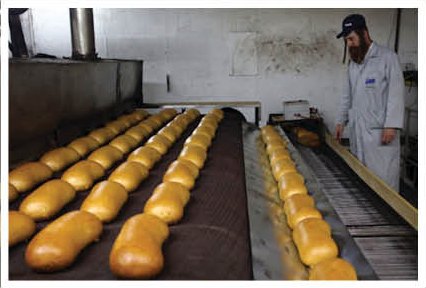
Our reporter followed the wondrous journey of the small wheat kernel until it is turned into the tasty challa we eat on Shabbos. Along the way, he collected fascinating, amusing and strange stories, all true, about wheat, bread and what is between them.
Starting the Journey
We breathe in the fragrance of fresh Shabbos challa … mmmm … the challa is soft and delicious!
Aside from challa, during the week we will also eat rolls, pitas, cookies and cake, pretzels and crackers and many other products made of wheat.
There is a great distance between the wheat that grows in the field and the baked goods made out of it. The Gemara Brachos tells of Ben Zoma’s wonder when he said, “How much Adam HaRishon toiled until he had bread to eat: he plowed, sowed, harvested, bundled, threshed, winnowed, ground, sifted, kneaded and baked. Then he ate. And I wake up and find all this ready for me.”
Indeed, we buy ready-made products in the store and don’t think of the long way from the wheat in the field to our stomach. Around the world, it is common to use wheat from which various food products and bread are made, most of which you’ve surely never heard of, and some of which we will tell about here.
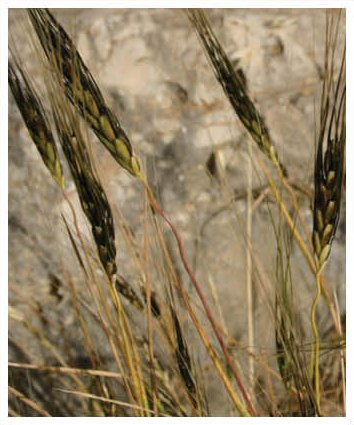
Wheat is one of the minim with which Eretz Yisrael is blessed. “A land of wheat and barley, grapes, figs, pomegranates, a land of olive oil and date honey.” We read of Reuven going out to the field in Charan “during the wheat harvest.” Later, in Mitzrayim, “the wheat and spelt were not struck” during the plague of hail because they were still unripe.
It’s interesting to know that occasionally, archaeologists find ancient kernels of wheat from the time of the Avos, that are well preserved in dry places. We can learn from this about agriculture in times gone by.
We read about wheat in Tehillim 147 where Dovid HaMelech sings in praise, “Within your borders He makes peace; with the best of the wheat He will sate you.” As far as how much wheat grew, we learn from Shlomo HaMelech who sent “20,000 kor of wheat for his household” to Chiram the king of Tzor. The second chapter of Rus ends with, “And she stayed with Boaz’s maidens to glean until the completion of the barley harvest and the wheat harvest …”
A Golden Field
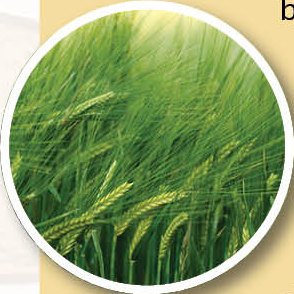
Picture a huge field, full of golden stalks swaying in the breeze. Each stalk contains dozens of small wheat kernels. That sea of golden wheat is a beautiful sight. Wheat is one of the most widespread crops in the world with hundreds of millions of tons a year.
For the most part, the wheat fields aren’t watered; they are dependent on rain. This is why we say that a farmer “believes in the Life of the Worlds (Chai Olamim = Hashem) and plants,” because he throws good wheat kernels into the ground and believes that Hashem will send down rain and he will get back way more grain.
When the wheat is ripe it’s time to cut it. In the past, farmers cut the wheat with a sharp and curved long knife called a scythe, by hand, which entailed a great deal of work under the hot sun. Then the kernels needed to be separated from the husks which was done by threshing. Then the kernels had to be separated from the chaff by winnowing. This type of work was hard and required much toil.
Today, there are huge combine machines which do the work. They cut quickly and separate the kernels. In the Torah, there are special mitzvos associated with the harvest. “When you reap the harvest of your land, you shall not fully reap the corner of your field, nor shall you gather the gleanings of your harvest … you shall leave them for the poor and the stranger.” These are the “gifts for the poor,” the mitzvos of peiah and leket teach us to think of the poor and to leave some of the crop for them.
Flour
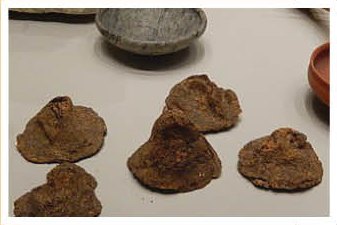
Now the clean wheat kernels have to be ground into flour. Try grinding some wheat at home with a mortar and pestle (or a powerful blender). See how much time it takes to turn the kernels into flour. Picture doing this for all the flour you need.
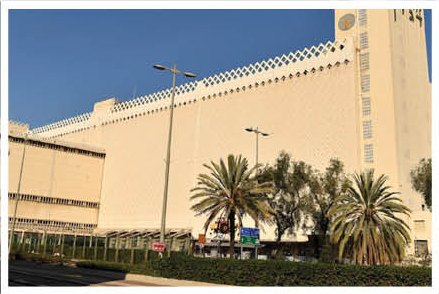
We learn about this work from, of all things, “the heavenly bread,” the mon which the Jewish people ate in the desert. The Torah says, “The people walked about and gathered it. Then they ground it in a mill or crushed it in a mortar…”
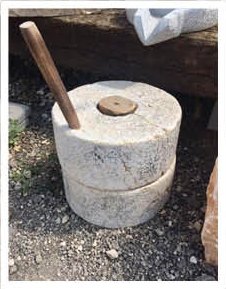
Grinding was very difficult which is why people didn’t grind at home; they brought the wheat to the mill where the miller did the work. In the olden days, he used heavy millstones to grind the wheat which was moved by a donkey or by water power.
Today, the wheat is taken by truck to a flour mill where the grain is put into giant grinding machines which grind it into dust.
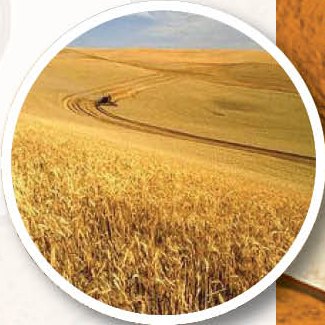
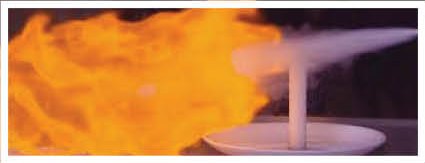
It’s interesting to know that flour is combustible and dangerous. Not to worry, the flour in your house won’t easily ignite because the particles are close together and don’t have oxygen between them that can ignite. But in large granaries where a lot of flour is stored, when flour floats in the air it becomes explosive and dangerous.
Bread!
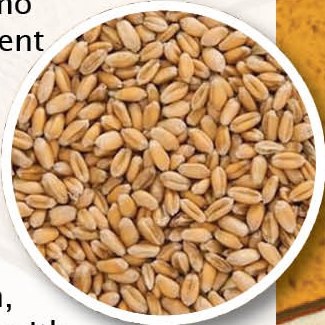
Now that we have flour, it’s time to make bread. In Chumash Bereishis, when Adam is cursed and expelled from Gan Eden, Hashem says to him, “With the sweat of your face you will eat bread.” Since then and until the Geula, we need to work for our daily bread. Later, Malkitzedek, King of Shalem, brings out “bread and wine” to Avrohom. Yaakov gave Eisav, “bread and lentil stew.” Toward the end of Chumash Bereishis, we read about Yosef who provides his brothers with bread.
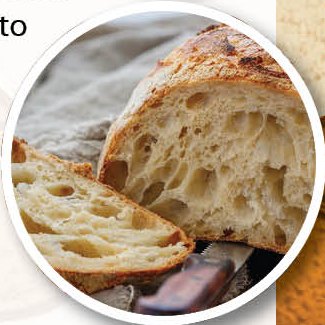
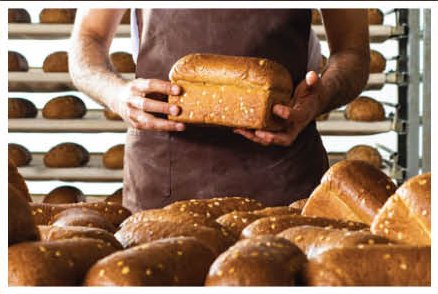
Bread is one of the most familiar and widespread food items in the world. In order to make bread, flour needs to be mixed with water and allowed to rise. In the past, the rising happened naturally; yeast which is found everywhere, made the dough slowly rise.
Later, man learned to preserve some of the fermented dough and use it the next time; it makes the dough rise even better. This is the seor (leaven) that is forbidden on Pesach. Still later, people learned to use yeast from beer, wine etc. to make tasty, fluffy bread.
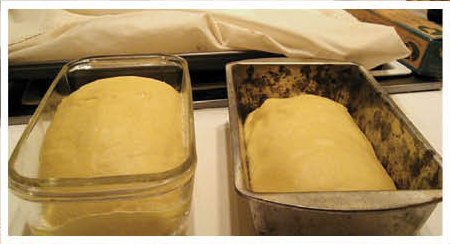
To bake bread at home, we mix the flour with water, yeast, sugar and salt and sometimes eggs and oil. After kneading it well, the dough slowly rises. Then the dough is punched down and shaped and is allowed to rise a second time before being placed in the oven.
Finally, the fresh, fragrant bread is bought to our Shabbos table. As we say the “hamotzi lechem min ha’aretz” bracha, we thank Hashem for this incredible process, from small wheat kernel to delicious bread.
For many years, white bread was considered preferable and the poor ate black bread. Nowadays, whole wheat is considered better quality and white bread is more commonly used.
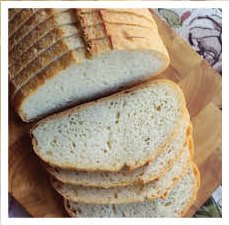
The smell of fresh bread is one of the best smells but after a few days, bread hardens, gets moldy and loses its smell. That definitely highlights the miracle of the Lechem HaPanim in the Beis HaMikdash. Chazal say that the bread remained fresh and warm for an entire week, from Shabbos to Shabbos.
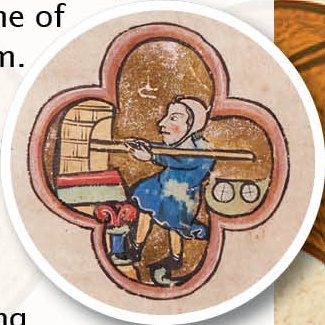
The Gemara says that in the future, when the sin of the Eitz HaDaas will no longer have an effect, the earth will produce incredible produce. A wheat stalk will be as high as a palm tree and one wheat kernel will be like the two kidneys of a large ox.
Then, we will be able to fulfill the mitzva of separating challa as it was meant to be done. Today, we separate challa just to commemorate the mitzva of challa which is given to the kohen. In the future, we will actually give it to the kohen.
Automatic Bread
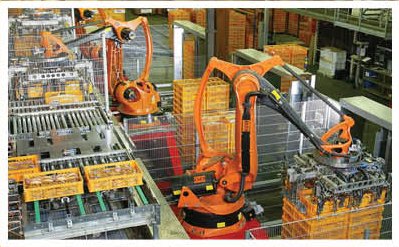
A few years ago, an American tech company introduced a unique innovation: the “Bread Robot,” a robot that can make up to 235 loaves of bread a day. The robot carries out all the steps of bread preparation from mixing the dough to baking it.
Bread Machine
In ordinary homes you can find bread machines in which you can mix the dough, have it rise, and baked, all in one place. It’s meant to enable one to bake bread without much work. Indeed, we are closer to the Geula than in the days of Adam HaRishon.
Turkish Bread Frozen in Time
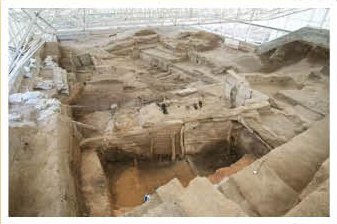
Archaeologists discovered a piece of something round and spongy at an archaeological dig in Turkey a few months ago. Nearby, they also found a mud-brick oven. The unique material was analyzed under a microscope and found to be bread made thousands of years ago. The bread survived thanks to a thin layer of limestone that covered the area. According to some estimates, the bread is thousands of years old.
Wheat for Aliens
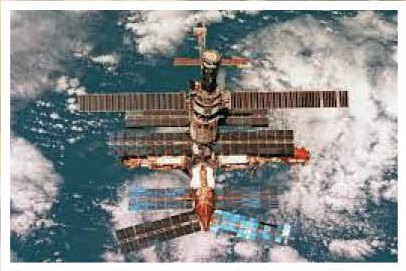
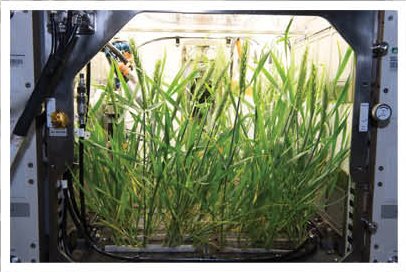
In 5755, in the Russian space station called Mir, they planted wheat as a special scientific experiment. The wheat grown in space was cut and planted again, successfully. The space station was eventually, deliberately, taken out of orbit and it burned up and pieces fell into the Pacific Ocean. There, deep in the sea, lies proof that you can grow wheat even in space. Who knows, maybe a boureka-loving alien is growing wheat on a distant star.
Sliced Bread
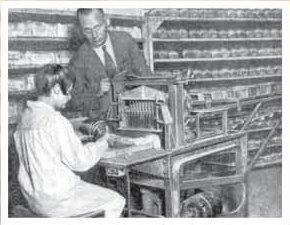
Otto Rohwedder is the man who came up with an amazing invention. No, not a new kind of wheat, but something that to us today seems quite obvious. He invented the bread-slicing machine. The first machine he built went up in fire, but he did not give up and built a second machine which easily sliced an entire loaf of bread. This invention was considered so revolutionary in its time, that we still commonly use the expression, “the greatest thing since sliced bread.”
Interesting historical fact: During World War Two, a prohibition was put in place making it illegal to sell sliced bread, in order to save on the packaging costs. The prohibition was canceled a short time later, when they realized that the cost savings were not very significant.
Let Them Eat Cake

French royalty lived a luxurious lifestyle, while the common people groaned under their yoke. When the wicked queen of France, Marie Antoinette, heard that the people were complaining that they had no bread, she could not comprehend that level of poverty and famously said, “If they have no bread, let them eat cake.” This story and expression are still used today to describe a person who is completely out of touch with the world around him.
Interestingly, this quote is still attributed to the queen, even though it has been proven beyond a doubt that she never said it.
Japanese Bread
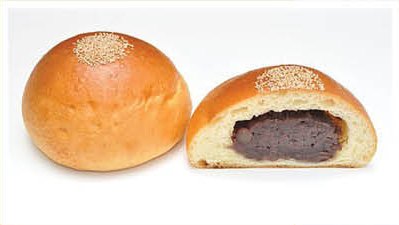
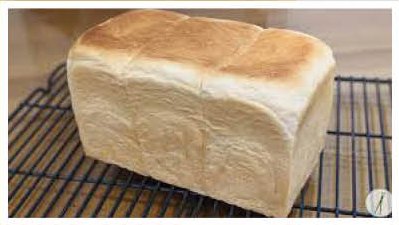
The Japanese are known to love rice and not wheat but in recent years, bread has made its way to Japan as well, but in their strange way eat it in odd forms. For example, they have many types of soft, dairy bread called shokupan. They have bread with strange flavors like melon bread and bread made with purple potato. A popular bread there is anpan which is filled with a red bean paste.
The Most Possible!
How could we discuss this topic without mentioning some strange records that were set?
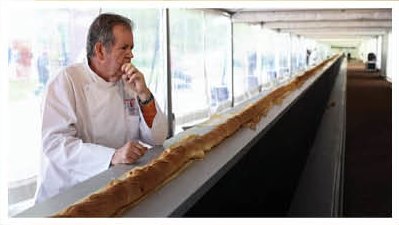
In 5775, the longest bread in the world was made in Italy. It was 189.5 meters long and a special oven was built for it. The bread was baked for thirteen hours by a team of over sixty bakers.
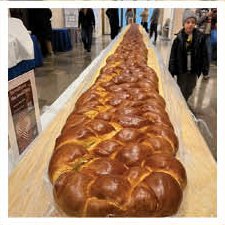
The longest challa in the world was about ten meters long and the longest French baguette in the world was about 122 meters!

The most expensive bread in the world was sold in a Spanish bakery called Pan Pina and it cost 1500 euros for a loaf weighing 400 grams. The bread contained expensive ingredients such as edible gold, silver, expensive butter and special spring water.
The Secrets of the Bread of Pompeii

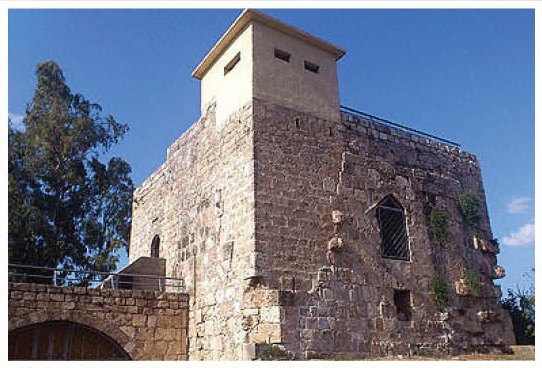
The ancient Roman city of Pompeii was buried under heaps of ash and lava from the volcano of Mount Vesuvius. In archaeological digs they found bakeries with ovens and even petrified rock-like loaves. One of the fascinating discoveries was that the loaves had seals on them identifying the baker, which show that even back then people cared about brand names.
Bagels and Lox
You are, of course, familiar with the taste of the famous “bagel.” You probably also know that the round bread with the hole in the center is seen as a famous Jewish symbol, mainly when it is sliced and filled with cream cheese and lox. The origins of the bagel seems to be from Poland, and it made its way to the United States along with the many Jewish immigrants from that country.
Napoleon’s Green Wheat

During the war of the French general Napoleon with Russia, the Russian soldiers who retreated would burn everything behind them, the goal being to deprive the French soldiers of any food and shelter. Having no other choice when their supplies ran out, Napoleon ordered his soldiers to cut green (unripe) wheat and use that to bake bread. The result was a greenish bread that caused severe digestive problems among the soldiers. As is well known, Napoleon lost in the end and finally withdrew from Russia.
The Astronaut and His Sandwich
In 1965, America sent two astronauts into space for the first time. The mission was called Gemini III. The astronaut, John Young, could not resist and smuggled onto the flight an unapproved corned beef sandwich, and even shared it with his fellow astronaut, Virgil “Gus” Grissom. This was the first time that bread was eaten in space, and resulted in a sharp rebuke on the part of NASA due to the danger of crumbs flying around instead of just falling on the floor due to the zero-gravity atmosphere on the spacecraft. As a result of the sandwich incident, the Senate launched a major investigation.
The Strangest Types of Bread in the World
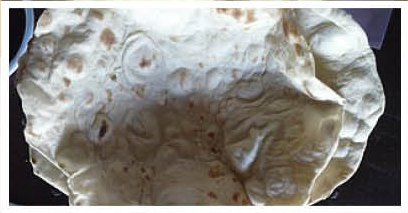
There are types of bread which would seem weird to us like in Iran, the ‘sangak’ bread is hung on the wall to cool after baking. In Egyptian villages there is a type called ‘aish merahrah,’ soft, big bread whose dough ferments all night long. In Finland there is ‘reikäleipä’, bread which dries out through the long, cold winter.
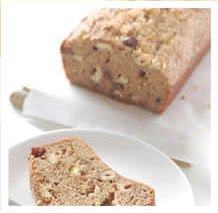
In the southern United States you can find banana bread made of wheat and mashed bananas, and in Germany there is “beer bread” which has beer added to the dough. In Italy, they have long thins breads called grissini, and in South Africa, “pot bread” which is made in an iron pot on coals.
Tree-bark Bread
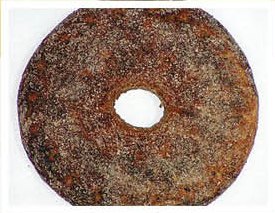
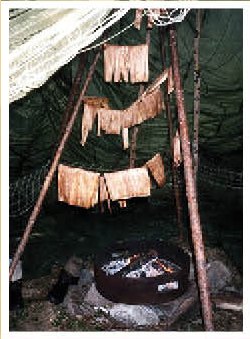
During times of famine in the cold of Europe, there was no choice except to add other materials to the flour in order to enlarge the size of the bread. Sometimes they added ground up tree bark, mosses, grasses and more. The last known case was during the civil war in Finland in 1918, when they added pine tree bark to the dough.
In both America and England, due to the price of wheat, some bakers were caught cheating their customers by adding foreign substances to the bread like chalk, sawdust, and plaster, in order to artificially add to the weight.
Salute #1478 • pp. 8-17
© 2026 Beis Moshiach Magazine. All rights reserved.
This article originally appeared in Beis Moshiach #1478. You are welcome to share it with friends and family by email or in print, provided that you do not change, add to or omit any part of it, you credit the author and Beis Moshiach, and you include a link to archive.bmoshiach.org (written out in full in printed copies).
To republish this article in a newspaper, magazine, book or website, please request permission in advance at [email protected].