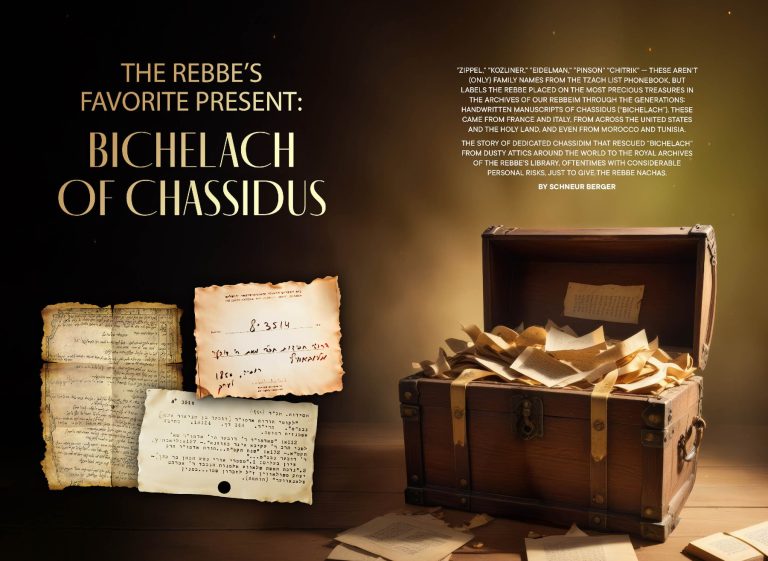
From Casablanca’s Alleys to Calgary’s Skyscrapers
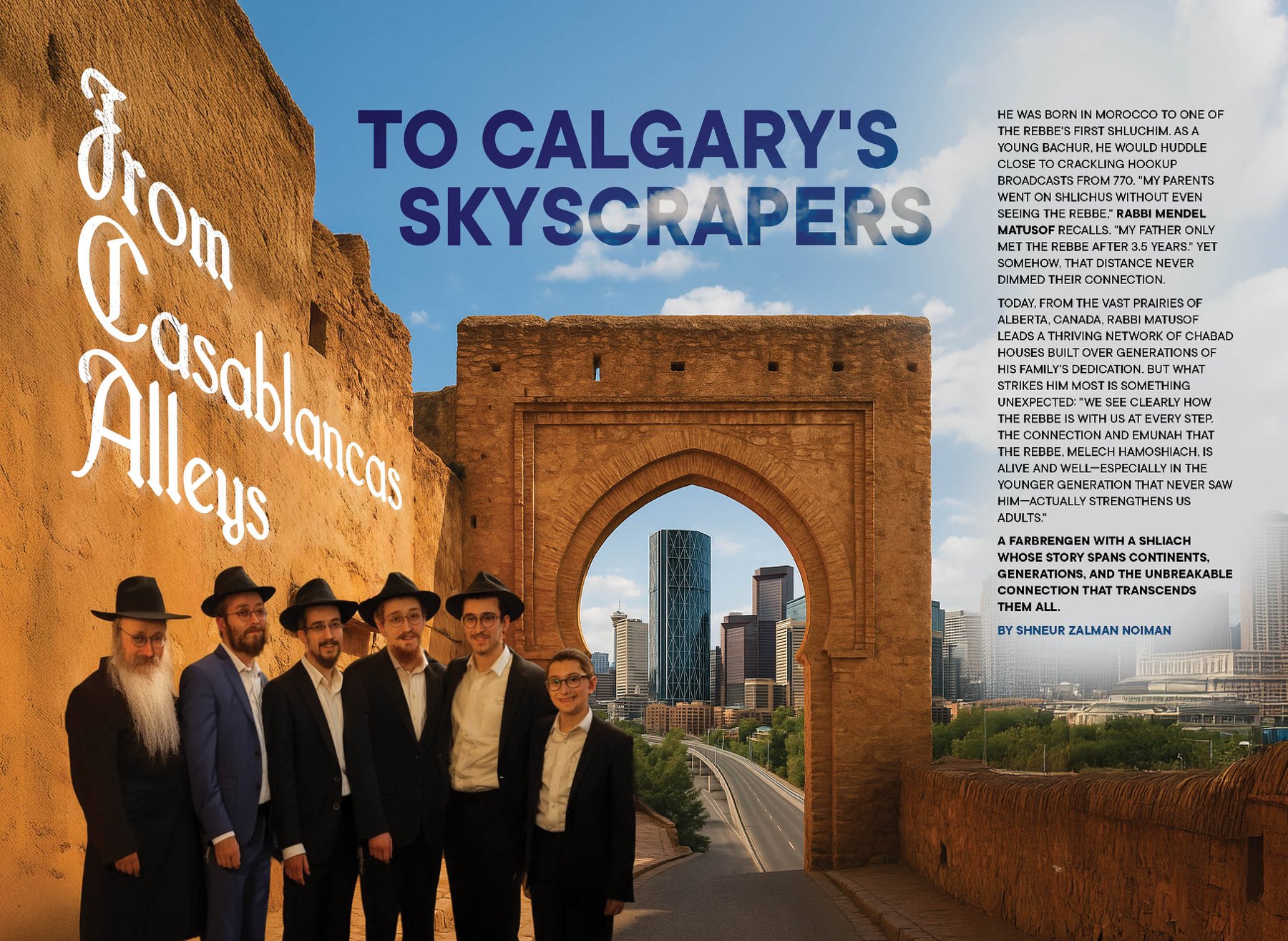
He was born in Morocco to one of the Rebbe’s first shluchim. As a young bachur, he would huddle close to crackling hookup broadcasts from 770. “My parents went on shlichus without even seeing the Rebbe,” Rabbi Mendel Matusof recalls. “My father only met the Rebbe after 3.5 years.” Yet somehow, that distance never dimmed their connection. Today, from the vast prairies of Alberta, Canada, Rabbi Matusof leads a thriving network of Chabad Houses built over generations of his family’s dedication. But what strikes him most is something unexpected: “We see clearly how the Rebbe is with us at every step. The connection and emunah that the Rebbe, Melech HaMoshiach, is alive and well – especially in the younger generation that never saw him – actually strengthens us adults.” A farbrengen with a shliach whose story spans continents, generations, and the unbreakable connection that transcends them all.
Do you believe in the Rebbe?
This simple question was accompanied by the tears of the woman who was now crying bitterly after discovering the note her husband had left on the table, informing her that he was leaving home.
“Of course,” she replied without hesitation.
“Then you have no reason to cry; you should be dancing!”
“Really?!” she asked in surprise.
“Absolutely! Just yesterday, you asked the Rebbe for a blessing. You didn’t have to do anything special, and now, here comes a rapid fulfillment of that blessing – in less than twenty-four hours!”
Rabbi Menachem Mendel Matusof, the Rebbe’s shliach in Calgary, Alberta, Canada, had this conversation with a woman closely connected to the local Chabad House. She had gradually been drawing closer to Torah, mitzvos, and the Rebbe, but now stood at a crossroads. She was married to a non-Jew, and although they had discussed the possibility of his conversion, they had serious shalom bayis problems.
She wrote a detailed letter to the Rebbe via the Igros Kodesh, asking for a special bracha for the difficult issues in her marriage. The response she received was filled with topics related to kabbalah and tefilla, but the first line on the page contained an outstanding blessing.
Several weeks later, when her ex-husband tried to return, Rabbi Matusof instructed her not to take him back.
But the story didn’t end there. When she later asked the Rebbe for a blessing to find a shidduch, she opened to a letter that said Torah study is the source of all brachos and that she must set fixed times for Torah learning.
Since she had stopped attending Rabbi Matusof’s classes due to a new job that conflicted with the class times at the Chabad House, he directed her to a class at the nearby Orthodox shul.
“You want me to go there?” she asked in astonishment. “But it’s not Chabad.”
“But it’s Torah study,” he answered. “If you can’t come to the Chabad House, go to the class there.”
After her second class, she called, excited: “You won’t believe what happened! I got a shidduch suggestion!”
It turned out that one of the regular attendees suddenly had the idea to match her with someone from the shul’s leadership – a good man whose wife had passed away a few months before.
Under the chuppa, Rabbi Matusof told the incredible story of how through a response from the Rebbe in the Igros Kodesh, the bracha was fulfilled.
This is just one of countless stories stored in the memories of Rabbi Matusof, a shliach who is a link in multiple generations of shlichus.
A Trailblazing Shlichus
Rabbi Matusof is a shliach from birth. He was born on 14 Menachem Av, 5722 to Rabbi Shlomo and Pessia, and had the zechus to grow up on the Rebbe’s shlichus in Morocco – the very first shlichus of the “seventh generation.”
“The first shlichus of the seventh generation started in Morocco,” explains R’ Matusof. “Our family, together with the Lipsker family, had the zechus to be the first shluchim chosen by the Rebbe to pave the way for the shlichus of the seventh generation.”
Back in the early 1950s, the term shlichus wasn’t yet a known Chabad concept. “It wasn’t a common idea then. Today, being a shliach is something everyone desires and strives for. Back then – who had even heard of such a thing? They didn’t even really know the Rebbe like today; it was before the official acceptance of the nesius. But when the Rebbe said to go – they went, without questions! My parents had never seen the Rebbe Rayatz nor the Rebbe himself before setting out.
“Neither my father nor my mother had ever seen him face-to-face (though Rabbi Michoel Lipsker had seen and served the Rebbe when he was in Paris to pick up his mother).
“It was true kabbolas ol and real mesirus nefesh – to be pioneers, to ‘lech lecha mei’artzecha,’ to an unfamiliar place, where they knew no one, not to mention the fact that it was an Arab-Muslim country with everything that entails.”
Chinuch of the Yaldei HaShluchim – On the Rebbe’s Shoulders!
“The first time my father saw the Rebbe was only in the middle of 5715 (1955), after three and a half years of shlichus,” Rabbi Matusof recalls. “My mother came later, only after all the children were born. I was a boy when she made her first trip.
“I always compare my mother to Yaakov Avinu, who raised the twelve shevatim in Charan – not in ‘Lubavitch’… Yet, mitaso shleima (his offspring remained entirely faithful).”
How can somebody raise Chassidishe children in far-off Morocco without direct contact with the Rebbe? Live broadcasts were only something to dream about. Even calling nearby France was complicated and expensive. There were only a few official pictures of the Rebbe – no video, no technology.
“I remember how we’d eagerly await the mail during Pesach, and keep checking to see if the Rebbe’s matza arrived. Someone from Anash would get it from the Rebbe for us and send it immediately. Usually, it arrived just in time for the Seudas Moshiach.”
What did they have? The weekly Likutei Sichos arrived a week or two late. Later, a few rare audio tapes via Rabbi Leibel Raskin, who would get them from Rabbi Meir Harlig. The Matusof family would copy them for themselves.
“We had no friends our age, no Tzivos Hashem branch, no events like in other Chabad communities. We were completely isolated from the broader Jewish and Chassidic world, yet despite that, boruch Hashem, my siblings and I are Chassidim, shluchim, deeply connected to the Rebbe…
“I recently pondered this – where did our hiskashrus to the Rebbe come from? Not just dry kabbolas ol, but genuine excitement and fervor, kochen zich mit’n Rebbin?
“The answer is simple: it’s purely the Rebbe’s power! Yes, our parents raised us in a deeply Chassidishe atmosphere – but ultimately, it’s an otherworldly force, the Rebbe’s koach. The Rebbe once told my mother that he takes the children’s chinuch on his own shoulders.
“Today, boruch Hashem, Chassidus is accessible – the Rebbe’s sichos are everywhere, the Rebbe’s horaos are available to everyone. There is truly worldwide hafatza, even for young children, in every language – truly global. There is also suitable material for the young children of the shluchim – everything they need and more, stories to go to sleep with the Rebbe, to wake up in the morning with the Rebbe, to live with the Rebbe twenty-four hours a day. But even today, just like it was before all these efforts, the chinuch of the young shluchim succeeds because the Rebbe takes the responsibility for their chinuch upon his shoulders.”
Living with a Living Rebbe
“How do you compare then to now? It’s the same thing, but a different form. True, my parents didn’t see the Rebbe before going on shlichus, but they clearly knew the Rebbe existed! Though physically far in the USA, they felt the Rebbe was with them in Morocco, aware of every detail in their daily life, and they hoped to one day meet him face-to-face.
“But today’s generation – born after Gimmel Tammuz – has never seen the Rebbe at all! And they know that the ultimate goal isn’t just to travel to see him in New York, but to believe and know that the Rebbe is alive in a physical body – Melech HaMoshiach! Even though they don’t see him even when they get to 770…
“This demands very strong emuna. Pure belief and absolute kabbolas ol. A deep hiskashrus, complete devotion to fulfill the will of the Rebbe in its entirety. In a way, it’s even stronger and deeper than my parents’ kabbolas ol back then.
“We see young people today with such enthusiasm, such hiskashrus – not less than before; on the contrary, even more! It’s mind boggling… I’m constantly inspired by what I see in the Chabad world, at 770, on shlichus – how people live with the Rebbe with such feeling and intensity. In a way, it gives me even more chizuk and Chassidic passion than what I grew up with.
“I can’t imagine my father ever dreamed, even in his wildest dreams back in 5710, 5711, 5720, that this is how things would look in 5785, how truly, ‘His kingdom rules over all.’”
Personal Yechidus
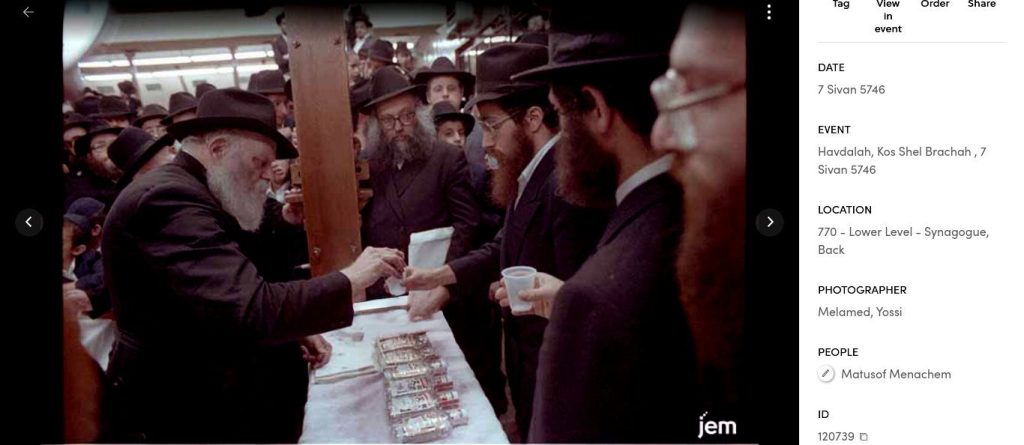
“The first time I went into yechidus with the Rebbe was when I was twelve years old,” he recalls emotionally. “I was the youngest among my siblings to merit going at such an age. It was during Tishrei 5735. My father was going and took me along with him.
“I had three minutes in yechidus together with my father. The Rebbe tested me on meseches Gittin. He asked me what I was learning, and I answered, ‘the second perek.’ The Rebbe asked questions and gave brachos. I left, and my father stayed with the Rebbe for another seven or eight minutes.”
He had another yechidus at age fourteen, also with his father.
‘Is it Possible to Wait?! We Need to Act!’
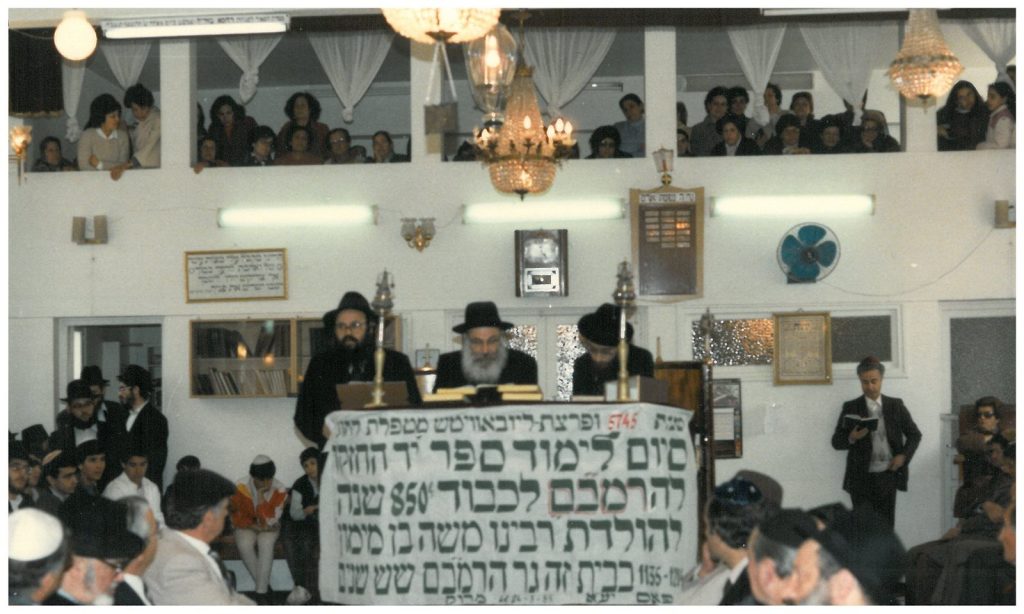
A special chapter in his life was the founding of the yeshiva gedola in Casablanca, Morocco, by the Rebbe, in 5742. R’ Matusof was part of the first group of talmidim shluchim sent to the new yeshiva.
In every other location where talmidim shluchim were dispatched, the hanhala in 770 made the decisions about who was going. But in the unique case of Casablanca, the matter came directly from the Rebbe to his father, Rabbi Shlomo Matusof.
“At first, there was confusion and some misunderstanding. My father insisted that the Rebbe wanted us to go to Morocco. The hanhala had a different list, which applied to all other locations. People didn’t understand what was happening or what the Rebbe actually wanted.”
On the night of Hoshana Rabba, at midnight, a critical meeting took place in the dorm room of the young Menachem Matusof in the 1414 yeshiva building for the eight bachurim who were supposed to go to Morocco.
“The Rebbe wants the parents’ consent,” said my father, “so before Yom Tov begins tomorrow, I need agreement from all of you, so I can write to the Rebbe.” And indeed, already on Hoshana Rabba, my father wrote to the Rebbe that parental consent had been received.
A few days after Yom Tov, my father had yechidus. Rabbi Mentlick, the rosh yeshiva, was waiting outside the Rebbe’s room to see what would be. Everyone sensed something significant was coming.
The Rebbe asked my father: “What about the bachurim?”
My father answered: that the Rebbe had requested parental consent, and on Hoshana Rabba, he had written that he’d received it.
“On the Rebbe’s right side,” my father later recounted, “stood piles of sefarim, stacked high. The Rebbe smiled, gestured toward all the sefarim, and said: ‘Is it possible to wait?! We need to act!’ Then he said: ‘Start preparing,’ and he gave brachos for success, and so on.”
My father exited the yechidus, and Rabbi Mentlick asked, “Nu?” My father told him all the details and Rabbi Mentlick instantly responded: “My opinion is nullified.”
It took time to arrange the visas, and we traveled on 7 Teves. Before our departure, we merited a sicha from the Rebbe, which was later edited and published in Likutei Sichos, vol. 20.
Live Broadcast – Underground
In the Casablanca yeshiva where his father was general director and the rosh yeshiva was Rabbi Leibel Shochet, they arranged a bold initiative: live broadcasts of the Rebbe’s farbrengens.
“Live broadcasts from New York for several long hours into a Muslim Arab country were, of course, illegal – and even dangerous,” he explains.
“My father, of course, couldn’t officially support it or host it in the yeshiva building. But behind the scenes, he helped and encouraged it in every way possible.
“The broadcasts took place in various rotating private homes. One of them was even in the home of a supporter of the yeshiva. I took my father’s car – with his permission – to bring the bachurim to the broadcast. My father couldn’t be present for obvious reasons, but the next morning, of course, he listened attentively to hear what the Rebbe had said in the farbrengen.”
Thousands Connected to the Rebbe Melech HaMoshiach
On 26 Sivan 5746, Rabbi Menachem Matusof married Rochel Leah, daughter of Rabbi Berel Zaltzman. Immediately after the wedding, they set out on shlichus in California. Even as chassan and kalla, they received a special bracha from the Rebbe.
“After two years, that chapter of shlichus ended. We wrote to the Rebbe, asking for a bracha to remain in the field of shlichus and to find a new shlichus,” he recalls.
“We didn’t receive a ‘written’ answer – but it came very speedily in the real world. Within just three days, we had three or four serious offers. One of them was to open a new Chabad House in the province of Alberta, Canada.”
The shluchim in Canada had promised the Rebbe a gift for his 80th birthday: to establish a Chabad House in Alberta – a large and important province in Canada. In practice, it had been delayed for years.
The Matusofs visited, checked everything out, and liked what they saw. They wrote and received the Rebbe’s full bracha to take on the new shlichus.
“We saw huge potential there,” he says. “We saw that there were many people who, if we brought them the Rebbe’s message, would receive it warmly – and we’d be very successful. And boruch Hashem, there has indeed been enormous success.”
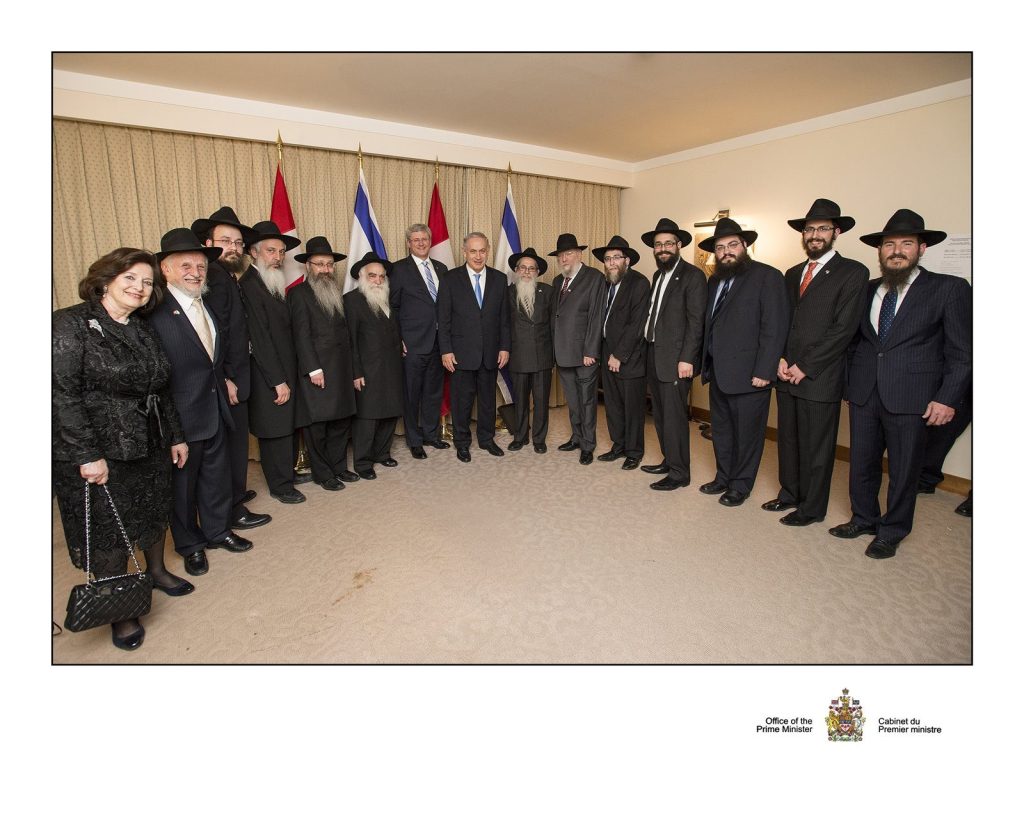
The numbers speak for themselves: “At our first Pesach there, in 5749, we brought just thirty pounds of matza for the whole province. Today, boruch Hashem, it’s over a thousand pounds.
“And in every aspect of shlichus everything has grown rapidly. We started alone. After two years, we brought in other shluchim to another city. Today, there are eight shluchim families operating in the province.
“The activities are large and impactful: on Simchas Torah, about 500 people participate; on the first night of Sukkos, around 400. At last year’s Chanuka event, 1,200 people took part in a impressive event downtown. Many children attend camp, and much more.
“We’ve been privileged that, boruch Hashem, more than 130 Jews from the city have become baalei teshuva and become connected to the Rebbe. Today, they are scattered around the world. Some of them have become full-fledged Chabad Chassidim – and one family even became shluchim with us.”
Shlichus Focused on Kabbolas Pnei Moshiach Tzidkeinu
“Today there’s nothing to be ashamed of!” says Rabbi Matusof confidently. “Everyone knows that the Rebbe and Moshiach go together. Chabad and Moshiach go together naturally – they can’t be separated. The Rebbe is Melech HaMoshiach. We see clearly that when you go with the truth, it works and has an impact. ‘Truth will sprout from the earth’ – that’s the foundation of everything. There’s nothing to be embarrassed about – on the contrary!
“About a decade ago, there was a proposal to relocate and purchase a building to serve as a permanent Chabad House. Until that point, we’d been renting. The building in question was significantly larger and located in the center of the city, which would undoubtedly lead to a tremendous kiddush Hashem, but we were uncertain because it was at the far end of the Jewish neighborhood.
“We asked the Rebbe through the Igros Kodesh, and received many brachos along with a clear push to build and expand. The Rebbe emphasized that we should invest in it, and invest energy. It was a strong and pointed letter. Similar clear and decisive answers were received several times.
“Many people write with us to the Rebbe, and see miracles and wonders. The story at the beginning of the article is just one of many.
Don’t We Deserve Personal Treatment?!
Rabbi Matusof returns to his years as a “tamim min ha’minyan” (one bachur among many) with the Rebbe, sharing openly about the difficulties and feelings of that period, and drawing a direct line to today.
“Just as there are those who feel that the Rebbe is indeed the Rebbe of Lubavitch and of the entire world, but they lack personal treatment and private attention in a personal and special way, so too with me – it was very, very difficult for me in my youth.
“I was jealous of the older ones,” he admits. “Those who were in the ‘yuds,’ who grew up with the Rebbe, literally like a son with his father. They were truly pampered. Each one received personal treatment. My father received so many responses, and in the later years we would wait and wait, and generally many of the responses would go just to rabbanim, mashpiim etc.
“Not just the older ones. Even my older brothers, before they started putting on Rabbeinu Tam [tefillin], they had to prepare and write a report and receive the Rebbe’s approval, and suddenly there’s a general instruction for everyone to put them on. Also the custom of private yechidus before birthdays stopped before I came to the Rebbe. Things changed drastically.
“I had complaints against the older ones: ‘You had the Rebbe personally, private yechidus, responses and answers, and with us?! The Rebbe tells us: Yechidus? Come to farbrengens.’
“Sometimes I thought ‘How can you compare personal yechidus to a farbrengen?!’ What exactly do you want from us younger ones… You, the older ones, of course you have deep love for the Rebbe, true hiskashrus, but me?! What do I have?!
“As students in Oholei Torah yeshiva we also didn’t merit to attend Krias HaTorah with the Rebbe on Mondays and Thursdays. We didn’t even daven Kabbolas Shabbos with the Rebbe, because there was mandatory Chassidus seder then.
“Even at the farbrengen itself,” he goes on, “sometimes you weren’t sure – did the Rebbe respond specifically to me or to the one standing next to me… You stand far away, you can’t manage to hear half the sicha until the sicha comes out in print and you can learn it from the written text.
“But then, I came to realize that there is personal attention, even at farbrengens… I once wrote to the Rebbe about a certain topic, and I wrote that I feel I’m working on myself, davening and learning, and I can’t reach the place I want to reach. And this is very difficult for me. I also spoke about this with my mashpia Rabbi Shloma Majesky, who was then a mashpia in Oholei Torah.
“I wrote the letter to the Rebbe on Thursday or Friday. The next day, at the Shabbos farbrengen of Parshas Ki Tisa, 20 Adar 5740, the Rebbe began the sicha with the following point: ‘There are those who complain that they do and work and don’t succeed…’
“I was standing then under the window of the WLCC broadcast room,” he recalls the details. “The mashpia Rabbi Majesky was in the east, near the Aron Kodesh. The moment the Rebbe began the sicha, we look at each other meaningfully, and he signals to me with a gesture ‘pay close attention.’
“The Rebbe spoke about the famous story of Choni HaMe’agel that occurred on 20 Adar. And the Rebbe said that if you put yourself into the work like Choni HaMe’agel [who refused to budge unless he was answered], it succeeds.
“I don’t know how many more Chassidim were in 770 who also wrote exactly the same thing to the Rebbe at that same time…” he smiles.
The Rebbe Guides Us More Than Ever
“Exactly the same thing happens today; despite the fact that superficially it seems as if something is missing, but it’s exactly the same thing actually. The Rebbe continues and even more so and with greater strength to lead and guide and be a Rebbe,” he emphasizes. “Not only in matters of the collective – the Rebbe of all Israel, but each and every one individually and privately in what he needs. It’s exactly the same thing. Maybe even more.
“And just as throughout the years there were tests, difficulties and yetzer hara, today too there are difficulties, but we need to overcome them, and when we surrender ourselves, we succeed.
“True, it’s hard to compare between the times; after all, we saw the Rebbe, but on the other hand what we see with physical eyes today, the miracles, and how the Rebbe guides and leads us today, it’s no less than what was then.
“The reality is, if one pays a bit of attention, that we all receive clear answers from the Rebbe, horaos and brachos, there are many amazing stories about this. The miracles roll under the table and on the table, in a much stronger way.
“Personally I have merited to receive from the Rebbe in recent years precise answers and instructions, really hitting the mark. Not always, but usually clear. When I am more serious and more focused with shiurim and preparations, I merit much more precise responses, than without serious preparation…
“On one hand the darkness is greater, on the other hand the light is incomparable,” he summarizes. “And on the contrary, it’s really great encouragement and chizuk from how we see the young generation, who didn’t see the Rebbe with their own eyes, and they live fully in the present, the Rebbe is chai v’kayam today. They don’t live with memories of the past. This is very, very encouraging and strengthening and shows that the Rebbe is with us.”
The Rebbe Promised – The Rebbe Will Fulfill!
“When the Rebbe accepted the nesius he declared clearly: I will not do the work for you. I will toil with you and together we will bring Moshiach,” he emphasizes.
“And exactly the same thing happens today. Nothing has changed in essence. This is exactly as it was after Chof-Zayin Adar 5752. The Rebbe sits on the balcony, high above all the people, looks at the Chassidim, encourages ‘Yechi Adoneinu,’ and as if saying to us: figure it out and do the work. I’m here with you, I give strength and encouragement, but you need to act also with your own strength.
“We must not go with lowered heads, ‘oy vey,’” he warns. “True, there are things that for now we don’t have; this will return soon. But meanwhile, we’re not allowed to go with lowliness of spirit. The Rebbe is with us! Everything is there, we just need to open the heart and eyes and ratzon pnimi. We have what we didn’t have in the past, and in a big way. Today we see clearly how at every step and 24/7 the Rebbe is with us and accompanies us. Especially when we truly live with the Rebbe.
“We need to devote ourselves to the Rebbe full force! How fortunate we are, not only that we are Chassidim and mekusharim because we have stories of the past from Nevel and Lubavitch, but how fortunate we are today that the Rebbe is conquering the entire world, literally!
“This is the point that must be emphasized and lived with at every moment; the Rebbe is with us, with each and every one individually,” he concludes passionately. “And ‘not one of Your words will return empty,’ not one of your words! There is no word that the Rebbe says that is not real and fulfilled in a tangible and revealed way. These are not just nice words. Everything one after another will be fulfilled precisely.
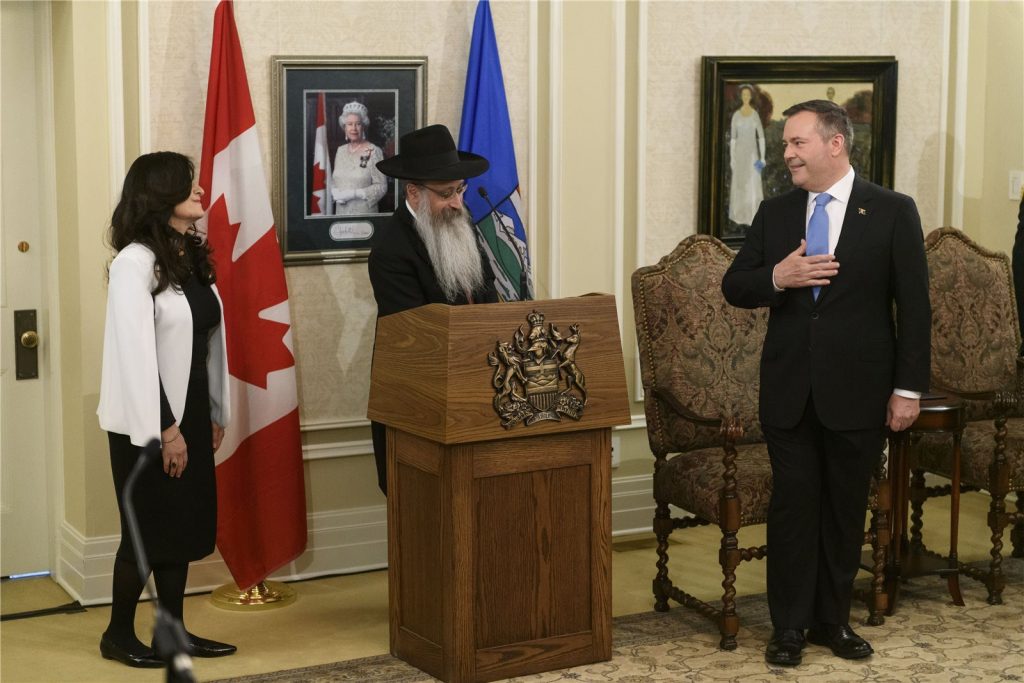
“We are in the Yemos HaMoshiach. If the Rebbe said so explicitly, the meaning is that it is completely real and tangible, and it is in our power to reveal and live this way, to live with Moshiach. After all ‘I ask only according to their ability.’ This reminds me of a story: I don’t know how I had the chutzpa, but I once wrote to the Rebbe that although I hear all the time from the Rebbe in farbrengens the maamar Chazal, ‘when I ask I ask only according to their ability’ – but in practice it’s not within my ability to do what is needed.
“The Rebbe crossed out the word ‘but,’ and between ‘don’t have’ and ‘ability,’ he added the words: [It’s not] his will and therefore explains himself that [it’s not within my ability]. The opposite of the ruling from the above saying of the Sages.
“The Rebbe cut it out, and gave to the secretariat only two pieces of the paper, from above and in the middle. On the other side of the letter was written the letter beis – surrounded by a circle: as per the advice of the mashpia.
“We must rely on the Rebbe with absolute trust. Just as my parents relied then on the Rebbe, we need to rely with complete faith, and the Chassidim indeed rely, and proceed full steam ahead. Thus we will exit the galus, through dance and joy to the true and complete Geula and the Rebbe Melech HaMoshiach will redeem us immediately b’poel mamosh!”
Yechi Adoneinu Moreinu V’Rabeinu Melech Ha’Moshiach L’Olam Va’ed!
Our thanks are given to the editorial staff of ‘Avo V’Eiraeh’
Beis Moshiach #1478 • pp. 10-20
© 2026 Beis Moshiach Magazine. All rights reserved.
This article originally appeared in Beis Moshiach #1478. You are welcome to share it with friends and family by email or in print, provided that you do not change, add to or omit any part of it, you credit the author and Beis Moshiach, and you include a link to archive.bmoshiach.org (written out in full in printed copies).
To republish this article in a newspaper, magazine, book or website, please request permission in advance at [email protected].