8 Things You May Have Not Known About Chanuka in Lubavitch
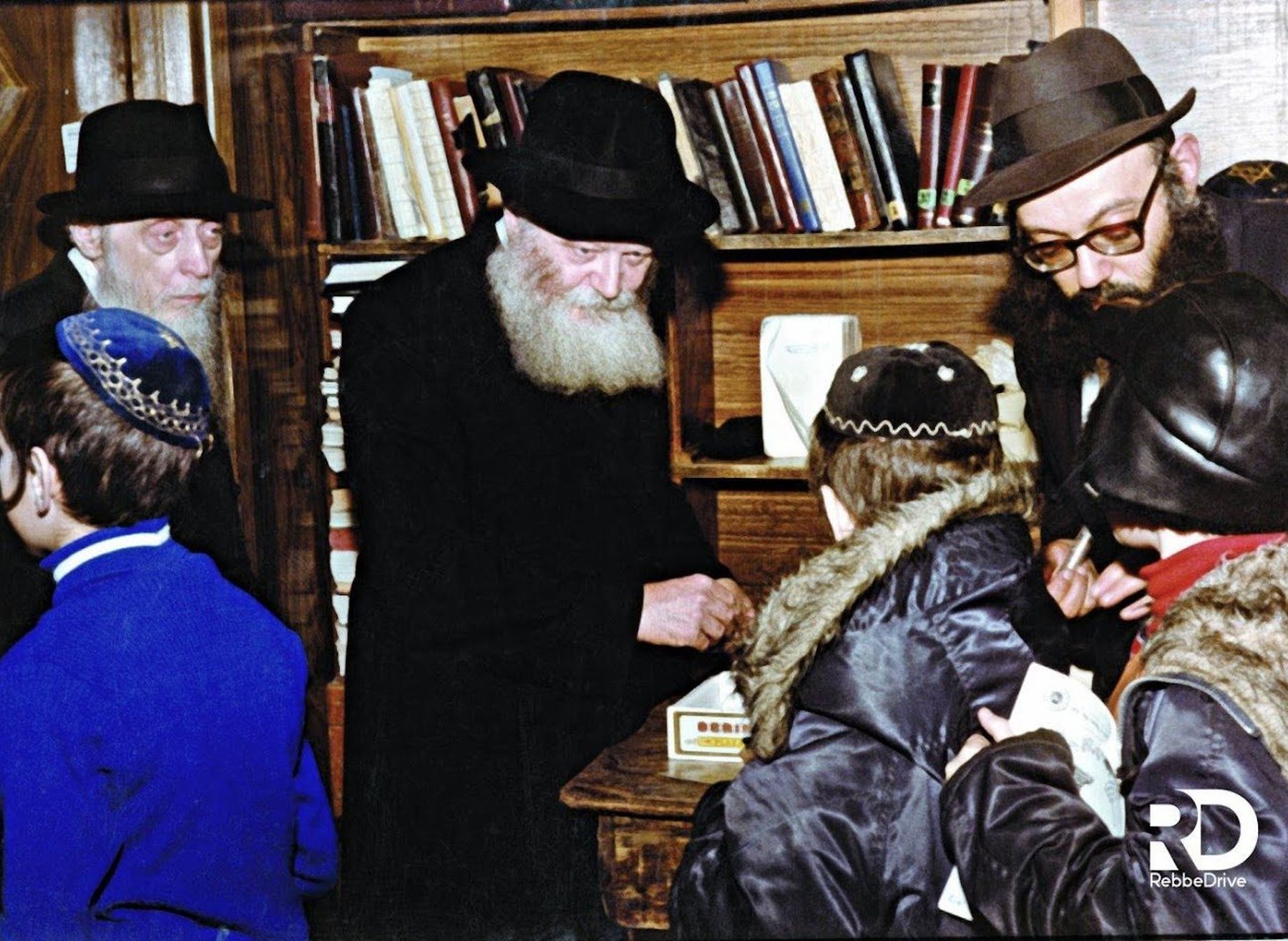
1. The Picture of the Rebbe Rayatz on Chanuka
The menorah lighting of the Rebbeim was always quiet and modest in a family setting. Chassidim were never present at the menorah lighting of the Rebbeim who were particular not to have outsiders in attendance.
The only picture of any of the Rebbeim with the menorah is that of the Rebbe Rayatz on the fifth night of Chanuka in 5710.
2. Chanukah Gelt for Temimim
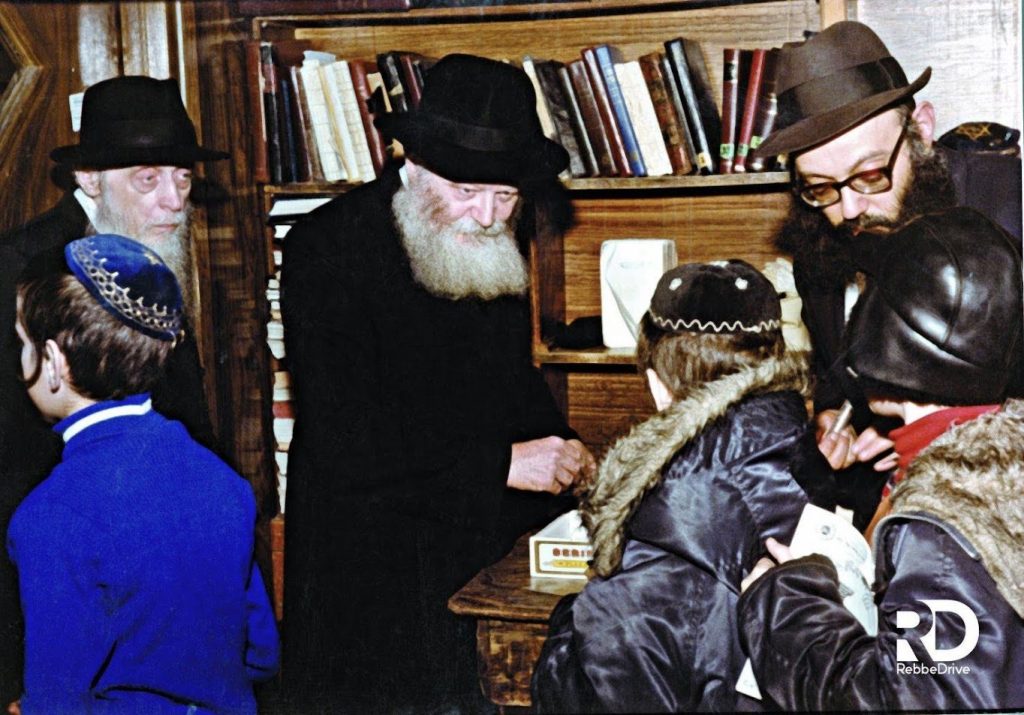
In 5712 (1952), the Rebbe established a special tradition: distribution of Chanuka gelt to students of Tomchei Tmimim yeshivos, but not to all – only to those who were meticulous about maintaining the seder Chassidus in the morning. This minhag became one of the most educational and meaningful moments in the life of the yeshiva.
The distribution took place regularly on the fifth night of Chanuka, in a fixed format: the Rebbe would deliver a special sicha on matters concerning the tmimim and hora’os of Chanuka, after which he would give each one a dollar coin. The Rebbe’s insistence on the criteria was absolute – when the hanhala once included talmidim on the list who were not deserving, he responded: “If the hanhala included them out of Ahavas Yisrael, let them go receive from Reb Levi Yitzchok of Berditchev…”
The event had a unique character. Talmidim who were able to participate, speak of the feeling of elevation and responsibility that they felt. In 5721, a change occurred when the Rebbe instructed that the hanhala distribute the Chanuka gelt in his name, and this tradition continues to this day.
An interesting episode connected to this was told by R’ Amram Blau, of blessed memory: “As a bachur, I did not merit to study at Yeshivas Tomchei Tmimim, but since my soul desired to study Chassidus, I would come in the morning to Yeshivas Toras Emes [in Yerushalayim] where I would learn Chassidus before davening.
“When Chanuka arrived, R’ Avrohom Pariz would bring Chanuka gelt from the Rebbe. He would be with the Rebbe on the first night of Chanuka, and on one of the nights of Chanuka, he would come to Toras Emes to distribute the dollars that the Rebbe had given him to distribute. When he arrived at the yeshiva he would make a big farbrengen, during which he distributed the Chanuka gelt to the bachurim.
“I too sat at the farbrengen, and when he came to give me, suddenly one of the bachurim said ‘Wait, the Chanuka gelt is designated for Toras Emes, and he is not from Toras Emes.’ R’ Avrohom stopped with the dollar in his hand and said: I will tell you the exact language that the Rebbe said when he brought me the dollars: ‘This Chanuka gelt is designated for those who learn Chassidus in Toras Emes,’ and then he turned to me and asked – do you learn Chassidus in Toras Emes? I answered yes, and thus I merited to receive Chanuka gelt from the Rebbe.”
3. The “Haneiros Halalu” Tune
The famous niggun, which originated with the Chassidim of the Rebbe Maharash who composed it during his illness to prolong their time in his presence, developed over the years into a central tradition in Beis Chayeinu.
The development of the niggun in 770 was gradual. Although the notes were already printed in the first Sefer HaNiggunim in 5709 (1949), in 5723 (1963), when it came out on a Nichoach record, the secretary Rabbi Yehuda Leib Groner recorded what he heard from R’ Shmuel Zalmanov: “Tonight the Rebbe heard the new record of Chabad niggunim and made several comments, among them a comment on the ‘Haneiros Halalu’ tune to clarify exactly if this tune was sung in Lubavitch.” The record even came out without the traditional ending of the niggun.
Over the years, a tradition developed to sing the tune after lighting the menorah in public. Initially only on Motzoei Shabbos, the fifth night, and ‘Zos Chanuka,’ and later every day. The Rebbe would encourage the singing with movements of his holy hands, especially when reaching the ending “for Your miracles and Your wonders.”
Particularly interesting was the approach to singing the niggun on Shabbos: the Rebbe instructed not to sing the complete tune on Shabbos, since the mitzva of lighting does not apply to Shabbos. However, he permitted singing the last stanza “for Your miracles” even on Shabbos, as he himself did on the Shabbosos of Chanuka 5751 and 5752, when he vigorously encouraged the singing.
4. Mivtza Chanuka
On Chanuka 5734 (1974), ‘Mivtza Chanuka’ became an official campaign by the Rebbe’s instruction, which included distribution of special Chanuka gelt to participants – a tradition that became one of the most significant mivtzaim in spreading the light of Chanuka in the world.
On Shabbos Kodesh Parshas Vayeishev, the Rebbe urged to intensify efforts so that in every Jewish home they would light Chanuka candles, and even instructed as a temporary directive that girls too should light Chanuka candles. At that Chanuka farbrengen, the Rebbe instructed that those who engaged in Mivtza Chanuka should say l’chaim. Additionally, the Rebbe instructed to distribute Chanuka gelt in Eretz Yisrael for those engaged in Mivtza Chanuka, and to IDF soldiers.
The Rebbe’s insistence on participation in the mivtza was exceptional. Only those who presented a certificate from Rabbi Dovid Raskin about their participation in the mivtza would receive Chanuka gelt. Even the Rebbe’s secretaries were required to present such a certificate, which emphasized the importance of actually doing it.
One night, an interesting thing occurred when a Skverer Chassid pleaded to receive Chanuka gelt. When the Rebbe refused due to his non-participation in the campaign, the man burst into tears and asked for a yeshua. The Rebbe replied: “A bracha I can give – and I will pour out for you a bracha ad bli dai, but Chanuka gelt I cannot give.”
Despite the long line stretching behind him, the Chassid continued to plead. The Rebbe responded:
“I don’t fully understand you. If you believe in me, you must also believe that when I say it’s impossible to give (the Chanuka gelt); this is not child’s play. You want from me a bracha and a yeshua specifically your way?! I will do it my way! Have a happy Chanuka and may Hashem fulfill the desires of your heart below ten handbreadths and in actuality.”
5. The Diagonal Menorah
In 5742 (1982), the Rebbe revolutionized the conception of the menorah’s shape when he proved that the menorah’s branches were diagonal and not in a semicircle, which led to a historic change in the shape of menorahs in the Jewish world.
The Rebbe first raised the issue of the menorah’s shape on Shabbos Parshas Matos-Masei 5742, and devoted extensive explanation to clarify how the menorah’s branches were in the Beis HaMikdash, with the Rebbe proving clearly that it must be that the menorah’s branches were diagonal, as implied by Rashi, and from the Rambam’s drawing who drew the Mikdash menorah with diagonal branches, and the image on the Arch of Titus is not correct at all.
Two determined talmidim in 770 decided to take action following this sicha. On Erev Rosh Chodesh Teves 5743, the sixth night of Chanuka, they brought a new menorah coated in pure gold with diagonal branches and placed it in the designated spot. The Rebbe, who entered for Mincha, immediately noticed the change.
During the davening, the Rebbe looked at the menorah, examining it from every angle. Afterward, he instructed to lower the shamash since the menorah resembled the menorah in the Mikdash, and since that night they lit six candles plus the shamash – it appeared as if lighting the menorah of the Mikdash!
A month later, in a sicha that dealt with the subject and was later printed in Likkutei Sichos, the Rebbe recommended making all menorahs with diagonal branches: “…there is room to say that Chanuka menorahs (for the days of Chanuka) should also be made with their branches diagonal – and in any case one must say that there is no concern of the prohibition of ‘a menorah in the form of a menorah’… because one changes the number of branches… and why change the actual shape of the menorah whose branches were straight and not in a semicircle?”
At one of the dollar distributions, when Rabbi Shalom Steinberg passed before the Rebbe with HaChumash HaMevuar that he had published, and opened for the Rebbe to the place where he drew the menorah with diagonal branches. The Rebbe commented with a smile and said to him: “You probably know that they made a commotion about me regarding this.”
6. Global Chanuka
Starting from 5750, a new dimension was added to the celebration of Chanuka: a global satellite broadcast of the menorah lighting at 770. The event, which became one of the highlights of the holiday, connected millions of Jews around the world to the light of the Chanuka candles.
In the first broadcast, a historic moment occurred when the Chief Rabbi, Rabbi Mordechai Eliyahu, lit candles at the Kosel. In his moving words, he said that when Moshiach comes, the Kohen Gadol will honor the Rebbe to light the menorah in the Mikdash, since there is no one who illuminates Jewish souls like him. Rabbi Eliyahu even detailed how this would be possible: they would take the menorah out of the Heichal to the Ezras Yisrael, where the Rebbe would light it, and afterward they would return it.
In 5751, a touching moment was when children from Chernobyl, who were saved by the Rebbe’s instruction, participated in the event at the Kosel. One of them, Gershon Rabinowitz, approached the microphone and said emotionally with a Russian accent: “Spasiba (thank you) Rebbe.” In 5752, the Rebbe explained the depth of the broadcast: utilizing the most advanced technology to spread the light of Chanuka throughout the entire world.
In 5753, the event was held as every year, and the Rebbe even expressed his desire to participate in it, and indeed the Rebbe came out to the porch and remained there throughout the entire broadcast, and even encouraged the singing during part of the time.
7. Chanuka Gelt for All Anash
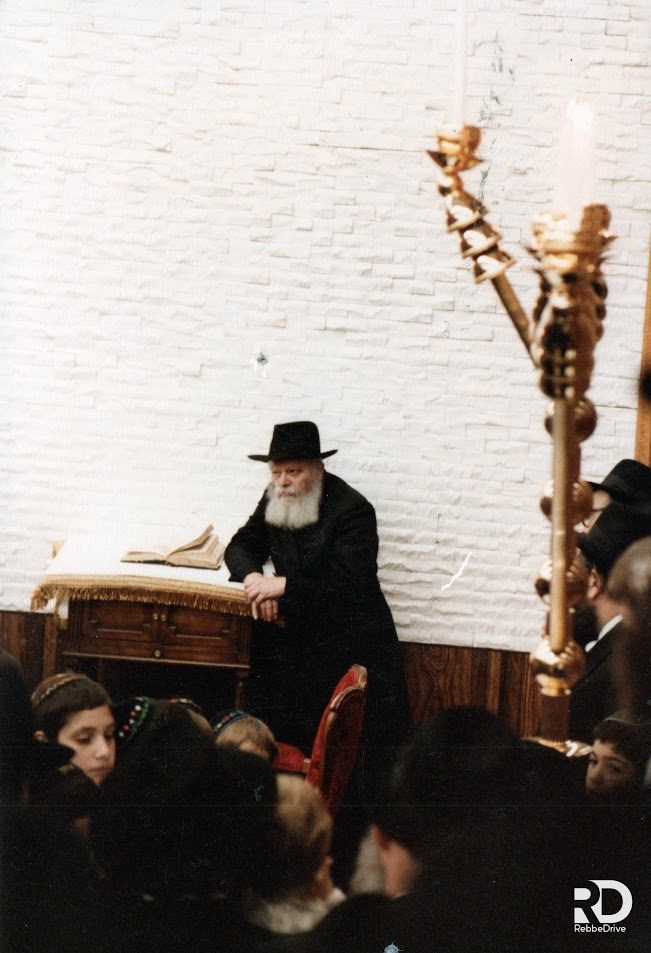
In 5737, the Rebbe instituted a new tradition: distribution of Chanuka gelt to the public. What began as distribution only to yeshiva students expanded into a mass event that became one of the illuminating moments of the holiday.
When the news of the distribution became known, a mass influx of neighborhood residents began – men, women, and children. A long line stretched outside, with everyone anticipating the special moment. The Rebbe blessed each person individually: “A freilichen Chanuka un a lichtigen yahr” (a happy Chanuka and a luminous year) or “A gutte Chanuka, un a gutte yahr” (a good Chanuka and a good year). To children, the Rebbe waved with special affection.
The tradition developed in different forms: in the years 5738, 5749, 5751, and 5752, the Rebbe distributed the Chanuka gelt himself. In the years 5739-5747, the distribution was done through the Tankistim.
8. The Peak: Zos Chanuka
During Chanuka, we read in shul about the dedication of the Mishkan, and on the eighth day we read the last part, a section that begins with the words “Zos Chanukas HaMizbeach” (This is the dedication of the altar). Thus the day received its name “Zos Chanuka.”
According to what is explained in Chassidus, this day is not just the last day of the holiday; it also symbolizes the peak moments of the holiday. Therefore, the Rebbe urged on this day that it should be utilized accordingly: to spread the message of Chanuka and to increase the light in the world in every place we reach. On this day – the eighth day – when we light eight candles, the connection to Geula is emphasized, as Moshiach’s harp will have eight strings, and it is the day of completion of the Chanukas HaMizbeach which relates to Geula – the dedication of the Bayis HaShlishi.
In 5738, the Rebe held a special farbrengen on Zos Chanuka.
Several days earlier, the Rebbe called Rabbi Yaakov Yehuda Hecht and said he was looking for a confidant whose identity would not be known to anyone and he found him, and said that he wanted to arrange a farbrengen with a kos shel bracha, etc.
Rabbi Hecht asked if he could reveal this to his sons, so they would know to arrive in advance, and the Rebbe did not agree to this under any circumstances, and said that revealing it to bachurim would mean it would be publicized to Australia immediately… Nevertheless, the Rebbe told him that he is permitted to inform his brother Rabbi Avrohom about this, who served as a rav in Flatbush.
After the farbrengen, Rabbi Avrohom Hecht wrote a thank-you letter to the Rebbe for allowing his brother to inform him about the farbrengen, and merited to receive the response “Thank you,” and the Rebbe wrote to him: “And see the introduction to the Zohar.” And there in the introduction to the Zohar it is told about Rebbi Chiya who ascended above and arrived at the chamber of Rashbi and Moshiach, and afterward they came and said they want him below, and he returned for several more years to the world – a soul in a body, and they understood that the Rebbe was hinting here with these words about the event that happened to him himself on Shemini Atzeres…
The Fifth Night – Siman of the Geula
As is known, the Rebbe Rayatz called the fifth day of Chanuka “a Chassidishe Yom Tov.” However, he said that even a Chassidishe Yom Tov pertains to all Jews, not just Chassidim. In fact, Chassidim in general celebrate the fifth day of Chanuka. Why is that?
At a farbrengen (motzoei Zos Chanuka 5734), the Rebbe explained that since the fifth light can never fall out on Shabbos, this symbolizes the epitome of darkness. With the light of Chanuka, it is possible to illuminate even that which is darkest and this is the job of every Jew, to bring light into even the darkest of places, with the light of Torah and mitzvos.
And since the day is meritorious, the Alter Rebbe was released to his home after his second arrest in 5561, the fifth day of Chanuka.
At a children’s rally on the fifth night of Chanuka 5746, the Rebbe gave another reason. Until the fifth night of Chanuka, we see more lights with those who act in accordance with Beis Shammai than those who light like Beis Hillel; but when it comes to the fifth night, when according to Beis Hillel five candles are lit and according to Beis Shammai only four are lit, we clearly see who has more candles and more light, those who follow Beis Hillel who say to always add light.
From this the Rebbe concluded that the fifth light highlights the view of Beis Hillel, halacha k’Beis Hillel, that the main job of a Jew is to invest himself in matters of light, increasing all aspects of ner mitzva v’Torah ohr, together with the light of pnimiyus ha’Torah, until we draw down the great light of the true and complete Geula speedily in our days, mamosh.
Beis Moshiach #1487 • pp. 12-17
© 2026 Beis Moshiach Magazine. All rights reserved.
This article originally appeared in Beis Moshiach #1487. You are welcome to share it with friends and family by email or in print, provided that you do not change, add to or omit any part of it, you credit the author and Beis Moshiach, and you include a link to archive.bmoshiach.org (written out in full in printed copies).
To republish this article in a newspaper, magazine, book or website, please request permission in advance at [email protected].