The Path Only a Rebbe Can See
From the TzaddikStory.org collection
Which way should a young man go?
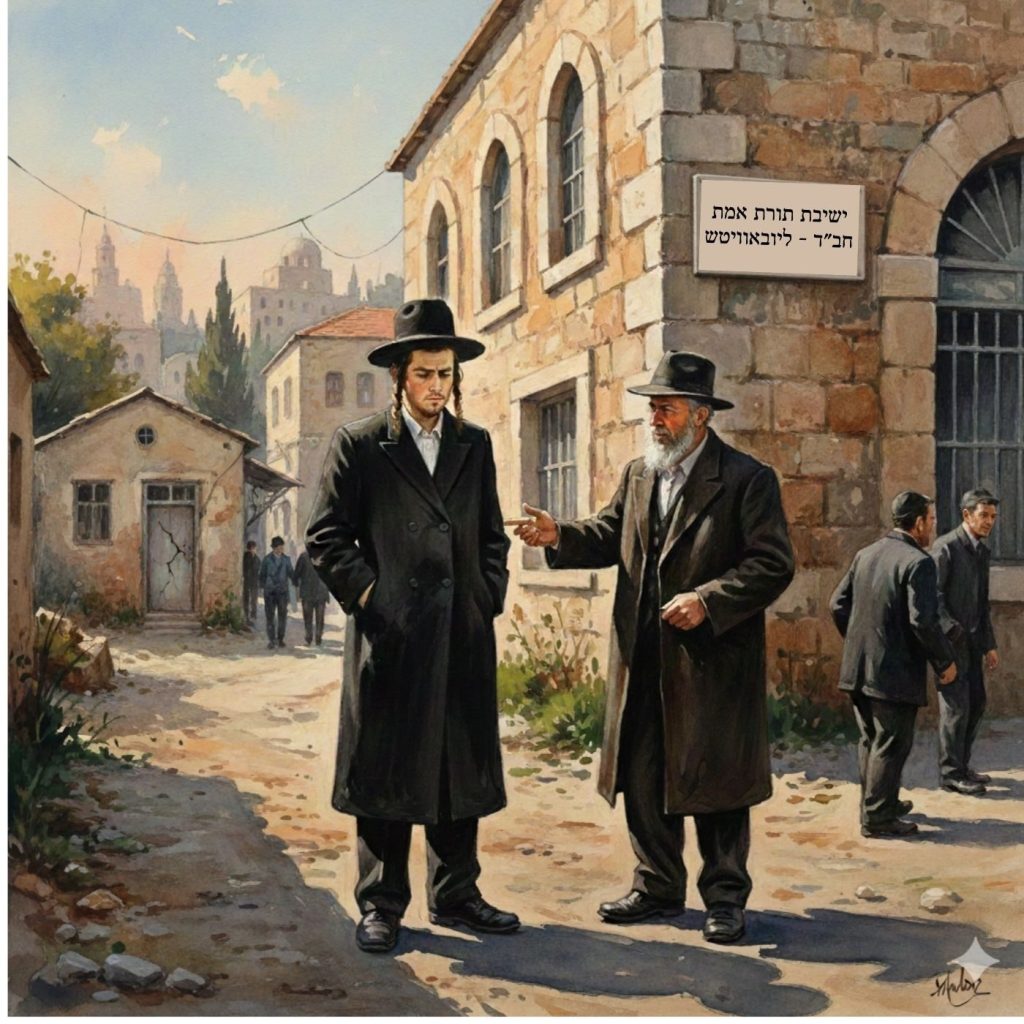
A warm golden sun shone over Yerushalayim, as a bachur walked down busy Yirmiyahu Street. Cars rushed past, people hurried by, and the whole city seemed alive.
To his right stood a large stone building – Yeshivas Toras Emes Chabad-Lubavitch. If he kept walking for six more minutes and turned onto Tzfania Street, he would reach a simple, dusty old house. Inside lived a holy tzaddik, the Lelover Rebbe, Rabbi Moshe Mordechai Biderman.
Here… or there?
The young man – Yankev Yitzchok, as his zeide called him – had been learning in New York, near the Lubavitcher Rebbe. He’d come to Eretz Yisrael to visit his father, Reb Duvid, and his grandfather, the Lelover Rebbe. But in New York, he had his yeshiva, the Rebbe, the world of 770, a future shidduch, and – one day – he knew he would be a shliach.
As he walked, an older man in a dark coat fell into step beside him. Without even asking, he began telling the young man where he should go.
“The Rebbe of Lelov is your grandfather,” he said sharply. “You belong near him – not in New York. You’re not Chabad. You should stay here, in the holy city of Yerushalayim. Why go to America?”
The man was taller. Older. Confident. Too confident. Maybe he did know better? Yaakov wasn’t in charge. He didn’t feel strong enough to say no. His heart tightened and his stomach twisted.
It was true – the Lelover Rebbe was his grandfather. A holy man. A glowing tzaddik.
But wasn’t the Lubavitcher Rebbe like a father to him, too? The Rebbe of all Yidden? His neshama pulled him back toward 770, to the Rebbe, and the mission waiting for him.
Yaakov pictured his Zeide. The Lelover Rebbe’s eyes were bright and full of love. When you looked at him, you saw a tzaddik. He treated every person as precious as himself. He loved Torah and mitzvos with all his strength. He davened through Shabbos until dark. Many days, he fasted. On Shabbos, he held a warm, glowing tish. People visited every day for advice, blessings, and help. Some asked him to light the fire in their neshamos. Others begged him to show them the truth.
Wouldn’t Yaakov Yitzchok do well here? Wasn’t this the place for him?
But how could he explain to the man – this strong, insistent Lelover Chassid – that the Lubavitcher Rebbe taught Torah in a way he’d never heard before? That his mashpia in yeshiva opened windows into connecting to Hashem that he never knew existed? That maybe, one day, he would go out into the world and bring lost Jewish souls home?
How could Yaakov explain all that… when he could barely say a word?
Just then, Reb Noach Goldberg, one of the Lelover Rebbe’s helpers, came running down Yirmiyahu Street, his peyos flying. As his feet slapped the ground, he waved his hands to get their attention.
When he caught up to them, he told the tall man, “The Rebbe is calling – the Rebbe is calling you.”
All three held on to their hats, jogged down Yirmiyahu, and turned onto Tzfania Street. They opened the worn-out wooden door to the Lelover shul. The door to the Rebbe’s private room was locked. So they waited at the top of those rickety stairs, watching paint peel off the walls. Yaakov’s heart was pounding; he tried to catch his breath.
What did his Zeide want to say to the tall man?
All of a sudden, the Rebbe’s door burst open. The Lelover Rebbe, Reb Moshe Mordechai, put his thin arms on the man’s shoulders and shook him. “Ich beit ir; ich beit ir. Luz im up, luz im up.”
That means, “I beg of you, I beg of you. Leave him alone. Leave him alone.”
The older Chassid opened his eyes wide, and his mouth hung open. Then, he closed his eyes and looked down at the floor. He mumbled a sorry and walked away.
Yaakov let out such a huge sigh of relief.
“He saved me,” thought Yaakov. “I felt so pressured to change my mind. He definitely made me uncomfortable.”
His Zeide, the Lelover Rebbe, trusted that he’d made the right choice.
Yaakov returned to New York, to the Rebbe and 770, and dove back into his learning.
* * *
Soon after, Yaakov earned smicha, and, suddenly, he was Rabbi Yaakov Biderman. He was only nineteen, but his Zeide, the Lelover Rebbe, told him, “You should begin looking into shidduchim. But first, ask the Lubavitcher Rebbe if the time is right. Go write a letter.”
Rabbi Yaakov listened right away. The Lelover Rebbe was a great tzaddik, a holy man who saw things others could not see. Yet even he told his grandson to ask the Lubavitcher Rebbe.
Yaakov tied on a gartel, found a clean sheet of paper, and sat for a few quiet minutes. Then he wrote out his question in careful handwriting and faxed it to New York, asking for the Rebbe’s guidance. After sending it, he waited.
That Shabbos, the Lelover Rebbe and some Chassidim traveled to Teveria, as they often did. On the high hills overlooking the sparkling Kinneret, they rented a little home. From the window, they could see the water, and beyond it, the mountains of Meron – resting place of Rabbi Shimon Bar Yochai. The air in Teveria felt pure and light, as if every breath brought them closer to Hashem.
As everyone settled into the small home and placed their bags on the floor, the Lelover Rebbe turned to his grandson.
“Did you get an answer from the Lubavitcher Rebbe yet?”
“No, Zeide,” Yaakov said.
Shabbos was almost here. The Chassidim gathered for Mincha. The Lelover Rebbe stepped out of his room to join the minyan, but before he took his place, he walked straight up to Yaakov.
He looked at him with calm, glowing eyes and said, “Now you have an answer from the Lubavitcher Rebbe.”
Now? Yaakov’s heart jumped.
He slipped out to the small porch, picked up a phone, dialed the number on his long-distance calling card, and asked for Rabbi Binyomin Klein, one of the Rebbe’s secretaries.
“Any word about my question?” Yaakov asked, almost whispering.
Rabbi Klein paused for only a moment. “Actually, yes. You have an answer from the Rebbe. It just came out now.”
Yaakov stood up straight. His heart felt like it skipped a beat.
“The Rebbe said you should begin looking into shidduchim,” Rabbi Klein said. “And that you should be successful in building a Jewish home.”
Yaakov closed his eyes for a moment, letting the words sink in. Then he hurried back to his grandfather. His eyes were shining.
The Lelover Rebbe smiled gently, as if he had known it all along. There, on the hills of Teveria – thousands of miles from New York, long before the answer was announced or shared – the Lelover Rebbe already knew. He felt the moment the Lubavitcher Rebbe had given his grandson direction. Two tzaddikim, connected across oceans, guiding one young man’s neshama down the path meant just for him.
* * *
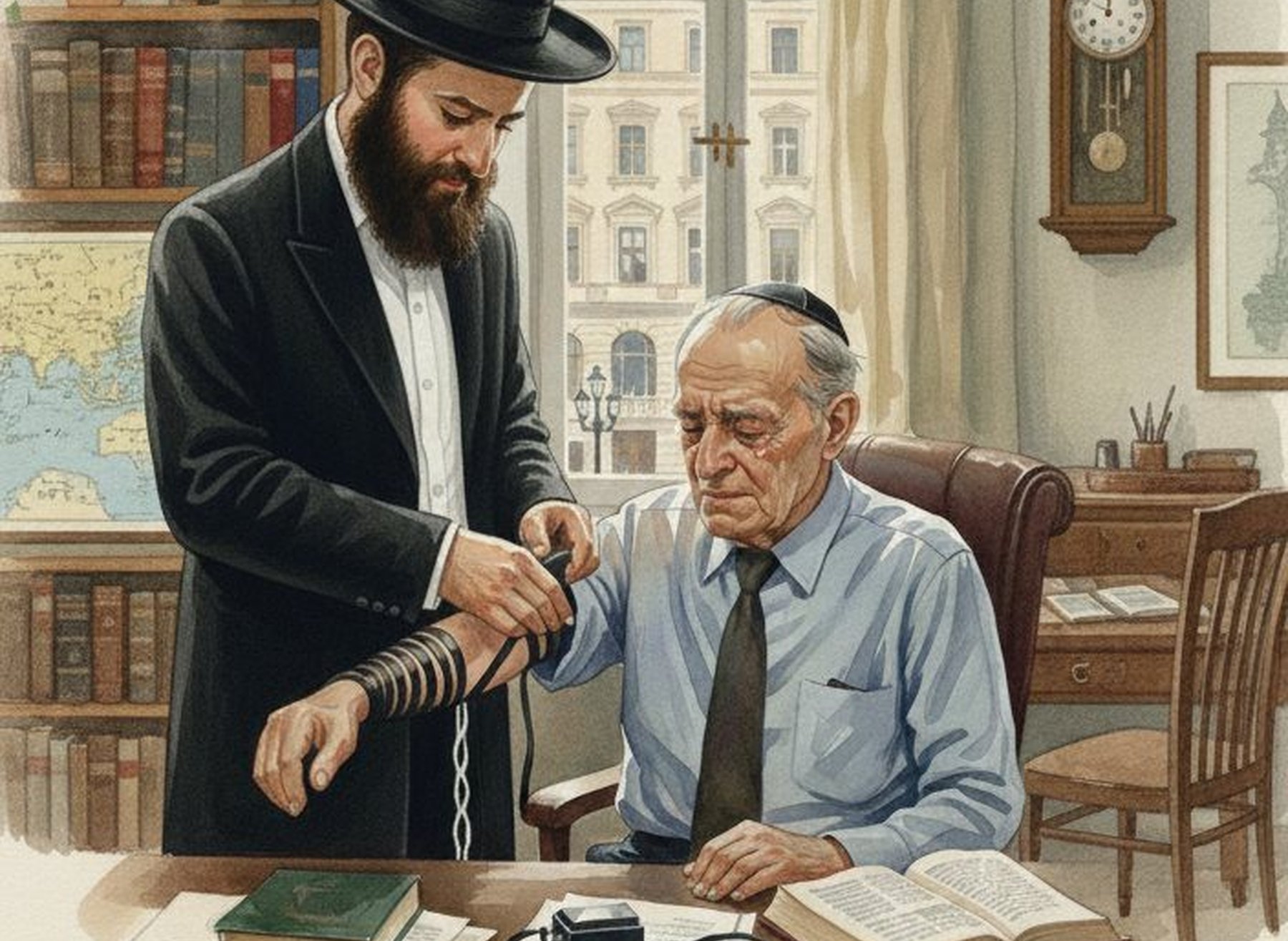
Back in New York, in the year Tav Shin Mem, Yaakov was introduced to a young woman with a warm smile and beautiful middos – Edla, who had come from France. They got married, found a small apartment, bought simple furniture, and began their life together. Rabbi Yaakov learned in the Rebbe’s kollel, and Edla taught in the girls’ school in Crown Heights.
Both of them dreamed of shlichus. But where? How would they find their place in the world?
Rabbi Yaakov thought, Maybe I should become the rav of a city. A rav reaches every kind of Yid. Maybe that’s where I can help the most.
A traveling shliach, Rabbi Glick, called Rabbi Biderman and told him about a city that needed a rav. Rabbi Yaakov and Edla wrote a letter to the Rebbe, asking if they should pursue it.
No answer came.
Later, they heard that the Jewish community of Düsseldorf, Germany, needed a chief rabbi. Again, Rabbi Yaakov and Edla wrote to the Rebbe and waited. They waited for weeks. Still nothing.
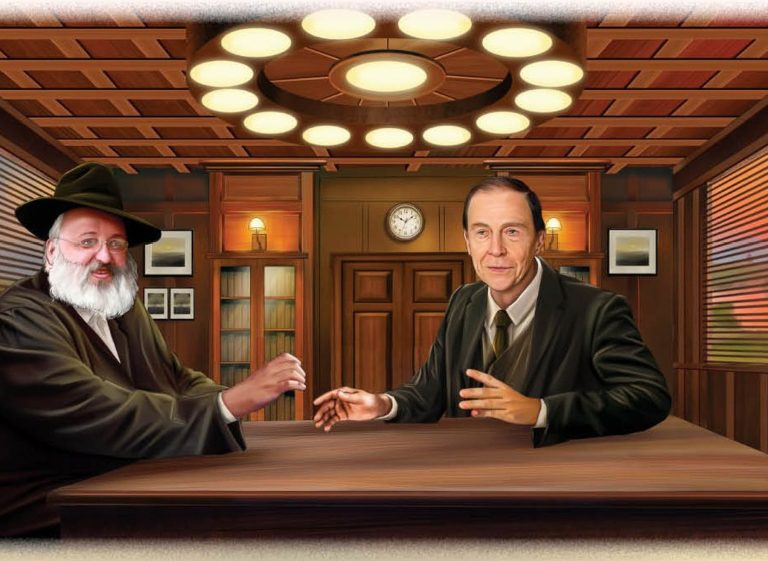
One morning, in kollel, as Rabbi Yaakov was learning, he suddenly felt a tap on his shoulder. He turned to see Rabbi Gershon Mendel Garelik, the Rebbe’s head shliach to Milan, Italy.
“Are you going on shlichus to Vienna, Austria?” Rabbi Garelik asked.
“No…?” Rabbi Yaakov said slowly, confused. Vienna? What’s he talking about? I’ve never heard about this.
Rabbi Garelik looked surprised. “Really? I heard you are. I suggested to Rabbi Chodakov that the Rebbe should send a shliach to Vienna, and he told me Vienna was taken. He said, Biderman is going there. You should go to Rabbi Chodakov and tell him you’re not.”
Yaakov blinked. The words didn’t make sense. Vienna… me…? Where did this even come from?
His heart beat quicker. He needed to straighten this out. He asked Rabbi Binyomin Klein when he could come to the office, and was told to come in after Mincha.
When he stood before Rabbi Chodakov, he spoke quickly. “This must be a mistake – we don’t know anything about Vienna. I don’t know where this idea came from.”
Rabbi Chodakov looked calm. In Yiddish, he said, “It’s not a horaa; it’s a hatzaa.” It’s not an instruction; it’s a proposal.
“Really?” Rabbi Yaakov asked. “Who made this proposal?”
Rabbi Chodakov only replied, “Don’t ask too many questions.”
Yaakov understood exactly what that meant. When something like this came up without explanation, it almost always pointed in one direction – the Rebbe. But the Rebbe didn’t want it known publicly yet. Sometimes, directions come through sideways, hidden behind other people’s words.
Still, Rabbi Yaakov was confused. His mind was on the other letter. “But we’re still waiting for an answer from the Rebbe about Düsseldorf, in Germany,” he said.
Rabbi Chodakov raised an eyebrow. “And did you get an answer?”
Yaakov thought for a moment. No… I didn’t.
“So listen to me,” said Rabbi Chodakov. “Write to the Rebbe that I gave you the proposal to go to Vienna.”
Rabbi Yaakov ran home to tell Edla the surprising news. Together, they wrote a letter.
Ten minutes later – just ten minutes – they received the Rebbe’s bracha to go to Vienna as his shluchim.
Two weeks later, their suitcases were packed and they were on a plane, heading toward their new life.
The Rebbe was sending them to Vienna, Austria – a sad, broken city that needed warmth, light, and new hope.
And the Bidermans were ready to bring it.
To be continued
Beis Moshiach #1490 • pp. 56-59
© 2026 Beis Moshiach Magazine. All rights reserved.
This article originally appeared in Beis Moshiach #1490. You are welcome to share it with friends and family by email or in print, provided that you do not change, add to or omit any part of it, you credit the author and Beis Moshiach, and you include a link to archive.bmoshiach.org (written out in full in printed copies).
To republish this article in a newspaper, magazine, book or website, please request permission in advance at [email protected].