Why They Called Him “Tashkenter”
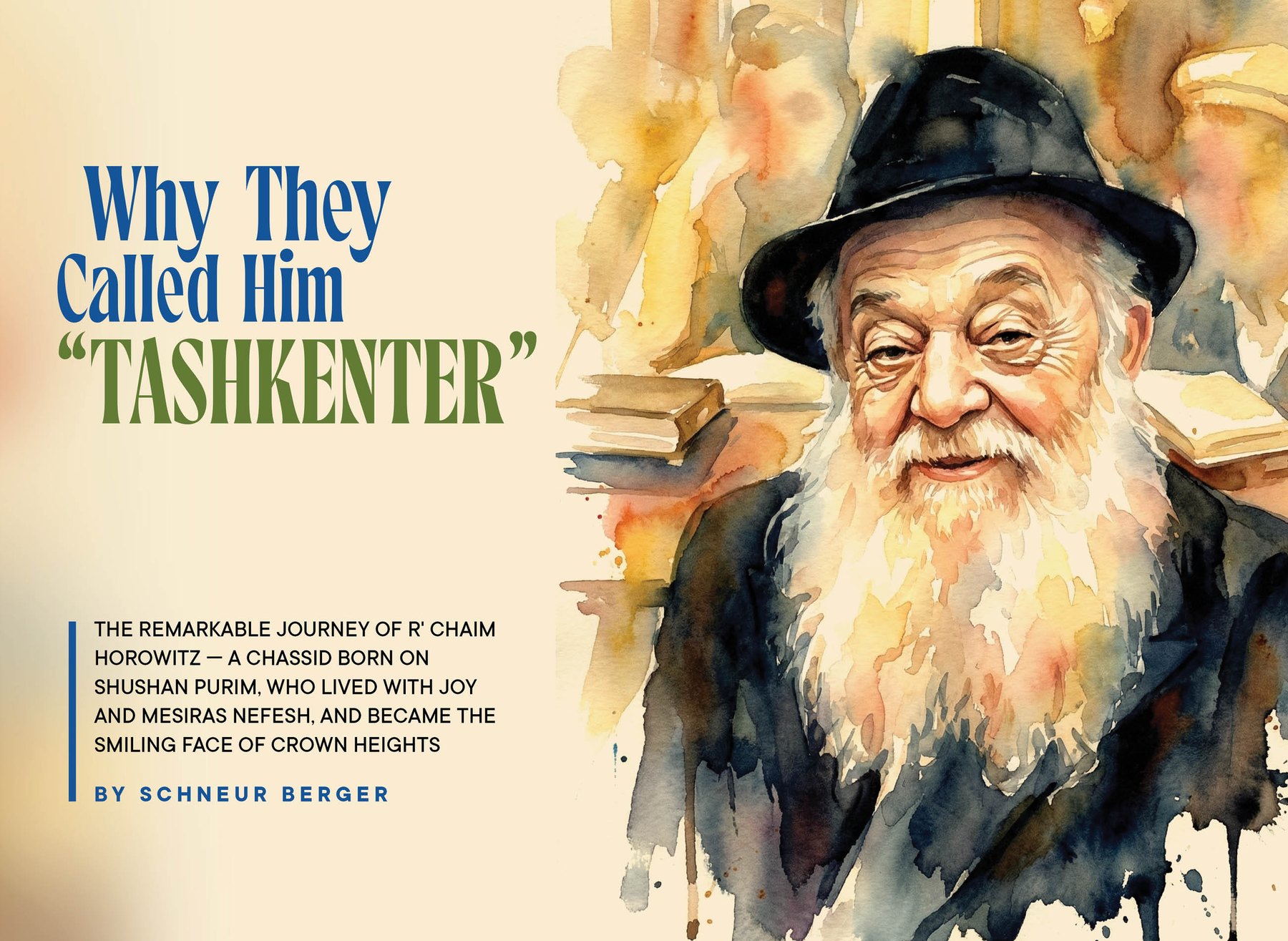
The remarkable journey of R’ Chaim Horowitz – a Chassid born on Shushan Purim, who lived with joy and mesiras nefesh, and became the smiling face of Crown Heights
“Tashkenter” – if you ask a Chabad Chassid or bachur: what does this name mean to you, the younger ones will naturally respond about the shul located in the basement of 770 known by this name. Some will remember how the drinking fountains at the entrance to 770 were dedicated to the memory of the “Tashkenter” – none other than Reb Chaim Horowitz a’h, known by this name, and some will also mention the “Tashkenter mikva” located on Empire Boulevard.
However, older Chassidim will recall the Chassid, R’ Chaim Horowitz, known to all as “Reb Chaim Tashkenter” – a Chassid with vibrant Chassidic feeling, passionate and truly mekushar, and a man who even in his advanced old age lived with youthful vigor. Even after passing the age of ninety, he was still a symbol and example of what a Chassid looks like…
Many will wonder: “Tashkenter” – why this name?
If you say it’s because he lived in the city of Tashkent – but many Chassidim lived in Tashkent, some during the terrible war years, and some afterward. So why did R’ Chaim Horowitz merit the nickname after the large city, the capital of Uzbekistan?
The answer lies in the historical fact that aside from two or three Chassidim who were shluchim of our Rebbeim to the cities of Uzbekistan – there were no Chassidim who went to live in Uzbekistan. And what would they have to look for there? Tashkent was thousands of kilometers away from the centers of Chassidim in Russia and Ukraine.
However, because of parnassa, R’ Chaim Horowitz arrived in Tashkent even before the outbreak of World War II and settled there. And so, when many Chassidim arrived as refugees in Tashkent, he was among those who welcomed and hosted them. Because of this, he was crowned with an unofficial title – ‘Head and First of Chabad Chassidim in Tashkent’, and therefore was known to all as “Reb Chaim Tashkenter”.
He stayed in Tashkent for less than a year, but many remembered him from there, and therefore the nickname “Tashkenter” stuck to him. He himself said in later years: “Tashkent was an important period in my life. I merited to save many souls”…
Memories From a Chassid Who Davens Like a Chassid…
Perhaps the constant joy in which he lived all his life stemmed from his birth date – Shushan Purim 5662 (1902).
On that day he was born to his father Reb Moshe Avrohom Horowitz and his mother Mrs. Masha Leiba (née Levin). His father was of distinguished lineage, generation after generation back to the Shelah HaKadosh. They were also descendants of Rabbi Aharon of Strashelye.
In an interview R’ Chaim Horowitz gave to Y. Shenhav, he told how his father took him to see the davening of the famous Chassid Reb Itche Masmid:
“Once my father took me to a small town to show me a Chassid who davens ‘as Zeide RebAryeh Leib used to daven’ – it was the famous Chassid Reb Itche Masmid who was known for his extraordinary avodas ha’tefilla that lasted many hours, with great enthusiasm. On the day my father took me to see him, he led the davening because of a yahrtzeit.
“Reb Itche knew that in small towns there are no businessmen rushing to work in the morning, so it’s easier there to daven at length with a minyan. Before Reb Itche went over to daven, the congregants warned him that his davening should not last more than two hours because of the burden on the tzibbur. In practice, in the first hour of tefilla, Reb Itche managed to get from ‘Mah Tovu’ to ‘Hodu’. How long did the entire davening last? – you can figure it out for yourself”…
After his parents married, they settled in the city of Surazh, where his father-in-law Reb Baruch Zalman HaLevi Levin lived, who was a teacher in the local cheder.
Since Surazh is located in the northern Vitebsk region of Belarus, it was relatively close to Lubavitch, and therefore was considered a Chassidic town.
His father was mekushar with all his heart and soul to the Rebbe Rashab. During one of his visits to Lubavitch, when entering for ‘yechidus’, the father asked the Rebbe Rashab to give him a learning schedule. The Rebbe replied that the main learning for businessmen would be Gemara twice a week (on Shabbos and one additional day), and also to learn ‘Torah Ohr’ and ‘Likutei Torah’, while the Sefer HaTanya should never leave the table…
Said and done. R’ Moshe Avrohom established among the Chassidishe businessmen in his town the study schedule as outlined for him by the Rebbe Rashab.
One Who Davens With the Heart
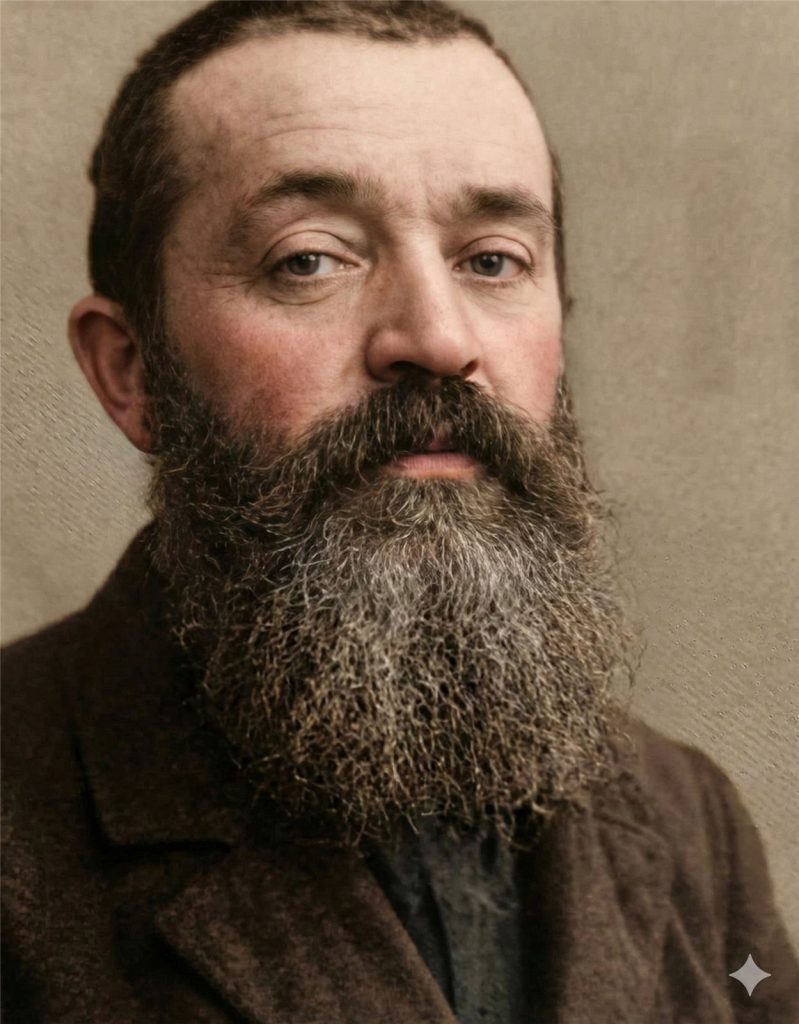
During his childhood, young Chaim studied the perek, ‘Bameh Madlikin’ in the cheder with his grandfather.
In his childhood, Chaim even merited to go with his father to Lubavitch twice – in the years 5674 and 5675 (1914-1915). Unfortunately, during these visits, the Rebbe Rashab and his son the Rebbe Rayatz were not in town.
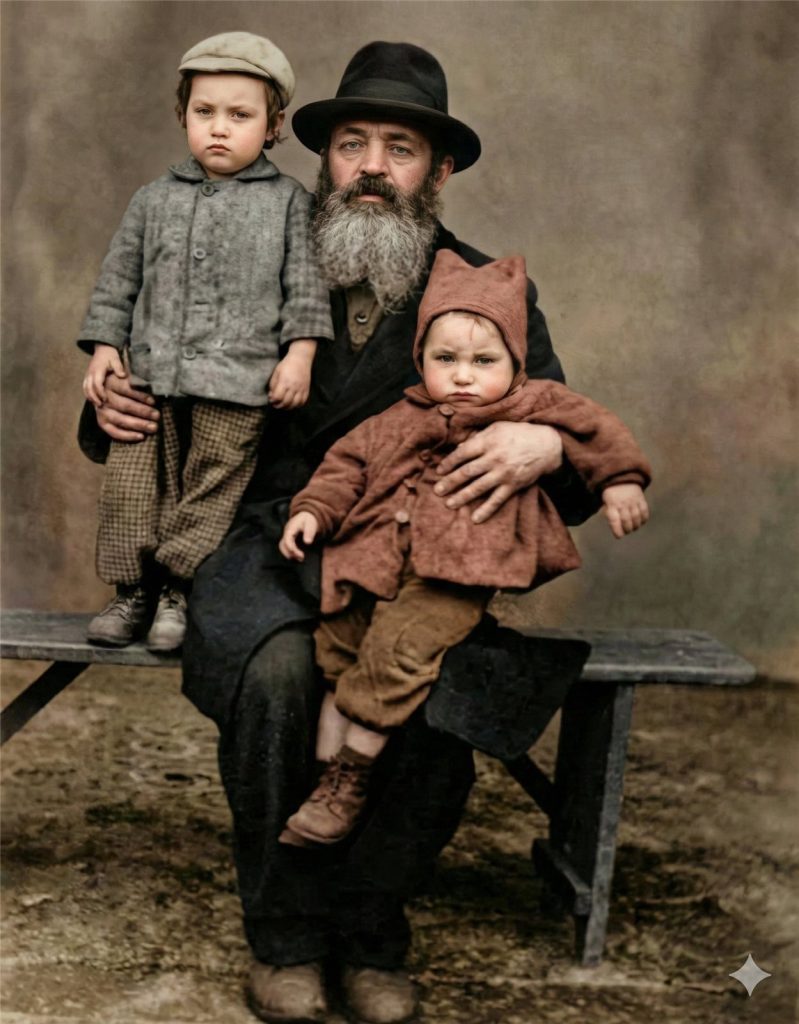
Two of his brothers were sent by their father to study in Tomchei Tmimim. In later years, one of his brothers, Baruch Shneur Zalman, left the derech of Lubavitch. For a certain period, R’ Chaim worked with him for his livelihood and was almost drawn after him, but one day R’ Chaim happened to be in Moscow where he saw the tmimim davening at length with inner feeling. At that moment he made a firm decision in his soul that he would not abandon the Lubavitch path as his brother had done.
The Chassid, R’ Nachum Wolosow related: “In the year 5690 (1930), R’ Chaim lived in Moscow, and the handful of Chassidim who lived there in those days used to daven in a Chabad shul. Some used to say: ‘We have one who davens with the mind – Rabbi Peretz Mochkin, and one who davens with the heart – R’ Chaim.’”
Over the years, R’ Chaim corresponded with the Rebbe Rayatz. He would send his letters (written in secret code) to another address, and the Rebbe’s responses were also written in a similar manner. The Rebbe’s secretary, Rabbi Yechezkel Feigin, once wrote to him: “How are the brothers?” meaning the Chassidim. And signed: “In the name of the father,” meaning the Rebbe Rayatz.
Open Rebuke for a ‘Moser’
Over the years he studied agronomy and earned a respectable living, but he did not agree to work on Shabbos. Therefore, he was frequently fired from his job. Each time he had to find new work elsewhere.
In addition to his work, R’ Chaim studied in those years at the Tiferes Bachurim yeshiva. This was a special program established by Rabbi Yaakov Landau, where bachurim or yungeleit who worked or studied a profession learned, while dedicating time to Torah study.
When he reached marriageable age he married, but sadly with the birth of their first daughter, his wife passed away in her youth, after weakening from hunger.
In the following years he lived in the city of Kuibyshev (today: Samara). During the period when a branch of Tomchei Tmimim operated in the city, R’ Chaim took upon himself to care for the physical needs of the yeshiva.
These were difficult years when the Yevsektsiya pursued the tmimim in a bitter war.
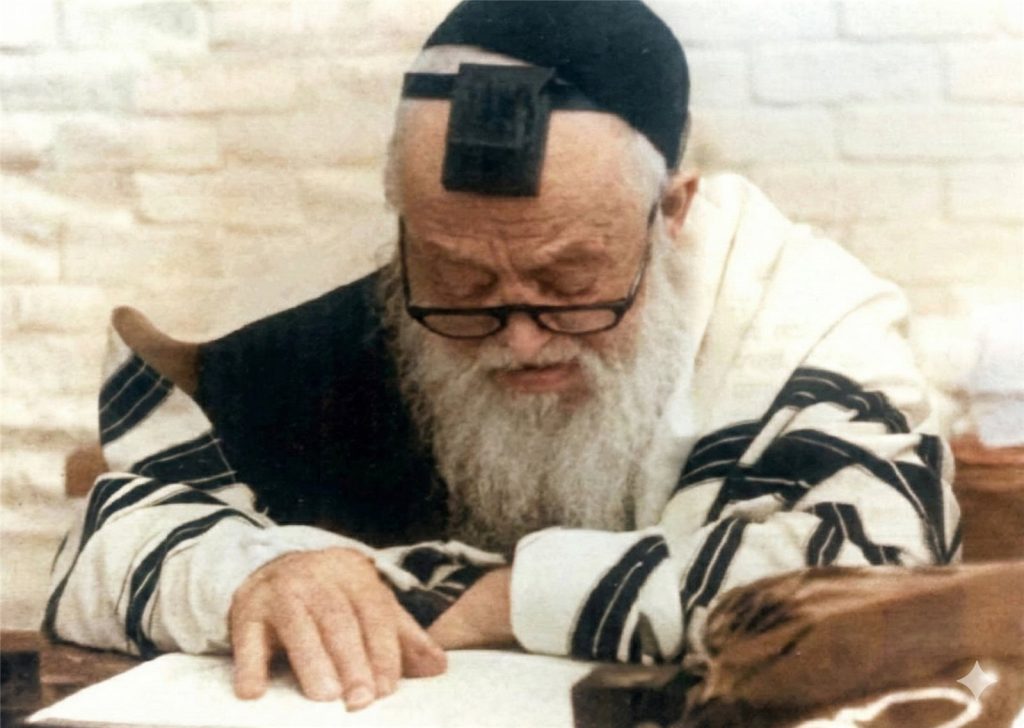
One day R’ Chaim heard that news of the yeshiva’s existence had reached the ears of the Yevsektsiya due to the informing of a Jewish moser (informer). He understood that every additional moment could be dangerous for them. At midnight he left his home and hurried to the house of his friend Mr. Posner who lived nearby, to ask him to give shelter to the yeshiva students. When he arrived at his friend’s house, he understood that he could not enter the house in the regular way, as there was a guard there whose job was to record and document every guest who arrived. Therefore, he chose to climb over the fence that surrounded the building.
To his joy, his friend Mr. Posner agreed to shelter the bachurim with him for the night, and the very next day they fled from the city.
At a Yud-Beis Tammuz farbrengen that took place afterward, the moser who caused the students to flee also participated. R’ Chaim shot him a stern look and asked him openly: Why does it bother you that the children should learn a little Torah? The very next day, R’ Chaim was called for interrogation about his connection with the study group. R’ Chaim denied any connection and presented to them his work card as a laborer…
The interrogators were surprised to see an official work card – something that in those days constituted a sort of ‘kashrus certificate’ for a citizen, and ordered him to go. Their intention was that he should leave the room and wait in the adjacent room until they finished consulting among themselves about him, but R’ Chaim pretended not to understand and walked toward the exit gate. When the guard stopped him and asked where he was going, he answered simply: ‘They told me to go’. The guard believed him, and he ran for his life…
A Wide Open House
He heard rumors that in distant Tashkent it was easier to observe Torah and mitzvos and that the persecutions were less severe – so R’ Chaim decided to go there.
In the city there was a large community of Bukharan Jews, and only a few Ashkenazim, most of whom came to the city due to circumstances related to parnassa. He found work and integrated into the local community.
During that period he merited a special meeting with Rabbi Levi Yitzchok, the Rebbe’s father, as will be told below.
The Jewish community prospered during the years of World War II, when thousands of Jews fled from the central cities of Russia and arrived in distant Uzbekistan; most settled in the cities of Tashkent and Samarkand. In those days R’ Chaim truly ‘flourished’ – the Chassidic community came to him… Being a veteran in the city, he became one of the chief hosts of the refugee Chassidim who arrived en masse.
In those years he married Mrs. Chava (née Zaslovsky). All of Anash in the city came to their wedding, with Rabbi Avrohom Eliyahu Plotkin as the mesader kiddushin. After their wedding, the couple moved to live in Samarkand.
R’ Chaim and his wife devoted themselves to helping all the refugees. He himself stood daily at the train station and gathered destitute Jewish refugees to his home – which was the first stop of every Jewish refugee.
Many of the refugees arrived without identifying documents, which put them in danger. R’ Chaim and his wife also took the trouble to forge documents for them, with his wife showing expertise in this.
On the instruction of the Rebbe Rayatz, R’ Chaim bought a large two-story house to serve as a Beis Medrash and underground mikva for Chabad Chassidim. Every house in the area had a water pit in the cellar – and R’ Chaim expanded it to build a mikva.
On the ground floor they learned and davened, and when there was a warning about the presence of ‘unwanted guests’, they all went down to the cellar and placed a closet at the entrance to hide the entrance.
Once, KGB agents came to search for young men to draft them for the war. When asked why he needed such a large house – R’ Chaim claimed it was a “hotel”…
When they reached the mikva and asked what it was, he answered that it was a drinking water reservoir. They looked at the murky water and didn’t believe it.
“Drinking water?” they wondered. “If it’s drinking water – drink”…
R’ Chaim filled a cup and drank without hesitation, declaring “This is excellent!”…
They didn’t know what to say or how to respond – and went on their way…
In this city too, his home was wide open to the bachurim who learned there. Some slept in his home and he lovingly and generously provided for all their needs.
During a certain period, when there were no sleeping places – R’ Chaim brought many bachurim into his home who made his home their home. They tell that once he came home and encountered a bachur who stared at him: “Who are you? What are you doing here?” His friends rebuked him: “This is the baal ha’bayis.” R’ Chaim smiled and hurried to reassure the embarrassed bachur: “I’m glad you’re guarding my house from thieves…”
His wife Chava, who was a doctor at the hospital in Samarkand, treated guests who needed it as well as Jews who came to the hospital. Thus she merited to save many Jews with devotion and mesirus nefesh. In those years at the end of the war – there were many Jews who experienced much suffering and needed a helping hand during their rehabilitation and recovery process.
A New World
After the war, like many Chassidim, he managed to smuggle across the border together with his family. After prolonged wanderings, he arrived at the Pocking displaced persons camp in Germany, from where he continued after a short time to France.
Already in the first period of his stay in France, he received a letter from the Rebbe Rayatz with instructions to study shechita, so he could join the group of Chassidim preparing to travel to Ireland, where they engaged in shechita. In the following period, he indeed devoted himself to studying shechita.
While in France, he worked extensively in outreach to Jews, especially those who came from Morocco and Tunisia. When needed, he circumcised their sons and slaughtered chickens for them. His wife also engaged in outreach to women who came to France from North African countries.
As in Tashkent and Samarkand – so too in Paris; his home was an open house for guests. When his sons went to learn at the Tomchei Tmimim yeshiva in Brunoy, steady guests would use their their beds. More than once, when they returned from yeshiva, they discovered that their places had been taken by the guests…
Reb Chaim Tells the Rebbe About a Rare Meeting
Since arriving in France, R’ Chaim yearned to go to the Rebbe, but could not obtain a visa. Every time one of the Chassidim came from the Rebbe to France – R’ Chaim and his friends would sit with him and extract every detail of what was happening at ‘Beis Chayeinu’ [770]. Only in 5718 did he manage to get a visa and he traveled to the Rebbe for the first time in his life. From then on he was particular about traveling to the Rebbe every year, for twenty years.
The challenges that stood in his way to obtain a plane ticket did not deter him. Years later he said that because he didn’t merit to see our Rebbeim, the Rebbe Rashab and the Rayatz – despite living not far from them in his childhood – this pushed him to do everything to see the Rebbe regularly. He himself testified that the trip made him extremely happy.
In 5738 he finally moved to Crown Heights, close to the Rebbe. His family members say that after he moved to Crown Heights he cried about the privilege of living close to the Rebbe… and in general, when he wrote a ‘pan’ (note to the Rebbe) – he cried.
When he went to the Rebbe for the first time before Tishrei 5718, he merited to enter for yechidus. Before that, he spoke with his friend R’ Zalman Duchman, who encouraged him to tell the Rebbe about the connections and help he extended to the Rebbe’s father, Rabbi Levi Yitzchok, during his exile period in Chi’ili.
“As soon as I entered the Rebbe’s room, the Rebbe asked me: ‘Are you Chaim Tashkenter?’ I answered affirmatively” – R’ Chaim described with emotion. “Afterward I told the Rebbe about my meeting with his father zt’l. It was when he was serving his exile in Chi’ili.
“Among other things, I told the Rebbe that in the year 5700 (1940) I was standing at the train station when suddenly a Jew approached me whose face looked like an angel of the L-rd of Hosts and his beauty like a prince, and said to me: ‘You are apparently a Lubavitcher’… When I answered affirmatively, he asked me: ‘Do you know who I am?’ I answered that I didn’t know, and he said to me: ‘I am the mechutan [father-in-law] of the Rebbe’… [the Rebbe Rayatz].
“When I expressed to the Rebbe that his father looked like ‘a prince’ – the Rebbe responded: ‘Why not like a king?’…
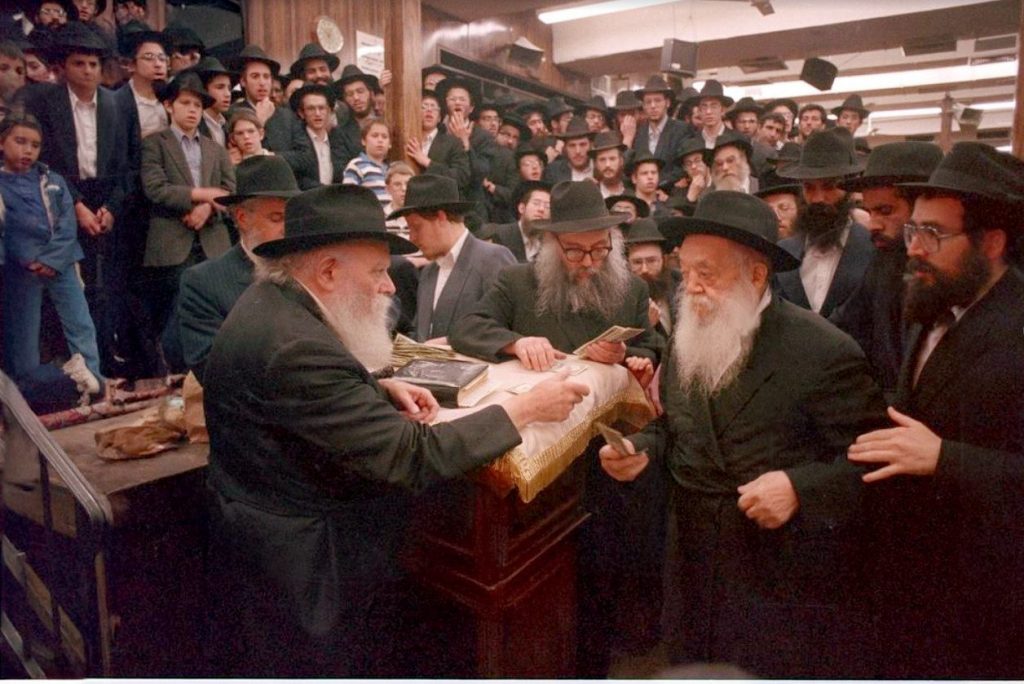
“Here the Rebbe asked to hear from me every detail about that meeting. I told how his father began to pour out his heart, mainly about the great difficulty in observing mitzvos b’hiddur: ‘There is nothing available here – no tzitzis, no tefillin, no Sefer Torah’. Rabbi Levi Yitzchok spoke with me for about a quarter hour and told me among other things that every action he takes involves ‘greene verms’ [enormous difficulties]; obtaining flour for matzos, obtaining tzitzis and tallisos, everything comes with many difficulties, and the secret police spy on my every step. Even now as we stand and speak, some of them are standing and monitoring our conversation.
“When I told the Rebbe the words his father said to me, that everything comes with ‘greene verms,’ the Rebbe was moved to tears.
“I told the Rebbe that after Rabbi Levi Yitzchok spoke with me about the situation in general, he asked me that when I return to Anash [in Tashkent, where he lived in those days], I should tell them that he is in Chi’ili and ask them to try to help him and send him tashmishei kedusha, etc.
“Afterward it became clear to me that Rabbi Levi Yitzchok came to the train station in the first place with the intention of meeting someone from Anash and telling him about his situation in Chi’ili, so that the news would reach Anash and they would surely send him assistance.
“At the end of the yechidus, the Rebbe gave me abundant blessings. Among other things, he blessed me that I should merit long life – a blessing that was fulfilled in glory – I only regret that I didn’t ask the Rebbe that these years be healthy and strong years”…
Faithful Fundraiser and ‘Chassidic Thief’
For many years – starting from the 5720s – R’ Chaim served as a fundraiser for Tomchei Tmimim in Brunoy in the suburbs of Paris, and for Beis Rivkah in ‘the Forest’, also near Paris. He worked hard to raise significant funds and sometimes even flew long distances.
During his flights he was careful to pass among the passengers to check who was Jewish, and would persuade them to put on tefillin.
[When the Rebbe announced the ‘mivtzaim’, R’ Chaim saw himself as a soldier and did everything to be part of the ‘mivtzaim’. Every week he would spend hours on the tefillin campaign].
The money he collected he would distribute thus: a third of the amount he would send immediately to the Rebbe, and the rest he would give to the institutions. Only a certain sum would he keep for himself for his family’s livelihood. When he raised an especially large amount, he would send it all to the Rebbe. There were times when the Rebbe returned part of the amount.
On one of his trips, a large sum that he had managed to raise from donors was stolen from him. R’ Chaim in his Chassidic integrity – took the blame upon himself and made sure to return the entire amount from his private funds…
The following incident occurred in the “lameds” when R’ Chaim arrived in the city of Lucerne, Switzerland to raise donations for Chabad institutions in France.
In the past he had promised the Rebbe that he would study ‘the Chassidishe parsha’ – the maamarim of the Alter Rebbe on the weekly sedra in Torah Ohr or Likutei Torah, every week. Therefore, he tried to find the sefer ‘Torah Ohr’ in the local yeshiva, but unfortunately it turned out that the sefer was not in their possession. R’ Chaim didn’t give up and began to inquire with everyone he met where it was possible to obtain the sefer. Unfortunately, it turned out that in the entire city the book ‘Torah Ohr’ was not available.
He remembered that the Chassid Rabbi Akiva Shmerling lived in Zurich and surely he had this sefer. He therefore decided to travel to Zurich, an hour’s drive away.
The hour was late at night, and the last train to Zurich had already departed. He therefore decided to find a ride, but heavy snow was falling at those hours. Much time passed until he found a truck driver who agreed to take him to Zurich…
After a long trip, he got off the truck in Zurich, and through thick snow, in harsh weather, he trudged until he reached the Shmerling family’s home. The hour was already late at night, and R’ Chaim didn’t want to disturb the family’s sleep. R’ Chaim looked and saw that the family’s home was on the ground floor. He didn’t hesitate and climbed on a balcony, hoping to find a door or window that had been left open…
The noise from his entry to the balcony woke the lady of the house, who immediately woke her husband. “It seems a thief is breaking into the apartment,” she whispered to him trembling. Rabbi Shmerling got up from his bed and entered the living room, where he noticed a figure with a Chassidishe hat and beard standing on the balcony trying the door… He realized it was a Jew. When he turned on the light, he discovered to his astonishment that it was none other than R’ Chaim Tashkenter… He immediately rushed to open the door for him, and R’ Chaim, completely wet, with snow on his clothes, entered the house.
The astonished shliach tried to understand from R’ Chaim where he had come from and why he tried to enter through the balcony. But R’ Chaim, who yearned so much to study ‘Torah Ohr’, approached the bookcase without a word, took ‘Torah Ohr’ and began to learn… Only after about a quarter hour did he turn to the host and explain what had happened, and asked for a cup of hot tea…
He served in his position as fundraiser until 5749 (1989).
‘He Paid Me to Break the Ice for Him…’
Every single day he labored over his learning. Even when he reached an advanced age, he continued his custom to study every day, despite the fact that learning entailed great efforts.
He had special hiddurim. Despite all the problems he went through in Russia, he always was careful to grow a beard, and kept it even in the most difficult days. He never touched his beard. He had a special stringency to immerse in the mikva every day, even when this entailed great efforts. After the Chassidim left Russia, he arrived at the refugee camps in France. The Chassidim at that time did not yet have an organized livelihood, and they lived on a monthly allowance from the Joint. Despite this, due to the importance of the matter, he organized a fundraiser among Anash for building a mikva, and everyone donated according to their ability. R’ Chaim donated to the building of the mikva the entire sum of the allowance he received for a month’s time.
His son R’ Yosef Yitzchok tells: “I remember that when I was a small child, four or five years old, something broke in the mikva and it was not possible to immerse in it. On that day my father surprised me and asked me to come with him on a trip. For me this was a complete surprise as I had never seen my father go on trips. He wasn’t the type for trips… Understandably, when he suggested I come with him, I jumped at the offer.
“I went with my father to the train station where we boarded the train that took us to one of the large parks of Paris. Father rented a boat and began rowing on the large lake in the park. When we reached a corner well hidden from the eyes of people, after father checked several times that no one was in the area, he quickly descended to immerse in the lake.
“Suddenly I noticed a guard boat of security people approaching us. Apparently they noticed something suspicious among the bushes and hurried to check what was happening there. In panic I called to my father to return to the boat, but he, at his pace, continued his immersion sequence… They came closer, and I was very stressed for him, but father continued to immerse with complete calm. Finally he got into the boat, but the guards had already understood that he had descended from the boat into the water, something that constitutes a violation of local laws, and they fined him a substantial sum.
“Afterward, I asked my father, trembling all over: why did you have to do that? My father answered me in a firm voice: ‘One must go to the mikva, and for the mikva one must pay. Sometimes you have to pay a little and sometimes you pay a lot’…”
If that wasn’t enough, R’ Chaim also merited to immerse in a frozen mikva, as his son tells:
“After some time the mikva was fixed, but the heating didn’t work. It was during the winter period, and my father went every day to the mikva, even on particularly cold days. One day I met the plumber who said to me: ‘Your father is a strange man for not only does he immerse in the cold water, but in recent days, when the cold intensified and a thick layer of ice formed on the water, he pays me to break the ice for him!’…
“After some time, he moved to the suburbs of Paris, and together with other Chassidim they would go to immerse in the river. Sometimes they were caught by inspectors who imposed high fines on them, but these didn’t deter the Chassidim who had immersed in Russia in the past with mesirus nefesh.”
His family members tell that even in his advanced years, when he was over ninety and lived in a nursing home in Williamsburg, he was particular about immersing in the mikva every day. Since walking was difficult for him, he would take with him the man who helped him during the day, and he – who wasn’t frum – also merited to immerse in the mikva every single day…
A Chassidic Figure at the Center of 770
R’ Chaim Tashkenter was an integral part of the Chassidic landscape of 770. His always smiling face and the Chassidic spark that shone from his eyes always attracted the young Chassidim who sought to hear from him.
Quite often he would sit and farbreng with the tmimim, and despite his advanced age he wouldn’t look at his watch and hurry on his way, but would extend Shabbos like one of the young people, from time to time saying ‘l’chaim’, singing a niggun and telling a story or weaving an idea.
“At 770, Anash and the tmimim crowded around the farbrengen of R’ Chaim Horowitz, known as Reb Chaim Tashkenter, one of the elder Chassidim, with the esteemed Reb Shalom Morozov beside him” – it says in the journal documenting the Yud-Tes Kislev farbrengen of 5752. “Unusually, Reb Chaim (who is in his ninetieth year, may he live long good years) sat and farbrenged at length until 5:00 in the morning, occasionally sipping a Chassidic ‘l’chaim’, and as always with the great chayus unique to him. He spoke about the Ahavas Yisrael of the Rebbe for every single Jew, and about how the Rebbe with his shining face encourages the hearts of the downtrodden.”
One could also see him on motzoei Shushan Purim Katan 5752, when at 770 there was dancing in light of the Rebbe’s encouragement to add in joy in the month of Adar. In the center of the circle of dancers one could see the figure of R’ Chaim, who despite being at an advanced age, his vigor didn’t fade, and his chayus and energy infected everyone with double energy to continue dancing with enthusiasm.
When necessary, he didn’t hesitate to go to the nearby grocery store, buy ‘mashke’ and ‘mezonos’ and organize a farbrengen.
R’ Chaim was a dugma chaya for the young Chassidim, of Chassidic life, of inner wealth and of pikchus.
96 Years of Chassidus
Rabbi Chaim Horowitz passed away on the night of the 26 Teves 5759 (1999), at the age of 96.
He left behind sons and daughters, and many descendants who walk in the ways of Torah and Chassidus.
Sources: History of Chabad in Soviet Russia, The Exodus from Russia, Beis Moshiach, Beit Chayeinu, Kfar Chabad, Agudas Chassidei Chabad Library, and more.
Beis Moshiach #1490B • pp. 24-34
© 2026 Beis Moshiach Magazine. All rights reserved.
This article originally appeared in Beis Moshiach #1490B. You are welcome to share it with friends and family by email or in print, provided that you do not change, add to or omit any part of it, you credit the author and Beis Moshiach, and you include a link to archive.bmoshiach.org (written out in full in printed copies).
To republish this article in a newspaper, magazine, book or website, please request permission in advance at [email protected].