Not Giving Up High Expectations
As we just celebrated Yud Shevat, and we begin another year of the Rebbe’s leadership, I would like to address a question that was asked of me last year after the Yud Shevat Farbrengen. During the farbrengen, which united a few Yeshivos together, the different Mashpiim were demanding of the talmidim very lofty levels of Avodas Hashem and Hiskashrus. After the farbrengen, a yungerman approached me and asked me in all seriousness: Can real Avodas Hashem be demanded of the talmidim of today?
As someone who has been involved in education for over twenty years, and seeing the progression of the young boys of our generation, this is not a new question and has been thought about and grappled with internally and at meetings between the members of the Hanhala and other Yeshivos.
I would like to share with my dear and loyal readers something important: This question, like all important and fundamental questions, is not new. It has been asked before and been answered before by Rabboseinu Nesieinu. Our Avoda is to look for those answers, find them, internalize them, and bring them into action.
This exact question was asked of the Rebbe Rayatz in 5681 (1921), but to appreciate the answer, some important background is necessary. On 2 Nissan 5680, the Rebbe Rashab was nistalek and was interred in Rostov, a city very far from Lubavitch.
At that point in history, the Czar was deposed and assassinated, and the Communists had just overthrown the short-lived democratic Russian government. They went to war with religion and private business. This was devastating to Tomchei Tmimim. The Yeshiva had moved to Rostov and they were being persecuted by the Bolsheviks and there was no money to support the Yeshiva.
“Now, When Alter Is Sweeping The Streets?”
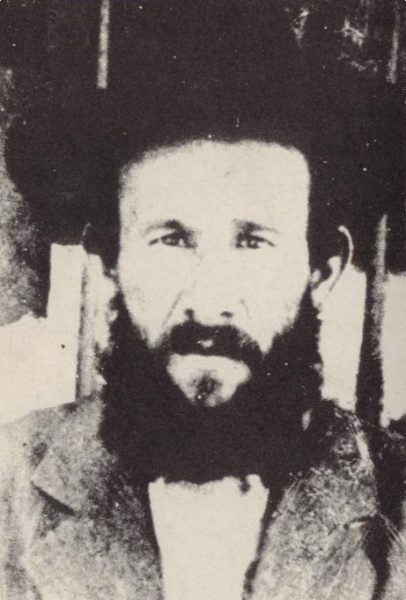
I know it may be hard for you to believe, but the following thing actually happened. The Yeshiva could not afford to pay any staff, so they had to let them go from their positions. The Yeshiva was run “by the bachurim, for the bachurim”. It was so bad that the great and legendary Mashpia Reb Alter Simchovitch was forced to clean the streets of Rostov in order to make a few rubles for his family! To put in bluntly: Tomchei Tmimim Lubavitch was at its lowest point since its founding.
At that time, Shavuos 5681 (1921), the Rebbe Rayatz led a farbrengen in Rostov and the tmimim were there. At that farbrengen, which was the Shabbos aufruf before the wedding of Rashag and the oldest daughter of the Rebbe, he demanded a lofty level of Avoda – similar to the demands that were demanded of the tmimim in Lubavitch.
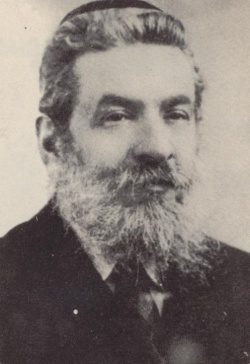
Attending that Farbrengen was Reb Hirshel Gurary A”H. Reb Yechiel Tzvi Hirsh Gurary was born in 5643 (1883) in Kremenchug, where his father Reb Nosson was a well-known Chassid and gvir. Reb Hirshel was one of the early talmidim in Tomchei Tmimim in Lubavitch, where he learned from the mashpia Reb Hendel. A son-in-law of the Radziner Rebbe, Reb Hirshel lived in Kremenchug where he owned a tobacco factory and was a leading gvir and askan.The Rebbe lists Reb Hirshel among those special Chassidim who put on four pairs of tefillin.
Reb Hirshel could not believe what he was hearing. He turned to the Rebbe Rayatz and asked (as recorded in Sefer HaSichos 5681 page 24): “Now?! When Alter [Simchovitch] is being forced to clean the streets, the Rebbe is demanding avoda?”
At the Right Place and the Right Time
The Rebbe responded the following: “Rabi Akiva and his friends were great Jews and acted with the highest level of mesiras nefesh. Seemingly, if they lived in our times – they would have been able to withstand the tests of today. But Hashem did not do that, rather he sent us – with our small minds and hearts – to this world. This shows us that we have the ability (to withstand the tests and live the way we are supposed to) because “as The Holy One, Blessed be He, does not deal tyrannically [b’trunya] with His creations”.
This special answer must be thought about and internalized: Since we believe that Hashem runs the world with hashgacha pratis, and he put us – and our students and children – in the world at this particular stage of time, it is without a doubt that we have the ability to fulfill the mission of the time.
This recognition and understanding needs to be shared constantly with our students and children as it is the most empowering concept for them to live with. They are constantly being told, and many of them feel, that they are truly inferior to previous generations and they do not have the strength and ability to really live up to the expectations of our Rebbeim. When they know that we really believe in them, and that because of that faith, we will not lower the standards of what we expect of them, they will (eventually) rise to occasion and lead us out of this galus!
Please feel free to share your thoughts on the above with me by sending me a personal email: [email protected]
Beis Moshiach #1492B • pp. 10-11
© 2026 Beis Moshiach Magazine. All rights reserved.
This article originally appeared in Beis Moshiach #1492B. You are welcome to share it with friends and family by email or in print, provided that you do not change, add to or omit any part of it, you credit the author and Beis Moshiach, and you include a link to archive.bmoshiach.org (written out in full in printed copies).
To republish this article in a newspaper, magazine, book or website, please request permission in advance at [email protected].