Does a Neshama have a Color?
From the TzaddikStory.org collection
My name is Rabbi Sholom Ber Kalmenson and my wife and I were sent over 50 years ago to Cincinnati, Ohio as the Rebbe’s Shluchim. One of the things we do is work with college campus students.
We’ve had many incredible stories over the years and one of them I’ll share with you today. At that time, I would go to campus, find Jewish students, and invite them individually for Shabbos. One week, I met a girl from Paris named Vanessa. She hesitated when I asked if she was Jewish, then nodded. Right away, I invited her for Shabbos—and she said yes. That Friday night, she walked in and froze, taking in the warmth, the singing, the crowd. Then came the questions: “What’s this challah?” “Why can’t you turn on lights?” “Why would G-d care about one little light?” I answered patiently—I heard these questions all the time. Vanessa kept coming back, every Friday night, then Thursday nights for the Rebbetzin’s class. She didn’t just ask questions; she kept whatever mitzvos she learned. Before long, she wasn’t just visiting—she belonged.
* * *
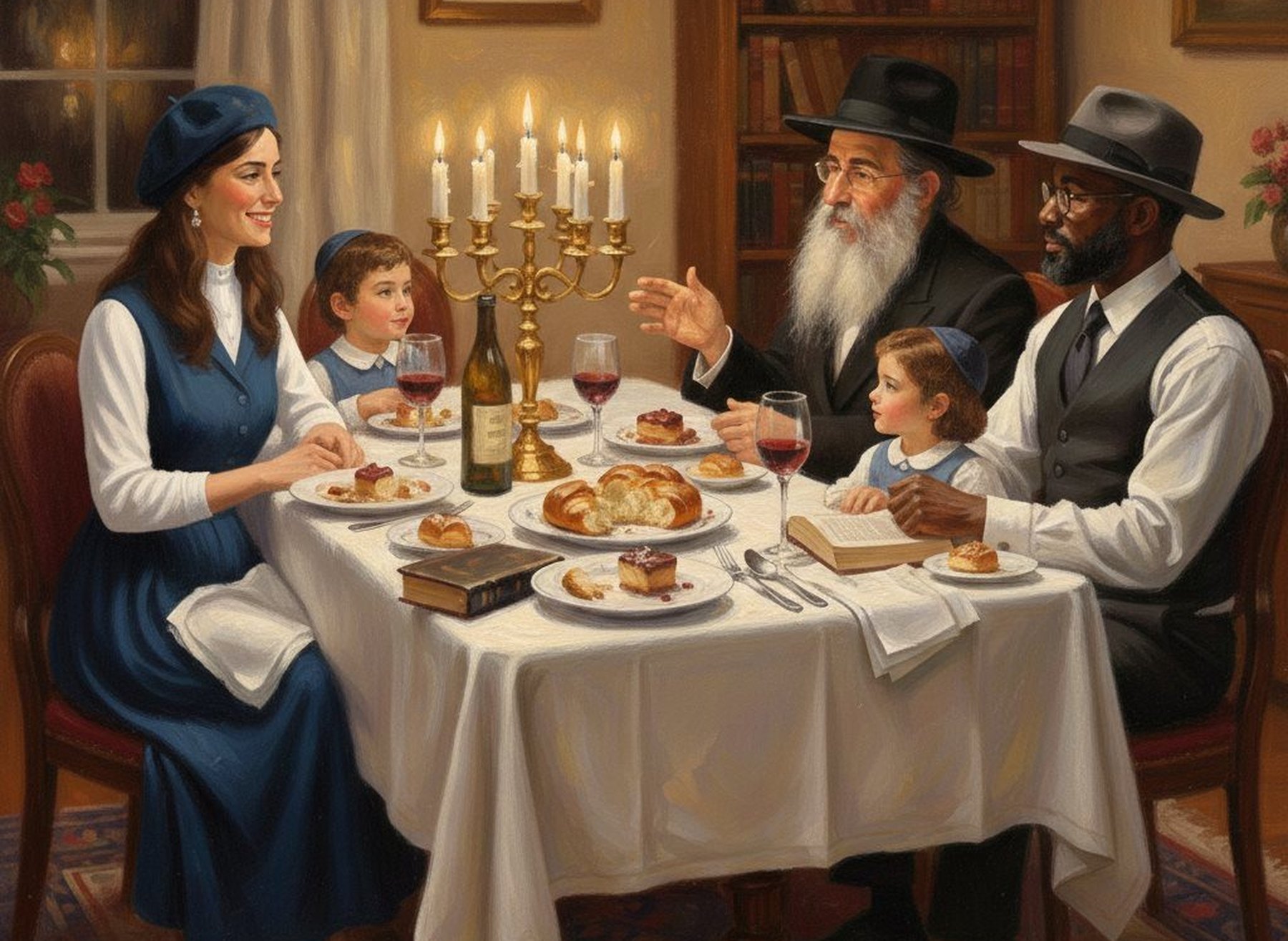
During this time, on one Friday night, after the meal, Vanessa was still sitting at the table, enjoying the Rebbetzin’s chocolate pie. She kept looking like she wanted to say something, but she was waiting for the right moment.
Finally, she turned to Rabbi Kalmenson. “Rabbi,” she said, “I have a question.”
Rabbi K smiled. “What’s on your mind, Vanessa?”
“I have a friend,” she said slowly. Then she shook her head, correcting herself. “He’s not really just a friend. I… I want to marry him.” Vanessa kept going, talking faster now. “Also… he’s a little older than me. Not a little, like just a year. More. And also… he’s… my professor.”
She paused again, like she was deciding whether to say the last part.
“And,” she finished, “he’s black.”
Rabbi Kalmenson nodded, understanding she wasn’t trying to make a speech. She was just telling him what the situation was, and why it felt complicated. It isn’t common for black people to also be Jewish, and these mitzvos were very important to Vanessa. She wanted to make the right choice for herself.
“Okay,” the rabbi said gently. “If he’s important to you, I should meet him. Bring him next Friday night?”
Vanessa blinked. “Really?”
“Really,” Rabbi Kalmenson said. “Bring him. We’ll talk.” The next Friday night, Vanessa came back to Rabbi Kalmenson, she wasn’t alone.
“Shalom,” the rabbi said, offering his hand. “Welcome. I’m Rabbi Kalmenson.”
“Thank you for having me,” the professor said. “My name is Michael.”
At first, Michael came because of Vanessa. But once he started listening, he came because of the questions. If Vanessa asked a thousand questions, Michael asked two thousand.
“What is Shabbos, really?” he asked. “Why do you do this part first?” “Why can’t you do that on Shabbos?” “How do you know what G-d wants?”
And Rabbi Kalmenson answered him the way he always answered Vanessa – clearly, patiently, and seriously. Week after week, Michael came again. Then again. And slowly, something changed.
Michael wasn’t just curious anymore. He wasn’t only learning because it was interesting.
He was learning because he cared. He started keeping what he learned, even though he wasn’t Jewish.
“I would like to become Jewish,” Michael said.
Rabbi Kalmenson leaned back in his chair. “Let me tell you something important,” he said. “Judaism doesn’t go around trying to convince people to convert. We aren’t looking to bring in outsiders. And when someone says they want to become Jewish, the Beis Din doesn’t say ‘amazing’ right away.”
Michael’s eyebrows lifted. “So… you don’t want converts?”
Rabbi Kalmenson shook his head. “We love and respect people. But conversion is a heavy commitment. A person can be perfect and not Jewish, so long as he keeps the mitzvos Hashem gave him, the Seven Noahide Laws! So the first thing the Beis Din does is ask a person, ‘Why are you coming?’ They’ll tell you straight: being Jewish isn’t easy – there are many responsibilities, and there can be hardships. They want to see if the person is doing this for the right reasons.”
Michael didn’t look scared. “I’m still here,” he said. “That’s the point,” Rabbi Kalmenson said. “A Beis Din will often reject the person at first – sometimes more than once. Not because they’re trying to embarrass them, but because they’re making sure they truly mean it. It’s possible, but a big deal.”
Vanessa sat very still, listening. Rabbi Kalmenson continued, “But if the person keeps coming back, keeps learning, and keeps choosing this – then there’s a process.”
Michael sat up straighter. “What process?”
Rabbi K counted on his fingers. “First, real learning. Not just facts – understanding what mitzvos are, and accepting that this is the life you’re taking on. Second, a Beis Din – three Rabbis – who speak with you and decide if you’re ready. And for a man,” Rabbi K added, “there’s bris milah. After that, a mikva.”
“So you’re saying it’s not quick,” Michael said.
“It’s not quick at all,” Rabbi K answered. “And it’s not supposed to be. Because once it’s real, it’s real.”
Michael nodded slowly. “Then let’s do it for real.”
* * *
Rabbi Kalmenson brought Michael to Rabbi Ezriel Sharfstein – the Rav who handled these things in Cincinnati, who knew the process and did it the right way. They met with him, and Rabbi Sharfstein spoke to Michael seriously. Michael didn’t back away.
He kept learning. He kept growing. He kept showing up. And, when the time finally came, they did what had to be done – the whole works.
There was a Beis Din. Accepting the mitzvos, not just as a “nice idea,” but as a real commitment to Yiddishkeit. There was the bris. And then came the moment. Micahel went to the mikva.
When he came up, he wasn’t the same person who had first walked into the Chabad House.
He was now a Jew.
* * *
Now we have to go back in time a little bit.
As Vanessa was still new to Yiddishkeit and learning so much herself, she got a call from her mother.
“Mon chérie,” her mother cried. “My darling Vanessa… your père… your father… he has passed away. Come home!”
Vanessa flew back to France to be with her family. When she arrived, she realized something right away: if she left, her mother would be all alone. Vanessa’s brothers were grown and lived elsewhere. Her mother was strong and smart, but she was getting older, and her father had taken care of so many of the daily things.
Now, in the middle of her grief, even simple responsibilities felt big – filling the car with gas, taking out the trash, fixing a meal. Her mother was already brokenhearted. Learning a whole new routine at a time like this would be too much. Vanessa couldn’t leave her mother alone.
But even from France, Vanessa kept in touch with Michael. At that point, Michael was still in the middle of the geirus process. He was learning, growing, and moving forward – but he hadn’t finished everything yet. Rabbi Sharfstein was guiding him through the steps.
Rabbi Kalmenson, meanwhile, was busy with his shlichus and many other things, and he didn’t know every detail of what was happening day-to-day. He knew Vanessa wanted to marry Michael, but he needed to make sure everything was done properly.
* * *
One day, Vanessa called Rabbi Kalmenson with exciting news.
“We’re planning our wedding. Will you be there?” Rabbi Kalmenson paused. Now, it was real.
He asked the questions he had to ask. He checked the status. Was Michael truly going through a proper geirus? Was it being done the right way, with the right guidance?
When Rabbi K saw Michael was serious and that the process was being handled properly, he said, “Okay. If that’s the situation, then I agree. I’ll be there for the chasunah.”
And from that point, they began planning.
* * *
As the wedding got closer, everything started moving fast. Vanessa and Michael were planning from a distance, calling back and forth, checking details, changing things, and then changing them again. Every time they thought they were done, a new question popped up.
Where would it be held? Who would be invited? What time would everything start? What comes first, what comes after, and what exactly do you do under the chuppah?
They weren’t doing it alone. There were people guiding them – rabbanim, friends from the community, and families – each one giving them another piece of the puzzle.
“Make sure you have this.” “Don’t forget that.” “You’ll need someone to help with that part.” “And remember, at a Jewish wedding, there are a lot of details that matter.”
Then Rabbi Kalmenson said, “And sometimes, the chosson says a maamar.”
“What’s that?” Michael asked.
Rabbi K explained that a maamar is a very holy Chassidic teaching, originally delivered by a Rebbe. Michael leaned in. “Which maamar?” “One that speaks about a wedding,” Rabbi Kalmenson said. “For example, a maamar of the Rebbe Rayatz, based on the words, ‘Lecha Dodi…’”
Michael blinked. “The whole thing?”
“Yes.”
“…By heart?”
Rabbi K nodded. “Mm-hmm.”
Michael paused for half a second, then said politely, “Okay, Rabbi. Goodbye.”
And that was it.
* * *
Rabbi K didn’t think too much about that part of the conversation. Michael was serious – very serious – but Rabbi Kalmenson never imagined that Michael would actually memorize a full maamar, word for word. In Hebrew… Pages long.
The Rabbi had explained to him what happens at a chasunah, and Michael had asked about the maamar like it was just another detail. He had no idea why Michael was asking, and he definitely didn’t know what Michael was planning to do with it.
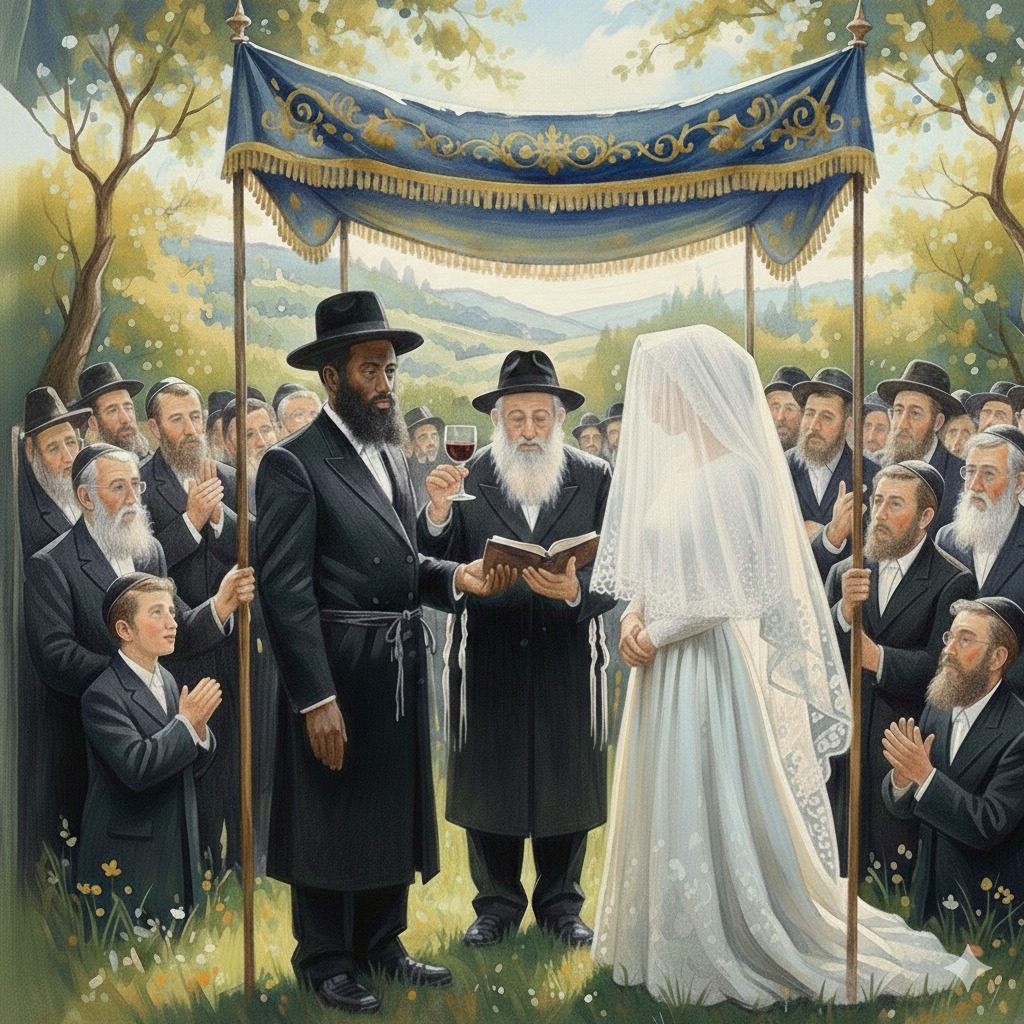
But then, the wedding came. Rabbi Kalmenson arrived, and the room was full – family, friends, singing, and the kind of excitement you feel when something unbelievable is about to happen.
And then… Quiet fell over the room. And Michael began to say the maamar.
By heart. Word for word.
Rabbi Kalmenson sat there thinking, This is wild. Really wild.
Over in the room, Rabbi Shmuel “Muleh” Azimov – the shliach in Paris – looked shocked.
He came over, upset. “He’s a goy,” he said. “He’s black!”
Rabbi K answered firmly, “Having dark skin doesn’t mean he’s a goy. He converted. We worked with him, and he converted properly, according to Halacha.”
Rabbi Azimov didn’t answer after that. He went quiet. And the chasunah continued – singing, dancing… a full wedding celebration. And then, just like that – boom. They were married. Both Jewish.
* * *
Back in France, Rabbi Azimov didn’t say anything after that conversation. He stayed quiet. But the truth was, it bothered him. A lot.
About half a year later, Rabbi Azimov called Rabbi Kalmenson. “Listen,” he admitted, “I couldn’t accept what you told me. I couldn’t settle it in my mind.”
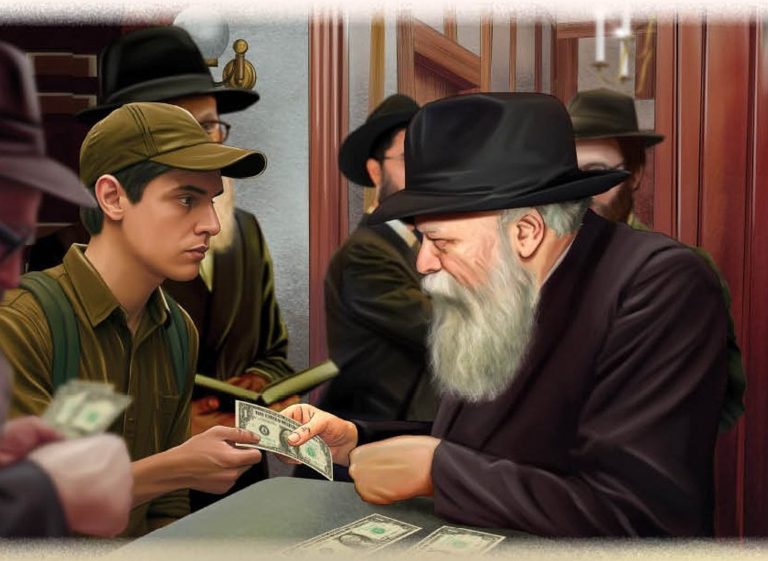
Not long after, Rabbi Azimov found himself in New York. It was Sunday, and he had a chance to visit the Rebbe for dollars. As the line moved forward, his heart started pounding. And when he finally stood in front of the Rebbe, the whole story spilled out – fast, like he couldn’t hold it in anymore.
“Rebbe,” he said, “I don’t understand. He keeps Torah and mitzvos… everything seems fine… but I’m still bothered.”
The Rebbe looked at him and asked simply, “So what is bothering you?”
Rabbi Azimov swallowed. “Rebbe… He’s a black man.”
The Rebbe answered so naturally, like Rabbi Azimov’s worries didn’t even belong in the room.
“And since when does a neshama have a color?”
That was it.
Rabbi Azimov walked away from the line holding his dollar, but he barely noticed it. He stepped aside, found a quiet spot, and sat down like his knees had suddenly gone weak.
Since when does a neshama have a color?
A soul has no color.
* * *
About a year after the chasunah, Vanessa returned to France again to be close to her mother. Rabbi Kalmenson told her firmly, “Don’t just go back. Make sure Michael has a job first. You don’t want him to arrive and get stuck.” Vanessa listened. She looked around, found him a good job, and then they moved.
Later, they went even further – to Eretz Yisrael – where there was a shliach, Rabbi Rivkin, and they joined his community. Over time, they helped build up a small kehillah there, and Baruch Hashem, they were doing well.
* * *
What do you see when you close your eyes?
You don’t see your eyelids – because your eyes are closed. Get it? Sometimes you might see a little swirl of light, or a blur of colors. But mostly, you don’t really see anything at all.
And that’s the point. When you stop staring at the outside, you can start thinking about what’s underneath.
The lesson here is a very important one.
Sometimes people look at someone and think, “He doesn’t look Jewish,” or “She doesn’t look like she belongs with us.” But that’s because we’re judging with our eyes – judging a person by the outside.
In Tanya, chapter 32, it teaches that the right way to look at another Jew is through the neshama. Bodies are different, backgrounds are different, and people can look totally different from each other – but the neshama is what makes a person who they are.
You can think of the body like a spacesuit for our time down here on earth. One suit looks one way, another suit looks another way – different colors, different styles. But that doesn’t tell you what’s on the inside.
So, if someone looks different, that doesn’t mean they can’t belong. It doesn’t mean they’re “not one of us.” The Rebbe’s words were simple and sharp: since when does a neshama have a color?
Neshamos don’t have colors.
And when we train ourselves to see the neshama first, we start treating people the way Torah wants: with real ahavas Yisrael.
Beis Moshiach #1495 • pp. 54-58
© 2026 Beis Moshiach Magazine. All rights reserved.
This article originally appeared in Beis Moshiach #1495. You are welcome to share it with friends and family by email or in print, provided that you do not change, add to or omit any part of it, you credit the author and Beis Moshiach, and you include a link to archive.bmoshiach.org (written out in full in printed copies).
To republish this article in a newspaper, magazine, book or website, please request permission in advance at [email protected].