The Art of Patient Gardening
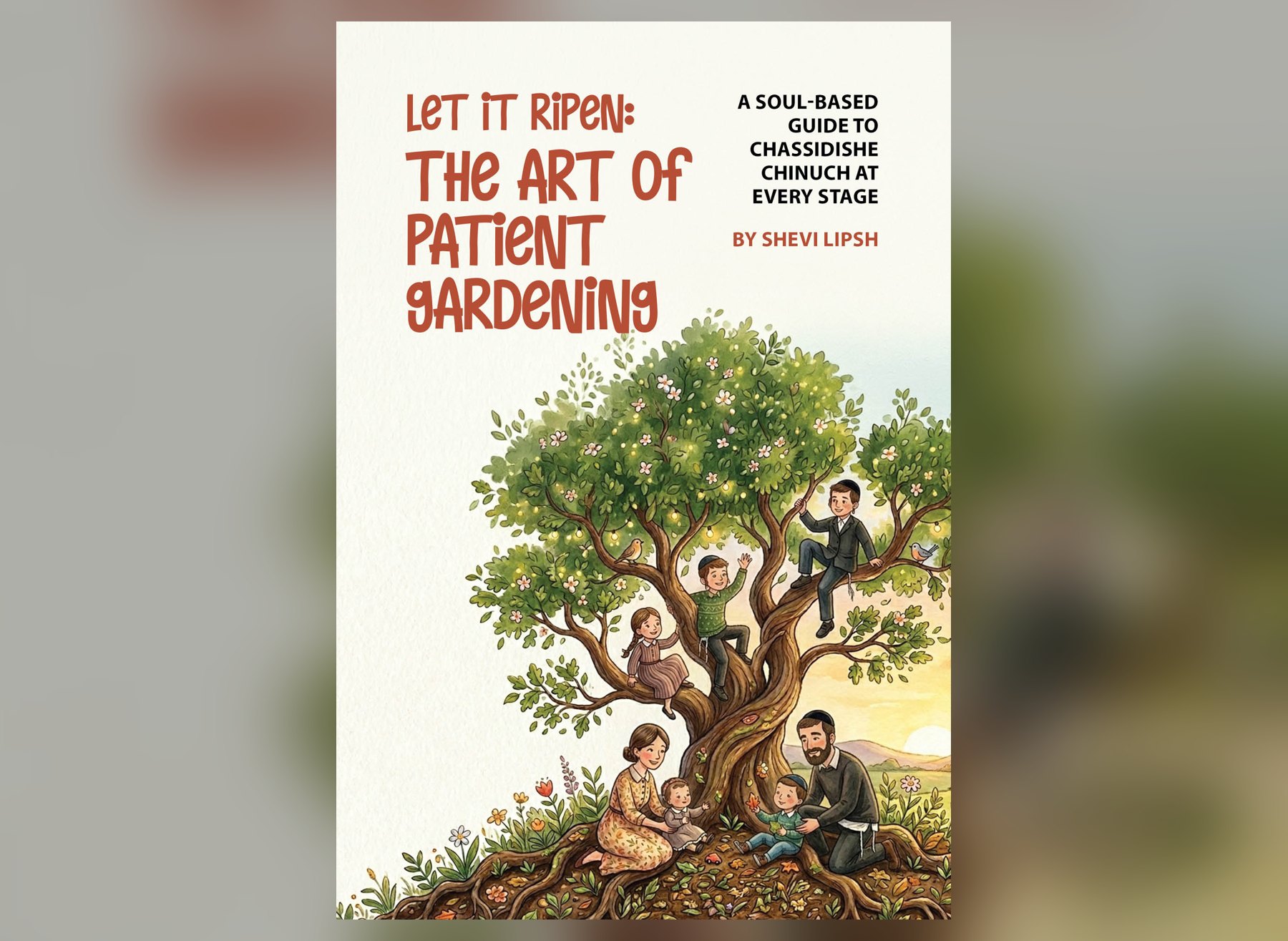
The work of chinuch appears to many as exhausting groping in the dark, amid heroic efforts to extinguish new fires that flare up each morning. But let’s take heart – the future of the Jewish people depends on the chinuch we give our children. The Rebbeim declared that their entire concern is chinuch, and therefore it is clear that chinuch has an organized framework. It is not beyond the sea; it is within reach of every father and mother. One need not be a great scholar – all that’s required is sincerity and learning the way.
In our Jewish treasures we can find precise parenting instructions – what to do and how to do it at every stage of a child’s life; guidance for Jewish values-based education – how to turn this work into an educational experience; and also the deep understanding behind it all – how a child’s senses and abilities develop, grow, and mature until adulthood, until he becomes a sturdy tree with strong roots…
A Bit of Chassidus — Understanding the Structure of the Soul
The Jewish soul has five levels: Nefesh, Ruach, Neshama, Chaya, and Yechida.
The nefesh, ruach, and neshama are the inner forces – that is, kochos that express themselves within the body through specific organs. For example: the power of thought resides in the brain, the power of sight in the eye, the ability to feel compassion or love in the heart. In addition to these, there are also encompassing levels – the chaya and the yechida – which influence the inner kochos mentioned above.
The chaya, called “ratzon” within the soul system, causes all of a person’s inner kochos to move toward a goal. For example: when one wants to cross the street, the entire body acts according to that desire – the eye checks whether the road is clear, the ear listens for the sound of cars, and the legs carry the body to the other side. The chaya is also the source of the inner kochos. What does this mean? The soul contains within it all of a person’s kochos and abilities in potential from the moment of birth, and does not change as the person grows. But with age, powers that were initially only potential within the chaya – which is the treasury of a person’s capacities – gradually reveal themselves.
One might say that the chaya contains all the soul’s powers within it. Slowly, as the body develops, parts of the soul dwelling within it and their functional capacities trickle down into the inner forces, and the powers expressed in the body gain new strengths that could not be expressed before. An example: as young children, we could not cut a precise circle, even though our eyes, hands, and brains were perfectly functional. A few years later, we suddenly discovered we were capable of doing so – even without practice – because our abilities had revealed themselves as the body and brain developed.
Stages of Growth
The trickling of kochos from above, from the chaya, is entirely synchronized with the development and growth of the parts of the soul that fill the body. These parts of the soul develop, grow, and mature in a fixed sequence and at fixed times – from lesser powers toward more elevated ones – and as they grow, the role of parents in the educational process also changes, guiding toward observance of mitzvos and toward independence. Each stage builds an additional layer in the soul, preparing it to become a strong kli for a complete Jewish life.
Awareness of the stages of the soul’s growth and its capacities helps one know what to demand and how much, and where to let go. Sometimes parents, out of a genuine desire to raise Chassidishe children, and out of a lack of knowledge and understanding of where their child stands on the timeline of his development, turn what seems in their eyes to be a chinuch process into prolonged heartache and damage to the tender soul.
The following presents the stages of soul development in detail and explains what a child needs at each stage. The division is into four levels:
1. The First Stage – Ages 0 to approximately two to three months: This stage is called the stage of the mutba (the imprinted) and the stage of gestation, because during it only the natural, instinctive functions imprinted in the body and the animal soul are expressed – that is, instincts, drives, and bodily needs. The main parental focus at this stage is on nurturing the body, but there is also an educational dimension, which is the foundation of the entire chinuch process: accepting the child as he is, unconditionally, without criticism – an expression of the essential bond between parent and child.
At this age, even though the newborn does not score 100 on a Gemara exam, does not clean up after himself, and it is hard to say he is particularly considerate of his parents – despite all this, the parents express open love toward him, love that springs from the essential bond between parent and child, a bond that is unconditional and will never change.
This essential bond is the first layer upon which all subsequent stages are built, and it is important to make it present throughout, because unconditional acceptance is the foundation of everything.
2. The Second Stage – Up to ages two to three: This stage is called the stage of nursing, and also the stage of the murgash (the felt). Just as milk is rooted in Chassadim (loving-kindness) and its role is to nourish the child’s body, so too all parental guidance at this stage must be given solely through love, without any criticism.
At this stage, every educational act – even limiting undesired behavior (for example, when a child tries to touch a knife) – must be done gently, calmly, and with open love. At this stage, the child’s emotions are developing. He still has no control over them, because his intellectual powers are not yet sufficiently developed. In order for his emotions to develop healthily, parents must base their interactions with the child on open, felt love – even when his behavior is stubborn and illogical. Parents should give the child pleasant, positive experiences in the observance of mitzvos: dancing at a Hachnosas Sefer Torah, a pekeleh on Shabbos, a kiss on the mezuza before sleep. And they should place no responsibility on him whatsoever for observing mitzvos or refraining from any prohibitions.
Until age three, emotion is present without intellect that generates it (meaning either there’s no logical reason for the emotion, or the reason is not really connected to it and is quickly forgotten and disappears, while the emotion remains in full force). When a young child has a certain feeling, it is very easy to distract him and arouse the opposite feeling. Therefore, when he plays with the light switch on Shabbos, one simply needs to give him something else more interesting to play with, and the problem is solved. There is no need to scold him or cry out: “Shabbos! Muktza!”
3. The Third Stage – Ages three to thirteen: This stage is called the stage of the muskal (the intellectual), because now the power of intellect gradually strengthens, enabling control over emotions.
From ages three to six, logical thinking gradually develops and the first buds of the ability to manage middos according to intellect appear. From age six onward, abstract thinking also develops. At this stage, we must gradually teach the child to control himself, to conduct his actions according to Torah wisdom – in both positive and negative mitzvos – and to begin developing identification with others.
The child is not yet capable of feeling another person’s state of mind, because he lacks daas (deep internalized knowledge), but he is capable of understanding that if he does not like being treated a certain way, others will not like it either. In addition, during these years the goal is to transfer to the child increasing areas of responsibility in his life – all according to his abilities, and in halachic terms: all according to his sharpness of mind. By the time he reaches the age of mitzvos, a person will be able to conduct all his actions according to Torah.
4. The Fourth Stage – Ages thirteen to twenty: This stage is called mochin d’gadlus (mature intellect), and it concerns the development of awareness. In addition to the intellectual understanding of what is fitting and what is not, there is now daas – which transforms understanding into recognition, into feeling.
This is the stage at which a person learns to “live” every matter he engages with, and to act from an inner sense of connection. For example, one learns to feel the difference between seeing that another person is in distress and being able to truly feel and live that person’s pain. Chassidus explains that daas cannot be transmitted, because daas is a type of feeling; it does not depend on logical explanations but on a person’s will to experientially live reality. A person acquires daas through his own efforts – through bittul, the desire to reach it, and effort.
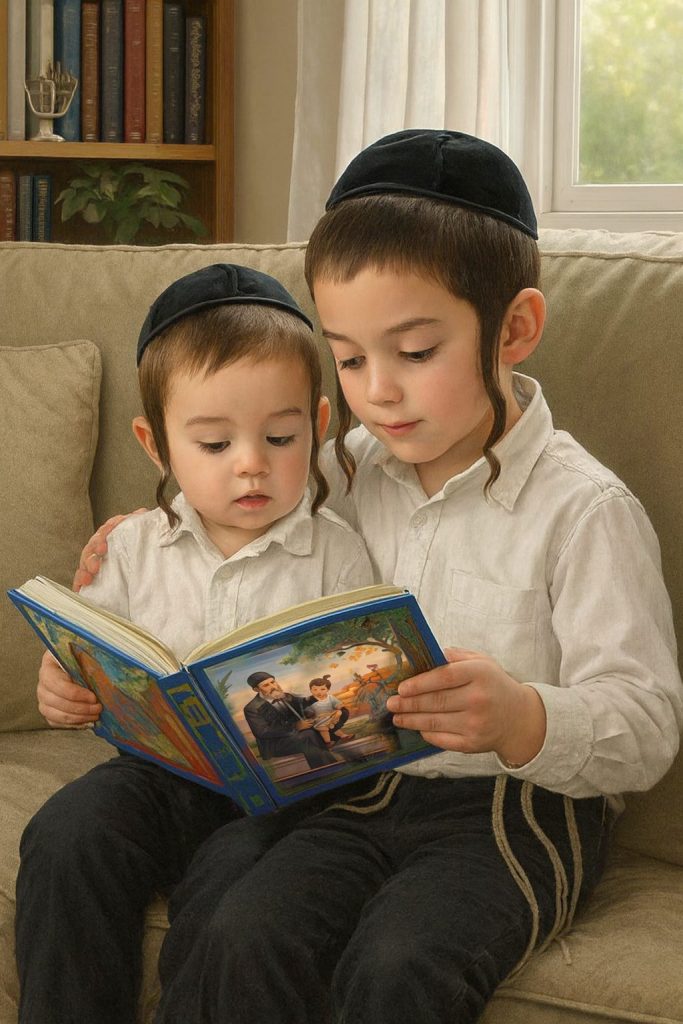
The schools designated for this age – yeshivos for boys, and high schools, seminaries, and youth organizations for girls – have an important role in developing daas and connecting to inyanei kedusha, internalizing bittul to Hashem’s will in the path transmitted to us by our Rebbeim, through the study of Chassidus, davening at length, farbrengens, and shlichus. At this stage, the role of parents is expressed mainly through unconditional expressions of love, guidance on what is right and wrong to do (without pressure or nagging), and maintaining ongoing contact with the school and other meaningful adults in the young person’s life – in other words, through indirect influence on his life.
Once a person reaches age twenty, and all the kochos that could enter from the chaya have already entered – drawing additional kochos depends on his own personal work, his efforts, and his ratzon. This is the time for complete independence.
As with every process, change and growth are gradual, and for the most part abilities and kochos will be revealed and develop in each child at a different pace and in a different way. It is thus essential that parenting be conscious parenting, and that parents invest time in refining their chinuch approach for each individual child. General awareness of the stages of development will be that mch more useful if parents also dedicate time to learning what halacha obligates them to do, where it is good and right to let go, and what guidance our Rebbeim provide, as these guidelines are precisely fitted to the child at every stage of his development – like a hand in a glove – and transform the labor of chinuch into a precise and effective art, through which we will merit abundant nachas.
(Sources: “Peirush HaMilos” by the Mitteler Rebbe, the maamar “HaShamayim Mesaprim,” section 3; “Horim b’Rosh Tov” — Rabbi Yitzchak Arad; Sefer HaMa’amarim of Yud Tes Kislev, Parshas Teruma)
Beis Moshiach #1497 • pp. 46-49
© 2026 Beis Moshiach Magazine. All rights reserved.
This article originally appeared in Beis Moshiach #1497. You are welcome to share it with friends and family by email or in print, provided that you do not change, add to or omit any part of it, you credit the author and Beis Moshiach, and you include a link to archive.bmoshiach.org (written out in full in printed copies).
To republish this article in a newspaper, magazine, book or website, please request permission in advance at [email protected].