Just a Bus Driver…

He holds no rabbinic post. He’s no mashpia. No one ever officially appointed him. He’s simply a bus driver who can’t bring himself to let a single Jew pass by unreached. For a quarter of a century, Reb Lazer Raksin has been transforming auto shops, parking lots, gas stations, and airport terminals into living tefillin stands. We sat down with him for an unfiltered conversation about mivtzaim – a companion to his newly released short mivtzaim memoir, which chronicles twenty-five years of shlichus behind the wheel.
The Catskill Mountains sun had not yet managed to warm the asphalt roads, but for R’ Eliezer (Lazer) Raksin, the morning had already started on the wrong foot. He worked in a rural mountain area in upstate New York, lived with his family in Monticello, and was completely dependent on his car to get to his job in a nearby town. But then, his station wagon decided to give up the ghost. A sudden leak in the heating system left him stranded in Monticello, without a drop of water in the radiator and with no way to get to work.
He somehow managed to drag himself and the car to a local garage, and the mechanic promised the car would be ready that same day. But a small glitch – Lazer forgot to tell the mechanic about a secret switch in the anti-theft system – left him without a car that evening, forcing him to spend time and money getting around by taxi. “This too is for the good,” he repeated to himself over and over, trying to force the simple Chassidic belief into his heart, even though it wasn’t easy…
The next morning, after davening, Lazer took a taxi to the garage, determined to collect his car and return to routine. In his hand he held his tallis and tefillin bag. He did not know that this bag was about to change his life for the next 25 years.
He stepped into the garage and at that very moment the accountant walked out of the back office. In a brief exchange it emerged that the man was Jewish. When the man’s gaze fell on the tefillin bag, Lazer decided to seize the opportunity and ask if he would like to put on tefillin. The answer was a simple: “Why not?”
A few moments later, an older customer from Florida walked in to collect his car. Lazer approached him too and made the same offer. The man replied that it had been no fewer than twenty years since the last time. “In that case,” Lazer smiled gently, “isn’t it time?” And the customer agreed. It all clicked for Lazer; he understood why the car had broken down, why the secret switch had been forgotten, and why he had been forced to return to the garage that morning. Everything had been arranged from Above for these souls.
The mechanic himself stood there, watching what was unfolding. Lazer turned to him with the same question. “Why not?” the mechanic replied pleasantly, without argument, “It’s been years since I put on tefillin.” But then came the most unexpected request: the mechanic, who had just tied the tefillin on his arm, turned to Lazer and asked him would he want to stop by every morning on his way to work, to put on tefillin together with him and the accountant.
Lazer froze. He was a working man, busy with his livelihood. “At first I wanted to answer: ‘Not really,’” he admits honestly. Coming to the garage daily felt like a commitment too heavy to take on. But deep inside Lazer’s heart a deeper spark stirred. “A second passed, and I heard myself saying: ‘Sure, why not?’”
It was 12 Nissan when he had been looking for a way to honor his late father’s memory and bring joy to the Rebbe. He decided that no matter where he was – on a drive, at a repair shop, or in a pizza line – he would not let a day pass without giving another Jew the gift of a mitzva.
From that morning, Lazer Raksin was no longer just a bus driver or a businessman. He became a shliach of a single mitzva, a mivtzaim person who recognized no such concept as “free time,” and a person who proved, day after day, that streets, garages, and gas stations are all potential tefillin stands.
This unplanned commitment, originally intended to honor the neshama of his deceased father, became a life’s journey that stretched across nearly 25 years of outreach. Over the years, Lazer published some of his stories in the N’Shei Chabad Newsletter, and recently collected all the stories into a booklet, which he distributes to encourage more people to join the mitzva.
The Chabad Art of Persuasion
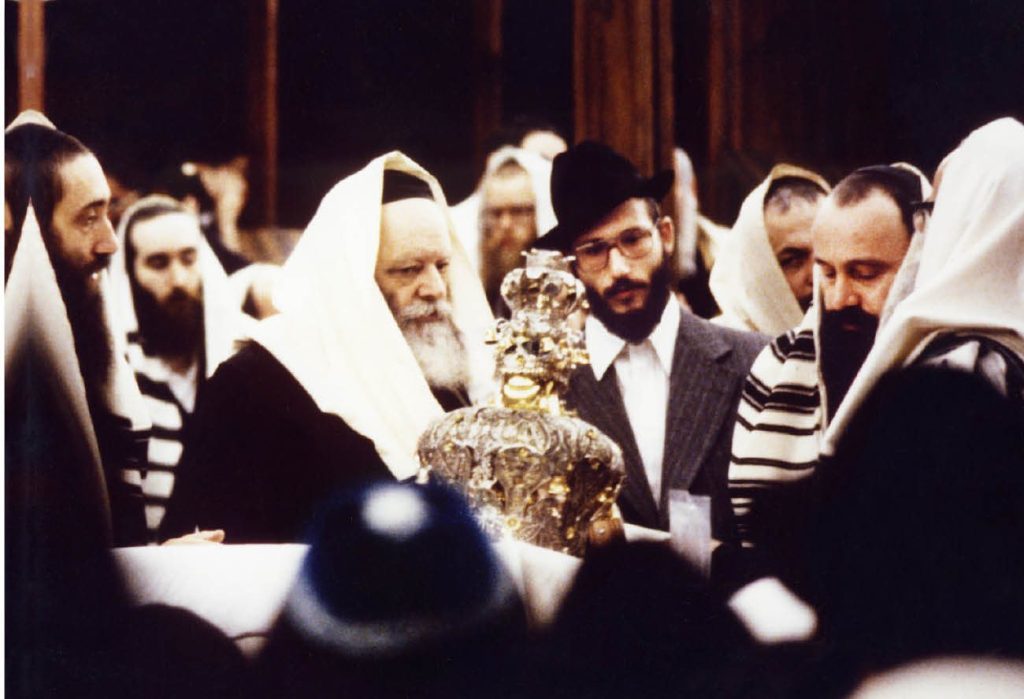
In the business world, when a customer says “no,” the negotiation ends. But in R’ Lazer Raksin’s business, the business of neshamos, the word “no” is merely an invitation for creativity: disarming Chassidic humor, charming stubbornness, and the art of making “deals” that leaves the other side speechless.
“Look,” Lazer explains, “when a Jew says ‘no,’ it’s usually not because he’s against the mitzva. It’s because he’s tired, stressed, or has simply forgotten who he really is. My job is to remind him – and all means are valid, as long as they come from love.”
Take for example the customer who tried to dodge the tefillin at any cost. He finished his repair at the garage and went to pay. “A hundred dollars,” declared the mechanic. The customer was furious. “What?! That much?” he raged. At that moment, Lazer spotted the opening. He stepped out of his car and offered: “If I pay for your repair – will you put on tefillin?” The man, certain it was a joke, answered immediately: “Yes!” Lazer didn’t flinch. He opened his wallet, pulled out a hundred-dollar bill, and handed it to the mechanic. The customer was stunned. “Come on, you’re kidding…” he tried to back out, but Lazer was completely serious. The ice was broken. “I don’t need your money,” the customer conceded, rolling up his sleeve, “Just so you know, I’ll give the whole hundred dollars to charity on Yom Kippur.”
This ability to find the positive “soft spot” in every person worked in Lazer’s pizza shop too. One day an older man from Florida walked in, a Holocaust survivor, who ordered two pizza pies and complained about the price. “Can I get a discount?” he asked. Lazer, who had already spotted the Jewish spark, offered him an unexpected deal: “You want a discount – I’ll give you five dollars off if you put on tefillin.”
The man laughed: “Five dollars for tefillin? Tefillin mean nothing to me!” “Well,” Lazer replied with a mischievous smile, “five dollars mean nothing to me. But to you it matters – and to me tefillin matters. So it’s the perfect deal!” They went to the kitchen, and the man put on tefillin and read the tefillos well, noting that decades had passed since the last time.
These “deals” didn’t stay inside America’s borders. When Lazer made aliya, he brought the exact same method with him. When he purchased a vehicle from a dealer in Teveria, it turned out the dealer had miscalculated in Lazer’s favor by 600 shekels. Even though the contract had already been signed and Lazer didn’t owe another penny, he saw it as an opportunity. “If you agree to put on tefillin,” he offered the surprised dealer, “I’ll pay the extra amount – no questions asked.” The dealer, who knew he couldn’t win, agreed happily, and in his wake two other dealers in the shop did the same.
Lazer describes how sometimes he approaches people with a personal request: “Do me a favor, it’s my father’s birthday” or “I need this for my bracha.” He turns the mitzva into a chesed the Jew is doing for him, and in doing so breaks down the walls of resistance.
Hashgacha Pratis on Wheels
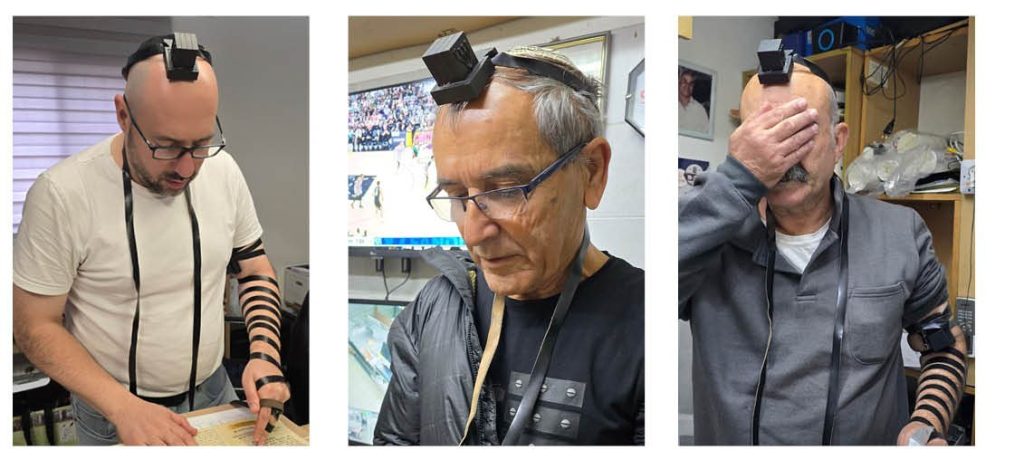
In Lazer’s world, vehicles are not merely means of transportation, but vehicles of divine providence. An overheating engine, a locked gate, or an outrageously expensive taxi – none of these are schedule disruptions, but precisely coordinated meetings from Above with a soul in need of tefillin. Take what happened to him one night in Teveria. Lazer, who had already made aliya, was driving a bus full of children on a nighttime camping trip. The camp director asked him to take the children to an additional site, and even though he knew it would take a long time with no precise schedule, he kept driving. The road wound, became narrow and dangerous, until the bus stopped at a locked gate blocking the way with no way to turn back. Lazer was stuck there with one of the school counselors.
During the nerve-wracking wait, Lazer steered the conversation to Judaism and tefillin. It emerged that the counselor carried deep pain and claimed he hadn’t put on tefillin even on the day of his own bar mitzva; he was a “karkafta” (one who has never worn tefillin).
“Now I understand why we ended up in this situation,” Lazer told him. “All of this was to get you out of your ‘karkaftaism’!” The next day, 12 Nissan, the anniversary of Lazer’s father’s passing, he made a special 30-minute trip to that counselor’s home and put on tefillin with him for the first time. The bus hadn’t gotten stuck; it had arrived precisely at its spiritual destination.
This spark, once kindled, is never extinguished. The ultimate proof of this came many years later, when Lazer was standing on the ground floor of “770.” A young man suddenly approached him, looked him in the eye and said in a loud, clear voice, full of gratitude: “You are the reason I am here today dressed like this… completely religious. Boruch Hashem, it worked out.”
And what happens when you’re forced to pay an outrageous price for a taxi? One morning, after landing at Ben Gurion Airport, Lazer and his wife were forced to take the only taxi available in the area toward Kfar Chabad, and the driver demanded an exorbitant sum. With no choice, they agreed. When the ride began, the driver surprised them by asking: “Do you have tefillin?” It turned out the driver had left home very early and hadn’t managed to put on tefillin. “Just before you arrived,” the driver told them, “I prayed: G-d, please send me someone with tefillin.” The driver went on to describe how in 1991 he had been diagnosed with a tumor in his back, had difficulty walking and needed a wheelchair. Doctors said his chances of recovery from a rare surgery were only 30%. His friends convinced him to fly to the Lubavitcher Rebbe in New York and receive a bracha. He was brought by ambulance and was wheeled before the Rebbe, who gave him a dollar along with a bracha. A short time later, miraculously, he began walking without pain and canceled the surgery, and since then had committed to putting on tefillin every day in honor of the Rebbe. He even showed Lazer the dollar he still kept in his wallet. “It was worth paying more for a taxi ride just to hear his story,” Lazer concludes.
Don’t you ever feel that it’s extreme, that every delay in life has to turn into a mivtza?
“On the contrary!” he exclaims. “That’s what makes life fascinating. Instead of getting angry at the traffic jam, I look left and right. If I’m stuck, there’s probably someone here who needs me. Once, due to a wrong turn, I arrived in a remote industrial zone. I found a Jew there working alone in a warehouse. He told me it was his mother’s yahrtzeit and he didn’t know how to mark it. When we merited putting on tefillin together, I saw how the ‘wrong turn’ became the most precise route possible.”
Next time you miss a flight, or your car breaks down, don’t get angry. Open your eyes. Hashem may have simply done a “recalculation of route” so you could meet a Jew who needs you.
Tefillin at 4:00 in the Morning
The 4:00 AM alarm is not simple for anyone, let alone for a family man who works hard for his living. Outside it’s still pitch dark, the body demands its rest, and cold logic whispers that you can keep sleeping. Lazer knew the calculation well: he could afford to get up at 5:45 comfortably, go to the first minyan at shul, daven in a settled state of mind and go straight from there to work. But Lazer had a different calculation a calculation of tefillin for one more Jew. It all started with one of the people he was in contact with, someone who had to leave for work very early. When Lazer offered to help him put on tefillin every day, the man set a condition that sounded almost impossible: “If you want me to put on tefillin every morning, you have to come to me before 5:00. After that I’m already gone.”
A regular person would have sighed, politely explained that this was a bit beyond his capability, and moved on. But for Lazer, his commitment to the tefillin campaign was not conditional on convenience. To be at that man’s place before five, he needed to completely restructure his daily routine. That meant going to sleep earlier every night, and waking up every morning between 4:00 and 4:30.
Lazer didn’t hesitate and took it upon himself. Morning after morning, summer and winter, on tired days and routine days, he got up long before dawn. He sacrificed his precious sleep hours not for overtime at work or a financial bonus, but purely so that one more Jew – just one – would merit putting on tefillin. “Hashem helped me do this for nearly seven years,” he says simply.
“By the way,” he adds, “some asked me how I could put tefillin on him before dawn. In fact, a similar question was asked of Rabbi Moshe Feinstein (Igros Moshe, Orach Chaim 1:10) regarding a person who absolutely must leave for work very early in the morning, and if he doesn’t arrive on time – he’ll be fired. Reb Moshe ruled: ‘Therefore, so that he not lose this beloved mitzva, he may put them on even with a bracha, because putting them on without a bracha – someone who is not a talmid chacham would not understand and would come to take the matter lightly. But for a talmid chacham, it is better to put them on without a bracha, since in cases of doubt regarding brachos, we rule leniently.’ In a later teshuva (Igros Moshe, Orach Chaim 4:6), he ruled that even a talmid chacham who has no other option should put on tefillin while it is still night – and with a bracha. Of course, these are exceptional circumstances.”
What goes through your mind on those drives, at 4:30 in the morning, when the streets are empty?
“I think about the Rebbe,” Lazer answers. “I think about how much nachas it gives him to see that his Chassid doesn’t give up on a single Jew, even when it demands physical effort. I tell myself: ‘Lazer, if the Rebbe doesn’t tire of caring for every Jew in the world, who are you to tire from a little lost sleep?’ In the end, this strength comes from the Rebbe. I am only the conduit that carries the tefillin.”
Shlichus Everywhere
Lazer’s mivtza tefillin doesn’t start and end on Friday afternoon. The shlichus is not limited to a tefillin stand with a sign, but encompasses the entire geography of life itself. It happens, as we described, inside his pizza shop. And it happens between weights and treadmills in the gym, when Lazer found two Jews there, aged 85 and 90, who were working out together. After a warm conversation, he managed to convince them to put on tefillin for the first time since their bar mitzvas. On another day in the same gym, an astonishing scene unfolded in which a non-Jewish man (who was married to a Jewish woman) became so enthusiastic about tefillin that he jumped in with great eagerness to help another Jew put them on.
It even happens at 30,000 feet. On an El Al flight to Israel, several passengers got up to daven. Another Jewish passenger, who was not familiar with the sight, began enthusiastically photographing what he called “a synagogue on a plane.” Lazer approached him and offered him to put tefillin on himself. When the man refused, Lazer pulled out a winning lure: “If you put them on, I’ll take a picture of you with the tefillin, and you’ll have a wonderful picture for your collection.” He agreed immediately, and another Jew merited a mitzva between heaven and earth.
“On a plane they’re a ‘captive audience,’” he explains with a grin. “They have nowhere to run. But the truth is that people are searching for meaning amidst all the noise and travel. When you offer them to put on tefillin in the middle of a flight to Miami or in a taxi ride in Yerushalayim, they feel that someone up there is looking out for them.”
Aren’t you sometimes afraid of intruding on people’s privacy?
“Heaven forbid,” he answers seriously. “I don’t impose myself. I offer a gift. If someone truly cannot, I won’t pressure him in an unpleasant way. But my experience teaches me that most people are just waiting to be asked. They simply need that little ‘push.’ The shlichus is not to be a nuisance – it’s to be an ‘awakener.’ If Hashem sent me to this pizzeria right now, there’s probably an owner or a customer waiting for a bracha.”
“The Jewish Spark” That Never Goes Out
In dry halachic terminology, the word “karkafta” (skull) describes a person who has never put on tefillin, and the Gemara warns about the grave significance of this state. In Lazer’s world, the word marks a weary soul that is just waiting for the right trigger to wake up.
Take for example a 43-year-old Jew whose non-Jewish partner had asked him to cooperate when Lazer offered to put tefillin on him. When Lazer came in and met him, it became clear how deep the disconnection was: the man had never put on tefillin, had not attended a Jewish school, and had never even visited a shul. He was a “karkafta” in the fullest sense of the word. After Lazer warmly explained the meaning of the mitzva to him, the man happily accepted it. The tears hanging in the air needed no words; that day, in the most ordinary of places, Lazer merited celebrating a historic “bar mitzva.”
The most moving moments of Lazer’s life are when a Jew says to him: “Lazer, I haven’t touched tefillin since my bar mitzva.” And then, when he puts tefillin on him – he might be 60, 70, or even 80 years old – decades of spiritual wilderness are erased in a single moment of “Shema Yisrael.”
Is there one story like that that you especially remember?

“There was an older Jew at the garage, a man who had lived a life very distant from Torah and mitzvos. When I approached him, he trembled. He said to me: ‘I don’t remember how it’s done.’ I told him: ‘Don’t worry, your hands will remember, your heart will remember.’ When we put on the tefillin, he began to cry like a little child. He remembered his father, he remembered the home he grew up in. In that moment, all the walls came down.”
From the Garage to the Tefillin Shop — Circles of Influence
In Lazer’s tefillin campaign, the goal was never merely to check off one more one-time donning. His aspiration is to kindle the spark so deeply that the Jew himself becomes an ambassador of the mitzva. And indeed, the numbers speak for themselves: dozens of Lazer’s regular “customers” took the moving step and acquired their own personal pair of tefillin.
Take for example the business manager Lazer visited following a recommendation. At their meeting, the man said that just two days earlier he had decided to examine his connection to Judaism and found his grandfather’s tefillin, a hundred years old. The straps were too cracked and dry to use, and Lazer immediately offered to lend him his own pair each day until he could buy a new one. But the influence didn’t stop there. That manager, who had begun putting on tefillin himself, referred Lazer to a nearby office and assured him he would certainly find two more people there to join him.
This is precisely the Rebbe’s request, which Lazer quotes with great emotion: whoever knows the “alef-beis,” should teach the one who knows only “alef.” Lazer’s greatest joy is not only when they buy tefillin, but when they themselves begin bringing other Jews into the circle of the mitzva.
“I had a friend in Monticello, a mechanic, and we began putting on tefillin together every morning. After a while he said to me: ‘Lazer, I want my own pair. I want to put them on even when I don’t see you.’ I helped him purchase a fine, kosher pair. Today? He doesn’t need me anymore. He puts them on by himself, and because of him his children see what it means to be a believing Jew.”
The most wondrous closing of the circle in all these ripples of influence occurred far from New York, under the Florida sun. Ira, one of those people Lazer had refused to give up on, had begun putting on tefillin every day, and went even further – purchasing two pairs: one for his New York home and one for his Florida home. One day, while strolling through a flea market in West Palm Beach, a local Chabad shliach approached him and offered to help him put on tefillin. Ira smiled and told the young shliach how in the summer of 2001 he had met a stubborn man named Lazer Raksin, who gave him no peace and bothered him day after day until he gave in, and thus turned him into a Jew who puts on tefillin every day and owns his own pair.
The young shliach looked at him in astonishment, and broke into a wide smile: “Ira, do you know who that man is? He’s my uncle!”
“But I’m Not an Official Shliach…”
One of the most common and quiet excuses that accompanies us day to day is the notion that “mivtzaim” belong mainly to yeshiva students or shluchim. There are working men who think: “I have a job, clients, a boss over my head, a family and a mortgage… I’m not a community rabbi and I don’t have an office in a Chabad House.” R’ Lazer Raksin takes this myth and shatters it to pieces.
“People say to me: ‘Lazer, it’s easy for you, you have that self-confidence, and besides you’re already well-known,’” he recounts with a slightly shy smile. “I answer them: ‘Friends, I’m a bus driver. I’m a working man. I have no special qualification other than the fact that I am a Chassid of the Rebbe.’ And by the way: I was embarrassed at the beginning too. My hands trembled too. But when you think about the Rebbe, and about the fact that every Jew is a child of HaKadosh Boruch Hu, the shyness disappears.”
In the introduction to his stories, Lazer sets forth his clear goal before the readers: “My aim is to excite and inspire, and to encourage people to go out and do what the Rebbe wants from us: the tefillin campaign.” He understands that his true power comes precisely from the fact that he is an ordinary person. The people who meet him don’t see a rabbi preaching from on high, but a working man who speaks to them as an equal, and who cares about them so much that he is willing to stop his packed daily routine – and even pay out of his own pocket – just so they will do a mitzva.
The Fire That Does Not Dim
Moving to another country generally involves a long period of adjustment with a new language, a different mentality, a different business culture. But when Lazer made aliya, it turned out that the language of the soul is international, and the shlichus requires no passport. As far as he was concerned, the fervor hadn’t changed one bit; the arena of action had simply relocated itself to the landscapes of Eretz Yisrael.
He encountered the very same challenges and acted with the same charming stubbornness. If in America the starting point was a garage in Monticello, in Israel it was a car dealership in Teveria. The road challenges and hashgacha pratis continued to accompany him in Israel too. Lazer’s Chassidic fire did not dim in the crossing of the ocean; it simply continued to illuminate the streets, garages, and roads of Eretz Yisrael, proving to us that the Israeli street is as thirsty as ever for tefillin.
Bringing Moshiach
When we look at R’ Lazer Raksin’s 25 years of mivtzaim, the full picture becomes clear. All those Jews, all those “karkaftos” who merited a belated bar mitzva, and all those tears of awakening, flow toward one single point that drives everything.
Lazer himself summarizes it in simple and piercing words at the end of his booklet: “All I can say is: Hashem, please bring Moshiach already. I love what I do, putting tefillin on with people, and my reward will be the coming of Moshiach, the end of all wars and pain. And that’s it.”
His booklet, and the article before you, were not written so that we might lean back in our comfortable armchair in the living room and admire the deeds of one man. As Lazer testifies in his introduction, the sole purpose of the enormous investment in publishing these stories is one: “to excite and inspire, and to encourage people to go out and do what the Rebbe wants from us: the tefillin campaign.”
Take a pair of tefillin and go out to the street. The Rebbe is waiting for you.
Beis Moshiach #1504 • pp. 12-21
© 2026 Beis Moshiach Magazine. All rights reserved.
This article originally appeared in Beis Moshiach #1504. You are welcome to share it with friends and family by email or in print, provided that you do not change, add to or omit any part of it, you credit the author and Beis Moshiach, and you include a link to archive.bmoshiach.org (written out in full in printed copies).
To republish this article in a newspaper, magazine, book or website, please request permission in advance at [email protected].