The Simchas Torah Stick-Up in Simferopol

As told by Rabbi Yitzchok Meir Lipscyz
A joyful night of hakafos in post-Soviet Simferopol, Crimea turned into four terrifying hours: three armed men, a mysterious fortune, and shluchim who never stopped believing Hashgacha Pratis was watching.
I
Rain Outside and Joy in the Heart
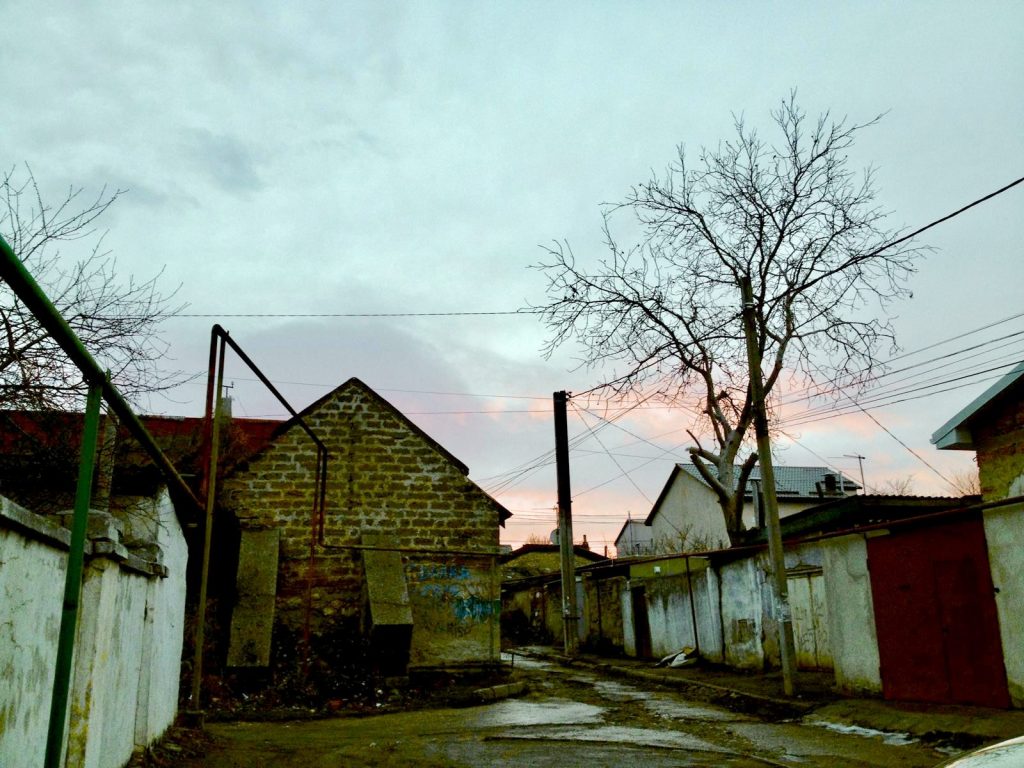
A cool autumn wind blew through the muddy alleyways of Simferopol in the year 5757 (1996–97). The rain had barely stopped for two consecutive weeks, and the narrow street in front of the home of the Rebbe’s shluchim to the city - Rabbi Yitzchok Meir Lipscyz, and his wife, Leah - had become a carpet of brown mud. Calling it a “street” was rather generous for an alley that had more potholes than asphalt. But in the hearts of the Lipscyz couple burned a great joy - the holiday of Sukkos was approaching, and it was expected to be very special.
The sukka they built that year was small and simple, made of long, thin pieces of unfinished wood. Its walls were covered with colorful fabric and cheerful strips, and its roof was covered with all the branches and leaves they had managed to collect. The entrance was decorated with pine cones and an elaborate wooden frame, remnants from the boys’ Russian bunk bed, which had fallen apart that week. The floor, as was typical of a Simferopol alley at the time, was muddy.
Since the sukka stood outside their courtyard, they hired Sasha, the secretary’s husband, to guard it throughout all the nights of the holiday. They knew from experience in another Soviet city that Chabad youngsters who had put up a sukka had once woken on the first morning to find only the bare frame; the blue and gold fabric walls, along with the blessings written on them, had disappeared. The next day, they saw two female neighbors proudly walking around wearing “new dresses” made from the same material…
The shliach couple also met with Rosa, the complaining neighbor who was considered the neighborhood informer. They explained to her what would be taking place and gave her food to distribute as gifts to all the neighbors. In this way, they thought they had covered everything.
That was simply how things worked in those days, during the first years of Chabad shlichus in post-perestroika Russia.
II
The Shluchim Fall Asleep, and Only the Babushka Remains in the Kitchen
Yom Tov passed with great joy and an exalted spiritual atmosphere. About forty guests - the maximum they could fit “reasonably” into the sukka - came to every meal. The bachurim who had arrived from Eretz Yisrael through the “Gutnick Center” breathed life into the Simchas Beis HaShoeiva celebrations and got the entire community dancing. The men sang and danced in the sukka, while the women sang and danced with drums beneath the stars in the courtyard.
The shluchim even built a “Sukka Mobile” on a trailer, decorated with vivid drawings of lulavim and esrogim, announcing the holiday to everyone passing by. They traveled with it to Yalta, Yevpatoria, and Sevastopol, and concluded the holiday season with a particularly joyful Simchas Torah.
On the night of Simchas Torah, as he did every year, Rabbi Lipscyz made Kiddush at the shul over vodka and drank more than half a cup, as required by halacha. After the spirited hakafos, at around eleven o’clock at night they invited the members of the shul to their home for a festive Yom Tov meal.
Leah, who had barely slept for nearly two weeks because of all the cooking and baking for Yom Tov, collapsed onto the table toward the end of the meal. She rested her tired head on the table for a few minutes and immediately fell asleep. Rabbi Lipscyz, exhausted as well, went to the bedroom to lie down.
Ida, the talkative “babushka” who lived around the corner in a small, cold shack, continued washing dishes in their kitchen. This was the work they had found for her - ten dollars a month for washing the dishes (not disposables) remaining after Shabbos meals. They did not want her searching through garbage dumps for empty bottles in exchange for a few kopeks a month, and she did not want to accept handouts either. She gladly agreed to this job.
III
“Quiet! This Is a Robbery!”
At around 12:45 a.m., all the guests left to their homes. Only Ida remained, washing the dishes. Half an hour passed, and suddenly, at 1:15 a.m., Leah awoke to a sound from the courtyard that sounded like one of the boys crying. She jumped up and half asleep, instead of checking whether the boys were in their beds, ran to the door to see why they were outside at a time when they were supposed to be safely asleep.
The moment she opened the door, three guns were pointed at her.
Three young men, wearing stocking caps made from sweater sleeves, all holding guns and knives, roughly shoved her into the house, shouting, “Quiet! This is a robbery!”
One of the robbers pushed Sasha into the dining room and made him lie on the floor between the tables, his hands clasped behind his head. They pushed Leah onto a chair where she remained for the next four terrifying hours. At least one of them stayed with her the entire time, pointing a gun at her while playing with a knife in his other hand.
It was learned later that Sasha had been going back and forth between the office and the sukka approximately every ten minutes, carefully locking the heavy metal gate that had been reinforced after the previous robbery. When he found the gate unlocked twice in a row, he went to investigate and saw that the sukka was dark. As he went to check, he felt a gun against his back and a knife pressed to his throat. The faint cry that had awakened the shlucha had been his.
IV
The Million-Dollar Mystery
The three armed men began systematically searching every corner of the house in a frustrating attempt to locate their “treasure.” If the situation had not been so serious, the scene would have been almost comical. By American standards, which they had not entirely forgotten, Rabbi Lipscyz and his wife lived at almost the same level of poverty as their neighbors…
They had two tiny bedrooms with two broken sofa beds and a baby’s crib. Rabbi Lipscyz and several of the boys slept on blankets on the floor or on benches in the dining room. The food supply was still limited, since kosher products were not yet available. The supermarket chains had not yet considered opening a branch in their neighborhood - and not everywhere in the former Soviet Union either.
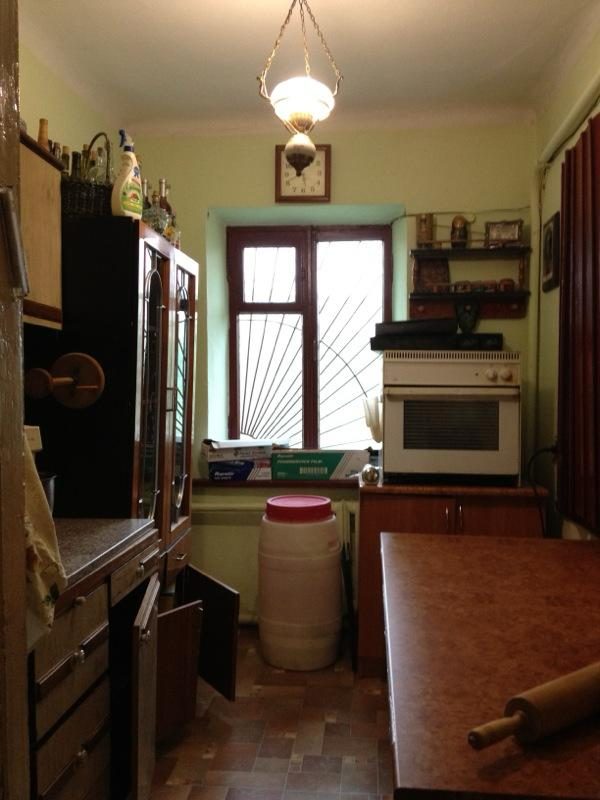
Because kosher chicken was difficult to obtain, the shliach usually used two chickens to feed forty-five people, sometimes one chicken, and sometimes merely a mixture of soup made the Shabbos meal “fleishig” on days when the kosher chickens had run out. Sheets decorated some of the tables, while holes could be seen in the tablecloths where Shabbos candles had melted through the synthetic lace. The “bookshelves” were nothing more than old wooden orange crates. The paint was peeling from the walls, and the old wallpaper in the hallway was peeling as well. The bathroom was an unfinished concrete shell, lacking such “luxuries” as tiles, electricity, and hot water.
And in the midst of all this, the crazy young men demanded one million dollars!
The shlucha was terrified, as they repeatedly insisted that they had reliable information that there was one million U.S. dollars in cash hidden in the house…
V
A Dozen Bottles of Coke and the Shluchim’s Wealth
It was no wonder Leah was scared to death. They could easily have killed everyone. What she did not know was that in places like this, when masked men entered, that was exactly what they did and it had been their full intention. They refused to let her get up to check whether her husband and the boys were all right. One of them seemed to take particular pleasure in opening the chamber of his gun as though he were about to shoot. He told her they were police Berettas and showed her the bullets. They refused to believe that her Russian was extremely limited. Sasha, who spoke English, was lying on the floor, as mentioned, and could not see them. Therefore, he was afraid to say a word.
Ida was in the kitchen and continued washing dishes indifferently. They apparently saw her as a helpless old woman. From time to time, she would come in and ask where to put something, then return to her place.
The robbers announced that they were professional robbers, not mafia, although they claimed that two other mafia groups were also following them. They had been watching the family for several months. They knew they were wealthy Americans because they knew what the shliach bought!
The stunned shlucha asked what on earth she had purchased that proved they were wealthy. As far as she knew, the most expensive thing she had bought recently was a heating pad, costing the equivalent of eleven dollars, when she had not been feeling well.
No! They knew that every Friday she bought a dozen bottles of Coca-Cola, and that proved they were rich!
One must remember that Coca-Cola was the only kosher drink in the country at the time and it was shared among all their many guests! Rabbi Lipscyz thought to himself what a wonderful advertisement for Coca-Cola this would make. An appropriate slogan even formed in his mind: “You know you’re worth a million dollars when you drink Coca-Cola!”
At that very moment, Ida chose to come in and ask what she should do with the last half-cup of soup and one remaining kneidel in the pot. When the shliach told her to do whatever she wanted, Ida declared that she would give it to her dog.
Great! This now conclusively established that they were so wealthy that even their employees’ animals deserved to eat chicken soup!
VI
The Rebbe MH’M’s Picture - Which the Robber Dared Not Look At
After recovering somewhat, Leah knew that she had to place her trust in Hashem. It was Simchas Torah, after all, and she had to be happy! And why did they live here in Simferopol in the first place? They were the Rebbe’s shluchim. They had come here to help other Jews find their way back to a heritage that had been denied to them during seventy years of communism.
Mrs. Lipscyz looked across the room at a small picture of the Rebbe, framed with popsicle sticks and glitter that one of the boys had made at camp and proudly hung on the window. “Rebbe,” she thought, “I know that you are here with us. I know that you are still helping people in difficult situations. I think this qualifies. Please help us now. Please do it quickly, before one of them snaps and shoots…”
After giving tzedaka before Yom Tov, she had been left with 20 kopeks - about ten cents. Rabbi Lipscyz had his last $40.
The leader of the robbers decided to spend most of the time with them, while the others continued turning the house upside down. He began telling her about his difficult life, how his parents hated him, and how he had been forced to make a living through robberies.
She asked whether he knew why they were there and explained that they were not wealthy American businessmen as he thought, but were there only because the Lubavitcher Rebbe had sent them. She pointed to the picture of the Rebbe on the wall above her.
“Shut up!” he shouted, and whenever she tried to get him to look at the Rebbe’s picture, he repeatedly turned his eyes away from it.
She tried telling him about the Seven Noahide Laws which non-Jews are also commanded to observe, thinking that there must be a reason for their encounter. She told him that he could easily put down his gun, leave, and become a better person. She also told him that Moshiach would come soon.
“Oh no! He will never come!” he almost screamed. “We are here from Satan! The satanic forces will take over the world!”
It was a very unusual statement for him to make. He seemed extremely uncomfortable in the Jewish environment, almost as if he could sense the holiness surrounding the house. His eyes remained lowered the entire time as though he could not bear to look at the pictures of the Rebbe in the room.
It was quite strange. Suddenly she remembered that the previous night, Sasha - a non-Jew who was very sensitive to spirituality - had told the shliach, “I hope you don’t think I’m crazy, but I feel that your house is being watched by satanic forces…” She had dismissed his concerns, telling him that they had kosher mezuzos and that Hashem was watching over and protecting them because of the Rebbe - but it was strange nonetheless.
VII
“If You Think We Have a Million Dollars, That’s a Joke!”
In the bedroom, Rabbi Lipscyz awoke to the sound of strange noises. When he opened his eyes, he saw a masked man going through the drawers of the dresser. His first thought was that one of the bachurim was playing a prank on him. But when he got out of bed and the man turned toward him, pointing a gun, he realized it was real.
Rabbi Lipscyz tended towards unusual reactions when faced with challenging situations. When the robber told him, “The rumor on the street is that you have a million dollars,” Rabbi Lipscyz smiled.
“I’m sure that if that’s the rumor on the street, it must be true. But I still haven’t received it. If you leave me your name and phone number, when I get the money, I’ll call you…”
The robber became angry and waved the gun.
“This is not a joke.”
“If you think we have a million dollars, that’s a joke!” Rabbi Lipscyz suddenly retorted.
“Where do you keep the money?” the robber impatiently waved his gun.
Rabbi Lipscyz laughed and said that he had spent the little money he had on the holidays. The only money he had left - $40 - was in the pocket of his shirt hanging in the closet.
A few minutes later, he suddenly noticed how quiet the house was. He began to worry about his wife and children. He got up, intending to search the other rooms, but the robber pointed his gun at him and asked where he was going. Rabbi Lipscyz replied that he was going to see where his wife and children were and whether they were all right.
“They’re fine, and you should sit back down,” the robber said impatiently.
Rabbi Lipscyz responded that the robber did not strike him as the kind of person whose words inspired trust or reassurance and therefore he was going to see for himself that everything was all right with his family. The robber was so astonished that Rabbi Lipscyz was completely ignoring his threatening gun that he jumped up and said that he himself would go check on them and then return for him.
“I’m giving you two minutes, but not a second more, before I go check myself…”
The robber ran to the dining room, lifted Sasha from the floor, and seated him on a bench. The robber realized that the Jewish rabbi was not afraid of his gun, and he was worried about how the rabbi would react if he saw the guard lying on the floor with a gun to his head…
On his way from the bedroom to the dining room, Rabbi Lipscyz passed through the children’s room. He was relieved to see them sleeping peacefully. He offered a brief prayer of thanks to the Almighty and asked Him to allow them to continue sleeping soundly throughout the dramatic ordeal.
When he entered the dining room, he was very proud to see his wife sitting in her place, relatively calm, and praised her for it. Sasha, on the other hand, was quite terrified; one could almost hear his knees knocking.
VIII
The Rebbe’s Dollars Fell from the Robber’s Hand Like Burning Coals
The robbers brought out the shliach’s jewelry box and began examining every item, asking whether any of it was gold or contained genuine stones. Most of the jewelry was not real gold, along with a few gold earrings and a gold-and-pearl pendant that had belonged to her grandmother.
The leader asked about each piece of jewelry, but when Leah told him which ones were genuine, he reacted aggressively: “No! I don’t want your jewelry, nor your mother’s or grandmother’s jewelry!”
He continued throwing the pieces onto the floor one by one. The box also contained twenty-one individual dollar bills that they had received from the Rebbe on various occasions.
There was also a copy of Raziel HaMalach, a Kabbalistic sefer traditionally regarded as possessing protective qualities for its immediate surroundings.
The moment the leader picked up the Rebbe’s dollars, he immediately dropped them from his hand, as though he had been burned by them. The same thing happened when the second robber tried to pick up the blessed dollars. When the third robber tried to take them, his leader shouted at him, “No! Don’t touch them! There’s something wrong with them!”…
“What about my ring?” she suddenly asked. “We don’t have any money, but my ring is worth a lot,” she said, referring to the wedding ring she had received in the yichud room after their wedding. She now thought that perhaps she could appease the robbers by giving them the ring in exchange for their lives.
“How much?” he asked.
“It’s an almost perfect stone, and it was worth more than $1,000 twenty-six years ago,” she replied.
“No, we don’t want your jewelry. In any case, it would be easy to identify,” he said.
She desperately tried to convince him. She practically begged someone to take the ring she had guarded so carefully over the years.
“No,” he insisted. “We don’t want your ring. We want the money.”
He picked up the sefer Raziel HaMalach and stared intently at the picture of the tzaddik, the Baba Sali, on its cover. He did this several times.
IX
A Lesson in the Seven Noahide Laws Under Threat of Death
“Today is Simchas Torah,” Rabbi Lipscyz thought, trying to connect the spiritual significance of the day with the strange and dangerous situation in which he had suddenly found himself in the middle of the night.
Rabbi Lipscyz and his wife continued trying to convince them that they had the wrong address.
The hours passed, and sunrise drew closer. The three robbers became increasingly nervous, desperate to find the money. They began banging on the walls in an attempt to locate a hidden safe, and then knocked down a valuable painting. The shlucha could not suppress a small cry that escaped her.
The painting belonged to a friend, an artist named Anton, who had hung it in their home “so that it would absorb the spiritual energy of the house.” Besides being an amazing artist, his paintings had such vitality that a viewer could almost feel as though he were inside the painting.
[The next day, when Anton came to their home for the Yom Tov meal, he looked at the painting and began physically trembling. No one knew about the events of the night, but he pulled Rabbi Lipscyz aside and quietly asked, “What happened here last night?” When Rabbi Lipscyz innocently asked what he meant, the artist looked him in the eyes. “Rabbi, the energy this painting is giving off shows that a very traumatic event took place here last night.”]
The robbers became even more agitated. The leader sent “Mr. Quick Trigger” to wake one of the children and take him hostage until the money was found. They sent Sasha with him, so that the child would not be frightened when someone wearing a mask suddenly woke him. Rabbi Lipscyz said to the leader, “If I were you, I wouldn’t do that.”
The man looked at him in surprise and asked, “Why?”
“Look,” Rabbi Lipscyz said. “Aren’t you wondering why both my wife and I are sitting here so calmly, even though three thugs with guns are threatening the lives of our family? You say you are a professional robber. If so, tell me: Is this the normal reaction you get from your victims?
“Let me explain why we are so calm. We are religious, believing Jews. We are in our current situation not because you decided to rob us, but because Hashem wants us to be in this situation. If Hashem has decided, Heaven forbid, that I am going to die tonight, then even if you don’t pull the trigger, it will happen. On the other hand, if Hashem has decided that we will survive the night, then even if you put a gun to my head and pull the trigger, I will live.
“However, I am not privy to this divine information, and I don’t know what Hashem has decided. So both my wife and I have said the prayers a Jew is supposed to say before death. Now we can sit peacefully and watch how Hashem directs the rest of this script. As far as I’m concerned, you are an insignificant actor in this scene.
“Precisely because we are sitting here so calmly and quietly, you can continue with your business of turning the house upside down to your heart’s content, until you are convinced that we really have no money. Perhaps you will even find something you like and take it. But now you are about to introduce another factor. If you try to take my son hostage, the Torah requires me, as a father, to do everything I can to stop you. And I will get up and fight you! You, in turn, will try to shoot me to kill me. With all the noise and panic that will follow, you will have to flee without continuing your search, and you will gain nothing!”…
As he explained this patiently, Mrs. Lipscyz stared at him incredulously. How could he speak in a way that sounded as though he were giving a lesson about a theoretical response to an event that might happen to someone else at some other time?!
Meanwhile, the second robber returned with Sasha and Chaim Yosef, their ten-year-old son. The shlucha motioned for Chaim Yosef to come and sit on her lap. The robber wanted to stop him, but his companion, the leader, signaled that he should allow it.
The second robber was impatient. “There are three more children in the room. I’ll point the gun at the boy’s head and count to ten. If they don’t tell us where the money is, I’ll shoot him, and then take the second child and do the same thing. Soon they’ll understand that we’re serious.”
At this point, Rabbi Lipscyz looked the leader directly in the eyes and stood up. The leader realized that he was about to lose control of the situation and shouted to his companion, “No!”
The latter became frustrated and angry. “Go search another room, and I’ll deal with them,” he said, pointing his gun toward Rabbi Lipscyz, his wife, and their son.
Having nothing better to do, Rabbi Lipscyz began telling the leader about the Seven Noahide Laws, emphasizing that there is an all-seeing Hashem who controls the world, and that He commanded us not to murder and not to steal.
“Seems like this is a good time to start putting some of those commandments into practice.”
“I used to believe in G-d, but I had a difficult life without money, so I turned to a life of crime.”
“If your success in your criminal activities is any indication, I recommend that you return to G-d. You’ll get more out of it!” the shliach said in a friendly tone.
“Are you telling me,” the leader asked, “that if I come back to you in two weeks without my mask and tell you that I’m the guy who did this, you’ll forgive me and help me?”
“I already told you,” Rabbi Lipscyz answered patiently. “As far as I’m concerned, you are completely irrelevant to what is happening tonight. If I have any problem with what is happening here, I need to resolve it with G-d. You have your own problems with G-d because you are involved in something He teaches us not to do. If you are asking me to help you repair your relationship with G-d - then if you promise to observe the Seven Noahide Laws from now on, I agree to serve as your advocate before Him.”…
X
“Give Me Your Word, As A Rabbi”
Daylight was approaching quickly. The robbers knew they did not have much time left. They realized that their leader had finally begun to doubt whether there really was any money there, and whether he had been given false information.
Suddenly, the leader spoke, and his tone was different than before: “You know what? I would just leave and take nothing. But as you can see, my partners are frustrated, and if I try to tell them that, they’ll turn against me. So give me something for the other two guys. Give me your diamond ring, and I’ll also take your daughter’s computer and video camera. But you have to give me your word as a rabbi that you won’t go to the police and that you won’t move for the next half hour so that we’ll have enough time to escape.”
Rabbi Lipscyz promised that he would not take steps to have them arrested for what had happened, but he wanted a favor in return: that they tell the other groups who were eying their house that it was a waste of time to try to rob them, because they truly had nothing of value.
It was 5:10 a.m. when the three men left the house. The shluchim remained in their places until 5:40, as they had promised. Only then did they go to close the door to keep the cold air out. Ida had already returned to her home. Sasha and the shlucha began clearing away the wreckage, after the house appeared as though a tornado had passed through it.
Rabbi Lipscyz sat down to study a maamar Chassidus relevant to the day - Simchas Torah.
Only then did the neighbors’ roosters begin announcing the arrival of the morning of Simchas Torah…
XI
One Less Criminal On the Streets of Simferopol
A year and three months passed since that terrible night.
One evening, while Rabbi Lipscyz was in the United States, one of the women entered the house and looked for the shlucha.
“There’s someone here who came to see you,” she said. “But he doesn’t look like someone we should let in”…
The shlucha went out into the yard and looked into those same intense brown-green eyes that had most recently been glaring at her from above the barrel of a Beretta.
“You know me,” the man said. “I was here before.”
“A year and three months ago?” she asked hesitantly.
“Yes,” was his brief reply.
This man was the “leader of the robbers.” A tremor of nervousness went through Leah’s body, and she began thinking about how she could get back inside with the door safely locked behind her.
She remembered that she had had a long and serious discussion with him about the Seven Noahide Laws and how he could change his ways. At the time, he had asked, “Do you mean that if I come back to you in two weeks without my mask and ask you to help me change my life, you will do it?” Rabbi Lipscyz had answered him in the affirmative.
Now, he continued, during the week following the robbery, he had thought a great deal and decided to leave Simferopol for Dnipropetrovsk, where he met a “holy woman,” as he called her, who helped him rehabilitate his life. He had now returned to them at her direction, in order to apologize for what he had done to them.
He was sorry that he had frightened them, he said, and of course he never would have shot the child! But the main thing was that they had been certain at the time that there must be a reason for the difficult experience they had gone through and here it was! He had taken their words to heart, and for the time being, at least, there was one less criminal on the streets of Simferopol…
When Mrs. Lipscyz looked again at the small, framed picture of the Rebbe, decorated with popsicle sticks and glitter, she knew with certainty that her prayer that night had been answered.
The Rebbe had indeed been with them, not only to protect them, but also to illuminate the way for a man who had lost his path and found it again.
Beis Moshiach #1524 • י״ד תשרי תשפ״ז • pp. 36-47
© 2026 Beis Moshiach Magazine. All rights reserved.
This article originally appeared in Beis Moshiach #1524. You are welcome to share it with friends and family by email or in print, provided that you do not change, add to or omit any part of it, you credit the author and Beis Moshiach, and you include a link to archive.bmoshiach.org (written out in full in printed copies).
To republish this article in a newspaper, magazine, book or website, please request permission in advance at [email protected].