We Are Far From Finished With Hezbollah
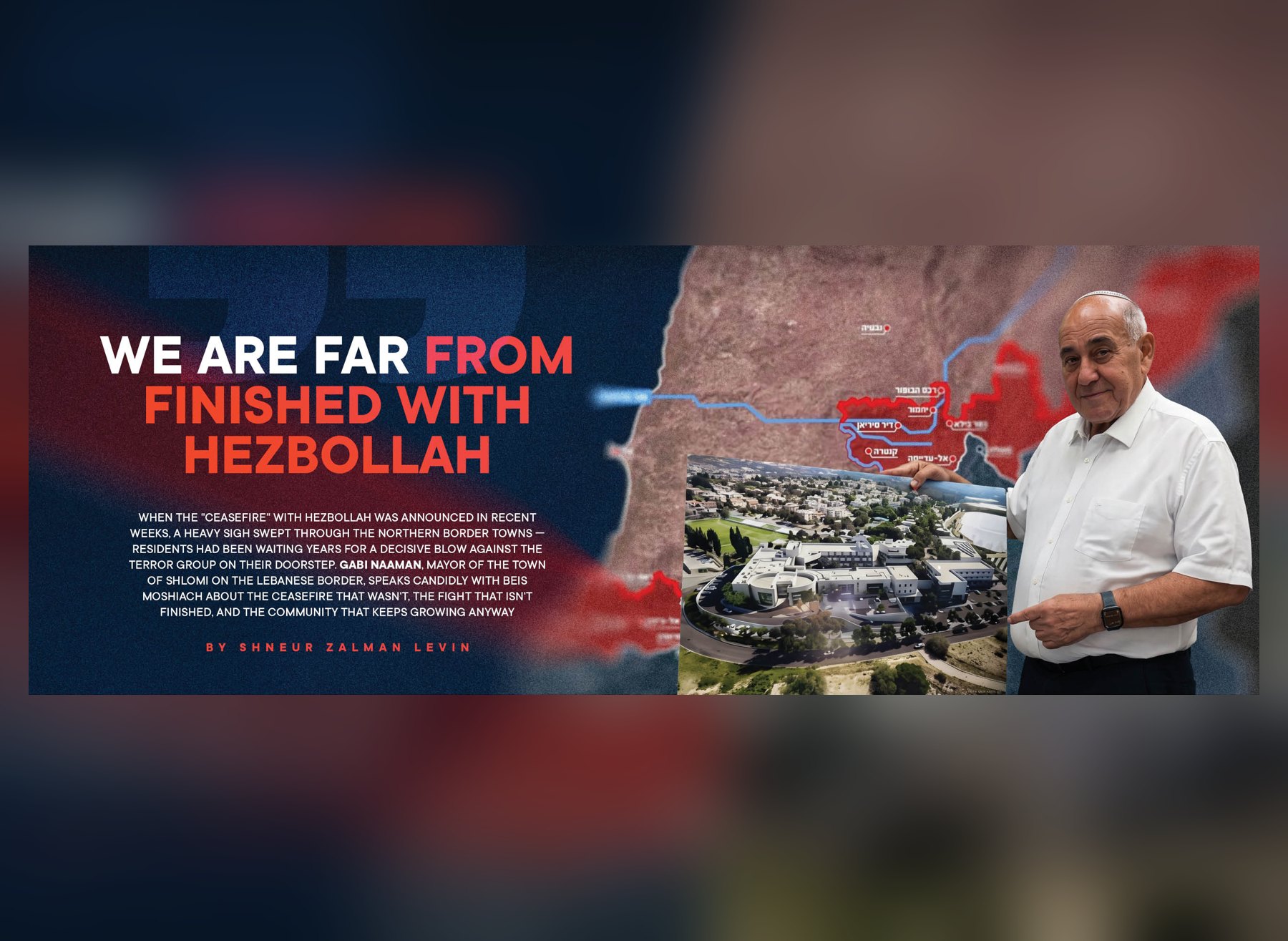
When the “ceasefire” with Hezbollah was announced in recent weeks, a heavy sigh swept through the northern border towns – residents had been waiting years for a decisive blow against the terror group on their doorstep. Gabi Naaman, mayor of the town of Shlomi on the Lebanese border, speaks candidly with Beis Moshiach about the ceasefire that wasn’t, the fight that isn’t finished, and the community that keeps growing anyway
Only one kilometer separates the local council of Shlomi from the Israel–Lebanon border. It is situated in the western Galil, about 4 km east of the Mediterranean Sea and 3 km east of Rosh HaNikra.
Its proximity to the Lebanese border caused it to take heavy hits during Operation “Lion’s Roar” in particular, and throughout the past two and a half years since the outbreak of the October War, on the morning of Simchas Torah 5784.
When I spoke this week with Gabi Naaman, mayor of Shlomi for the past 27 years, I asked him how Shlomi’s residents had experienced this period, and he immediately fired off statistics: “Look, over 300 missiles were fired at Shlomi, and over 40 drones hovered above our skies. One drone fell last Shabbos on a concrete building, causing damage only, along with several missiles that fell on roads.
“How did the war affect us? It was very, very hard for us as residents. A large number of our residents were inside their homes. It’s not simple at all when you’re this close to the border, and the warning time for incoming fire is essentially zero.”
How do you survive that?
The message I conveyed to residents at the start of ‘Lion’s Roar’ was very clear: we are in a routine, but an emergency routine. I asked that we do everything so that our community would not become a community living under threat. On the contrary, I made sure businesses stayed open; the industrial zone opened as well, and some five thousand workers arrived daily to work. We also opened kindergartens, daycare centers, ran afternoon activities – all of course inside shelters, as required by law. In the end, parents went to work and routine life here in Shlomi was strong and meaningful.
At the same time, of course we protected ourselves; we distributed over 80 fortified shelters throughout the community. Pedestrians always have somewhere to duck into at any moment near supermarkets, employment areas, shuls, and so on. We also renovated shelters and worked as quickly as possible to build safe rooms for residents who didn’t have them. About 450 families still lack safe rooms, but the budget is in place and contractors are already on the ground.
Overall, we came through this war with dignity. I always like to see the positive side. This time we did not evacuate residents from their homes as we did after October 7th. I’m proud to say our community has great resilience; almost 100% of residents who left during the previous war came back home. Recently, 20 new businesses have opened in Shlomi, and we are on the verge of marketing 1,200 housing units in a new neighborhood. All of this truly gives me great hope.”
Against Hezbollah — No “Bang and Done”
The north is breathtaking this time of year, and Shlomi is its crown jewel. At the foot of the mountains, facing the coastline, a horizon of sky and blue sea against the flowering green orchards that seem unfazed by the shelling. In Shlomi’s new neighborhood, the houses are also beautifully designed but all of this is overshadowed by the uncomfortably close proximity to the security border fence. The locals used to say that if Hezbollah throws a stone into a well, it lands on one of the residents’ heads.
Throughout the years, Hezbollah was entrenched on the hill and Shlomi lay beneath it, spread out before them, defenseless. In older homes, shrapnel marks are still visible. During Operation Iron Swords, significant damage was caused by rockets, artillery shells, and anti-tank missiles. Immediately after Simchas Torah, most residents evacuated. It’s no simple challenge; locals joke (or don’t) that in Shlomi, the alarm goes off after the missile has already landed.
You talk about development and expansion plans, and I don’t need to remind you that you’re sitting almost on the fence facing a Hezbollah that is alive, breathing, kicking, and very dangerous…
True, and as I understand it, we are far from finishing this campaign against Hezbollah. It seems one chapter has ended, but is not yet complete.
It sounds like you’re not satisfied with the ceasefire.
Look, we are in a very extensive war. There’s no ‘bang and done.’ There are processes: a process with Iran, a process with Hamas, a process with Hezbollah.
Toward the end of the previous war, we asked for some 4–5 fortified positions to protect our communities, and we received five positions, one of them in Shlomi. At the same time, we demanded that terrorists be pushed back at least 2 km as a red line security buffer and instead we received something in the order of 7–8 km deep into Lebanon. The IDF has expanded Israel’s borders with a new security strip. Based on the information I know, this is a genuine security strip that provides a real security response for Shlomi residents and all northern communities. It is now much harder for terrorists to attempt to infiltrate our communities.
It’s important to remember where we were on October 7th. On that day, Hezbollah was sitting right on the fences, equipped with some 130,000 missiles, with fighters who could at any moment cross the fence and conquer the entire north. Boruch Hashem, we were saved by a great miracle. We merited heavenly miracles and wonders. Just last night I wrote to our residents on our Facebook page and asked them to read perek 100 of Tehillim, Mizmor L’Soda, together with me. 300 missiles flew above us, and only a handful fell on open roads – that is a great miracle, and we thank Borei Olam for it. Together, we truly understand that the road is still long until we ultimately defeat the enemy.
Was there a particularly miraculous story you can share?
We don’t have dramatic stories; I can tell you that our residents are the true heroes – residents who don’t complain, residents who sat for almost 50 days in their homes, got up and went to work, and protected their children from the sirens. Every day 7, 8, 9 alarms, at night and during the day, and boruch Hashem, no complaints. It amazes me how our residents don’t complain.
Maybe they’ve given up complaining when they see no real change?
“They understand that the road to victory over our enemies is long, and there’s no ‘bang and done.’ We are in the middle of a process. Will it ultimately lead to peace or dialogue with the Lebanese government? Or with Hezbollah? Ashrei ha’maamin. But in the end, apparently the IDF will sooner or later have to complete this task. It’s a very difficult challenge, because to truly defeat Hezbollah, you’d have to conquer Lebanon. We’re talking about a vast area – like conquering from Shlomi all the way to Ashkelon. Is the IDF ready and equipped for that right now? I have no idea. But for now we are in the first phase, and we’ll see where the next phases lead us.
“It Seems We Are Destined to Fight Until the Geula”
For 27 years, Naaman has led this small local council in the western Galil, managing its affairs with dedication and drive. He has been there so long that the boundaries have blurred – Shlomi is Naaman, and Naaman is Shlomi.
You are a very longtime resident of Shlomi and have served as council head for so many years. You’ve seen and heard things firsthand, without anyone telling you stories… Do you truly believe that one day Hezbollah will no longer be on the lines and this threat will be lifted? Or will it be “the sword shall devour forever,” with tension always on the northern border?
I believe that one day Hezbollah will no longer be on the border lines. And October 7th will not repeat itself. We as council heads personally will not agree to it or allow it. If we see, heaven forbid, that the IDF starts to relax and turn a blind eye, we will do everything to prevent that from happening again.
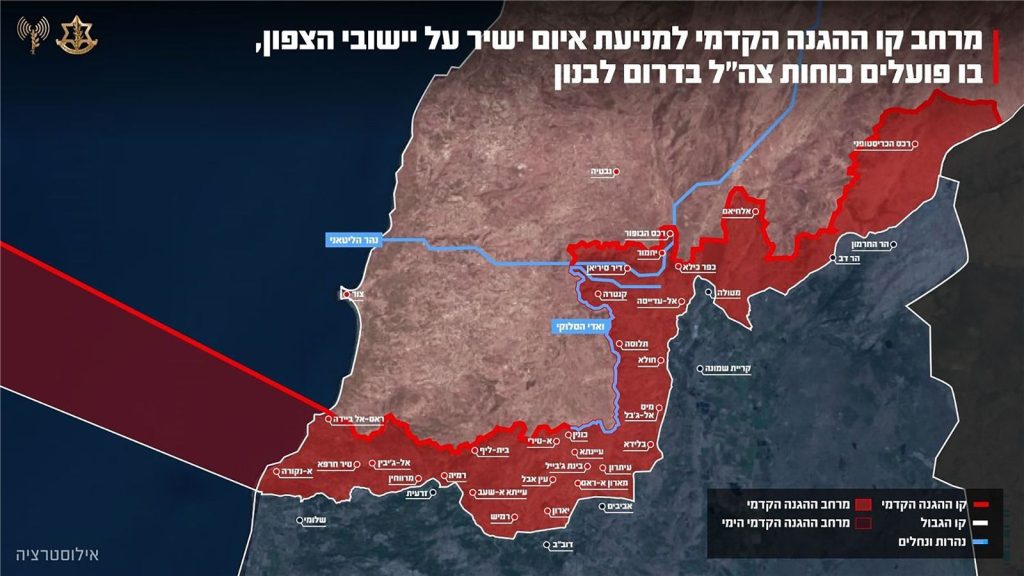
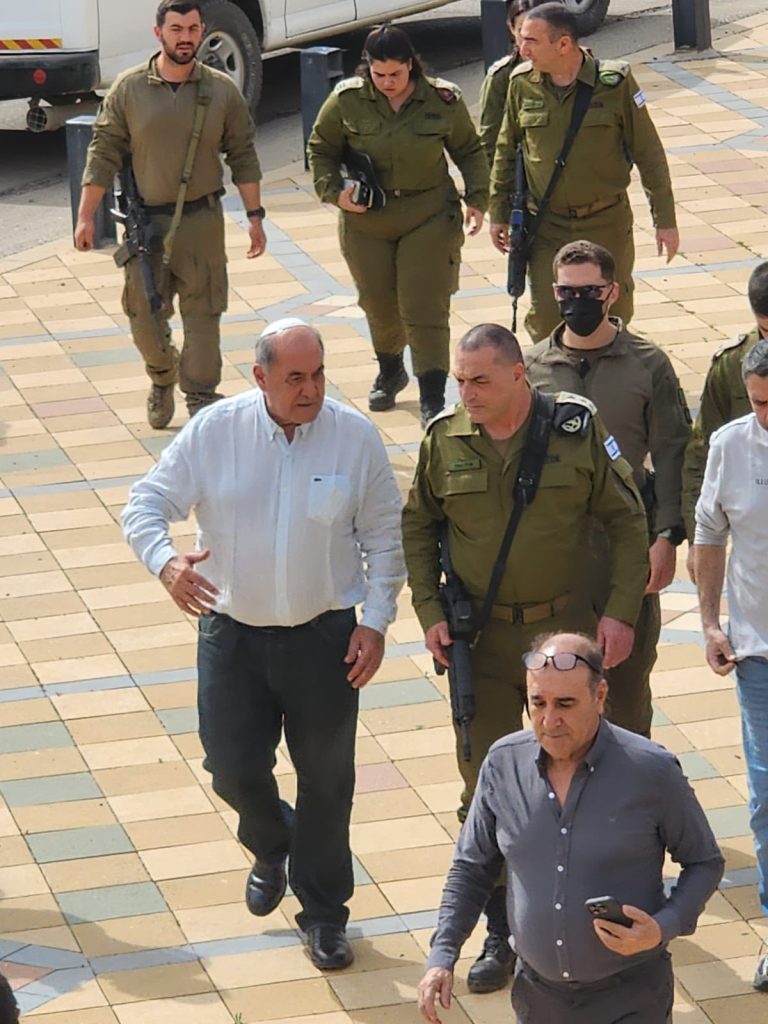
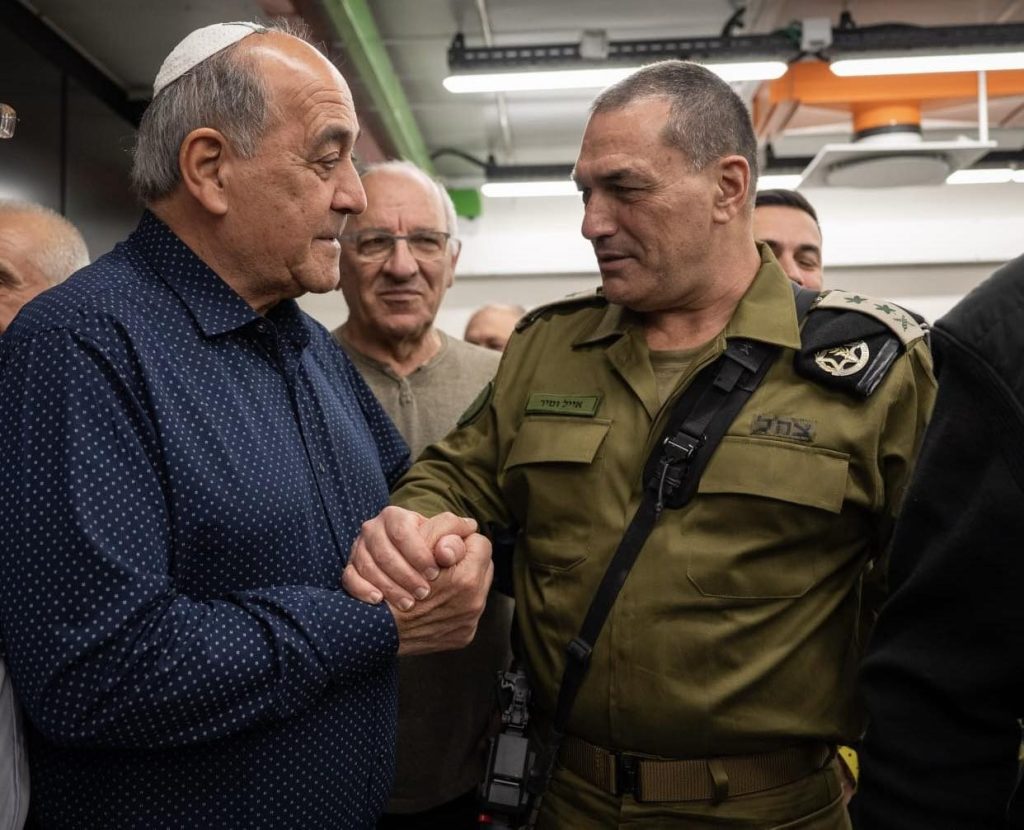
Last week the Chief of Staff visited us, and I heard from him personally that the IDF has changed its way of thinking. There will no longer be a ‘conception.’ We have now captured a strip in Lebanon, and we will not leave until Hezbollah disarms and no longer poses a threat to northern residents. I hope I can believe the Defense Minister and the Prime Minister, though I don’t delude myself, and it’s clear to me that the road is still long until Hezbollah is eradicated.
You know, the Rebbe cried out and pleaded several times in the past – mainly during the First Lebanon War – not to stop in the middle of an operation; if there is bleeding, the doctors must not panic but must continue the surgery to the end. In military terms, the Rebbe implored not to halt an operation midway, but to cut down the enemies until the end of the campaign. And here, last week, we were informed once again – for who knows how many times – that they’re stopping again in the middle of an operation without finishing the job. What do you think of that?”
The Rebbe’s words are powerful – more powerful than me, more powerful than all of us combined, including the Prime Minister. What he sees and what he believes is light-years beyond our comprehension.
Does the Israeli government, the Prime Minister, follow the Rebbe’s path and understand that the war must not be stopped before it concludes in a great victory? I wish that were happening! Why isn’t it? There are several reasons. I don’t think the ceasefire happened now due to a lack of faith in the righteousness of our path or in our strength – but mainly because of heavy constraints resting on the Prime Minister’s shoulders.
In one of my meetings with the Prime Minister, Netanyahu told me that Lebanon, Hamas, and the terrorists in Yehuda and Shomron are one big headache, but Iran is the head, and that’s where we need to dismantle things. I do see that he is now giving extra attention to Iran. Not everything is in the Prime Minister’s hands; we have another representative we received as if from Heaven – the President of the United States who helps us greatly, and perhaps he too is a shliach from Borei Olam to assist us…
I hope that both of them are doing work that will ultimately allow us to see the head of the serpent that tried to strangle and destroy the State of Israel, crumbling before our eyes as in the stories of Tanach…
I always use the example of Moshe Rabeinu who tells Yehoshua to go and destroy Amalek who came to fight against the Jewish people. With all of Moshe’s faith and strength, when Hashem gives him all the powers from above, and Moshe raises his hand and Israel prevails, at a certain point his hands grow heavy and they place supports under them… Yet in the end, after all that visible divine power, the Torah recounts: ‘And Yehoshua weakened Amalek by the sword.’ That is, even he did not manage to completely destroy Amalek. It was hard then, and it is hard today to completely destroy the enemy.
Do you think there’s a scenario in which Hezbollah will ultimately be eradicated and true, long-awaited quiet will arrive? Or will that be left for Moshiach?
It’s hard for me to envision the IDF entering and conquering Lebanon and completely destroying Hezbollah. I do hope that a miracle will occur and that some kind of arrangement will emerge so that ‘the land shall rest for 40 years’ – or that Moshiach will come beforehand and redeem us all with a Geula shleima, and we will see the justice of our path, and all nations will honor the Jewish people. I pray we merit our Geula, but until then, it seems we are destined to fight.
“We Knew It Was Only a Matter of Time Before the Terrorists Would Enter”
The massacre of Simchas Torah 5784 caught Gabi Naaman, the council head, in shul: I was in the middle of tefilla, and suddenly my wife arrived agitated and frightened, saying there was a major event in the south. I told the congregants there was an emergency, urged them to be careful, and went home. The security coordinator and the council’s CEO arrived, and together we watched the news and called the brigade commander and waited for soldiers to arrive at Shlomi. It was clear to us that trouble would open from the north as well, and it was only a matter of time before Hezbollah struck. In practice we waited eight hours, and the army didn’t come. We even managed to eat lunch, and while waiting, it became clear that there were many dead and hundreds of hostages. So I opened a command center, mobilized the municipal staff, and we began to work.
I felt like I was living in a bad movie. I couldn’t understand how something like this happened to the IDF, the Shin Bet, Military Intelligence. The scenario was that they would enter Israel, conquer the Galil, and abduct soldiers. From the moment people in the north saw what happened in the south, the level of dread rose and most residents evacuated.
Gabi Naaman doesn’t believe in the conception that existed all those years – of building a well-fortified border opposite Hezbollah: In the end, even if the IDF tries to be smarter and more technological, refine its procedures, and station divisions and heavy equipment in the north, time does its work and vigilance weakens. Even if the army builds battalions in Shomera and Zarit and soldiers guard us day and night, eventually Hezbollah will find the weak point and exploit it and pour through en masse and reach Haifa. They have the capabilities, equipment, and fighters far more trained than those who conquered the south.
He is glad the IDF entered deep into Lebanon and is “putting things in order,” as he puts it. He and the residents always feared that on the day of reckoning, Shlomi and neighboring communities would face thousands of trained terrorists on motorcycles, gliders, and machine guns crossing the border from above and below: If we hadn’t entered to fight them, we would have seen Hezbollah terrorists in Haifa and Yokneam, racing to Tivonim and Shomera, conquering Nahariya and turning beautiful, green Shlomi into scorched earth. They posed an existential threat to Israel.
How do you explain the fact that Hezbollah did have an opportunity to join the campaign on the morning of Simchas Torah 5784 – and didn’t?
We had a miracle. ‘And the fear of G-d fell upon them,’ as the pasuk says. Something deterred them and they waited until it was too late to join. But as a people that loves life, we cannot rely on miracles. Woe to us had they joined the campaign. In the south there were still police officers and local security teams, soldiers and readiness units who took personal initiative and fought to the end. That’s how they stopped the terrorists, and thanks to them Tel Aviv was saved. In the north the situation would have been far worse; Hamas fighters are savages, but low-level combatants, while Hezbollah are skilled, experienced fighters. The Radwan Force was composed of thousands of professional, aggressive fighters with a clear objective: to conquer the north. There are videos of them training to conquer Shlomi and the confrontation-line communities. They declared this goal openly and prepared themselves for years for the opportune moment. We knew this. The great mazal was that Hamas and Hezbollah were not coordinated – and by the time Hezbollah came to its senses, the IDF had already begun streaming large forces here, and the element of surprise was gone. I pray that the IDF and the government take on the responsibility to eradicate Hezbollah from its roots.
A Near-Total Return — and Then Some
Since the widespread evacuation of northern communities on Simchas Torah 5784, the picture of return has been far from uniform. While many northern authorities struggle with only partial returns and communities that have not yet recovered, the local council of Shlomi presents a different reality: an almost complete return, alongside absorption of new families.
In Kiryat Shemona, Metula, and other places on the northern border, there is negative migration. How did it happen that Shlomi is different?
(Naaman returns to Simchas Torah 5784, when Shlomi was evacuated within just two and a half days. He says the community was prepared for evacuation in advance as part of early preparation with the Home Front Command): We’re the only ones among the confrontation-line communities that prepared an evacuation scenario for all 9,000 residents. For four years we practiced it with the Jerusalem Municipality – so when the order came to evacuate, within just six hours, half the residents were already in hotels in Yerushalayim… The next day we completed the evacuation of the second half, to Teveria and Haifa. The very fact that residents saw the evacuation carried out in an orderly, caring, non-chaotic manner created the first layer of trust. They knew they were not being abandoned. (According to him, the real challenge was not the evacuation itself, but maintaining the community afterward): A community that disperses to several regions – that’s a dangerous situation. If you lose the connection, you lose the ability to bring people home.”
To prevent disconnect, the local council decided to operate with a different structure: splitting into four active arms – in Yerushalayim, Haifa, Teveria, and Shlomi. “We essentially established a local council in each one,” Naaman recounts. “Administrators, workers, education, welfare. Everything that existed in Shlomi was there as well.”
While most municipal workers were evacuated with the residents, Naaman himself, together with the council CEO and the security division, remained in Shlomi, while simultaneously running between the hotels where the evacuees were staying. “Not on Zoom or through messages. I would physically go, listen, solve problems, and return. A resident needs to feel seen.” Residents confirm this. “He knew what every family needed,” residents say. “Who had young children, who had health issues, who was in distress. He was there.”
Alongside managing the evacuation and running things from a distance, Naaman chose to remain in Shlomi throughout the war. He says the physical presence in the community was an inseparable part of management. Every day he published a daily update to residents describing what was happening in Shlomi, the security situation, what work was being done, and what was expected. “The residents were partners in the process,” he says. “They knew what was happening, even when there were no complete answers.” According to residents, the daily update and the visible presence of the council head in the field united the community, created continuity during a period of uncertainty, and instilled a sense of civil security – even when the community was almost entirely empty.
According to Naaman, the return happened in clear stages: in March, about 75% of Shlomi’s residents returned. By the end of the school year the return rate rose to about 85%, and in September, with the opening of the school year, the community reached near-complete return – alongside the absorption of new families.
And the result?
Boruch Hashem, 100% of Shlomi’s residents have returned to their homes! This is not at all a given.
I’ll add further that today we have 112% of the residents we had on October 7th. That is, since the outbreak of the war – with all the difficulty – new populations have additionally purchased or rented apartments here in Shlomi. We have actually grown by nearly 800 new residents. We now number almost ten thousand souls. Not only did people not leave, we absorbed new ones.
How did you perform this miracle?
Throughout the entire time we truly cared for our residents, gave them optimism, gave them hope and a sense of community structure; we knew how to care for them even when they were outside the community after the outbreak of the Iron Swords War – we gathered them in Acco, Nahariya, and Haifa, and in that way we kept our community intact without letting it fall apart as happened in other places. I invested a great deal here.
With full modesty I can say that in the last elections for Shlomi, all the residents united around me and asked that there be no elections. We formed a single movement under my leadership, and even the former opposition members joined and we all enlisted as one party in complete unity. 100% unity. I pray that every city and our entire country will learn to connect people and be united – and this is a great blessing for our community.
If we spoke of ‘Yemos HaMoshiach,’ there’s no doubt that from the perspective of this rare unity, you are already tasting ‘Geula’…
I truly want to wish all of Israel’s residents, without exception, that we will genuinely hear the footsteps of peace and the footsteps of the Moshiach coming to us speedily, and that everyone will have a good livelihood and true peace. ■
Beis Moshiach #1505 • pp. 24-31
© 2026 Beis Moshiach Magazine. All rights reserved.
This article originally appeared in Beis Moshiach #1505. You are welcome to share it with friends and family by email or in print, provided that you do not change, add to or omit any part of it, you credit the author and Beis Moshiach, and you include a link to archive.bmoshiach.org (written out in full in printed copies).
To republish this article in a newspaper, magazine, book or website, please request permission in advance at [email protected].