8 Days at Bedford & Dean – Part II
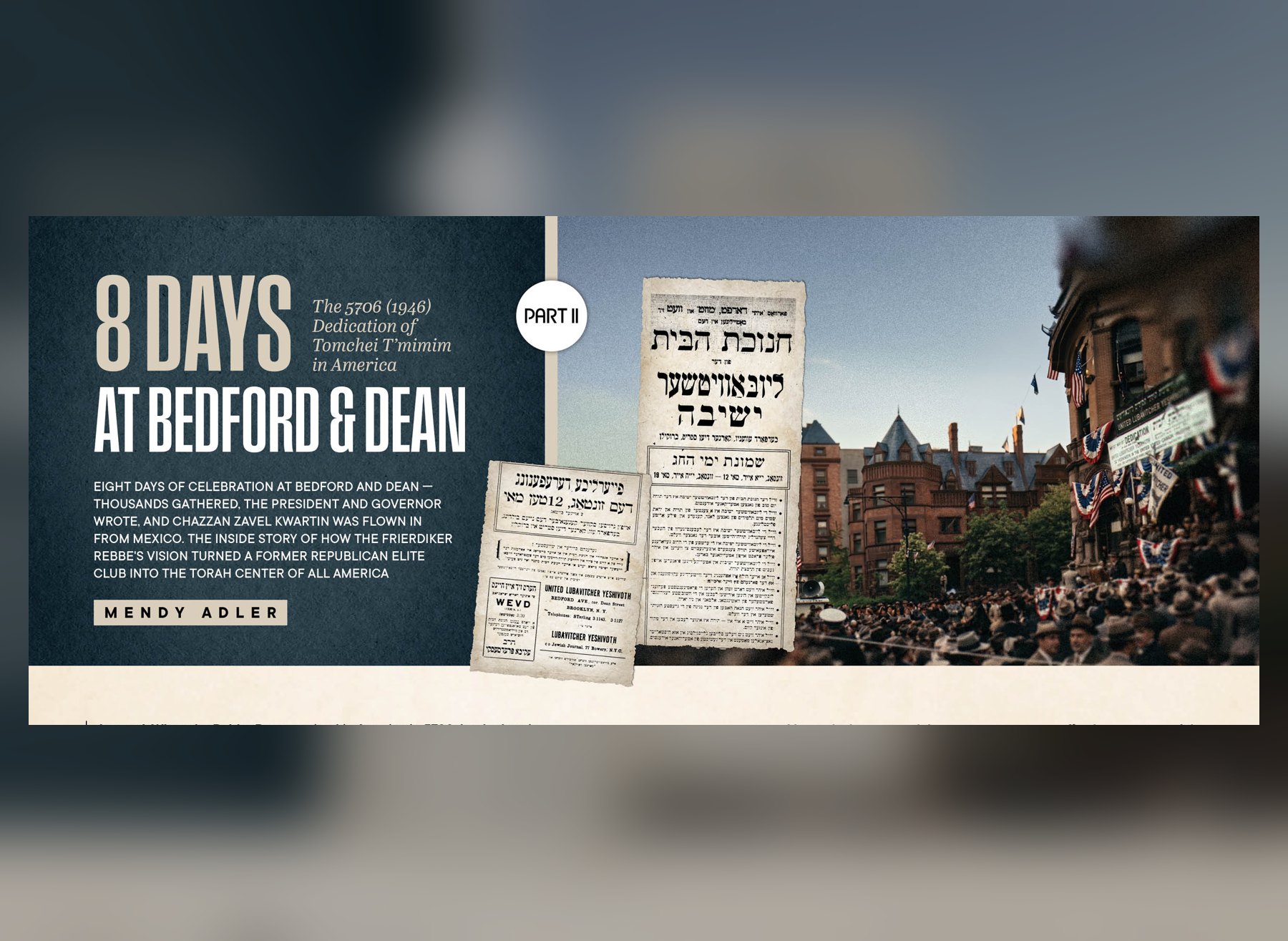
The 5706 (1946) Dedication of Tomchei T’mimim in America
Eight days of celebration at Bedford and Dean – thousands gathered, the President and Governor wrote, and Chazzan Zavel Kwartin was flown in from Mexico. The inside story of how the Frierdiker Rebbe’s vision turned a former Republican elite club into the Torah center of all America
In part I: When the Rebbe Rayatz arrived in America in 5700, he declared “America is no different” and founded Tomchei Tmimim. As the yeshiva outgrew 770, the former Union League Club (the Republican Civil War-era organization) on Bedford and Dean was acquired and renovated. By Iyar 5706 (1946), an unprecedented eight-day chanukas ha’bayis was planned, garnering presidential recognition and causing a great buzz in the Jewish world:
11 Iyar: The Parade and the Kabbolas Panim
The dedication events opened on Sunday afternoon, the 11th of Iyar. Despite the questionable weather in Brooklyn that day, the number of participants was estimated at more than three thousand people. The gathering point was not the new building itself, but rather 770. From there, an organized mass procession set out, a public parade that crossed the streets of Brooklyn. At the head of the march walked hundreds of rabbis, roshei yeshiva, and balabatim from the Chabad community and from all streams of Judaism, carrying Sifrei Torah in their arms. The report in the newspaper Der Tog described the scene as an extraordinary show of presence on the American street: “The crowd passed before thousands of people who lined both sidewalks of the avenue.” Pedestrians and local residents stopped their daily routine to watch the parade making its way from Eastern Parkway toward Bedford. Dozens of organizations, communities, rabbis, and askanim joined the Torah march and expressed their support for the great enterprise.
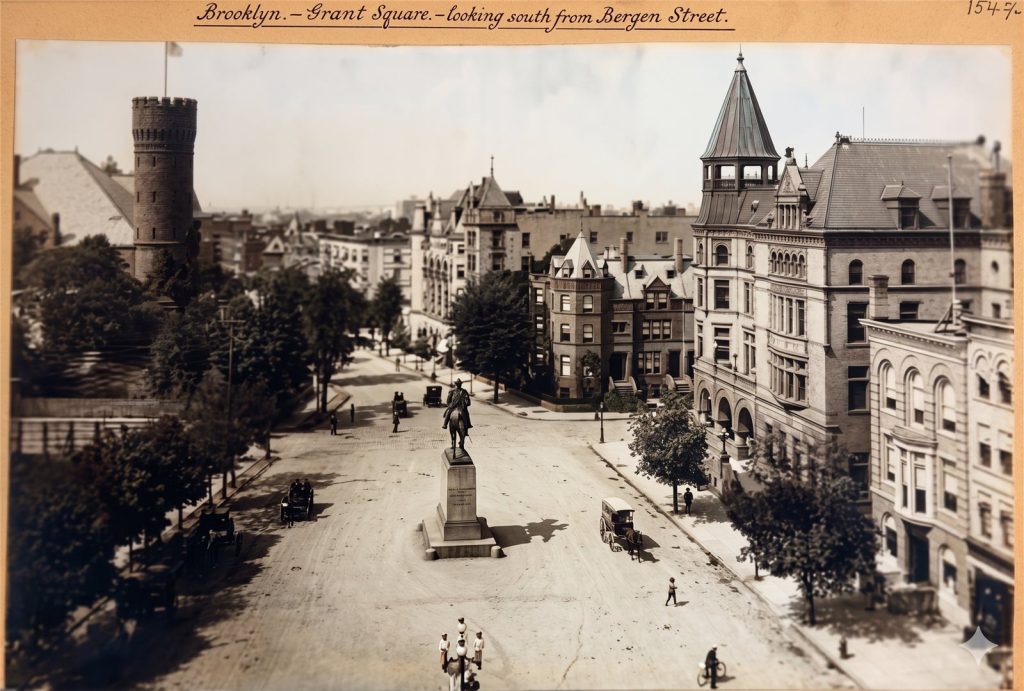
At around 2:30 in the afternoon, the impressive procession arrived at ‘Grant Square,’ the broad plaza standing directly before the facade of the new building. A large platform had been erected beforehand in the square, upon which the activists and public figures were seated. The ceremony began as a large choir of chazzanim, conducted by R’ Shmuel Kantaroff and Oscar Julius, sang “Mizmor Shir Chanukas HaBayis,” a melody composed especially for the occasion by Julius himself.
Immediately afterward, the yeshiva’s director, the Rashag, approached the microphone and read before the thousands the ‘opening letter’ of the Rebbe Rayatz. On the platform stood representatives of the government who had come to express official recognition of the institution: Congressman Emanuel Celler, Housing Commissioner Herman Stitchman, and Supreme Court Justices Samuel Dickstein and Philip Kleinfeld. Brooklyn Borough President John Cashmore delivered a congratulatory address praising the yeshiva’s contribution to the character of the borough.
One of the most talked-about moments of that day occurred when Lazarus Joseph, comptroller of New York City, rose to speak. Instead of delivering a routine address, Joseph launched a live public fundraising drive directly from the platform – a kind of auction in which he called on those present to purchase rooms and donate substantial sums to cover the building’s expenses. This move, made by a senior government official, brought the crowd into a spirit of giving that led to significant financial pledges on the spot, to the great satisfaction of the yeshiva’s administration.
12 Iyar: An Evening of Chabad Pnimiyus
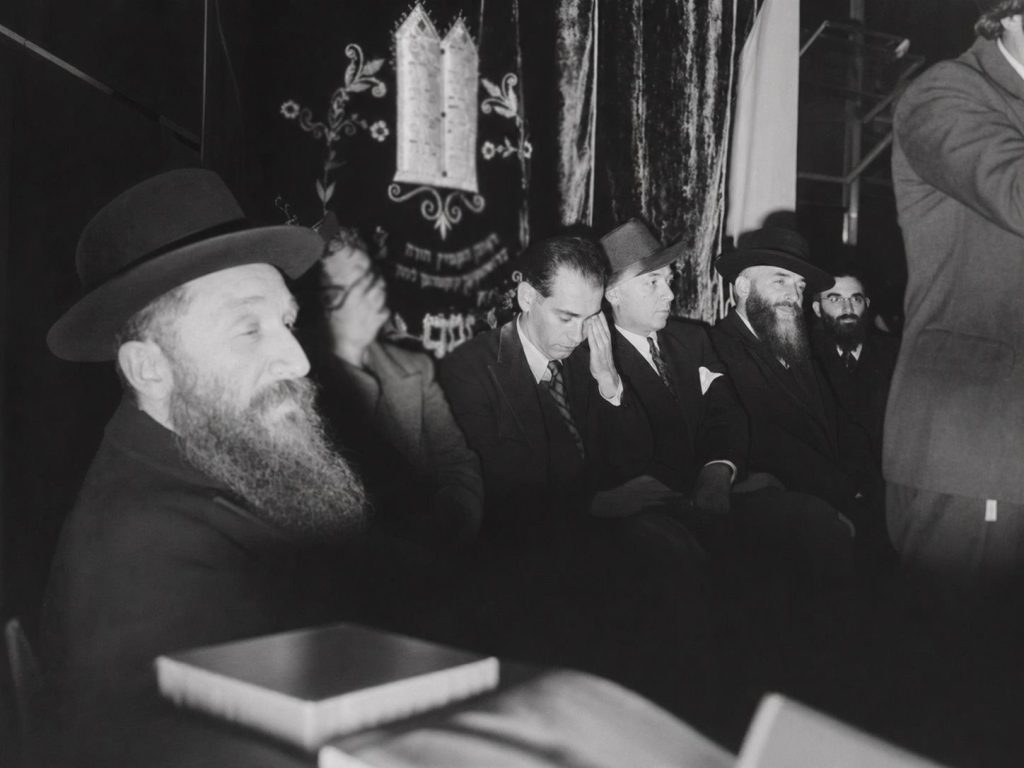
Following the first day, which featured external exposure of the building and political involvement, the second day was dedicated to the pnimiyus of the yeshiva and was called “An Evening of Chabad Torah.” Those present gathered in the new and spacious zal of the yeshiva.
The dais that evening hosted the senior and most distinguished rabbanei Chabad, including those who had personally experienced the horrors of persecution in Soviet Russia. Seated on the dais were Rabbi Nissan Telushkin, Rabbi Chaim Zalman Kramer, Rabbi Shmuel Levitin, Rabbi Shalom Schneiderman, and Rabbi Moshe Dov Ber Rivkin. The speakers spoke of the yeshiva in Lubavitch, in Rostov, and in Petersburg, and connected the heroic steadfastness that had been their lot there with the continuation of learning in comfort, now in New York.
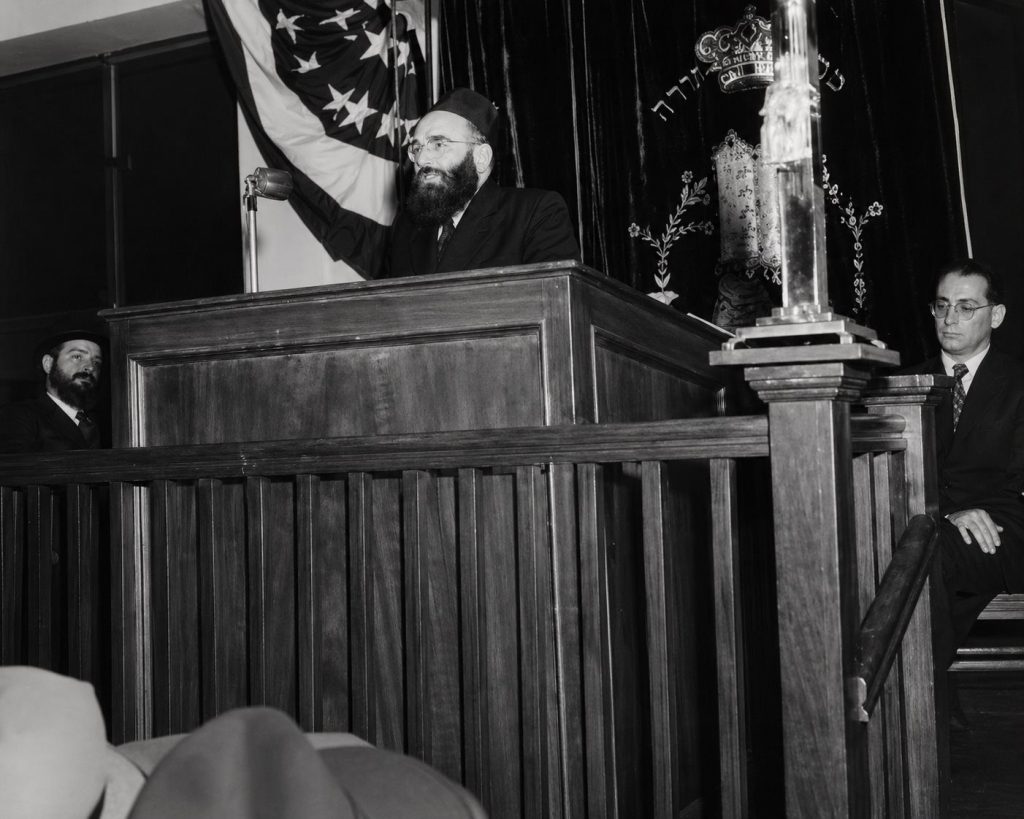
The artistic program of that evening did not rely on professional chazzanim or external choirs, but on the yeshiva’s own students. A choir composed of Tomchei Tmimim students, under the direction of Cantor Yehoshua Weizer, performed a series of Chabad niggunim, with the aim of transmitting the deep-rooted atmosphere of Tomchei Tmimim into the walls of the new building and to the participants.
13 Iyar: Tomchei Tmimim — The Torah Center of America
The third day was intended to present Lubavitch Yeshiva not merely as a private institution of a specific Chassidic group, but as a center of the Torah world in all of the United States. The slogan chosen for that evening was “Amerika – a makom Torah!” (“America – a place of Torah!”)
In the hall gathered representatives of all active rabbinical organizations in America: the ‘Agudas HaRabbanim of the United States and Canada,’ the ‘Rabbinical Council,’ and the ‘Vaad HaRabbanim.’ The evening was presided over by the Gaon Rabbi Eliezer Silver, president of the Agudas HaRabbanim, considered one of the most influential figures in Orthodox American Jewry. Alongside him in the front row sat leading poskim and roshei yeshiva, including the Geonim: Rabbi Moshe Feinstein, Rabbi Yisroel Dusowitz, Rabbi Zev Dreizen, and Rabbi Pinchas Teitz.
The public support of these individuals for a Chassidic yeshiva was by no means self-evident in those days. Press reports accurately described the words of Rabbi Silver, who delivered an address that combined halachic analysis with Chassidic concepts, and expressed publicly his wholehearted support for the endeavors of the Rebbe Rayatz. Rabbi Silver turned to the rabbis present in the hall and called upon them to stand actively and practically in support of Lubavitch Yeshiva, which he defined as the Torah center of America.
14 Iyar: Women Too in the Campaign
The fourth day presented an organizationally unusual development in the yeshiva landscape of 5706: an entire evening, public and central, devoted exclusively to the role of women, under the heading “Chochmas Nashim Bansa Beisah” (“The wisdom of women builds her home”).
The organizers recognized the importance of the community’s women in building the Torah infrastructure in America. Presidents and representatives of the yeshiva’s ‘Women’s Auxiliary Organizations’ from throughout the East Coast attended the event, arriving by bus. The hall filled with women who had come from New York neighborhoods: the East Side and Brownsville, to more distant cities such as Newark, New Haven, Pittsburgh, and Philadelphia.
Rabbi Eliyahu Simpson and Rabbi Shlomo Aaron Kazarnovsky addressed the women, speaking about the role of women’s organizations in the economic stabilization of the yeshiva and the building of a Jewish home in America. In addition, radio broadcaster Mrs. Bracha Mintz, a well-known figure in New York public life, was invited to speak, lending additional media resonance to the event.
That very evening, another event took place that revealed the broad scope of the awareness campaign. While the women’s assembly was being held in the yeshiva building in Brooklyn, the Rashag left for an entirely different event. He was invited as the guest speaker at a rally of the Mizrachi movement held in Far Rockaway. In his address there, he spoke about the yeshiva’s activities and sought to recruit that community’s support as well.
15 Iyar: An Evening for All of Israel
The fifth day was considered the most massive public event of the dedication week, under the heading “Ovent fun Klal Yisrael” (‘An Evening for All of Israel’). At the center of the evening was the hachnosas Sefer Torah donated by Mr. Ira Rosenzweig in memory of his brother Dov Ber, who had directed the efforts to purchase the building and transform it into a yeshiva until his passing. The family matriarch, Mrs. Rivka Rosenzweig, was seated in the place of honor during the ceremony.
The evening was hosted by R’ Harris Selig and Rabbi Simcha Levy. Throughout the event the presence of the Chassidim Reb Yisrael Jacobson, Reb Yosef Wineberg, and Reb Shlomo Zalman Hecht was prominent, along with Rabbi Ephraim Elazar Yolles, who represented the ‘Igud HaRabbanim.’ It was a genuine and great joy that the enormous project had succeeded, and everyone was gathering to celebrate its continued existence. The event emphasized the pan-Jewish recognition of the institution. Present in the hall and delivering remarks were editors and representatives of the major Yiddish newspapers in New York: William Edlin and Morris Weinberg of the Der Tog editorial board, and A.L. Malkinson and D.L. Mekler of the Morgen Journal editorial board. Also participating were official representatives of the “Agudath Israel” and “Young Israel” organizations.
But the enormous interest in that evening – which brought thousands of people to the venue – focused considerably on the cantorial program that accompanied Maariv and the hachnosas Sefer Torah. Appearing on the platform were the leading chazzanim in the United States at the time: Cantors Shmuel Vigoda, Berele Chagy, Zindel Sapoznik, Herman Bornstein, and Sidney Shicoff. The chazzanim were accompanied by three different choirs that featured throughout the week (it should be noted that during the week additional chazzanim also appeared, including Yasanofsky, Leibel Trainer, Israel Flusberg, and Menachem Leib Lange).
The moment most discussed in the press occurred at around 7:30 in the evening. The world-famous cantor Zevulun Kwartin approached the platform. The yeshiva’s administration had specially flown Kwartin in from Mexico for one purpose: to lead the counting of the Omer for the night of the 16th of Iyar before the congregation.
The demand to hear Kwartin created unprecedented pressure at the building’s doors. To prevent the danger of a crush, the organizers, aided by local police, were compelled to lock the building’s gates entirely at 7:30. For the thousands of people who remained outside and could not enter, a special loudspeaker system was set up on the facade of the building, broadcasting Kwartin’s voice and the tefillos directly to the crowd standing in the square.
18 Iyar: The Dormitory and the Closing Event
On motzoei Shabbos, eve of the 18th of Iyar, the event focused on the opening of the dormitory. The yeshiva officially inaugurated the students’ central dining room. In honor of the opening, a large Melave Malka was held which was attended by Chassidim, many activists and local supporters, as well as delegations of rabbis and activists who had come from out of town, the most prominent being a delegation from the city of Harrisburg, headed by Rabbi David Silver.
The final day of the week of celebrations fell on Sunday, the 18th of Iyar, Lag B’Omer. Despite the joyful character of the day in the Jewish calendar, the yeshiva’s administration decided to close the dedication week on a weighty and serious note, with an event defined as a ‘Yizkor Evening.’ This decision stemmed from the understanding that the construction of the building was not merely a real estate achievement, but first and foremost a direct response to the destruction in Europe and the Second World War that had only just ended.
To the hall were invited representatives of the Jewish veterans organization, American Jewish veterans who had fought on various fronts, as well as bereaved parents whose sons had fallen in Europe during their service in the US Army. The invitation to this evening quoted explicitly the purpose of the gathering: “Dedicated to the memory of our millions of holy martyrs and the Jewish soldiers who fell.”
The central speaker at this event was correspondent Mr. Shmuel Margoshes, who had just returned to New York from a long mission he had carried out in Europe on behalf of the World Jewish Congress. From the podium of the new yeshiva hall, he presented a factual and detailed report on the complete destruction of Polish Jewry and the scenes he had encountered in the valley of slaughter. The profound contrast between the painful reports from Europe and the large audience seated within the magnificent yeshiva building in America rendered all the more stark the weight of the responsibility now placed upon the shoulders of the American Jewish community.
The most tangible response to the destruction described by Mr. Margoshes was not expressed in speeches alone. During those very days, a group of 28 bachurim joined the yeshiva. These were the Shanghai students, a group of Tmimim who had fled Europe at the outbreak of the war, obtained transit visas, made their way through Russia to Japan, and spent all the war years in exile in China. Now, after many tribulations, they had finally reached the shores of America.
These students joined the hundreds of American Tmimim who were already studying there, and together they began attending classes from the yeshiva’s maggidei shiur, Rabbi Mordechai Mentlick and Rabbi Moshe Pinchas Katz.
* * *
After the week of celebrations, the building’s gates closed to the masses and politicians who had visited it throughout the week but the doors of Tomchei Tmimim remained open. The Chanukas HaBayis Week had succeeded in fulfilling its strategic purpose: it positioned Lubavitch at the heart of mainstream American Jewry, secured the financial support for the institution’s continued existence, and proved in a practical and public manner the historic declaration of the Rebbe Rayatz: “Amerika iz nisht andersh.”
The yeshiva occupied the building until 5729 (1969), when a fire broke out and the yeshiva relocated to 770. The building was sold to another organization, and since then it has housed an organization serving the welfare of New York’s retirees.
Note: This article does not claim to cover the complete story of the dedication in all its details, but rather to tell the story in its broad outlines and reflect the general atmosphere experienced by the Chassidim eighty years ago.
Sources: The United States National Archives. The New York Jewish press from the months of Nissan–Iyar 5706. Igros Kodesh vol. IX, p. 50. Sefer HaSichos 5700, the sicha for Purim.
Beis Moshiach #1506 • pp. 12-17, 27
© 2026 Beis Moshiach Magazine. All rights reserved.
This article originally appeared in Beis Moshiach #1506. You are welcome to share it with friends and family by email or in print, provided that you do not change, add to or omit any part of it, you credit the author and Beis Moshiach, and you include a link to archive.bmoshiach.org (written out in full in printed copies).
To republish this article in a newspaper, magazine, book or website, please request permission in advance at [email protected].