Out of My Comfort Zone, Into the Light
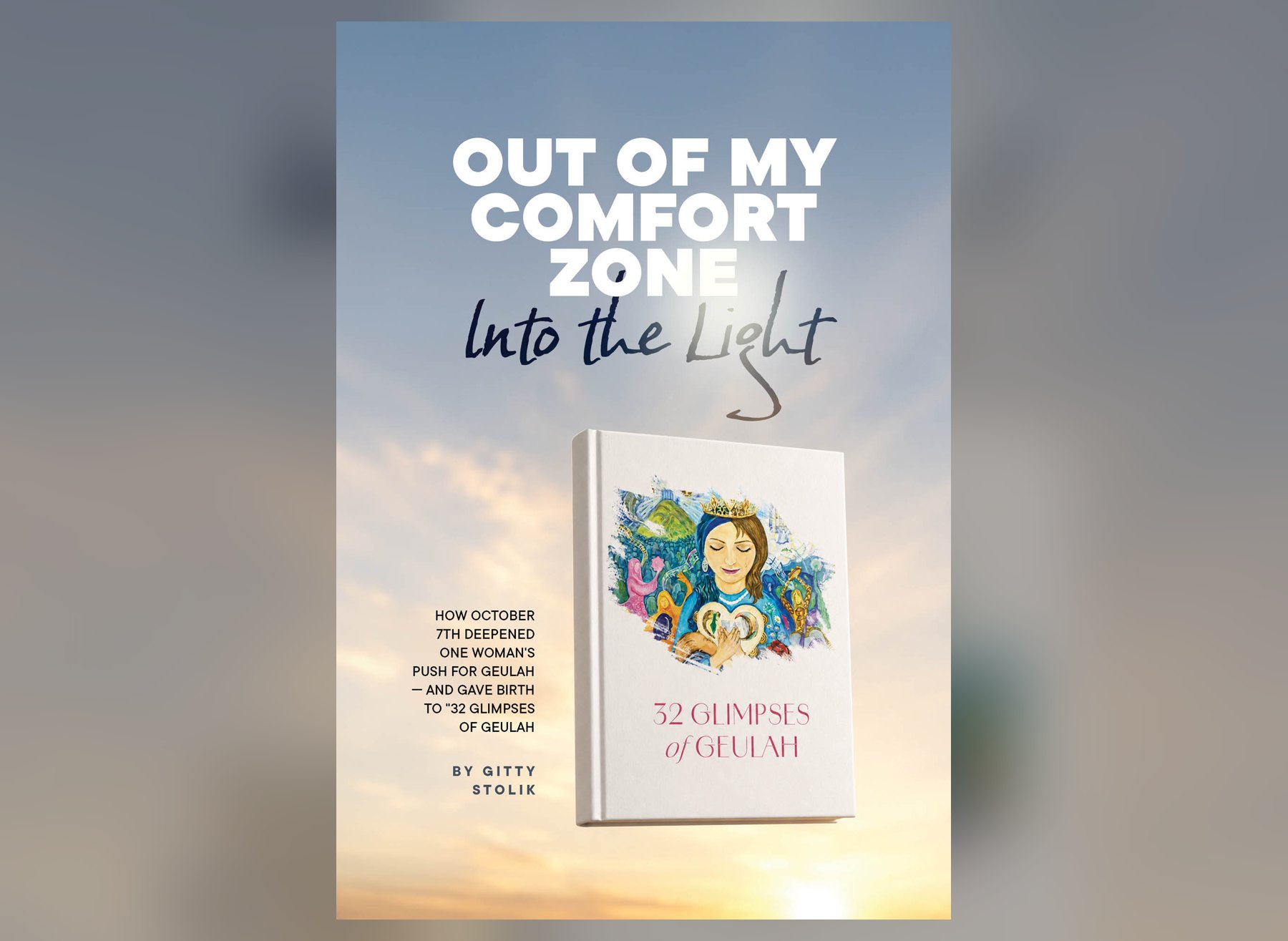
How October 7th Deepened One Woman’s Push for Geulah – and Gave Birth to “32 Glimpses of Geulah”
How has October 7th changed you?
I think it’s fair to say that none of us are the same people we were pre-October 7th. We may not be able to quantify it, but we’ve all grown.
I can’t pinpoint how I as a person have changed, but I can point to what I stepped up to do differently. I give simcha-bitachon courses, and the hostage crisis pushed me to deliver a specific Rebbe-Geula message more authentically. It pushed me out of my comfort zone and up to the next level.
…Which in turn led to launching a creative art and writing contest on visualizing Geula as a channel to release hostages. And finally, to publish an anthology 32 Glimpses of Geulah, Beyond Anything We Could Have Imagined with curated selections from the contest. Hashem blessed the project with success. The anthology is truly an aesthetic delight. The art is impressive and the verse and essays are deep, passionate, hold our emotions and heal our hearts, emerging from deep-thinking women and girls age 7-70, from five continents. I like to call the anthology “the Rebbe’s Geula strategies in a coffee table album.”
Where did the idea to run a contest on visualizing Geula come to me?
Directly speaking, it was the hostage crisis, but the ‘visualizing Geula’ concept traces back to a sicha from the Rebbe that I ‘stumbled’ on many years earlier as I was clearing clutter from my counters. It was pure hashgacha pratis that I took a moment to glance at this one paper, a magnified printout of excerpts from that sicha, before tossing it into the sheimos. Its message enraptured me immediately (forget the sheimos – it went on my wall instead).
When we dwell on the Geula’s imminence and visualize its reality this will evoke joy. And the joy will bring the Geula. (14 Elul 5748).
The Rebbe added, “Try it, you’ll see that it works!” A Rebbe-guarantee, no less.
And: “The message is important. Share it!”
I ended up writing two books to promote this Geula strategy, Okay to Laugh, Seriously! and NEW JOY, Response to a Changing World. Eventually I began giving courses on simcha. At the last session we would unpack details from this sicha, which was the raison d’etre, the soul, of my simcha platform. And since action is the main thing, we would offer tools to bring this purely-for-Geula-joy into our lives. I thought I was doing a fine job getting the Rebbe’s message out.
Then came October 7th, and here’s where the story heats up.
Two of the hostages were a mother and daughter from Evanston Illinois, Yehudit and Natalie Raanan (they were visiting in Nachal Oz). Yehudit was a frequent participant in the Chabad women’s learning group. On Rosh Chodesh Cheshvan (one week after their abduction), the women of the learning group staged an advance celebration for the abductees’ release. This was not a token spiel. These women completely entered an emotional space of jubilant triumph imagining the captives’ liberation, untainted by a shred of gloom, horror or doubt. (Read about the vision Yehudit had in the tunnels, which she recognized as a message from the Rebbe, in the anthology.)
The two hostages were released five days later. This was a real-life playout of the Rebbe’s promise – that visualizing the Geula in a very real way will bring us to a state of joy, and will catalyze Geula.
They were the first hostages released, and no reason was ever given for their release. But as they say, ‘if you know you know.’
This lit a fire under me, for two reasons. First, for the clear correlation between the Rebbe’s strategy and success. I had been investing in this strategy for years, but between you and me, it does sound a bit far-fetched. How indeed will simcha activate Geula? If you throw an egg on the floor, you know it’s going to break – you’ve seen it happen. But we don’t typically see how simcha can literally bring about Geula.
After years of pursuing a theme which unfolded from a premise, a promise, that simcha will precipitate the Geula, I finally had live evidence to point to and say – look… it works!!
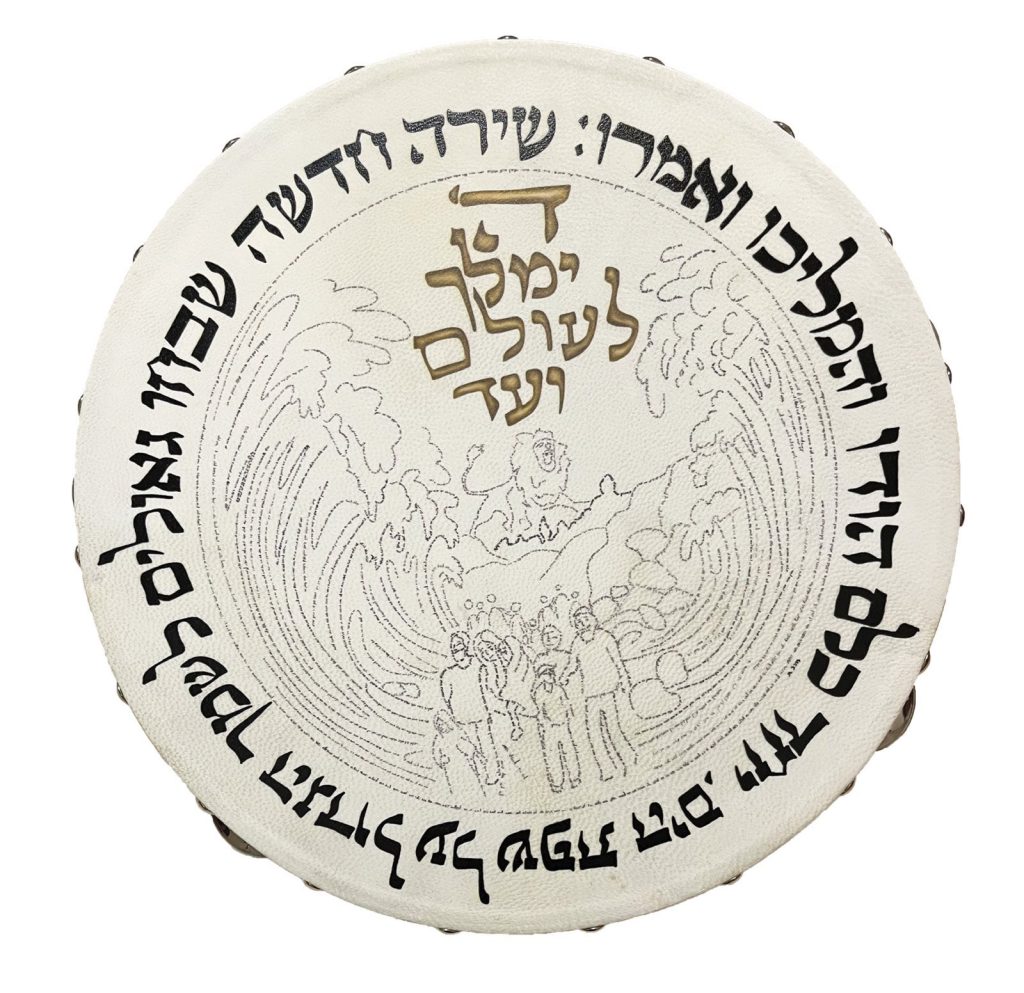
Second, I discovered that the woman who led the visualization was an alumnus of my simcha course! The personal connection gave me the jolt I needed. The time had come to take visualizing-Geula to the next level.
Confession alert… I had always glossed over the Rebbe’s call to dwell on and ‘visualize’ Geula, focusing primarily on a unique term the Rebbe used in that sicha – ‘pure joy,’ simcha b’taharasa.
Why did I always skip the visualization part? Frankly, I’m not much of a visualizer. But the main reason was, I guess I wasn’t ready. Maybe I was still at an earlier stage of labor when there are so many unknowns lurking ahead, that visualizing oneself holding the new baby (aka Geula) is still unreal. The pain (of galus) takes center stage. But now I needed to update to the birthing stage where the midwife tells you that you will be holding a baby in your hands imminently, and your heart skips a beat as the anticipation of becoming a mother becomes tangible – it’s for real!
As I shared the remarkable story of Yehudit and Natalie’s release with my next joy-course group, I thought, how about we try some visualizations now? As our last session wound to a close, I challenged my participants to dig into their creative brains. A few thoughts were offered.
Nice, but that’s it?? We have hostages to release, and we all have to get out of galus!
I had over 200 women signed up to the course (an atypically high number, testimony to that unusual time), which amplified the weight of responsibility and opportunity. On the spur of the moment I announced, “We will run a contest so more visualizations can be shared.”
How, what, when, where? I couldn’t tell them because I didn’t know. Fast forward – a contest was launched and promoted on many networks. I prayed to Hashem that the response would neither overwhelm nor underwhelm. And so it was – thank you Hashem!
The day after the winners were announced, four hostages were released in a daring high-risk operation (just before Shavuos as readers may recall). The synchrony caught my attention. Maybe we should keep the momentum going and compile an anthology with selected submissions from the contest to promote the Geula-visualization idea?
I assumed it would take a few months to put out, but an invisible hand seemed to be blocking the process. As one example, a graphic designer’s computer crashed, and the work was unrecoverable. (I was hoping I was not the “Yonah HaNavi” culprit who was the reason for the storm!) I had to let go, stop trying to control the outcome and leave it to Hashem. It will be ready if and when it’s needed. Indeed, so it was!
Incredibly, the anthology’s release coincided exactly with the release of the last hostage, Ron Gvili. It was released on a Tuesday, sandwiched between the Monday and Wednesday that his body was returned and buried.
I was stunned!
The wink from Above was unmistakable. But wait, wasn’t this a book about hostages’ release? The synchrony made the purpose of the book clear as day. It was confirmation that the story was not over. The hostage story was pointing to us right from the start.
We all point to the hostages, astounded at how they found Truth in the darkest, most abysmal conditions. As we point our finger to them, three fingers are pointing back at our own selves. Our pride at their growth is an invitation for self-reflection. How have we changed? Actually, the three fingers also point us to three pivotal Geula strategies. All three took a giant leap forward post-October 7th.
#1. To evoke simcha for Geula by vividly visualizing the Geula’s imminence. Everyone wants Moshiach, but it is critical to connect to the positive aspects of a world evolving into Geula. A minute of reflection can do it. Geula therapy!
#2. After the Gulf War (28 Nissan 5751), the Rebbe spoke with great pain about our failure thus far to bring the Geula, or, his failure thus far to get us to want it sincerely.
Actually, we were working quite actively to bring the Geula, don’t you think? But – we were doing it because we were told to. We were not driven from deep inside us. We didn’t own it.
If we truly, sincerely, wanted the Geula, we would be acting as we did during the hostage crisis. We were utterly consumed. It hijacked our minds, hearts and even the oxygen in our lungs. It propelled us to take on extra spiritual activities. We were engaged in it with nonstop intensity.
#3. In the V’ata Tetzaveh maamar personally distributed just before his stroke, the Rebbe says: Prosperity has lulled us into complacency. We need to be in gantzen tzutreiselt, shook up at our core for every moment we are not yet at our King’s table.
After October 7th we are complacent no more.
We know only too well what yearning for liberation feels like, to the point that it hijacks our sleep, when every delay is painful, when every moment matters.
The hostage crisis was like a flag waving at us, feel the urgency! You want to know what yearning for Geula feels like? That’s the model!
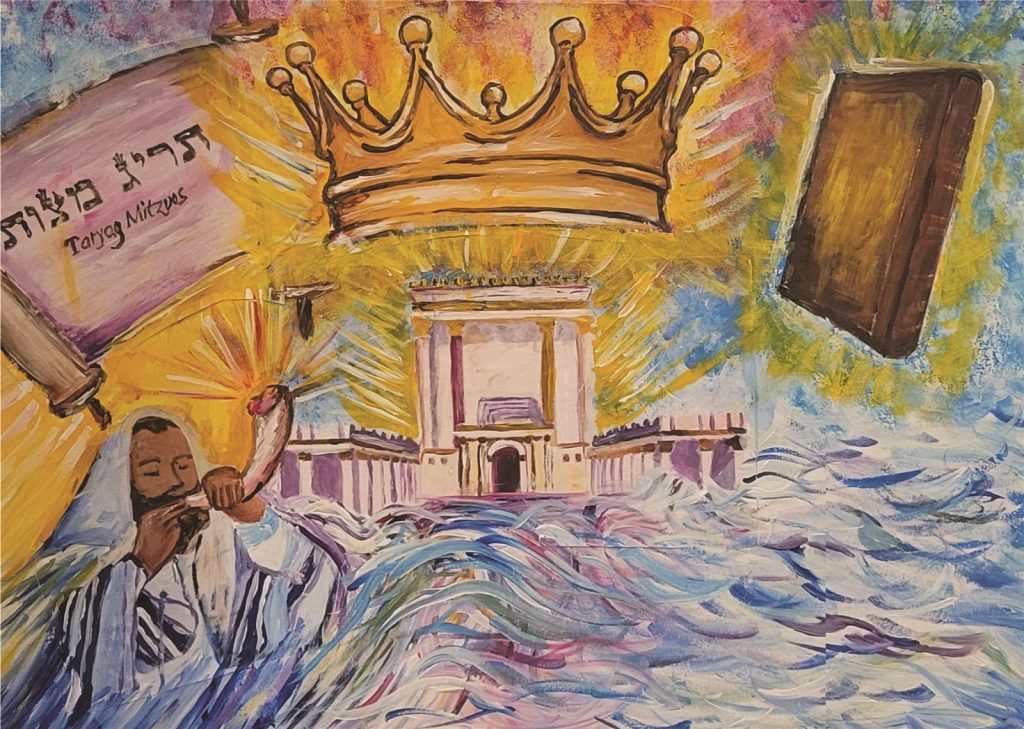
I am surprised again and again, when I share this perspective with people, that they respond, “Oh, I didn’t think of that.” Let’s get mileage out of the shake-up to get ourselves out of the darkness into the light.
* * *
The final delay holding up the anthology’s publication was a wording dilemma on the dedication page. Resolving that subtle distinction gave me so much insight – it’s amazing how a word can change a universe.
I was trying to define pain in these last moments before the full Geula. It was at the height of the hostage crisis, how could we not mention the word ‘pain’? But this was a collection about visualizing Geula!
A member of my family had explained some fine nuances several years ago based on the maamar V’ata Tetzaveh. I contacted him to refresh my memory, but he was ‘over his head’ with a deadline. It stalled the anthology publication for weeks!
I tried expressing it one way. Changed it again. Finally, after numerous iterations I got it to tuned to the right frequency. Our pain today is not about the pain of galus. It’s about being deprived of Geula. Of the revelation of G-dliness. Of being at the King’s table.
This is not word play. It changes the way we view our world.
Let’s use the classic ‘half empty’ or ‘half full’ cup to illustrate the difference two words make in creating a Geula shift. The actual amount in the cup doesn’t change. The difference lies in a mere two words empty and full. Empty dwells on scarcity, deficiency – and panic. Full invites abundant thinking and composure. We change.
When ‘getting out of galus’ is your focus, your world is dark. The world is running amok and you’re in here, stuck. Most important, pain-of-galus has no joy in it.
With the word Geula as your centerpiece, there’s a light in your day. Yearning for Geula may feel unbearable (it should be) but it is forward-thinking, encouraging, energizing. It prods us to do something, to set goals to get there. The King’s table beckons richly.
When I got to the closing line of that page my Geula Positioning System was already trained in the right direction. Notice how the Geula shift helped shape the last sentence:
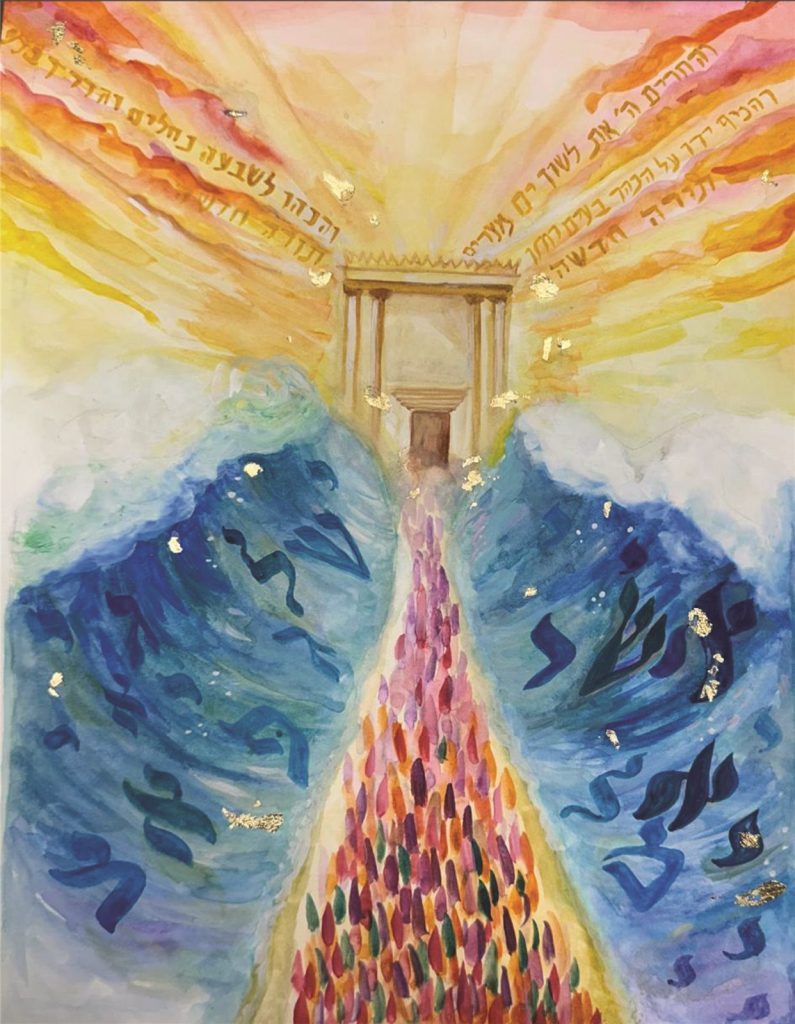
Let the hostages’ captivity be our icon – how insufferable is every moment we remain in galus we are denied the glory of Geula.
Family Activity
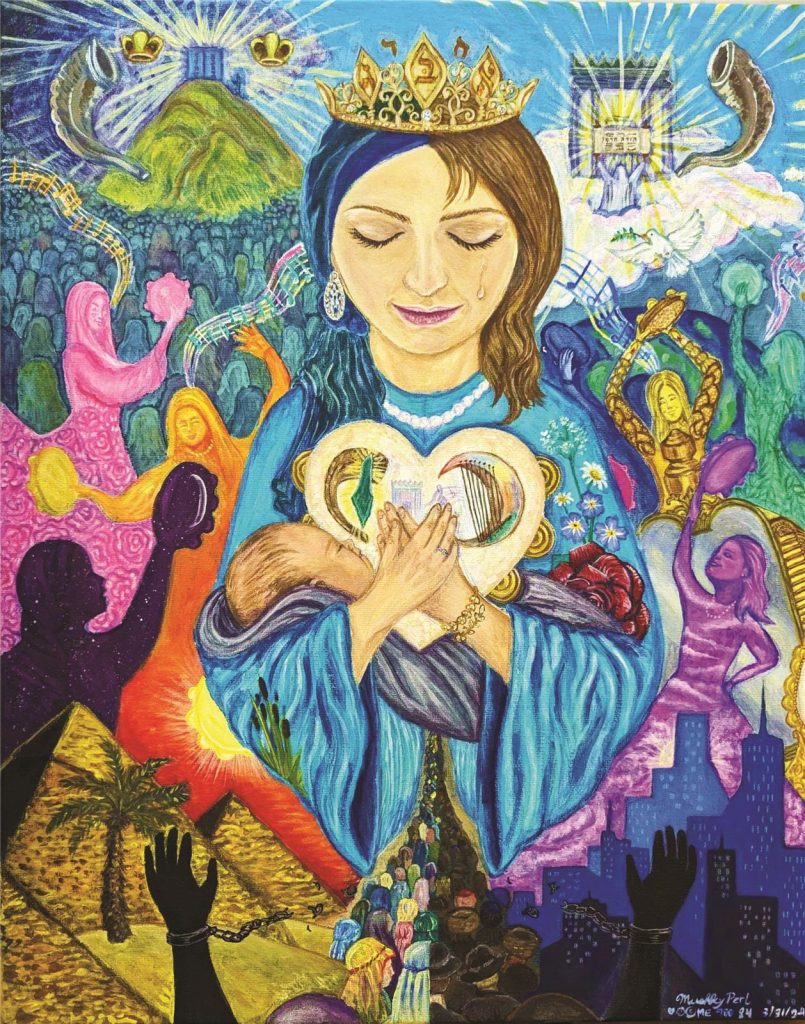
Packaged in the anthology is a family activity based on the richly-detailed cover art by Mushky Perl. (It was delivered with a thirteen-minute audio (!) by the artist, explaining the many layers of kabbalah and symbolism embedded in the picture.)
I have turned the painting into a fun and meaningful theme-find. Everyone in the family can join, from parents to little ones. I’ve played this game with my various visiting families. The activity is so fulfilling that in each case, when we were determining the winner, the children said, “It doesn’t matter who’s the winner.” If that’s not Geula, what is?
The anthology is available in hardcover and softcover on Amazon (compiled and edited by Gitty Stolik), and in Kingston Ave Judaica stores. The Joy books are available on Amazon. Email [email protected] for bulk orders or questions.
Beis Moshiach #1509 • pp. 38-43
© 2026 Beis Moshiach Magazine. All rights reserved.
This article originally appeared in Beis Moshiach #1509. You are welcome to share it with friends and family by email or in print, provided that you do not change, add to or omit any part of it, you credit the author and Beis Moshiach, and you include a link to archive.bmoshiach.org (written out in full in printed copies).
To republish this article in a newspaper, magazine, book or website, please request permission in advance at [email protected].