Tracht Gut, Vet Zayn Gut
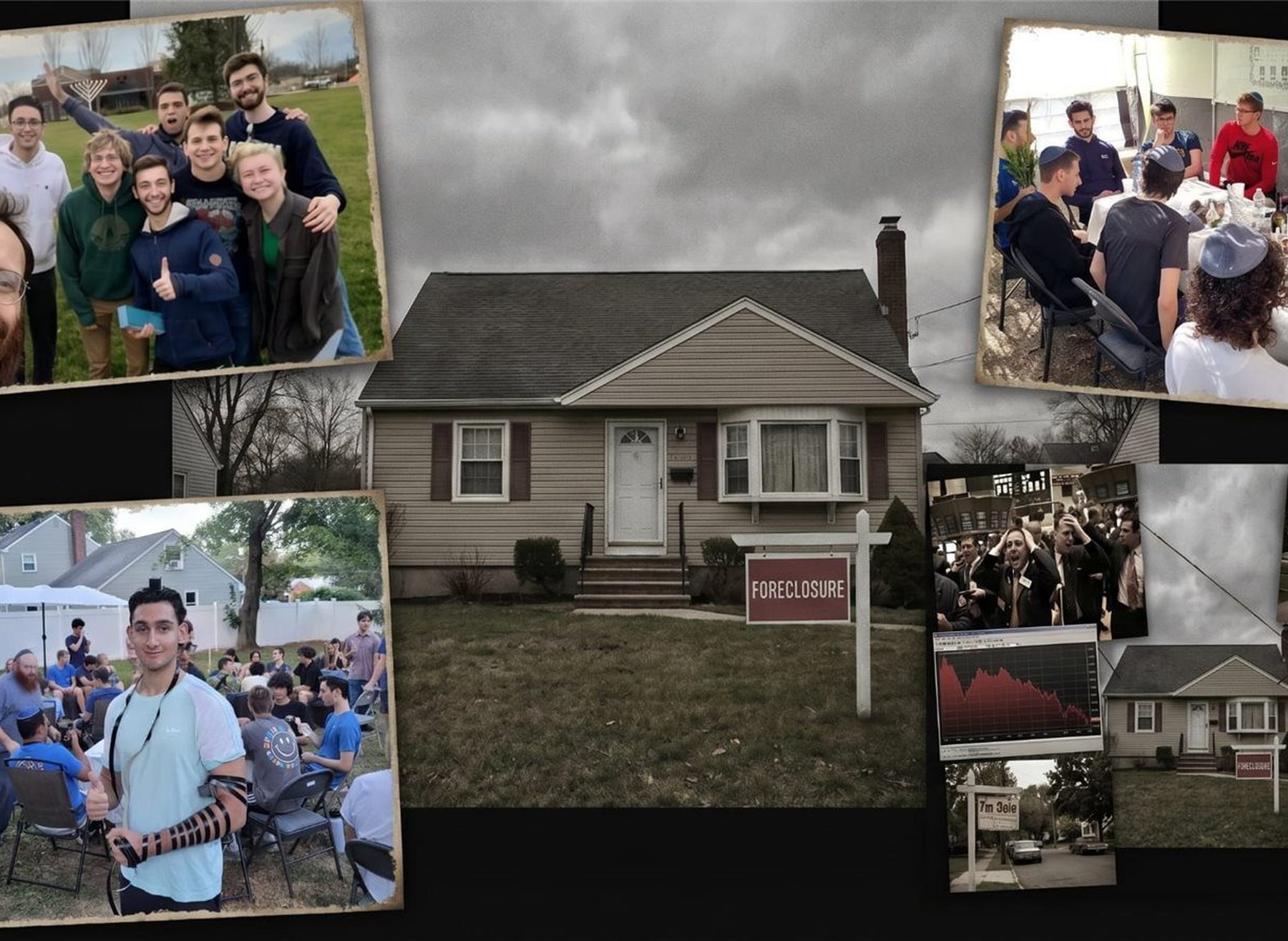
Rabbi Kivi (Akiva) Greenbaum still remembers how scary that time was. He had only recently bought a house and they were excited and happy. Rabbi Kivi had worked hard, and he thought things were moving in a good direction.
Many people all across America felt the same way. Stores were open, people were working, and life seemed great. It looked like the country was doing well. But underneath, there were serious problems that most regular families did not see.
Banks had made many bad decisions with everyone’s money. People had borrowed more than they could afford to really pay back. Everything looked sturdy from the outside, but inside, it was shaky, like a tall building built on thin sticks, about to fall over.
Then, in 2008, everything started falling apart. It didn’t happen to just one person or one city. It happened across the whole country. All at once, it was clear that those huge loans wouldn’t be paid back and people stopped lending money all at once. Families were afraid of spending. Businesses struggled. Many people lost their jobs. Others lost money and savings. Families who had once felt secure suddenly felt unstable.
Parents who used to pay their bills without worry were now lying awake at night, wondering how they would manage. It was called the financial crash of 2008, because the whole money system had collapsed.
* * *
For people like Rabbi Kivi, it became even harder. A Chabad Shliach doesn’t usually earn money the way a person with a regular job might. They rely on help from others, from people who believe in their mission and want to support it.
Before the economic downturn, many donors had been able to give money. But once the economy – how the whole country handles its money – broke apart, that changed very fast. People who in the past would help, suddenly couldn’t. They were busy trying to save their own homes, their own businesses, and their own families. The support began to slow down, and in many cases, it stopped almost completely.
That was what made the situation so serious. Rabbi Kivi hadn’t stopped working. He was still doing his Shlichus, still helping college students get closer to Yiddishkeit, and still trying to move forward. But now, the money he had counted on was no longer coming in, and the bills didn’t stop just because times were hard. The house still cost money. His Shlichus still needed funds. Everything was weighing on him at once.
* * *
Before the crash, raising money for Shlichus had been much easier. In the years just before 2008, many people were doing well. They had jobs, businesses, and a little extra money, so when Rabbi Kivi asked them to help support his work on his New Jersey college campus, they were often able to give. That support helped him continue to welcome more students and care for the growing needs of his Chabad house.
When the support Rabbi Kivi depended on suddenly dried up, the mortgage that had once seemed possible now felt much too heavy.
Very quickly, the situation grew worse. The house went into foreclosure. That means the bank began the process of taking the house so they could sell it to pay back the loan. What made it even harder was how impossible it was to get help. The banks were in chaos. Rabbi Kivi tried calling, again and again, hoping to reach someone who could explain what to do. No one answered. There was no one to speak to, no one taking responsibility, and no one guiding him through the next steps.
Even the lawyers did not seem to have clear answers. No one could tell him how to stop the foreclosure. All Rabbi Kivi understood was that the bank was moving forward to take away his home, and he did not know how to stop it.
* * *
Then, Sukkos arrived. Sukkos is the Yom Tov when we leave our homes and sit in a Sukka to remember that, no matter how strong a house looks, it’s really Hashem Who protects us.
Usually, Sukkos is full of joy. But that year, Rabbi Kivi was struggling to feel that joy. His heart was still weighed down by fear. The future was still unclear. Was their home even theirs anymore?
In the middle of all that worry, he opened a Likkutei Sichos, a Sefer with talks from the Lubavitcher Rebbe, chelek lamed-vav, and began to read. As his eyes moved across the page, one message entered his heart:
“Think good, and it will be good – Tracht gut, vet zayn gut.” Rabbi Kivi read the words again. He wanted to believe that, somehow, by thinking positive thoughts, everything would turn out okay. But how?! Even now, could things still turn around?
Still, those words gave him a little bit of encouragement. For the first time in a long while, he felt a moment of calm. Nothing had changed yet on the outside. But inside, for a few precious heartbeats, he felt something different. Calm. He knew that Hashem was guiding his life, and that he wasn’t alone.
* * *
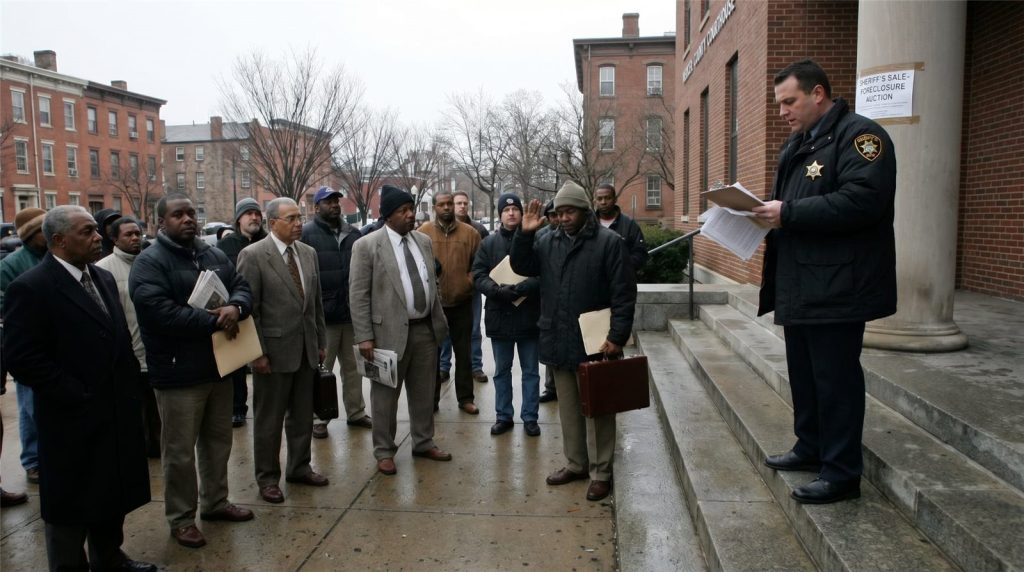
In Rabbi Kivi’s area, many homes went into foreclosure, which means the bank took them back since the families who borrowed the money from them weren’t keeping up with the monthly mortgage payments. What did the bank do with the houses? They didn’t want houses; they wanted their money back. So they had to try to sell the houses at a low price in a special sale called an auction. Rabbi Kivi’s bank had an auction in the city of Trenton, New Jersey.
On the second day of Sukkos, he saw the Sefer sitting there and thought to himself, “It helped yesterday. I’ll learn it again.” So he did. He sat down and read all five pages of the Sicha from beginning to end. And, once again, for a few precious minutes, he felt good. Not because the problem was solved, but because his fear felt smaller. His worried thoughts could quiet down for a little while.
He read that same Sicha every day of Sukkos. It became part of his Yom Tov. For about half an hour, he could breathe normally. The huge worry was still there, but he had at least one tool to help him: Knowing Hashem was in control.
When Sukkos came to an end, Rabbi Kivi looked at the Sefer and paused. Part of him thought, “Yom Tov is over… maybe I should go back to my regular routine.” But another part of him pushed back. “Why should I stop now?” he thought. He realized that if these words were helping him, even just a little, then he needed to continue.
So he made a decision. Just one more week. And so, every single day, he sat down and learned that same Sicha from beginning to end. Five pages. Each day, his heart felt just a little lighter.
When the week ended, he thought, “Why stop now?” His house was the bank’s, his future was not clear. “Let’s try for a month,” he decided.
And he did.
Every single day of that month, Rabbi Kivi sat down and learned the same Sicha from beginning to end. It became part of his life, like eating, like sleeping.
* * *
The month passed.
Month after month, Rabbi Kivi returned to those same five pages.
Meanwhile, nothing had changed that he could see. His house was still not really his, the bank still owned it. Every other Wednesday, houses in the area were being chosen and sold at auction in Trenton. Rabbi Kivi would check the listings again and again, searching to see if his house had been scheduled. Every time he checked, his heart would tighten. Is this the week we’re kicked out of our home…? he wondered.
And through all this, he kept learning. Six months passed. Seven months. Eight.
* * *
The Sicha had become Rabbi Kivi’s anchor in the stormy sea – but over time, a different voice began whispering in his mind.
“Think good, and it will be good?”
Doubt began creeping into his mind.
Could someone really just “think good” and expect everything to turn out well? The more he thought about it, the more confused he became.
Still, even with the doubts, he kept learning the Sicha.
* * *

After more than a year of learning the same Sicha again and again, and of course asking everyone he knew for help, Rabbi Kivi felt he couldn’t go on. But before giving up, he told himself, “…Let me learn it just one more time.”
And then, something happened. He realized he’d been learning the Sicha the wrong way the entire time.
Until then, he’d been trying to understand it only with his mind, but now he understood that the Rebbe was not only teaching an idea. He was teaching a way to live, how to practice Bitachon. He’d been reading about exercise without ever moving his body!
You can read books about becoming strong, but if you never actually train, your muscles won’t grow. In the same way, a person can speak about trusting Hashem, but that doesn’t mean the trust has entered their heart.
That was when everything changed for him.
Now Rabbi Kivi went back to the Sicha with a new understanding. Instead of only learning the words, he began using them.
He began training his brain the way a person trains their other muscles. And as he did that, he discovered something important. Whenever he tried to picture things working out, he couldn’t do it. It was as if his thoughts had been practicing worry for so long, they no longer knew how to rest.
Tracht gut vet zayn gut. Think good, and it will be good!
Rabbi Kivi understood that he had to change the way he thought.
He had to teach his mind a new path.
So for another whole year, every single day, he continued with that same Sicha. But now, he wasn’t only learning it. Now, he was doing it. He’d focus his mind on imagining Hashem’s help, and picture good instead of disaster, to train his heart not to run wild with fear. Slowly, patiently, little by little, he began to change the way he thought. Tracht gut vet zayn gut. Using his bitachon muscle was the biggest Bracha.
* * *
Over time, the fear that once filled Rabbi Kivi’s thoughts began to loosen and grow weaker. He now had a strong and steady feeling inside.
Rabbi Kivi reached a point where, in his heart, he truly believed Hashem would save his house. On the outside, nothing had changed. But inside, something had become very clear. He felt certain that, somehow, in a way he could not yet see, Hashem wouldn’t abandon him. And with that change came a kind of lightness he hadn’t felt in a very long time.
Previously, fear followed him everywhere. It woke up with him in the morning. It sat with him during the day. It haunted him at night. But now, that constant pressure began to fade. The calm he used to feel only while learning the Sicha for a short time each day began to stretch. Now, it stayed with him throughout the day.
And that was already kind of a miracle.
Rabbi Kivi also learned Shaar HaBitachon, the famous section in the Sefer Chovos HaLevavos about trusting Hashem. It helped him, too. It spoke about the calm a person can feel when he truly places his trust in Hashem. But Rabbi Kivi felt that the Rebbe’s Sicha taught not only that Bitachon brings peace to the heart, but that Bitachon itself draws down Bracha. In his understanding, the trust itself was part of what helped bring the Yeshuah.
Rabbi Kivi would still calmly check the auction listings every other week. And something very strange kept happening. Sometimes, his house would appear on the list, as if it was about to be sold. Then, just as suddenly, it would disappear. A few weeks later, it would happen again.
Then, the day finally came.
His house appeared on the list again, and this time, his lawyer said, “This is it. Your house is being auctioned off to a new owner, and you will have to leave.”
After all those months, after all the waiting and wondering, suddenly, it was no longer a question. It was happening.
But right at that moment, he started seeing pieces of hope coming together. A few donors stepped in to help, and somehow, even though everyone else was struggling too, the money was coming together at the very last minute.
When Rabbi Kivi went to the bank that morning, the money hadn’t even fully shown up in his account yet. He explained to the bank that he was on his way to the auction for his own house and that if he didn’t get a check, his family would have nowhere to live.
With Hashem’s help, he got what he needed.
He took the cashier’s check down to Trenton.
Would he win and get his house back now? Would someone else give a higher bid and take it?
A year earlier, he would have been shaking. Now, he knew, with a calmness he couldn’t explain, that his house was in Hashem’s hands.
And then, the moment came. No one bid against him. He bought his house back, just like that.
The very house he had begged Hashem to save was his now, completely and forever.
He walked in carrying the exhaustion of all those long months of uncertainty. He walked out mortgage-free, because the check paid for the whole house. At that moment, everything came together.
Now, he could see it clearly.
The Bitachon brought the Bracha.
That was the end of this story, but it was also the beginning of another. Saving his house was only the start of Hashem’s gifts. Along the way, Hashem taught Rabbi Kivi what Bitachon really means. He taught him that a person can live in fear and still train their heart to trust. He taught him that before the yeshuah appears on the outside, it often begins on the inside. Tracht gut, vet zayn gut.
* * *
This very story was written in short and printed in Illuminations, a newsletter put out by the publisher of Amazing Miracles. Then something unexpected happened.
Someone in shul in Monsey read the story.
He turned to Rabbi Shmuel Katz, who was sitting near him, “Hey, this is amazing! You have to read this. I want to learn this sicha, too. Rabbi Kivi inspired me! Do you know where I can find this sicha?”
So Rabbi Katz called Rabbi Kivi and asked him.
Rabbi Kivi told him it was a Sicha in Likkutei Sichos chelek lamed-vav, the one that speaks about fear, trust in Hashem, and the meaning of real bitachon.
Now, Rabbi Katz needed to call Moshe Gross to pass along the answer, but he didn’t have his number. Rabbi Katz called the gabbai who knew lots of people, “Do you have Moshe Gross’ number?”
The gabbai wasn’t sure. “I have a number for someone by that name,” the man said, “but I’m not sure if it’s the right one.”
Rabbi Katz called.
“Hello,” he asked, “is this Moshe Gross?”
“Yes,” the man answered.
Rabbi Katz began speaking, “I have the Sicha you were looking for. The one about Bitachon.”
There was only one problem: this was not the same Moshe Gross. He’d called the wrong person! But what happened next made it clear the call hadn’t been a mistake at all.
Instead of saying, “You have the wrong number,” the man on the other end became very excited. He wanted to hear everything. Rabbi Katz told him about the story, about Rabbi Kivi, and about the Sicha that had carried him through the frightening months when he thought he might lose his house.
The man listened closely and drank up every word. It felt like Moshe Gross was waiting to hear these words exactly. Afterwards, Rabbi Katz finally discovered what was happening.
This Moshe Gross was going through his own painful struggle. He, too, was about to lose his home that he loved and worked very hard to buy. In fact, he had already decided he’d have to sell it because there was no other choice.
He’d painted the house. A power washer was on the way to clean the outside and get it ready to show to buyers. In his heart, he felt that the battle was over.
That morning, his phone was dead. He’d only just plugged it in. The moment it turned on, it rang.
It was Rabbi Katz’s call.
Rabbi Katz was not calling the person he meant to reach, but it felt like a message sent straight from Hashem. The other Moshe Gross was thankful and very emotional.
“What’s your name?” Moshe asked Shmuel. A second later, he stopped himself. “You know what? I don’t need to know your name. You are like Eliyahu HaNavi.”
He meant that, just as Eliyahu HaNavi comes to announce geula, this phone call had reached him at the very moment when he felt all hope was gone. Just when everything looked lost, he heard a story about a Jew who had held on with Bitachon and seen Hashem’s Bracha. And that was the message he needed most.
* * *
May Eliyahu HaNavi come and announce the arrival of the complete Geula now.
Beis Moshiach #1509 • pp. 54-59
© 2026 Beis Moshiach Magazine. All rights reserved.
This article originally appeared in Beis Moshiach #1509. You are welcome to share it with friends and family by email or in print, provided that you do not change, add to or omit any part of it, you credit the author and Beis Moshiach, and you include a link to archive.bmoshiach.org (written out in full in printed copies).
To republish this article in a newspaper, magazine, book or website, please request permission in advance at [email protected].