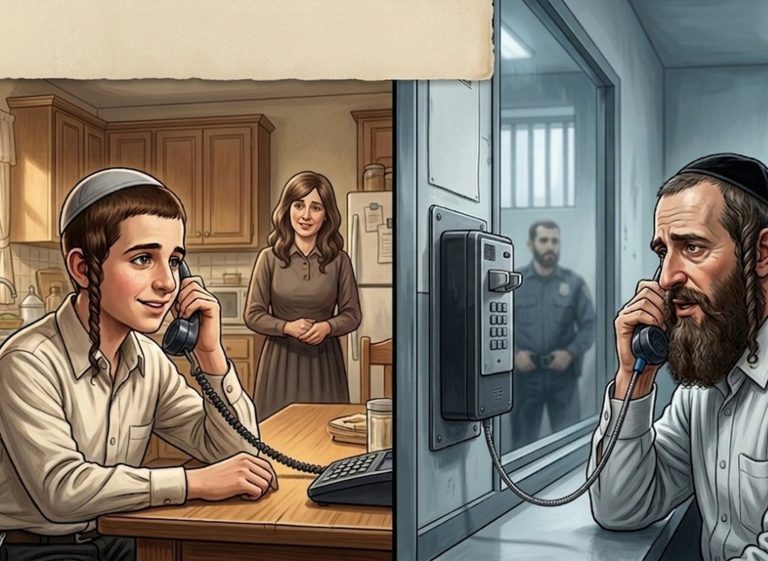
Not In The Book of Gaavah
Previously: After a mysterious night lost in the forest, Reb Mendel Horodoker’s shochet/mohel Chassid stumbled into a strange glowing house, where an old man’s brilliant Torah slowly convinced him to abandon his Rebbe for this stranger instead. When he came to say goodbye, Reb Mendel refused to see him…
The questions kept coming. Every time he pushed one away, another appeared. He remembered the old man. His Torah, his smile. The way everyone seemed completely absorbed by him. Most of all, he remembered the way he, himself, had become absorbed. A cold feeling crept over him. He remembered how quickly his thoughts had changed. At first, he admired the old man. Then he’d compared him to Reb Mendel. Then he’d begun to doubt. Then, somehow, he was ready to leave his Rebbe entirely.
The shochet closed his eyes. How had that happened? Only a few hours earlier, the idea had seemed completely reasonable. Now, it seemed impossible. He loved Reb Mendel. He trusted Reb Mendel. He’d spent years learning from Reb Mendel. How could one weird evening erase all of that? The question struck him deeply. None of this was normal. Something had happened in that house. Something was very wrong.
The shochet’s heart began to pound. The Rebbe knew. That was why he wouldn’t see him. The Rebbe knew exactly what had happened in the forest. Suddenly, the pieces began falling into place. The strange house, the strange gathering. The strange feeling he’d ignored. The admiration. The doubt. The temptation. All of it.
The shochet felt the blood drain from his face. Suddenly, everything became clear. The house in the forest had never been a place of holiness. The old man hadn’t been a tzaddik at all. Whatever power was hidden in that house, it didn’t come from kedusha. It came from darkness, from tumah – perhaps even from the Satan himself. That was the only way he could have been misled so quickly. That was the only way he could have been ready to abandon his Rebbe after one strange night.
Now he understood why Reb Mendel wouldn’t see him. The Rebbe wasn’t pushing him away. The Rebbe was showing him something terrible had happened. Whether it had been evil spirits, the sitra achra, or the Satan himself, one thing was certain: it had been a trap.
* * *
For several moments, he stood frozen outside the Rebbe’s door. Only yesterday, he’d been ready to abandon Reb Mendel, planning to return to that strange house in the forest. Now he understood how close he’d come to disaster. The excitement he’d felt disappeared. The pride disappeared. In their place was shame and fear.
The shochet couldn’t simply walk away. He stayed there, brokenhearted, begging for a way to repair what he’d done. “Please,” he pleaded, “ask the Rebbe what I can do. There must be a way for me to do teshuva.”
At last, Reb Mendel sent him a message. “Your tikkun will be if you pass that place again and are disgusted by it. You must tell them to their faces what they really are.”
The shochet felt a small measure of relief, yet the Rebbe’s words stayed with him. He couldn’t stop thinking about that night. Again and again, he replayed the events in his mind. Again and again, he thought about how easily he’d been fooled. Only a few hours in that strange house had nearly caused him to abandon the Rebbe he loved. The thought frightened him every time it returned.
He knew there was nothing more he could do right now. The tikkun would only come if Hashem brought him back to that place again. Until then, he carried the Rebbe’s words in his heart and waited.
* * *
A year passed. Then the same father returned to Reb Mendel. “Rebbe,” he said happily, “the child from last year is healthy, baruch Hashem. Now my wife has given birth to another son. Please send the same mohel again.”
Reb Mendel called for the shochet. When the shochet entered, he noticed something immediately. The Rebbe didn’t look directly at him. “Go back to the same place you went last year,” Reb Mendel said.
The shochet understood. This was the tikkun the Rebbe had spoken about. “I’ll go,” he said. “And if I pass that place again, I won’t be fooled. I’ll stand up to them.” Then he hesitated. “But I’m afraid.”
“Don’t worry,” Reb Mendel replied. “Hashem will help you. They won’t be able to hurt you.”
Again, the shochet traveled, performed the bris, and was happy when the baby made it through okay. And again, on Motzoei Shabbos, the shochet climbed into a wagon and began the journey back to Reb Mendel.
The wagon entered the forest, and once again, the driver mysteriously lost his way. Soon the lights appeared between the trees. The same house stood glowing in the darkness, filled with candles, candelabras, and torches.
The shochet entered the house, and at once, the memories of the previous year came rushing back. He recognized every table, every candelabra, and every torch. Last year, he’d sat in this room and listened with amazement. But this time, as he looked around, he felt a chill. This time, he knew what he was seeing.
Everyone inside recognized him. Smiles spread across their faces as they welcomed him back, almost as if they’d been waiting for him all year. At the head of the table sat the old man, watching him with the same calm smile as before. “Where were you all year?” he asked. “Why didn’t you come back, as you promised?”
For a moment, the shochet felt his heart pound. The old man’s voice sounded pleasant. His face looked kind. The room still glowed with warmth and light. But the shochet thought of Reb Mendel. He thought of the Rebbe’s message. He thought of the tikkun he’d carried with him for an entire year. Then he stood firm and answered, “Reb Menachem Mendel is kodesh kodashim, and you’re from the lowest tumah.”
The smile disappeared from the old man’s face. For a moment, no one spoke. Then the old man laughed and said, “Who’s Reb Mendel? He’s nothing.”
Last year, those words might have shaken the shochet. Last year, he might have listened. “Reb Mendel is a true tzaddik,” he said, firmly, “and everything here is a lie.”
The people around the room began to stir. Their faces no longer seemed welcoming. The warmth that had filled the room moments earlier suddenly felt cold. Then the old man’s followers – faces twisting into their true demonic features – began throwing sparks of fire toward him. The shochet’s heart raced, but he didn’t take back a single word.
The old man raised his hand and stopped them. “Wait,” he said. “I’ll share more Torah. You’ll see – he’ll change his mind again.” Then he began to speak Torah once more. His words were deep and sharp, just as they had been the first time. Question after question was answered, and idea after idea unfolded. For a moment, the shochet understood how he’d fallen into the trap the first time. The words were powerful, but now, he knew where they came from.
When the old man finished, he turned to the shochet and asked, “Now what do you say?” The shochet answered firmly, “If you belonged to holiness, perhaps your words would have found favor in my eyes. But since you come from tumah, your Torah is tumah too.”
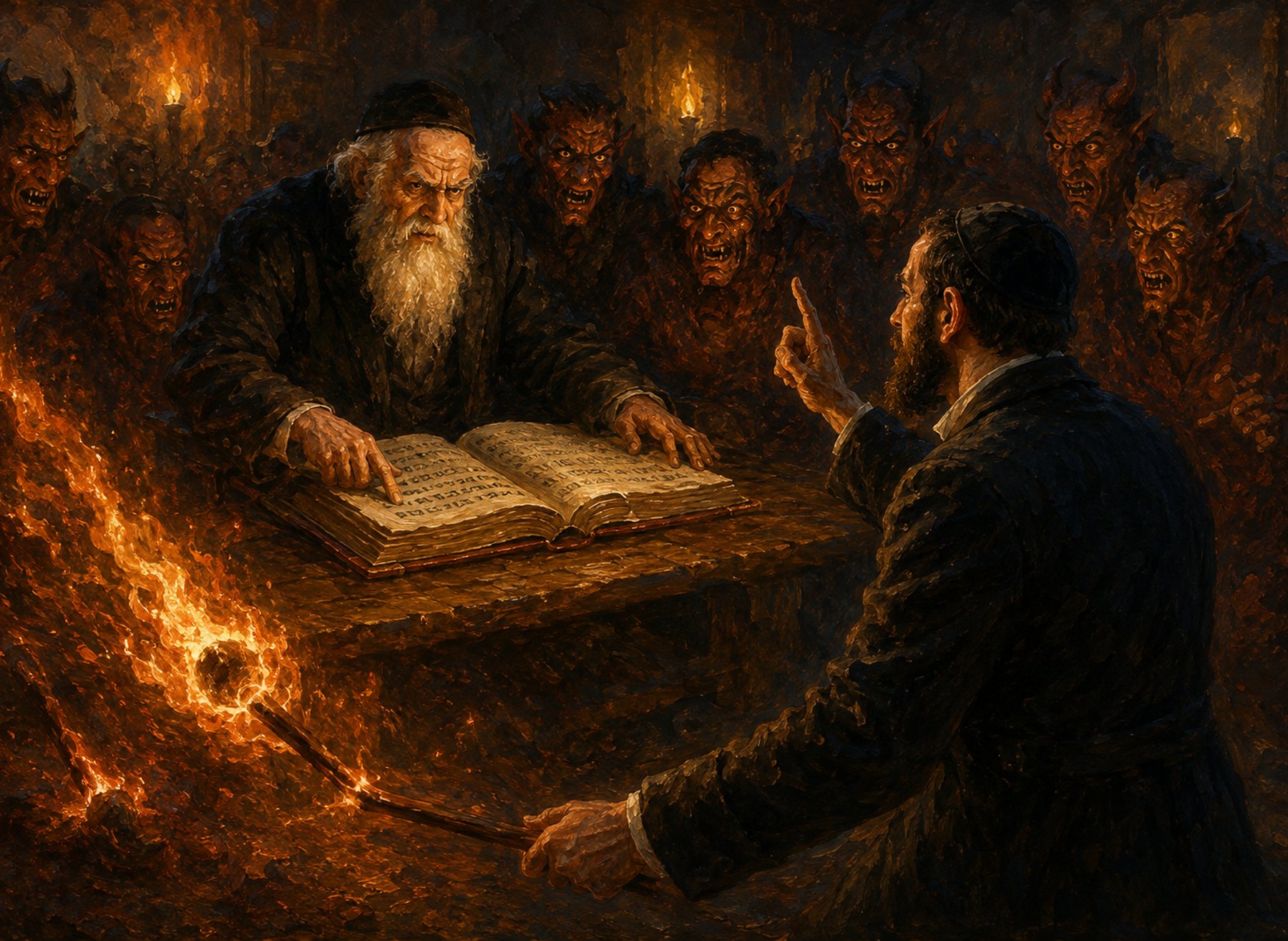
Again, the demons wanted to harm him, and again, the old man stopped them. This time, his face was no longer smiling. He looked at the shochet for a long moment and said, “Bring me my book. If I find even one teaching from Reb Mendel inside it, you may do whatever you want to him. But if not, you have no permission to touch him.”
* * *
They brought a thick book and placed it before the old man. The room went quiet as he opened it. Even the demons seemed curious to see what he would find. At first, the old man searched with confidence. A faint smile rested on his face as he turned the pages. The book contained teachings from many great tzaddikim, and he seemed certain that, sooner or later, he’d find the teachings of Reb Mendel as well.
The shochet stood silently and watched. Page after page passed. At first, he read carefully, studying each page. Then his hand began moving faster. He searched one section, then skimmed through another. He found teachings from one specific tzaddik, then teachings from another, but he couldn’t find even a single letter of teaching from Reb Mendel. For the first time, he seemed troubled.
Around the room, the demons leaned forward. Some pointed at different parts of the book. Others watched anxiously as the old man’s fingers raced across the pages. Their confidence slowly began to disappear. The smiles faded, the scheming whispers stopped. One by one, the demons realized something was wrong.
A heavy silence settled over the room. Even the old man seemed unwilling to accept what was happening, but unable to deny it. One last time, he looked through the pages, for some trace of Reb Mendel’s teachings.
There was nothing.
Slowly, the old man closed the book. The sound echoed through the silent room. For several moments, nobody moved. Then the old man looked around at his followers. Their excitement had vanished. They had failed. At last, the old man turned toward the shochet and said quietly, “Let him go.”
The shochet left unharmed and returned to his home and Rebbe.
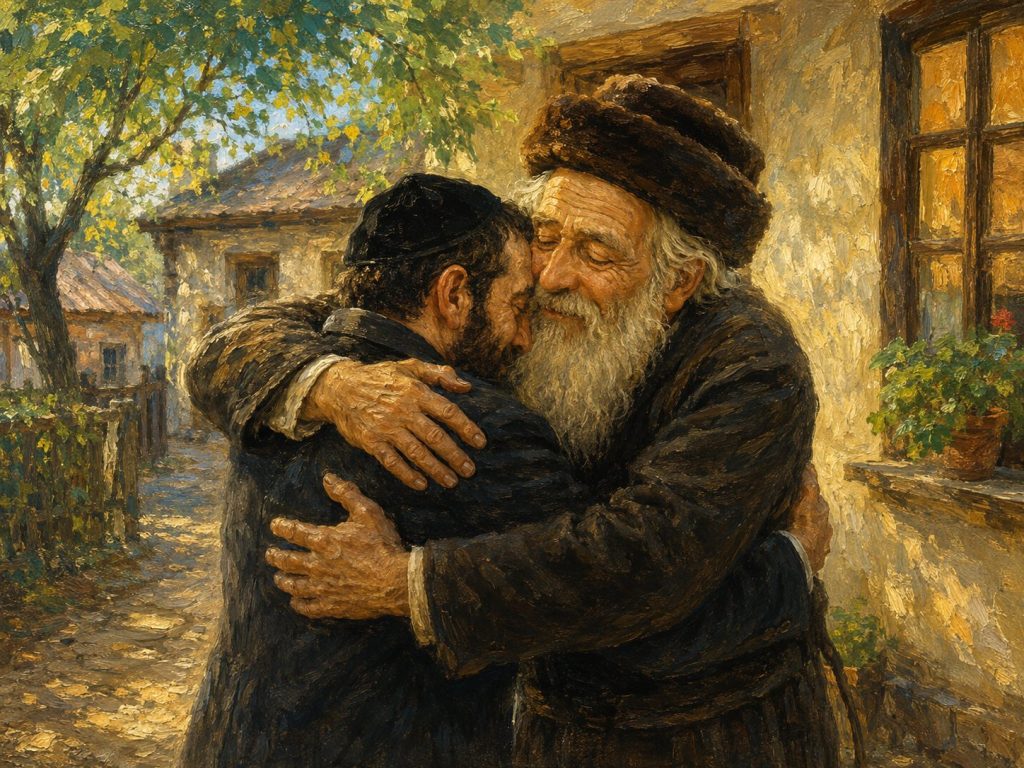
This time, when the shochet returned, Reb Mendel came toward him and embraced him warmly. “You stood through a great test,” the Rebbe said. “You brought down the power of tumah and increased kedusha. Hashem helped you, and you were saved.”
The shochet still had one question. “Rebbe,” he asked, “it was a large book, filled with Torah from so many tzaddikim and talmidei chachamim. Why wasn’t there even one teaching from the Rebbe?”
Reb Mendel answered gently, “Those teachings came from true tzaddikim. But when Torah is said with even a tiny feeling of personal pride, the Satan and the forces of tumah can grab onto it. The Baal Shem Tov and the Maggid taught us to serve Hashem with deep humility, so the Torah we learn isn’t about ourselves at all. When Torah is shared without selfish pride, the Satan has nothing to hold onto. I’ve had to be careful my whole life. Even tzaddikim can act with pride sometimes.”
* * *
The Tzemach Tzedek finished the story and looked around the room. Every candle was burning brightly. “Now you understand,” he said quietly, “why I told you to relight all the candles before speaking about Reb Menachem Mendel.”
The Chassidim sat silently. Now they understood.
(Sefer Sippurei Tzaddikim HaChadash, R. Avrohom Yitzchok Sobelman, Piotrków, 1909)
Beis Moshiach #1519 • ח׳ אלול תשפ״ו • pp. 56-59
© 2026 Beis Moshiach Magazine. All rights reserved.
This article originally appeared in Beis Moshiach #1519. You are welcome to share it with friends and family by email or in print, provided that you do not change, add to or omit any part of it, you credit the author and Beis Moshiach, and you include a link to archive.bmoshiach.org (written out in full in printed copies).
To republish this article in a newspaper, magazine, book or website, please request permission in advance at [email protected].