A Mother, and So Much More
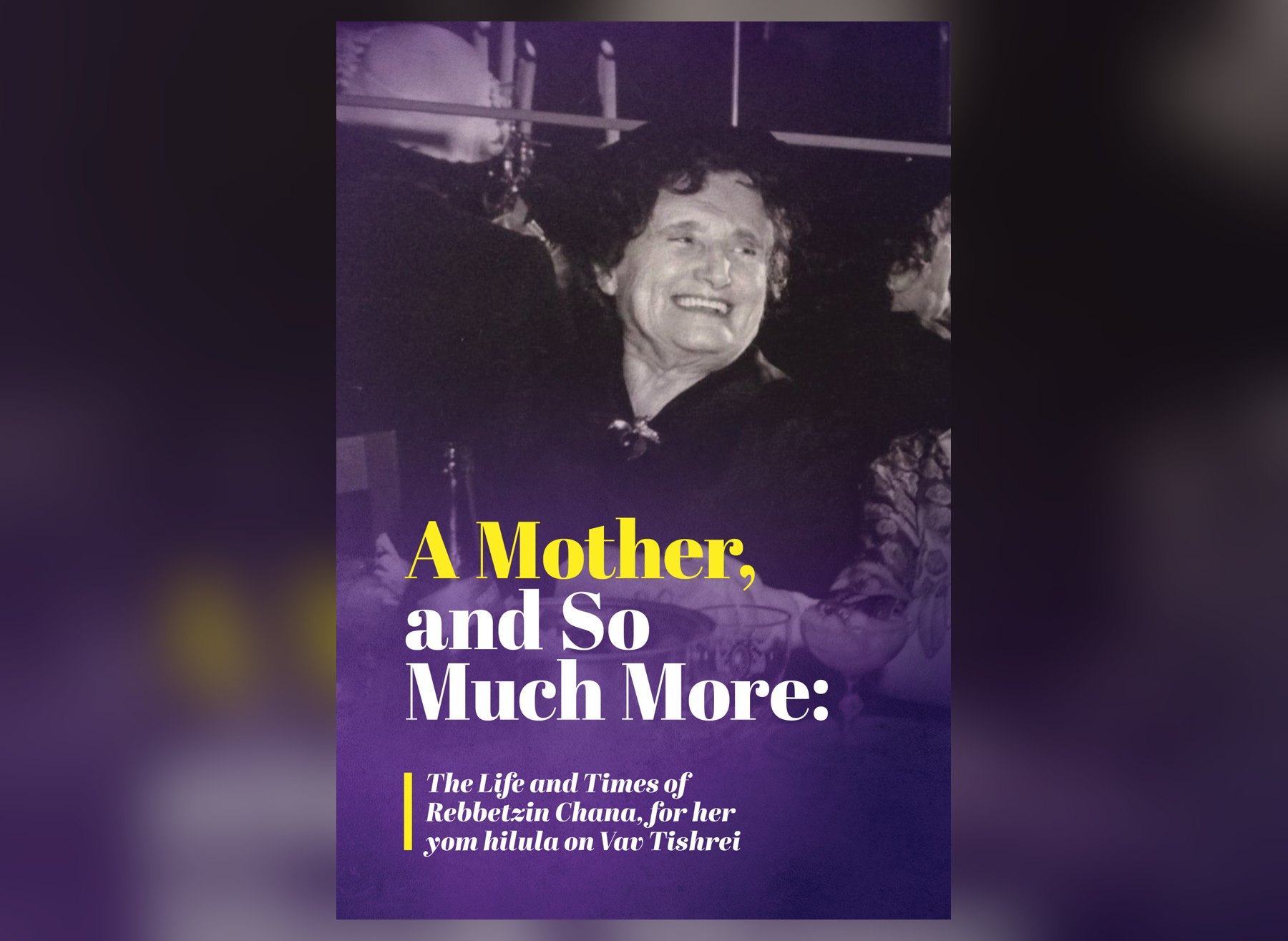
The Life and Times of Rebbetzin Chana, for her yom hilula on Vav Tishrei
Early Days
Ahead of Vav Tishrei, I researched a bit about the life of the Rebbetzin and discovered fascinating and extraordinary stories, each of which sketches another line in her unique portrait.
Rebbetzin Chana was born on the Chof-Ches Teves, 5640 (1880), in the settlement of Romanovka, to her parents, the great Rabbi Meir Shlomo and Mrs. Rochel Yanovsky.
In that era, it was customary for young married men to travel to Lubavitch for a period of between seven months and a year, to study Chassidus there and engage in avodas ha’tefilla.
Rebbetzin Chana’s father spent several years there, and was among the “yoshvim” at the court of the Rebbe Maharash. After his time with the Rebbe, he moved to Nikolayev, where he was appointed Rav of the city, even though most of its residents at the time opposed Chassidus.
The Rebbetzin’s parents gave her a deeply grounded Chassidic education from a young age. In those days, the city of Nikolayev was home to a vibrant community of Chabad Chassidim. When a Chassidic maamar arrived from Lubavitch, Rebbetzin Chana would copy it out in fine handwriting for the benefit of the Chassidim.
Rebbetzin Chana was blessed with extraordinary musical talent, which she inherited from her father, who himself composed several Chabad niggunim of dveikus ha’nefesh, among them the niggun “Volach” and “Rachmana D’anei.”
A Faithful Home
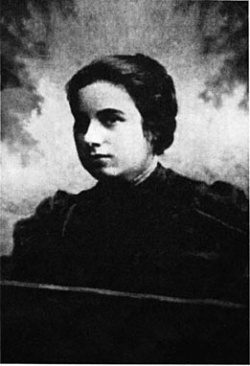
The Rebbe Rashab was deeply involved in the shidduch between Rabbi Levi Yitzchok and Rebbetzin Chana. In fact, it was he who proposed it. The wedding was set for the 11th of Sivan, 5660 (1900), but a few months before the appointed date the kalla fell ill, and her father wanted to postpone the wedding.
The kalla’s father asked the Rebbe Rashab for approval to postpone the wedding, but was met with an absolute refusal.
The Rebbe gave his holy bracha that everything would proceed properly and that the kalla would regain her strength and recover in time for the wedding and so it was.
Another story. Rabbi Meir Shlomo’s friend, Rabbi Asher Grossman of Nikolayev, received a letter from the Rebbe Rashab on Rosh Chodesh Adar, in which the Rebbe wrote, among other things, that he found it strange that Rabbi Grossman had made no mention in his letter of the daughter of their friend Rabbi Meir Shlomo, and asked to be informed promptly, with a prayer that Hashem send her a complete recovery soon.
The Rebbe Rashab even gave the chassan, Rabbi Levi Yitzchok, spiritual guidance in preparation for the marriage.
The wedding of the Rebbe’s parents was exceedingly joyous, as the Rebbetzin herself wrote in her diary, describing how, for more than a month beforehand the atmosphere of the wedding was felt among the entire family and their good friends. After the wedding, Rebbetzin Chana and her husband lived in Nikolayev for about ten years, where their three sons were born: the Rebbe, Rabbi DovBer, and Rabbi Yisroel Aryeh Leib.
Dnepropetrovsk
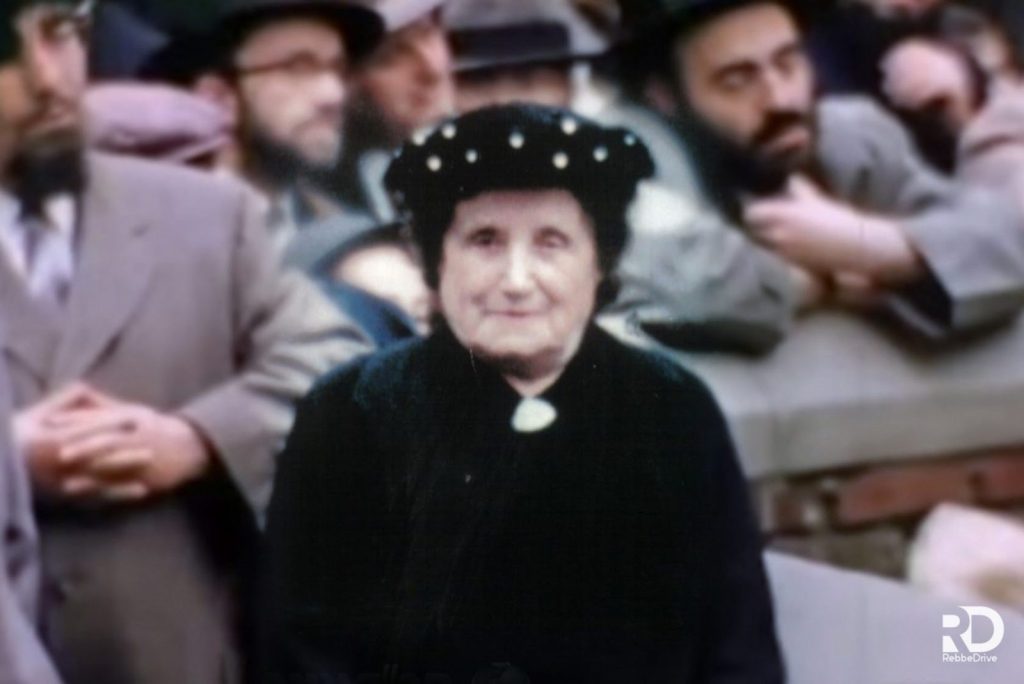
In the year 5669 (1909), Rabbi Levi Yitzchok and Rebbetzin Chana moved to Dnepropetrovsk (known in those days as Yekaterinoslav) where Rabbi Levi Yitzchok was called to become the city’s Rav.
Rabbi Levi Yitzchok served as rabbi of Yekaterinoslav for thirty years, and Rebbetzin Chana served as his support in his holy work.
The Rebbetzin was fluent in the local language and was cultured and pleasant in conversation, and in this way contributed considerably to her husband’s success and influence.
During the First World War, entire communities of Jewish refugees from Poland arrived in Dnepropetrovsk, including teachers, shochtim, rabbanim, and roshei yeshivas. The Jews of the city established relief committees for the refugees – no simple task given the large numbers who arrived. Rebbetzin Chana headed these committees, and for days and nights she labored on behalf of those Jews. The Rebbe related at one gathering that he had never seen his mother in such a state, “and with such tremendous energy!”
Ezer Kinegdo
Rabbi Levi Yitzchok worked extensively for the observance of mitzvos and the spreading of Yiddishkeit, and was especially known for the baking of kosher matzos for the Jews of the Soviet Union. In the year 5699 (1939), the authorities arrested him for this and from there begins a new period in the life of Rebbetzin Chana and her husband.
He was imprisoned for over a year and the Rebbetzin had no contact with him whatsoever, despite her many efforts to locate him and get food packages to him. The officials she approached about the matter told her, time and again, that he was not there. But the Rebbetzin did not give up and continued to try, knowing that her husband was an elderly man, over seventy, who could not endure such conditions (physically or spiritually).
After more than a year in prison, Rabbi Levi Yitzchok was exiled to the village of Chili in Kazakhstan, and Rebbetzin Chana joined him on his journey, to look after his needs.
Rebbetzin Chana, amid the harsh living conditions there, managed to prepare ink for her husband so that he could commit his Torah teachings to writing. According to her account in her diary, he was happier with the ink she prepared for him than with the kosher food she brought him after a long period in which he had barely eaten.
“After five months of searching for my husband,” Rebbetzin Chana recounts in her memoirs, “and attempts to obtain information about his whereabouts and to find out whether he had received the things I sent in his name to Kiev and to Dnepropetrovsk – inquiries to which I was always answered that ‘he is not here’ – and while I was searching for advice on how to proceed (I had no one to consult with, since everyone was afraid to become involved in the matter), I received notice from the prison in Yekaterinoslav stating that ‘L. Y. Schneerson’ was being held there in a cell with such-and-such a number, and that I could send him food supplies and money.
“First of all, I was overjoyed at the news that he was still alive, and second, that I had the ability to send him what could be sent. At last, after all the difficulties and official arrangements I had to go through, I sent him a food package.
“The time for receiving packages was set according to the order of the Russian alphabet, spread over ten days. The first time, my husband did indeed receive the package, and I received a receipt with his signature. The second time, my husband’s turn – according to the first letter of his name – fell on Shabbos. So I prepared everything on Friday, and on Shabbos morning I took along a Russian girl to carry the package.
“No more than four kilograms of food was permitted to be brought into the prison, bread included. Had I not come that day, I would have had to wait another ten days. Of the four kilograms of bread I sent him, a tenth was taken twice as ‘maaser’… and since it was clear that he was eating nothing of the prison food, I judged that by all opinions I was permitted to bring him food on Shabbos.
“After an exhausting wait from seven in the morning until seven in the evening, when it had already grown completely dark, I was handed a note whose contents were even read aloud by the commander, in the presence of many people who were also standing in line (though they did not understand the meaning of the note that was read): ‘Since today is Shabbos, he refused to accept the package’!…
“Such nisyonos can only be withstood through my husband’s spiritual fortitude and yiras shomayim. All this, after six months in which my husband lived on black bread and water alone and suffered great torment, knowing that he would have to wait a considerable time before he could receive another package!
“With great effort I managed to persuade the official in charge to give him the package three days later, though my husband derived more satisfaction from not receiving the food package on Shabbos than he would have from receiving it ahead of schedule…
“Afterward, the prison officials referred to my husband as: ‘The man who doesn’t accept packages on Shabbos.’”
After five harsh years of exile, Rabbi Levi Yitzchok was permitted to move to Alma-Ata, but due to the hardships of imprisonment and exile, he fell gravely and fatally ill. He passed away in Alma-Ata on Chof Menachem Av, 5704 (1944), and was buried there.
The Wanderer’s Staff
A year and a half after her husband’s passing, the Rebbetzin managed, with the help of friends, to reach Moscow. She stayed at the home of Rabbi Dov Ber Rickman, who lived near Moscow. From this point begins Rebbetzin Chana’s journey of wandering, on her way to her son the Rebbe in the United States.
She crossed the border into Poland with two girls whose father she had known in Alma-Ata, Yocheved and Hadassah Gurary, and traveled with them through various towns. From Poland, the Rebbetzin reached a refugee camp in Germany, where families of Chassidim who knew her supported her there. The girl Yocheved Gurary also arrived there, in order to help her reach France and meet her son the Rebbe there.
The Rebbe arrived in France before Pesach 5707 (1947), and this was the only time he ever flew on an airplane.
The reunion with his mother the Rebbetzin was deeply moving after nearly 20 years of separation. He held a farbrengen with the Chassidim there. During the farbrengen he spoke about Yosef who did not see his father for 22 years, and as he spoke he wept bitterly.
The Rebbe sailed with his mother, Rebbetzin Chana, to the United States by ship. They arrived on the shores of the United States on the 28th of Sivan, 5707.
Mother of Royalty
The Rebbetzin’s life alongside her son the Rebbe in Crown Heights was filled with activity on behalf of Chabad Chassidim in general and the Chassidim of the neighborhood in particular. She was a member of the presidium of N’shei u’Bnos Chabad in the United States and supported the Rebbe’s activities in countless ways.
The Rebbe, despite his packed schedule, made a point of visiting her every single day without exception.
The Rebbetzin, for her part, regularly attended the tefillos and farbrengens at 770, and participated in the celebrations of the Chassidim.
There were a number of Chassidim in Crown Heights who would frequent her home, converse with her, and bring up memories of her husband, Rabbi Levi Yitzchok. For example, Rabbi Yehuda Leib Raskin made a point, as a bachur, of visiting the Rebbetzin often and speaking with her. Sometimes when he entered he would find the Rebbe there during his daily visit, and would hurry to withdraw. When he visited her after becoming a shliach, the Rebbetzin would rise in his honor and address him respectfully, in the plural form. He told her he was simply a young married man, and she replied that he was, after all, a shliach of the Rebbe…
Vav Tishrei
On the first day of Rosh Hashana 5725 (1964), the Rebbetzin came to 770 to hear her son the Rebbe’s shofar blowing.
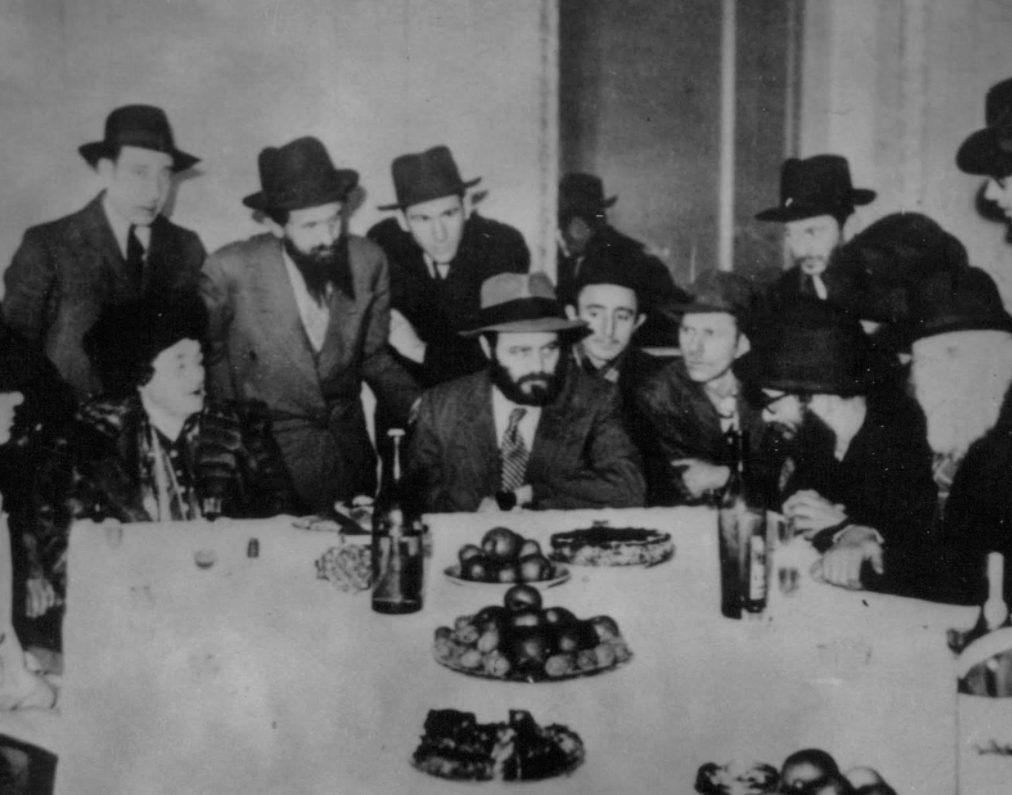
Only afterward did people understand how much this had cost her, for on the second day of Rosh Hashana she did not attend the shofar blowing, due to her weakness. On Shabbos Shuva, the 6th of Tishrei, those at 770 sensed that something extraordinary was happening. The Rebbe passed messages through his secretary during the davening, which was highly unusual. At a certain point the Rebbetzin asked Rabbi Junik, who was close to her, to call the Rebbe. He ran to 770, and found the congregation in the midst of “Aleinu L’shabeach” of Mincha. Immediately at the conclusion of the tefilla he told the Rebbe and the two of them went to her home, with the Rebbe putting on his coat while walking briskly out of his room.
The Rebbe supported the Rebbetzin, and after the recommendation of two doctors, traveled with her to the hospital.
At six in the evening the Rebbetzin passed away. The Rebbe stood by the window, gazed at the sky, and wept intermittently, for a long time.
* * *
Boruch Hashem that we merited having the mother of our Rebbe. Of women like her it is said, “Happy is she who bore him.” In Nikolayev and in Dnepropetrovsk, in exile in Kazakhstan and in Crown Heights, in every place and in every era, her nobility, devotion, strength of spirit, and modesty were evident. Her image is an inspiration for us, the N’Shei u’Bnos Chabad, and the story of her life illuminates the way for us.
Beis Moshiach #1523 • ז׳ תשרי תשפ״ז • pp. 44-49
© 2026 Beis Moshiach Magazine. All rights reserved.
This article originally appeared in Beis Moshiach #1523. You are welcome to share it with friends and family by email or in print, provided that you do not change, add to or omit any part of it, you credit the author and Beis Moshiach, and you include a link to archive.bmoshiach.org (written out in full in printed copies).
To republish this article in a newspaper, magazine, book or website, please request permission in advance at [email protected].