Two Tishreis, Two Hemispheres

A baby born on Shemini Atzeres. A fountain of fish that didn’t survive Rosh Hashana. A stranger who stumbled onto Tashlich in a park. Ahead of the Kinus HaShluchos, Leiky Cohen of Almaty and Rivkale Plotka of Buenos Aires share their Tishrei on the Rebbe’s front lines.
Tishrei with R’ Levik
“Being on shlichus at the tziyun of Reb Levi Yitzchok is a great privilege, and it gives us something unique that exists only in our city,” begins Leiky Cohen, a shlucha of the Rebbe, MH’M, in Alma-Ata (Almaty).
“One of the most special months in our shlichus is Tishrei. From Rosh Hashana until after Simchas Torah there’s hardly a moment’s pause between the tefillos, the meals, the mivtzaim, the events for every kind of audience, building the sukkos, and more.
When I look at the Jewish community celebrating the Tishrei chagim in unity near the resting place of Reb Levi Yitzchok, the Rebbe’s father, I’m moved, and I think about how not many years ago it was forbidden to openly observe Torah and mitzvos here. Jews had to protect the Jewish spark under harsh conditions, with real mesirus nefesh.
We begin preparing for the chagim already in the month of Elul. We have to organize the tefillos, the meals, the “mivtzaim,” and of course make sure that every Jewish man and woman, even those who don’t come regularly, know that they have a place to be for the Tishrei holidays.
The Yomim Noraim
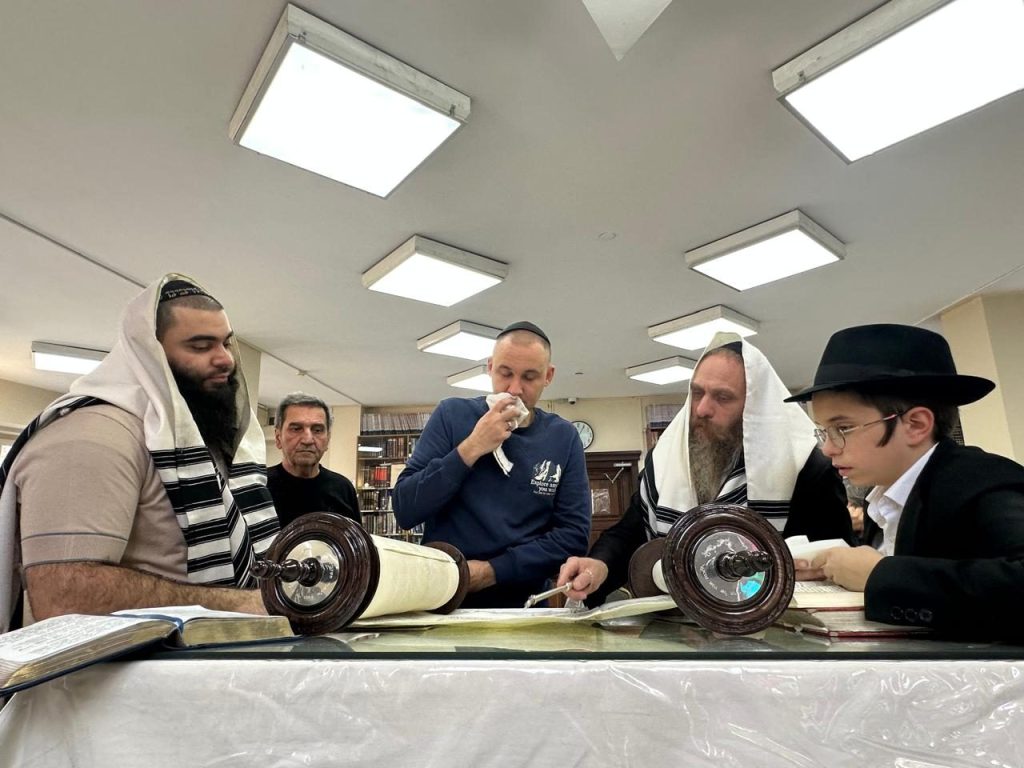
A special moment on Rosh Hashana for us is when hundreds of Jews, each from a different world, enter the shul to daven and hear the shofar.
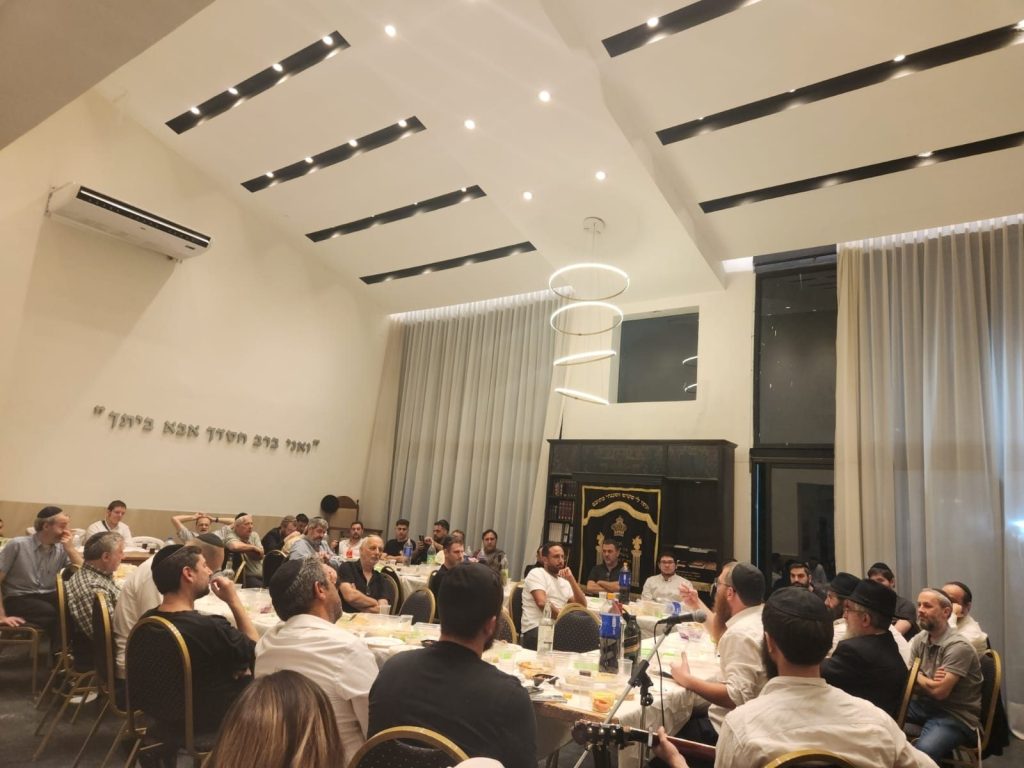
After the davening we hold a seuda for all the guests and explain the customs of the holiday. Afterward we all walk together to perform Tashlich at the river near the Chabad House.
During the Aseres Yemei Teshuva, the activity intensifies, and just before the holy day the custom of Kaparos takes place. My children, boruch Hashem, are very involved in the shlichus, and they love to help the Jews who come to observe the custom. Every year I enjoy watching them help people with a smile and recite the text with them, learning from a young age to help another Jew.
On Yom Kippur our Chabad House is extremely busy. More than a hundred people stay on the premises throughout the entire holiday so they can take part in all the tefillos and keep the fast. Until the end of Yom Kippur the Chabad House parking lot is full of cars belonging to people who came especially for this.
What moves me most is hearing everyone call out “Shema Yisrael” together in the final moments of Neila. which concludes the holy day. When the fast ends, my husband, Rabbi Elchanan Cohen makes Havdala for all the guests, and at the bracha over the fire everyone draws close to the candle and tries to get as near as possible. It’s amazing to see how they concentrate even on the bracha over the fire during Havdalah.
Sukkas Shalom
Even before Yom Kippur we start building the giant sukka in the Chabad House courtyard. In addition, we set up sukkos in the courtyards of homes in other places around Alma-Ata, so that even Jews who live far from the Chabad House can sit in a sukka and fulfill the mitzva of the holiday. We order dozens of sets of Dalet Minim from Israel and send them to communities, to other Chabad Houses across the country, and to private individuals who request them. Throughout the holiday the central sukka is open, and many Jews come and go, take the lulav, eat, or simply sit down to meet acquaintances from the community. That’s the beauty of the Sukkos holiday.
During Chol HaMoed, alongside the main Simchas Beis HaShoeiva, we hold additional age-specific events for seniors, young adults, and children. Each event has a program suited to its audience, and we try to start all of them before sunset, so that as many Jews as possible can take the lulav and sit in the sukka, because there are people who come only to these evening events. Our success is not measured by the size of the event or by the food and decor, but by how many more Jews fulfilled the mitzva of the day b’hiddur, as the Rebbe wants.
The Climax: Shemini Atzeres and Simchas Torah
You could say that the two days of Shemini Atzeres and Simchas Torah are the climax of the month.
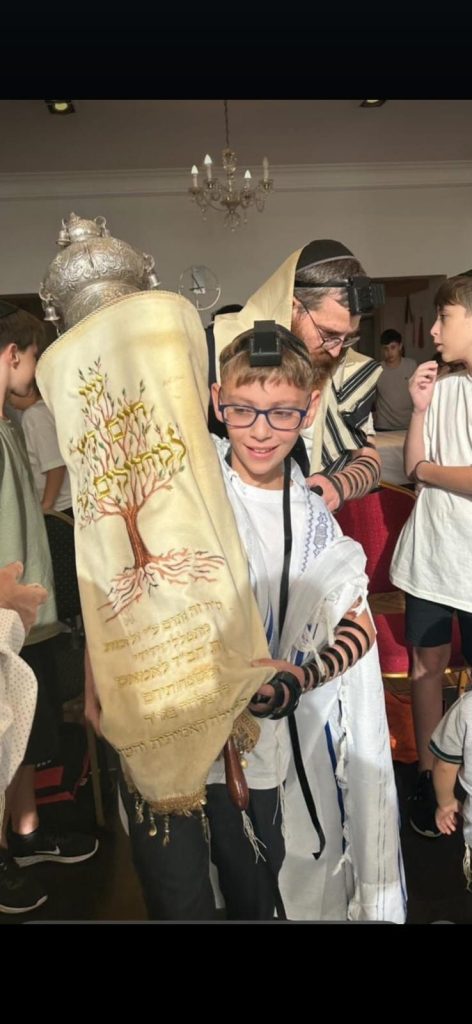
Before the holiday we print a special banner with the pesukim of the Hakafos in giant letters. We hang it on the wall of the shul so everyone can see it and recite the order of the Hakafos while dancing. After the Hakafos we hold a festive meal in the sukka. This meal has a special story.
The Hakafos niggun of Reb Levi Yitzchok, who is buried here with us in the city, has over the years become a kind of anthem of the shluchim of Kazakhstan. But during the Hakafos it returns to its natural place and takes on special meaning, because of the closeness to Reb Levi Yitzchok’s resting place.
In our community there was a couple who for years had not been blessed with children. At the Hakafos several years ago, during the niggun of Reb Levi Yitzchok, they asked those present to say “l’chaim” with them and to bless them that the tzaddik’s merit should stand by them and that they should be blessed with children. A year later, precisely on Shemini Atzeres, their first child was born!
Since then they sponsor the Shemini Atzeres meal every year.
“And Yaakov Went On His Way”
After Simchas Torah, when the month of Tishrei is over, we return to routine, to the regular activities of the Chabad House (as far as it can be regular), but with great satisfaction, knowing that we got many Jews to take the Dalet Minim, hear the shofar, and fulfill the many mitzvos of Tishrei. And there are some for whom it was the first time they recited the bracha “to dwell in the sukka” or fasted on Yom Kippur.
I try, and intend, to take the many lights of Tishrei and carry them forward into the shlichus work of the whole year. And boruch Hashem, we merit to see here, in the city of Reb Levi Yitzchok and Rebbetzin Chana, how the spark that was preserved in the past with mesirus nefesh not only continues to burn but shines brighter and brighter today.
An Argentinian “Tashlich” Operation
My name is Rivkale Plotka. Boruch Hashem, we have been on shlichus for 16 years at Chabad House Lemas in the Flores neighborhood of Buenos Aires, Argentina.
My husband is Argentinian, and his parents have been here on shlichus for over 30 years. I came here right after our wedding. Our neighborhood, Flores, is the size of an average city in Israel, and my in-laws’ Chabad House is in a different part of the neighborhood.
The Tishrei chagim on shlichus are a great zechus but also a very complex operation. Let me tell you a bit about Tashlich on shlichus. In Israel it’s an integral part of the holiday, but for us it’s a project in its own right.
When I arrived, as someone who grew up in Kfar Chabad I took for granted that everything was available and convenient for observing mitzvos, and here I discovered that the nearest body of water is a lake about an hour’s walk from the Chabad House. From the very first year of shlichus I couldn’t go to Tashlich on Rosh Hashana, because I was expecting, and afterward I already had children and it simply wasn’t feasible. So the children and I do Tashlich after Rosh Hashana.
My husband goes with the chevra from the Chabad House on Rosh Hashana to that big lake with the fish in a park in another part of the city. He has told me several times about the good atmosphere, how they sang and told Chassidic stories along the way, did Tashlich, and returned to the Chabad House for Mincha of Rosh Hashana.
I needed to find my own solution, and indeed after Rosh Hashana we would drive with the children to the park and do Tashlich there.
Then I thought of an idea I had also heard from other shluchim families, and I wrote in the Chabad House women’s group that I was organizing a trip to the park where we would do Tashlich together. Since then, every year a group of women goes to do Tashlich together at this lake.
Women are very moved and connect strongly to this minhag, especially at the stage of shaking out the garment, when they feel that we’ve cast off all the sins and that it’s really happening at that very moment. They ask why specifically a body of water with fish, and they ask about the details of the minhag, and I explain it to them and they enjoy it.
Afterward we sit and learn something about the parsha or the Aseres Yemei Teshuva, and the atmosphere is lovely, because it’s a change. It’s not the usual class in the Chabad House but a shiur held outdoors on the green grass beside a lake… The whole atmosphere is pastoral and special, a beautiful, unusual once-a-year experience.
Some women already ask me in advance when it’s happening this year and how we’ll organize. Whoever has a car volunteers to drive other women, and so everyone arrives together to observe the custom of Tashlich. Some years there are fewer women and some years more, but the atmosphere is always good and it’s a meaningful experience for all of us.
When we’re there, a group of women with machzorim in our hands facing the lake, murmuring and enthusiastic, non-Jews walking through the park take note. It’s a sight you don’t see every day…
Once, a woman passed by us, stopped, and said: “I’m Jewish too.” Apparently she realized that this was a Jewish act, and so she joined us. We explained the essence of the minhag and she recited the text of Tashlich from one of the machzorim and was very moved and happy about the opportunity. We, of course, were even happier…
On that occasion I explained to the women about hashgacha pratis and the power of a Jewish soul awakening, and this connected them even more to what they were doing.
The Tashlich experience on shlichus is so different from Tashlich in Kfar Chabad. But davka here I have a special feeling that I didn’t have in the Kfar. A feeling of “Who is like Your people Israel,” a connection between souls and true elevation.
The Fountain That Disappointed
There was one year when we decided to be resourceful and said that if we don’t have a lake close by, we’ll bring the “Tashlich” to us.
Our Chabad House is located in a house more than a hundred years old. When we arrived, people told us they call it the “mansión,” Spanish for palace, because of its special architecture. We have a very high ceiling, and stairs and marble columns… Anyway, outside the Chabad House we have a stone fountain, also in an antique and interesting design.
All these years we’ve been trying to get the fountain to work and spout water. We brought many professionals, gardeners, and maintenance workers, but no one managed to get it running. So we decided to seal the pipe openings with mortar, fill the fountain’s basin with water, and put in fish, so we could do Tashlich.
In fact, for several years people had suggested we do this, but we were afraid the basin wouldn’t seal properly or that the fish would die. That year we got up the courage and were very excited about the idea. We brought someone to do the renovation, filled the basin with water, and bought huge goldfish. We figured small fish would die faster, so we bought big ones. We were thrilled that we would finally be able to keep the custom at its proper time, right next to the Chabad House, without having to go far. But already on the morning of Rosh Hashana we saw that most of the fish had died, and by the time it was time to do Tashlich, there were no fish left at all…
We were very disappointed, and the children were too, but at least we had a pond with fish swimming in it on Rosh Hashana.
In the end we did the custom itself as every year; my husband went with the men to the faraway lake, and I went with the children after Rosh Hashana.
Rosh Hashana Without a Pomegranate
I remember my first Rosh Hashana on shlichus, when I discovered that there are no pomegranates here…
The seasons here are exactly the opposite of the seasons in Eretz Yisrael. That means that right now it’s the peak of the cold weather here and spring will slowly arrive. And pomegranates don’t grow in winter! I can’t describe the shock I had when I found that out. I couldn’t imagine Rosh Hashana without a pomegranate. I didn’t understand how nobody had told me about this. After that I knew I needed to prepare for the holiday in advance and get pomegranates. I don’t succeed every year, but in most years we already start preparing for the Tishrei chagim from Pesach, and along with all the other holiday supplies, we buy a pomegranate too.
Davening on Shlichus
I feel the zechus of being here on the Rebbe’s shlichus, gathering the neshamos at our Chabad House. It’s moving to daven, unite, connect, and be uplifted on Rosh Hashana, which is such a special day, and of course on Yom Kippur, which is the climax, especially alongside those who don’t come to shul all year round… “Rosh Hashana Jews” is what they call them…
Often in the middle of the davening I have to help a woman find the right page or greet with a smile a new woman who arrives, and most of the time I can’t sit and concentrate on davening. But I’m very moved to meet these Jewish women who come especially during the Yomim Noraim. During these days the crowd is bigger and more diverse. People who don’t come during the year are inspired and come at this time. I sometimes find myself wondering: Where do these people come from? What were they busy with before they came to the Chabad House to daven? There are even fathers of non-Jewish children there, unfortunately, and it’s moving to see how their spark awakens anew each year, and they come to the Chabad House, open a siddur, and daven.
Preparing Argentina to Greet Moshiach
The subject of Moshiach is in the forefront of our minds. We know that we came here to bring him closer and to reach that great moment. When I learn with women, we always end with a request that Moshiach come already and we go up to Yerushalayim.
Recently we renovated the Chabad House, and in the big window above the Aron Kodesh we put a large picture of the Beis HaMikdash descending from heaven, and it looks real and alive. It makes people excited, and they ask and talk about the subject of Moshiach even more. It’s something that ‘lives’ here very strongly; we breathe it and wait for the Geula to come.
B’ezras Hashem, Moshiach will come immediately and we will be gathered from all corners of the world and from all countries to Eretz Yisrael, to the true place where a Jew is meant to be, the third Beis HaMikdash with Melech HaMoshiach, and we will be able to tell the Rebbe that we fulfilled our shlichus and reached the moment for which we came here, to this shlichus.
Beis Moshiach #1529 • כ״ו חשון תשפ״ז • pp. 44-50
© 2026 Beis Moshiach Magazine. All rights reserved.
This article originally appeared in Beis Moshiach #1529. You are welcome to share it with friends and family by email or in print, provided that you do not change, add to or omit any part of it, you credit the author and Beis Moshiach, and you include a link to archive.bmoshiach.org (written out in full in printed copies).
To republish this article in a newspaper, magazine, book or website, please request permission in advance at [email protected].