Mrs. Tzivia Jacobson Remembers When the Rebbe Rayatz Wanted to Make a “Shehecheyanu” on Their Family of Eight
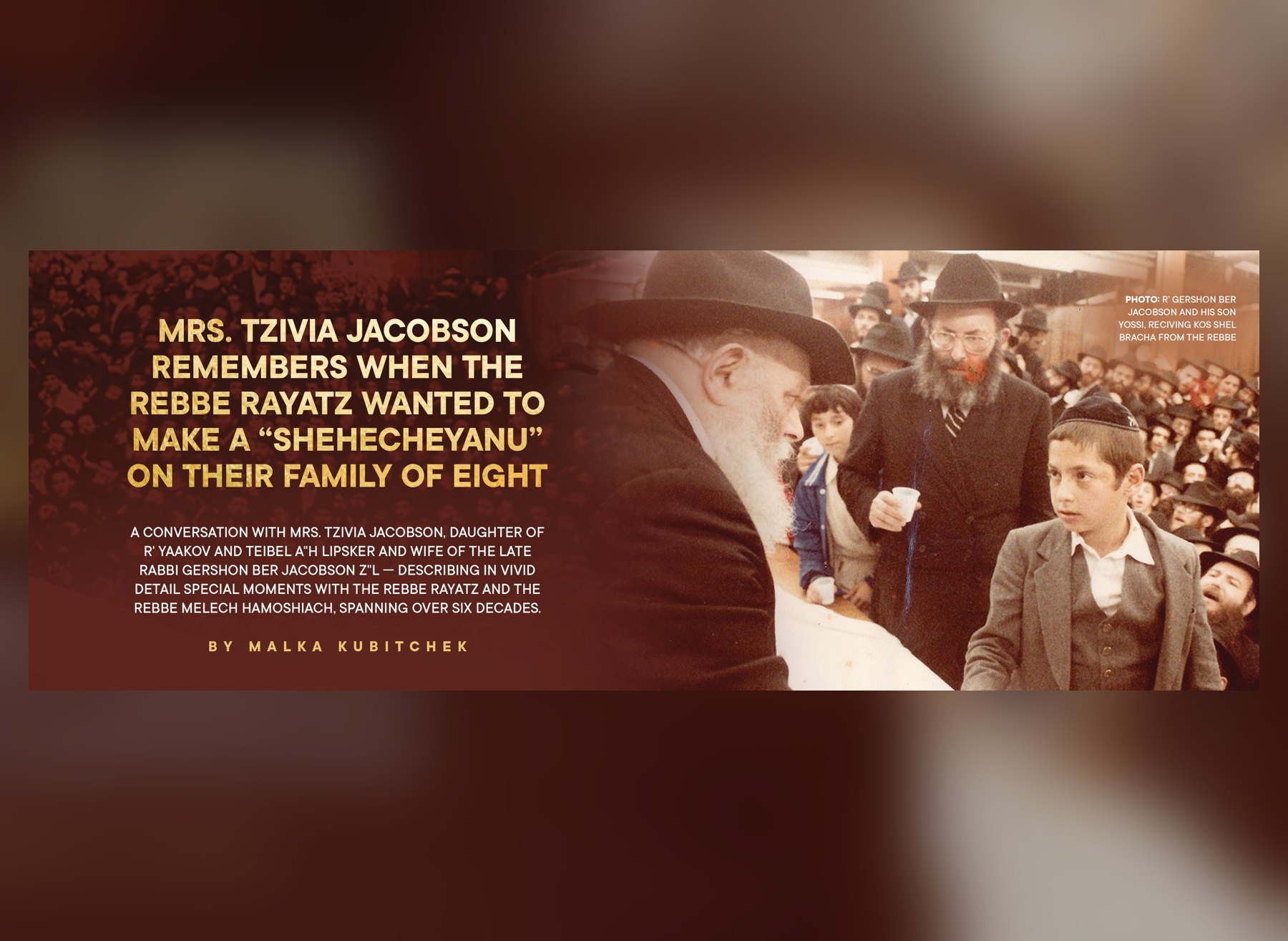
A conversation with Mrs. Tzivia Jacobson, daughter of R’ Yaakov and Teibel a”h Lipsker and wife of the late Rabbi Gershon Ber Jacobson z”l - describing in vivid detail special moments with the Rebbe Rayatz and the Rebbe Melech HaMoshiach, spanning over six decades.
“Shehecheyanu” from the Rebbe Rayatz
We left the Soviet Union in 1946. My parents, Rabbi Yaakov and Mrs. Teibel Lipsker z’l, were Chassidim, yerei shomayim, mekusharim heart and soul to the Rebbe Rayatz. With the kindness of Hashem, they built a beautiful Chassidishe family within the Soviet Union.
The Chassidic spirit was absorbed into our very being; our dear parents were the ones who instilled it in us. Our home in Kutaisi was a Chabad House in every sense. Everything holy, everything needed to strengthen Jewish life in the city, passed through our home. The yearning to see the Rebbe pulsed through every object in the house. Every evening, when she said the Shema before bed, my mother would end her prayer with the words: “Der Oibershter zol helfn, ich zol zich zehn mit’n Rebbn” - may Hashem help that we see the Rebbe. This wish that my mother expressed came from simple, pure faith in the yeshuas Hashem, even though naturally there was no chance in the world of leaving the Soviet Union and seeing the Rebbe.
In all our years in the Soviet Union we never saw a single picture of the Rebbe, and yet we felt so connected to him, so close to him.
After the Second World War, we managed to leave Russia. We then moved from place to place across Europe while waiting for entry permits to the United States. After our wanderings, we boarded the ship that brought us to a safe haven. In the spring of 5708 it docked in the port of New York.
Upon arriving in New York we had yechidus with the Rebbe Rayatz. The whole family that had left Russia came: father, mother, and six children. I was the oldest, twelve years old. Seeing the Rebbe Rayatz, we recited the bracha of Shehecheyanu with great emotion.
The Rebbe Rayatz looked at our family, a Chassidishe, yerei shomayim family, and responded with great emotion: “To see such a family leaving Russia I must bless Shehecheyanu.” We merited his brachos, and they have accompanied us until the coming of Moshiach Tzidkeinu.
So my mother’s hope was fulfilled, and we merited to see the Rebbe Rayatz.
The American government was good to the immigrant refugees and gave them a sum of money to help them establish themselves in their new home. With the blessing of the Rebbe Rayatz, my father bought an egg-laying chicken farm in New Jersey. He sold the eggs and made his living that way. In New Jersey we attended school where we learned to speak English. After six years my father sold the business and we moved to live in Crown Heights within a large Jewish community. There was already a Bais Yaakov school there, and afterward Bais Rivkah opened as well. At last we merited to experience full Chassidishe life, close to the Rebbe, Nesi Doreinu.
A Chassidic Atmosphere at Home
On Yud Shevat 5711, when the Rebbe accepted the nesius, there was great joy. The Rebbe held a farbrengen with a group of Chassidim in the shul next to the secretariat’s office. Near that room stood several women, myself among them, a girl of sixteen. I stood there to see the Rebbe. That was the atmosphere I grew up in, the air I breathed. It was clear to me that if the Rebbe was holding a farbrengen, I had to be there.
Over the years we merited private audiences with the Rebbe on special dates. Meanwhile our Chassidic family grew. My parents had three more children born in New York. On my father’s birthday the whole family would come for a yechidus.
Chassidim Ein Mishpacha
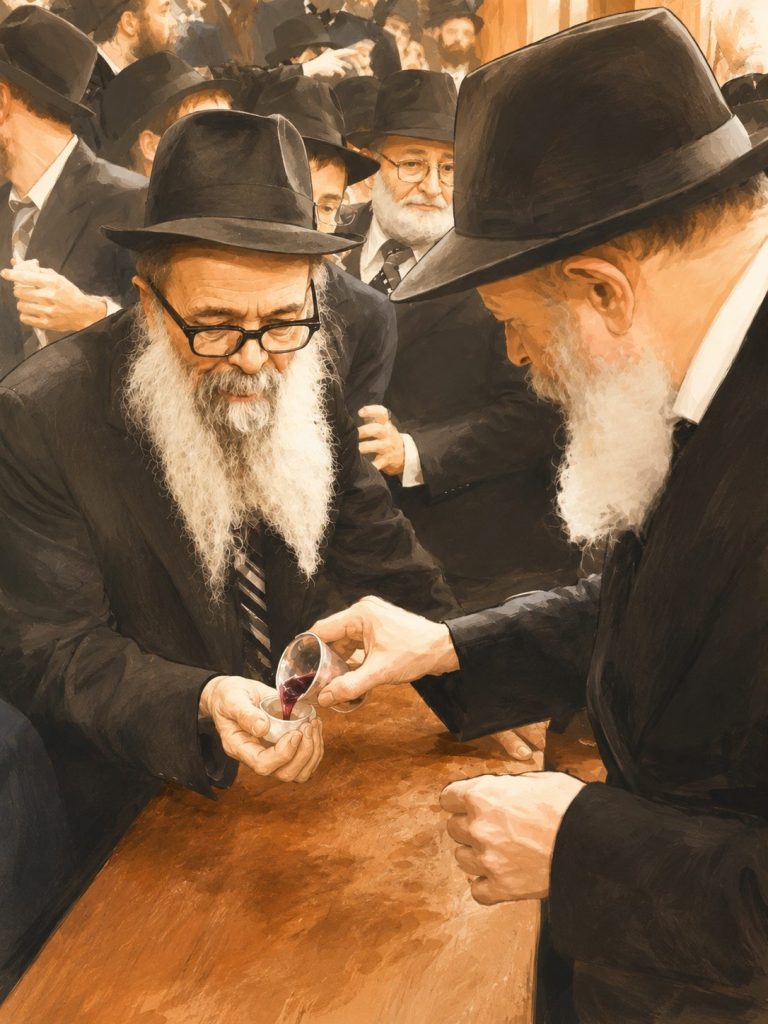
My husband, Rabbi Gershon Jacobson z’l, grew up in Moscow. His father, Rabbi Simon Jacobson (Yakobashvili) z’l, merited to study under the Rebbe Rashab and after his histalkus became strongly mekushar to the Rebbe Rayatz. He was one of ten Chassidim who swore to the Rebbe Rayatz to spread Torah everywhere and to guard the flame of Yiddishkeit in their surroundings to their last drop of blood. Rabbi Simon Jacobson traveled with mesirus nefesh throughout the Soviet Union, opened mikvaos and shuls, and inspired Jews to strengthen their Yiddishkeit. In the end he was caught by the Soviet authorities, who persecuted anything Jewish. He was tried for spreading Judaism and exiled to Siberia under harsh conditions because he refused to hand over his friends. After years in harsh exile he was released, very ill and weak, and reunited with his family, his wife and their two children.
After the Second World War ended, the small family left the Soviet Union: my husband’s father, Reb Simon Jacobson, his mother Fraida, and their two teenage sons, my husband Gershon and his brother Betzalel. They wandered through France and Germany, where their youngest son, Sholom, was born. In 1952 (5712) they emigrated to Canada. Sadly, the harsh imprisonment in Siberia had taken its toll. After about a year and a half in Canada, my husband’s parents passed away, first his father, and a short time later his mother as well.
Thus three young orphans were left alone. My husband, Rabbi Gershon Jacobson, was nineteen; his brother Betzalel was seventeen; and the youngest brother, Sholom, was five. They came to New York. My husband, the oldest brother, wrote to the Rebbe that a good Jewish couple from New York wished to adopt the youngest brother as their son, in exchange for payment. He asked the Rebbe what arrangement to find for his little five-year-old orphaned brother. The Rebbe answered that he should find a Chassidishe family from a similar background - immigrants from the Soviet Union, with young children of a similar age - so the little boy could grow up in a warm, family-oriented Chassidic home. The Rebbe added: when you work and earn money, you can pay them.
When my dear parents, Reb Yaakov and Teibel Lipsker, heard of this sad situation, they did not hesitate for a moment. They already had nine children, and they took the little orphan, Sholom Jacobson, into their home with love and joy, without any payment. My parents had grown up in Russia, where the community of Chassidim was like one family. They felt responsible to help any Jew in distress. That is the spirit of genuine Chassidic brotherhood we grew up with in our parents’ home.
A Dollar for the Broker
Over the years I merited to bring groups of Jews to the Rebbe as part of my activity in mivtzaim, especially the Taharas HaMishpacha campaign. We organized gatherings of Jewish couples from across New York at the mikva on Union Street in Crown Heights. There I would lecture and passionately explain about the importance of the family purity laws. The participants, women and men, would well up with emotion hearing the illuminating divrei Torah and about our tradition and would immediately accept upon themselves to keep the mitzva. They understood that observing family purity is the essence of our Jewish life, and that we bear responsibility for the purity of our descendants.
When these gatherings took place on Sundays, I would take the group to the dollars distribution. On one occasion I received wonderful encouragement and chizuk from the Rebbe for my work in the holy mivtzaim. I stood with the group of women in the long line. They passed before the Rebbe in holy awe, received a dollar for tzedaka, and were blessed by him. When I passed before the Rebbe, last of the group, I received a dollar like everyone else, for shlichus mitzva and then the Rebbe gave me an additional dollar with a bright smile and said: “Dos iz fahr ah commission.”
A Proper Bris Mila
I would visit hospitals in New York. When I found Jewish patients, I would speak with them and awaken their hearts to strengthen their observance of mitzvos. Once I met the excited, joyful family members of a young mother who had given birth to a son a few days earlier. They were Russian speakers. I spoke with them in their language and asked how I could help them arrange a bris mila for the newborn. The young parents and their family replied that they intended to hire a surgeon to perform the procedure, and had no interest in a mohel or in keeping the mitzva of mila in accordance with halacha. I continued speaking to their hearts and tried to persuade them of the value of observing the mitzva properly, but in vain. The family remained firm in their refusal.
I left the hospital with a heavy heart. I returned home and called the Rebbe’s office. Rabbi Leibel Groner z’l, the secretary, answered. I described to him what had happened that day at the hospital and asked him to convey to the Rebbe my request for a bracha for the newborn and his family. A short while later Rabbi Groner called back with an answer: “The Rebbe asks that you go back to them and tell them that the Rebbe says a proper bris mila has a positive impact for generations. The Rebbe gives you a bracha to succeed in your mission.”
Hearing the Rebbe’s words through the secretary, I drove back to the hospital. I entered the new mother’s room, and to my surprise I found the family members, who just moments earlier had refused a proper bris mila, smiling at me and asking, “Do you have a mohel’s phone number?”
I answered: “Of course!”
We immediately called a mohel and arranged to hold the bris mila on time, according to halacha. I organized a respectable seudas mitzva for them, and we parted joyfully.
In this event (and in others) I saw with my own eyes how what the Rebbe said came to pass. When the Rebbe says something and gives a bracha, his words are already at work in the world. We are merely carrying out the Rebbe’s ratzon to draw Jews closer to Yiddishkeit.
Being Precise in Fulfilling the Rebbe’s Ratzon
With great excitement and joy we prepared for our dear daughter’s wedding, the first wedding in our family. My husband was a public figure and well-known journalist, and he had a long list of distinguished people to invite to our joyous occasion. We wanted a large, spacious hall that could properly and honorably accommodate our guests. There was indeed a grand hall suited to this in Crown Heights, but my father would not agree to use it because a Conservative synagogue was located on the floor above it. What to do?
We wrote to the Rebbe that we had many guests for our daughter’s wedding who wanted to attend and that this would be their first time seeing a grand, joyous Chassidic wedding but we had no suitable hall. So we thought of holding the chuppa in the courtyard of 770, and the wedding feast at a hotel hall in Manhattan.
The Rebbe’s answer to my husband was clear and sharp: “Since you are a public figure and many people look to you, if you go and do the opposite of what I am fighting for, that people should not leave the neighborhood, and hold an event outside the neighborhood, then everyone will do as you do. I hope you find a good solution. May it be at a good and successful hour. Success to the couple.”
The Rebbe showered more wonderful blessings on the young couple. Meanwhile I ran around searching for a suitable place for the wedding but found nothing. In the midst of this, my husband was invited to Washington to attend an important press conference. This press gathering took place in a huge tent set up on the White House lawn. My husband sat down in his seat in the row of journalists and at that very moment the idea struck him: we would also set up a large tent within the Crown Heights neighborhood for our daughter’s wedding! Now my husband understood why he had come to Washington, to understand how to fulfill the Rebbe’s will!
Behind the Bais Rivkah building there is a large parking lot. We hired a maintenance company which cleaned and arranged the area and set up the spacious tent there. We ordered colorful flower arrangements and elegant tableware, so that everything would be done with great taste and splendor. It was, boruch Hashem, a wonderful, joyous wedding.
Flowers for Rebbetzin Chaya Mushka
Before the wedding, I put a flower arrangement into a decorated basket, attached a wedding invitation with a personal handwritten note, and sent it to the home of Rebbetzin Chaya Mushka a’h. She was moved to receive the lovely gift and asked me on the phone, “Why did you send me this festive bouquet of flowers?” I answered her: “I wanted you to feel a bit of the wedding atmosphere that will take place here in the neighborhood in a few days.” The Rebbetzin thanked me and gave us a special gift, a handkerchief that had belonged to her father, the Rebbe Rayatz, to cover the kalla’s face before the chuppa.
* * *
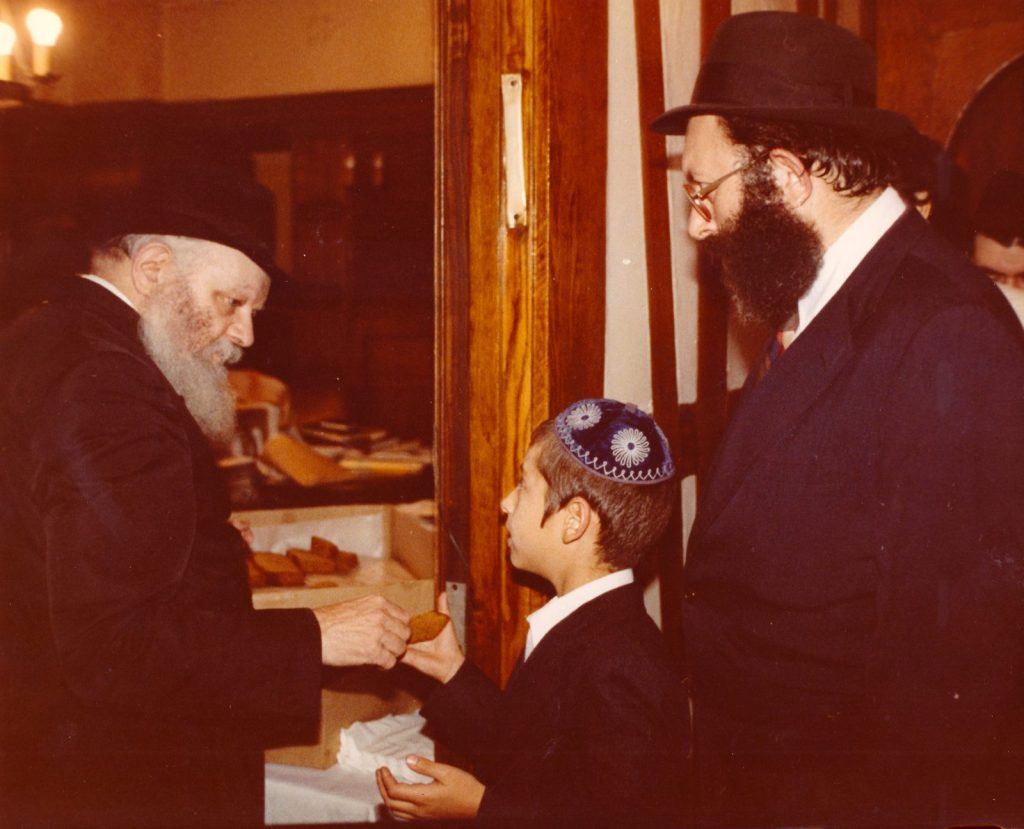
The values we received from our parents, first and foremost devotion to Nesi Doreinu, we have, b’chesed Hashem, passed on to our children.
That is true Yiddishe nachas.
This story and other stories about beloved moments with the Rebbe can be found in the book “Ohr Mosheich Eilav” published by “Chish.” Orders can be placed through Chish Publishing – Hafatzas HaMaayanos.
Beis Moshiach #1525 • כ״ח תשרי תשפ״ז • pp. 42-47
© 2026 Beis Moshiach Magazine. All rights reserved.
This article originally appeared in Beis Moshiach #1525. You are welcome to share it with friends and family by email or in print, provided that you do not change, add to or omit any part of it, you credit the author and Beis Moshiach, and you include a link to archive.bmoshiach.org (written out in full in printed copies).
To republish this article in a newspaper, magazine, book or website, please request permission in advance at [email protected].