The Arrest and Geula of the Mitteler Rebbe
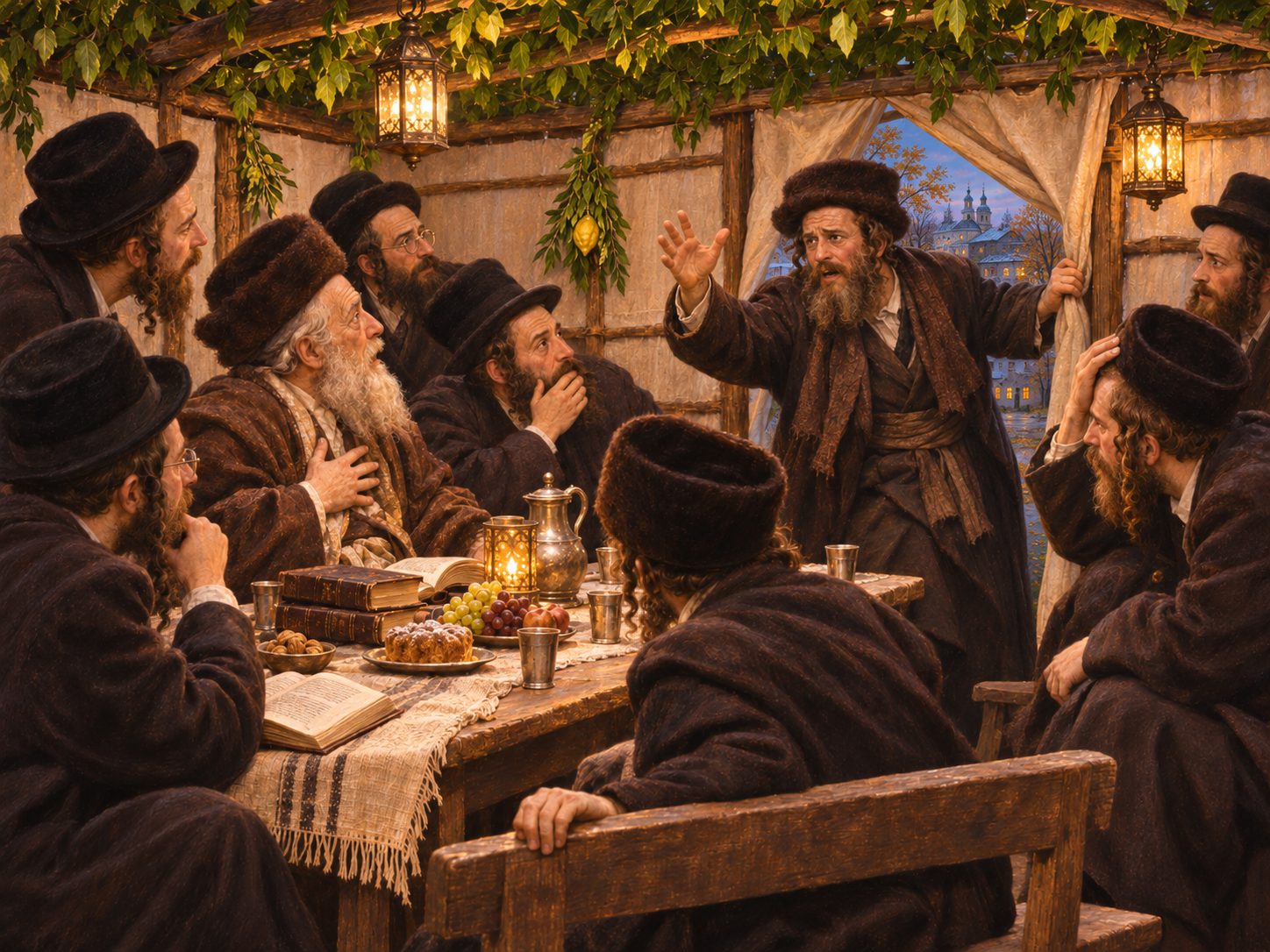
“I heard that the government is investigating the Mitteler Rebbe!” Reb Simcha Zelig had just hurried into the sukkah with the frightening news. He was one of the respected Chassidim of Vitebsk, and he had overheard the rumor while visiting the government offices.
It was Chol HaMoed, the middle days of Sukkos, in the year 5587, or 1826. The Chassidim, followers of the Rebbe, had gathered in the sukkah for a farbrengen, a gathering where they share words of Torah and encourage one another in serving Hashem. Now they had something very troubling to discuss.
Vitebsk was the center of the region that included Lubavitch, the town where their Rebbe lived. The government offices there had power over what happened in Lubavitch, too.
The Chassidim could hardly believe it. The Mitteler Rebbe, the second Rebbe of Chabad, was the son of the Alter Rebbe. Years earlier, when the French ruler Napoleon had fought against Russia, the Alter Rebbe had helped Russia by arranging for Chassidim to gather information about the French army. The Czar, the ruler of Russia, had been so grateful that he gave the Alter Rebbe’s family the special title of “Honored Citizen.” That honor passed from father to son.
The government had even helped when the Mitteler Rebbe moved to Lubavitch from Kremenchug, where he had stayed after his father’s passing. Officials in St. Petersburg had sent instructions ahead to the towns along his route. They were to send people to welcome him and help with his horses. Why would that same government now be investigating him? What could anyone possibly accuse the Rebbe of doing?
By Shemini Atzeres, the Yom Tov that follows Sukkos, the rumor had been confirmed. A group of Chassidim met with the secretary of the regional governor. A governor was in charge of a region, and ministers were important officials in the government. The secretary explained that by the coming Thursday, the Minister of Justice in St. Petersburg was expected to sign an order allowing the police to search the Rebbe’s home and take him away under guard. The minister went even further: the Rebbe himself must be brought from Lubavitch to Vitebsk for questioning.
The Chassidim still did not know who had accused the Rebbe or what he was accused of doing. How could they defend him without knowing? Together with several non-Jewish landowners who greatly respected the Rebbe, they went to speak to the minister handling the travel arrangements. “Our Rebbe should not be carried away like an ordinary criminal,” they insisted. “Let him travel in his own wagon.” Because his health was poor, they also asked that he be allowed to travel slowly. The minister agreed. The journey would take three days instead of two.
By Sunday, officers had reached Lubavitch and begun searching the Rebbe’s home. As the Chassidim learned more about the case, they discovered how the trouble had started. Someone had taken a letter about tzedaka and used it to make terrible accusations against the Rebbe.
Years earlier, the Alter Rebbe and his family had fled their home in Liadi as Napoleon’s army approached. They had left their belongings behind, where they were stolen, and their houses were burned to the ground. The money they still had was spent on the difficult journey. During their escape, the Alter Rebbe passed away. His family was left with almost nothing.
The Chassidim knew how much the family had lost. When the Mitteler Rebbe accepted the invitation to settle in Lubavitch, Chassidim at every stop along the way gave generously to maamad, the fund that helped support the Rebbe’s household. By the time he arrived, he had collected a few thousand rubles. Rubles were the money used in Russia, and even a few thousand was a large amount.
The Rebbe knew that the other members of his father’s family had also been left with almost nothing. He decided to share the money among them. Three trusted Chassidim, Reb Pinchas Reizes, Reb Zalman Reizes, and Reb Shlomo Freides, were chosen to divide it. In a letter to Reb Pinchas, the Rebbe explained what should be done with the money.
Years passed. Reb Pinchas passed away without leaving any children, and his belongings went to a nephew who lived in Shklov. Sadly, this nephew was known as a dishonest man who was involved in crime. He immediately began looking for ways to make more money from what his uncle had left him. Among the papers, he discovered the Rebbe’s letter. Instead of seeing a letter about helping a family in need, he saw a chance to get money for himself.
The nephew went straight to the Rebbe and demanded a large payment. “If you don’t give me the money,” he threatened, “I will use this letter to make trouble for you with the government!” He was trying to blackmail the Rebbe, frightening him into paying by threatening to spread lies about him.
“I have done nothing wrong,” the Rebbe replied. Whatever the nephew chose to do with the letter was his own decision. The Rebbe would not give in to his threat.
His plan had failed. Disappointed, the nephew began thinking of another way to get what he wanted. He could not carry out his threat alone because he did not know any important government officials. He needed a partner with the right connections. Then he found people who could help him: members of the wealthy Segal family in Vitebsk.
The Mitteler Rebbe’s mother, Rebbetzin Sterna, the wife of the Alter Rebbe, came from this family. The Segals were known for Torah learning, wealth, and generous tzedaka. They took part in charitable work throughout Vitebsk. Yet the men whom the nephew approached were bitter opponents of Chassidus, called misnagdim. Chassidus teaches us about Hashem and helps us understand how to serve Him.
These men also held a personal grudge against the Alter Rebbe. For years, they had hoped to arrange marriages between members of their family and members of his. Even when they offered large sums to help support the couples, the suggested marriages had been politely turned down. They were always looking for ways to harm the Alter Rebbe and his work.
These men knew Governor Khavansky, the governor of the Vitebsk region. Together with the nephew, they found a way to make an innocent letter look frightening.
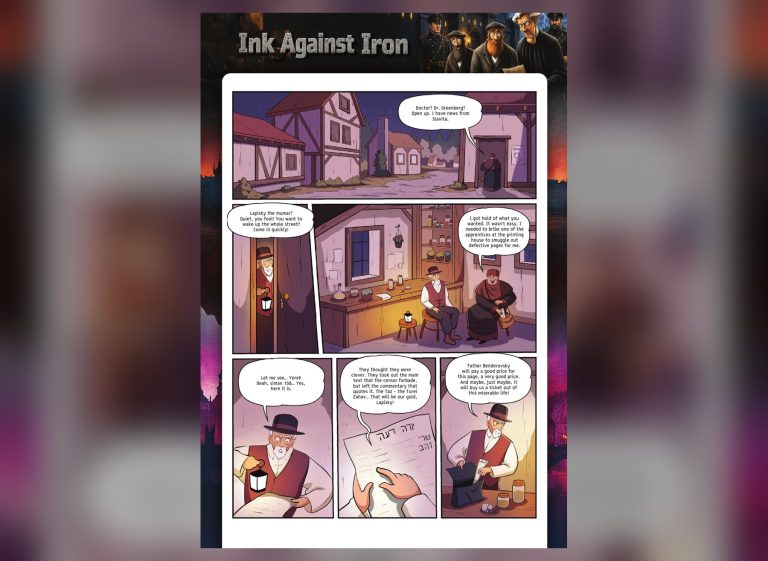
The letter spoke about “gimmel oh daled alafim,” meaning three or four thousand rubles. Hebrew letters can also stand for numbers: gimmel stands for three, daled for four, and kuf for one hundred. The men added a kuf to the number. Now the letter read “kuf-gimmel o’ kuf-daled alafim,” meaning 103,000 or 104,000 rubles!
They had added a hundred thousand rubles to the amount! This was a forgery. They had changed the letter to make it say something the Rebbe had never written.
Then they brought the letter to the minister. “How could he collect so much money on such a short journey?” they argued. “He must be planning a rebellion against the Czar!” They claimed that the Rebbe had traveled from Kremenchug to Lubavitch to stir up the crowds and persuade people to overthrow Russia’s ruler. In other words, they were accusing him of being a traitor, someone who betrays his country.
They also accused the Rebbe of sending money to the Sultan, the ruler of Turkey and an enemy of Russia. They suggested that the money was a bribe to persuade the Sultan to start a war against Russia. Or perhaps, they said, it was to pay for the war. Another claim was that the Rebbe was buying protection for the Chassidim during the coming war. The men could not give a clear explanation, but they knew that talk of sending money to Russia’s enemy would make the minister suspicious.
Even the shul in Lubavitch became part of their story. “Have the shul measured,” they told the minister. “You will find that it is the same size as the Beis HaMikdash!” They claimed that copying the size of the holy Temple in Yerushalayim was another sign that the Rebbe planned to challenge the Czar’s rule.
These were terrible lies. Yet because of them, officers were coming to take the Rebbe away.
As news of the arrest spread, people throughout the region became upset. Jews and non-Jews began preparing to greet the Rebbe and accompany his wagon into and out of their towns. The police already understood how respected he was throughout White Russia, that part of the Russian Empire. Even before the officers arrived on Sunday, hundreds of Chassidim from the surrounding villages had come to Lubavitch for Shabbos. The Rebbe continued his usual Shabbos routine and taught Chassidus as always.
When the officers reached the Rebbe’s home on Sunday, they stayed for about an hour and spoke with great respect. “Please travel with us to Vitebsk to be questioned by the governor,” they asked politely. “You may arrange your own wagon and travel slowly because of your health.”
The officers wanted to reach Liozna that day, sleep there, and continue to Vitebsk on Monday. The Rebbe’s family asked for a shorter first day’s journey. Could they travel only as far as nearby Dobromisl on Sunday, reach Liozna on Monday, and arrive in Vitebsk on Tuesday? The officers asked the people in charge, who approved the plan.
During the search of the Rebbe’s home, the officers carefully examined his papers for signs that he was plotting against the government. The only papers they considered suspicious were records of tzedaka sent to Eretz Yisrael. They took these away to be translated from Hebrew into Russian. At that time, Eretz Yisrael was part of the Ottoman Empire, the lands ruled by the Sultan of Turkey. Money sent there to poor Jewish families could be made to look like money sent to Russia’s enemy.
The officers also measured the shul. It did not match the Beis HaMikdash at all. That accusation was false.
Since Motzoei Shabbos, when Shabbos ended, Chassidim in the Rebbe’s courtyard had been crying and calling out in distress. Only the Rebbe remained completely calm. He received Chassidim for yechidus, private meetings in which they could ask for guidance, and continued writing Chassidus. Early on Sunday morning, he spent two hours alone with his son-in-law, the Tzemach Tzedek.
At eleven o’clock, it was time to leave. Their beloved Rebbe was being taken away, and the Chassidim did not know what would happen to him. Yet as the Rebbe sat down in his wagon, there was a small, almost amused smile on his face.
That morning, some Chassidim had asked permission to accompany him. The officers readily agreed. They were pleased to see people honoring their Rebbe, and the minister in Vitebsk had instructed them to treat him respectfully. Now many wagons began moving together, while hundreds of Chassidim followed on foot.
Back in Lubavitch, four more investigators arrived after the wagons had left. These men were Jews who worked for the government and spoke Yiddish. They mixed with the townspeople, trying to learn about the Rebbe’s behavior, and questioned non-Jewish landowners from the surrounding area. The landowners all spoke highly of him.
Meanwhile, the long line of wagons and people was approaching Barzuvka, the first village on the road to Dobromisl. The whole village came out to greet the Rebbe. The non-Jewish village leader, called Starasta, presented him with bread and salt, a local way of showing honor to an important visitor. The same thing happened in the next village, and again in the third!
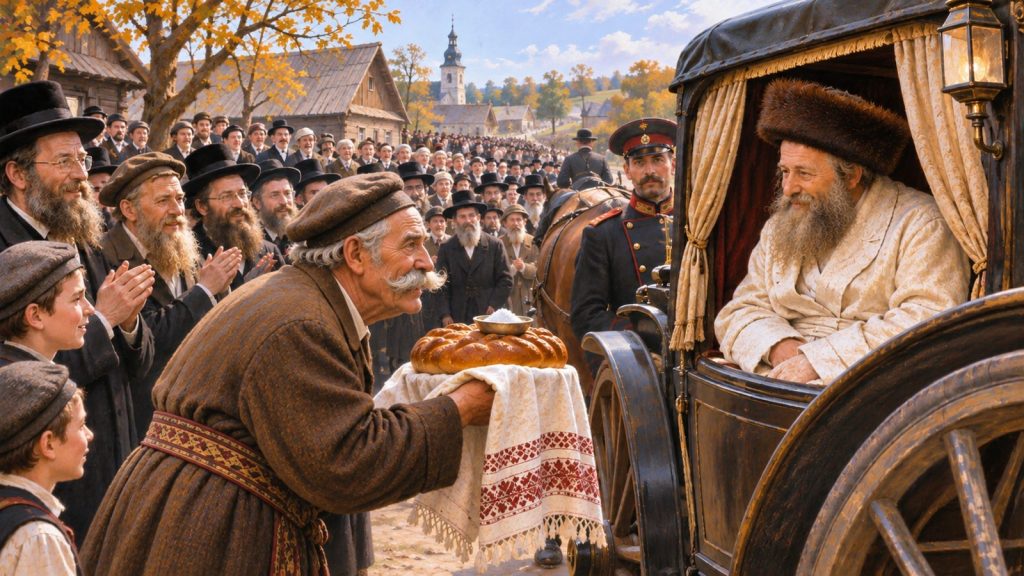
About a mile before Dobromisl, the town’s non-Jewish residents came out with their elders to welcome him. The officers were deeply impressed. They could see for themselves how much Jews and non-Jews throughout the region respected the Rebbe.
To be continued
Beis Moshiach #1530 • ג׳ כסלו תשפ״ז • pp. 56-59
© 2026 Beis Moshiach Magazine. All rights reserved.
This article originally appeared in Beis Moshiach #1530. You are welcome to share it with friends and family by email or in print, provided that you do not change, add to or omit any part of it, you credit the author and Beis Moshiach, and you include a link to archive.bmoshiach.org (written out in full in printed copies).
To republish this article in a newspaper, magazine, book or website, please request permission in advance at [email protected].