Spices and Secrets — Chapter 15

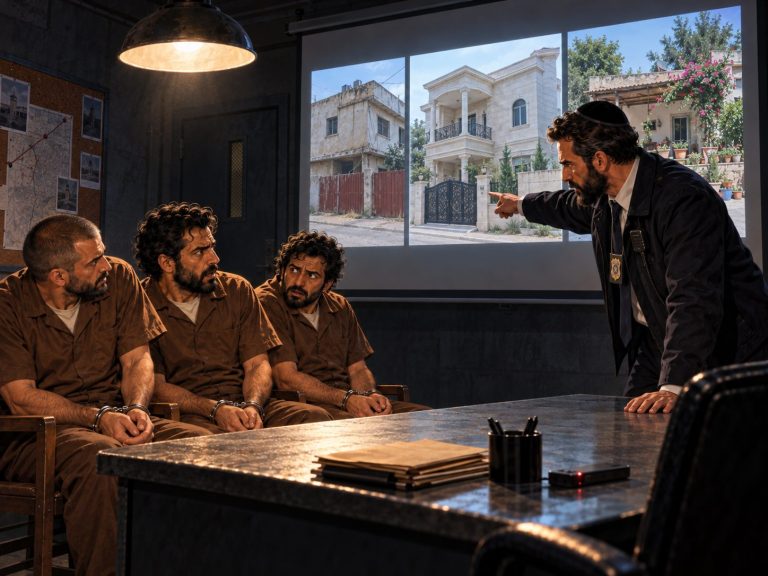
Recap: The Arab inmates are led to the interrogation room where Meir questions them and threatens them if they don’t tell him why they poisoned the peppers.
“You need time to decide? asked Meir. The three Arabs looked at him apprehensively, afraid to speak, and looked at one another.
“I guess we’ve decided,” said the tall one on behalf of the three of them.
Meir was all ears and it wouldn’t be a lie to say that his heart was pounding. The Arabs’ cooperation was vital and he was highly dependent on it.
“We’ve decided not to cooperate with the enemy!” said the Arab.
You couldn’t help but see the hatred and evil in his eyes.
Meir turned red.
“That’s your decision?!” he shouted as he banged on the desk.
The Arab repeated himself.
“We don’t want to cooperate with the enemy. We prefer rotting here in prison and not caving in to your threats and providing you with information about our organization.”
Meir became tougher than ever.
“I understand,” he said calmly. He pressed a button and two jailers came in.
“Take them back and give them the worst conditions that can be given under the law,” he told them. “They will pay dearly for not agreeing to cooperate. Let them rot in jail until they are sentenced which will take years.” He said this loudly on purpose so the Arabs would hear. Maybe that would motivate them to change their minds.
The Arabs looked frightened but despite the threats and warnings they didn’t change their minds. With heads bowed, they left the room with their hands cuffed behind their backs. Meir took note: It looks as though they were trained somewhere. They themselves admitted that there’s an organization behind them. I need to check and find out who is this organization that sent them to perpetrate the poisoning.
The senior warden called for additional wardens and they took the inmates back to the wing with the cells. Even after the last of the Arabs left the room, Meir still sat for a long time, trying to come up with new lines of thought that would lead him to a breakthrough in the case. He knew it was no simple task. It wasn’t just three individuals who committed a serious crime, he thought. There is a terror organization that sent them. Who knows what else they can do?
Meir sighed deeply, took his keys and began going up the stairs to the ground floor.
“I’m done,” he told the warden at the counter as he held out his hand to receive the pass that would allow him to leave. He walked past the high walls and entered his car and then took out his phone and called the last number that had been used.
“Hello,” said Meir.
Zecharya’s voice could be heard saying, “Hello Meir, how are you? Any news?”
“Boruch Hashem,” said Meir, avoiding answering the question directly. “I called to find out if you know how your father is doing. How does he feel?”
“There’s no progress,” reported Zecharya.
They concluded the brief conversation. Both prayed that Tzadok would recover quickly and that the investigation would lead them in the right direction, toward apprehending the guilty ones and frustrating any future plans.
* * *
“Hello, Dr. Vladimir speaking.”
It was afternoon and Zecharya had just returned home from yeshiva.
“Who are you talking to, Ima?” asked Zecharya when he saw her holding the phone as she faced the window, smiling to herself.
She noticed his astonished expression and put the conversation on speakerphone so that Zecharya could also hear it. “It’s important that he hear it for himself,” she decided.
“I’m sorry, Dr. Vladimir, can you repeat what you just said,” she asked.
“Gladly,” said the doctor. “This morning, we began a complicated test to determine the continued care of Tzadok. The test is done through an advanced scan which shows the stomach. We want to see whether the stomach lining itself is damaged as a result of the poison. In addition, we are taking more blood samples to a special poison lab to examine more closely the extent of possible damage.
“We started the first test early this morning and it ended a short while ago. We usually cannot tell families the unofficial results but you are an exception. On your visits to the hospital I’ve noticed you and your concern for your father has touched my heart which is why I am giving you a report about Tzadok’s condition. However, you are absolutely forbidden to make any use of it. Understood?”
“Of course, doctor,” chorused Zecharya and his mother.
“I will read to you the results of the test of Tzadok Adani. After extensive testing only a few remnants of poison remain in the patient’s stomach which shows that the hard part is behind us.”
Zecharya felt he had to understand how the miracle occurred and he asked, “How can that be?”
“The truth is that we have no explanation for what we’ve seen here,” said Dr. Vladimir. “In my opinion, it’s a miracle.”
Zecharya felt a huge sense of relief. He jumped up and down in place excitedly but his mother shushed him.
“Wait a bit until he finishes what he has to say,” she whispered to him.
“Therefore,” Dr. Vladimir continued reading, “We want to release him today, this afternoon or tomorrow afternoon.”
“Thank you for the great news, Dr. Vladimir,” said Mrs. Adani. She had nearly hung up when Zecharya motioned to her not to.
“Doctor Vladimir!” Zecharya called out and he took the phone from his mother’s outstretched hand.
“Yes, who is this?” came a surprised voice.
“It’s Zecharya, the soldier who brought you the important card yesterday.”
“Soldier?” asked the doctor, again in surprise. “I don’t remember any soldier.”
“I mean a soldier in Tzivos Hashem,” explained Zecharya and the doctor laughed. “I wanted to ask you whether you read the card I brought you?”
Even over the phone one could sense the doctor’s smile.
“Of course, what’s the question? Although it was just yesterday, I got to read what it said about the Seven Noahide Laws. Thank you for giving it to me.”
“I’m happy to hear that. Bye doctor. Yechi HaMelech HaMoshiach!” said Zecharya and he hung up. He was grateful to the doctor and wanted to show his gratitude to him.
To be continued
Beis Moshiach #1530 • ג׳ כסלו תשפ״ז • pp. 60-62
© 2026 Beis Moshiach Magazine. All rights reserved.
This article originally appeared in Beis Moshiach #1530. You are welcome to share it with friends and family by email or in print, provided that you do not change, add to or omit any part of it, you credit the author and Beis Moshiach, and you include a link to archive.bmoshiach.org (written out in full in printed copies).
To republish this article in a newspaper, magazine, book or website, please request permission in advance at [email protected].