I Won a Ticket to the Rebbe at Camp Lubavitch – and Never Came Back the Same
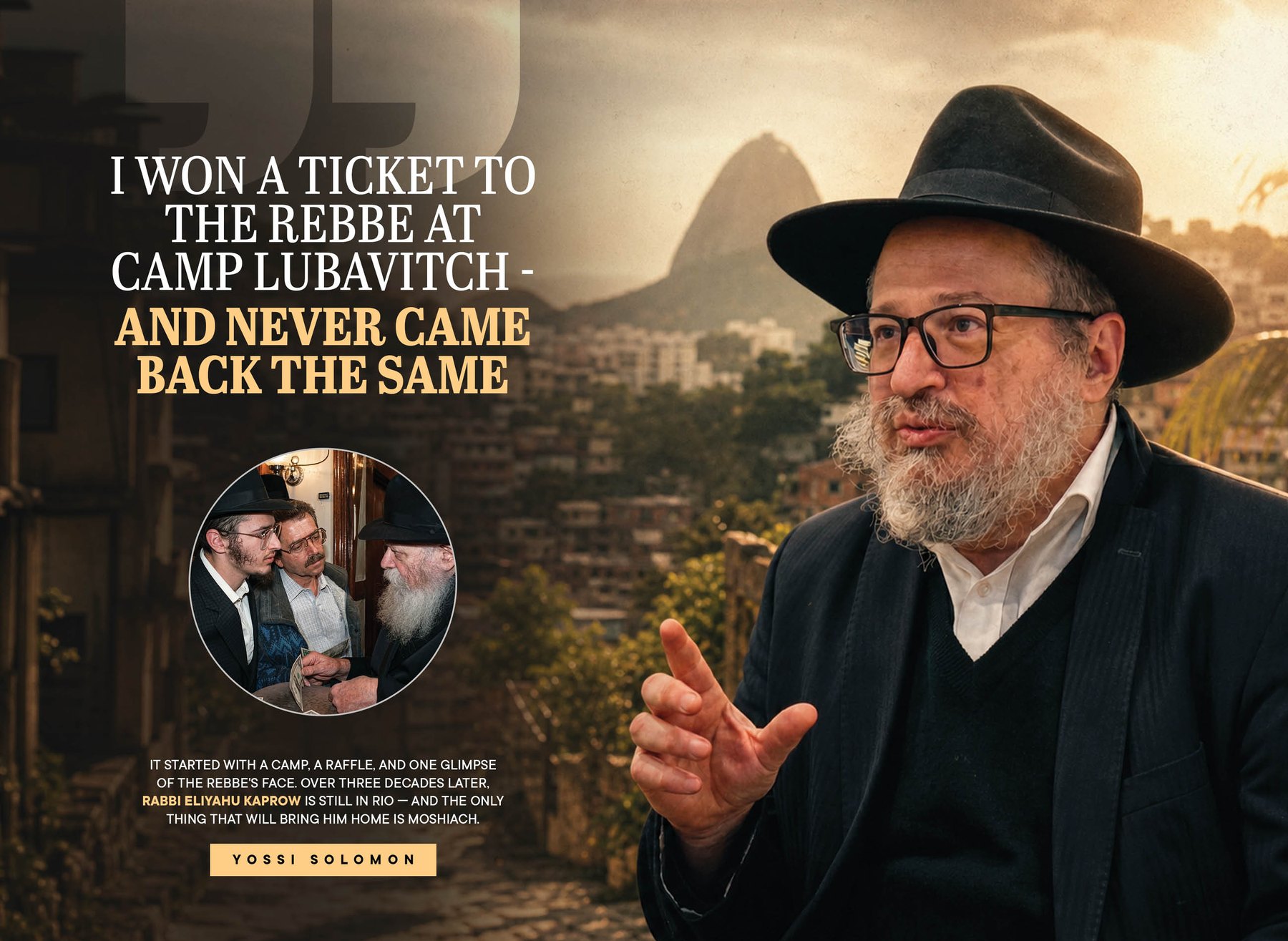
It started with a camp, a raffle, and one glimpse of the Rebbe’s face. Over three decades later, Rabbi Eliyahu Kaprow is still in Rio – and the only thing that will bring him home is Moshiach.
Rio de Janeiro is one of the largest and most central cities in Brazil and all of South America. The city is home to the second largest Jewish community in Brazil, numbering approximately 25,000 Jews, spread throughout the city. The Chabad community there is the oldest in Brazil, comprising about 50 families, a tiny number given the challenges the city presents.
During a brief family visit to Rio, I met the Rebbe’s shliach to the Tijuca neighborhood, Rabbi Eliyahu Kaprow. Between one class and the next activity, Rabbi Kaprow sat down with me for a fascinating conversation about twenty-five years of shlichus in the heart of one of Rio’s most challenging neighborhoods.
Rabbi Kaprow, how did you come to serve as a shliach in Rio? Why specifically in such a remote and challenging neighborhood?
“My life’s journey is an instructive story about the power of Chabad and the eternal influence of the Rebbe MH’M,” R’ Eliyahu begins. “I grew up in a traditional family. We kept basic kashrus, holidays, and attended shul on Shabbos but nothing beyond that.
“After my bar mitzva, a dramatic turning point occurred in my life. It happened when the Rebbe’s shluchim invited me to ‘Camp Lubavitch’ in Argentina. That camp was the seed that planted within me the light of Chassidus and shlichus. From there, I continued to a small Chabad yeshiva in Argentina intended for baalei teshuva. That experience reshaped me entirely, turning a murky tradition into a clear way of life.
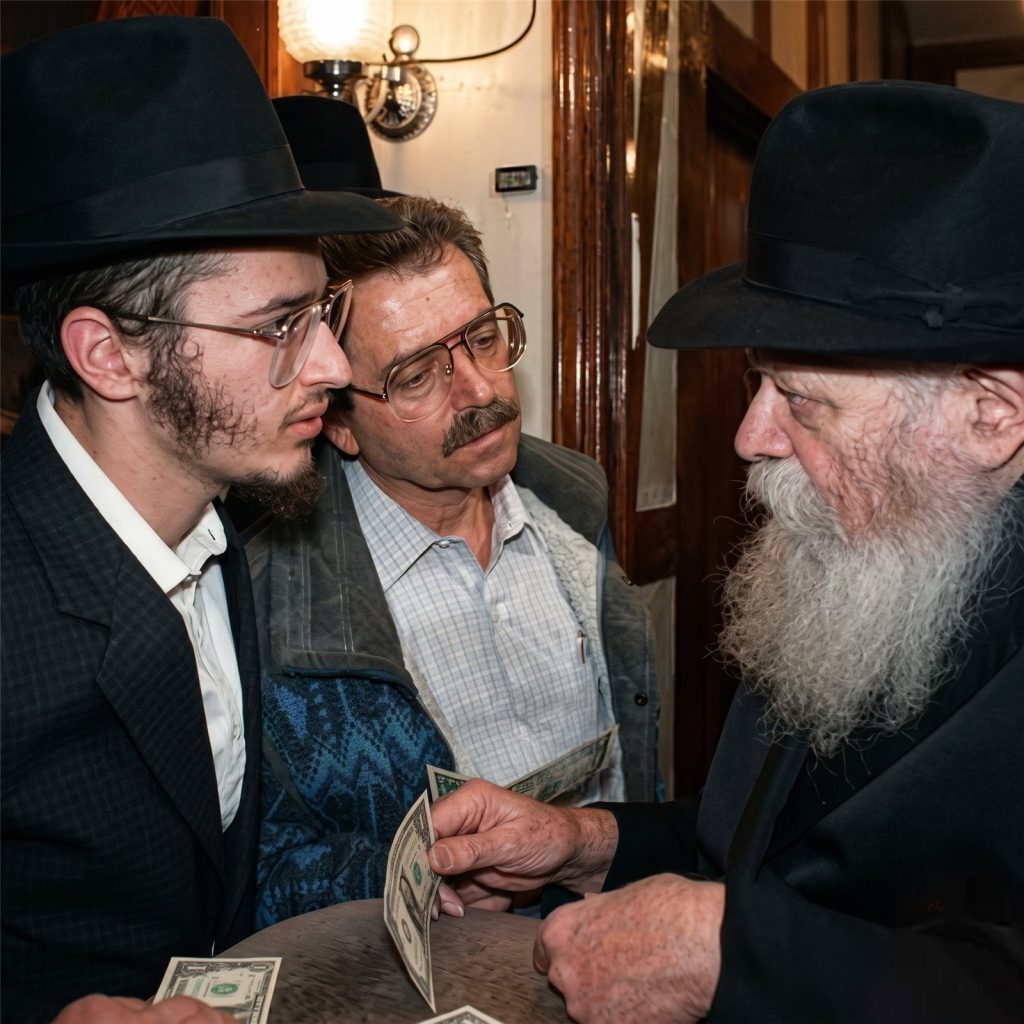
“The first time I merited seeing the Rebbe was in the year 5750 (1990), after winning a plane ticket in a raffle. Anyone who has ever seen the Rebbe’s holy face even once knows that from that moment, there is no going back.
“At age 20, I went to study at the yeshiva in Morristown, New Jersey. It was a special period. Every Friday evening, the bachurim would travel to spend Shabbos at 770. We would participate in the Rebbe’s farbrengens, and after Shabbos, return to the yeshiva. That period, in which we were immersed in chayus and a sacred atmosphere, greatly influenced the rest of my life as a Chassid and shliach.”
As was customary at that time, after his year of study in Morristown, Eliyahu went on a period of ‘shlichus.’ Since he spoke fluent Spanish, he was sent to a yeshiva in Venezuela. He then returned to ‘770,’ completed his semicha l’rabbanus, and some time later met his wife Batya, who is originally from Brazil.
After their wedding, he continued studying in a kollel in the US for another year, after which they moved to Brazil.
“I arrived in Rio in 5757 (1997). I initially worked as a teacher in the Jewish school in the city, but after four years – and with the support of the Rebbe’s shliach to Rio, Rabbi Yehoshua Goldman, I took the plunge and began serving as the Rebbe’s shliach to the Tijuca neighborhood.”
The Challenges: Small and Large Battles
“The saying ‘all beginnings are difficult’ is well known, but the truth is that in Rio the continuation is no less challenging,” R’ Eliyahu admits openly.
“The greatest difficulty was physical and communal. At the start of the shlichus in Tijuca, we were essentially a ‘desert island.’ Before that I had lived in the Leblon neighborhood, where everything a Jew needs is available – a mikva, a school, a kosher store. But in Tijuca, there was nothing! Only over the years, and with Heaven’s kindness, did we manage to open a kosher bakery, a mikva, and an active community center.”
The challenges continue daily, hour by hour. “Shlichus here is not simple at all. The ‘sitra achra’ has a strong presence here,” he admits. “In Brazilian culture, everything is ‘open’ – liberalism and above all: the absence of boundaries. This directly affects the children of shluchim who grow up here. They understand there is nothing for them here spiritually, so they leave for Crown Heights or Eretz Yisrael – and we grow old here alone. We mostly know our grandchildren through a screen… That is part of the reality of our shlichus here,” Rabbi Kaprow shares with visible pain.
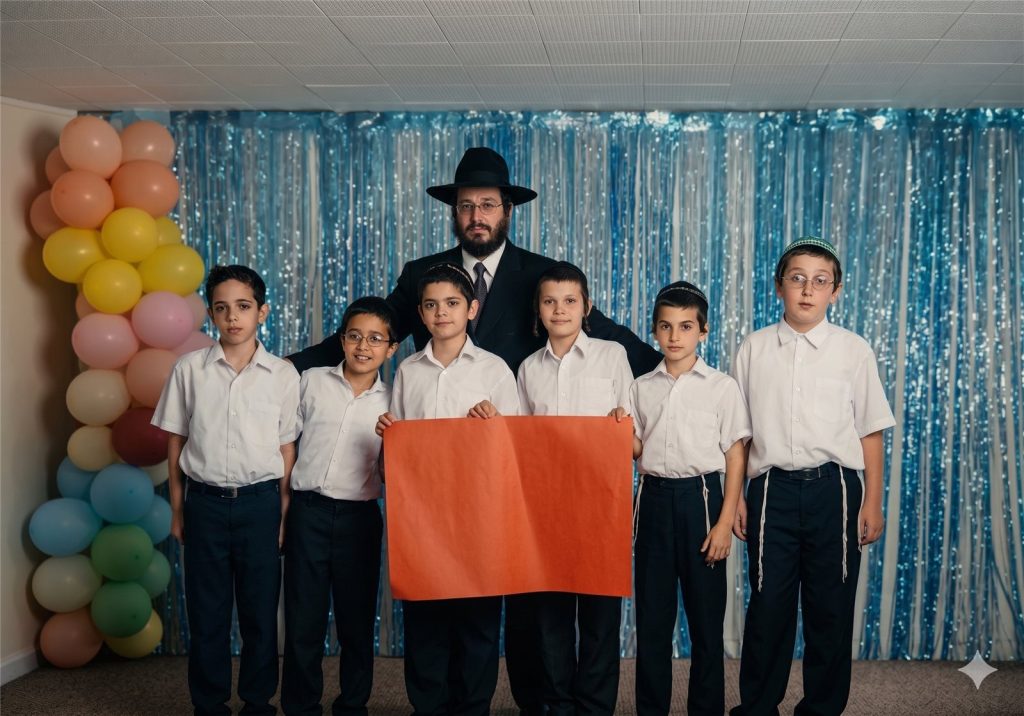
“In addition, crime and theft here are rampant. It is dangerous to walk the streets with valuables, even inside a car with the window open. The Jewish community has also experienced many thefts. The situation directly affects the Jewish activities we run. We must hold all events during daylight hours, because at night people do not leave their homes out of fear of being robbed.
“There are also personal challenges every shliach knows, and ours are particularly pronounced. Every Shabbos I must walk 12 kilometers (7.4 miles) to get to shul! This is a walk I must make in all conditions – in pouring rain or in heat exceeding 40 degrees Celsius (104 F). These are complex challenges, but this is our choice. This is what we wanted to do, to be the Rebbe’s shluchim, and we do it with joy. It is clear to me that the Rebbe sent us here; otherwise, I would never have thought of coming here of my own free will…”
These near-impossible conditions form the backdrop against which the shliach couple must contend as they go out day after day to activities and their shlichus work. The difficulty is great and that is only the starting point.
The Battle Against the Plague of Assimilation
One of the most serious and widespread phenomena in Rio is assimilation. I was curious to hear how R’ Eliyahu, who is involved both in educating children at school and in daily community activity, fights this painful phenomenon.
“When I arrived in Tijuca nearly thirty years ago, there were eight active shuls, full of people. Today there are only five shuls, and most of them, with the exception of two, are not continuously active,” says R’ Eliyahu, painting a sobering picture of the spiritual state of the city.
“When we arrived here, we saw that there was not a single shliach working exclusively with young people, and this was a critical insight, since assimilation begins at a young age. That was one of the reasons we immediately launched targeted activities for youth, focusing primarily on those who are not yet married. We know that saving someone who has already married a non-Jew is many times harder, nearly impossible, but saving people beforehand and educating them properly is certainly easier.”
In year 5764, the Kaprow couple received significant reinforcement. A wealthy Jewish businessman initiated a worldwide program for Jewish communities aimed at ‘saving Jews from assimilation.’ Here in Brazil, the program was called ‘Kiruv.’ He provided financial support, and they in turn worked spiritually with a group of 300 Jews from Rio. “Boruch Hashem we managed to save many Jews from assimilation,” says R’ Eliyahu.
Can you share a story where you managed to save a Jew who was on the verge of assimilation?
“One of the young men in our community became involved with a non-Jewish woman, and the relationship grew increasingly serious, to the point where they were approaching marriage. The one consolation was that he did not distance himself from us; he continued coming to events at the Chabad House. But we had a very clear rule: a non-Jewish woman cannot enter the Chabad House.
“Because she was jealous and afraid they would ‘steal’ her fiancé from her, she would come with him to every event but wait outside in the entrance. Even though it was hard for us to see her arriving with him, we held back, keeping in mind the eternity of his soul and his Jewish identity.
“After many conversations, I managed to persuade him to travel to a yeshiva in Eretz Yisrael for thirty days. We found a personalized program for him: half a day of Torah study and half a day of trips and tours. He was an only child, so we also explained the importance of this to his parents.
“During his time in the Eretz Yisrael, ‘the penny dropped’ – in his words – that a Jew must only marry a Jewish woman. He decided to leave the non-Jewish woman and marry only a Jew. Today he is married according to das Moshe v’Yisrael, and he himself is a maamin who brings other Jews closer to Torah and mitzvos,” Rabbi Kaprow recounts with satisfaction.
“Unfortunately, because there is no Chabad yeshiva for baalei teshuva who speak Portuguese, we are forced to send these young people to non-Chabad yeshivas. Therefore, not everyone we manage to save from assimilation becomes a full-fledged Chabadnik. I am using this important platform in Beis Moshiach to call upon anyone who can rise to the challenge – to open a yeshiva for Portuguese-speaking baalei teshuva, and similarly a women’s seminary for Portuguese-speaking young women. This is the urgent need of the hour! The salvation of dozens and hundreds of souls depends on it!”
A Multidimensional Daily Shlichus
What are the main areas of your shlichus that you engage in day to day, beyond the battle against assimilation?
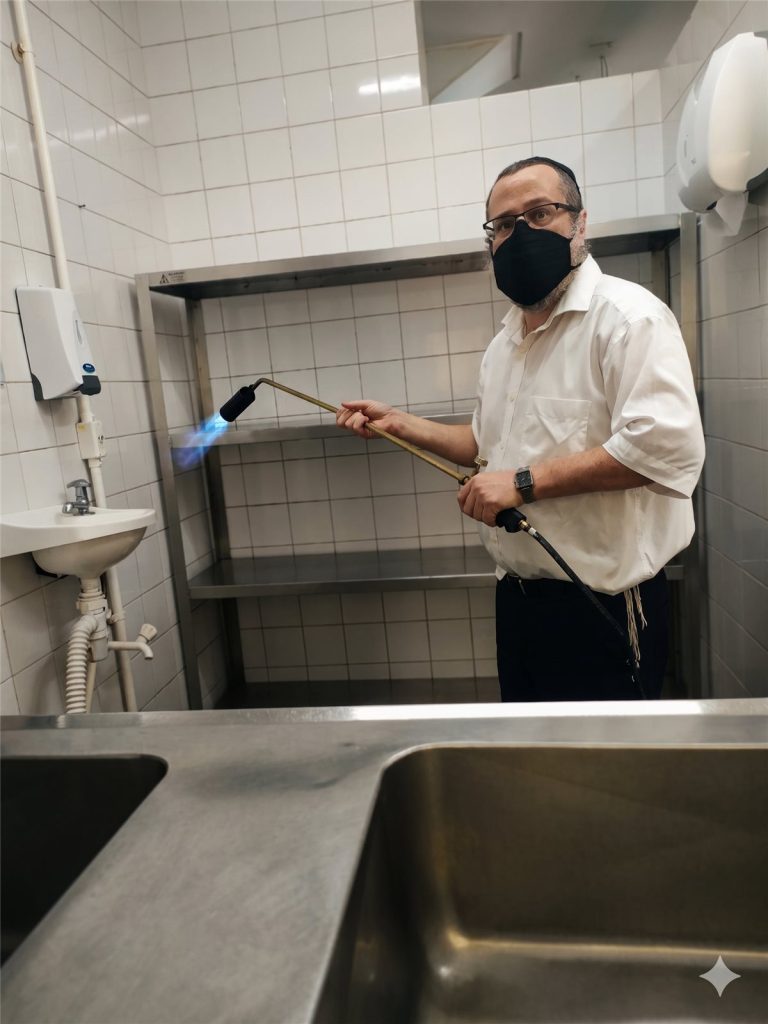
“The shlichus here is multidimensional and never-ending,” explains Rabbi Kaprow. “Besides my work as a teacher in the Jewish school in the city, I serve as a mashgiach at a soup kitchen opened here by the central Chabad House for people in need of food. I also provide kashrus certification to various catering services.
“In addition, I give several Torah classes each week at the shul ‘Moadon Har Sinai.’ A few years ago, we organized a group of local Jewish youth and traveled with them to Beis Chayeinu. The visit made a deep impression on them and led to significant strengthening in mitzva observance among many of them.
“There was a period when we ran a ‘Tefillin Bank’ campaign. Anyone who took upon himself to put on tefillin every morning received a free pair of tefillin. We distributed over 200 pairs, which led to enormous outreach. This resulted in the opening of new morning minyanim in the city.
“My wife, Rabbanit Batya, is my right hand and the driving force behind the women’s activities. Every Rosh Chodesh she organizes a full-day program for women starting at nine in the morning. Between 60 and 70 participants come together to recite Tehillim and take part in various programs of interest to them. She also teaches Torah classes to young women, and in addition teaches at the Talmud Torah.”
Stories of Hashgacha Pratis
As a shliach, you surely have some stories of hashgacha pratis from your shlichus…
“There are many stories, but I will share three that come to mind now, which illustrate the power of a Jewish neshama and the hashgacha pratis that shluchim have,” says Rabbi Kaprow.
“One of the shul-goers in the neighborhood was an adult whose father was a non-Jew. Due to his father’s opposition, he had not been circumcised. After a period of drawing closer to Judaism, he decided he needed to be a complete Jew and have a bris mila. In São Paulo there is a program called ‘Brit Avraham,’ overseen by Rabbi Noach Gansburg, designated for adult Jews who have not yet been circumcised. We helped him fly there and undergo a halachically proper bris mila.
“Subsequently, he strengthened further in his Jewish observance and decided he wanted to go to yeshiva. We sent him to a yeshiva in Eretz Yisrael, he continued to grow, got married, and today he learns in kollel and is a father of a Chassidic family,” R’ Eliyahu recounts with emotion.
“Another case involves two brothers whose mother is Jewish and whose father is not. They had non-Jewish girlfriends, but they came to our outreach program. Once they arrived with a religious question: ‘Should we go pray in a church, since our father is a non-Jew, or go pray in a shul, since our mother is Jewish?’ I explained to them clearly that since their mother is Jewish, they too are Jewish in every respect, and their place is in the shul.
“At that time, there was a program in Brazilian schools in which young men were sent to the United States to experience a different culture, and they were sent there. One day they called me from America and asked: ‘As part of the program, we were offered a job but the employer requires us to work on Shabbos as well. What should we do?’
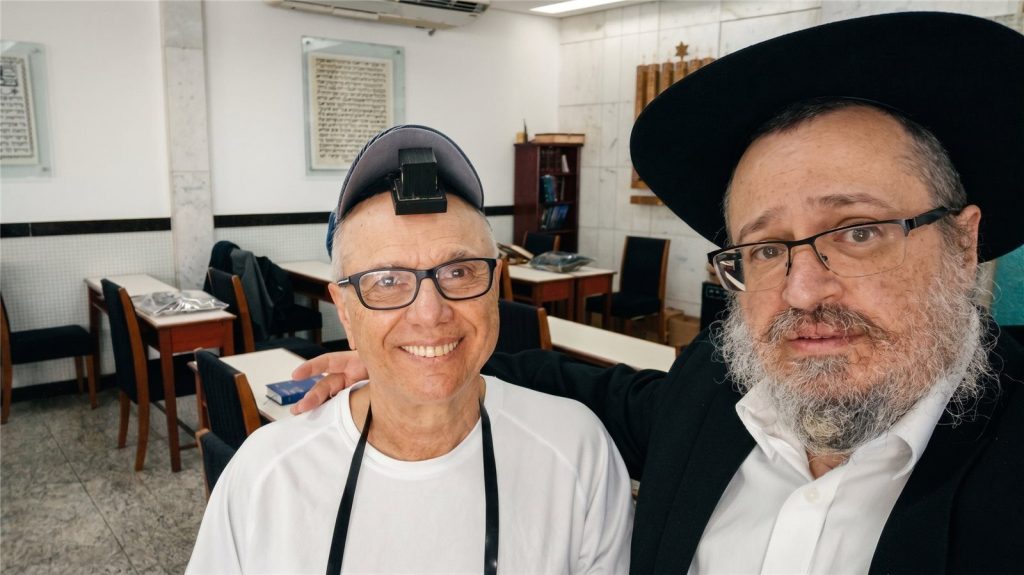
“I told them not to work on Shabbos under any circumstances, and to trust in Hashem that things would work out. I suggested they visit the Chabad House in Miami and speak with the local shliach. They listened and took my advice. At the Miami Chabad House, they found someone who offered them a better job than what they had, one that did not involve chilul Shabbos.
“Later we sent them to a yeshiva in Eretz Yisrael, they continued to grow in Yiddishkeit, got married, and today both are rabbis in the city of Rio.”
Another story:
“In the early years of my shlichus, there was a Jew who had come from New York. He always enjoyed coming to the shul and participating in the tefillos. Since he had no family in Brazil, he once asked me a personal favor: ‘When I pass away, I ask that you take care of transferring my body to New York,’ as he had purchased a burial plot in Queens. He asked that I handle all the bureaucracy and permits, and wanted to give me the money in advance.
“I went to ask the Chevra Kadisha what the cost would be, and they told me they could only quote a figure after the passing, since it was impossible to know what the future cost would be. Eventually, they gave me the current cost – $15,000. He asked his sister-in-law in Florida to send me a check. I received a check for $15,000, but wasn’t entirely sure what to do with it.
“By hashgacha pratis, I found a Jew who agreed to exchange the dollars for reals (the Brazilian currency) without charging interest. Exchanging that amount of money in Rio would normally have cost a significant percentage of the sum, and his act was a tremendous chessed.
“When that Jew passed away, we managed to handle all the bureaucracy. I went with the passport to the Chevra Kadisha, paid them, and informed the family that I was sending him to Queens for burial.
“By hashgacha pratis, since he passed away close to the date of the Kinus HaShluchim, it turned out that I personally accompanied him until he reached Jewish burial in Queens, exactly as he had requested.”
Rio Prepares for the Geula
In Eretz Yisrael, following the war, there has been a great awakening and an understanding that Moshiach is the only solution to all problems. How is the message of Geula and Moshiach received in Rio de Janeiro?
“The residents of Rio are naturally warm and open to hearing, and therefore it is easier to convey the Besuras HaGeula to them. We explain it through regularly delivering classes on Geula and Moshiach.
“You can see how the message is getting through: on Gimmel Tammuz, there is a regular group of Jews from Rio who travel to 770 with Rabbi Goldman. On every yoma d’pagra, there is a farbrengen, and we use these opportunities to speak with people about the Rebbe and about the ‘spark of Moshiach’ within them.
“The message has penetrated so deeply among the youth that there are young people who may not yet dress like Chabadniks, but who come to the Chabad House, take a pair of tefillin, and go out into the streets of Rio to give other Jews the zechus of putting on tefillin!” says Rabbi Kaprow excitedly.
“The crowning jewel is the Maccabiah: once a year, a ‘Maccabi’ – a sports day for the Jews of Rio – takes place in the city. We use it to set up a tefillin stand and explain to Jews the importance of putting on tefillin to hasten the Geula. When you see a young man, sweating after a 100-meter sprint, stopping to put on tefillin to bring the Geula closer, you know that Rio de Janeiro is ready to greet Moshiach Tzidkeinu.”
Beis Moshiach #1507 • pp. 22-29
© 2026 Beis Moshiach Magazine. All rights reserved.
This article originally appeared in Beis Moshiach #1507. You are welcome to share it with friends and family by email or in print, provided that you do not change, add to or omit any part of it, you credit the author and Beis Moshiach, and you include a link to archive.bmoshiach.org (written out in full in printed copies).
To republish this article in a newspaper, magazine, book or website, please request permission in advance at [email protected].