The Shlichus on Kingston Avenue
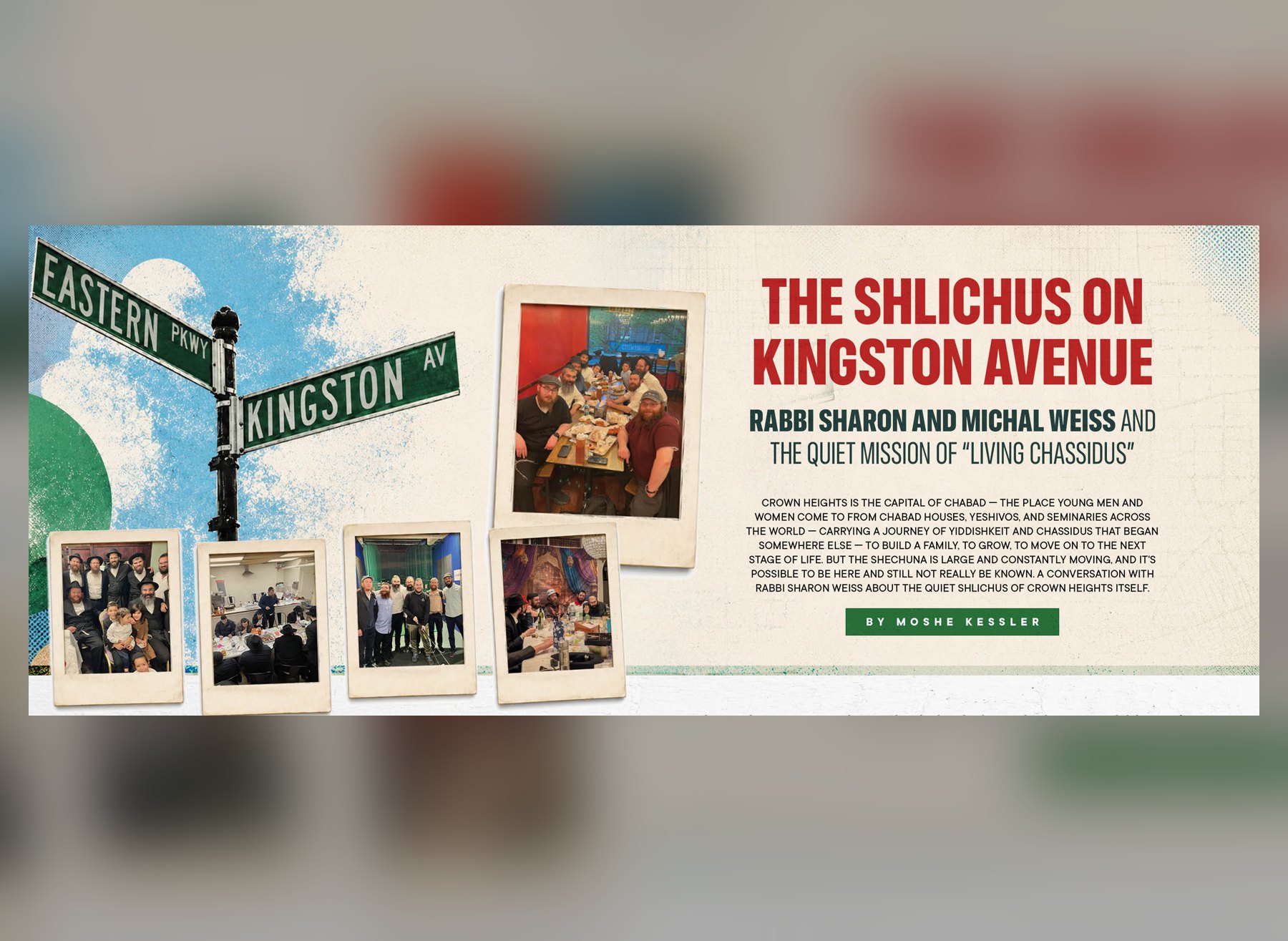
Rabbi Sharon and Michal Weiss and the Quiet Mission of “Living Chassidus”
Crown Heights is the capital of Chabad – the place young men and women come to from Chabad Houses, yeshivos, and seminaries across the world, carrying a journey of Yiddishkeit and Chassidus that began somewhere else, to build a family, to grow, to move on to the next stage of life. But the shechuna is large and constantly moving, and it’s possible to be here and still not really be known. A conversation with Rabbi Sharon Weiss about the quiet shlichus of Crown Heights itself.
For many young men and women arriving in Crown Heights after yeshiva or seminary, the neighborhood is the natural next stop – a place to continue growing, enter shidduchim, and begin building the next stage of life.
But Crown Heights is large, open, and constantly moving. It is home to established families and longtime residents, while also drawing new arrivals – baalei teshuva, shluchim’s children, guests, and young men and women just beginning the next stage of their lives. In such a busy and welcoming place, it is possible for a person to be surrounded by Chassidim and still feel unsure where exactly he or she belongs.
That is part of what Rabbi Sharon Weiss and his wife Michal set out to address through Living Chassidus – a growing Crown Heights community focused on practical Chassidus, real connection, life skills, farbrengens, Shabbatons, and helping young men and women build a genuine Chassidishe life.
MK: You didn’t grow up on the typical yeshiva path. Tell me about your background and how you came into yeshiva life and the world of Chassidus.
RSW: I grew up between two worlds. My father was religious, my mother was not, and I went to public school. So I didn’t slide into yeshiva life from the usual system.
At first, my plan was simple: learn for one year in Yeshiva Gedolah of Melbourne and then join the IDF. But when I came to Crown Heights for Tishrei, something hit me hard. I saw Israeli bachurim who had very little physically – they were hungry, their gashmiyus was rough – yet they had zero interest in running off to Manhattan or looking for distractions. They had come for the Rebbe. They had come for something real. That sincerity left a deep impression on me.
After Melbourne I wanted more serious learning, so I went to Morristown for three years. Later, I flew to Eretz Yisrael for a friend’s wedding, and he kept pushing me to try Mayanot. I told him I wasn’t interested in another yeshiva, but I went anyway – and I connected with it right away.
MK: What made Mayanot different for you?
RSW: Mayanot made every bachur feel that he could really grow from exactly where he was. That was huge for me. The atmosphere was serious without being heavy or pressuring. No one looked down on you because of your background or because you didn’t come from the standard track.
One line from the rosh yeshiva stayed with me forever: Seder isn’t a rule. It’s why you’re here. It wasn’t about forcing someone into the Beis Medrash. It was about helping him want to be there. The learning felt alive. Torah and Chassidus suddenly felt like they were speaking straight to real life.
MK: How did that experience shape the way you started understanding Chassidus?
RSW: Until then, a lot of the Chassidus I had learned felt very high and abstract – Atzilus, the worlds, deep concepts. Of course that’s real Chassidus, and it’s important. But I started to see that Chassidus also has to speak directly to a person’s everyday life.
Friends showed me how to open a maamar and ask: What is this saying about my nefesh ha’behamis? What does it say about the desires I’m struggling with? About my davening? About my avoda?
That changed everything for me. I started coming to Chassidus in the morning – especially Shabbos morning – not just because “that’s what a Chassidishe bachur does,” but because I wanted to know what Chassidus had to tell me about my life. I also realized that davening itself is something many yeshivos don’t teach properly. People are told to daven, but they aren’t always shown how to daven, how to make it personal, how to use Chassidus to work with themselves.
MK: So how did Living Chassidus actually begin?
RSW: A lot of the credit goes to my wife Michal. She kept hearing from young women who said Chassidus was beautiful but they didn’t always see how it applied to their daily lives. Some were looking for answers in other places. Her response was simple: Chassidus has the answers.
So she started arranging classes twice a week, bringing speakers who could show how the same maamarim and sichos that speak about the highest inyanim also speak straight to building a life. From there it grew naturally – farbrengens, programs, and lively events like “Sushi and Sicha,” where we’d farbreng over sushi and really dive into a sicha. During Elul and Tishrei we learned together from Rabbi Simon Jacobson’s “60 Days” book. People would read, discuss, and apply the ideas to their own lives. There were prizes, real energy, and a feeling of growing together.
We also began hosting Shabbatons. Recently we had one at Reb Sholom Mordechai Rubashkin’s home near Lakewood, where he spoke about emuna and bitachon. Baruch Hashem, it keeps growing because people need it.
MK: What need in Crown Heights is Living Chassidus trying to fill?
RSW: Crown Heights is incredibly open and welcoming – that’s one of its greatest beauties. But because it’s so open and busy, it can also be easy to fall between the cracks. There are many small communities inside the larger one. People are constantly coming and going.
Young men and women arrive after yeshiva or seminary. Some are in shidduchim, some are newly married, some are baalei teshuva trying to find their place in a Chassidishe world. Because the neighborhood is large, a person can be here and still not really be known. He might need a Shabbos meal, guidance, a friend, someone to talk to, or simply a place where he feels he belongs.
Many people don’t think of Crown Heights itself as a place of shlichus. But it is. These are Yidden who already want to grow. They’re already connected. They just need support, structure, and real community. That’s what we’re trying to give.
MK: What kinds of programs does Living Chassidus run today?
RSW: We try to focus on the things people actually need when they’re building a life.
For example, we brought Rabbi Osdoba to teach women the halachos of tefilla. We run programs around Yomim Tovim and the different stages of life – finances, pregnancy, marriage, running a home, all the things people are expected to know but aren’t always taught.
My motto is simple: I don’t want anyone ever saying, “Why didn’t anyone tell me this before?”
When a woman becomes pregnant, she often can’t share the news right away, yet she’s going through real changes. We create safe, tzniusdig spaces for support. We also have a chicken-soup gemach – because sometimes a simple bowl of soup is more than food. It’s someone saying, I see you. I care that you’re here.
That’s what community does. Once people feel connected, everything else – meals, advice, simchas, referrals – becomes so much easier.
MK: You also started a shul. What was the idea behind that?
RSW: We realized people needed one place – especially during Tishrei – where they could feel they truly belong.
A person can be surrounded by minyanim, farbrengens, families, and guests and still feel alone. So my wife and I discussed it and decided to go for it, even though we didn’t have the money at the time. The goal was simple: create a place of real warmth and real growth. Not comfort without chayus, and not growth without ahavas Yisroel. Both together.
One of the hardest things is celebrating a simcha without a community. You can feel very lonely, and you think you’re the only one. But you’re not. Many people are in the same place. They just need to be seen.
MK: What is your vision for the future of Living Chassidus?
RSW: The shul was really the beginning of something bigger. Baruch Hashem, Living Chassidus is growing. The men’s side has about thirty-five active members, the women’s side around seventy, and we now have Shabbatons for different groups – singles, married couples, and more.
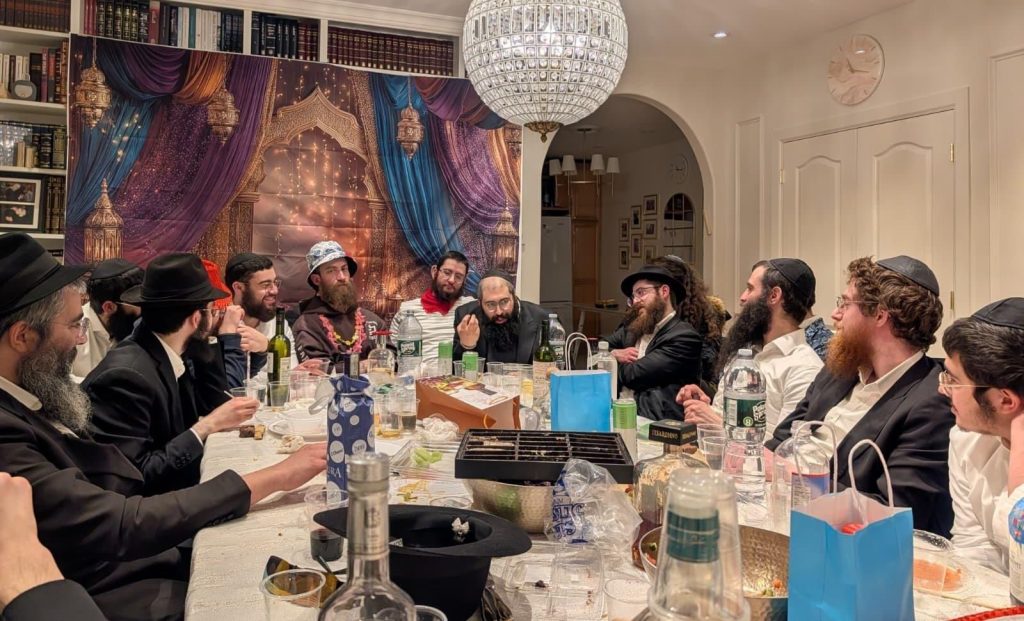
But the dream is a permanent home. Right now, events move from place to place. We want a real shul, proper event space, a hospitality suite, a simcha hall, and a place where my family can live so we can be fully there for the community.
The goal isn’t just to run programs. The goal is to build a home – a place where young men and women who come to Crown Heights to build a Chassidishe life don’t have to do it alone. They should have guidance, connection, and a place where Chassidus isn’t only learned… it’s lived.
Because if Chassidus is meant to shape a person’s life, then it has to meet him in the places where life is actually being built – in shidduchim, in marriage, in davening, in Yom Tov, in loneliness, in simcha, and in the ordinary questions people are often too embarrassed to ask.
And if Crown Heights is the center of Chabad life, then it cannot only be a place people come to. It has to be a place where they are noticed, helped, and given room to grow. ■
Learn more about Living Chassidus and donate at LivingChassidus.org
Beis Moshiach #1508 • pp. 12-15
© 2026 Beis Moshiach Magazine. All rights reserved.
This article originally appeared in Beis Moshiach #1508. You are welcome to share it with friends and family by email or in print, provided that you do not change, add to or omit any part of it, you credit the author and Beis Moshiach, and you include a link to archive.bmoshiach.org (written out in full in printed copies).
To republish this article in a newspaper, magazine, book or website, please request permission in advance at [email protected].