How Did Ari Know Where To Blow?
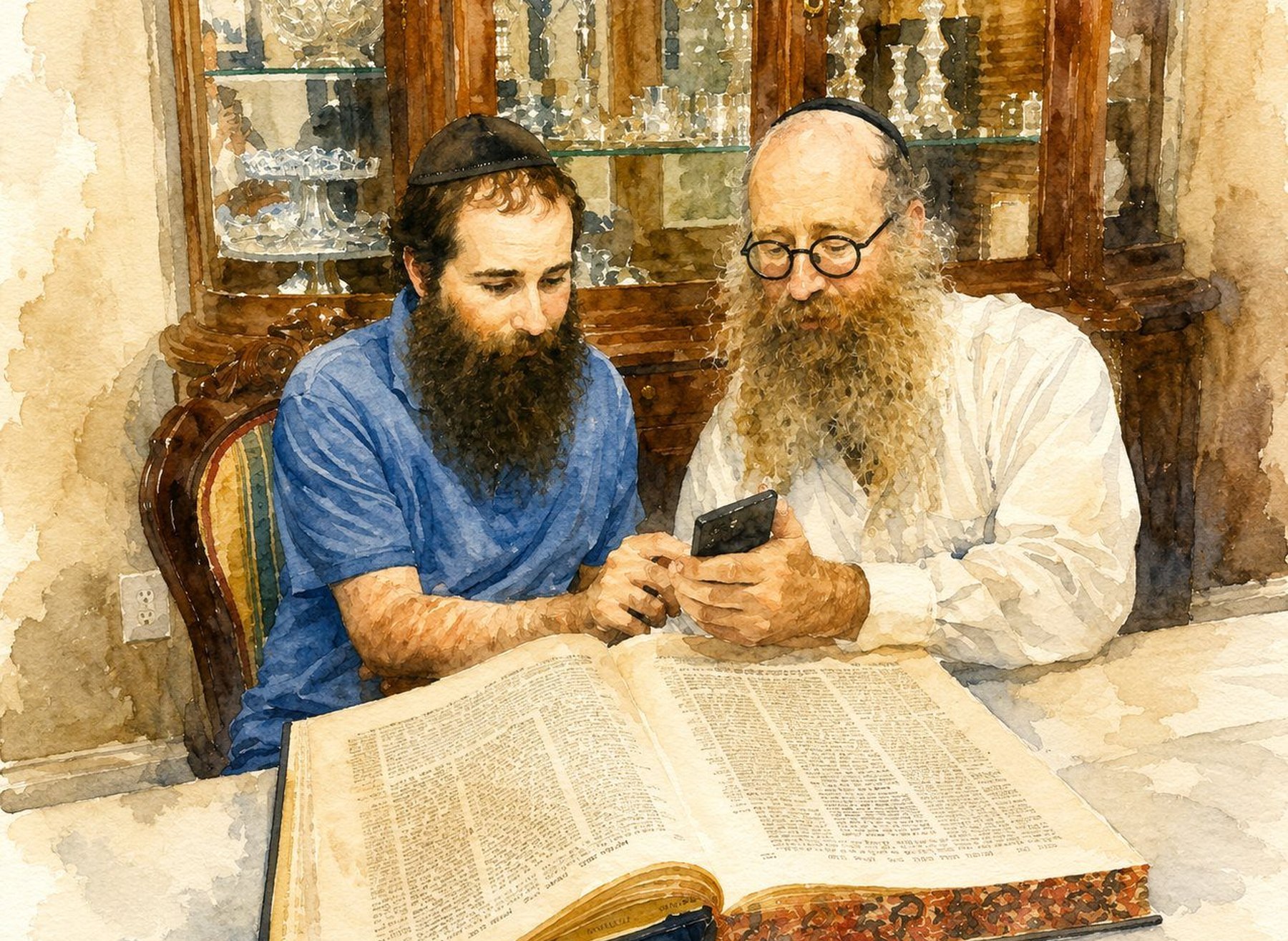
Late on Rosh Hashana afternoon 5786, the streets of New City, New York, had grown quiet.
Most people had already returned from shul. Families were sitting around Yom Tov tables, singing, talking, and enjoying the special meals of the day. The sun was sinking lower, and only a few hours remained before Rosh Hashana would end.
Inside one house, a Jewish woman sat alone.
She’d grown up in a frum, “heimish” home. As a child, Rosh Hashana had meant getting dressed for tefillos at shul, hearing the shofar, and spending the day surrounded by family and Yiddishkeit.
But over the years, for different reasons, her life had changed.
Slowly, she’d drifted away from many of the mitzvos she had once kept. She no longer lived the way she’d been raised. Still, deep inside, she felt connected to Hashem. A Jewish neshama never disappears. Sometimes, we just can’t hear it under everything else.
That afternoon, a painful thought suddenly struck her. She hadn’t heard the shofar.
Rosh Hashana had nearly passed, and for the first time in her life, she might not hear even one tekiah,one sound of the shofar. Until that moment, she hadn’t even considered it. Now, the silence left by the missing sound seemed to fill the whole room.
No long, clear tekiah. No broken shevarim. No trembling teruah.
Nothing.
For someone who’d heard it every year since childhood, missing it was like letting an important piece of Rosh Hashana – and an important piece of herself – slip away forever. She felt a deep emptiness. Memories of other Rosh Hashanas came rushing back. She remembered sitting in shul for hours, yet even then, she’d often wondered whether she truly felt close to Hashem.
Now, she spoke to Him directly.
“Hashem, You know me,” she whispered. “I want to feel close to You. Show me that You are with me.” No polished tefilla from a Machzor; Just the helpless cry of a Jewish heart.
A few minutes later, someone knocked on her door.
To understand who was standing outside, we need to go back in time a little.
* * *
Rabbi Sholom Ber Liberow was a shliach of the Rebbe. His twenty-three-year-old son, Ari, was autistic.
Autism affects every person who has it differently. Some people with autism can speak and communicate easily, while others find speaking extremely difficult, or just never feel comfortable doing it. Ari was unable to speak. He couldn’t use his voice to tell people what he wanted, how he felt, or what he was thinking.
For twenty-three years, Ari’s family loved, cared for, and tried their best to understand him. They knew he recognized the people around him and experienced the world in his own way, but much of what was happening inside his head remained a mystery.
Being unable to speak, however, doesn’t mean someone has nothing to say. Ari had thoughts, feelings, knowledge, and ideas of his own. The problem was, he had no clear way to share them with anyone else.
Then, about a week before Rosh Hashana, they found a solution. With Hashem’s help, and some fancy new technology, Ari began communicating using a text-to-speech device. He could type anything he wanted, and it would be read aloud for all his loved ones to hear. He had finally found his voice!
For the first time, they could ask Ari a question and receive a clear answer.
For his family, it was as though they’d finally tracked down the key to a dusty old room that had been locked for decades, and were thrilled to see all the blessed treasures that had been hiding inside.
Little by little, they discovered how much Ari understood. They learned that he knew far more than they had realized. He thought deeply about Yiddishkeit, cared strongly about other Yidden, and had a powerful longing for Moshiach.
Ari had always had so much inside him. Now, at last, his family had a way to hear it.
* * *
On Erev Rosh Hashana, Ari did something he’d never done before. He wrote a pidyon nefesh, a letter asking for blessings, to the Rebbe.
His family was overwhelmed. After so many years of wondering what was inside Ari’s heart, they were now able to hear some of it.
But on Rosh Hashana, typing technology couldn’t be used.
After the Yom Tov meal, Rabbi Liberow noticed that Ari was trying to tell him something. Ari clearly had a message, but his father didn’t know what it was.
Someone suggested using a Siddur.
Rabbi Liberow opened one and showed Ari the Alef-Beis. Ari began pointing, one letter at a time.
Mem. Beis. Tzaddik. Ayin. Yud. Mem.
The letters formed one word:
“Mivtzaim.”
Now, Rabbi Liberow understood. Ari wanted to go out on the Rebbe’s mivtzaim. He wanted to help find Yidden who hadn’t yet heard the shofar.
It was already late in the afternoon. The day was slipping away. Rabbi Liberow could have decided that there wasn’t enough time. But instead, he picked up his shofar.
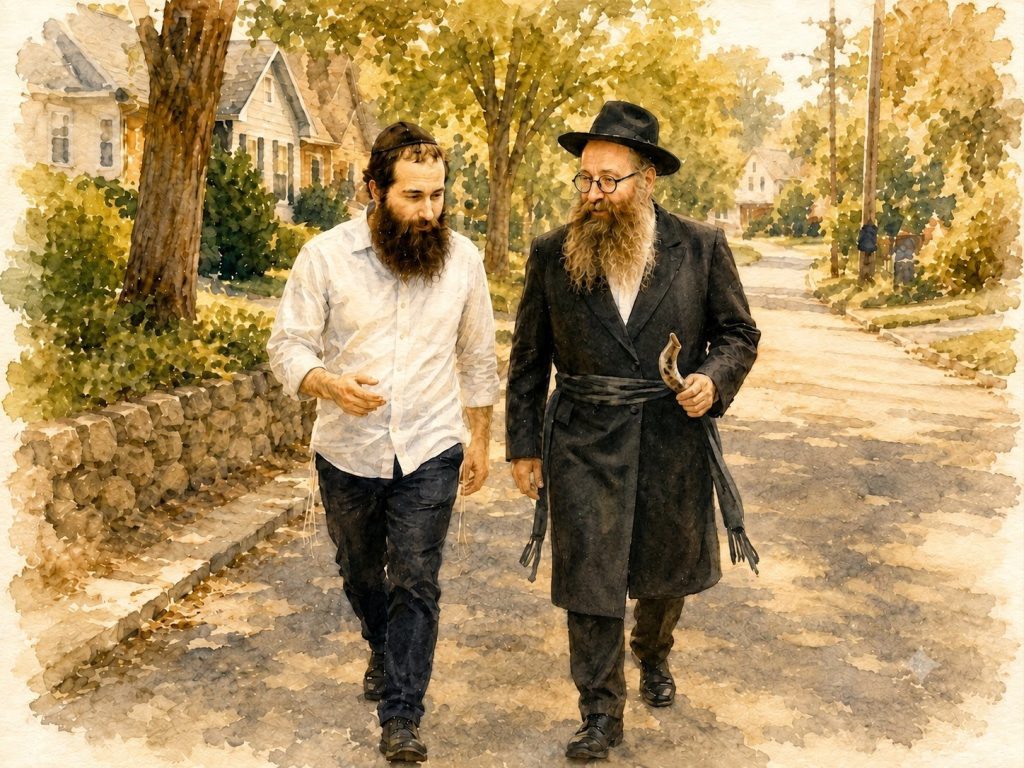
To everyone’s surprise, Ari instantly took off, walking down the street. He didn’t wander or stroll, or wait for his father to choose a route. Ari moved quickly and with purpose. Rabbi Liberow followed, sometimes struggling to keep up. They walked for about fifteen minutes, through the late-afternoon streets.
Rabbi Liberow knew of a Jewish woman in the area who had become distant from Yiddishkeit. He’d never met her. He wasn’t sure how she would react if a rabbi appeared at her door on Rosh Hashana.
Would she welcome them? Would she be uncomfortable?
Would she simply… send them away?
But Ari kept walking – until stopping suddenly at one particular house.
Rabbi Liberow stepped forward and knocked.
Inside, the woman had only just finished pouring out her heart to Hashem. She opened the door and saw a rabbi holding a shofar, his son standing beside him.
Rabbi Liberow first made sure that she was Jewish. Then, he asked whether she would like to hear the shofar.
The woman didn’t hesitate.
“Yes – yes, please.”
Of course she wanted to hear it.
A few moments earlier, she’d been grieving that Rosh Hashana would pass without the sound of a shofar. Now, a shliach had brought one directly to her front door.
Rabbi Liberow raised the shofar to his lips.
Tekiah.
The strong, steady note entered the house.
Shevarim.
Three broken wails followed.
Teruah.
The short, trembling sounds seemed to shake something loose inside her heart.
The woman began to cry.
Rabbi Liberow could see there was more to this than just one lonely Rosh Hashana. When he finished, he gently asked why she’d been so deeply moved.
Through her tears, she explained.
Only minutes earlier, she’d spoken to Hashem. She’d asked to feel Him close to her. She’d asked for a sign that He was with her.
Then came the knock.
Rabbi Liberow was stunned. He was sure this was why Ari had been so determined to go on mivtzaim. He’d worried she might not want to see them. All the while, behind her closed door, a Jewish neshama was begging Hashem to send someone – to send them.
After Yom Tov, the story began to spread. Rabbi Liberow had no idea how far it had traveled – until Hoshana Raba, when a Poilisher Chassid approached him and asked whether he was the father from the remarkable shofar story.
At first, Rabbi Liberow didn’t even know what he meant!
But after it was explained, he was surprised to learn that everyone, everywhere, was talking about the woman who’d asked Hashem for a sign, and heard a knock, moments later.
But Rabbi Liberow still wondered… had they just happened upon the house at the right moment, or had Ari known…? Either way, it was a miracle… but he was still so curious.
A few days later, when Ari could type his thoughts out once again, Rabbi Liberow asked him.
“When you spelled ‘mivtzaim’ on Rosh Hashanah, was there something else behind your request?”
Ari answered, “Yes.”
“What was it?”
“I felt that woman wanted to hear the shofar.”
Rabbi Liberow asked how he’d known.
Ari answered simply that he didn’t know.
“Did you know where she lived?”
“Yes.”
“How?”
Ari didn’t explain. Instead, he said he wanted to return to the house, and then go to shul.
The mystery remained.
The woman later confirmed what had happened. She also insisted that, although she’d moved away from the frum life of her childhood, she’d never stopped feeling spiritually connected to Hashem.
Other people might have thought she was too far away, but Hashem knew exactly where she was. Her neshama knew, too. And, somehow, Ari could tell that she was waiting.
There are many miracles inside this one story.
There was the woman’s private tefilla, answered by a knock, only minutes later.
There was a father finally hearing clear thoughts from the son he’d loved and worked to understand without words for so many years.
There was Ari’s determination to go on mivtzaim, when little time remained.
And there was a shofar carried through the streets, because Ari knew one Jewish person needed to hear it.
This story also teaches us to be careful about our assumptions. A person may not speak out loud, yet have a world of Torah, emotions, and understanding inside.
A Jew may appear far from Yiddishkeit, yet be quietly longing for just one mitzva.
A closed door may seem like a sign to leave someone alone, while behind it someone is begging Hashem to send help.
The Rebbe taught his shluchim not to wait for Yidden to come looking for them. Go outside. Walk another block. Knock on another door. Carry a shofar, a pair of tefillin, Shabbos candles, or simply a warm Jewish smile. We don’t always know which neshamos are waiting.
Ari continues longing for Moshiach. His message is simple: “We want Moshiach now.”
Perhaps that’s the final sound of this story.
The shofar at the woman’s doorway was calling more than one Jew home. Every blast of the shofar carries the promise of the great shofar that will sound when Moshiach comes.
Beis Moshiach #1522 • pp. 56-59
© 2026 Beis Moshiach Magazine. All rights reserved.
This article originally appeared in Beis Moshiach #1522. You are welcome to share it with friends and family by email or in print, provided that you do not change, add to or omit any part of it, you credit the author and Beis Moshiach, and you include a link to archive.bmoshiach.org (written out in full in printed copies).
To republish this article in a newspaper, magazine, book or website, please request permission in advance at [email protected].