Avraham The Believer
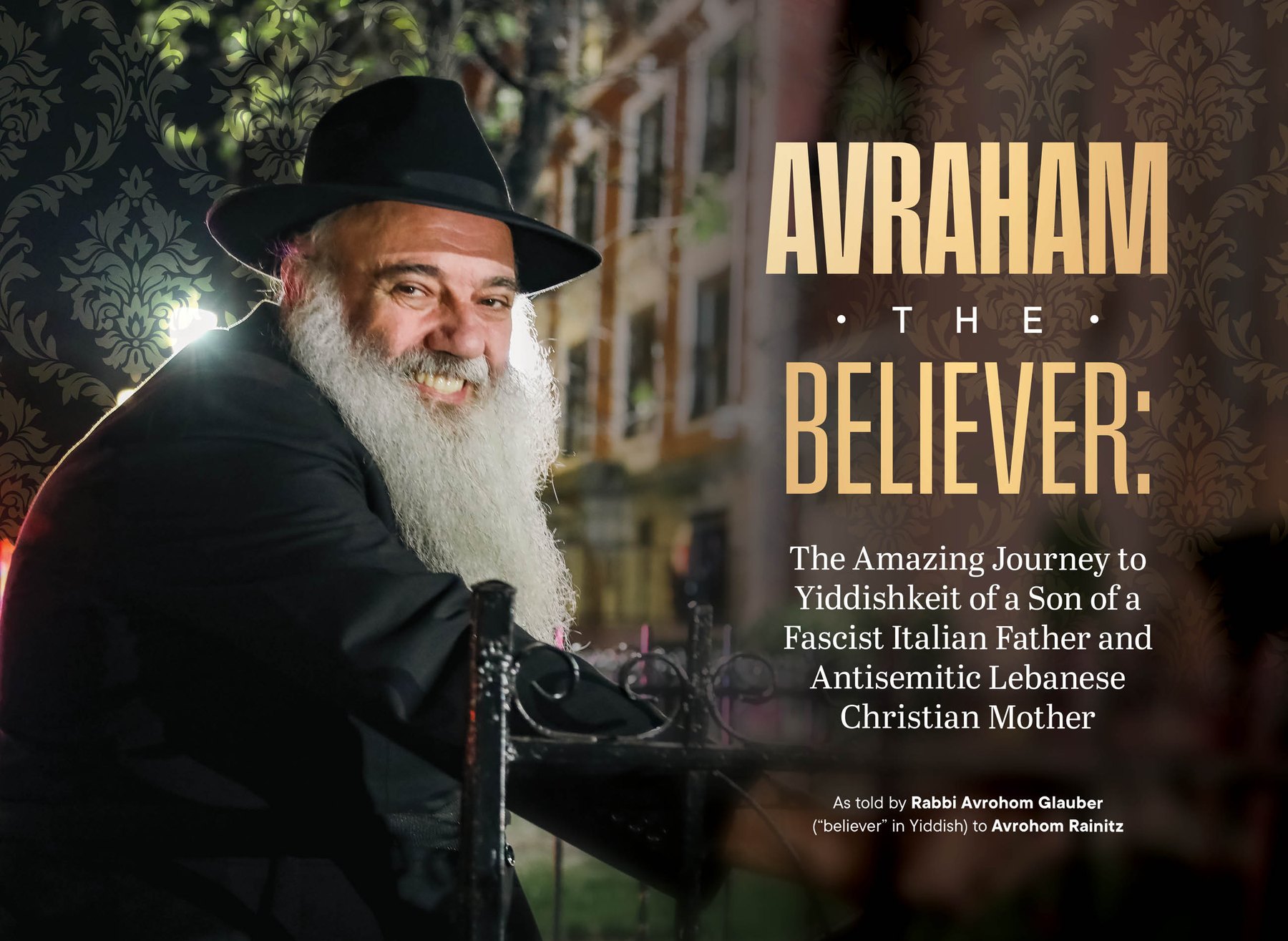
The Amazing Journey To Yiddishkeit Of A Son Of A Fascist Italian Father And Antisemitic Lebanese Christian Mother
As told by Rabbi Avrohom Glauber (“believer” in Yiddish) to Avrohom Rainitz
1969. An upper-class neighborhood in S. Paulo, Brazil. On the sixth floor, in a hallway between apartments, were two women who spewed their hatred against Jews.
“Jews are the cancer of the world,” said one.
“It’s a pity the Germans didn’t finish them off,” said the other one.
“A Jewish family recently came here to live in the building across the way, on the seventh floor,” said the first one in disgust.
They hadn’t noticed a nine-year-old boy who was standing there, horrified and surprised. He was horrified by their hatred of the Jewish people whom he had learned about lately in Bible class, and surprised since one of the ladies was his mother. When he had asked her the week before where he could meet Jews, she dismissed his question by saying that the Jewish people had been wiped out 2000 years ago.
He was skeptical because when he asked his father the same question, his father told him the Germans had killed the last Jews in Europe. What he concluded from what they said was there aren’t any Jews left. Now he found out that not only had they lied to him, but right near him, in the facing building, there was a Jewish family!
The two women continued chatting and didn’t notice the boy who had pressed the button for the elevator. He hurried over to the seventh floor of the other building. He didn’t know that at this very moment, his soul had begun a long, fascinating journey to the Jewish nation.
When I first met Rabbi Avrohom Glauber, I had no idea he is a ger tzedek. He looks like a born and bred Chassid, and if I had to guess his background based on his features, I would have thought maybe Russian-Jewish or Polish-Jewish. I would never had dreamed that his father is Italian and he served in the Nazi Axis army, and that his mother is an Arab Christian anti-Semite from Lebanon.
He ended up in my house one Friday night and when he began telling his extraordinary story, it was like the clock stopped. The Shabbos meal continued until nearly midnight.
I
Looking for Real Jews
“I was born to a Christian family in S. Paulo to an unusual family. My father, a young Catholic Italian served in the Nazi Axis army in World War II. He was in charge of German gunners in the high mountains above Rome, where trains took Jews northward. Although he served in the Nazi army, he didn’t share their hatred for Jews. He even told me that at the beginning of the war, when he saw the freight trains packed with beaten Jews, he was filled with compassion for them and he snuck them food, endangering his life with the Nazi officers. After the Allies conquered Italy, he fled to Brazil which agreed to accept Nazi refugees.
My mother was a Christian Maronite from Zahle in Lebanon. She and her family fled with passports from Lebanon to Brazil, which took in many refugees from the Middle East. She met my father who was working as a teacher of ancient languages. Despite enormous cultural differences between them, they married and when I was born, I was named Thomas de Maulo.
Both were intellectuals and they ran our home on a relatively high level. We lived in an upper-class neighborhood and they sent me to a Christian school that was on a high academic level. Our Bible teacher was a known bishop in Brazil and when I heard him tell the story of the Jewish people, it intrigued me. Interestingly, until then I hadn’t take much of an interest in my studies but when he began telling about the Exodus and the Giving of the Torah, I listened intently.
As a child, I didn’t realize this was a story many thousands of years old and when I went home I innocently asked my mother where I could meet Moses and the Jewish people. My mother was happy that I was taking an interest in my studies but she didn’t want me interested in Jews. Her reaction was the Jewish people existed thousands of years ago and were annihilated. From my father I heard a slightly different answer. He said there had been Jews in Europe up until recently but the Germans killed them all. Either way, I understood that there were no more Jews and since I had so connected to the story of the Jewish people, I decided to act like the Jews in accordance with what I learned in Bible class.
After we learned that Jews cannot eat pig and camel, I asked my mother at suppertime whether the meat she served was pig or camel meat. She wondered where this question came from. Later, when I learned it was forbidden to light a fire on the Sabbath, I decided to stop going in a car on Shabbos.
* * *
Then came the turning point. Thomas heard his mother and her neighbor talking about a Jewish family and he rushed over there and befriended a Jewish boy his age. His first question was: Are you the only Jews in the world?
“What?!” said the Jewish boy, and he invited Thomas to join him at the Jewish club, but the Jews there were assimilated and when Thomas saw a ham sandwich there, he said to his Jewish friend, “You lied to me! They can’t sell ham at a Jewish club!”
The Jewish boy, who was very far from religious observance, understood that Thomas was seeking something more Jewish and he said he would take him to synagogue on Shabbos where he would see Jews praying from a Hebrew prayer book.
On Shabbos, he took Thomas to the Reform temple and when Thomas saw the Reform rabbi come to shul in his car, he said to his friend, “You lied to me again. Jews cannot drive on the Sabbath!”
“Okay,” said the Jewish boy, “next Shabbos I’ll take you to a real synagogue where the worshipers don’t eat ham and the rabbi doesn’t drive on the Sabbath.”
II
We Were Lied to
That’s how I got to the shul of Jews from Lebanon and Syria, led by Rabbi Laniado. I felt an inexplicable pull to the shul and I went there whenever I had free time. When the people there asked me about my background, I said my mother came from the town of Zahle in Lebanon. They were sure she was Jewish and had married a non-Jewish Italian and that thank G-d I was getting back to my Jewish roots.
I naturally fit into life in the Jewish community and had no idea I would need to convert. After school, I would go to the shul and join the Torah classes and tefillos. Like a sponge, I absorbed the basics of emuna and mitzvos.
In the meantime, at the Christian school I attended, the bishop had finished teaching the Bible and he began teaching what they call the New Testament. He said that everything we learned in the Bible was true until the time of Yeshu; after that, the rules changed and everything was permissible. This nonsense really annoyed me and I spoke sharply against Yeshu. The bishop was shocked and he asked, why do you speak that way against him? I said, since he went against G-d!
The bishop quickly realized that it would be better to remove me from the class before chaos would ensue with the rest of the students. He called me to his office and asked my father to come to school. Realizing that I could be in trouble, I told him that my father was from Italy where he had a good relationship with the pope. The bishop immediately changed direction and when my father arrived, he was as sweet as could be and he told my father that he had come to the conclusion that I was too smart for their school and he should switch me somewhere else where they studied science on a high level.
My father took me out of the school but after a short talk with me, he realized what had happened. He told me that he also wasn’t a big believer in the church. He said that in his youth he had been drafted into service at the Vatican and his job was to stand behind the curtains of the large visitors’ hall. When a group of visitors came to see the statue of Yeshu, he poured blood through a narrow pipe and the tourists would be amazed and think they were witnessing a miracle. “It’s been many years that I don’t believe in this religion and I’m happy that you wised up too,” he said to me.
III
‘discovery’ at a Yud-alef Nissan Farbrengen
At age twelve, he attended a bris mila that took place at the shul and realized that in order to be a Jew, he had to undergo circumcision. He remembered that a few months earlier, after being injured in an accident, his father, because of his senior position, was able to arrange a special card for him that enabled him to receive immediate treatment at the hospital.
He went to the hospital and glibly convinced the doctors that he was experiencing great pain that wouldn’t go away until they circumcised him. He also used his father’s senior position to explain to the doctors that it didn’t pay for them to argue with him.
“The big upheaval in my life began on Yud-Alef Nissan 5738. I was eighteen and I had spent years hanging out with Jewish boys at the Lebanese shul. My friend, Yosef Menache, told me that a new Chabad House had opened and recommended attending their farbrengens. ‘It will be interesting,’ he promised.
“During the farbrengen, one of the people said that very soon the Rebbe would be revealed as Moshiach and once there was the Geula, there wouldn’t be any more converts. I had never heard the word ‘convert’ before at the shul for the simple reason that there were hardly any converts among Jews of Arab origin.
“I asked one of the Chassidim sitting next to me what ‘geirim’ meant and he said it’s a goy who underwent a process to become a Jew. I, who had been certain that just my wanting to be a Jew made me a Jew, was taken aback. I suddenly realized that I was a goy.
“I was stunned by this. My head began to ache and when I returned home I went to bed and for three days. I couldn’t leave the house. On Erev Pesach I decided that I must go to shul and speak about this to the rabbi of the community. When I got to the shul, I saw the rabbi sitting with a goy and trying to convince him to buy the community’s chometz. The rabbi didn’t speak Portuguese and the goy didn’t quite understand why he needed to buy the community’s pasta. ‘I have enough pasta,’ he said and refused to buy the chometz.
“I went over the rabbi and told him that I have a problem. ‘I also have a problem now,’ he said, feeling stressed, ‘but let’s hear your problem.’
“In a trembling voice I told him that I realized I am a goy. For a moment, I didn’t understand why his eyes lit up. He asked, ‘Are you sure you’re a goy?’
“After telling him about my mother, he called Rabbi Shaul (Shachud) Chrem, the rav of Beirut and the conclusion was that I was a goy, no question. He was very happy and he said, now I can sell the chometz to you. After we made the kinyan, we arranged that after Pesach I would return and we’d deal with the matter of conversion.
* * *
Something interesting happened on Pesach. Armed with the bill of sale, he knocked on the doors of some Jewish families and said he wanted to take the chometz. When they grew agitated, he reassured them and said he just wanted them to know that it was a real sale. Once he converted, he was sitting and learning in the shul in S. Paulo and heard two boys learning the laws of selling chometz. One of the children said that his father told him that once, a goy came to them on Pesach, asking for the chometz.
IV
Do I Have a Jewish Soul?
“After Pesach, I spoke at length with Rabbi Laniado and once he was convinced of the truth of my intentions, especially knowing me from the shiurim I had attended for years, he sent me to Eretz Yisrael with a letter of recommendation to the Chief Rabbi, Rabbi Ovadia Yosef.
“At this time, my friend, Yosef Menache, went to the yeshiva in Kfar Chabad so when I arrived in Israel I went to Kfar Chabad. After a few days in yeshiva, I went to Yerushalayim to Rabbi Ovadia Yosef and asked to convert. He read Rabbi Laniado’s letter and after testing me and being impressed by my knowledge, he asked me whether I was sure I wanted to convert. He said: Do you know that the goyim persecute us and kill us? And he described the tzaros of the Jewish people. Then he asked: Is it that you want to marry a Jewish woman?
“I was highly emotional and hadn’t noticed that he had gone to another topic, so I enthusiastically said: I am ready to accept all the persecution of the Jewish people and even to marry a Jewish woman… He burst into laughter and ended up approving the conversion and since I had undergone circumcision, I only needed hatafas dam bris and tevila in a mikva.
“While I was in Brazil there was another young man who thought he was smart who told me that my conversion would only be worthwhile if I really had a Jewish soul. ‘If you don’t have a Jewish soul, your conversion will be nothing.’ Since he was considered a learned person, what he said made me nervous. I decided to check this out and went to one of the senior rabbis in Yerushalayim about whom it was said that he was a mekubal and understood spiritual things.
“There was a gathering at his house at the time, and they gave out homemade wine. I decided to check whether he really understood spiritual things and went over to him with two cups of wine, wanting to say l’chaim to him. I already knew that wine that isn’t cooked becomes yayin nesech when touched by a goy and I wanted to test him. To my astonishment, he immediately put the cup down on the floor under the table and refused to drink it. I should say that my appearance at that time was chareidi and I was even wearing a long jacket in the Yerushalmi style. I was definitely impressed by the fact that he didn’t drink the wine.
“I asked him what I should do and he looked at me and said sharply, ‘You need to convert!’ I saw that he was a very special person and I asked: What name should I choose? He thought and then said, ‘Your name will be Avrohom Eitan.’
“After I immersed in the mikva and the dayanim asked me what name I wanted, I said: Avrohom Eitan.”
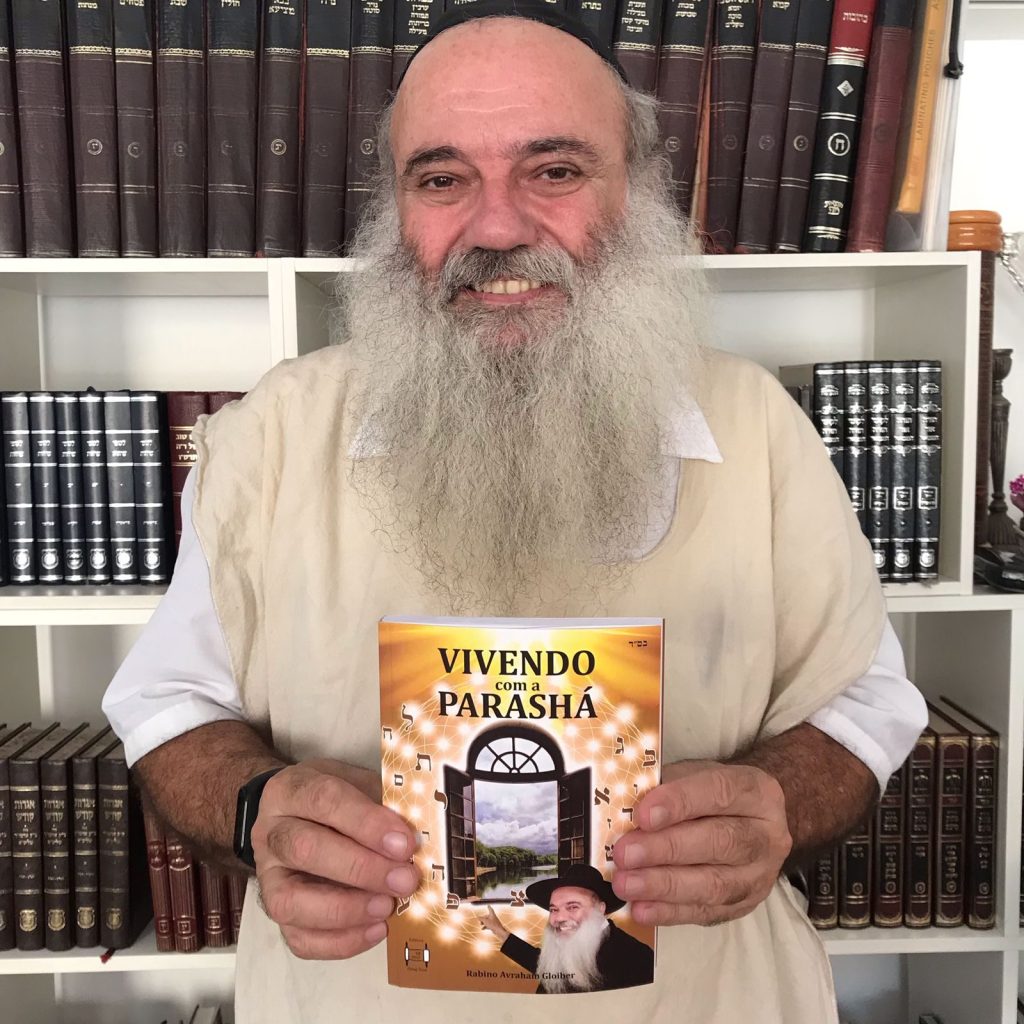
After the conversion he returned to Kfar Chabad and went to learn with a group from Brazil. At the time, the yeshiva had a special program for English-speaking baalei teshuva with Rabbi Shneur Zalman Gafni. For the Brazilians, the hanhala arranged special shiurim with Rabbi Yosef Yitzchok Offen.
V
First Encounter with the Rebbe
After learning for three years in Kfar Chabad, Avrohom wanted to go to the Rebbe.
“Bachurim would go to the Rebbe and come back from the Rebbe and their stories captivated me. I wanted to go but I had no money for the trip and didn’t know what to do.
“Just at that time, I received a letter from my father saying he was very sick and asking me to visit him. I wrote him that I was willing to visit him on several conditions: 1) that he would drive me every day to the mikva and shul which were far from his house; 2) that he would enable me to buy kosher products and eat separately in his house; 3) that going or coming I could make a stopover in New York where I could visit the Rebbe. He said that was all fine with him and he would send me a ticket.
“When I told Rabbi Gafni, he was opposed to the trip since at that time, there wasn’t an established Chabad community and he was afraid that a long stay at my gentile parents’ home would be a bad influence on me. What a downer, after I was sure I was going to the Rebbe; now it was all up in the air.
“One of the bachurim suggested I go to Baba Sali and ask for his bracha for the trip to the Rebbe and to Brazil. I went to Netivot and Baba Sali received me with special affection and even honored me with lunch and saying l’chaim over a cup of arak. After hearing my question, he said: Go to Brazil and don’t be afraid of anything.
“When I told Rabbi Gafni that Baba Sali had given me his bracha, he said that in that case I could go and apparently I had some ‘shlichus’ in Brazil.
“In Kfar Chabad we were learning maamarim of the Rebbe Rayatz from Sefer HaMaamarim-Kuntreisim with R’ Berel Kesselman. When I went to Brazil, I took two sefarim with me, thinking maybe I would find someone with whom I could learn. Indeed, in the shul that I davened in during my visit, I met a young Jew who was happy to accept my offer to learn with him and we learned Chassidus for a month.
“After being with my parents for a month, my mother pleaded with me not to return to Israel because they were afraid for my life in the Middle East. ‘I already made my peace with the fact that you are a Jew,’ she said, ‘but at least live in the Jewish community in America. As someone who comes from the Middle East, I know how dangerous the area is and I’m afraid for your life.’ I told her that I was going to New York now and then I would see…
“I finally got to 770 in Menachem Av 5741. The first time I saw the Rebbe I nearly fainted. I attended tefillos with the Rebbe on his father’s yom hilula, Chof Av.
“The next morning, I went to Rabbi Groner’s office and said I wanted yechidus to ask the Rebbe what I should do next, whether to go to Eretz Yisrael or remain in New York. R’ Groner explained that the Rebbe was no longer receiving people for yechidus but I could submit a note and when there would be an answer, he would let me know.
“That same day, R’ Groner looked for me and said there was an answer. He explained that I could not get the Rebbe’s handwritten answer but he gave me a copy of it which said: Return now and immediately to Eretz Yisrael; as to how to arrange things in Eretz Yisrael – he should decide when he’s there.
“I had $400 which I got from my parents. I went to a travel agent and bought a ticket to Israel. When I arrived in Israel and showed the Rebbe’s answer to my mashpia, Rabbi Moshe Naparstek, he was amazed since usually, bachurim were told to consult with the yeshiva’s hanhala or with friends. This response was unusual, that I should decide when I’m there. In any case, I decided to remain in Eretz Yisrael.”
VI
Amazing Closure
“I married in 5742 and began learning in the kollel of Rabbi Avrohom Hersh Cohen. At first, I learned for semicha l’rabbanus. Once I realized it would be hard for me to get a rabbinic position in Israel, I consulted with Rabbi Gafni who suggested that I study safrus. He took me to a safrus course in Bnei Brak. I was able to write nicely but very slowly so it wasn’t a good way to make a living.
“We were living in Kfar Chabad when one day, Rabbi Dov Elroie came to my house with some Chassidim and they suggested I become a schoolteacher. They had gotten some answer from the Rebbe from which they understood that children in Eretz Yisrael are already able to learn alef-beis from the age of three and they wanted to teach kriah to little children. They tried their luck with another teacher who wasn’t able to relate to children of this age. For some reason, they believed I’d be good at it.
“I said I was willing to try and it turned out, they were right and I was able to get the children to enjoy learning to read. By the end of the year, the children in my class could read better than children in the older grade. That’s how I became a teacher.
“About two years after I married, my wife won a ticket. When Rabbi Yaakov Pelles heard that my wife won, he came over to me and said he would pay for my ticket so we could go to the Rebbe together.
“On that visit, at the Rebbe’s farbrengen they told me I could get a device which would provide a simultaneous translation into Portuguese. I stood on line to get the device and in front of me stood a young man wearing a hat and sirtuk. He turned around and when he saw me, he began to excitedly hug and kiss me as he murmured: It’s been three years that I’m looking for you and finally, we meet!
“I was surprised and confused. I looked him over from head to toe and said, ‘I’m sorry, but I don’t know you…’ He spoke Portuguese but he was a stranger to me.
“‘You made me a baal teshuva!’ he exclaimed and I still didn’t understand. How could I have made you into a baal teshuva when I don’t recognize you?
“The man said: We learned together for an entire month in the Syrian shul in Brazil.
“I was stunned. That young man with whom I had learned Maamarim-Kuntreisim three years before had become a Chabad Chassid. That young man, known as Rabbi Shlomo Levy today, became one of the most talented shluchim in Argentina. That’s when I realized what shlichus awaited me in Brazil.”
VII
Shlichus in Brazil
R’ Avrohom continued teaching, though when he had a hard time supporting his family because of the high cost of living in the center of the country, he moved to Nachalat Har Chabad where housing is cheaper.
Shortly before the Gulf War, having financial difficulties, R’ Avrohom went to Brazil to see about parnassa possibilities. He first stopped at 770 and he thought that when he would pass by the Rebbe for dollars, he would ask what he should do. But when he passed by the Rebbe, he was too overcome and he wasn’t able to say anything.
The Rebbe gave him a dollar and said: This is for the daughter. The Rebbe gave him another dollar: For the daughter. And a third dollar: For success on your trip. At the time, R’ Avrohom had two daughters and this was the Rebbe’s open ruach ha’kodesh.
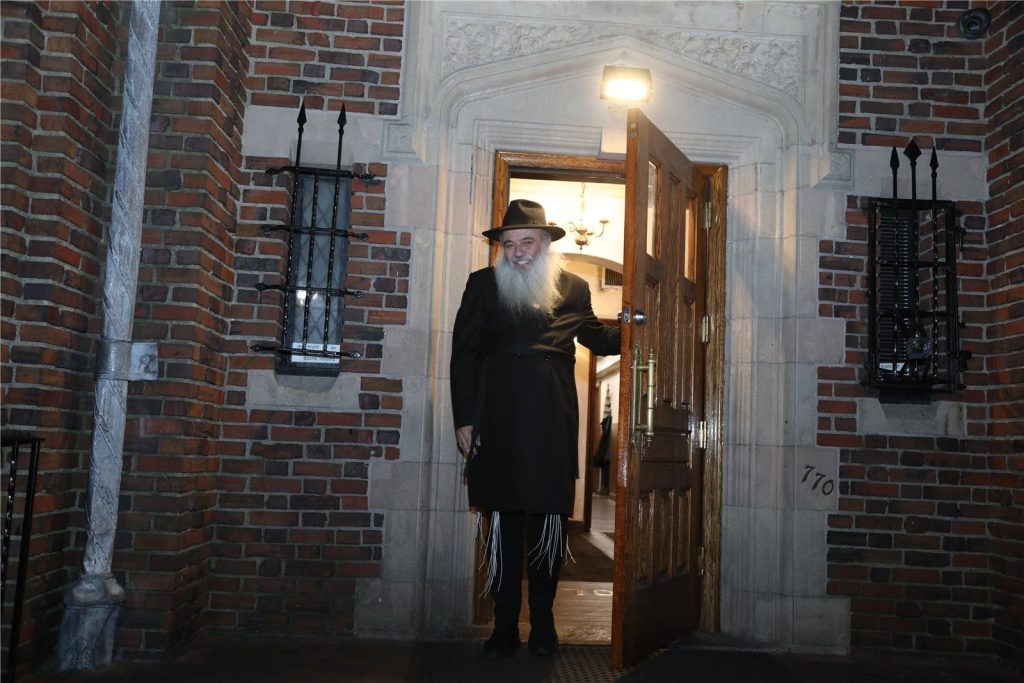
On the trip to Brazil he did not find work but years later, in 5760, due to several incidents, he moved to S. Paulo where he opened a bustling Chabad House which is a center of Yiddishkeit and Chassidus. He also began writing Jewish books in Portuguese. His books on the parsha based on the Rebbe’s teachings, present abstract ideas in a way that is readable and usable for the reader of today. He is working on publishing a siddur for children.
As to his outreach over the past two decades, that could be a separate article.
“Since I began on shlichus, I see miracles and wonders from the Rebbe on a daily basis. I’ll tell you just one story that happened recently. Our mekuravim know that when they need advice or a bracha, they can write to the Rebbe and receive answers through the Igros Kodesh. Since they don’t know Hebrew, they ask me to translate the letters for them.
“A woman came to me who asked the Rebbe for a bracha for a shidduch. I read the Rebbe’s answer to her which was all about marriage, that it’s permissible to get engaged on Chol HaMoed ‘lest someone preempt him.’ As I translated, I noticed that she was shocked. She told me that the person who was going to be her fiance also asked the Rebbe for a bracha and they had both opened to the exact same letter. Out of all the volumes of the Rebbe’s letters, they both got the same letter, about marriage.
“We see how the Rebbe is with us, here and now. We used to have to go to the Rebbe; today, we feel that the Rebbe comes to us, to the Chabad House.”
Beis Moshiach #1417 • pp. 26-35
© 2026 Beis Moshiach Magazine. All rights reserved.
This article originally appeared in Beis Moshiach #1417. You are welcome to share it with friends and family by email or in print, provided that you do not change, add to or omit any part of it, you credit the author and Beis Moshiach, and you include a link to archive.bmoshiach.org (written out in full in printed copies).
To republish this article in a newspaper, magazine, book or website, please request permission in advance at [email protected].