The London Couple Who Challenged The World
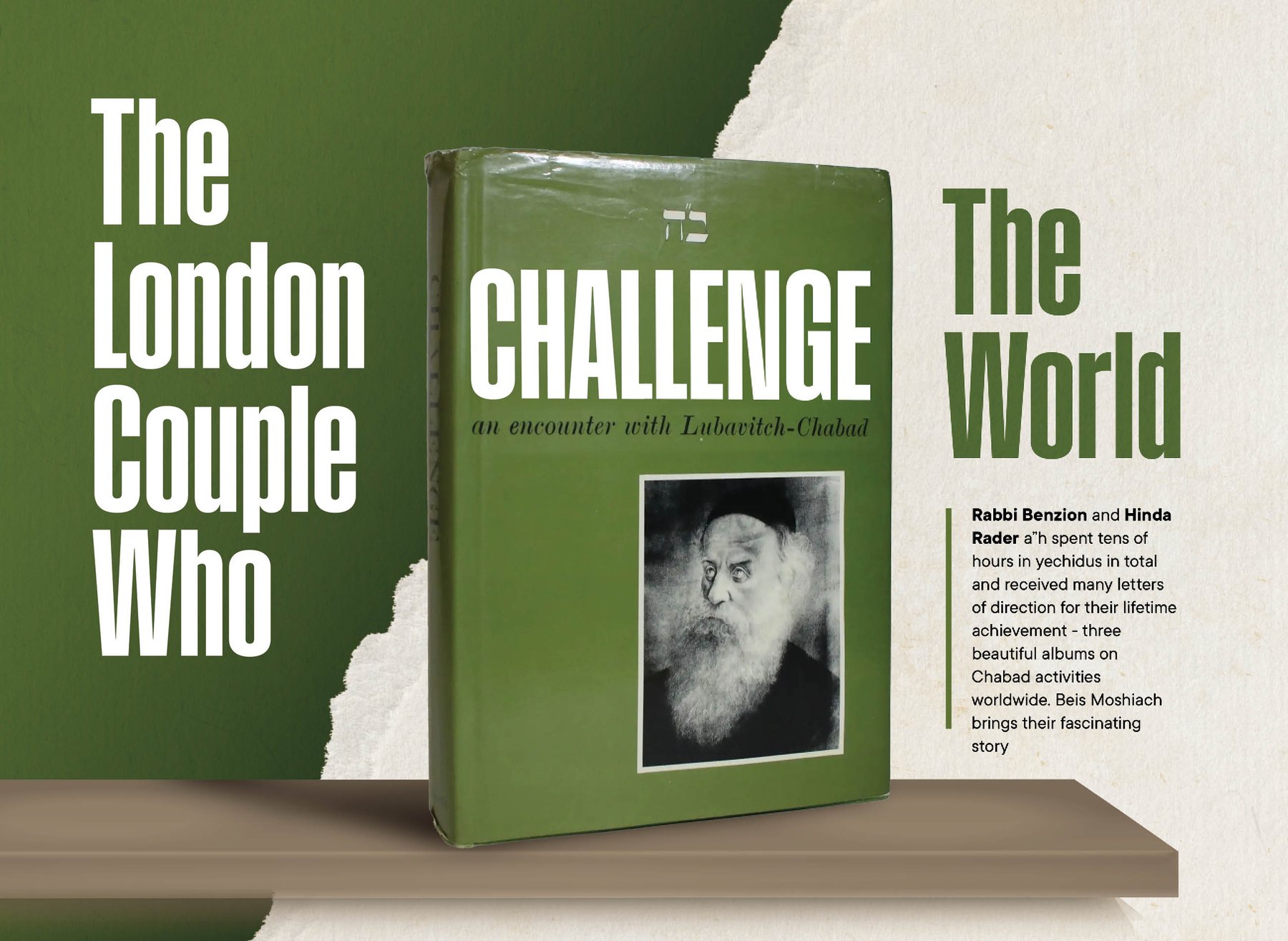
Rabbi Benzion and Hinda Rader a”h spent tens of hours in yechidus in total and received many letters of direction for their lifetime achievement – three beautiful albums on Chabad activities worldwide. Beis Moshiach brings their fascinating story
The Rader couple, Benzion and Hinda, entered the Rebbe’s room for the first yechidus of their lives. The Rebbe’s gaze seemed to penetrate to the depths of their souls and read their thoughts.
The couple consulted with the Rebbe on an array of subjects, from R’ Benzion’s business (he was also an accountant) to his wife’s communal activities; she was active in WIZO.
In an article that he wrote, R’ Benzion described the impression the Rebbe made on him in that yechidus. “How can one capture his smile that seemed to light the world, his vigor and energy, his attention to detail, the piercing eyes that seemed to invade one’s soul and discover its secrets, his prodigious memory and his knowledge of so many disciplines?”
The Rebbe told him to have his tefillin checked. It turned out they were improperly assembled. He was stunned. “How did the Rebbe know?”
What made the greatest impression in that yechidus was when the Rebbe asked Mrs. Rader with a smile, “Were you at the farbrengen yesterday?”
“Yes, I was.”
“Did they tell you it was an unplanned farbrengen, a last minute decision?” asked the Rebbe.
“I didn’t know that,” said Mrs. Rader.
“Did you enjoy it?” asked the Rebbe.
“The truth is that I didn’t understand everything,” she admitted, “but I enjoyed it very much, especially the singing which was so enthusiastic!”
The Rebbe smiled broadly. “I’ll know that you enjoyed it when you bring me your children.”
This yechidus, which took place in 5726, was a milestone in the Raders’ lives.
Mrs. Rader passed away a few weeks ago at the age of 98. She is survived by 241 descendants which include three children, grandchildren, great-grandchildren and even great-great-grandchildren, all ardent Chabad Chassidim spreading the light of Chassidus.
Long before she parted from the earthly plane, the Raders lived through an amazing life journey. Their story is a fascinating saga of a religious-traditional English couple who underwent an unusual spiritual and Chassidic transformation with the personal guidance of the Rebbe, and became prime activists in spreading Yiddishkeit in England.
The First Steps
Benzion Rader was born in the East End of London to Yehuda Leib and Chana Faige Rader. As a boy, he was greatly influenced by his maternal grandfather, Yaakov Waterman, who was frum and a big baal tzedaka.
After his graduation from high school, and the outbreak of World War II, Benzion Rader enlisted in the Royal Navy. In 1947, he married Hinda Garfinkel, also of the East End. The Raders built their home on traditional Jewish values. In the 1960s, Rader met Rabbi Faivish Vogel, who introduced him to the teachings of Chabad Chassidus. Rader was particularly drawn to the Rebbe and Chabad due to what he would later describe as the movement’s uniquely “dynamic approach,” combining “warmth and devotion” with “intellectual awareness of the problems of the Jews in the world as it is.”
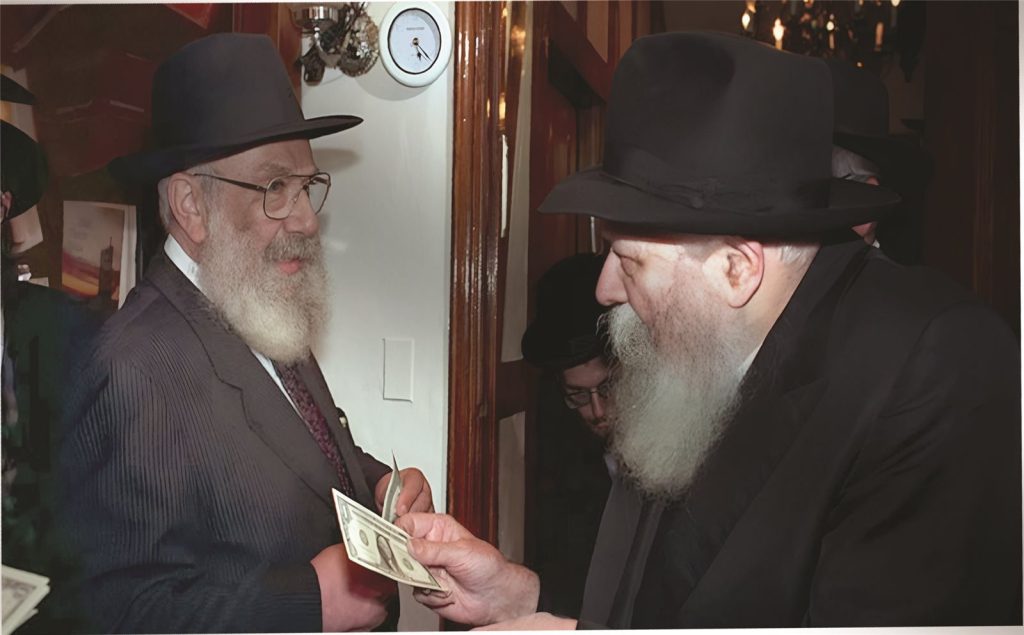
Mrs. Rader began arranging Chassidic events. Tefillos on Shabbos, Chassidishe farbrengens, and shiurei Torah took place in their spacious living room. “Whenever you saw a guest in town on Friday with suitcases, you knew they were on their way to the Raders,” said a community member.
The ‘challenge’ Series
In addition to hospitality and farbrengens, R’ Benzion and his wife had personal missions from the Rebbe which illuminated their lives with deep, uplifting meaning. One of the outstanding ones entailed publishing a series of books called Challenge which described the lives and work of Chabad Chassidim in the modern era.
The idea for the series was born at one of the private audiences when the Rebbe spoke to them about transferring their children to Torah schools with the Rebbe saying, “I’m not saying Chabad schools; the main thing is to be in Jewish, religious schools.”
When the Raders said, if they were switching to another school already, they’d prefer Chabad, the Rebbe said, “In that case, I will be personally responsible for your children.” [In fact, in a letter the Rebbe wrote in response to a joint letter which they concluded by writing that they had covered all the ‘news,’ the Rebbe pointed out that they had neglected to report about the positive progress of their their children, especially as they were now the Rebbe’s personal responsibility.]
The Raders told the Rebbe that at the exclusive school their children attended there was a special book in which the founders of the school laid out the central principles that guide their students as well as the stories of famous students who had attended the school.
“We are currently coming closer to Chabad Chassidus – why isn’t there a book that tells the story of the founding of Chabad Chassidus which will present to the Jewish world how Chabad has succeeded, despite modern challenges, to live and disseminate traditional, rich, deep Jewish life?” they asked.
The Rebbe thought the idea was excellent and said, “If you know someone who can produce a book like this, we would be happy to work with him.”
The Raders were thrilled that the Rebbe had accepted their idea and said they thought they could edit a book like this if they were given guidance and instructions from the Rebbe.
Over the next two years, the Rebbe displayed active editorial interest in every aspect of the development of the project. The Rebbe said the book should include photographs and illustrations. He carefully examined all the material and made critical corrections via trans-Atlantic phone calls.
During this period, the Rebbe said several times that it was surely possible to correct the book more and more but since there was no other book like it yet, they could delay no longer. Yet, there were some things that the Rebbe wanted to add despite this. For example, when some Lubavitcher Chassidim left Russia, the Rebbe said to interview them and add their pictures to the book.
Presenting the Book to the Rebbe
R’ and Mrs. Rader finished preparing the book for print by Yud Shevat 5730. In the midst of all the excitement surrounding the completion of the Sefer Torah shel Moshiach, and anticipation of the hisgalus of the Rebbe, his wife begged him to go to the Rebbe and personally present the book to him. In the last chapter there was an article about Shavuos in Chabad and since there was room on the last page, R’ Benzion commissioned a painting of a Sefer Torah with which to end the book.
At the farbrengen held after the completion of the Sefer Torah shel Moshiach, the Rebbe told R’ Benzion to say l’chaim on a full cup. This caused his head to spin and he put his head down to rest a little, except that then Rashag roused him and said the Rebbe was looking at him. He raised his head and the Rebbe motioned that he should say another l’chaim over a full cup. Now, all of 770 swam before his eyes and he wanted to rest. The Rebbe motioned to him a third time to say l’chaim on a full cup. After that, he couldn’t stay there any longer and had to go out to get some fresh air. In the meantime, the farbrengen ended and he was sorry he had missed out.
The following week, before having yechidus, he met with the secretary, Rabbi Yehuda Krinsky, who just then had pictures from the hachnosas Sefer Torah shel Moshiach event. R’ Rader saw the famous picture of the Rebbe putting the crown on the Torah and thought it was most suitable for the end of the book. He asked for a copy of the picture and right before entering for yechidus, he stuck the picture on the last page of the book.
Upon entering the Rebbe’s office, he gave the book while opening it to the last page and saying with a smile, “Unfortunately, the book was delayed until now because it is only now that we got this picture.”
The Rebbe gazed solemnly at the picture and said: There is a picture of me at the beginning of the book and the middle. Why does another picture need to be added at the end?
R’ Rader said: I thought this is what Chabad is about – the Rebbe at the beginning, the middle and the end!
The Rebbe did not accept this and said in all modesty: Chabad Chassidus exists for over 200 years now, and I’m only 68.
Then the Rebbe said to him: I noticed that you weren’t present at the last part of the farbrengen.
When R’ Rader said that after saying l’chaim over such large amounts he couldn’t compose himself, the Rebbe said: I hope I didn’t harm your health. R’ Rader said that as far as his health was concerned, he was fine, but he was sorry he had missed part of the farbrengen. The Rebbe reassured him when he said: You really didn’t lose out because at a farbrengen, the neshama speaks directly to the neshama.
Shlichus to Shazar and Another Book
Challenge: An encounter with Lubavitch-Chabad was published in the summer of 1970 by Lubavitch Foundation in Britain. It opened with a personal letter in which the Rebbe addressed a philosophical problem, how to reconcile G-d’s goodness with the “seemingly insurmountable obstacles” that confront ordinary people in real life. The Rebbe’s answer is that a world without challenge would be a world without effort, and without effort, goodness will always remain intrinsically flawed.
The Rebbe asked them to travel to Eretz Yisrael and present a copy of the book to Shneur Zalman Shazar for his birthday at the Tzemach Tzedek shul in the Old City of Yerushalayim. The Rebbe suggested they prepare a copy with an especially nice binding, befitting the president. They had the royal bookbinding service of Britain do the job and the results were so magnificent that they decided to order another copy which they gave as a gift to Rebbetzin Chaya Mushka.
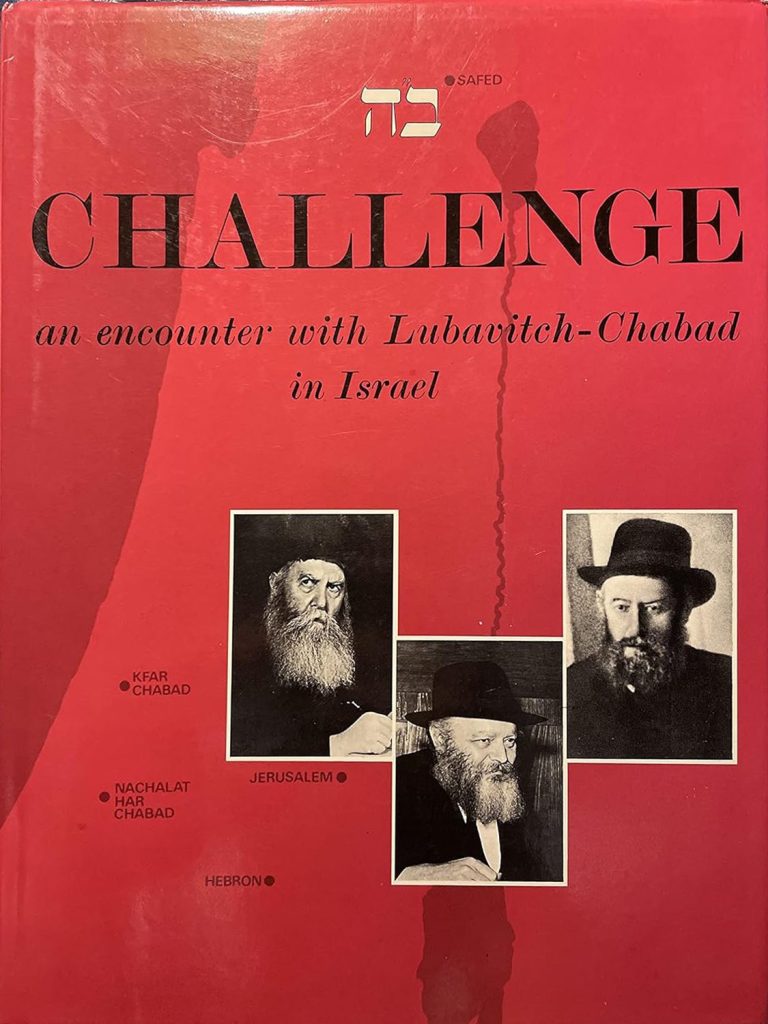
The day after they gave the book to Shazar, he called them and invited them to his office. He complimented them on all the work they had put into the book but said the chapter on Chabad’s work in Eretz Yisrael was too short and that a book devoted to Chabad’s work in Eretz Yisrael was needed. The Raders reported to the Rebbe who responded in a long letter and agreed to Shazar’s idea. The Rebbe qualified this by saying they should first issue a supplement to the book that would focus on Chabad in Eretz Yisrael and only afterward should they publish a separate volume on Eretz Yisrael. Two years later, the second volume: Challenge: An Encounter with Lubavitch-Chabad in Israel was published, which was well received.
Focus on the Jewish Woman
When the Raders had yechidus and brought the second volume, the Rebbe asked them what their plans were. They said people asked them whether they would publish more books in the series, about Chabad in Europe and the United States. The Rebbe said that after publishing the book on Eretz Yisrael, that was an excellent model for others to follow and they themselves didn’t have to do it.
They understood that the Rebbe wanted to assign them another project and indeed, the Rebbe said, “I would like you to start editing a literary creation about the Jewish woman.” The Rebbe addressed Mrs. Rader, “If there is a financial problem, I’d like to be a partner in the expenses.”
Mrs. Rader said there was no money problem since she had just raised money for the convention of Chabad women in Europe and some money remained, so she would use that money for this purpose. The Rebbe began to laugh so hard that tears streamed down his cheeks and as he wiped the tears he said: This is the first time in the history of my organizations that someone has a surplus!
When the Raders began sending material to the Rebbe that R’ Benzion and others wrote about the Jewish woman, the Rebbe said they did not have to send him the articles for editing since he could rely on them by now.
After sustained effort, the book was ready for print. The pages were going to be sent to print on a flight that left on motzoei Shabbos but on Friday morning, Mrs. Rader decided that the book couldn’t be sent to print without the Rebbe reviewing it. They sent the pages to their son-in-law in Crown Heights and asked him to give it to the Rebbe for a final review.
The son-in-law complained at first about submitting it to the Rebbe on erev Shabbos and expecting to receive edits before Shabbos but to his great surprise, just an hour later, he got a phone call from the secretariat saying that the Rebbe had reviewed the book and had critiqued it too!
Series of Amazing Works
While in yechidus at that time, the Rebbe asked about the printing of the book and they said they tried to get a good price and the printing house agreed to their terms on condition that they print 10,000 copies and pay up front. They told the Rebbe that they would be meeting with Rabbi Chodakov and would ask him to buy 7000 copies from them and pay up front. The Rebbe smiled and said that if they succeeded in convincing R’ Chodakov to buy that many books and to pay up front, they would be the best businesspeople in the world.
In light of what the Rebbe said, and knowing that R’ Chodakov was very careful when it came to money, they expected a difficult meeting. Therefore, they were very surprised when he immediately agreed to buy 7000 books. Even when they said he had to pay up front, he said they should go into the office where they would get a check. When R’ Benzion reported to the Rebbe about this, he said he didn’t think this was a result of his business talent. It seemed more likely that someone had spoken to R’ Chodakov about this…
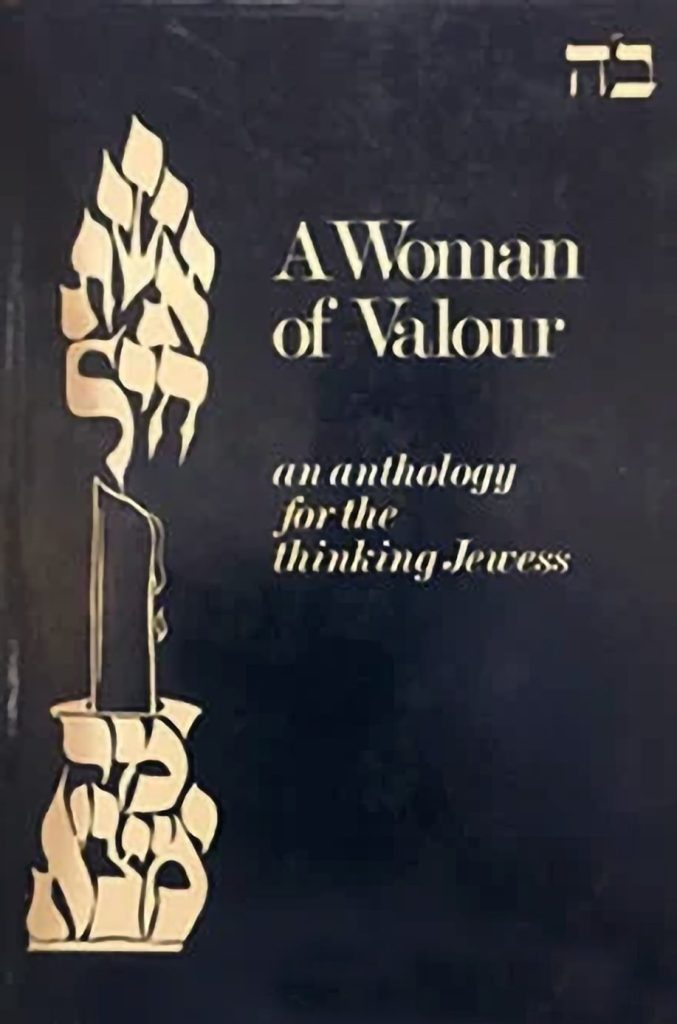
The Challenge series was just the first of an inspired lifetime project for the couple. They wrote, edited and also paid for many other books which illuminated the world of Chassidus and the persona of the Rebbe from a number of fascinating angles. Among the titles are, Woman of Valour: An Anthology for the Thinking Jewess and Return to Roots, about N’Shei Chabad in Europe, and To Touch the Divine: A Jewish Mysticism Primer. The motivation to write came from the Raders’ deep hiskashrus to the Rebbe.
The Power of the Chassidic Woman
The Rebbe particularly esteemed Mrs. Rader’s resourcefulness as illustrated in the following story. In the summer of 5744, Life Magazine published a feature on Chassidic weddings at the same time there was a N’shei Chabad convention in Crown Heights. The Rebbe asked Rabbi Krinsky if he could arrange that every woman attending the convention receive the magazine feature as a gift.
The convention was scheduled to end the next day, and Rabbi Krinsky didn’t feel comfortable calling the magazine with such a request, especially with such a tight time frame. The Rebbe said, “Ask Mrs. Rader, she will get it done.” Rabbi Krinsky called the Raders, who were living in Crown Heights at the time, and relayed the Rebbe’s request. It was early in the morning and R’ Benzion was about to leave for work. Like Rabbi Krinsky, he doubted the magazine would agree to such a request, and so he told his wife that whatever it costs she should just pay for it.
When R’ Benzion returned home that evening, he asked what the outcome was. “It was no problem, They delivered them to 770 and they have already been given out.”
“And how much did it cost?”
“Cost? It was their pleasure!”
The Rebbe’s Guidance in Raising Children
In addition to the big projects, the Raders worked on the most important project of all: raising their children and grandchildren. The Rebbe sent them many letters with encouragement and direction for providing a proper Chassidic education. For example, on 29 Teves 5729, the Rebbe wrote:
I was particularly gratified to read the detailed report about the progress of your children. It is the first time that you have written about them in such detail, and it certainly has given me much pleasure to read about them. I noted, of course, what you wrote about your older daughter, namely that it was suggested to her to study at a seminary, but she rejected the idea. Judging by your writing, this is something that belongs in the past, and may G-d grant that it should also be for the good in every respect, and that you should in general have much and true Yiddish Nachas from each and every one of your children, and to quote the traditional blessing: “To bring them up to a life of Torah, Chuppah and Good Deeds.”
In the month of Cheshvan 5734, after they had sent their daughter to the Rebbe for the Tishrei holidays, the Rebbe wrote them:
I take this opportunity of expressing to you my satisfaction at seeing your daughter. Although in her modesty she did not say “much” about herself, it was evident to me that she has made great strides in her development and achievements. These impressions were further confirmed by what I have heard from other sources.
May G-d grant that you should have much true Nachas from her and from all your children in an ever-growing measure.
I am particularly pleased that she was here in the month of Tishrei, the initial month of the year that sets the tone for the entire year – which is also why the month of Tishrei contains “samples” of the whole range of religious experience: Rosh Hashanah – acceptance of G-d’s kingship; Yom Kippur – repentance; Succoth – rejoicing with Mitzvoth, culminating with Simchas Torah – rejoicing with the Torah, and also the Torah rejoicing with Jews, who live by the Torah and Mitzvoth.
I am confident that these experiences will brighten her life throughout the year and be a source of true joy in every respect of the daily life, materially and spiritually.
The Next Generations
R’ Benzion passed away in 5777 and Mrs. Rader recently passed away. They are survived by hundreds of descendants who illuminate the world with the light of Chassidus. Despite all the Raders’ accomplishments, these were their greatest pride and joy.
Beis Moshiach #1414 • pp. 10-17
© 2026 Beis Moshiach Magazine. All rights reserved.
This article originally appeared in Beis Moshiach #1414. You are welcome to share it with friends and family by email or in print, provided that you do not change, add to or omit any part of it, you credit the author and Beis Moshiach, and you include a link to archive.bmoshiach.org (written out in full in printed copies).
To republish this article in a newspaper, magazine, book or website, please request permission in advance at [email protected].