An East-Coast Trip Tracing The Rebbe Rayatz’s Steps In America
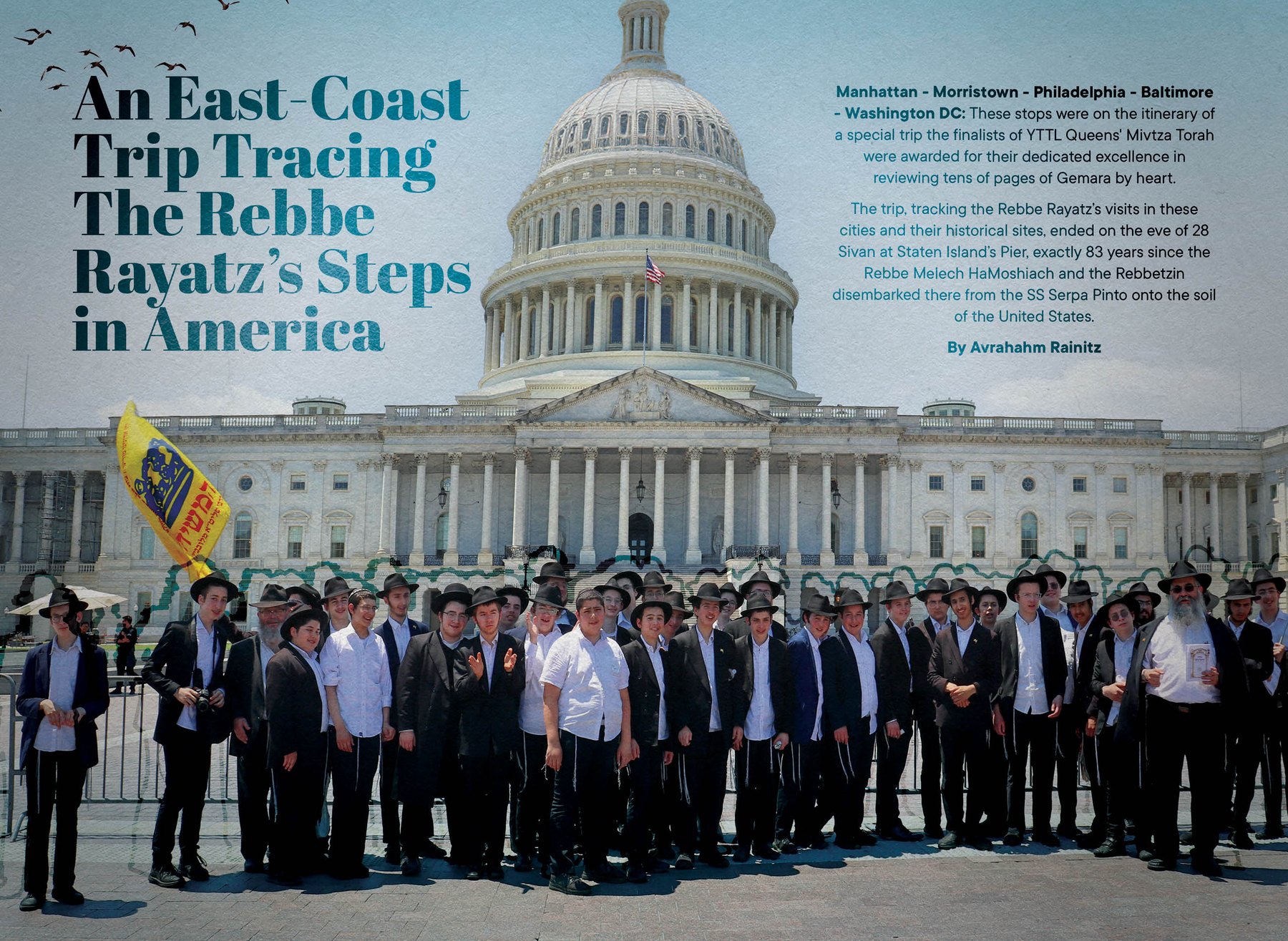
Manhattan – Morristown – Philadelphia – Baltimore – Washington DC: These stops were on the itinerary of a special trip the finalists of YTTL Queens’ Mivtza Torah were awarded for their dedicated excellence in reviewing tens of pages of Gemara by heart. The trip, tracking the Rebbe Rayatz’s visits in these cities and their historical sites, ended on the eve of 28 Sivan at Staten Island’s Pier, exactly 83 years since the Rebbe Melech HaMoshiach and the Rebbetzin Rayatz disembarked there from the SS Serpa Pinto onto the soil of the United States.
The sun was shining on the Morristown National Park in New Jersey as David sat in his office. As the police chief in charge of all parks in the state of New Jersey, he was used to busy days but not life-changing surprise visits.
“Sir, there is a group of yeshiva students who want to visit the historic building,” said the secretary. David follows the rules and the place isn’t open to groups of visitors. Guards at the entrance to the building made this clear to the group of bachurim. From the window of his office, he could see the bachurim turning away disappointed from the building and gathering in a corner of the yard.
The unusual sight made him very curious. He remembered that in a book that described the happenings in this historic building, there was a chapter about famous people who visited the building. One of them was a Jewish rabbi who looked like he belonged to this group of yeshiva students. Then and there, he took the book and went down to see the bachurim.
He stood near them and after a few minutes of listening to their conversation, he addressed the leader of the group, Rabbi Menachem Mendel Hendel and asked for the reason of their visit.
“We are here because the Lubavitcher Rebbe visited a health spa which was in this building, eighty years ago [1944]. Can you tell us a bit about the history of the building?”
“Certainly,” said David and he showed the talmidim the picture of the distinguished looking Jew in the book.
“That is Rabbi Yosef Yitzchok of Lubavitch!” exclaimed R’ Hendel and the bachurim excitedly surrounded David.
“This is precisely the reason why we came here; we are following in the footsteps of the Rebbe.”
David got caught up in the talmidim’s excitement and decided to make an exception and invite them into the building. As they walked in, he told them that in the fifties, the place was bought by the gas company that set up a gas ‘tank farm’ for storage. However, a few years later, when the Cold War between the United States and the Soviet Union had grown serious, the government was afraid that in the event of war, the place would be bombed and cause tremendous damage to the entire area. They bought the site from the gas company and turned it into the command offices of the parks police responsible for all national parks in New Jersey.
The talmidim entered the first floor and David said this floor remained exactly as it was eighty years before. One room was a large auditorium where the Rebbe Rayatz said sichos. The excited talmidim sat there and finished learning the sicha which the Rebbe Rayatz said in this location. The Rebbe had said the sicha to the Chassidim who accompanied him on this trip and afterward, when they arrived here, he repeated the sicha for his son-in-law, the Rebbe, who had arrived there ahead of them to prepare for his arrival.
R’ Hendel told the talmidim what the Rebbe Rayatz said about the spiritual arousal one can have when being in the physical place where the Rebbe had been. In Likkutei Dibburim, the Rebbe Rayatz writes about the place where the Alter Rebbe stopped to spend Shabbos on his way to prison. Although he was there for only one Shabbos, the Rebbe Rayatz says the Chassid, R’ Michael the Elder from Nevel went to see the tree near where the Rebbe spent Shabbos, and when he spoke about it, “He was enlivened and was aroused to fear of heaven and feelings of elevated middos by seeing the tree, more than the degree to which one is inspired by learning an inyan in avoda!”
Well, the police commander was inspired too. After R’ Hendel told him about the Chabad perspective of the place, he said, “Your name is David, for King David. The Jewish people are at war and you can help the soldiers by putting on tefillin.”
David was from a Reform family and although he had celebrated a “bar mitzva,” he had not put on tefillin. David now put on tefillin for the first time in his life. R’ Hendel patiently guided him, explaining the significance of each part. When the tefillin were in place, he asked David to repeat the Shema after him. As David repeated the words, he felt something he had never experienced before; he nearly cried. The bachurim said this was his real bar mitzva celebration and they danced with him.
When the group of talmidim left the building, David remained standing there, thinking. He looked at the picture of the Rebbe, understanding the deep connection between past and present, between the Rebbe’s visit so many years before and his personal revelation that day.
* * *
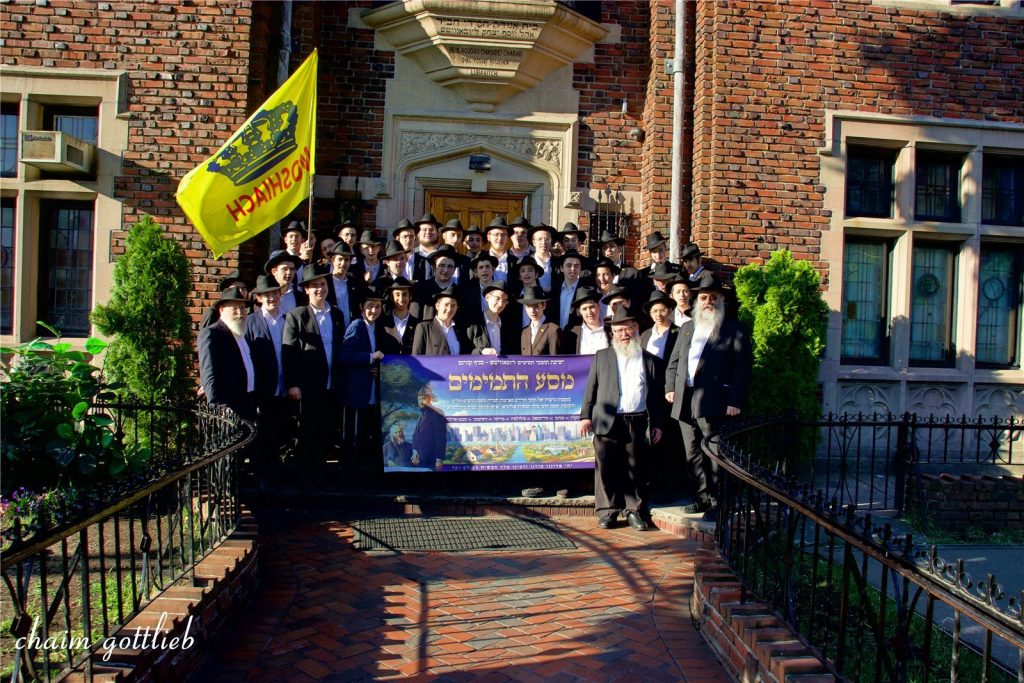
It all began a few months ago. The yeshivas Tomchei Tmimim of Queens announced a “Mivtza Torah” to learn meseches Bava Basra. To encourage the bachurim to join the mivtza, R’ Hendel announced a special trip for the participants, one which would follow in the footsteps of the Rebbe Rayatz and the Rebbe MH’M, to some places they visited on the East Coast of the US: New York, New Jersey, Pennsylvania, Maryland, and Washington DC.
“We are mechanech the talmidim in the spirit of the famous saying of the Rebbe Rayatz, ‘America is no different,’ and that the world is ready for the Geula. In essence, the spiritual transformation wrought by the Rebbe Rayatz passed through all these places. The central place was obviously 770 Eastern Parkway, but there were other places that the Rebbeim visited and they are also part of the transformation of the ‘lower hemisphere.’ A trip like this combines gashmiyus and ruchniyus.
“Boruch Hashem, the talmidim enthusiastically joined the mivtza and out of seventy talmidim, forty-two bachurim joined the trip.”
First Stop: 184 Brooklyn Avenue
Tuesday, 26 Sivan. It was a clear July morning when the bachurim excitedly gathered outside 770.
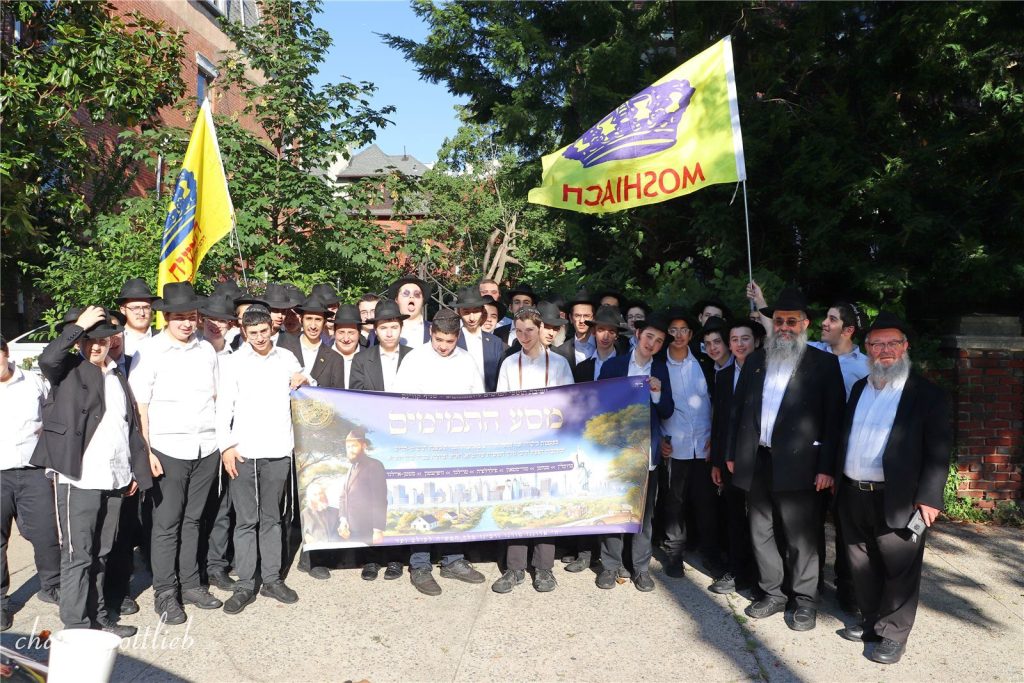
“Dear talmidim,” said R’ Hendel, “our trip includes, in part, the Rebbe Rayatz’s first visit to America in 5690 (1930), but in the end, the Rebbe Rayatz established residence here, at 770 Eastern Parkway, and this is an excellent place to start our trip.”
The talmidim looked through the booklet they were given with an excellent overview edited by tamim, Menachem Mendel Adler. The booklet begins with “general background” about the Rebbe Rayatz’s famous trip to the US in 5690.
“In order to understand how significant this trip was, remember that it took nearly a year, in the course of which the Rebbe passed through all centers of Jewish life in this vast country.”
The first stop the talmidim made was not far from 770, at 184 Brooklyn Avenue, near the Brooklyn Museum, where the Rebbe Rayatz lived during the visit. The Rebbe spent long periods of time here in the course of which he received people for yechidus and even said sichos and maamarim.
After reading the HaYom Yom for that day, brief divrei hisorerus, and a lively Chassidic dance, they boarded the bus for the next stop.
Second Stop: the Hotel on Broadway
The bus crossed the bridge and headed into Manhattan. It’s hard to imagine but when the Rebbe came here, America was a spiritual wasteland. Today, there’s a Chabad house, mikva and yeshiva wherever you turn.
They stopped near an impressive building on the corner of Broadway where the Greystone Hotel was located. This is where the Rebbe Rayatz stayed when he came to America to live. He lived at the Greystone Hotel from his arrival on 9 Adar 5700 until he moved to 770 in Elul.
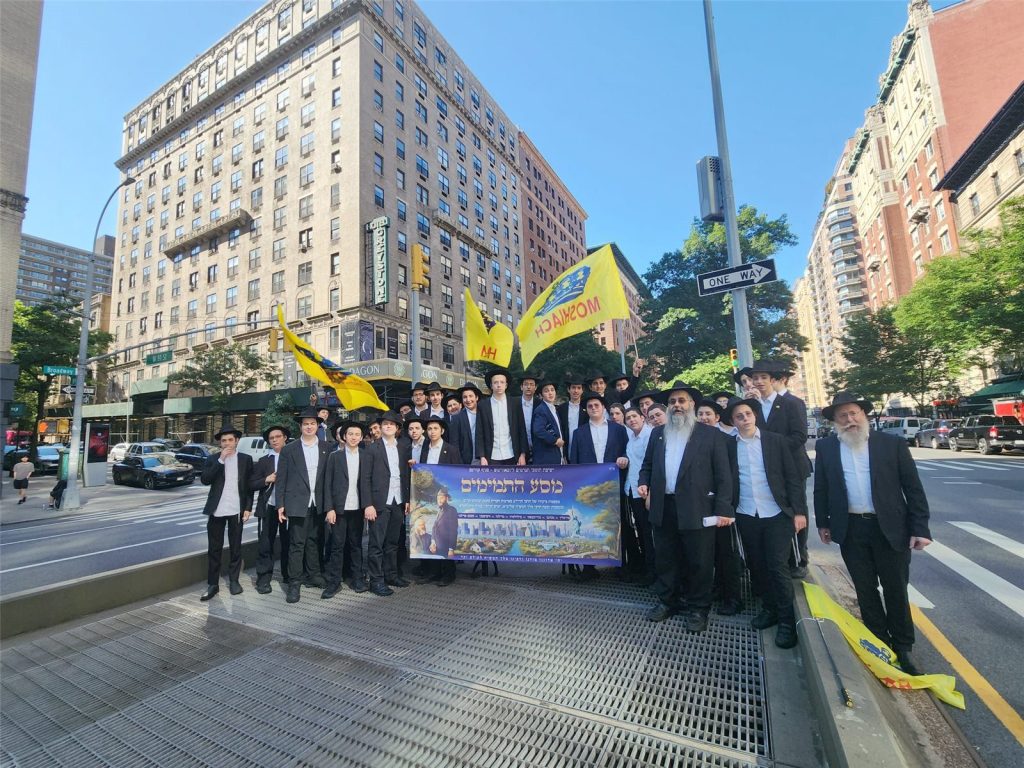
Today, the building is in residential use and the bachurim entered the lobby. The gentile security guard was most surprised to hear the historical significance of the building and was very impressed by the talmidim’s excitement.
From there, the talmidim continued on foot and singing, to the Newton Hotel, where the Rebbe stayed during his first visit. Today, the building is a homeless shelter and it is illegal to enter. The bachurim stood outside and helped Jews put on tefillin.
In the booklet, the bachurim read that the Rebbe stayed at this hotel several times. One of the times was on Shabbos, parshas Bo, Yud Shevat 5690. That day, was his grandmother, Rebbetzin Rivka’s yartzeit, and after Mincha the Rebbe said a maamar, “Maayan Ganim” for 300 people in the hotel’s big hall. The Rebbe returned to this hotel during the last weeks of his stay and celebrated his fiftieth birthday there and said the maamar, “Kol Ha’shoneh Halachos.”
Third Stop: Health Spa in Morristown
From Manhattan, they traveled to the park near the town of Morristown where they davened Shacharis after learning the maamar, “Maayan Ganim.” After davening, they went to the health spa building where they met David as we described at the beginning of this article.
In the booklet, the bachurim read that one of the doctors who treated the Rebbe Rayatz in Austria, Dr. Benjamin Scherman, had emigrated to the US and ran a health resort called the Aurora Health Farm. In the summer of 1941, the Rebbe Rayatz spent several weeks there. Before he went, the Rebbe MH’M went to arrange things.
During those weeks, the Rebbe MH”M went at least once every two days and spent hours with his father-in-law. The Rebbe later said on Shabbos Bereishis 5717 that the siddur Torah Ohr was published at that time and during his visits to the Rebbe Rayatz he clarified many minhagim with him. Some of the minhagim were written down on the hotel’s stationery.
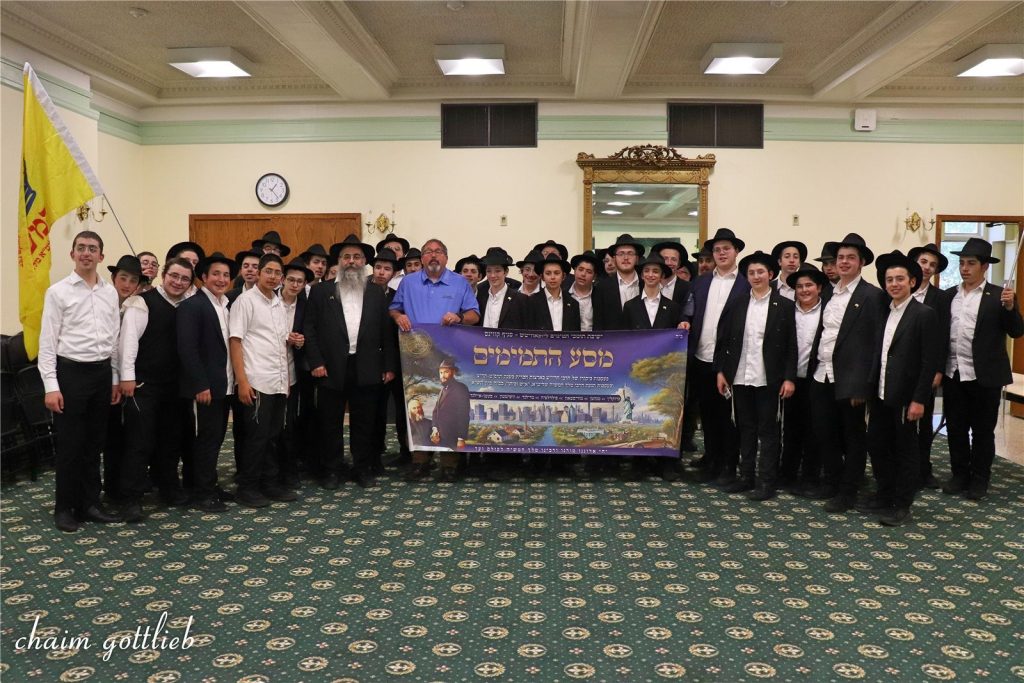
The Rebbe Rayatz went there in the summer of 5702 and 5704 too. Regarding the trip in 5704, it is told that the trip took place in a car with an open roof so as to enable the Rebbe Rayatz to easily enter the vehicle from the wheelchair that he used. A rare picture from that trip that was publicized in recent years, was included in the booklet.
Rabbi Yisroel Noach Vogel, who joined the staff of the yeshiva’s mashpiim for the coming year, praised the booklet that included pictures of the Rebbe Rayatz from that time and those places, which helped everyone picture the Rebbe’s visits. During the trip, R’ Vogel got the bachurim into the special atmosphere as he told interesting stories in his special way.
Fourth Stop: Liberty Bell
The bus headed for Philadelphia, following in the footsteps of the Rebbe Rayatz on 13 Kislev 5690. The long trip was used to finish learning the maamar, “Maayan Ganim” with Rabbi Dovid Kahanov, mashpia and mashgiach in the yeshiva for the upcoming year.
When they arrived at the central train station in Philadelphia, R’ Hendel stopped the group.
“Picture this station ninety-four years ago. Thousands of people filled the area, all waiting to see the Rebbe. The atmosphere was electric.” The bachurim noticed that the place hadn’t changed since then which added an authentic feel to their visit.
Just as the Rebbe Rayatz left the train station for Independence Hall, the bachurim did the same thing. Independence Hall is the building where both the Declaration of Independence and the Constitution of the United States were debated and adopted by the Founding Fathers of the United States. Independence Hall is featured on the back of $100 bills.
Upon arriving at Independence Hall, R’ Hendel told them that the Rebbe was given the rare honor to sit on George Washington’s chair. R’ Vogel added that the Rebbe Rashab sat on the chair of the German kaiser and wrote a maamar Chassidus, saying as he left, “a kluge shtul” (a clever chair).
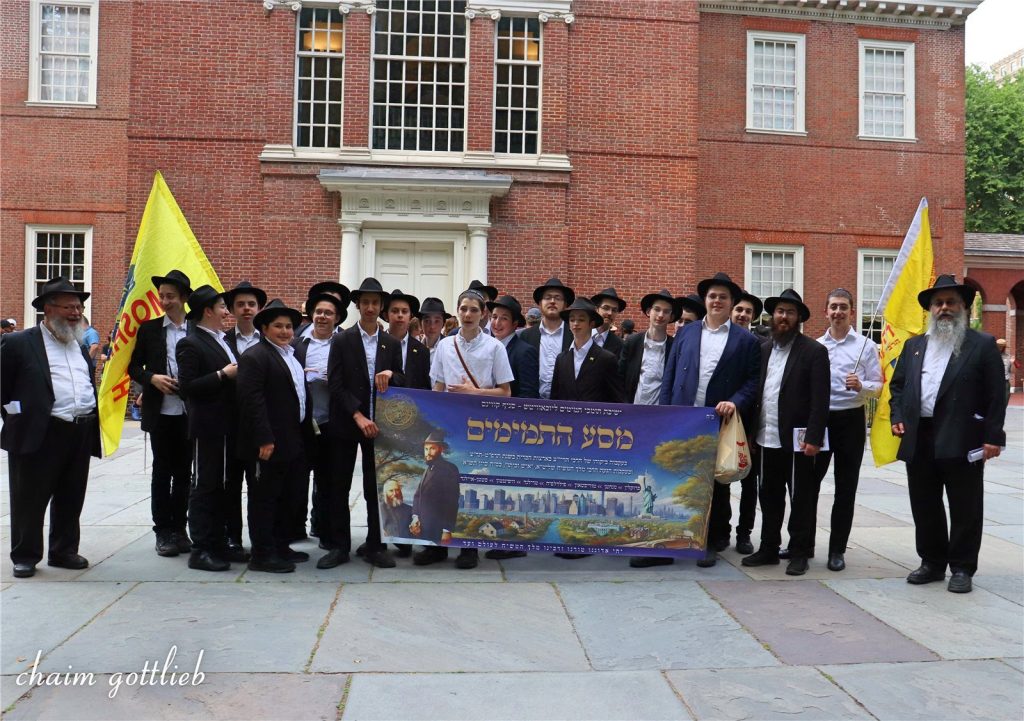
They next went to the Liberty Bell which is nearby. Here, the Rebbe was honored by being able to place a wreath near the bell and he said, “Liberty based on faith is the most proper and the strongest.”
Each of the tmimim took a flower and placed it near the bell while repeating the Rebbe’s words about true liberty. The bachurim then danced, “Yechi Adoneinu” which expressed the feeling that real freedom in the world will take place only with the hisgalus of the Rebbe in the complete Geula.
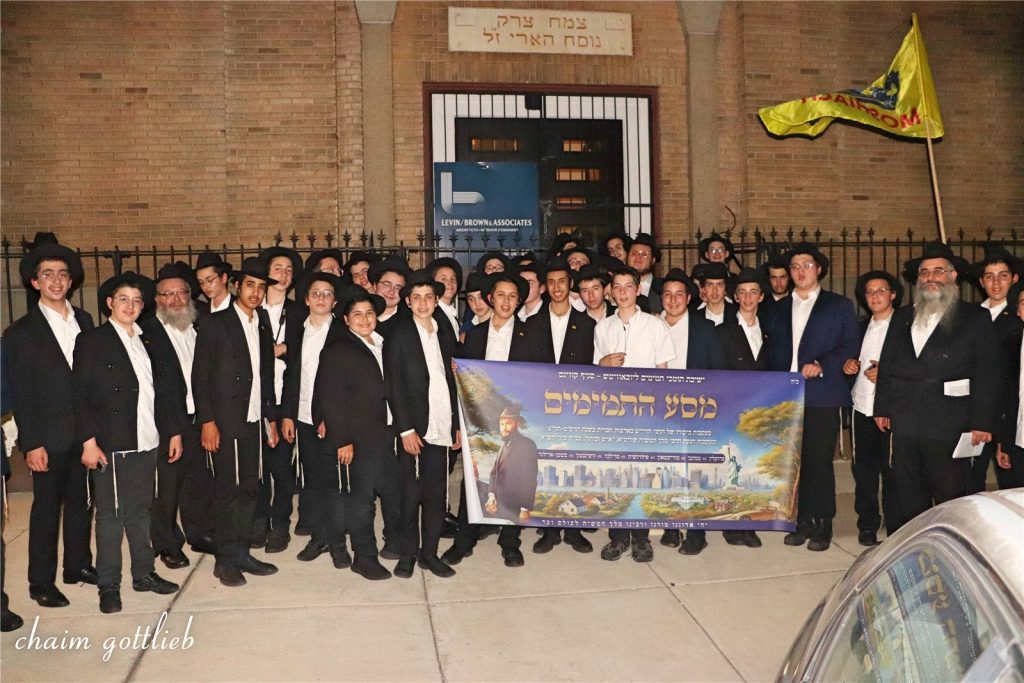
The bachurim continued to the house where the Rebbe stayed while in Philadelphia. Previously, the place was a yeshiva but over the years, Jews left the area and today it’s a residential building for non-Jews. Till today, there is Hebrew writing on the building.
The bachurim davened Mincha there and danced again. After the davening, an older woman came out who said she is the only Jew in the area and she lights Shabbos candles. When she heard the history of the building, she was very excited to hear that the Rebbe Rayatz visited the area where she lives.
Fifth Stop: the Tzemach Tzedek Shul in Baltimore
Toward evening, the group traveled to Baltimore and arrived at the Tzemach Tzedek shul.
“On 24 Teves,” said R’ Hendel, “the Rebbe delivered a maamar Chassidus here to a huge crowd. Picture it, 800 men and 400 women, stood here, listening in silence.”
R’ Kahanov learned part of the maamar, “Yehi Hashem Elokeinu Imanu” with them, which the Rebbe Rayatz said in Baltimore. After Maariv there, the bachurim went to the Chabad yeshiva in Baltimore which graciously hosted the group for the night. Before going to sleep, they went to the Chabad house where a special farbrengen took place with a notable guest, Rabbi Binyamin Rothstein, a Lubavitcher Chassid.
Rabbi Rothstein, a doctor, told the talmidim about something that happened in 770 on erev Yom Kippur 5745. R’ Shmerel Gurary lost consciousness before the recital of Kol Nidrei and Dr. Rothstein was called upon to resuscitate him. He said that that the Rebbe watched him the entire time until R’ Gurary was taken out of 770 and brought to the kollel building where he was declared deceased, so kohanim would not have to leave 770 on Yom Kippur.
Sixth Stop: the White House
Although the farbrengen the night before ended at two in the morning, the bachurim were up at six to continue the trip. After a brief stop at a park where they davened Shacharis and ate breakfast, they arrived in Washington DC.
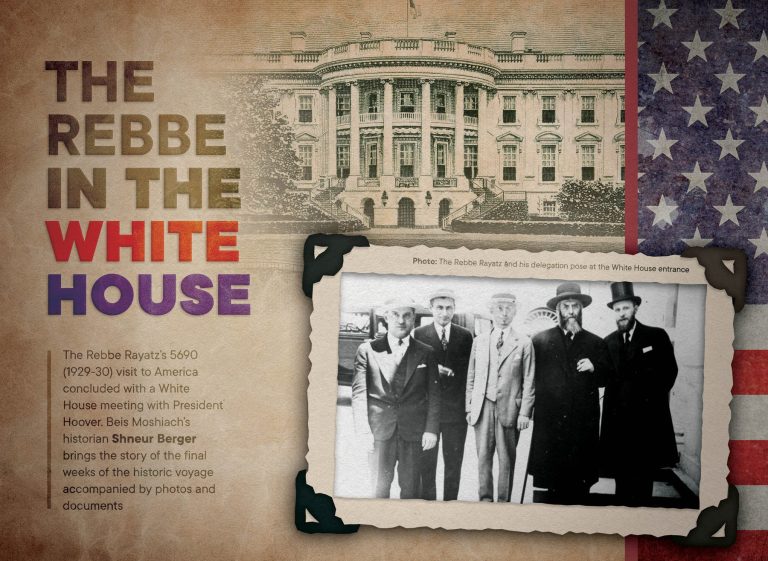
In the booklet, the bachurim read that the Rebbe Rayatz visited Washington two times, the first time on 27 Teves 5690, when he met with Judge Louis Brandeis, to ask him lead the work in saving Jews in Russia. The second time was on 13 Tammuz, when he met with President Herbert Hoover. The visit was to thank the president for the freedom that the United States gives Jews, and for the interest that the government takes in Jews overseas.
The tmimim first visited Capitol Hill, the seat of the U.S. Government. The tour guide welcomed the “Chabad group” and explained to them how the history of the United States is based on the foundation of democracy. The mashpiim with the group quoted from the Rebbe’s sichos in praise of democracy, and learned the lesson about the power of an individual to affect his surroundings. They also spoke about the power of the people, which is why it is important for the nation to the accept the Rebbe’s malchus.
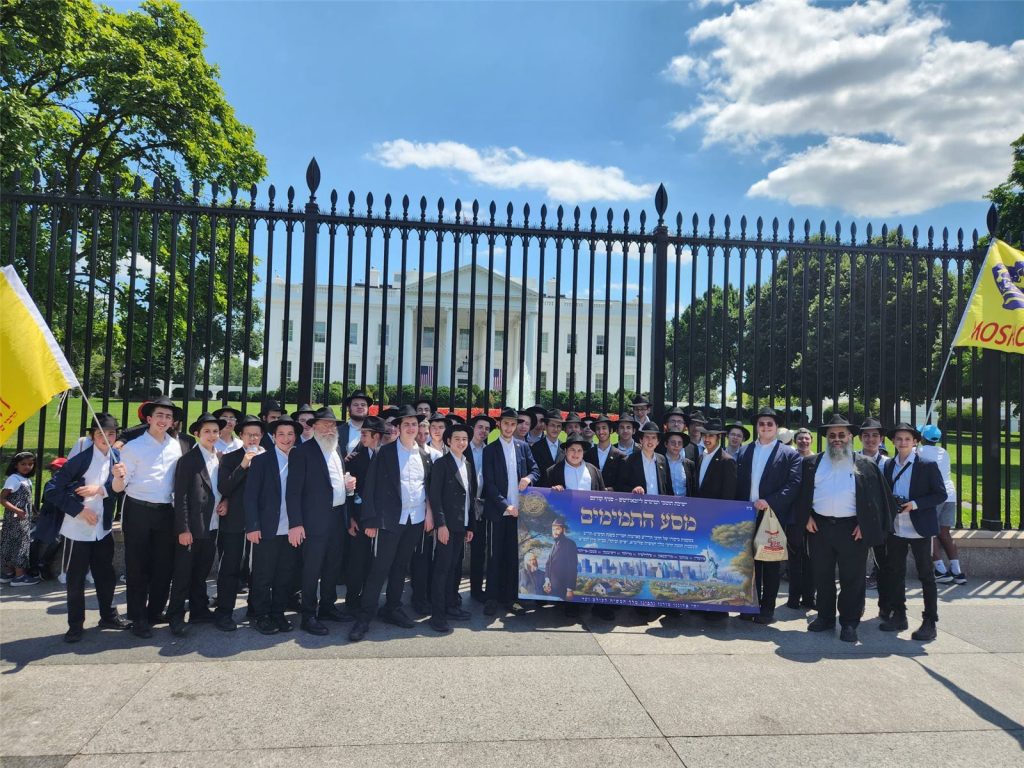
From Capitol Hill they went to the White House where they saw in the booklet a picture of the Rebbe Rayatz standing with his son-in-law, Rashag, on the steps of the White House. The bachurim posed for a group photo in front of the White House.
Seventh Stop: the Harbor in Staten Island
The next stop was the Staten Island Ferry where the Rebbe MH”M and Rebbetzin’s ship anchored when it arrived in the US on 28 Sivan 5701. It was most symbolic that the bachurim arrived there the night of 28 Sivan.
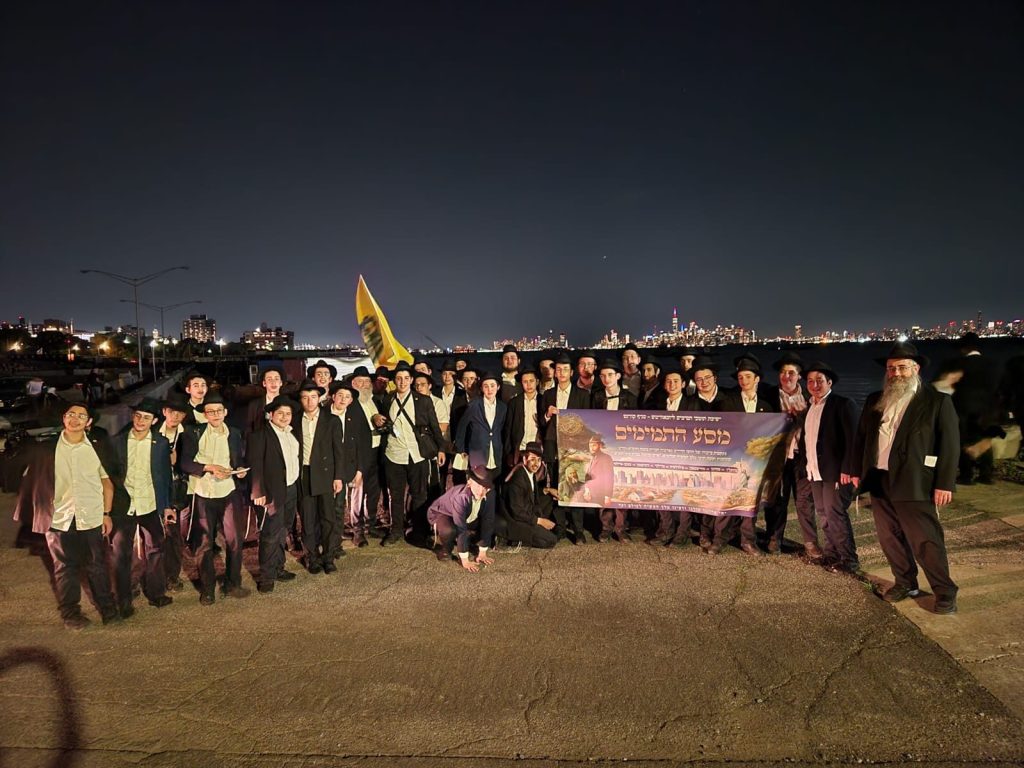
Upon arriving, they were surprised to see Rabbi Reuven Matusof of France who came to farbreng with them. After a brief farbrengen at the harbor, where the tmimim sang the niggunim of the Rebbeim, they took the ferry to Brooklyn. In Brooklyn, they took the subway to 770 and after Maariv in 770 they continued on to a Chassidishe farbrengen in the yeshiva’s hall. Although the farbrengen ended late at night, nearly all the bachurim were up for the morning Chassidus seder.
* * *
As the bus made its way back from Washington to New York, the atmosphere was laden with inspiration and R’ Kahanov and R’ Vogel related fascinating Chassidishe stories with messages of yiras shamayim.
R’ Hendel summed it up. “The Rebbe Rayatz didn’t only visit the places we went to. With his emuna he changed them, transforming the entire United States into a flourishing center of Yiddishkeit. We also have a role, to prepare the entire world to welcome Moshiach. Wherever we go, we need to not just visit a place but affect those who live there in a pnimiyusdike way, learning with them inyanei Moshiach and Geula and telling them the Besuras HaGeula until they are ready to welcome the Rebbe MH”M shlita.”
Beis Moshiach #1419 • pp. 20-29
© 2026 Beis Moshiach Magazine. All rights reserved.
This article originally appeared in Beis Moshiach #1419. You are welcome to share it with friends and family by email or in print, provided that you do not change, add to or omit any part of it, you credit the author and Beis Moshiach, and you include a link to archive.bmoshiach.org (written out in full in printed copies).
To republish this article in a newspaper, magazine, book or website, please request permission in advance at [email protected].