Chazzan On The Rebbe’s Demand
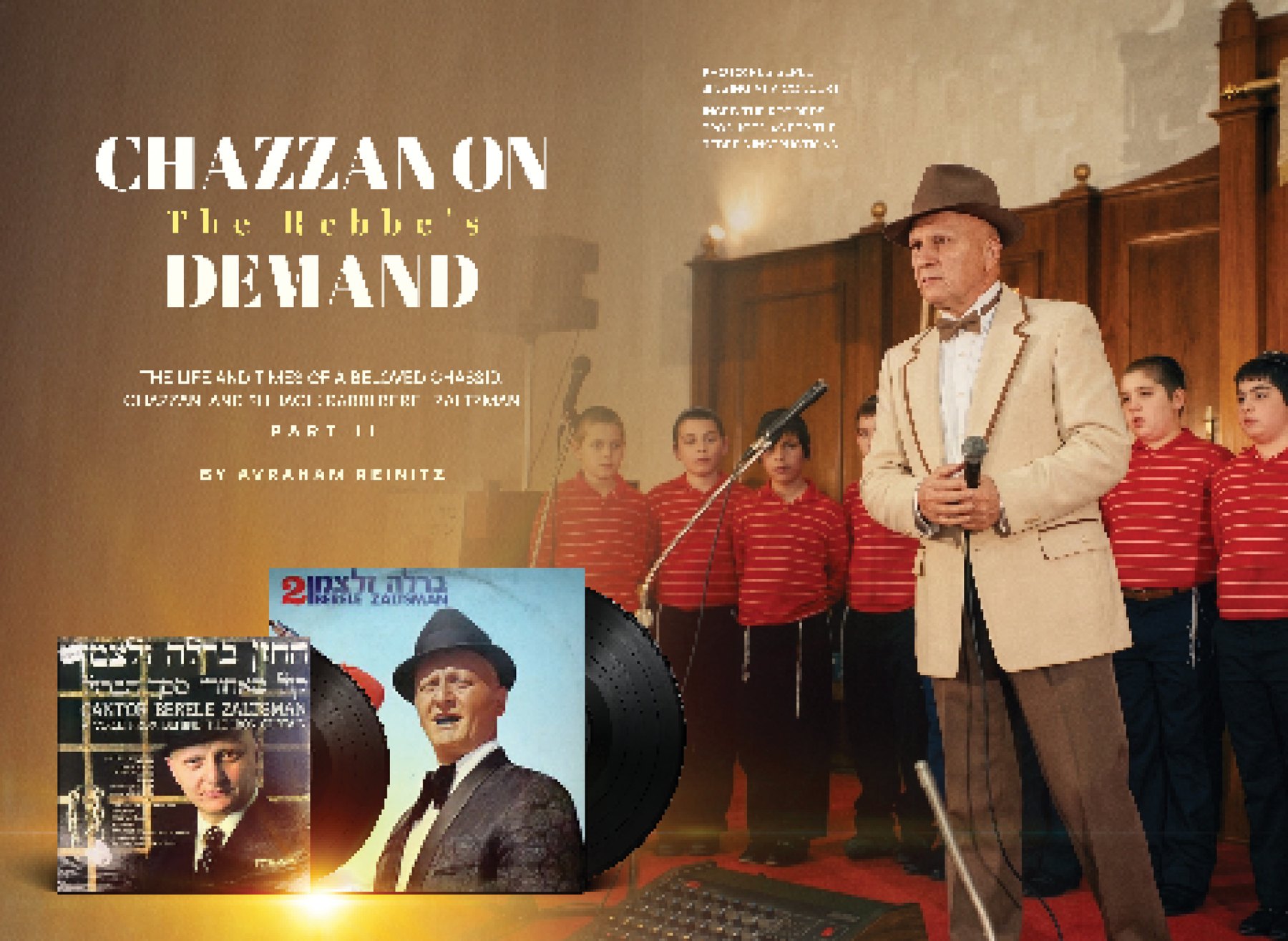
The life and times of a beloved Chassid, Chazzan and Shliach, Rabbi Berel Zaltzman – Part II.
Motzoei Rosh Hashana, during the distribution of “kos shel brocha,” Reb Berel stood in the center, opposite the Rebbe’s place. On the sides stood bachurim and young married men on the “pyramids,” singing. Suddenly they told him: the Rebbe is looking for you. He looked toward the Rebbe, and saw him motioning for him to climb onto the pyramids. When he climbed up, everyone fell silent, and he too was silent. The Rebbe looked at him and said, “Nu.” R’ Berel understood the Rebbe wanted him to sing, and began a niggun.
After he finished the first niggun, the Rebbe motioned for him to continue. And so it went, after every song. He sang Lubavitcher niggunim he remembered, and after them songs in Yiddish, in Hebrew, in Russian, and in Ukrainian, and pieces of chazzanus. The crowd recognized some of the songs and sang along; the rest he sang alone. And the Rebbe never left him for a moment. As soon as he finished one song, he encouraged him to sing another, as if wanting to hear everything he knew. R’ Berel later related that it was perhaps 29 or 30 songs until he said he didn’t know what else to sing, and the Rebbe smiled and waved his holy hand in a gesture of dismissal, as if to say, “Is that all?”
Only later, when the Rebbe instructed him to hold concerts, did R’ Berel understand what the purpose of that long singing may have been: the Rebbe was checking what he could sing. “You can’t get up on stage and sing ‘Hineni He’ani Mimaas,’” he explained; a chazzan needs a repertoire too.
Among other things, he sang the Chassidic niggun “Tchumatshok,” and the Rebbe said he should teach the crowd this niggun, so that at the next farbrengen everyone could sing it together. On Friday night of Shabbos Shuva, after Kabbolas Shabbos, it was announced at 770 that anyone who wanted to learn the song should stay after davening, and R’ Berel would teach it. He stood surrounded by bachurim and young married men, singing it over and over until he became hoarse, but he kept going. One of the bachurim was impressed and told his friend: he’s more of a Chassid than a chazzan. The next day, at the farbrengen, the Rebbe asked him: Nu, does the crowd know the niggun already? And motioned for him to begin. Some of the young men, who had a sheet with the words, joined in. The niggun was very heartfelt, and when he finished, the Rebbe remarked that it would be good to add joyful gestures at the end (which today everyone recognizes when this niggun is sung).
According to the plan, R’ Berel was supposed to return to Eretz Yisrael right after Sukkos. Before his trip, he went in for a yechidus like everyone else and there the Rebbe changed all his plans, saying: you need to stay here and hold concerts. You need to tell American Jewry how you managed to remain shomrei Torah and mitzvos in the Soviet Union, and you’ll do this through songs and stories.
In accordance with this instruction, R’ Berel stayed another three months for a series of concerts. Rabbi Yaakov Yehuda Hecht received instructions from the Rebbe to help him organize the concerts. R’ Berel would later speak of him with great affection, as a close friend. The first concert was in Rabbi Hecht’s shul. The hall was packed; although it had about nine hundred seats, about twelve hundred people actually attended, including famous chazzanim such as Moshe Stern and others. Rabbi Hecht told him that usually the great chazzanim attend chazzanus concerts for free, whereas here they asked to pay like everyone else. R’ Berel guessed this was the Rebbe’s doing, that besides spreading Yiddishkeit through the songs, the Rebbe also wanted to help him earn a living, so he’d have the means to get established in Eretz Yisrael.
Afterward he held a concert in Worcester, and then at the Ford Auditorium in Detroit, attended by about two thousand people; R’ Eli Lipsker was there too, with his children’s choir. From there he went on to performances in Montreal and Toronto. All the chazzanim of Montreal came to the concert. Two of them, younger than him, went up on stage and also sang, to make it easier for him so he wouldn’t have to sing the whole evening. In truth, R’ Berel had a cold and was coughing and before the concert the chazzanim worried he wouldn’t be able to sing well, but the Rebbe’s bracha stood by him and the concert was a great success.
The voice that had been silenced in Russia was not lost; it had only been biding its time and for the Rebbe to direct it.
The Gateway Called “Record”
When R’ Berel returned to New York after all the concerts, the secretariat told him he could go in for yechidus again. He understood the offer did not come from the secretariat, but was an instruction from the Rebbe. When he went in, the Rebbe told him: I heard everything went very successfully. Now, since you’ve become famous, you need to produce a record.
R’ Berel told the Rebbe that he had already been offered a deal to produce a record. The Rebbe said to him: we will give you the money. R’ Berel thought to himself, how could I dare take money from the Rebbe, and said there was someone willing to invest. The Rebbe cut him off and said: but I say that I will give you the money. Do you want to receive it here in dollars or in Eretz Yisrael in liras, through Rabbi Wolf? Tell them here at the office and they’ll give it to you as you wish. In the end, the Rebbe gave him several thousand dollars as a loan.
R’ Berel had been a businessman all his life, even back in Russia (where he managed a factory that employed dozens of Jews and enabled them not to have to work on Shabbos there, but that’s another long story), and now he needed to find parnassa in Eretz Yisrael. While still in New York, R’ Berel noticed that there were many “dry cleaning” businesses—a type of business he had never seen the likes of in Russia or in Kiryat Malachi. The idea occurred to him to open such a business in Kiryat Malachi, employ workers there, and thus be free to engage in mivtzaim.
When he raised the idea before the Rebbe, the Rebbe said: it’s worth looking into, and if necessary I will give you money for the business. Afterward he said: I will be a partner with you in the business. And he immediately clarified what he meant: “I don’t mean to be a partner in the parnassa because I have enough distractions over my head already (and as he said this, the Rebbe raised his hand above his head to illustrate this), but a partner in the mitzva.”
R’ Berel left New York around Chanuka, about two months after the other guests had left. When he arrived in Eretz Yisrael, he immediately began working on producing the record. He found a production company in Jaffa, signed with them, and released a high-quality record. At the same time, he began setting up the dry-cleaning business. He found a location in an industrial area, opened a small plant and began working. He worked long hours, but the business did not succeed. He worked hard all day, and in the end earned nothing and had no livelihood from it.
For Tishrei he traveled again to the Rebbe, bringing the records with him to sell. With Hashem’s help, he managed to sell almost all the records, and thus was able to repay the secretariat the money he had received from the Rebbe for the production.
When he went in for yechidus before returning home, he told the Rebbe he had serious problems with the business. The Rebbe did not respond to what he said about the dry cleaners, and began talking about the need to produce another record. He said: Now, having released a record, you’ve become even more famous, and it’s worth capitalizing on the fame and releasing another record. R’ Berel said: I’m so tangled up with the business that I don’t have a penny in my pocket, and I have no money to produce another record. The Rebbe responded sharply: With Stalin you managed and with a few thousand dollars you can’t?
A year later he came again, and in yechidus complained about his financial hardships, that he could not support himself. He told the Rebbe that he was being offered a chazzan’s position in America, and asked: Maybe it’s worth selling the business? And again, as the year before, the Rebbe ignored what he said about the livelihood, and asked: and what about the record? R’ Berel was silent. What could he say? The Rebbe asked him: “Even without a reason?”
He returned home broken, without money and without hope. He told his wife about the Rebbe’s words. It was she who grasped what the Rebbe wanted from them. You see, she said, that every time you ask the Rebbe about the business, the Rebbe asks you what’s happening with the record and this repeats itself year after year. He told her: I don’t understand what you’re getting at. What’s the connection between the business and the record? She said: I don’t understand either, but you can see it keeps repeating. Apparently this is our gateway to parnassa. And he stuck to his: but I have no money to live on, how can I produce a record?
He had a large family, and the situation was such that he could only afford to buy one chicken for Shabbos; on weekdays there was nothing to speak of. From time to time his father would visit, open the refrigerator, and when he saw it was empty he would go to the store, buy a chicken with his own money, put it in the refrigerator, and leave. But his wife insisted: “We need to take out a loan, we have to do something. I believe the only reason the business isn’t progressing is because you’re not producing another record, as the Rebbe asked.”
A short while later, R’ Berel came home on a Friday evening from work, tired and worried. Despite the late hour before candle-lighting, he stayed in the car, troubled thoughts filling his head. Another week had passed and nothing had progressed. He felt a lump in his throat and held back from crying.
Out of the corner of his eye he saw R’ Pesachya Lipsker leaving his house to take out the garbage. When he came back and saw R’ Berel still in the car, he approached and asked: Berel, why are you sitting in the car at this hour, it’s almost candle-lighting time?
What could he say to him? He decided to pour out his heart. He said: Pesachya, come into the car for a minute. He got in, and R’ Berel opened up heart to him—that he had no parnassa, no work, and was in trouble with no solution in sight. R’ Pinchas asked: Did you write to the Rebbe? He answered yes, but the Rebbe hadn’t answered, and only insisted that he produce a record, and that his wife claimed all this was happening because he wasn’t listening to the Rebbe, but he didn’t have a penny in his pocket and didn’t know what to do.
R’ Pesachya told him: Berele, listen to me—tomorrow, motzoei Shabbos, call the studio where you produced the first record, and set up a meeting for Sunday. On Sunday I’ll go with you and pay the entire cost of the production. And after you sell it, we’ll see. R’ Berel was moved by the offer, and said immediately: I’m willing to split the profits with you fifty-fifty. R’ Pesachya told him: Nu, fine. The main thing is that you have a restful Shabbos, a joyous Shabbos (it should be noted that it was later revealed that R’ Pesachya himself had taken out a loan in order to help R’ Berel. The ahavas Yisrael of Chassidim!).
It wasn’t long before he saw firsthand just how right his wife had been, that the record was the “gateway” to parnassa. On motzoei Shabbos, he called the studio and set up a meeting, and already the next day, Sunday, people came to him from the slaughterhouse near Kiryat Malachi, “Hod-Avaz,” and asked if he could launder the smocks the shochtim wore for work, which got soiled with blood, every day. It involved a substantial quantity—a hundred and fifty smocks—and they promised to pay on time, provided the work was good. He signed a permanent deal with them immediately, and saw in this an open miracle from the Rebbe: the moment he began working on producing the record, the big deal arrived and pulled the business out of crisis. Within a short time he was debt-free, and had a good livelihood.
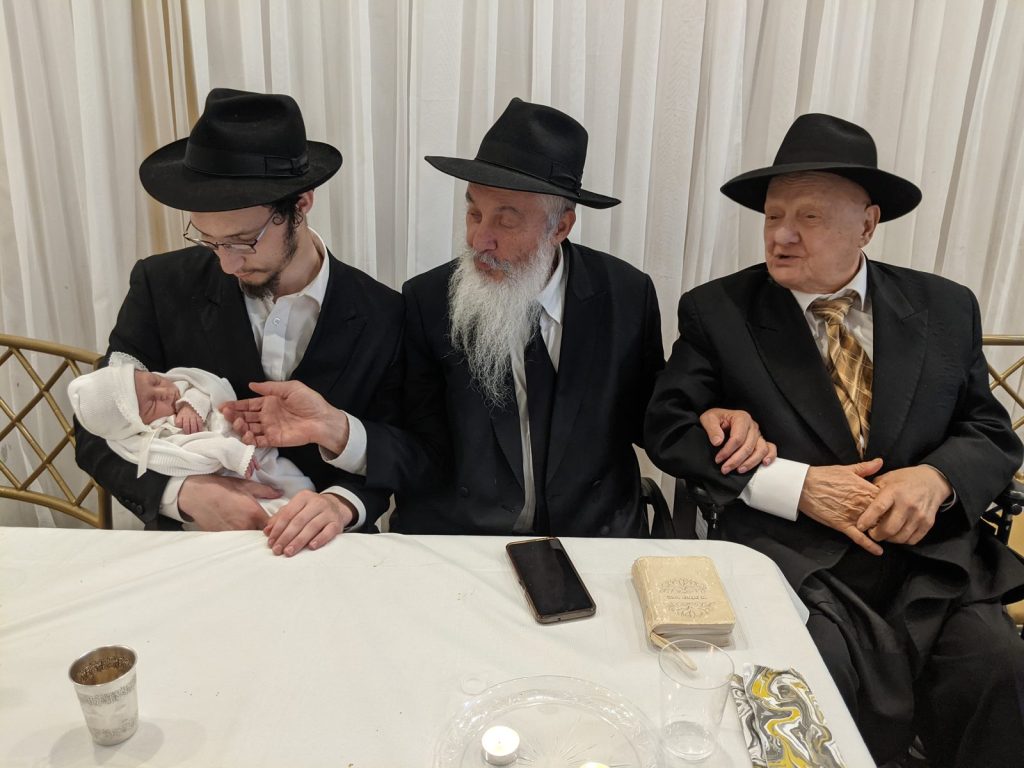
R’ Berel would go on to carry this voice and this emuna, far away—to a shlichus overseas in Los Angeles and afterward in Fair Lawn, New Jersey, where he continued to draw Russian Jews closer. But that we will tell, G-d willing, in the next article.
Pure Emuna in the Rebbe, Melech Ha’Moshiach

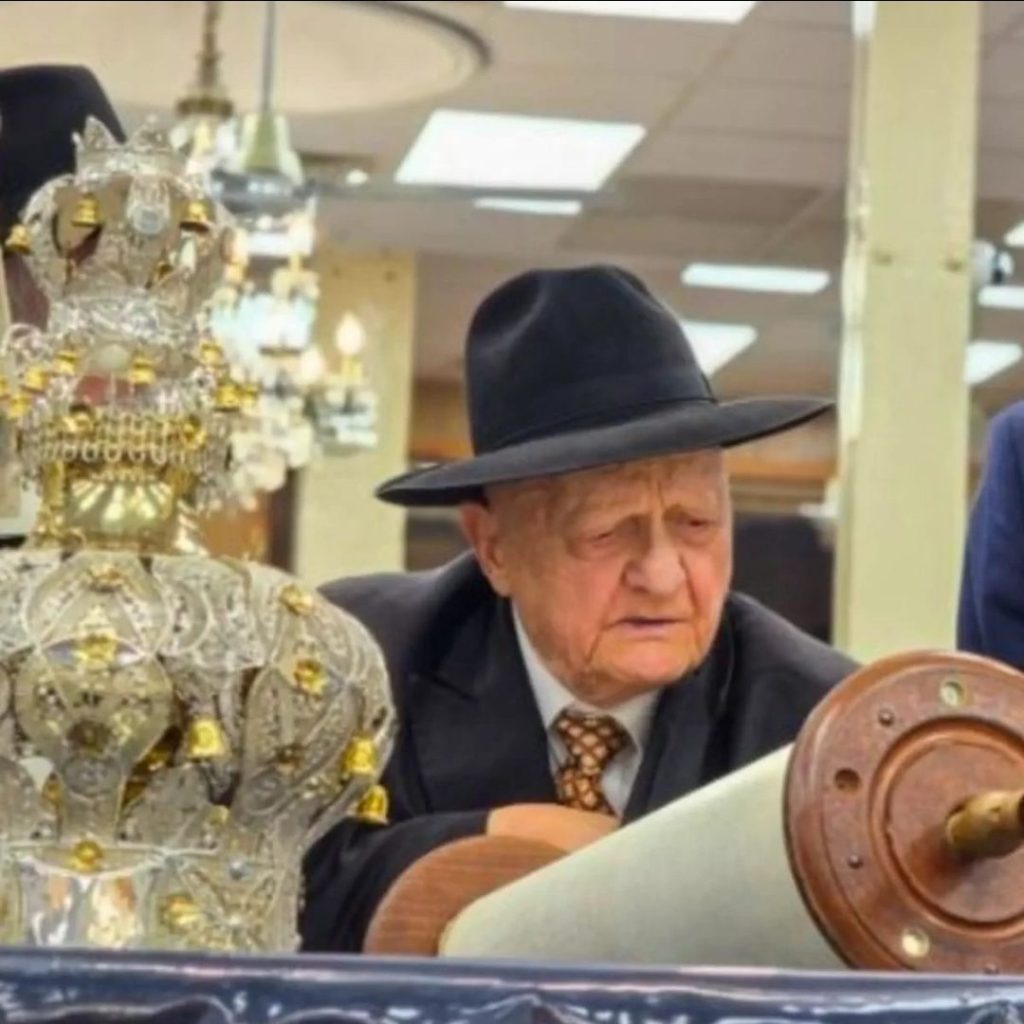
With all these stories one figure emerges, and one point recurs in all of them: the emuna peshuta in the Rebbe’s words. The essence of R’ Berel’s life was: great love and uncompromising, fearless devotion to the Rebbe. Neither intellectualism nor calculations stood at the center, but simple, straightforward devotion. He absorbed this faith at home from his father, Reb Avrohom, who devoted his life to the chinuch of his children, and from Reb Mendel Futerfas, who shaped his Chassidic world.
Reb Mendel once told his brother in Samarkand to consult with his father, Reb Avrohom, about something, saying, “Dayn tatte iz nisht a farshimelter Chassid” (“Your father is not a ‘moldy’/stale Chassid”). He explained that he had seen his father practice a certain custom (possibly washing hands three times before eating bread), and when asked how he knew of it, he answered, “Yoske (Volovik a’h, who was a young bachur at the time) said he heard that this is the custom by the Rebbe.” Reb Avrohom was already 60 years old, and had studied in Lubavitch itself, but he was not “old and stale.” A young bachur tells him that’s the custom by the Rebbe and he begins to act accordingly!
R’ Berel was educated by his father. His wife, Chaya Esther told her grandchildren that after Gimmel Tammuz, she davened and wrote to the Rebbe, asking that her husband, R’ Berel, hold firmly to faith in the Rebbe’s words and in inyanei Moshiach.
His grandchildren heard from him several times how the older Chassidim in Russia had pressured him to send his son to the shkole, arguing: Why do you consider yourself more of a Chassid than those who do send their sons? It was they who, after Gimmel Tammuz, reinforced within him his firmness and faith. He said that “from R’ Mendel we heard many times, that with all due respect to the intellectualism and logic of the older Chassidim one must also listen to the simplicity of the youngsters.” And he would conclude by saying that since the youngsters have “Yechi” yarmulkes therefore he has one too.
R’ Berel held onto his faith in the Geula with his whole heart, openly and with pride. “You are the soldiers of Beis Dovid,” he said at a farbrengen to the bachurim, “and Beis Dovid—that is the house of Moshiach, the house of the Rebbe.” When he said and sang “Yechi Adoneinu,” he did not see it as a figure of speech: “When we say and write on the yarmulke ‘Yechi Adoneinu Moreinu v’Rabbeinu Melech HaMoshiach l’Olam Va’ed’—this is literal: the Rebbe is chai v’kayam, the Rebbe is truly here, and that is why thousands of people continue to come here, to 770,” he said with Chassidic emotion at a farbrengen in 770.
He also allowed himself to rebuke those who saw this as a mere slogan: “You have a ‘Yechi’ yarmulke? Good. But where’s the tochen? That the Rebbe is alive, there’s no doubt about that. But what about us? Do we live the Rebbe? ‘Yechi Adoneinu’ means that the Rebbe will live within us, and we will live within the Rebbe,” he would say, noting how important it had been to the Rebbe to encourage the singing of ‘Yechi Adoneinu’ from the balcony, even when it took great effort on his part.
And anyone who knew him understood that this was no late-blooming chiddush. His faith in the Rebbe as Melech HaMoshiach was nothing but a direct continuation of that same “cheder,” of that same mesirus nefesh in Russia, of that same uncompromising devotion to truth that he absorbed from his father and from Reb Mendel.
When he would farbreng with young bachurim, he would rouse them, saying: “You are going to be the Rebbe’s shluchim, and you must focus on fulfilling the Rebbe’s demand: do everything within your power to bring about the hisgalus of Moshiach. Since we are still in galus, apparently we haven’t done enough yet. And since the Rebbe said ‘everything within your power,’ he surely sees in us more strength that we haven’t yet tapped…”
(In preparing this article, I was assisted by the memoirs of his brother, R’ Hillel in the book “Samarkand,” by testimonies from family members, and also by several recordings of R’ Berel’s Chassidic farbrengens. One of them I received from Yosef Ben-Melamed.)
Beis Moshiach #1517 • כ״ד מנחם אב תשפ״ו • pp. 22-29
© 2026 Beis Moshiach Magazine. All rights reserved.
This article originally appeared in Beis Moshiach #1517. You are welcome to share it with friends and family by email or in print, provided that you do not change, add to or omit any part of it, you credit the author and Beis Moshiach, and you include a link to archive.bmoshiach.org (written out in full in printed copies).
To republish this article in a newspaper, magazine, book or website, please request permission in advance at [email protected].