The Dust Beneath the Stars
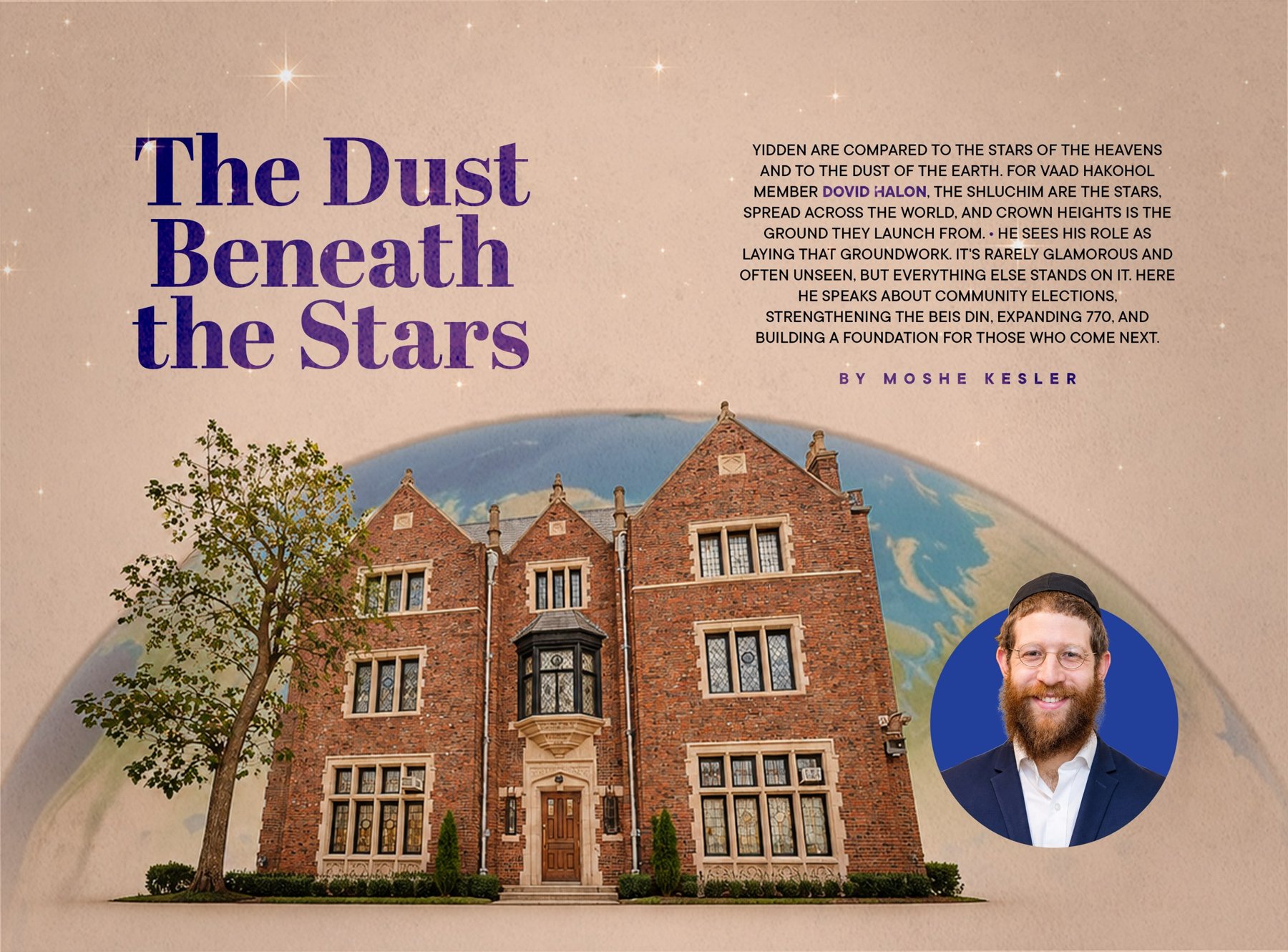
Yidden are compared to the stars of the heavens and to the dust of the earth. For Vaad HaKohol member Dovid Halon, the shluchim are the stars, spread across the world, and Crown Heights is the ground they launch from. He sees his role as laying that groundwork. It’s rarely glamorous and often unseen, but everything else stands on it. Here he speaks about community elections, strengthening the Beis Din, expanding 770, and building a foundation for those who come next.
Crown Heights has seen considerable changes in recent years. The community continues to grow, new shuls and mosdos are opening, and longstanding questions concerning the Rabbanim, communal leadership, and the future of 770 remain at the center of public discussion.
Among the organizations working to address these issues is the Vaad HaKohol, which has become increasingly active in communal affairs. From efforts to advance the expansion of 770 to discussions about elections, strengthening the Beis Din, and improving cooperation between different institutions, much of its work takes place behind the scenes.
To better understand these developments, Beis Moshiach sat down with Vaad HaKohol member Dovid Halon, 35, for an extensive conversation about the challenges facing the Rebbe’s shechuna and his hopes for its future.
Halon, one of the younger members of the Vaad, is refreshingly candid. He speaks openly about his own struggles with shlichus, chinuch, and parnassa, and is no less outspoken when discussing communal politics, the need for elections, and those who seek positions of power.
Throughout the conversation, he returns to a question that has occupied him since his years as a young bachur: How do we translate our sincere desire to accomplish something for the Rebbe into practical results?
Wanting vs. Doing
MK: You grew up in Crown Heights. What led you to become involved in communal affairs?
DH: Yes, as you noted, I was born and raised here, and the question of how to make our community better is something that’s always been on my mind.
Now, when you’re young, your capacity is smaller, but as you grow older, your understanding grows with you. It’s like planting a tree: an idea you keep working on grows into a broader vision.
For me, one of those ideas, something I’ve been thinking about since I was a young bachur, is how a person can actually be effective. I’ll give you an example. Imagine a fourteen-year-old bochur going on Mivtza Tefillin. He approaches a Yid and asks him to put on tefillin, and the person says no.
Now, this bachur really, really wants him to put on tefillin. He wants it with his whole heart, with his neshama. He’s not sitting in a pizza shop. He’s out there doing the right thing, trying to help another Yid.

And the guy says no!
So what does that mean? Is he doing something wrong? Does he not really mean it? Does he have to dig deeper within himself?
You can genuinely want to accomplish something good, with your whole heart, and still not get the results you were hoping for.
The Rebbe has a mission of changing the world, and obviously every Lubavitcher has that switch turned on. We all want to do good. But wanting to do good and actually being effective aren’t necessarily the same thing.
When something doesn’t work, how do you know whether you need to try harder or try something different? At what point do you recognize that this particular area isn’t where you can accomplish the most?
I’ve had to confront these questions myself. I went out on shlichus for a trial period, but that didn’t continue. Later, I worked in chinuch for several years, and eventually I came to the conclusion that I wasn’t particularly good at it. And believe me, I tried. There were days when school finished at four o’clock, and I would still be there until six or eight, doing paperwork, preparing, trying to figure out how to give the children the right balance of care and firmness.
But ultimately, I felt that I wasn’t cut out for it.
And that brings us back to the fourteen-year-old bachur. Should he keep pushing, or can he contribute more somewhere else? Sometimes, a person has to recognize his limitations and concentrate on where he can actually make a difference.
In my case, that meant focusing on parnassa and supporting my family. If chinuch or shlichus wasn’t where I could be most effective at that point, then at least I could concentrate on doing a good job providing for my family. And if another opportunity came along where I could contribute, I would pursue that too. Today, I work in special education and social work. But even parnassa wasn’t simple. There are times when a person is trying to do the most basic thing, to support his family properly, and he simply doesn’t have the clarity of how to accomplish it.
I remember reaching a moment of total bittul. I realized that I didn’t know what I was doing, and I turned to the Rebbe and said, essentially, “Rebbe, I have no clarity. I don’t know what I’m doing. You’re the one who’s going to have to raise me up.”
And I cried.
It wasn’t some wonderful therapeutic experience. It was humbling, even shameful. A person asks himself, why can’t I provide for my family? Why can’t I be competent?
But I think it’s important to talk about these things, because there are many people going through similar challenges, and they should know they’re not alone.
Nobody becomes competent without going through difficulties. You’re going to fall down, and you’re going to have to get up again. The question is what you do after something doesn’t work out.
I once heard a story about two Chassidim who were fundraising. They entered someone’s office, and the fellow practically threw them out. He screamed at them, made fun of them, the whole business.
One of the Chassidim was completely discouraged. But the other one told him, “What are you talking about? The next guy doesn’t know what happened to us!”
You went to a job interview and were rejected. But the next person interviewing you doesn’t know anything about it! Why should you bring all that disappointment into the next interview?
Or you had a terrible day at work, and now you’re coming home to your family. Whatever happened earlier doesn’t have to determine how you greet them.
It’s not so much about controlling yourself. It’s about learning to recalibrate. That was that, and this is this.
There’s another important point here. Before a person worries about changing the world, he has to look at his own life. Is he effective in his marriage? With his parnassa? With his children?
Your home is your smallest community. Then come your neighbors, your building, and eventually Crown Heights as a whole. That’s how a person learns to contribute: by taking responsibility for what’s closest to him, and expanding from there.
Two Councils, One Mission
MK: Many people aren’t entirely clear about the difference between the Vaad HaKohol and the Crown Heights Jewish Community Council. What exactly is the role of each organization?
DH: Essentially, they both have the same underlying purpose, but the mechanics are different.
The Jewish Community Council developed, as I understand it, during a period when Crown Heights was dealing with serious security problems. There were groups like the Maccabees, who were involved in protecting the neighborhood, and people began recognizing that there’s strength in numbers.
Together, a community gains political representation, government programs and financial resources that no individual could get alone.
The Vaad HaKohol is essentially the same idea, although its responsibilities are different. Today, the Jewish Community Council is primarily involved in government funding, programs, and political matters, while the Vaad HaKohol focuses more on the internal Jewish affairs of the community, particularly the Rabbanim and the Beis Din.
And there’s an important distinction here. The Rabbanim are the ones who establish the halachic policies of the community. The Vaad HaKohol is there to support them and help implement those policies.
We’re very good at having our own Rav, our own mashpia, our own shul, and there’s nothing wrong with that. But when you’re living in a community, there’s also a Mara D’Asra, the Rav of that place. Does having your own Rav mean you don’t have a responsibility to support the Rabbanim of the community?
Stars and Dust
MK: Communal work like this often brings more complaints than thanks. What drew you to it in the first place, and what keeps you going?
DH: I’ll tell you a vort that I’ve been thinking about. We find that Yidden are compared both to the stars of the heavens and to the dust of the earth. These seem to represent two opposite ideas.
The stars are spread across the heavens, each shining in its own place. That’s like the shluchim, spread out all over the world, each bringing light to his particular corner of the world.
But the earth represents something different. It is the foundation upon which everything stands, quietly supporting all that is built upon it. That’s Crown Heights. While the shluchim are spread throughout the world, Crown Heights is the foundation, the community that supports and strengthens the work being done everywhere.
And when we’re all living together, we need to recognize that we’re a community, with Rabbanim and a Beis Din that we’re responsible to support.
This is something I’ve become much more sensitive to since joining the Vaad HaKohol. Beforehand, I didn’t necessarily appreciate it myself. It’s like a bachur before he gets married. There are things he doesn’t understand until he’s married, and then suddenly they’re obvious.
And part of supporting the Rabbanim is supporting them financially.
In earlier times, people understood that the community had to provide for its Rabbanim. Someone with considerable means contributed more, while someone who had very little gave what he could.
The Rabbanim serve the entire community, and the community has a responsibility to support them. That’s an important part of the Vaad HaKohol’s role. The Rabbanim establish the direction, and we’re there to help them carry it out.
Elections and the Beis Din
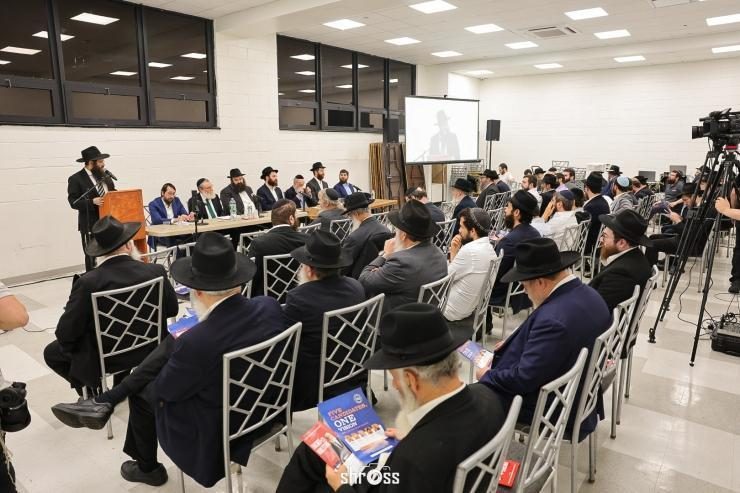
MK: There has been considerable discussion about elections for the Vaad HaKohol, as well as the question of a third Rav for Crown Heights. Do you see these elections finally taking place?
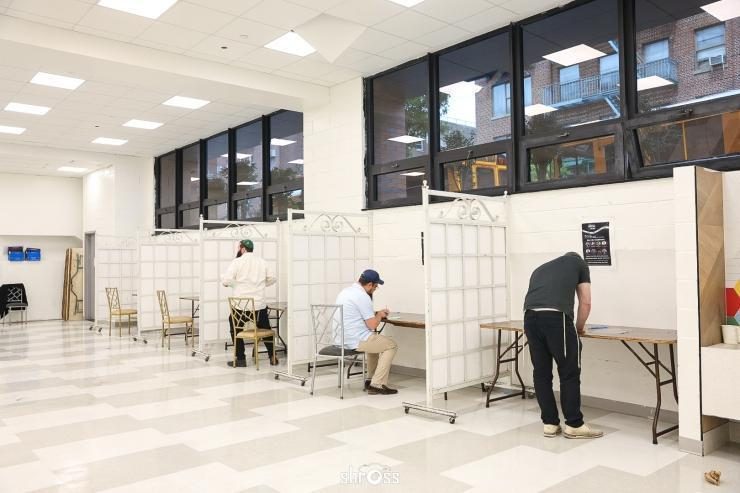
DH: B’ezras Hashem, yes. We’re hoping to have elections for the Vaad HaKohol around Lag B’Omer, with the official details expected to be announced around Chanuka. But it’s important to understand that the Vaad HaKohol itself doesn’t run the elections. That’s the responsibility of the “netzigim.”
The netzigim are the representatives of the shuls in Crown Heights. We have over a hundred shuls today, Baruch Hashem, and each shul has its representatives. They have their own authority, and they’re the ones responsible for organizing elections, whether for the Vaad HaKohol or the Rabbanim.
We can encourage elections, but ultimately it’s up to the netzigim. If you want to know why elections for the Beis Din haven’t been called yet, you’ll have to interview someone from the netzigim. I’m not a member.
But my understanding is that we’ve reached a point where all these elections need to happen. The Vaad HaKohol, the Rabbanim, the questions surrounding the Beis Din. It’s time to get these things moving.
Of course, there are rules and regulations, and everything has to be done properly. Some of these questions are very complicated, particularly when it comes to the Rabbanim. But it has to be done. There’s enough time to do it right.
We’re talking about having a proper Beis Din for Crown Heights. That’s not some luxury. A Jewish community needs a Beis Din, with Rabbanim who have the authority and the ability to actually address the needs of the community.
Sure, a person can and should have his own Rav. But that Rav should have a connection with the broader Beis Din, so if someone has a communal question or problem, there’s a proper way to deal with it.
And for that, you need a proper structure: the central Beis Din of Crown Heights, with additional dayanim [so the Rabbanim can focus on broader communal policy while the dayanim handle day-to-day matters], and a system that connects the Rabbanim of the individual shuls to it.
Think about financial disputes, for example. Unfortunately, money causes disturbances between people. Two Yidden have a disagreement. Where are they supposed to go? They need a functioning Beis Din that can deal with these matters according to Torah. And it’s much more than financial disputes.
I believe this will bring tremendous clarity and shalom to the community.
Look, we have different opinions in Crown Heights. That’s not going to disappear. But what are we going to do, keep fighting about who should be in charge? Or are we going to have elections?
You have elections. Your guy wins one year in the netzigim, another guy wins another year. That’s how the system works. We don’t have to turn everything into a fight.
“Only the Eibeshter Has Power”
Some people think that if they get their own person into a position, they’ll have control.
But who really has power? Only the Eibeshter has power!
Do you really think that putting your person in place means you control everything? Where’s the emuna? Where’s the bitachon?
We have to do what’s right according to the Torah. We have to be respectful, try our best, and no one can take that away from us.
But this need to control everything, to have everything our way? I don’t understand it.
Not everyone will like hearing this, but we have to do what needs to be done.
Baruch Hashem, we have young, capable people in the community with clarity and vision, who understand that these things simply have to happen.
So why delay a good thing? We have to do it, and we have to do it right.
The Long-Short Way For 770
MK: Another major issue you’ve been involved with is the expansion of 770. You mentioned in the recent Vaad HaKohol magazine that discussions are taking place with the different parties involved. What progress has actually been made?
DH: We’re talking about 770. It’s not just another building.
This is the center of Chabad throughout the world, and everything has to be done properly, with the necessary permits and approvals, the legal way, the way the Rebbe wants it to be.
I’ll tell you something very interesting.
When we had the incident with the bachurim digging in 770, the city came in to inspect the building. And a question came up: Was the original expansion of 770 actually legal?
There was a possibility that the city would say the walls between 770 and the adjoining buildings had to be put back. But someone involved was able to show the inspectors documentation that had been filed many years earlier, and the city accepted it.
Think about that! Baruch Hashem, we received confirmation from the city that the existing arrangement was acceptable. To me, it’s almost like a Purim miracle for 770.
Now, to be clear, that’s the expansion done many years ago, not the permits for the new expansion.
That’s a separate process. Building something new requires plans, permits, approvals, and a tremendous amount of work. And when we’re talking about 770, a building that serves Lubavitchers from throughout the world, it’s an especially complicated project.
But Baruch Hashem, we’re making progress.
We’ve already taken care of many of the smaller steps that have to happen before construction can begin. These are things that the public doesn’t see, but they’re absolutely necessary.
It’s like the derech arucha u’ketzara that we learn about in Tanya. Everyone wants to see the ketzara, the building actually going up. But before you can get there, you have to go through the arucha.
And we’re getting through that process. We’re still finishing the arucha, but I believe we’re getting closer to the point where people will begin seeing the results.
There’s another important development, and that’s the cooperation between the different parties involved. From my most recent conversations, the different parties have agreed to work together on the project and figure out how to move it forward.
Now, does everyone agree about everything? Of course not. But that’s not the question.
Everyone understands that 770 needs to be expanded. So instead of fighting over who’s in control, let’s figure out how to get it done.
And I think that’s where we’re finally seeing a change.
If you have a position or some influence, wonderful. That means you have a responsibility to use it to accomplish something good. It doesn’t mean you have to hold on to everything for yourself.
And if money is needed, there is money in the world. Go out and raise it. We shouldn’t let these questions prevent us from doing what needs to be done.
That’s really what we’re trying to accomplish through the Vaad HaKohol as well. People don’t have to agree about everything. They have to be able to put their differences aside and work together for a common goal.
And when you see the different parties beginning to do that with 770, I think that’s a very encouraging development.
Identity at the Ballot Box
MK: The recent Assembly primary brought out some differences of opinion within Crown Heights. The Vaad HaKohol supported Ahron Gluck, while others in the community supported the incumbent, Brian Cunningham. Why did you decide to support Gluck, and why did the decision come so late?
DH: It wasn’t an easy decision. There were different opinions in the community, and I think both sides had valid points. Everyone meant well.
That’s part of why it took time to reach a decision.
But ultimately, we had to go back and ask ourselves: What is the Vaad HaKohol here for? What’s our mission?
As we discussed earlier, the Jewish Community Council is primarily involved with government programs and funding. And today, any nonprofit can apply for government funding.
But the Vaad HaKohol has another responsibility. It’s about our identity. Who are we as a community?
We’re Yidden, and our Jewish identity has to be at the center of what we do.
With Ahron Gluck, it wasn’t simply that he happened to be Jewish. We felt that his values and approach reflected our Jewish identity. And the icing on the cake was that we also believed he had the community’s financial interests in mind.
So yes, we took a risk. And we lost the election.
But does that mean we made the wrong decision? I don’t believe so. We stood up for what we believed was right.
We need funding, of course. But our identity can’t depend on which candidate is promising us more money.
Standing Tall at City Hall
MK: That brings us to Mayor Zohran Mamdani. There was considerable opposition to him in Crown Heights, and now he’s the mayor. How should the community maintain a relationship with City Hall without compromising its principles, particularly when it comes to Eretz Yisrael?
DH: I want to be very clear about something. You can disagree with someone, you can object to something he’s doing, but calling him names is simply inappropriate behavior.
And that’s not because we’re worried about getting money from him or because we want him to like us. That’s not the point. We don’t call people names because it’s not the right thing to do.
But on the other hand, we also don’t have to hide who we are.
All Yidden are one family. The Yidden in Eretz Yisrael are our Yidden. The Yidden in America are our Yidden. Whether they’re in Russia, Iran, Iraq, or anywhere else, we’re all one Jewish people.
That’s something that has to be clear, first of all, to ourselves.
You ask how we should explain this to elected officials. But why do we have to spend all our time trying to convince somebody? Our actions speak louder than words.
We live in a city where politicians understand numbers. And Baruch Hashem, Crown Heights is growing, with large families, new shuls, and more people living here.
That’s a tremendous strength, and we have to recognize it.
We need to stand tall and be proud of who we are. The Rebbe taught us that a Yid doesn’t have to hide his identity or apologize for being a Yid.
And that doesn’t mean insulting anybody. You can treat an elected official with complete respect while being absolutely clear about your convictions.
The question is whether we’re prepared to stand by those convictions even when there’s money involved.
Are we going to be less open about who we are because we’re worried about losing some government funding?
I don’t believe that’s the way. There are people who genuinely want to help, and we have to learn how to access those resources. But we shouldn’t have to sell ourselves for a few dollars.
This is something the world is demanding from us today. You can’t keep trying to maneuver your way around everything. People want to know where you stand.
So let’s be clear about who we are, let’s treat people respectfully, and let’s use the strength that the Rebbe has given this community.
Dovid Prepares, Shlomo Builds
MK: As this Vaad HaKohol’s term draws to a close, how do you assess what it has accomplished?
DH: This is the first active Vaad HaKohol we’ve had in many years, and Baruch Hashem, we’ve accomplished a tremendous amount. But much of what we’ve done isn’t necessarily visible yet.
I like to compare it to Dovid HaMelech. Dovid prepared the foundations for the Beis HaMikdash, but Shlomo HaMelech was the one who actually built it.
I think that’s where we’re holding now. We’re putting things in place, working through the difficulties, and laying the foundations. The next Vaad HaKohol may be the one that actually builds on what we’ve started.
And that’s perfectly fine.
The point isn’t that I should get credit, or that everything has to happen under my leadership. The point is that the job gets done.
That’s something I keep coming back to. Hashem gives each person certain abilities and opportunities. If you have the ability to help people, then you have a responsibility to do so.
And Baruch Hashem, Crown Heights has tremendous people and tremendous potential. We just have to learn how to use what we have, work together, and actually get things done.
* * *
The views expressed in this interview are those of the interviewee and do not necessarily reflect the position of Beis Moshiach.
Beis Moshiach #1530 • ג׳ כסלו תשפ״ז • pp. 10-19
© 2026 Beis Moshiach Magazine. All rights reserved.
This article originally appeared in Beis Moshiach #1530. You are welcome to share it with friends and family by email or in print, provided that you do not change, add to or omit any part of it, you credit the author and Beis Moshiach, and you include a link to archive.bmoshiach.org (written out in full in printed copies).
To republish this article in a newspaper, magazine, book or website, please request permission in advance at [email protected].