Willowdale, Ontario Can Imagine Moshiach
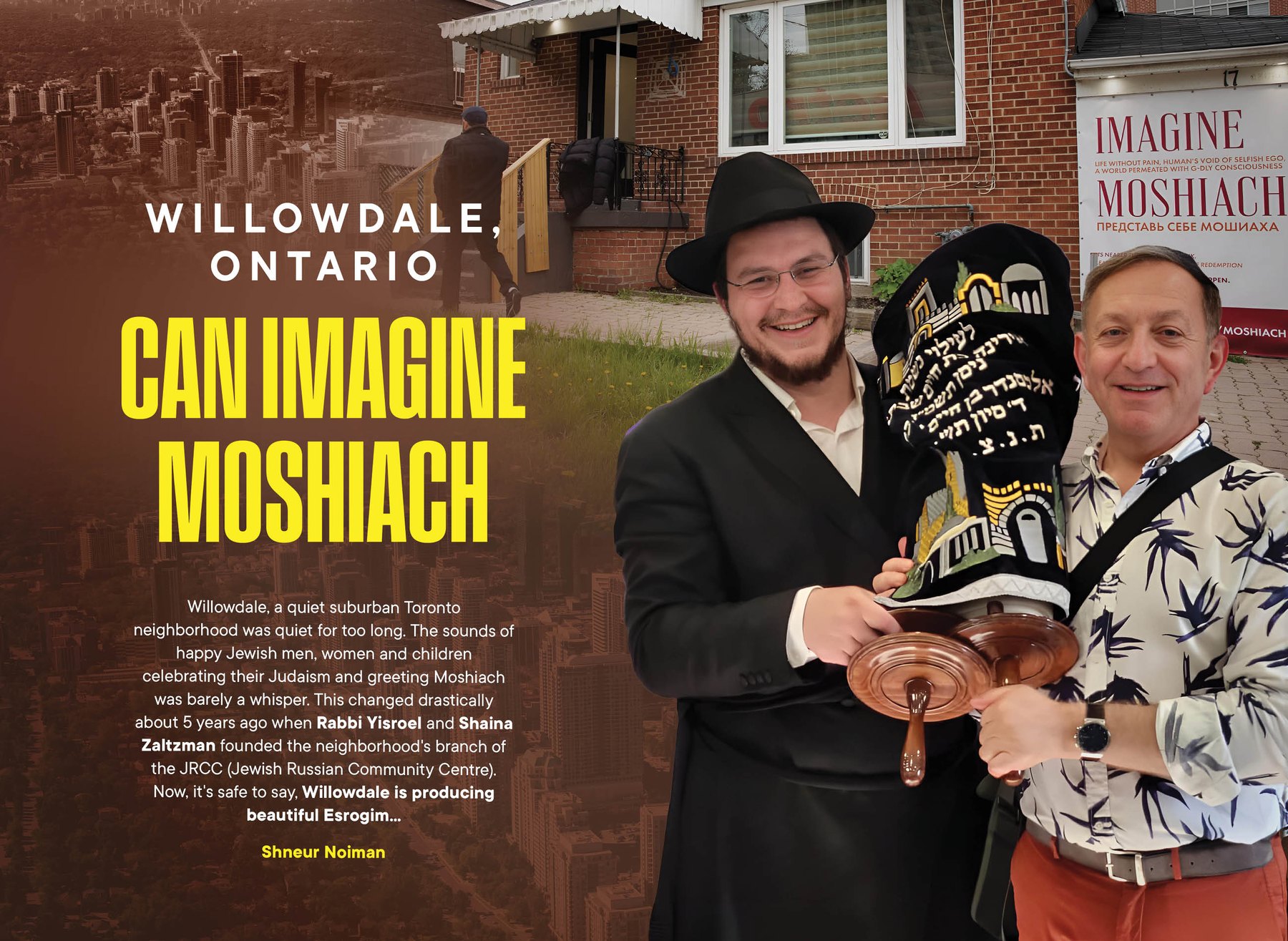
Willowdale, a quiet suburban Toronto neighborhood was quiet for too long. The sounds of happy Jewish men, women and children celebrating their Judaism and greeting Moshiach was barely a whisper. This changed drastically about 5 years ago when Rabbi Yisroel and Shaina Zaltzman founded the neighborhood’s branch of the JRCC (Jewish Russian Community Centre). Now, it’s safe to say, Willowdale is producing beautiful Esrogim…
Erev Simchas Torah 5782. The clock showed 8:00 PM. Rabbi Yisroel Zaltzman was standing in the parking lot of the new building, arranging a bima and chairs. In twenty minutes, people were supposed to arrive for the Simchas Torah hakafos, but he had no access to the building. He had already started resigning himself to the idea that they would have to celebrate outside.
The story began a few months earlier, as Rabbi Zaltzman recounts:
“At the end of the summer, we had to vacate the ‘office’ where we held the minyanim and activities due to renovations, but it turned out that finding a new building was not at all a simple matter.
“After an arduous search, lengthy negotiations with the landlord, and open miracles (more on that later), we signed a lease for a new building for the Chabad House during Chol HaMoed Sukkos. It was supposed to start at the beginning of the secular month, erev Shabbos Bereishis.
“At that point in time, the building was rented to a Liberal Party member of parliament from the Willowdale section, a man of Iranian descent named Ali Ehsassi. He had rented the building for his election campaign, and since the elections ended erev Sukkos (and he had won…), I thought I would surely be able to coordinate with him to allow us to use the building for a couple of days before our lease began.
“I really had no other choice, and I had already informed everyone that we would be celebrating Simchas Torah in the new Chabad House building. But from the moment we concluded the lease negotiations and signed the contract with the landlord, I tried to reach the member of parliament, but to no avail.
“Hoshana Rabba arrived, and I still hadn’t managed to reach him. I used connections through a Jewish person serving on the city council and managed to reach the head of his team. But even the team leader couldn’t get hold of the member of parliament… he had gone on vacation to ‘clear his head’ after the elections. It was impossible to reach the man.”
The hours were passing; there were just three hours left until the holiday began. There was no place, but of course, the hakafos could not be canceled… In a ‘l’chatchila ariber’ manner, Rabbi Zaltzman loaded the Aron Kodesh, the bima, siddurim, chairs, etc. and transferred them (along with the portable sukkah) to the new building.
“I left all the equipment by the side entrance to the building. I spoke to the chief of staff of the Jewish city council (also Iranian), and asked him to continue trying to make contact and get approval. I told him that if he managed to get the approval, to leave the building key under the entrance mat.
“At that time, we still didn’t have a minyan for all the tefillos, and on Shemini Atzeres I stayed with my older brother, Mendy, at the Chabad House in a different neighborhood, an hour’s walk from our area. By erev Simchas Torah I arrived at the place. No key, and the building was dark. After a few minutes, the head of the city councilor’s team arrived (he knew I wouldn’t answer the phone…) and said he had tried and tried… but couldn’t reach the member of parliament.
“After another twenty minutes, the real estate agent on behalf of the landlord arrived and started yelling at us that they had called him from the member of parliament’s team and they complained that we had left things there, ‘Your lease hasn’t even started yet! You have no insurance, etc.’ After a few minutes, his partner arrived, and they got angry. They left angrily.
“Meanwhile, my wife went with a young man who joined us to bring the Sefer Torah and food for the kiddush from our home. It was already eight o’clock, people were start to arrive in another twenty minutes. With no other choice, I started arranging the Aron Kodesh and the chairs in the parking lot.
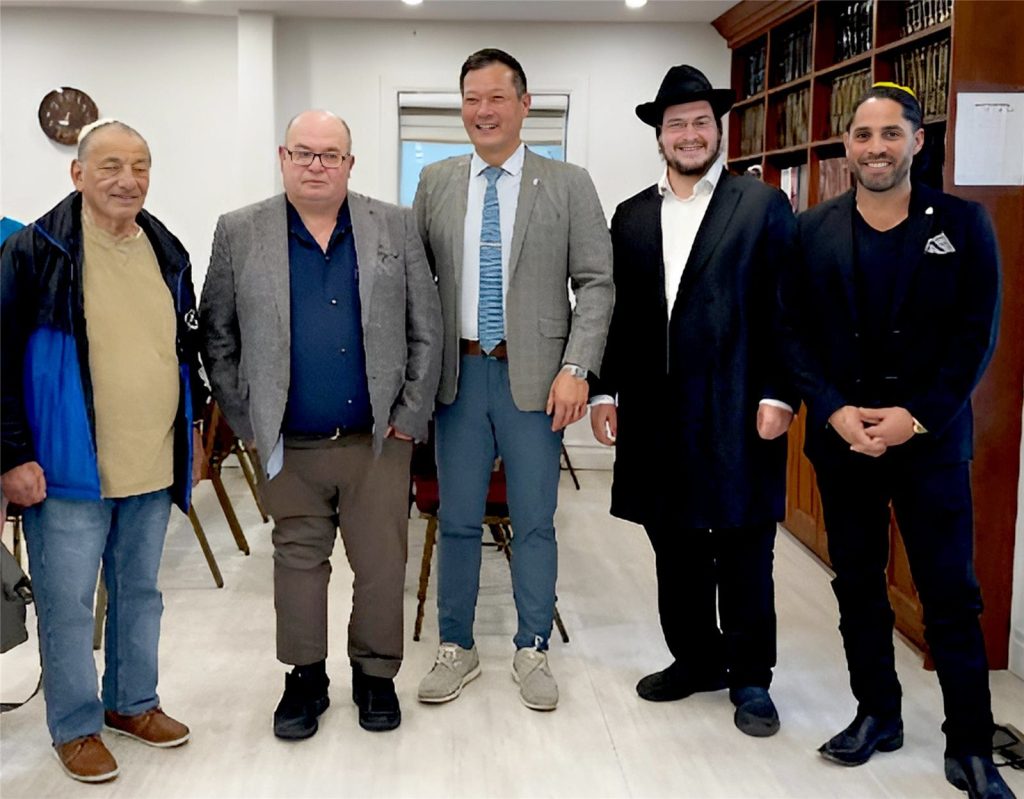
“Suddenly, a vehicle entered the parking lot. ‘Rabbi Zaltzman?’ the man who got out of the vehicle asked. I nodded, fearing he had come on behalf of the landlord to demand that we leave the private property… ‘I heard you have a holiday and need to use the building,’ said the man, who turned out to be the member of parliament himself.
“He opened the door, turned on the lights and the air conditioning (which is permitted on Yom Tov, for the sake of the mitzva) and even helped bring the equipment inside. When I said we would finish by 11:30 pm, the member of parliament agreed to return and lock up, even though he was tired after a long day and a long drive.
“In the end, the hakafos continued until 12:30 AM, with dancing in the street. The member of parliament not only waited, but also participated, spoke with the people, and even helped carry and clean up…
“I saw this as the fulfillment of the Rebbe’s words that the world itself is helping with the Geula! Truly ‘and kings shall be your caretakers,’ I thought to myself. A week after the elections he didn’t need the votes… and he probably knew that most of the Jews didn’t vote for him as he was a representative of the Liberal slate in Canada.”
The Sounds Of Geula In Willowdale
In Elul 5779, five years ago, Rabbi and Mrs. Yisroel Aryeh Leib and Shaina Zaltzman arrived in Toronto on shlichus. They came to establish a Chabad House for Russian speakers in the Willowdale neighborhood, an area that despite being in the center of the city, lacked a significant Jewish presence.
Toronto itself was not foreign to him. “I was born on shlichus of the Rebbe in Toronto,” he relates. “My parents, Rabbi Yosef Yitzchok and Chaya Mushka Zaltzman, have been on shlichus since 5741, when they received the Rebbe’s blessing to go to Toronto to work with the Jews from the former Soviet Union, under the local Tzach director, Rabbi Zalman Aaron Grossbaum.
“At that time, there were about a thousand such families living in Toronto, who had emigrated in the waves of the 1980s and 90s. Over the years, and especially with the fall of the Iron Curtain, a flood of thousands of Jews from all the former Soviet republics arrived, so that today there are around 16,000 such families, spread throughout the city, comprising about 20% of the entire Jewish community in Toronto.”
As the community grew, so did the programs. “In the last twenty years, the activities have expanded, and several branch locations of my parents’ central institution, called (the Center for Russian-Speaking Jews), have opened throughout the city,” explains Rabbi Zaltzman. “There are about 10 branches across the city, some managed by my siblings and in-laws, and some by additional shluchim, who are doing great and awesome things with the Russian-speaking community.”
In Elul 5778, Rabbi Yisroelik and his wife Shaina (née Dubov, whose parents serve as shluchim in South London, England) got married. In their first year of marriage they lived in Crown Heights. “I learned in the kollel, and at a certain point I transferred to a kollel in Manhattan that focused on Halachic study in a more serious way, and semicha preparation.”
Towards the end of the year, the young couple stood at a crossroads. “It was natural that when we were looking for a place for shlichus, Toronto was the first option. I received an offer from my father to open a new Chabad House for Russian speakers in another neighborhood. In addition, there was a proposal to teach in a yeshiva in Eretz Yisrael, and a third possibility was to stay for another year by the Rebbe and continue learning in the kollel. There was a great internal struggle.
“We wrote to the Rebbe, detailing the options and the pros and cons of each one,” he recounts. “I also mentioned the concerns about working closely with family members, and the challenge of shlichus in an area with many other shluchim.”
In the michtav klali–prati that he opened to in the Igros Kodesh (vol. 3, p. 387), the Rebbe added a handwritten note at the end to one of the recipients: “And regarding the guidance he asks for in his letter – our Sages have already said a general instruction – as explained in the pasuk in Yeshaya 58: ‘Should you not share your bread with the hungry, and to bring the poor, the wanderer, into your home; when you see the naked, to cover him’ – which speaks of those naked of mitzvos, and hungry for the ‘bread’ of Torah, and lacking the shelter of a shul (and it is understood that if he does not feel this hunger, his poverty is very great). – And the pasuk concludes: ‘and from your own flesh’ – also – ‘do not hide!’ Instruction for the entirety of one’s life in a single pasuk!”
“The response was clear. To go out on shlichus to spread Yiddishkeit! The Rebbe spoke of people who have no Torah, no mitzvos, and no shul. And indeed, the neighborhood my father suggested was exactly that – in the heart of the city, but without a single shul within walking distance in any direction!
“Based on the conclusion of the Rebbe’s letter about the Chassidic interpretation of ‘and from your own flesh do not hide’ – (in addition to the ‘hint’ from the simple interpretation of the pasuk, which speaks of how ‘the members of one’s household take precedence’ regarding the laws of tzedaka, which related to my concerns about working with family members) – that while the importance of outreach must not be forgotten, one must not ‘forget’ about oneself… I inquired about a kollel in Toronto. Although there is no Chabad kollel in the city, there is a kollel of Bobover Chassidim, and since arriving on shlichus, I have made an effort to dedicate some time each day to study halacha.”
A New Chabad House In A Quiet Neighborhood
The Willowdale neighborhood, despite being in the heart of the city, is not identified as a Jewish area. Most of the residents are Chinese, Korean, and Iranian. The Jews who do live in the area are mostly retirees or single young people, scattered among the tall, upscale apartment buildings.
Despite the challenges, the Zaltzman couple immediately began their activities. They received a list of names, phone numbers, and addresses of hundreds of Russian-speaking Jews in the area from the central institution, and went out to meet them one by one. Within a few weeks, they had already organized a minyan for the Yomim Noraim of 5780.
“Many shluchim don’t start with a minyan right away, but we felt it was important. We remembered the Rebbe’s response before we left on shlichus, which explicitly addressed the concern for a ‘house of prayer.’ After the Yomim Noraim, we continued with tefillos on Shabbos even though we didn’t always have a minyan, and it was a huge effort every single week from scratch.”
From Parking Lot To Community Center
Over the five years of their shlichus, Rabbi Zaltzman and his wife experienced many instances of wondrous hashgacha pratis.
“There is a very wonderful man by the name of Eliyahu HaKohen,” Rabbi Zaltzman relates. “When my parents arrived in the city, he was a child from a traditional Russian family. Over the years, he drew closer and closer, and also opened a successful business, and today, baruch Hashem, he is a Lubavitcher through and through, with a kapota and beard, and an enthusiastic supporter of the Rebbe’s inyanim.”
The offices of his company are located in the Willowdale neighborhood even though he himself lives in a different neighborhood. “We started the minyanim and activities in the reception area of his company located on the ground floor of one of the office buildings in the neighborhood.” This was a significant contribution to the fledgling Chabad House, allowing them to start their activities without major financial concerns.
Rabbi Zaltzman recalls the logistical challenges of that period:
“Every Friday we had to bring the equipment and organize the place before Shabbos, and on Motzoei Shabbos, pack everything up.”
Despite the difficulty, this was an excellent solution for the growing Chabad House. When the coronavirus pandemic arrived, this arrangement actually became even more convenient. “The place was deserted and all the employees worked from home, so we could leave all the equipment there during the week, and also use it during the week for activities.”
After about two years of operation, the offices underwent renovations and it was time to find a permanent, independent location. “We looked for a place that would be more centrally located, on the main road; our own place where we could put up a sign outside and advertise the Chabad House, and also be open all week.”
The search was challenging. The area is in high demand and the prices are very high. Finally, they found a suitable building right on the main road, but the rent was astronomical compared to what they were used to – $140,000 per year!
“We realized this is simply impossible,” says Rabbi Zaltzman. They continued searching, but without success. Time was pressing, and they had to vacate the temporary location soon. In desperation, Rabbi Zaltzman wrote to the Rebbe. The response was to consult with knowledgeable friends. After consulting with his father, father-in-law, and others, it was decided to explore fundraising options.
“At that time, I was learning once a week, at the request of my father, with a local Russian Jewish philanthropist. After asking my father’s permission to approach him for assistance with one month’s rent I spoke to him, and he was interested and asked for details about everything.
“Then he surprised me by saying, ‘I’m giving a full year’s rent, plus $50,000 for renovations’… close to $200,000 without my even asking!”
This generous donation not only enabled the Chabad House to start the lease in the new location, but also to renovate it and adapt it to the community’s needs. In the end, the renovation costs exceeded the original amount, but the foundation he provided was critical to the successful transition.
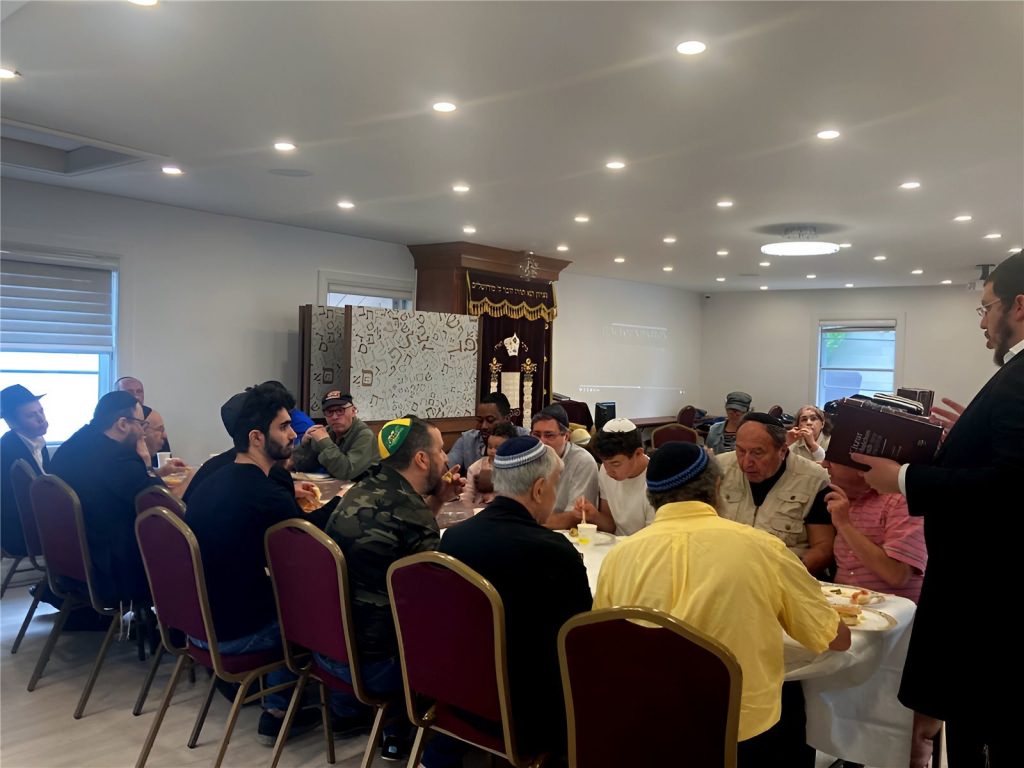
Since moving to the permanent location, the activities have expanded significantly. The new building includes a shul, a Sunday school classroom for children’s Jewish studies, and guest rooms for Shabbos. There are many classes, people are becoming more connected to Yiddishkeit, and the Shabbos minyan and the emerging community are steadily growing.
A Bridge Between Languages
Another area that Rabbi Zaltzman has had to grapple with is the language gap. His shlichus is focused on activities with Jews from the former Soviet Union, and although some of them speak English, it was clear that in order to reach everyone, he would have to learn the language.
“I work very hard to learn Russian,” he says. “Many times a shliach goes to a country with an unfamiliar language, and within a short time he learns the language, simply because he has no choice. I live in an English-speaking country so I use English for the vast majority of the day. So it’s much harder for me to learn the language, especially since Russian is considered one of the most difficult languages.
“I’m still learning, investing in it as much as possible. In my daily life, I try to speak ‘one-on-one’ with people in Russian as much as I can. In the last two years, I have met many people who came from Ukraine due to the war there, and they really don’t know any English, and even in the shul, there are elderly people who don’t know English. So the Russian is improving, but it’s not easy. For Yomim Tovim, I prepare short Russian-language divrei Torah in advance, so that everyone will connect and feel at home.”
Spreading The Besuras Ha’geula
Rabbi Zaltzman places special emphasis on disseminating the message of Geula. “Inyonei Moshiach are at the forefront of our activities,” he says. The recitation of “Yechi Adoneinu” after davening is a given.
“As shluchim, we need to not be satisfied with instilling Moshiach in a ‘makif’ way in all things and activities. The Rebbe wants specific, targeted activities dedicated exclusively to Moshiach!
“The Rebbe concludes the sicha of Dvar Malchus Chayei Sarah with a clear instruction: to go out with a proclamation to all the shluchim – ‘to come and make good hachlatos,’ and the Rebbe defines this in the clearest way, to explain the ‘inyan of Moshiach’ to each and every one ‘in a way of chochma, bina and daas.’
“When you speak about Moshiach in general terms, or write it briefly in an advertisement, while it’s important, it’s not enough – the Jews around you understand that you live here, period, but they’re not with you, they’re not connected to your ideas and concepts. We must teach and explain the matter of Moshiach, give classes on the subject, and organize more focused activities ‘purely’ around the topic of Moshiach!”
As part of this effort, Rabbi Zaltzman initiated a comprehensive course on Geula and Moshiach. “When I started, I was unsure how to approach it. After all, the Jews here don’t know the ABCs of Judaism, how and what should I teach?” he shares. “Boruch Hashem, in the summer of 5781, JLI published a comprehensive course about the Geula. To my surprise, people from all backgrounds and types came: a twenty-year-old woman in advanced stages of conversion, an 85-year-old Russian pensioner, and even a Russian-speaking Jewish professor from one of the city’s universities who lives in the neighborhood. They all came together and learned from the foundation up: what Moshiach is, what his message is according to Chassidus, according to Nigleh, and all this in a realistic way that shows how it’s happening here and now.
“After such a course when people enter the Chabad House, you see that something has changed. Suddenly, the concepts speak to them, your mekuravim are broadcasting on the same frequency as you, and not only that, they themselves are talking about it with others!”
Outside the Chabad House, Rabbi Zaltzman hung a huge sign in English and Russian with the message: “Imagine a world of Moshiach, it’s in our hands, we must do everything to bring Moshiach,” with a link to a website about Geula and Moshiach.
Unity Among Shluchim
Rabbi Zaltzman addresses the unique challenges of shlichus today. While in the past, the difficulties were more physical, like finding kosher food or dealing with financial challenges, today, generally speaking, the challenges are different.
“In my opinion, one of the biggest challenges in shlichus today, and the place where a shliach ‘gives of himself’ to the Rebbe, is to live in peace and work cooperatively with the neighboring shluchim,” he explains. “There are so many shluchim, and there are places where there are many shluchim in one city. Literally every few kilometers. And there can be all kinds of conflicts: in activities, mekuravim who move, donors, etc.
“In some ways, it’s harder than lacking money and similar difficulties. Money can indeed be a very big challenge, an enormous difficulty, but when it’s lacking… a shliach can’t blame anyone. It’s part of going on shlichus and part of the sacrifice for the meshaleiach. But when there’s a shliach next to me that I don’t get along with, or I think isn’t behaving properly; that I should restrain myself, that I should bend for him, that I should give up of myself – I don’t feel that this is bittul to the Rebbe. It seems like bittul to him. And he ‘isn’t worth it.’
“But despite this, there are places where you see people whose dedication to the Rebbe causes them to give in, and to live in love and brotherhood. To set up a chavrusa with another shliach, even when it’s difficult.”
In his Chabad House, Rabbi Zaltzman strives to implement these principles. “Here in the neighborhood there’s another shliach who works with the local English-speaking Jews. I greatly appreciate and respect him for his ability to work together cooperatively and maintain constant contact with love and peace.”
The Community In The Shadow Of War
The war taking place in Eretz Yisrael over the past year hasn’t skipped over the small community. The difficult events deeply affected the Jewish community in Toronto.
“I entered the shul on Shemini Atzeres morning at 9:40,” he recalls. “I grabbed someone who was already in the shul for a small dance, he dances with me, and then he tells me, ‘You must not know what’s happening in Israel, that’s why you’re dancing…’
“He told me about what was known then, in the morning hours in Canada. Everyone who entered the shul shared another update (and attempts to stop it, due to the holiday, were unsuccessful…). On the one hand, you hear terrible things; on the other hand, it’s Shemini Atzeres today and we needed to rejoice. But people might not understand what’s wrong with you and think you don’t care…”
He decided to deal with the situation directly. “We davened, I talked about the situation. About the Yom Kippur War and Simchas Torah 5734 and the Rebbe’s references to the topic. After kiddush in the sukkah, we went into the shul, said Tehillim and danced a bit.”
For the hakafos on Simchas Torah night, a much smaller crowd came than we expected. “An Israeli living here came, about 29 years old. He fought in ‘Tzuk Eitan,’ and was wounded in Gaza. Now he’s married with two children. He told me, ‘I spoke with a friend from Unit 8200, and it’s not 300 dead (the number reported at those hours), it’s more than 1,000…’”
Dealing with the situation was complex: “It’s Yom Tov and you’re alone, you have no one to ask how we should behave, and what we should say to people in the community. But, of course, we didn’t cancel the hakafos.”
Despite the geographic distance, Rabbi Zaltzman and his community mobilized to help the people in Israel in every possible way. “We published through the central Chabad House a link where everyone could take upon themselves a mitzva for the merit of the hostages,” he reports. “And indeed there was a great response. Tefillin, Shabbos candles, Tehillim and more.”
At the same time, they also took practical actions:
“We raised thousands of dollars in Toronto with which we bought tzitzis that were no longer available in Israel. We simply emptied a store in Boro Park and sent them to Israel, for distribution to soldiers in cooperation with my uncle Rabbi Shlomo Berkowitz, the shliach in Rosh Pina.”
Additionally, some of his community members were themselves at the heart of the battle: “There’s an Israeli couple living right across from the shul. They were supposed to get married in Israel about two weeks after Simchas Torah, and the kalla was studying with my wife in preparation for the wedding. After Yom Tov, my wife asked about their welfare, and about their family in Israel. It turned out that they themselves were in Israel during the holiday, at his parents’ house in Netiv HaAsara… They were in the shelter the entire holiday, and were evacuated by soldiers at the end of the holiday, passing by the bodies of the fallen and murdered, may Hashem avenge their blood. By Shabbos Bereishis they were back in Toronto and came to shul to recite the ‘Hagomel’ blessing…”
“Another Russian-speaking family we knew moved to Toronto, to Willowdale, from Ashdod last summer. Both parents of the father of the family were murdered at Zikim Beach on Simchas Torah by the cursed terrorists, may Hashem avenge their blood.”
Vision For Expanding Activities
Five years after arriving in the Willowdale neighborhood, the Zaltzman family can look back and note that from a place with almost no Jewish presence, they built, with the power of the meshaleiach, an active and flourishing community, with a shul, Torah classes, and activities for all ages.
Rabbi Zaltzman is full of hope and plans for the future. “The dream is to buy a large building located across the street. We just need 20-something million dollars…” he says with a smile.
Another dream is to open a school for the general public, with Jewish education in the traditional Jewish way.
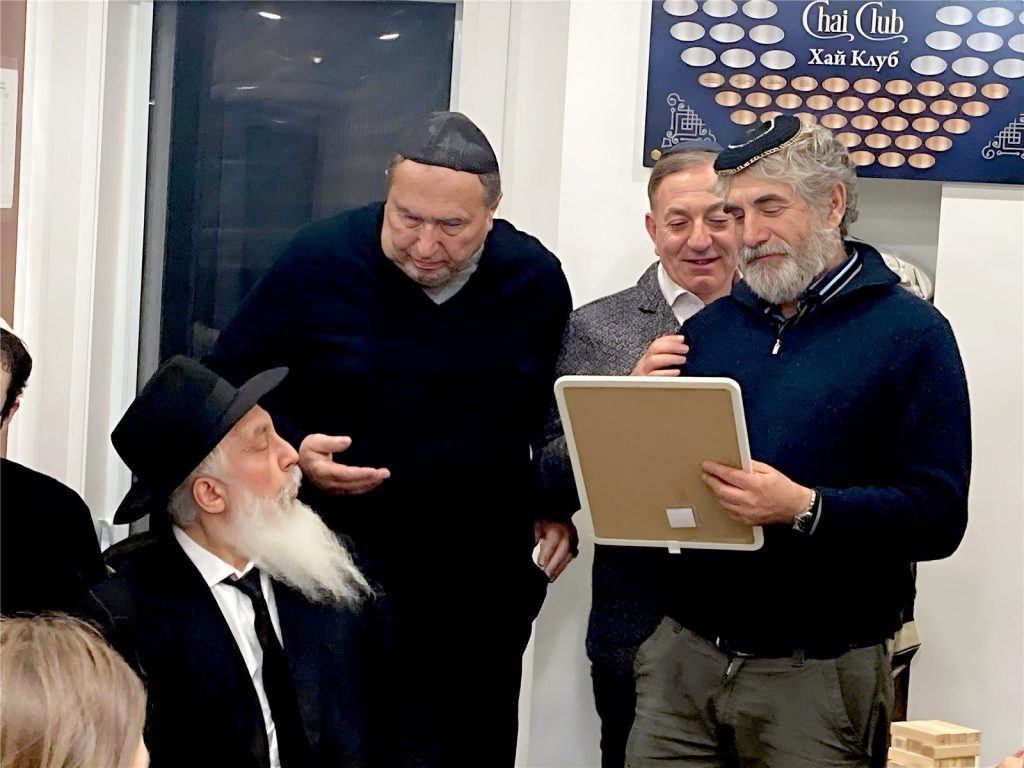
“And meanwhile… to increase the minyanim on Shabbos. To have a minyan both on Friday night and motozei Shabbos. To open more classes. To arrange activities for young people. To expand the Sunday school. To meet new people and bring them into the Chabad House circle.”
In conclusion:
“The Rebbe changed the entire direction in the seventh generation. It’s clear that the Rebbe wants every Chabad young man to work in ‘Chabad’s vineyard,’ and not in high-tech, etc. Shlichus in Chabad Houses, as well as educational shlichus – in yeshiva, in cheder, in schools for non-religious children. Which shlichus among these to pursue, one needs to ask the Rebbe, but it’s incumbent upon and pertains to each of us.
“We are here to prepare the world for the revelation of the Rebbe MH”M. Every Jew who comes closer, every mitzva that is done, is another step toward the complete Geula. Teikef u’miyad mamosh!”
Yechi Adoneinu Moreinu v’Rabeinu, Melech HaMoshiach L’Olam Va’ed!
Beis Moshiach #1436 • pp. 12-21
© 2026 Beis Moshiach Magazine. All rights reserved.
This article originally appeared in Beis Moshiach #1436. You are welcome to share it with friends and family by email or in print, provided that you do not change, add to or omit any part of it, you credit the author and Beis Moshiach, and you include a link to archive.bmoshiach.org (written out in full in printed copies).
To republish this article in a newspaper, magazine, book or website, please request permission in advance at [email protected].