Refortified: Shlichus One Year After October 7th
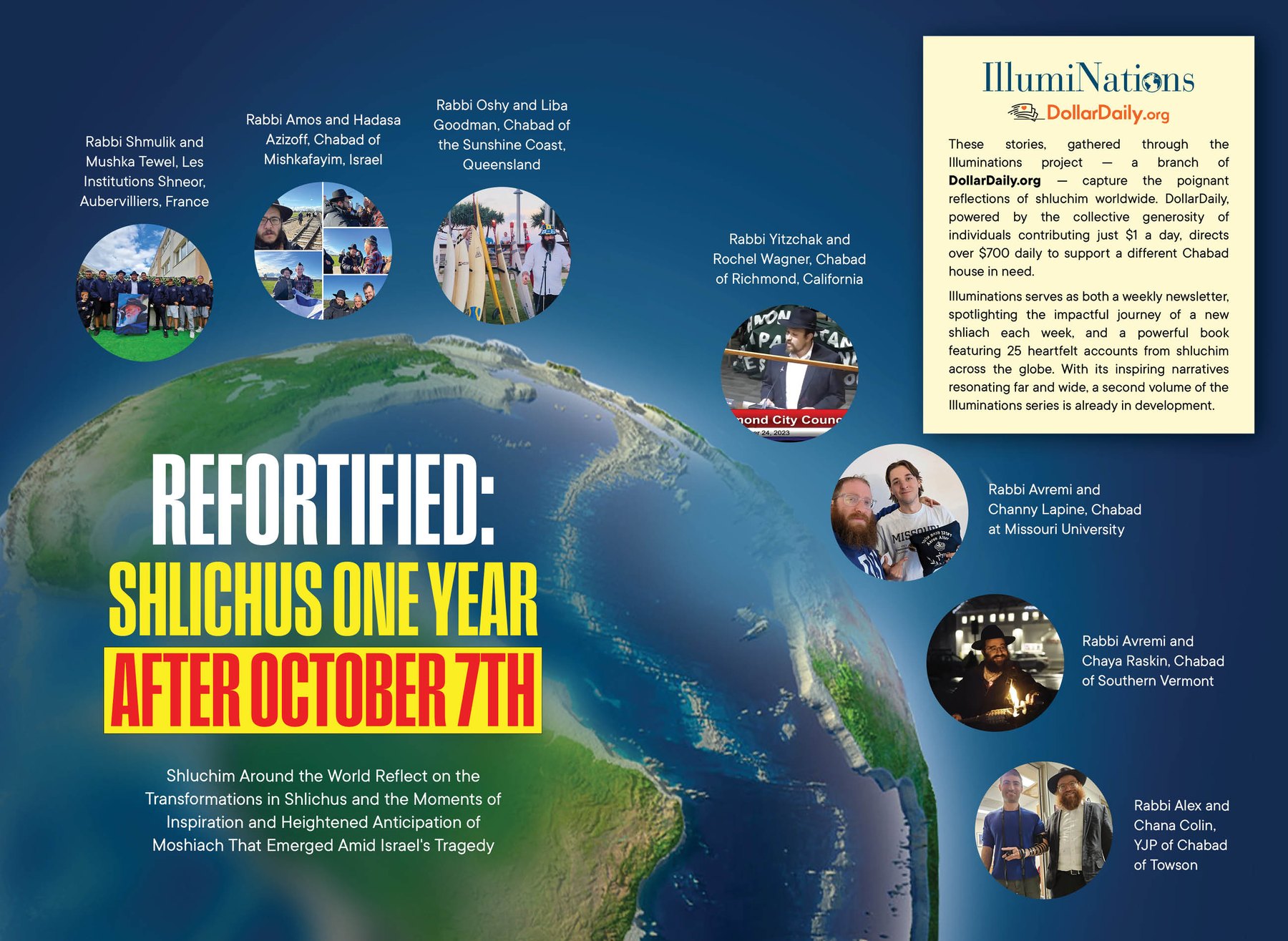
Shluchim around the world reflect on the transformations in Shlichus and the moments of inspiration and heightened anticipation of Moshiach that emerged amid Israel’s tragedy
Rabbi Amos and Hadasa Azizoff, Chabad of Mishkafayim, Israel:
Rabbi Levi Paris A”H, a beloved mashpia in London, was known for his dedication to Mivtza Tefillin. In his memory, his family encouraged others to continue the mitzva, and since then, I never leave home without my tefillin.
As a seminary teacher, I bring my tefillin on the annual trip to Poland. My first visit was heartbreaking—stepping out of Auschwitz, I felt hollow and desolate. I asked myself, “What would the Rebbe advise? Don’t dwell in sorrow; make this meaningful.”
Finding a Jew willing to put on tefillin became my tradition after each Auschwitz visit. This year, I carried the tefillin of Yehuda Becher HY”D, a young man killed on October 7th at the Nova Festival, with the intention of putting them on others. However, with Israeli groups no longer visiting, it was harder to find someone. Finally, I found a father and son wearing yarmulkas. The father, initially hesitant, shared that his mother was a Holocaust survivor and agreed to don tefillin.
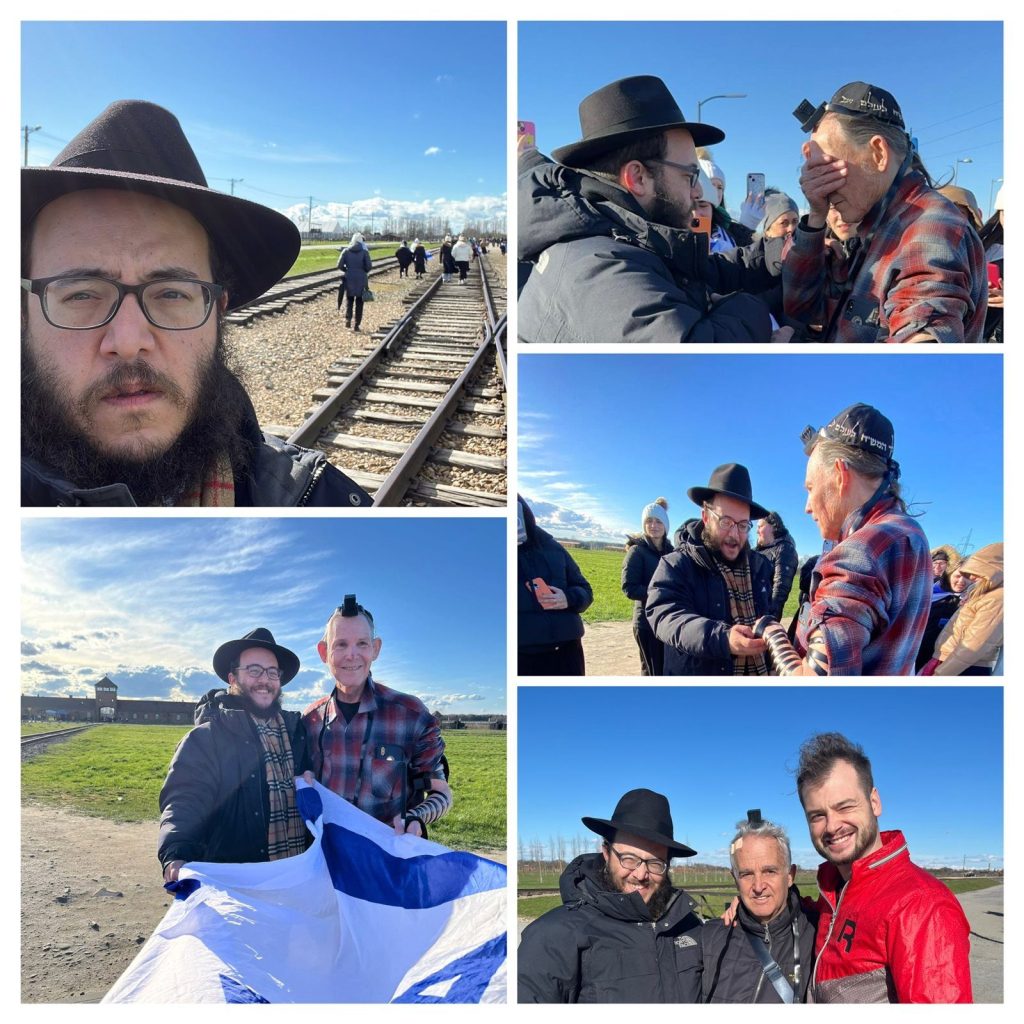
As we finished in Birkenau, our group, still emotional, sang “V’hi She’amda,” a song of Divine protection. An elderly man nearby watched, filming on his phone. When I asked if he was Jewish, he explained, “A DNA test showed my mother and I are Jewish, but I’ve never acted on it.” At 71, he had only just discovered his Jewish heritage.
So, on the tracks of Birkenau, a lone Jew celebrated his bar mitzva, donning Yehuda’s tefillin as the “V’hi She’amda”—declaring how in every generation Hashem saves us—lingered in the air.
Rabbi Avremy and Channy Lapine, Chabad at Missouri University:
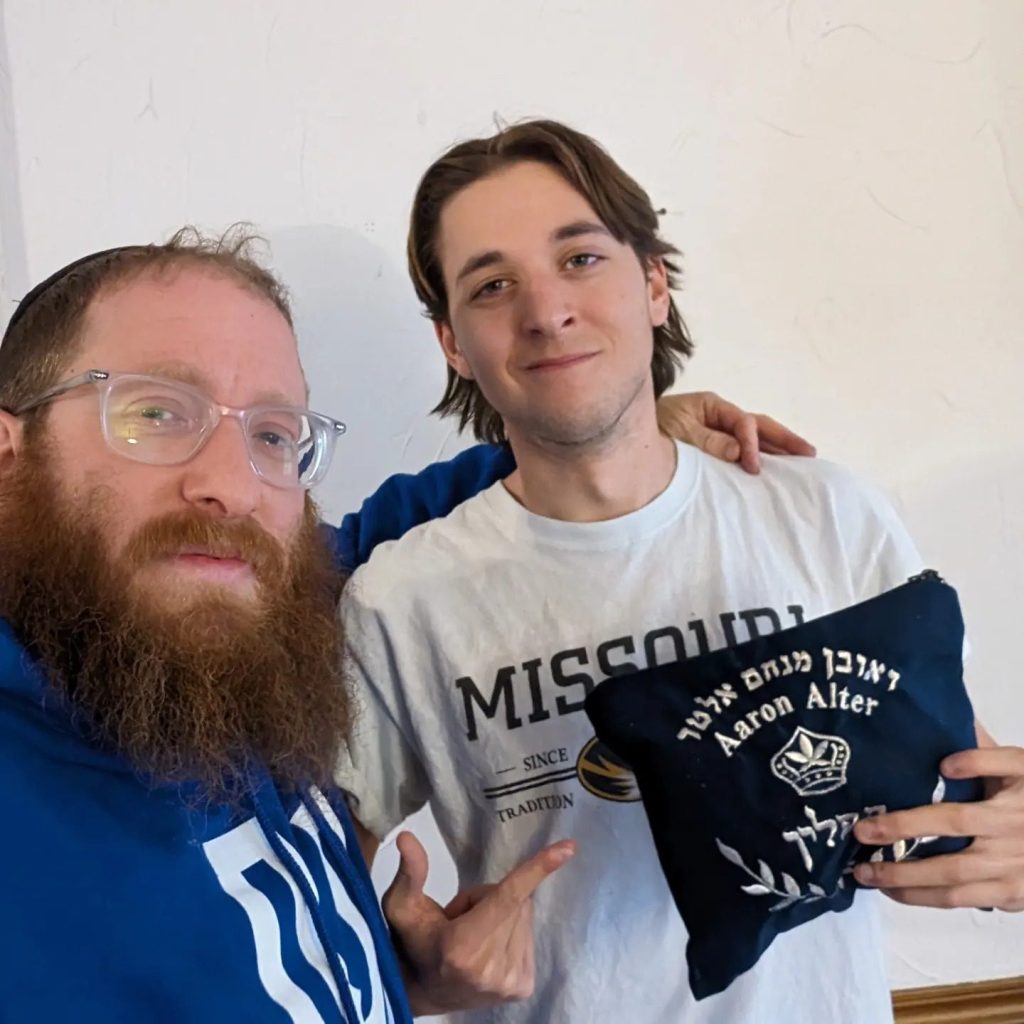
One day, I received a call from Greg*, a non-Jew from a remote town in Missouri.
“Although I’m not Jewish, I want to live by as much of the Torah as I can. I even follow Chitas daily by listening to Rabbi Josh Gordon’s podcast! I know there are seven laws for non-Jews, and I’d like to learn more. Can we meet?”
I was intrigued and, of course, agreed.
Over the next few months, Greg and I stayed in touch regularly. He asked thoughtful questions and offered his support in any way he could.
After October 7th, Greg called, his voice unusually serious.
“I know that mitzvos are the key to winning this war,” he said. “We need as many people as possible to put on tefillin. Since I’m not Jewish, I can’t wear them, but I’d like to sponsor a pair for one of your students who will commit to wearing them daily. That way, I’ll have a part in the mitzva.”
One of our students accepted the commitment, and Greg was thrilled to have a role in the mitzva, proud to do his part.
Tewel, Les Institutions Shneor, Aubervilliers, France:
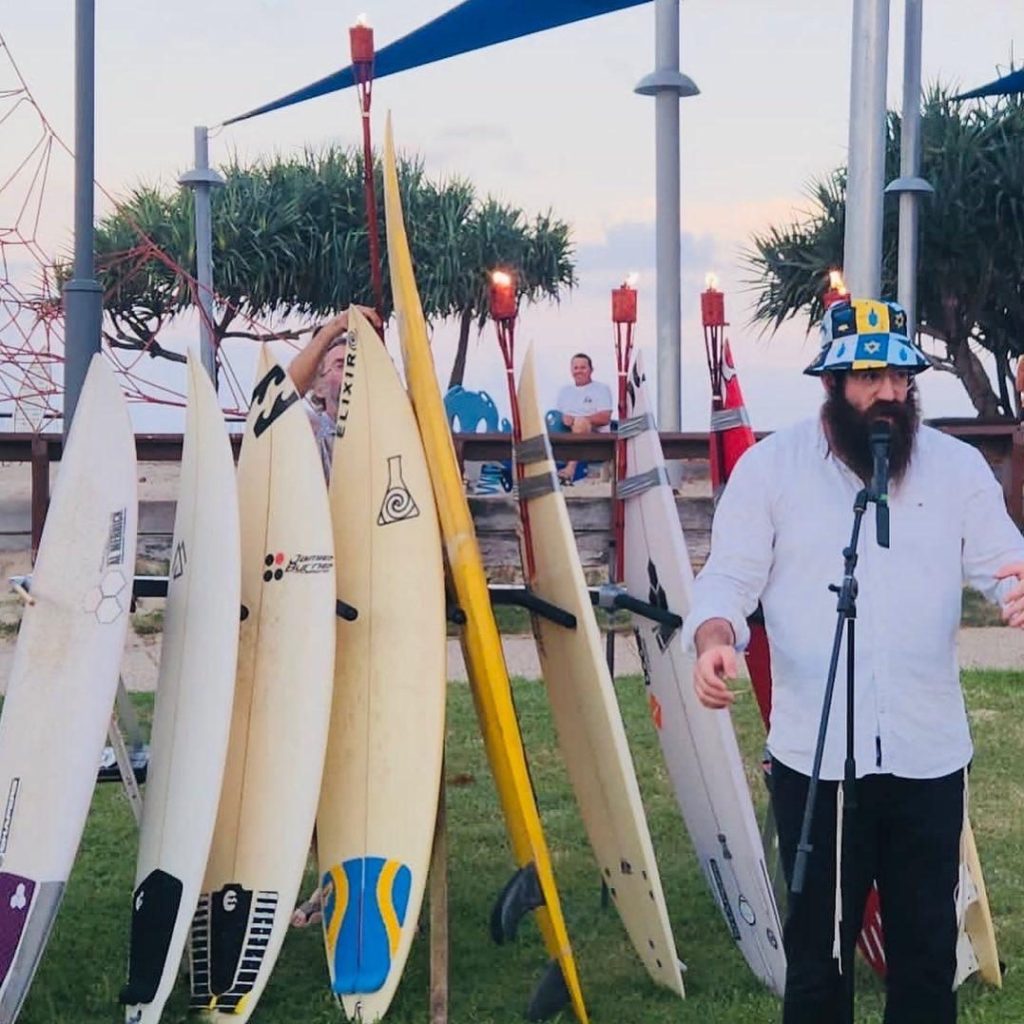
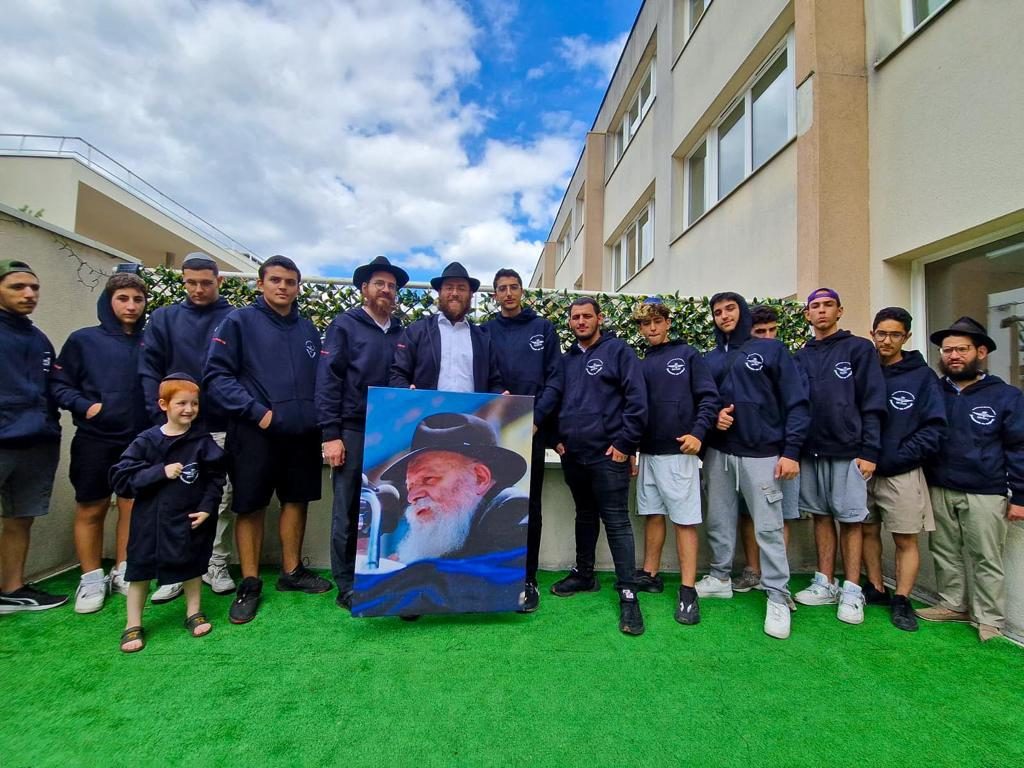
The importance of a Jewish education was a passion my father-in-law, Rabbi Eliezer Niselevitch a”h, founder and director of Les Institutions Shneor, held close to his heart. He vividly remembered his childhood under Communist rule, where he was forced to attend public school. Despite the danger, an underground yeshiva operated with immense mesirus nefesh—sometimes even in his family’s basement.
After a wave of antisemitic attacks targeting Jewish institutions across France, my father-in-law became determined to enroll every Jewish child in a Jewish school, no matter the obstacles. Known for his relentless drive, he fundraised tirelessly to cover tuition, arranged transportation, and provided scholarships for families in need, personally overseeing every detail. This was his life’s mission.
One of these scholarships was offered to Claire*, a high school student.
“She’s almost finished school and perfectly fine where she is,” her mother argued. “Give the spot to someone else—a younger student with a future. She’s happy with her current life.”
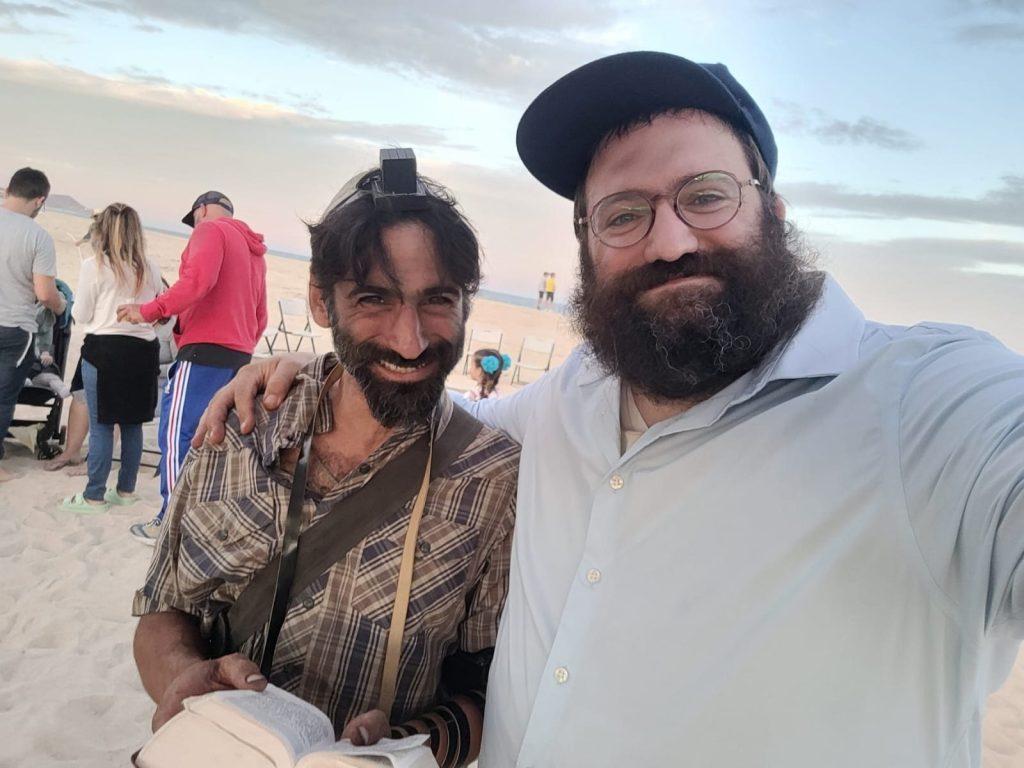
But my father-in-law wouldn’t take no for an answer. My wife joined the effort, promising transportation to and from school for Claire. Eventually, they succeeded, and Claire attended Les Institutions Shneor for her final years of high school. It was a life-changing decision. Claire thrived, and her Jewish education not only transformed her but inspired her entire family. She went on to attend seminary in Israel, married a Chabad bachur, and together they moved on shlichus to run a Chabad house for French speakers in Netanya.
After the events of October 7th and the mounting financial challenges in Israel, Chana, as she is now called, felt overwhelmed by the difficulties of shlichus. She began considering leaving her post and returning to France, where life seemed easier.
Not long after, she had a dream. In it, my father-in-law and his mother—my wife’s grandmother—appeared to her. He pointed at Chana and exclaimed, “This is our pride! This is Shneor’s pride!”
Chana woke up with a start. She realized she was indeed Shneor’s pride and could draw strength from the vision of nachas shining on their faces in her dream.
Inspired and rejuvenated, she stayed in Netanya and founded her own Torah Cafe, empowering other women to find hope and strength during these trying times. In doing so, Chana has continued the legacy of resilience and dedication to Jewish education that transformed her own life.
Rabbi Oshy and Liba Goodman, Chabad of the Sunshine Coast, Queensland, Australia:
The blatant antisemitism and Jew-hatred displayed not only by Hamas terrorists but by many worldwide unified us in a way nothing else could. Jews who had once distanced themselves from their heritage now reached out, seeking connection with their brethren abroad.
Nuri* was born and raised in Israel, but she’d done everything to hide it. Proud of her life in Australia, she celebrated her successful assimilation. She’d never returned to Israel, surrounded herself with non-Jewish friends, and built a promising career.
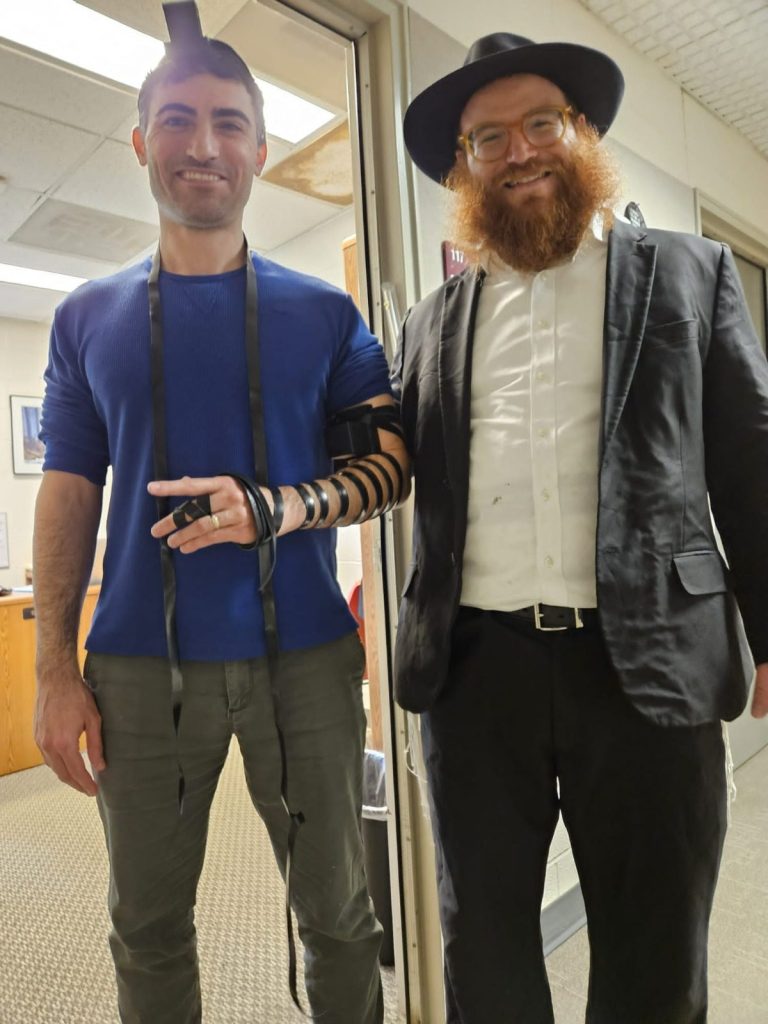
October 7th shattered her world.
Desperate for connection but unsure where to turn, Nuri was directed to us. When we met, she poured out her heart.
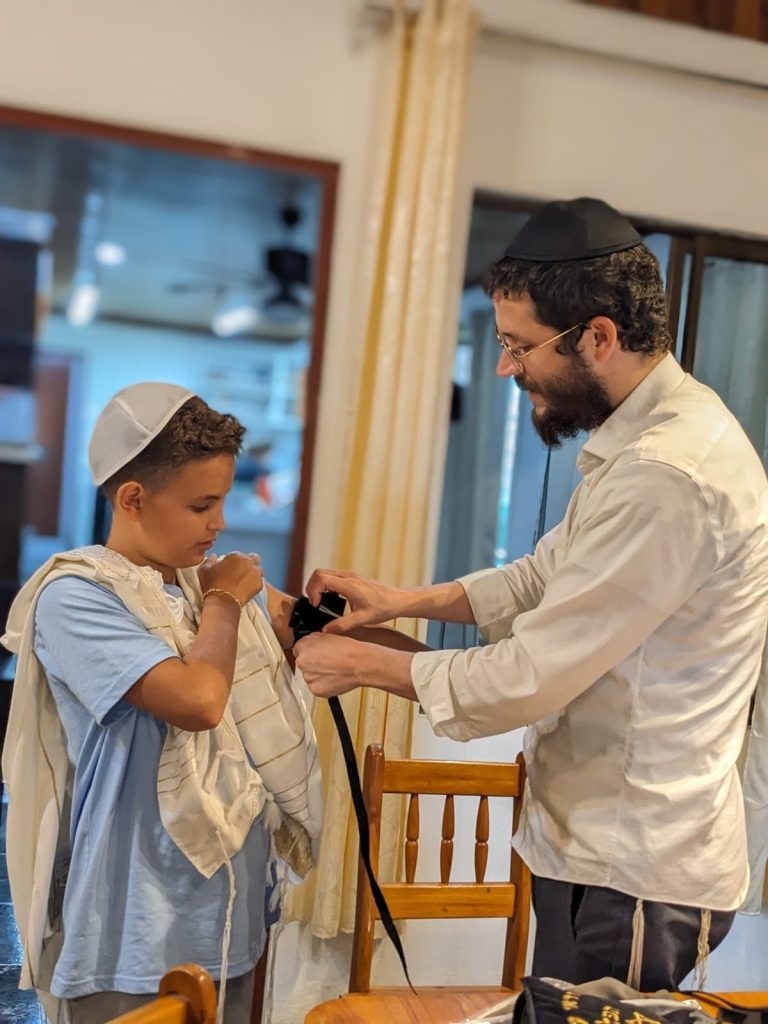
“Am I crazy, Rabbi?” she asked, gripping her coffee mug. “I worked so hard to build a life here, to fit in. Now, everywhere I go, I feel like a stranger in my own home.”
“You’re not crazy,” I assured her. “That’s your neshama crying out, asking to be heard.”
Nuri now lights Shabbos candles each week and recently took her first trip back to Israel.
“It was time to go home,” she said simply.
Rabbi Benny and Sonia Hershcovich, Chabad of Los Cabos, Cabo San Lucas, Mexico:
Meidad* was a firebrand—a passionate, spirited Canadian youth who had temporarily made his home in Cabo. We connected instantly, bonding over our shared roots in Montreal. Everything about Meidad was intense—his energy, his drive, and his unwavering loyalty to those he cared about. He poured his heart and soul into everything he did, from his work to his relationships.
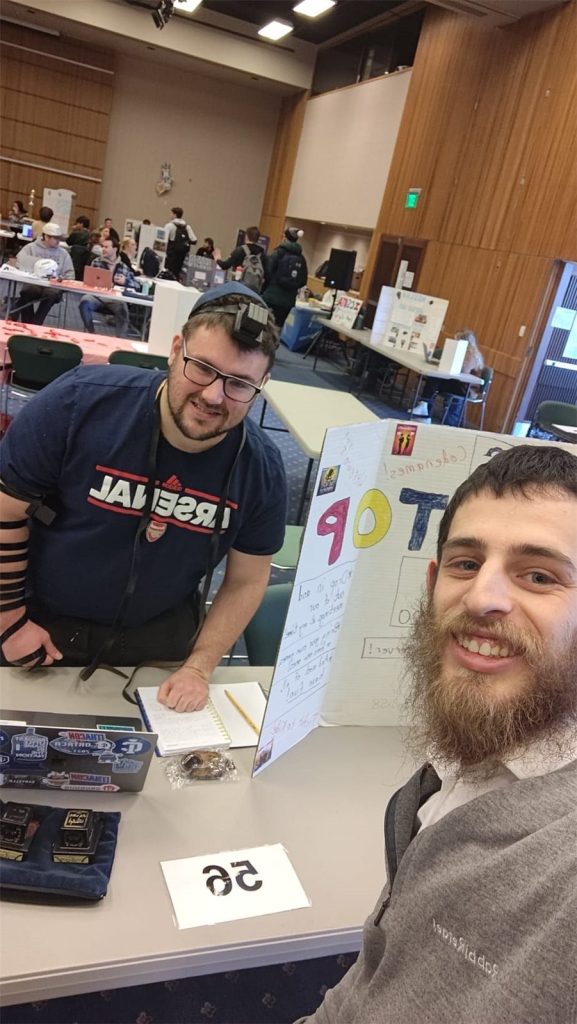
One relationship, in particular, revealed the depth of his compassion. Meidad befriended a young Israeli struggling with drug addiction. He didn’t just offer support; he took him under his wing, caring for him like a brother. Protective and devoted, he made it his mission to help this young man heal, rarely leaving his side.
One day, Meidad walked into the Chabad house, his face etched with pain. His friend had suffered a relapse, and Meidad was taking it hard. I had just received a rare delivery—two pairs of tefillin. Without a second thought, I offered one to him.
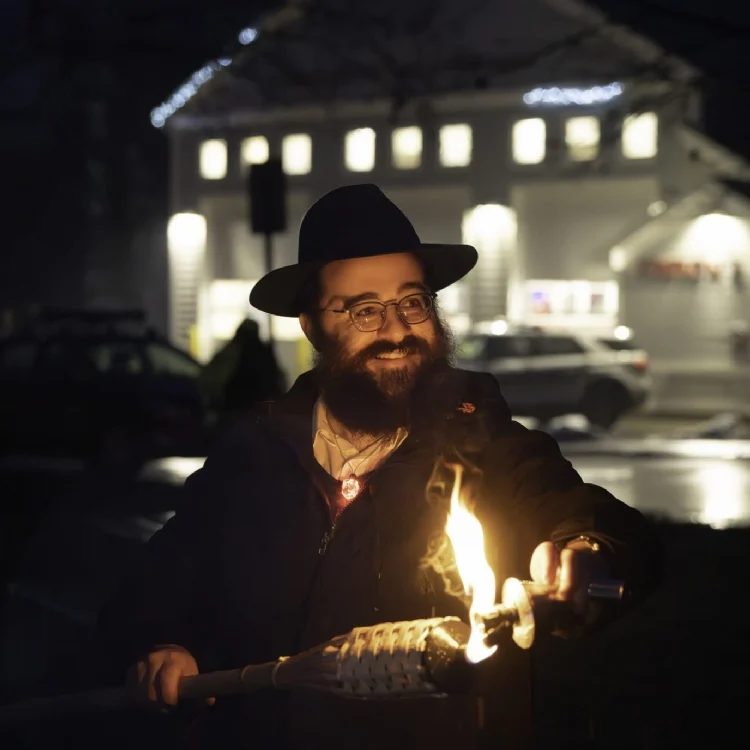
His hands trembled as he reached out.
“Rabbi, you got these for me?” he asked, his voice breaking with emotion.
“Of course, Meidad,” I said. “These tefillin are yours.”
He clutched them tightly to his chest and broke down, sobbing openly. Tears streamed down his face as he wrapped them around his arm for the first time, thanking me over and over, promising he’d treasure them forever. In that moment, his soul shone so clearly, so beautifully.
Meidad was one of the heroic souls taken from us in the horrific October 7th attack. When terrorists stormed the music festival, Meidad stood in the doorway, facing them head-on, shielding others as he fought them off. Despite being gravely injured by multiple gunshots, when a grenade was thrown into the room, Meidad didn’t hesitate. With every ounce of strength he had left, he threw himself on it, giving his life to save his brothers and sisters.
Meidad’s final act was one of ultimate courage and love. His memory is a blessing—a shining light of sacrifice, compassion, and the boundless depth of a Jewish soul. May we all be inspired by his legacy.
Rabbi Alex & Chana Colin, YJP of Chabad of Towson
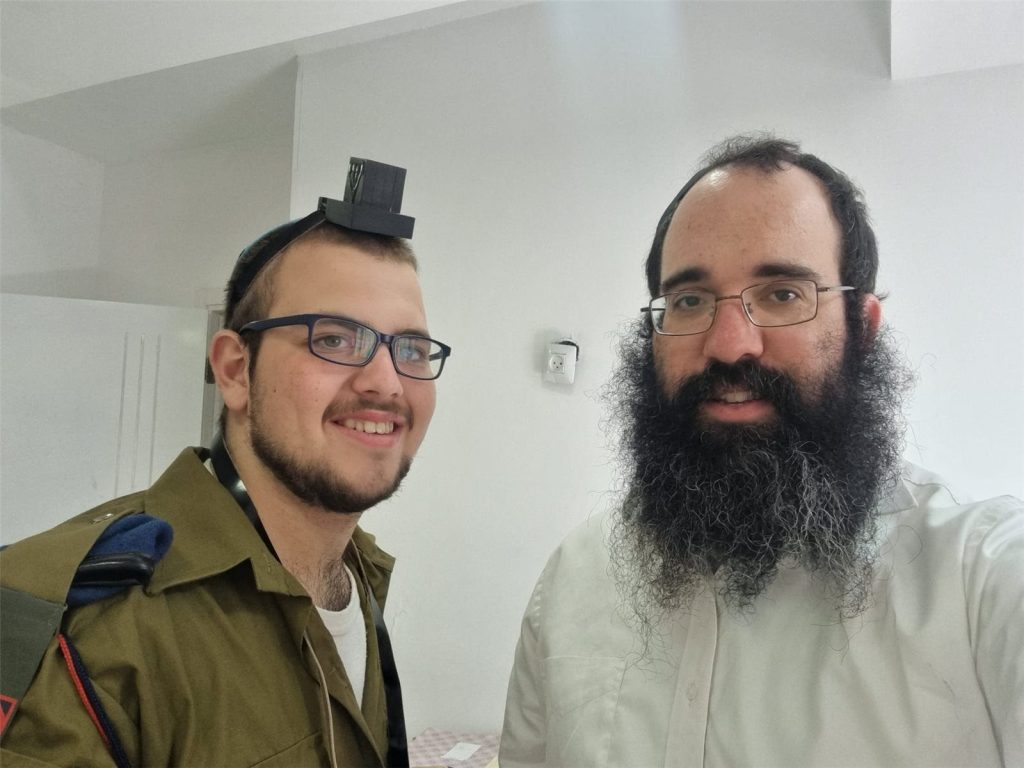
Although our focus is on young professionals, living across from Goucher College brings many opportunities to connect with students.
Recent events have reminded me of the love and patience my rabbis and rebbetzins showed me as a young activist. I feel a duty to offer that same care to today’s youth—outspoken and passionate, but equally deserving of patience and respect.
As a baalas teshuva, I relate to their journey. In college, I was skeptical of Israel and deeply committed to the BDS movement. When I traveled to Haifa to study the Israeli-Palestinian conflict, a friend in the BDS network provided strict guidelines to avoid supporting Israel’s government and economy. But once in Israel, despite my resistance, my Jewish identity stirred, leading me to connect with Chabad back at Goucher. Eventually, a trip to Maayanot opened my eyes to the idea that Judaism isn’t just a religion; it’s a profound connection to Hashem and had a place for me, just as I was.
However, even in grad school back in Israel, my liberal views held strong. When Israel launched Operation Pillar of Defense in 2012, I protested Israel’s actions by wearing a keffiyeh— in Mayanot. Yet Rabbi Levinger’s calm, respectful engagement accepted me as I was. It was his warmth, not arguments, that ultimately opened my heart.
This understanding guides me now as a shlucha. During Pesach, there was a campus encampment of students protesting Israel. They chanted “Free Palestine,” and many were Jewish. I could have felt frustrated with them, but I remembered my own misguided years. We offered matza, which they accepted warmly and even used for a seder. Later, they shared their surplus food with us, which we used for Shabbos, and their leader put on tefillin.
These students remind me of myself, and I’m grateful for mentors who looked past my resistance—even when I wore a keffiyeh—to embrace me. Facts and arguments may fall short, but love and acceptance speak to the heart. This is the message we, as shluchim, must carry forward.
Rabbi Berel and Chana Dubinsky, Chabad of S. Teresa, Costa Rica:
Some in our community prefer to keep their Judaism private, but after the events of Simchas Torah, we felt it was time to make a stand and show our pride. For Chanuka, we organized a “mitzva car parade.” Given the community’s reservations about public displays, we expected a small turnout. But to our surprise, several more than expected joined us!
At our destination, with Jewish music, dancing, and Chanuka treats, a man rushed up to me.
“Are you Chabad? Is there really Chabad here?” he asked, breathless.
“There sure is! Come join us!” I replied.
“I can’t believe it!” he shouted. “Wait one minute; I’ll be back.”
He returned moments later with his family. They had been scheduled to fly to Israel on October 7th to celebrate their son’s bar mitzva, but their flight was canceled amid the chaos of that day, and they never got the chance to celebrate.
“Let’s do it right now!” I said, hearing his story. “I’ve got tefillin right here!”
In a moving moment, the boy donned tefillin for the first time, joined by his father.
Rabbi Raffy and Chana Filler, Chabad at Ithaca College:
Like many college campuses, ours has seen anti-Israel demonstrations. While our large Jewish population has kept things less intense than at places like Columbia or Harvard, the administration has maintained a neutral stance.
After the tragic events of October 7th, we witnessed a surge in Jewish pride and connection. Students who had never put on tefillin before suddenly volunteered, and we received countless calls of support.
Inspired, we planned a Shabbaton to give students an authentic Shabbos experience. Many were hesitant to unplug for 25 hours, and only a few signed up. We questioned whether to proceed for such a small group but reminded ourselves that if our students could step out of their comfort zones for Israel, we could too.
The Shabbaton was a tremendous success. For many, it was their first real Shabbos, leaving a lasting impression so profound that we decided to make it a recurring event.
Afterward, we handed out Sinai Scholar T-shirts with the slogan “I ♥ Being Jewish!” and had a deep conversation about Jewish pride and overcoming fear. Many students committed to wearing their T-shirts on campus.
Sharon* was hesitant. She had seen too much hate and worried about being a target. Her mother even suggested removing her Magen David necklace. But after reflecting on our discussion, Sharon wore her T-shirt proudly, snapping a selfie to share with her mom.
Her mother, Mattie*, was set to run the New York City Marathon a few days later and had been feeling the same anxieties. Inspired by Sharon’s courage, Mattie ran with the names of every hostage pinned on her back and the name of a fallen soldier over her heart. Unafraid, she ran through crowds waving Palestinian flags, crossing the finish line with tears streaming down her face, her heart filled with pride and love for her people—all sparked by a Shabbos we almost didn’t host.
Rabbi Avremi and Chaya Raskin, Chabad of Southern Vermont:
Vermont, known as the home of Bernie Sanders and Ben and Jerry’s, is “true blue.” Many in our community proudly embrace their liberal values and see themselves as social justice warriors, often critical of Israel.
But October 7th struck a chord that ran deep, awakening the Jewish souls of our “woke” community.
Recently, a group from our community traveled to Israel to show support. When they returned, we hosted a Shabbos dinner where they shared their experiences. It was powerful to witness how each of them, once filled with years-old biases, was touched by the warmth of the Yiddishe neshama.
Kyle*, a lifelong Democrat, shared how betrayed he felt by former allies. That Shabbos morning, Kyle was our tenth man for minyan. Just as we were about to read the Torah, he began folding his tallis to leave.
“Kyle, where are you going? We’re about to read the Torah!” I asked.
“Sorry, Rabbi, I gotta go,” he apologized. “There’s a pro-Palestinian protest downtown, and I need to be there to counter-protest!”
“I wouldn’t attend such events,” I warned.
Kyle just laughed it off. But I asked him to stay a few more minutes until someone else arrived, and he agreed before quickly heading out.
He returned a few hours later, visibly shaken.
“It’s the first time I’ve ever truly felt what it means to be Jewish,” he said, his voice thick with emotion. “I’ve never experienced such hatred and hostility! But they can’t scare me off. I’ve never been prouder to be Jewish!”
Rabbi Nosson and Miriam Rodin, Chabad on Campus Karmiel – ORT Braude College, Karmiel, Israel:
One student, Tom B., started coming to our shiurim and became very close with us. His WhatsApp status even read, “Becoming a Baal Teshuva.” Tom volunteered regularly at our Chabad House and was an enthusiastic participant in all we did.
But then, suddenly, he stopped showing up. He stopped volunteering, coming to shul, and eventually seemed to be distancing himself from Yiddishkeit altogether. Tom had such a pure neshama, a love for mitzvos, and a natural connection to our community. I couldn’t understand the abrupt change, and I found myself thinking about him often.
Eventually, I learned he had joined the army, but I lost track of him after that. Then, about a year later, during one of our erev Shabbos programs, where we put on tefillin and serve ice cream, Tom showed up with his girlfriend. I was overjoyed to see him! He even asked to put on tefillin, something he hadn’t done in a long time. Seeing his pintelle yid spark again gave me hope that his connection to Yiddishkeit might rekindle.
Later, as part of our Chabad House activities, we decided to visit an army training base where medics who had been deployed to Gaza were stationed. It was a long two-hour drive, but one of our students, Michael, was there, so we made the trip to bring them simcha, serve a BBQ, and help them put on tefillin.
When we arrived, we were surprised to see Tom there. He was just as shocked to see us! One of the soldiers nudged Tom to share his story about being spared from attending the Nova Music Festival on October 7th, where so many Yidden tragically lost their lives.
Tom explained that he had planned to go to the festival—dancing at music events is one of his favorite things. But on Simchas Torah, he had a change of heart and decided to go to shul instead, dancing with the Torah rather than at the festival. Because of that choice, he was spared from a devastating fate.
It was then that Tom opened up about why he’d stopped coming to our programs. During his time at our Chabad House, he was becoming closer to Yiddishkeit, but his parents were unhappy about it, which discouraged him and led him to distance himself from the community and his religious journey. However, after October 7th, when his parents realized how he had been saved by choosing to go to shul, they completely changed their minds. Now, they’re supportive of him becoming closer to Yiddishkeit.
Tom joined us this Simchas Torah to dance with the Torah once again, and we’re thrilled to welcome him back, knowing how his journey has come full circle.
Rabbi Shmulik and Mushka Rabbi Yitzchok and Rochel Wagner, Chabad of Richmond, California:
While we were still grappling with the horrific news of our brothers and sisters in Eretz Yisrael slaughtered by the thousands, our community faced an additional blow when the city council announced a resolution condemning Israel for “ethnic cleansing” and “genocide.” The resolution, which conveniently omitted any mention of Hamas or its role in the conflict, was a painful insult. To add further injury, the council had the audacity to invoke the Holocaust to bolster their claims against Israel.
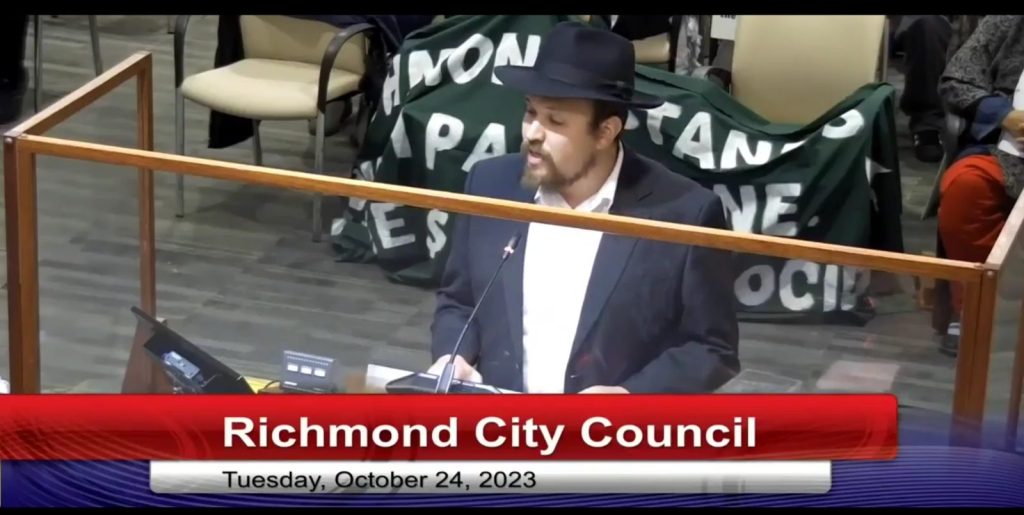
For many in our community who align with liberal values, this resolution crossed a line they hadn’t known existed. I received an overwhelming number of texts, calls, and emails from people who had never stepped foot in a shul or met a rabbi, seeking tefillin, Shabbos candles, or simply a spiritual connection to their people.
When the council announced a session to vote on the resolution, I knew I had to speak. With only a few minutes to make my point, I wanted to use the time wisely. I was given plenty of talking points—justifications for Israel’s actions and critical facts about the conflict—but none felt right for this moment. After consulting a nearby shliach, he shared a letter from the Rebbe that solidified my decision to take a different approach. The Rebbe emphasized that, while protesting and demanding justice is important, a community leader’s role during a crisis is to urge their community to increase in Torah and mitzvos.
Standing before the council, surrounded by a sea of angry Palestinian flags and anti-Israel chants, I spoke from the heart. I explained that this resolution only added to the darkness already suffocating the Jewish community, but our response would not be to argue or match hate with hate. Instead, we would fight with light, increasing acts of kindness, good deeds, and Torah. Baruch Hashem, the sincerity of my words was met with a standing ovation. Of course, this enraged the anti-Israel crowd, who ramped up their hateful chants in response.
Unfortunately, the resolution passed, but our mission remains clear: to combat the darkness with light, spreading Torah and mitzvos to illuminate the world during these difficult times.
Beis Moshiach #1436 • pp. 22-29, 35
© 2026 Beis Moshiach Magazine. All rights reserved.
This article originally appeared in Beis Moshiach #1436. You are welcome to share it with friends and family by email or in print, provided that you do not change, add to or omit any part of it, you credit the author and Beis Moshiach, and you include a link to archive.bmoshiach.org (written out in full in printed copies).
To republish this article in a newspaper, magazine, book or website, please request permission in advance at [email protected].