When Kindness Could Have Saved a Life
From the TzaddikStory.org collection
As heard from Rabbi Avrami Fisher, as told to Rabbi Nachman Seltzer. Some details were changed.
In Elul of 5784 (2024), something very sad happened in Kfar Chabad, Israel. A 12-year-old boy named Mendel Bolton went to a friend’s Bar Mitzva, excited to join the simcha. But during the party, some boys wouldn’t let him join their circle of dancing. On top of that, a photographer got upset and yelled at him for touching his equipment. Mendel felt left out and very hurt.
He ran out of the hall crying, feeling very upset. Outside, he collapsed on the ground. By the next morning, Mendel had tragically passed away. Even though Mendel didn’t have any serious health problems, doctors explain that when someone feels really sad, lonely, or left out, their heart and body can sometimes react in a way that makes them very sick. This is called “broken heart syndrome,” and it can happen when the pain someone feels inside becomes too much for their body to handle.
Mendel’s story shows us how much our actions and words can hurt or help someone else. Even if we don’t mean to, being unkind or leaving someone out can hurt them more than we realize. That’s why it’s so important to include others and choose kindness—our words have the power to make someone feel happy and loved, or hurt and lonely.
Instead of pushing someone away, we can welcome them and make them feel like they belong. Imagine a new kid at school sitting alone—what if you invited them to join your game? That one small act could make their whole day bette. Instead of saying something mean, we can say something kind. Our words have the power to hurt or heal, and even small acts of kindness, like a smile or a compliment, can make someone feel cared for and loved. You never know how much your kindness can mean to someone!
* * *
Sruly Friedman was attending a local Jewish day school. He was popular, and he liked playing baseball, soccer, and riding his bike. Sruly was the leader of a large circle of friends. He could do no wrong in their eyes.
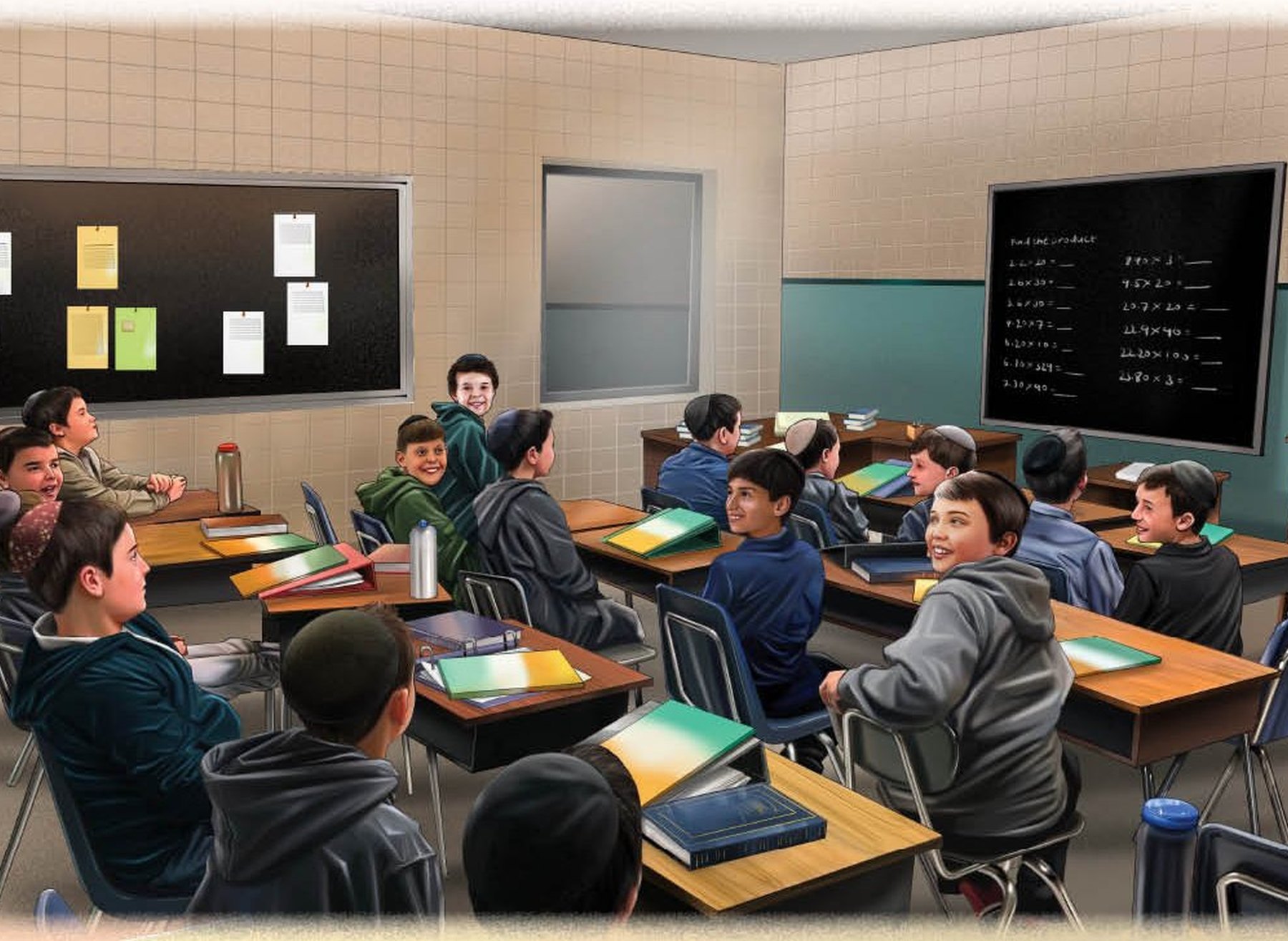
At the start of fifth grade, Sruly’s class received a new boy. His name was Yuri. He spoke with a heavy accent from Ukraine, and wore different clothes than everyone else. He seemed unsure how to act, and the other kids noticed it right away.
Yuri didn’t really fit in. He was quiet and didn’t talk much, which made it easy for some kids to tease him.
Sruly leaned over to his friend, Dovid, during recess, snickering and laughing as he pointed toward Yuri. “Look at his sweater! Did he borrow it from his grandmother?” he whispered.
Dovid laughed nervously. “I don’t know, Sruly. Maybe it’s all they have.They are new to America.”
Sruly just looked away like it didn’t bother him. “Still, doesn’t he know how to dress? Yuri the fury!” he said with a smirk, making sure the teacher wasn’t nearby.
Yuri, overhearing the laughter but not all the words, looked down at his shoes, pretending not to notice. But his red cheeks showed how upset he felt.
After class, Yuri quietly approached his desk, trying to stay out of sight. Sruly turned to his friends, whispering again, “I bet he didn’t even get the joke. Let’s repeat it and make sure he understands what we mean.”
This time, Dovid paused. “Sruly, maybe we shouldn’t. It’s not nice.”
“Oh, come on,” Sruly said with a laugh. “It’s just a joke. If he wants to fit in, he needs to learn.”
* * *
This went on for some time, but no matter what Sruly and his friends said or did, Yuri didn’t respond, which frustrated them.He was like a closed book. Sruly and his friends didn’t understand it.
“Maybe he doesn’t cry at all,” Moshe suggested.
“No way—everyone cries.”
“Maybe he’s just really tough,” Chaim said.
“Exactly,” Sruly said, narrowing his eyes. “He thinks he’s stronger than us. But we’ll prove he’s not.”
One afternoon, while hanging out at the park, Sruly brought up the idea again. “Akiva,” he began, “how do we get Yuri to cry?”
Akiva raised an eyebrow. “Why do you even care? Just leave him alone.”
“You don’t get it,” Sruly replied, his voice serious. “If we make him cry, that means we win! We’d prove he’s just a wimp.”
Akiva thought. “I don’t know, Sruly. It feels kind of… mean. Like really mean.”
“Mean?” Sruly laughed. “It’s fun! Come on, Akiva, don’t be such a baby.”
Another boy in the group nodded. “Okay, Sruly, so what’s the plan?”
Sruly was already planning. “Tomorrow, we’ll show him who’s really in charge.”
* * *
The plan was simple. At a set time, one of us would give the signal, and we’d all turn around and stare at Yuri. It was like a staring contest—but he didn’t know he was part of it. If six boys stared at him, acting like something was seriously wrong with him, he’d feel so embarrassed that he’d finally break down and cry. That was the goal. If he cried, we’d win. If he didn’t, we’d give up.
The next morning, we arrived at school, barely able to contain our excitement. The plan felt like a secret mission. We took our seats, each one of us waiting for the perfect moment. Yuri sat quietly, his head down, completely unaware of what was about to happen.
“Do you think this will really work?” Akiva whispered to Sruly as the teacher wrote something on the board.
“Of course,” Sruly said confidently, a mischievous grin on his face. “Nobody can handle being stared at like that. Trust me, he’ll break.”
“What if the teacher notices?” another boy asked.
“Relax,” Sruly said with a smirk. “What, are we going to get in trouble for just looking at him? Stick to the plan. Trust me, I’ve got this.”
We all sat still, pretending to pay attention to the lesson, while the minutes ticked by. At exactly 11:07, Sruly cleared his throat loudly—a fake cough. The signal.
As one, we turned our heads and locked our eyes on Yuri.
At first, Yuri didn’t realize what was happening. He was focused on the blackboard and what the teacher was saying. But when he glanced around the room, he noticed it—six boys staring straight at him. Their eyes were locked on him like he was some sort of strange creature.
The whispers spread. Soon, other kids were turning to look at him too. Yuri’s face got redder and redder, and his hands were holding tightly onto his desk. He looked down at his notebook, trying to pretend nothing was happening.
Yuri’s breathing got faster. Everyone staring at him felt like too much. “Why are they doing this to me?” he thought, his heart beating so fast it felt like it might burst. He looked at the teacher, hoping for help, but the teacher kept talking like nothing was wrong. Yuri felt trapped, like he was all alone under a bright spotlight.
Two big tears slid down his cheeks, and then more followed.
“He’s crying!” Sruly whispered to Akiva, giving him a gentle poke with his elbow.
“We… did it,” Akiva said quietly, but he didn’t sound excited anymore.
Yuri wiped at his face, trying to hide his tears, but they just kept coming.He cried quietly, his shoulders shaking, and he couldn’t hold back.
Sruly looked away, suddenly uncomfortable. “Guys, let’s stop,” he said to his friends.
“But we got what we wanted,” one of them said.
Sruly didn’t reply. Instead, he looked down at his desk, realizing that their “win” didn’t feel good at all. Hurting someone didn’t feel as great as he thought it would.
* * *
Years went by, and Sruly’s bullying in fifth grade became a distant memory. Life moved on, and Sruly grew into a bright and successful yeshiva bachur. He learned well, had great chavrusas, and was respected by his friends and rebbeim. His parents couldn’t have been prouder. Even before they thought of marrying him off, shadchanim began knocking on their door with ideas for shidduchim.
One evening, as the family sat around the Shabbos table, Sruly’s father smiled and said, “Sruly, it looks like it’s time to start thinking about your future. What do you say?”
Sruly looked up from his sefer. “I guess… if you think I’m ready, Tatty.”
His younger siblings giggled. “Sruly’s going to get married!” one of them sang.
A few months later, Sruly met his bashert, Racheli, and before long, they were married. Life was exciting and new, filled with the joy of building a home together. Within a year, their first son, Avrohom, was born.
Racheli held the baby close, her eyes shining. “Look at him, Sruly. Our first little boy.”
“He’s perfect,” Sruly said, leaning in to tickle Avraham’s little fingers. “I’m going to be the best Tatty I can be.”
Avi was a bright, happy boy, just like his father, Sruly. He had a big smile and loved being around people. But one day, something changed. As he started grade school, it was like he became a turtle, hiding inside his shell.
At first, it was small. Avi stopped speaking up in class and didn’t play with his friends as much. Sruly and Racheli thought it was just a phase, but it only got worse. Avi became very quiet and shy. He wouldn’t even say hello to their neighbors.
“How was school today, Avi?” Racheli would ask.
“Fine,” Avi said softly, staring at his plate.
Sruly tried to cheer him up. “Avi, want to play outside? We can get ice cream after!”
“No thanks, Tatty,” Avi replied softly. “I think I’ll just go to my room.”
Avi, who had once been so full of life, was now too nervous and scared to talk to anyone. Sruly and Racheli tried everything—therapy, horseback riding, and even medical tests. But nothing helped.
“We can’t find anything wrong,” one doctor said. “It’s a mystery.”
Avi kept getting worse. He stayed away from people, froze up around other kids, and wasn’t the happy boy he used to be. Sruly and Racheli felt broken.
One day, as Sruly drove Avi home from yet another appointment, he looked at his son in the backseat, staring quietly out the window. Sruly’s heart felt so heavy. How could he help him?
* * *
As they drove past a park, Sruly’s mind drifted back to his own childhood—his fifth-grade year. He had been so different from Avi—always confident, loud, and the center of attention. Then, a memory hit him like a brick.
Yuri.
Sruly’s grip on the steering wheel tightened. He remembered Yuri clearly: the quiet boy in his fifth-grade class who didn’t seem to fit in. Sruly and his friends had teased him, made fun of him, and said mean things. He remembered how hard they’d tried to make Yuri cry—and how, in the end, they succeeded.
Sruly’s stomach felt like a rock. Could this somehow be connected? It didn’t make sense, but he couldn’t push the thought away. Maybe this is coming back to me from Heaven, he thought. The way I treated that boy back then – maybe now it’s my son who’s feeling the same pain.
“Tatty?” Avi’s soft voice interrupted his thoughts.
“Yes, Avi?” Sruly asked, shaking himself out of his thoughts.
“Do you think I’ll ever feel okay again?” Avi’s voice was small and shaky.
Sruly’s heart hurt as he glanced back at Avi. “Of course, you will, Avi,” he said softly. “You’re strong, and we’ll figure this out together. I promise.”
But even as he said the words, Sruly couldn’t shake the heavy feeling in his chest. Was this more than just a tough time for Avi? Could it somehow be connected to something he had done years ago?
Sruly realized there was something he hadn’t done yet – something important. Something he needed to make right. Not just for Avi, but for himself too.
* * *
Suddenly, memories rushed through Sruly’s mind. He remembered the cruel things he and his friends had done to Yuri – the teasing, the jokes. How strange it felt that his own son, Avi, was now in fifth grad – the same age Sruly had been when Yuri joined their class.
Could this really just be a coincidence? Or was Hashem trying to send him a message? Sruly’s chest tightened with the thought.
“Maybe this is a punishment for what I did,” he whispered to himself. “I need to apologize to him!”
The more Sruly thought about it, the more determined he became. “Why didn’t I think of this before?” What I did was so wrong, and saying sorry is the least I can do.”
Without wasting any time, Sruly started calling his old childhood friends, hoping someone could help him find Yuri. But one by one, the answers were the same: “I don’t know,” “I haven’t kept in touch,” or “Sorry, no idea.”
Finally, Sruly got a lead. One of his friends remembered that an elderly aunt of Yuri’s had lived next door to them. “I think I still have her number somewhere,” the friend said.
Sruly quickly jotted down the number and stared at it for a moment. “Alright,” he thought. “This is my chance. I’ll call her and see if she can help me find Yuri.”
* * *
“Hello?”
“Hi, is this Mrs. Goldsmith?” Sruly asked nervously.
“Yes, who is this?” she answered in a thick accent.
“This is Yisroel Friedman. I’m trying to find my old classmate, Yuri Weinberg. I heard you’re his aunt? I’d really like to talk to him. It’s important.”
There was a long pause. Then Mrs. Goldsmith’s voice trembled. “…Yuri? Oh no… Yankel, Yankel, do you hear this? Someone is calling asking for Yuri!”
Sruly’s chest felt tight because he was scared something might be wrong and he desperately wanted to apologize to Yuri.
Mrs. Goldsmith sighed deeply, her voice shaky. “No, you can’t speak to him. He’s… gone. Our Yuri is no longer alive with us.”
Sruly froze. “What… what happened?” he asked softly, dreading the answer.
Mrs. Goldsmith began to cry. “He went through so much. The kids at school were so mean to him. They made him feel like he didn’t belong, like he wasn’t good enough. After a while, he couldn’t take it anymore. He told his parents he was tired of being hurt by people. And then, one day… well we never saw him again.”
Sruly felt like the world was crashing down around him. His legs felt weak, and tears stung his eyes. Shameful memories flooded his mind. He knew he had been the leader of those boys.
“I’m so, so sorry,” Sruly whispered, his voice trembling. “We were so young… what did we know? I never meant for this to happen. I didn’t realize how much he was hurting. Can you please tell me where he’s buried? I need to go and say I’m sorry.”
Mrs. Goldsmith was quiet for a moment before giving him the information. Her voice was filled with sadness as she ended the call.
* * *
Sruly sat down, overwhelmed by guilt. He had wanted so badly to make things right with Yuri, but now it was far too late. The only thing he could do was visit Yuri’s kever and pray, asking Hashem to forgive him for the pain he had caused another boy so many years ago when he himself was just a kid—and to guide him in finding a way to do true teshuva.
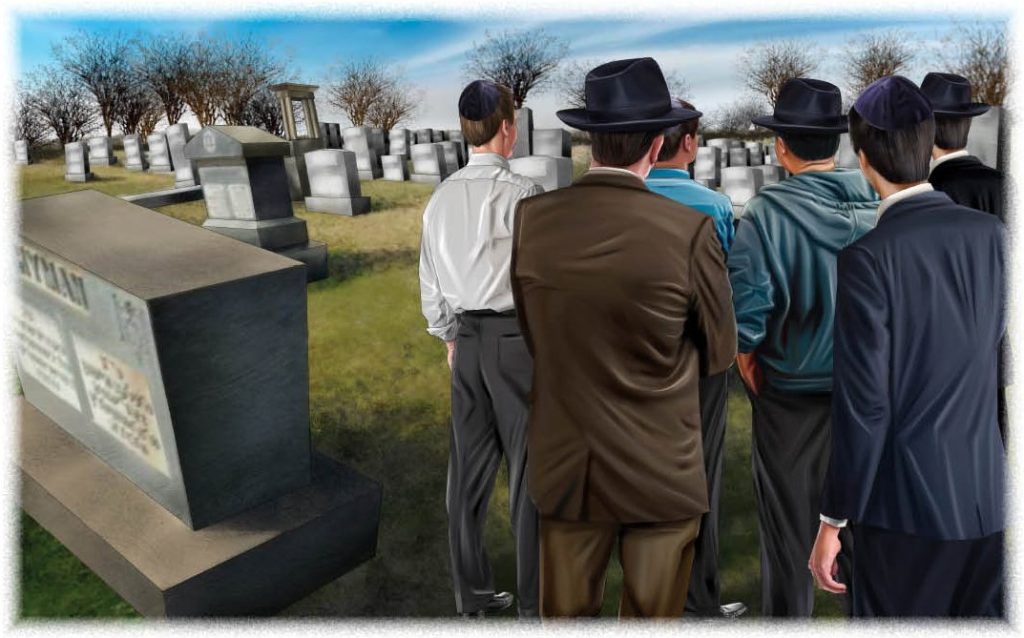
A few days later, Sruly gathered a minyan, including boys from his old class, to visit Yuri’s grave.
When they arrived, Sruly stepped forward first. His voice shook as he spoke. “Yuri, I’m so sorry. We didn’t understand—we were young, we were foolish kids, and we didn’t think about what we were doing. But you became our target, and that was so wrong. I hope you can forgive me. I’ll do my best to honor your memory.”
One by one, his friends followed. “Please forgive us,” Akiva said quietly. Another added, “We wish we could take it all back.”
They recited Kaddish together, and as the wind whispered through the trees, they stood in silence, letting the moment sink in. It was their turn to cry, and the tears flowed freely.
* * *
A few months later, during his lunch break, Sruly’s phone rang. It was Racheli, and her voice was filled with excitement.
“Sruly, you won’t believe this!” she said.
“What happened?” Sruly asked, sitting up straight.
“The menahel called. Avi raised his hand in class today! And guess what – yesterday, he asked a boy to play during recess. Do you think he’s finally getting better?”
Sruly’s heart swelled with hope. “Chasdei Hashem,” he said, a smile spreading across his face. “It sounds like he’s starting to come out of his shell.”
As Avi continued to improve, Sruly couldn’t stop thinking about the painful lesson he had learned. He felt a strong need to share his story with others.
“Maybe,” he thought, “if kids hear this story, they’ll think twice before saying something mean. Maybe they’ll understand how much words can hurt and choose to be kind instead. And instead of making someone cry, they’ll make someone smile.”
Beis Moshiach #1441 • pp. 57-62
© 2026 Beis Moshiach Magazine. All rights reserved.
This article originally appeared in Beis Moshiach #1441. You are welcome to share it with friends and family by email or in print, provided that you do not change, add to or omit any part of it, you credit the author and Beis Moshiach, and you include a link to archive.bmoshiach.org (written out in full in printed copies).
To republish this article in a newspaper, magazine, book or website, please request permission in advance at [email protected].