Tell Him I See Nothing

From the TzaddikStory.org collection
Hi, my name is Rabbi Pinchas Baumgarten. Today, I’m a shliach of the Rebbe in Buenos Aires, Argentina, where I work with the Jewish community. But I want to tell you a story from many years ago.
It’s a story about a miracle I witnessed with my own eyes—a miracle that showed me the incredible power of the Rebbe’s blessings, and the importance of doing mitzvos. I’ll never forget it!
It was a hot summer day in 1973, during the Nine Days before Tisha B’Av. Back then, I was a young man, engaged to my kalla from Argentina. While waiting for the wedding, I spent my time learning Torah at 770, the central hub of Chabad in Crown Heights, Brooklyn.
That morning started like any other. I went to my usual spot at the table, opened my sefer, and began to learn. Little did I know, it would be a day I’d never forget.
As I was learning, I suddenly heard my name being called. It was Rabbi Binyamin Klein, one of the Rebbe’s secretaries.
“Pinchas, I need your help. Come with me,” he said.
I was surprised. I closed my sefer and followed him to his office.
As we walked, Rabbi Klein explained, “There’s a group of people here who only speak Spanish. I can tell they need something important, but I can’t understand what they’re saying. I know you speak Spanish—can you translate for them?”
I nodded yes. My father, Rabbi Berel Baumgarten, had been a shliach in Argentina for many years, so I had learned Spanish growing up.
When we got to the office, I saw three men, apparently brothers, walking back and forth nervously. They looked really worried. As soon as they saw us, they started talking quickly in Spanish. One of them, a man with sad eyes, looked very upset.
“Por favor,” he said, Spanish for please, his voice shaking. “We need to see the Rebbe. I’m sick, and the doctor says I might not have much time left.”
Rabbi Klein looked at me, clearly unsure what to do. “What are they saying?” he asked.
I translated, and Rabbi Klein let out a deep sigh. “I understand this is urgent,” he said, “but the Rebbe doesn’t meet anyone during the Nine Days before Tisha B’Av. They’ll have to wait until after. These are the Rebbe’s strict instructions.”
The sick man lowered his head sadly, and his brothers glanced at each other, not knowing what to do.
I turned back to Rabbi Klein, desperate to help. “They’re so heartbroken. The doctor said he might only have a few days left. Isn’t there any way they can meet with the Rebbe, just this once?”
Rabbi Klein shook his head firmly. “I wish I could help, but they’ll have to wait.”
The sick man lowered his head, and his brothers exchanged anxious looks. Suddenly, one of them reached into his pocket and pulled out a stack of money.
“Here,” he said, holding it out to Rabbi Klein. “We’ll pay anything. Please, get us an appointment with the Rebbe. We’ll give you everything we have.”
Rabbi Klein didn’t take the money. He turned to me and said, “Tell them I’ll schedule them for the first yechidus after Tisha B’Av. That’s the best I can do.”
I translated, but they were clearly still heartbroken.
“Where are you staying?” I asked, trying to lift the mood a little.
They told me they’d rented an entire floor at a fancy hotel near Central Park. They were Sephardim from South America, very wealthy, and had even brought their surgeon from Argentina to ensure the best care.
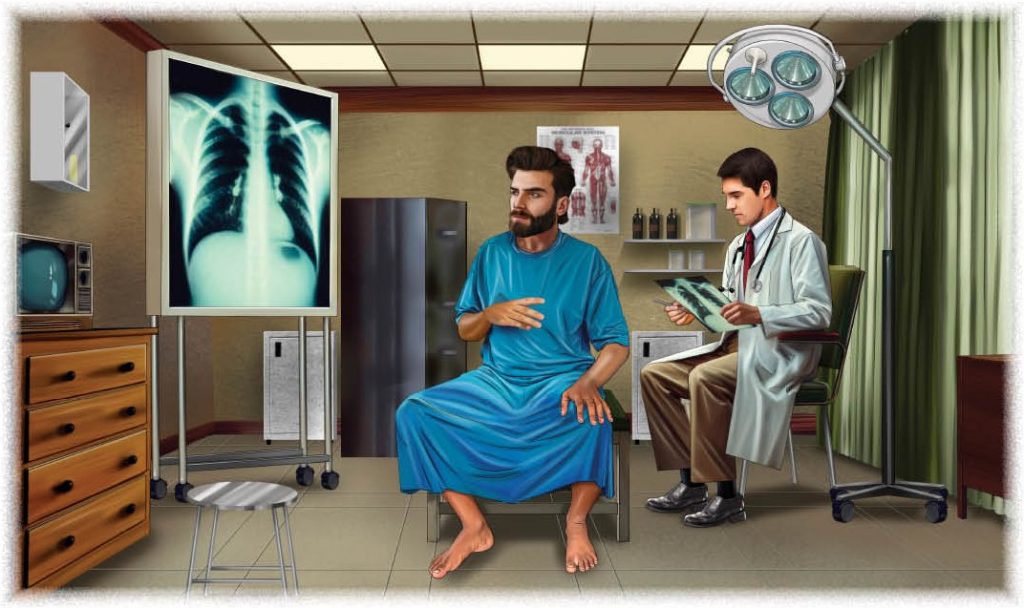
They explained that they’d come for life-saving surgery with one of the top doctors in New York. But a friend of theirs, a religious man they trusted, had insisted they visit the Rebbe. “He said only the Rebbe’s blessing could ensure the surgery would go well,” they told me.
I was amazed by their faith. Even though they didn’t have much experience with Yiddishkeit, they believed in the power of a tzaddik.
* * *
“For the Rebbe’s blessings to work, you need something to hold them,” I explained. “It’s like needing a cup to hold water. A mitzva is the cup that holds those blessings.”
They looked at me, excited to know more. “What mitzva should we choose?” they asked.
I suggested they start putting on tefillin, explaining how special it is to Hashem and how it’s a mitzva they could do every day.
“Tefillin?” they said, confused. “We’ve seen them, but we don’t know how to use them.”
“Don’t worry,” I said. “Let’s go buy some tefillin, and I’ll teach you.”
They agreed. I took them to a sofer on Kingston Avenue, and they bought three pairs. I showed them how to put on tefillin, and they promised to wear them every day.
Every morning until they left, I traveled to Manhattan to help them put on tefillin and learn more about Yiddishkeit.
Finally, after the Nine Days, their appointment with the Rebbe arrived.
* * *
The morning before the Yechidus, I wrote a note to the Rebbe explaining the situation. I included how the brothers had begun putting on tefillin every day as a merit for their sick brother to recover.
Late that night, when the appointment time came, the sick man, his wife, and his two brothers arrived at 770. I was there too, to help translate.
Even though the Rebbe knew Spanish, he still sometimes used a translator. Some people thought it was to give visitors more time to think about what they were saying, while others believed there was a deeper, spiritual reason—something only the Rebbe, as a tzaddik, truly understood. That day, the Rebbe chose to have me translate, which I had done a few times before.
As we stepped into the Rebbe’s room, I felt something powerful. My heart was pounding. I knew that with the Rebbe’s blessings, miracles could happen.
The Rebbe kindly asked everyone to sit, but as a Chassid, I knew we don’t sit in front of the Rebbe. I stood there, ready to translate.
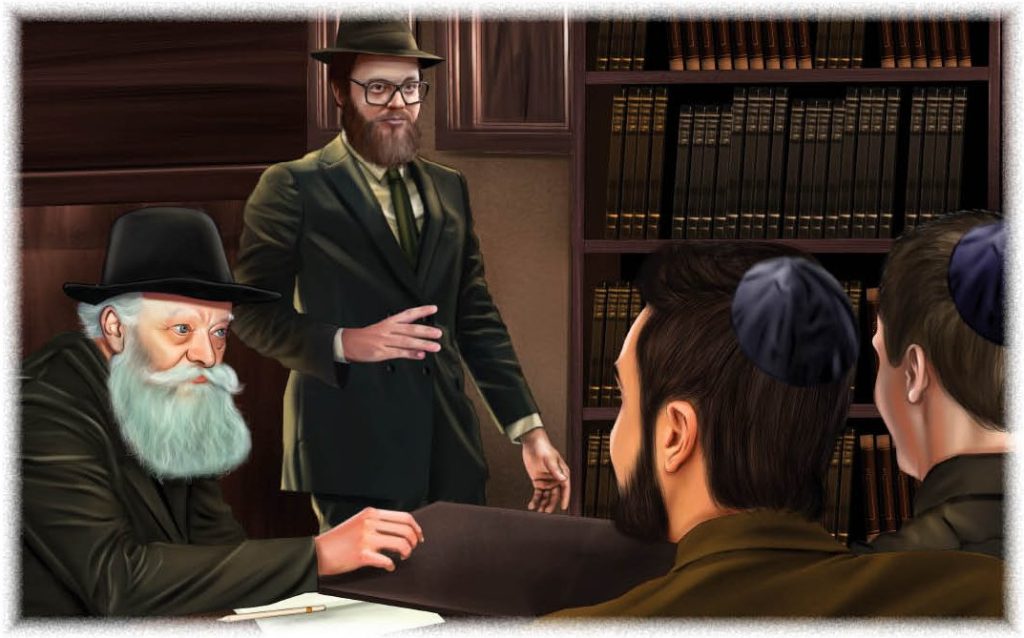
The Rebbe read the note I had written carefully. Then, he looked at the man’s wife and spoke gently. “If you want your husband to get better, you must make sure your home is completely kosher, and everything he eats, even outside the house, must be fully kosher.”
I translated the Rebbe’s words. Then, the Rebbe turned to the brothers and said firmly, “If you want your brother to recover, you must all promise to keep kosher, too.”
As I translated, the Rebbe corrected my Spanish, showing that he understood the language perfectly. “That’s not actually what I meant,” he gently said, so I tried again. This time, the Rebbe was satisfied. It was clear he knew Spanish, but had chosen to have me translate for some other reason.
Then the Rebbe said, “Ask him if he could show me where the disease is.”
I translated, and the man stood up, lifted his shirt, and pointed to the area where he was sick.
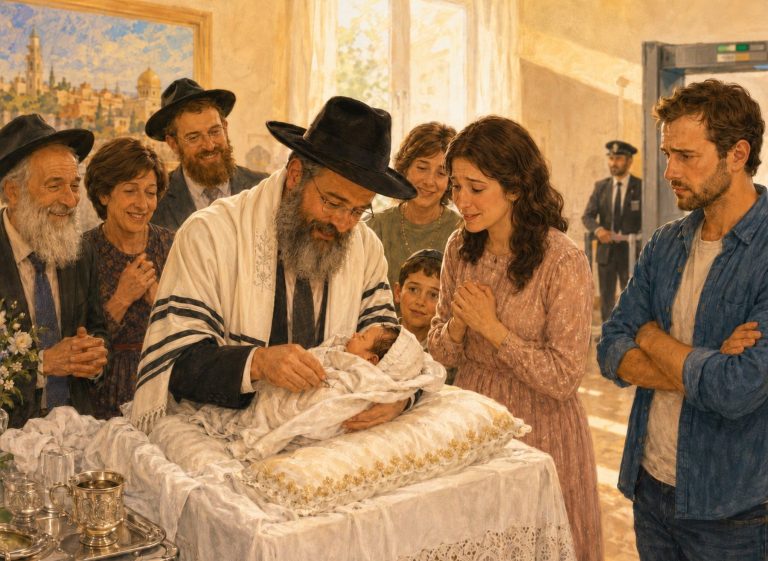
The Rebbe put on his glasses and leaned forward to look closely. After a moment, the Rebbe turned to me and said, “Zog im, ich zeh gornisht—Tell him, I see nothing!”
The Rebbe gave the family many brachos. It felt like something special, something holy, was happening. I could feel the energy in the room. It seemed the meeting was coming to an end when the Rebbe turned to me once more and said, “Maybe he can show me the spot again.”
The man lifted his shirt again, and the Rebbe leaned in, putting on his glasses again. He studied the area carefully, then repeated, “Zog im, ich zeh gornisht—Tell him, I see nothing!”
The Yechidus was over. The family rose to leave, and I reminded them to walk backwards out of the Rebbe’s room, as was proper. But I couldn’t move. I stood frozen, filled with awe. I realized that when the Rebbe had said, “I see nothing,” it wasn’t just words—he’d been making a miracle happen.
The disease was fading away, right before my eyes. I simply knew it, even though I couldn’t see things the way the Rebbe did.
Rabbi Leibel Groner, one of the Rebbe’s secretaries, gently pulled me out of the room. “What’s wrong, Pinny?” he asked.
I looked at him, my voice shaking. “The Rebbe told the man he saw nothing! The disease is gone! It must be!”
Rabbi Groner smiled and waved his hand as if it was no big deal. “Ah,” he said. “Miracles like this happen in the Rebbe’s room every day.”
* * *
The next day, the man and his family went to the hospital to meet the top doctor who was supposed to perform the life-saving treatment. I couldn’t stop thinking about them and the Rebbe’s bracha.
Later, I heard what happened at the hospital.
The doctor, a world-famous expert, entered the room with a serious expression and a clipboard in hand. He asked the man to show him where the disease was. The man lifted his shirt, and the doctor leaned in to examine the area carefully.
The doctor frowned, adjusted his glasses, and looked again. And again. With each moment, his confusion grew. “This can’t be,” he muttered. Finally, he straightened up and shook his head.
“I don’t understand,” the doctor said, turning to the family in disbelief. “Why did you travel all the way from Argentina? There’s nothing here—no disease at all! I see nothing! You’re completely healthy!”
I heard that the doctor almost seemed annoyed, as if he thought they’d wasted his time.
When the family told me this later, I could so clearly picture the stunned silence in the room. No one could find the words to speak. The man, his wife, and his brothers must have looked at each other in such shock. The Rebbe’s bracha had come true. Right away! The disease was gone—completely gone. Even the doctor saw nothing.
From that day on, the brothers remained very careful about keeping kosher. They kashered their kitchens, replaced their pots, pans, and dishes, and made sure all their food had proper kosher certification. Even when eating out, they only went to kosher restaurants.
* * *
Just a few months later, in the month of Kislev, I got married. The chasuna took place in Argentina, where my kalla was from. Her father was a shochet, supplying kosher meat for the local Jewish community.
I invited the man and his brothers to join us. After everything we’d experienced together, I was certain they’d come. But to my surprise, none of them showed up.
“That’s strange,” I told my father the day after the wedding. “I was sure they’d be here!”
My father paused and looked at the floor. I could tell something was wrong.
The next day, I asked him again. “Ta, do you know why they didn’t come…? Did you hear anything?”
My father sighed. “They went on vacation to Punta del Este, a beautiful island in Uruguay,” he said softly. “But sadly, they weren’t careful about keeping kosher there. In fact, they stopped keeping kosher completely.”
“Within a few days, the disease came back, and he… passed away, last week,” my father said quietly. “It was as if the Rebbe’s blessing stopped working when they stopped listening. When they visited the Rebbe, he was very close to dying, but the blessing gave him more time—a pause. But as soon as they stopped keeping kosher, that pause ended.”
Tears filled my eyes as I remembered that miraculous meeting. I had seen with my own eyes how the Rebbe’s blessings had changed nature and healed the man. But now I understood—the blessing was tied to the mitzva of keeping kosher. When they broke their promise, the protection disappeared.
I found out where the family was sitting shiva and decided to go visit them, even though it was the week of my sheva brachos. I had just gotten married, but this was important to me. My parents hadn’t told me earlier because they didn’t want me to be sad before my wedding.
The family lived nearby, so I walked over. When I arrived, I saw one of the brothers sitting at the entrance, hunched over with sadness in his eyes.
As soon as he saw me, he shook his head sadly. “You see what happens when you don’t listen to the Rebbe…?” he said mournfully.
Tears filled my eyes. The Rebbe had performed an open miracle, curing the man’s disease through the mitzva of keeping kosher. But now, the miracle was gone, and nature had taken over again.
Even today, I stay close with the family. Whenever I think of this story, I am reminded of the great power of our tzaddikim. They are so connected to Hashem, and their brachos have the power to make miracles happen, higher than nature itself.
Beis Moshiach #1442 • pp. 57-61
© 2026 Beis Moshiach Magazine. All rights reserved.
This article originally appeared in Beis Moshiach #1442. You are welcome to share it with friends and family by email or in print, provided that you do not change, add to or omit any part of it, you credit the author and Beis Moshiach, and you include a link to archive.bmoshiach.org (written out in full in printed copies).
To republish this article in a newspaper, magazine, book or website, please request permission in advance at [email protected].