A Beacon of Light in Bacalar
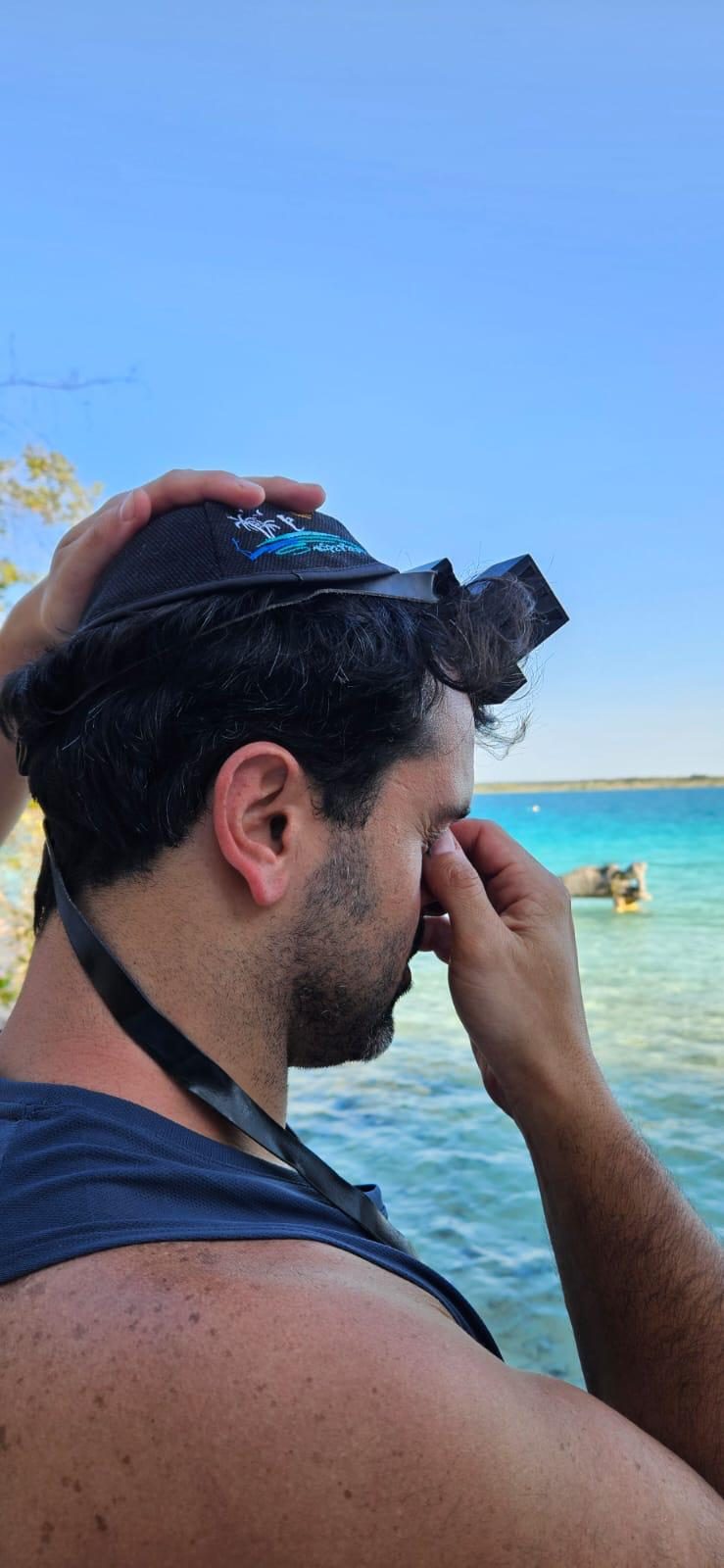
On the shores of Mexico’s breathtaking Seven Color Lagoon, in a small picturesque town called Bacalar, Rabbi Yisroel and Esty Orian opened a Chabad House. In this faraway place, where so many Jews are just passing through, they have chosen to stay and welcome them home to Yiddishkeit.
“My parents are American-born, and made aliyah after they got married,” Esty begins her story. “My father, Ozer Breen, merited to participate in several farbrengens of the Rebbe. He was a student in university at the time, wearing headphones that gave a simultaneous translation, and trying to understand as much as he could. But the Rebbe saw him, and he and my mother Naomi ob’m, were zoche that all of their children became Lubavitchers.
“At first we lived in Nes Tziona, and then we moved to Rechovot. My parents instilled in us values of integrity, honesty, giving, and pure and wholesome yiras shomayim. It was a home of Tehillim and tefillot. This, in addition to the wonderful chinuch that I had in Beit Sefer Chabad Nes Tziona, and in Beis Rivkah in Kfar Chabad, made me become the Rebbe’s daughter.
“When I finished seminary I married Yisroel Orian, and we set up our new home in Tzfas. After six years we went to Beis Chayeinu, intending to stay for only two weeks. But the outbreak of Covid changed our plans, and we remained in the shechuna of the Rebbe for a year and a half. During that time we felt a growing desire to go on shlichus.
“One day we were visited by my husband’s cousin Rivka, who is on shlichus with her husband Rabbi Yosef Yitzchok Ben Shimon in Isla Mujeres, a tropical island in Mexico. We asked her many questions about her shlichus, and were inspired. With the Rebbe’s bracha, we set out for Mexico, and opened a Chabad House in Bacalar, which is several hours away.”
A Connection that Outlasts the Trip
“Bacalar offers water sports and other popular tourist attractions, but what the Israeli backpackers and local Jews are really looking for is connection,” Esty continues. “We advertise in their WhatsApp groups that we run a kosher restaurant, host group meals on Shabbos and holidays, have shiurim in Tanya and Chassidus, and prayer services too. One evening a week we have a free dinner for the Israelis, which turns into a lively farbrengen. Participants share stories of hashgacha pratis, hear about the Rebbe, and take on hachlatos tovos. A Jewish spark gets ignited, one by one…
“We also do activities and have Tanya shiurim in Mahahual, a beautiful beach village an hour away. There are about fifty Israelis living there, who support themselves by selling cosmetics in carts at the cruise port nearby. Each of our visits there builds continuity; there is someone to learn with, celebrate with, and turn to for direction and support.
“Our Chabad House is located near the famous Seven Color Lagoon, a crystal-clear freshwater lagoon that displays a striking spectrum of blue and green hues, as the sunlight reflects off its surface. Every time I go there it opens my heart, and I feel that I am in Gan Eden! מה רבו מעשיך השם!
“Tourists like to go there before dawn on stand-up paddle boards, awaiting the breathtaking sunrise. Later that day, some of them find their way to our Chabad House.
“Each arrival is an opportunity to get to know the person who has walked through the door; where they came from, what’s on their mind, and where they are heading. Through conversation there is connection. Someone who comes in for a meal may find themselves joining a Tanya class, a guest at the Shabbos table may stay for a farbrengen, and make a commitment that stays with him long after he leaves the region.”
The Power of One Deed
When I ask Esty how she manages feelings of loneliness in this far-off place, she responds, “It’s not simple. If you would ask shluchos what’s most difficult for them, I think most of them would say being distant from their families, and from Eretz Yisrael.
“I’m part of a WhatsApp group of shluchos in the region, and we share tips and recipes. Once in a while I go with my family to another Chabad House for Shabbos and meet the Shlucha and her family. Recently I opened up a smaller group, led by a facilitator, where we discuss pressing issues, such as chinuch, share how our week went, and give each other support.
“There are other challenges, too, such as funding our growing array of Jewish activities. In addition, it’s difficult to obtain many kosher products, including dairy products. We learn to live without them.
“The poor quality health-care here is a big problem. I have two sons, and last year one of them wasn’t feeling well. I was deeply concerned, and I said to my husband, ‘How are we supposed to give our children proper medical care over here? Maybe we need to leave shlichus, at least for a while?!’
“It was Beis Tammuz, and someone came in to the Chabad House to put on tefillin. Afterwards, in the evening, I gave my weekly taharas hamishpacha zoom shiur to two women living in Mexico. We made hachlatos tovos, and one of them said that she wanted to say the nightly bedside Kriyas Shema.
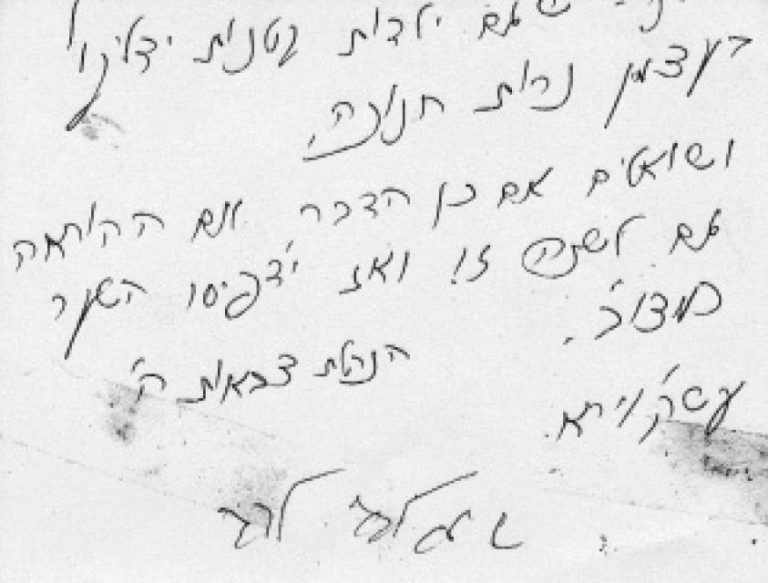
“After the class, on erev Gimmel Tammuz, I wrote to the Rebbe. In the answer I received the Rebbe says: ‘even one act of a bachur putting on tefillin, or of a girl saying Kriyas Shema, who can fathom its value, and it’s not a personal thing of one individual, because it all joins into a large account, and every thing and thing is the condition for hastening the collective redemption.’
“The next day we took our son to the doctor and she dispelled her previous worries regarding his condition. Afterwards we made a seudas hodaya in the Chabad House with singing and dancing!”
Esty adds happily, “After two years of giving the shiur in taharas hamishpacha, one of the women just gave birth to her second child, a boy, and last week was the bris. The other one just gave me the good news that she’s in her fifth month of pregnancy. And yesterday a third woman joined the shiur!”
Great Leaders Create Leaders
“Shlichus taught me that we are far stronger than we think,” Esty concludes. “But it’s not our kochos, it’s the kochos of the Rebbe MH’M that accompany us every step of the way, and bring success to our mission!
“There’s no excuse for just waiting around for something to happen, we have to lead the way and make it happen! As Rabbi Jonathan Sacks ob’m, reflecting on his encounter with the Rebbe, was known to say, ‘Good leaders create followers, but great leaders create leaders!’
“Everyone has a unique light, and has to reveal it and spread it onwards, to their children, family, community, and to everyone who crosses their path. That’s how we can build a world ready for Geula!
“It’s written in the Tehillim, 37:23: מה’ מצעדי גבר כוננו, that a man’s steps are directed from Hashem. Tzadikim knew where to go to accomplish their shlichus. The Baal Shem Tov would trust in hashgacha pratis to direct his horses to wherever a soul needed help, or to a place where a divine spark had to be rectified. But we don’t know where our shlichus is, therefore HaKadosh Boruch Hu causes ‘reasons’ that bring us to where we have a mission!
“B’ezrat Hashem, may we be zoche to the coming of Moshiach teikef u’miyad mamosh!”
Esty can be contacted at +17703831050 WhatsApp. She invites you to follow her statuses.
Beis Moshiach #1533 • 24 Kislev 5787 • כ״ד כסלו תשפ״ז • pp. 38-39, 52
© 2026 Beis Moshiach Magazine. All rights reserved.
This article originally appeared in Beis Moshiach #1533. You are welcome to share it with friends and family by email or in print, provided that you do not change, add to or omit any part of it, you credit the author and Beis Moshiach, and you include a link to archive.bmoshiach.org (written out in full in printed copies).
To republish this article in a newspaper, magazine, book or website, please request permission in advance at [email protected].