Not Deserters, Defenders!
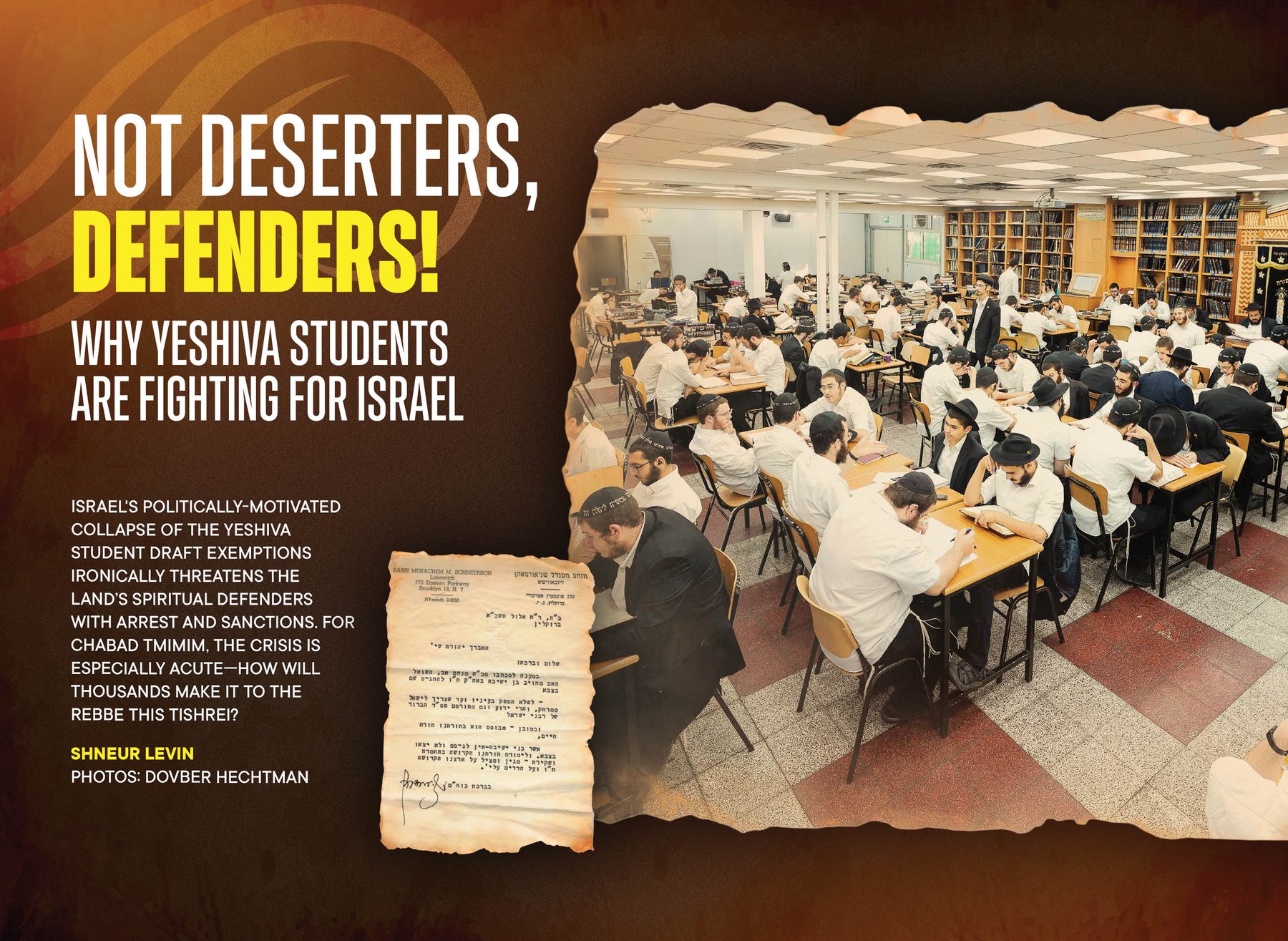
Israel’s politically-motivated collapse of the yeshiva student draft exemptions ironically threatens the land’s spiritual defenders with arrest and sanctions. For Chabad tmimim, the crisis is especially acute – how will thousands make it to the Rebbe this Tishrei?
For more than seventy years, the interface between the world of yeshivas and the IDF has not reached a boiling point as it has in these days. The entire arrangement regarding the special status of bnei ha’yeshivos, those who toil in Torah, for seventy years and more, has collapsed and been dissolved by order of the High Court of Justice. The latter insists on regulating the status of bnei ha’yeshivos while establishing an ‘equitable’ system among all young people eligible for military service. The value of Torah in the Jewish state has never been so disregarded, even humiliated, as in these days.
If that’s not enough – the Attorney General of the country is applying uncompromising pressure on military authorities to send draft orders to tens of thousands of young men who until recently were considered “their Torah is their profession.” Government Secretary Yossi Fuchs stated sharply this week that “I say from knowledge, that the Attorney General requests a daily report on the number of arrested chareidim…”
At the same time, she understands that it’s really impossible to force a person to enlist against their will, and therefore she is leading, in parallel to arrests, a series of draconian sanctions against Torah scholars in a series of civic and economic areas, all with the aim of forcing them to leave the halls of Torah, close the Gemara and the Likutei Sichos, and report to the military base as an ordinary soldier.
If initially the roshei yeshiva and representatives of chareidi parties hoped it would be possible to reach some arrangement that would satisfy everyone – the former chairman of the Foreign Affairs and Defense Committee came and shuffled the deck of cards. His role was to legislate a new law that would satisfy everyone: the army’s needs, the status of yeshiva students as well as the Supreme Court. But through cunning ways, he dragged and dragged the legislative process, and finally pulled out a draft law that the roshei yeshiva could not agree to. Here came the explosion.
The bottom line: Yeshiva students have become subject to the draft, pursued by military police, and candidates for economic sanctions in social security benefits, travel restrictions abroad, and a series of other decrees.
And the Trip to the Rebbe – What Will Become of It?
Along with tens of thousands of yeshiva students in Eretz Yisrael and those who learn in kollel – there are of course also thousands of students from Tomchei Tmimim yeshivas in the country. If in the past there were various arrangements with military authorities, now there is no arrangement at all. Every talmid has a legal obligation to report for full military service (unless a new law is enacted to regulate the situation).
Needless to say, this is not about bachurim in yeshivos ketanos (mesivtas) who are young, rather, students of yeshivos gedolos, talmidim of Kevutza and those who returned from Kevutza.
It’s chaotic. If throughout the network of yeshivos in Eretz Yisrael it’s somehow possible to move on with daily life, and hope that things will work out – the tmimim find themselves in a complicated predicament.
The month of Menachem Av has always been the month when the tmimim begin talking about the trip to the Rebbe. This is the time when they raise funds, obtain loans, arrange passports and purchase plane tickets. But in the current situation, when there are those who might be arrested at border crossings when leaving (or returning), some of them are afraid to travel to the Rebbe.
We haven’t even gotten to the issue of the talmidim of Kevutza 5786 who have been waiting to go to the Rebbe since they started learning in yeshivos ketanos. Will they be forced to give up the longed-for trip? Will they not merit to bask in the ‘House of Hashem,’ Beis Chayeinu in the coming year?
There are many questions, and the uncertainty disturbs the peace of many young men as well as their parents, and not without reason.
The issue became acute last week, after Chabad rabbis issued a clarification letter regarding ‘do’s’ and ‘don’ts’ as regards everything related to the military age tmimim. In at least some of the clauses, the uncertainty remained unaddressed.
Beis Moshiach’s reporter entered into the thick of things, spoke with many sources both in the ‘world’ of the yeshivos, within the army, and among Anash askanim working with the army. Due to the sensitivity of the situation, not everyone agreed to be quoted by name. Some also preferred not to put all the cards on the table (“The situation is sensitive as it is.”).
“Their Study… with Persistence and Diligence Protects and Saves Our Holy Land”
As mentioned, for more than seventy years, full-time yeshiva students enjoyed the status of “his Torah is his profession,” an agreement signed at the time by the first Prime Minister David Ben-Gurion. This agreement was signed with the understanding that the Jewish world needs those who study Torah who will sit and learn without disturbances.
The goal was also to build and strengthen anew the world of Torah that had been depleted in its ranks following the annihilation of hundreds of thousands of yeshiva students, Torah scholars, ‘cedars of Lebanon’ and Torah giants by the German murderers, may their name be erased.
Over time, the world of Torah prospered and flourished. Tens of thousands of students and kollel scholars filled the halls of Torah, and the voice of Torah was loudly heard.
But in recent years, voices arose opposing the continuation of the arrangement. Those who upset the apple cart – were Supreme Court judges who claimed that the arrangement cannot continue, due to ‘inequality’ between young people who don’t study Torah and those who do.
Since then, in recent years the issue has been rolling from committee to committee; politicians trying to find a new arrangement under the guidance of the roshei yeshiva.
In light of the difficult war being conducted for nearly two years – louder voices joined the clamor (unfortunately also from within the religious-Zionist sector) calling to force the enlistment of yeshiva students. The atmosphere in the street became more poisoned than ever.
As of today, there is no official arrangement between the ‘Torah world’ and military authorities. This means, every yeshiva student who has reached the appropriate age must report to the recruitment office and enlist. This includes, of course, thousands of Chabad yeshiva students.
The incitement on one hand, and calls for “partnership in bearing the burden” on the other hand, can confuse any young man, even a Chabad yeshiva student. “Maybe this is really the time to leave (even temporarily) the yeshiva and stand alongside our fighting brothers in Gaza?” “Why not help in ‘bearing the burden’ and serve both ideals simultaneously?’ And “perhaps at least serve in one of the organizations helping civilians like Zaka, United Hatzalah, and many others?”
There’s no doubt the questions are powerful, but they are built considerably on guilt feelings of not bearing the burden as well as lack of true recognition of the importance and virtue of a bachur sitting by the Gemara or sefer Chassidus, diligently studying.
“In response to your letter from the 25th of Menachem Av, asking whether a ben yeshiva in the Holy Land is obligated to enlist there in the army,” the Rebbe presents the question with great clarity. “It’s puzzling that there’s doubt in his eyes to the extent that he needs to ask from a distance, and it’s known and also publicized the clear psak din of rabbanei Yisrael and, obviously, it is based in our Torah, the Torah of life, that bnei ha’yeshivos should not be drafted and should not go out in the army. And their study of our holy Torah with persistence and diligence – protects and saves our Holy Land and those dwelling upon it.” (Igros Kodesh vol. 20 p. 317. Printed in Likutei Sichos vol. 24 p. 448)
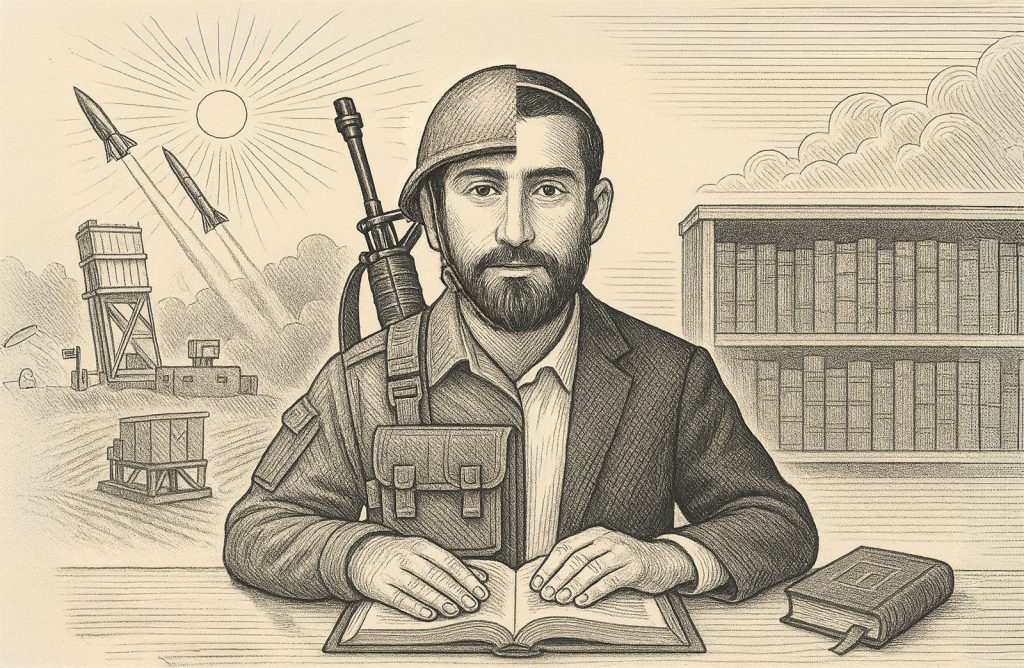
The Rebbe clarifies unambiguously the place of a yeshiva bachur: by the sefarim. And what about bearing the burden of war? “Their study… with persistence and diligence protects and saves our Holy Land and those dwelling upon it,” comes the clear answer.
The Rebbe is decisive in his opinion that Torah study protects Eretz Yisrael, even more than a soldier in the army: “Strengthening inyanei Torah is also a help for the security of Bnei Yisrael, literally, because a bachur who sits and learns Torah protects the land even more than the bachur standing on the border and endangering his life…” (Hisvaaduyos 5743 vol. 2 p. 646).
Is this only the Rebbe’s opinion? Is this the position only of Torah giants and leaders who recognize the spiritual value of Torah?
In another letter, the Rebbe writes that this is also how the state’s leaders thought. They understood the importance of the virtue of study for the people dwelling in Zion: “As you perhaps know, this exemption received recognition and agreement by the founder of the IDF, the late D. Ben-Gurion. And it’s based on the fact that a talmid yeshiva can accomplish for the security of the state by continuing his Torah study more than through military service.” (Moreh l’Dor Navuch vol. 3 p. 214)
The Rebbe’s position is therefore decisive: the place of a yeshiva bachur is with the holy sefarim. The more he learns – the more he protects Eretz Yisrael and those dwelling in it.
That being the case, for us that is the last word on the subject. The Rebbe, with his all-seeing vision, sees and recognizes the virtue of Torah study by yeshiva students. He also recognizes and honors the IDF soldiers who sacrifice their lives for Klal Israel – and yet, his position is clear and decisive: a yeshiva bachur needs to study Torah. That’s his place. Not only because Torah study is more important than fighting in the IDF – but because Torah study itself protects Am Israel.
Yeshiva Students Do Serve the People
We wanted to hear the position of Rabbi Meir Wilschansky, rosh yeshiva of Tomchei Tmimim Chabad-Lubavitch Yeshiva in Tzfas, the largest Chabad yeshiva in Eretz Yisrael with about four hundred and fifty students.
About one hundred and fifty students have completed shiur gimmel at this time and are preparing to travel to 770 for their Kevutza year, not to mention hundreds of others who wish to travel to Beis Rabbeinu she’b’Bavel for Tishrei. The talmidim themselves are asking questions and seeking answers.
Rabbi Wilschansky sighs. “This is a very, very sensitive subject,” he says carefully, choosing his words, “and the time is also sensitive. Additionally, the current situation is unclear, as things are supposed to change – only no one knows how or when.”
How should bachurim who are of age and at the heart of the conflict view the current situation?
“I think there are two points that are not sufficiently emphasized and not brought up when discussing the army issue.
“First, it’s important to clarify that it’s not correct to say that yeshiva students don’t serve. They do serve! They serve the people and the security of the land through their Torah study. This is no less than combat service, but even more – because the spiritual front is the strength and power that gives success on the physical front.
“If they carried this message with pride, then the conversation would be much easier. We are not ‘draft dodgers,’ we are fighting with all our might. Even the ‘Mizrachi’ should agree with such a perspective, since they too believe that they enlist in the IDF for only a year and a half (instead of three) while part of the time they study Torah within the special ‘hesder’ arrangement, and Torah also protects and saves.”
Would the general public accept such an argument?
“I don’t know if it will be accepted or not – and anyway, there are many issues that the general public doesn’t agree with us about – but at least you have an argument that is correct and true. You’re not ignoring them; you’re saying firmly: I am fighting and I am protecting Am Yisrael.
“A second point that’s important to clarify – our struggle is only regarding yeshiva students, and not against the army itself as exists in other circles. A kollel student who leaves his learning and sets out to establish his home, according to the Rebbe’s system, should serve in the army. Of course this needs to be in an appropriate manner, in an appropriate place where he won’t fall spiritually. But the very issue of military service is not pasul according to the Rebbe.
“But all this applies to kollel students who went out to work and are not learning. As for bachurim, their place and concern is Torah study. This is their service for Am Yisrael.”
Words in this spirit were also published last week by Chabad rabbanim in Eretz Yisrael: “The role of bnei ha’yeshivos until the time of their marriage and for a period after their marriage is to study Torah, Nigleh and Chassidus in the holy yeshivas without disturbances from within or without. This role is part of the defense and protection system for Am Yisrael throughout the generations.”

The rabbanim quote the Rebbe, “that yeshiva and kollel students are not evading the battle, but on the contrary – through their Torah study they bear and fulfill their vital role in defending Am Yisrael in Eretz Yisrael. The learning of bnei ha’yeshivos is not only a privilege, but also an actual obligation placed upon them for the purpose of defending Am Yisrael. So it was until now, and so it will continue to be, b’ezras Hashem.
“These words are all the more true in this period, when a war is being conducted against Israel’s enemies on several fronts, and extra protection is required for Bnei Yisrael throughout the world, and particularly in Eretz Yisrael. Chazal, in Gemara Sanhedrin 49a, say: ‘If not for Dovid, Yoav would not have made war, and if not for Yoav, Dovid would not have engaged in Torah’; (and according to Rashi’s commentary there – that Dovid’s merit for engaging in Torah stood by Yoav in his wars).
“Yeshiva and kollel students serve on the front lines through Torah study, together with the soldiers in the army who defend with their bodies to the point of mesirus nefesh for Am Yisrael in Eretz Yisrael.”
The rabbanim also noted the place of kollel students after their marriage: “It’s worth noting the known and publicized fact that many Chabad Chassidim served or serve in the army after their marriage and after the period of study in yeshiva and kollel, and this too needs to be within frameworks appropriate for a Jew who is a Chassid and yerei shomayim.”
Rabbi Wilschansky, you surely had conversations with your father about this issue and the situation. What did he think should be done?
“Indeed I spoke with my late father about the subject but I didn’t conduct long conversations with him about this. My brother Rabbi Eliezer, who has been dealing with this matter for a long time, can surely provide more information.
“In general, my father didn’t like to follow the approach of plowing into a wall head-first, i.e. forcing a given issue. He always claimed that you don’t gain anything from this. This is how he conducted himself generally in all areas of life, and in this issue too. He always liked to find ways in which you can succeed and gain more, by focusing more on working smarter and less on being right (‘be more of a chacham and less of a tzaddik’).
The Tmimim Yearn to Reach the Rebbe
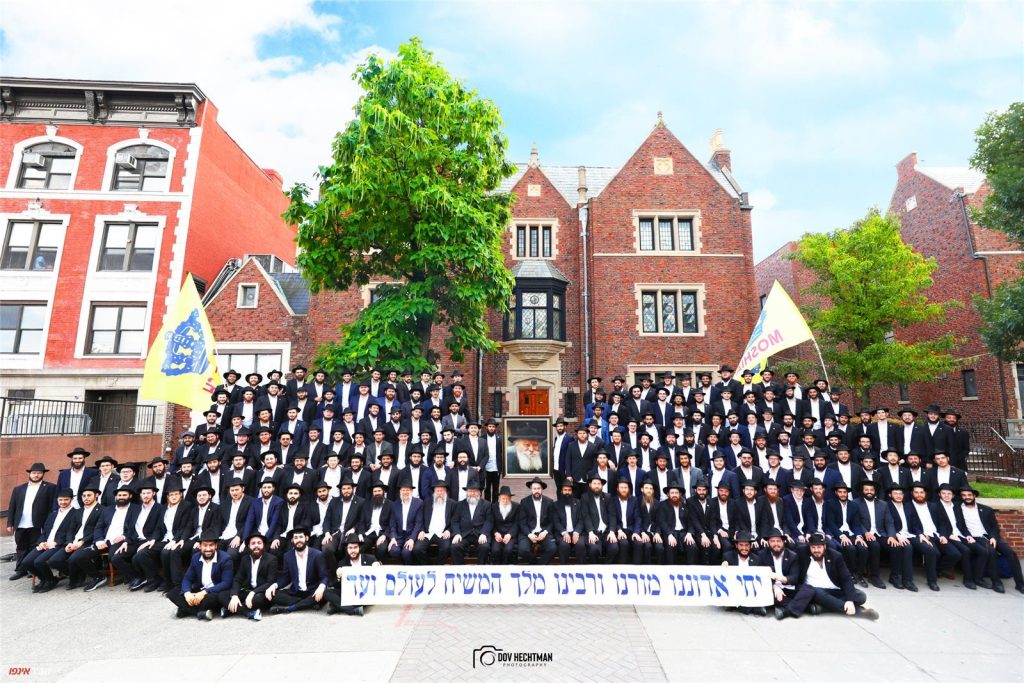
Over the years there was a unique agreement between Chabad Chassidim and the IDF. The essence of the agreement stemmed from the Rebbe’s desire that every yeshiva bachur should stay in Beis Chayeinu upon completing his yeshiva studies, for a full year. The Rebbe urged Chabad askanim in Eretz Yisrael to work this out with military authorities to approve the unique arrangement.
The request was not fulfilled easily. Over the years the arrangement experienced ups and downs – but the Rebbe always stood guard and ensured that the agreement would be achieved. Thus, for example, the Rebbe wrote to Mr. Menachem Begin in 5730: “Exit permits for bachurim of this age is not among the simple matters, but we are not speaking about bachurim who were already drafted to the IDF, but about bachurim whose soul’s desire is to come study Torah here for a time, and who are convinced that here they will succeed in their studies and worldview, etc. And the known rule is that success in study is greater if it’s in a place where his heart desires.”
In the volumes of Igros Kodesh there are many more letters on this subject, where the Rebbe urges those concerned to pave a way for the bachurim to come to him for a full year.
In years when problems arose, there were quite a few bachurim who came for Kevutza and it was ‘decreed’ upon them to return to Eretz Yisrael after only a few months – and they wrote about this to the Rebbe, while accepting upon themselves improved study and Chassidish behavior. The Rebbe blessed them and things worked out.
With the cancellation of arrangements with all yeshiva students, the arrangement for ‘Chabad bachurim’ was also canceled. Ostensibly, Chabad yeshiva students find themselves in the same boat as the rest of the tens of thousands of bachurim – and what will be with them, will be with them too, and this is along the lines of “the trouble of many is half a consolation.”
And yet, how great is the yearning of the tmimim to travel to the Rebbe for the Tishrei. The older age group that is already in the draft process, ostensibly, should be prevented from leaving Eretz Yisrael.
In addition, there is also a problem with the ‘graduates’ group who wish to leave for a year. This concerns about four hundred and fifty graduates of Chabad yeshivos gedolos across the country who wish to travel for Kevutza 5786.
Given the lack of clarity, in recent months Chabad rabbanim held meetings and consultations with heads and directors of yeshivas as well as with Anash askanim, those who dealt in recent years with various army officials. During these discussions, several attempts were made to come to a new arrangement regarding the situation of Chabad bachurim with the army leadership. A series of proposals came and went, many of them encountered various difficulties. Even solutions that satisfied the parties – were torpedoed when they reached the military legal advisors.
“Despite many attempts by Anash askanim throughout the past year to formulate a framework that could perpetuate the situation that existed for many years, we encountered many difficulties with the relevant parties,” the rabbanim wrote last week without elaborating.
The Chabad rabbis therefore determine that when “young bachurim receive a first summons, it’s correct that they report and thereby avoid immediate sanctions. In contrast – students of Kevutza 5786 will consult with the yeshiva administration and Anash askanim how to conduct themselves regarding travel to ‘chatzros kodsheinu’ (770), and also talmidim of this year’s Kevutza 5785, who are now b’chatzros kodsheinu, will consult with the mashpia and Anash askanim how to conduct themselves regarding return to the Holy Land.”
It seems that these days, even Anash askanim working on the issue are confused and don’t know how to give answers or solutions. The hope is that soon representatives will be chosen from each yeshiva so that these will serve as an address for yeshiva students for questions that arise and possible solutions.
The rabbanim express their clear position: “In this period when ‘darkness covers the earth, etc.,’ you talmidei ha’tmimim must remember your role and increase your devotion to your important and vital role of studying Torah, Nigleh and Chassidus, without being fazed by obstacles and hurdles from the outside. You must draw strength from the recorded history of Chabad Chassidus about the conduct of Raboseinu Nesieinu, and the conduct of Chassidim in previous generations who sacrificed their lives in standing firmly against compromises in chinuch for Torah and mitzvos, in the path of Chassidus.”
Beis Moshiach #1475 • pp. 10-19
© 2026 Beis Moshiach Magazine. All rights reserved.
This article originally appeared in Beis Moshiach #1475. You are welcome to share it with friends and family by email or in print, provided that you do not change, add to or omit any part of it, you credit the author and Beis Moshiach, and you include a link to archive.bmoshiach.org (written out in full in printed copies).
To republish this article in a newspaper, magazine, book or website, please request permission in advance at [email protected].