We Felt the Electricity in the Room
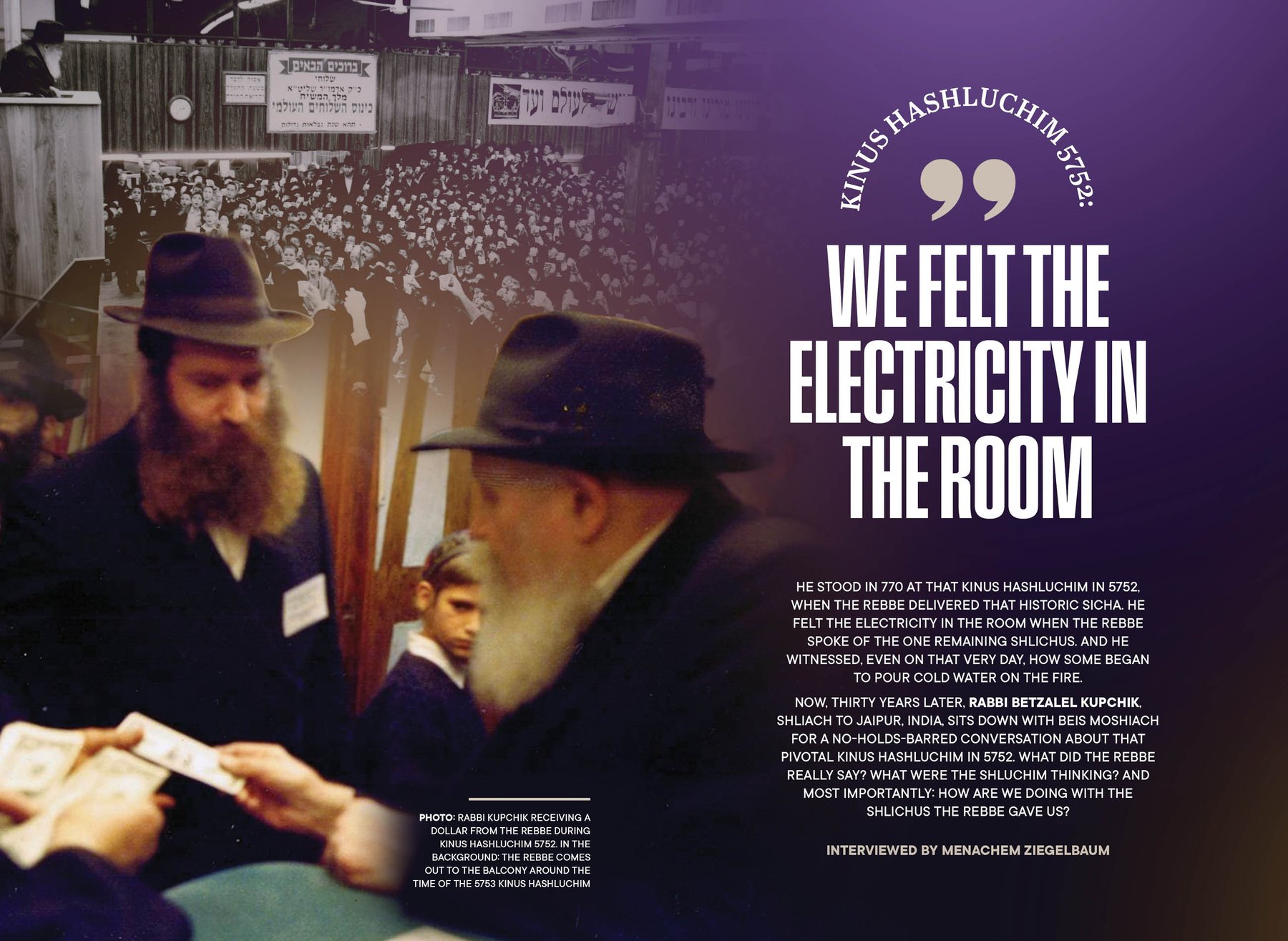
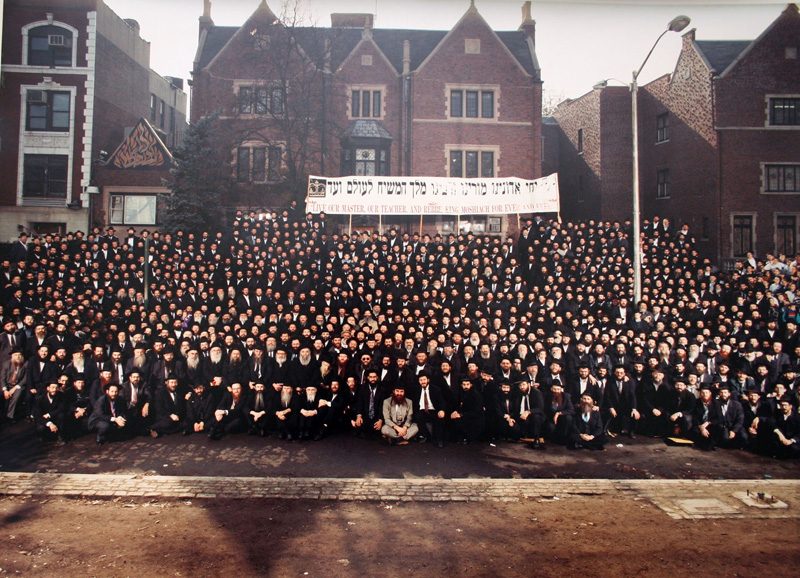
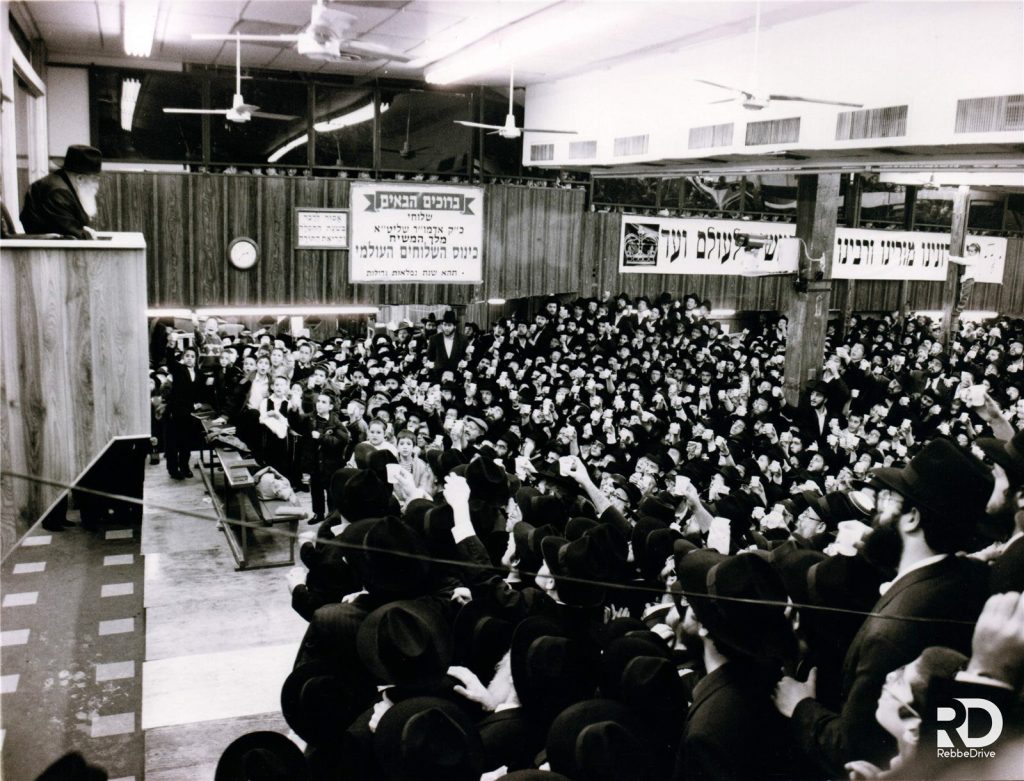
He stood in 770 at that Kinus Hashluchim in 5752, when the Rebbe delivered that historic sicha. He felt the electricity in the room when the Rebbe spoke of the one remaining shlichus. And he witnessed, even on that very day, how some began to pour cold water on the fire. Now, thirty years later, Rabbi Betzalel Kupchik, shliach to Jaipur, India, sits down with Beis Moshiach for a no-holds-barred conversation about that pivotal Kinus Hashluchim in 5752. What did the Rebbe really say? What were the shluchim thinking? And most importantly: how are we doing with the shlichus the Rebbe gave us?
The phone call with Rabbi Betzalel Kupchik kept getting postponed. Various things from his life on shlichus come up every hour, demanding his intervention and attention. The conversation finally took place late at night.
R’ Betzalel Kupchik is the first of the shluchim in India. He and his wife pioneered the way almost half a jubilee ago, when India was still beyond the mountains of darkness, in every sense. With typical stubbornness, courage and determination, they established a Chabad House that served as a model and inspiration for other Chabad Houses established in the years that followed on the great subcontinent. Over the years, hundreds of Israeli backpackers were sent from India directly to the halls of Chabad yeshivas. These established Chassidic homes. The fruits and fruit-of-fruits are thanks to the extraordinary outreach that the Kupchik couple invested in India.
In addition to their spiritual children, their own children who grew up with them in difficult conditions were forged and shaped in the spirit of front-line shlichus, and themselves established beautiful families and went out to distant or nearby countries and cities in Eretz Yisrael and around the world, on the Rebbe’s shlichus. Each of them is busy day and night preparing their place and the people of their city to greet Moshiach.
I spoke to him not only as a shliach, but also as someone who was present at the well-known farbrengen on Shabbos Kodesh Parshas Chayei Sarah 5752.
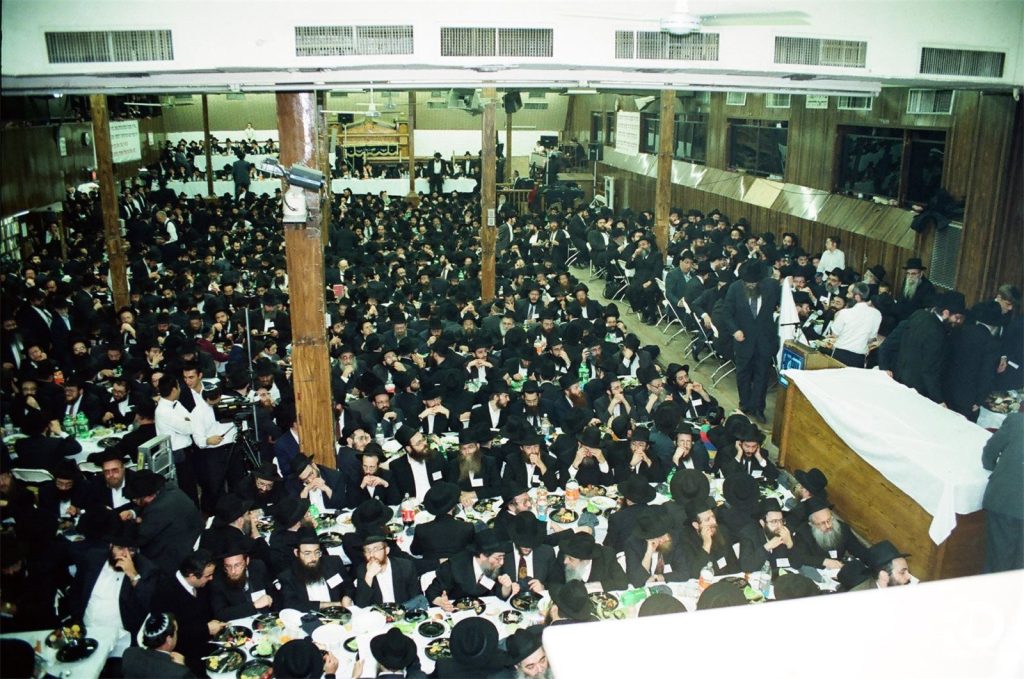
The Kinus HaShluchim actually begins on Wednesday-Thursday of the week, but it officially opens at noon on Shabbos, during the Rebbe’s farbrengen – that special meeting between the meshaleiach and his shluchim, in the sicha that the Rebbe delivers to them.
The content of the sicha on that Shabbos, 5752, was a kind of ‘bombshell’ (positive of course) for the shluchim. The Geula expressions did not lend themselves to interpretation and called for a new way of thinking.
Already in the first words, one could sense that this was not an ordinary farbrengen: “As we stand at the beginning and opening of the International Kinus HaShluchim – the shluchim of the Rebbe, Nasi of our generation, in all corners of the world, in the four corners of the earth – it is necessary to mention, first and foremost, the foundation, and to express the role of the shluchim in this generation in general, and especially – the chiddush that has been added especially in recent times in the work of shlichus: to greet Moshiach Tzidkeinu in the true and complete Geula.”
Rabbi Kupchik, do you remember the event of that sicha?
Certainly.
This sicha didn’t exactly fall like a bolt from the blue. After all, in the many months before that, starting from the 27th of Nissan 5751, the topic of Moshiach came up in an unusual way week after week, in the Rebbe’s farbrengens…
Nevertheless, I remember there was tremendous excitement among the shluchim who came to the Kinus. Close your eyes for a moment and think that you’re standing before the Rebbe and hearing him speak such ‘Geuladike’ words… The feeling in the air was something unusual, a level we hadn’t known…
And did the shluchim accept it straight away?
Not at all. Already then, some tried to cool things down. I remember that a few hours later, at the Melave Malka of the Kinus, one of the main speakers stood up and began to explain that the words were not as they appear, and the Rebbe didn’t mean it that way, but rather differently… There was another shliach from Canada who started shouting “If you go with this approach, you’ll delay the matter more and more…”
The overwhelming majority of shluchim were tremendously excited. Everyone understood the Rebbe’s true desire.
You know, today, after 30+ years, there are those who dare to twist things with explanations of ‘what the Rebbe meant.’ But then?? A few hours after that explicit holy sicha from the Rebbe’s mouth?
Well, and when was the Eigel HaZahav made? Not just forty days after everyone heard Hashem Himself speaking, and saw Him with their own eyes?!…
I remember that on Sunday morning, the day after, a special discussion session was held in Oholei Torah. The topic of course came up on the agenda, and anyone who wanted to ask, express themselves or say something, could speak. The shluchim expressed themselves in various ways, and I too, I was much younger, sat facing veteran and experienced shluchim. One of them spoke against publicizing the topic of Moshiach, claiming it put people off; he even told how one of his donors came to him and said “What is this?” and threatened in a veiled way to cut off contact with him.
In contrast to that shliach, there was another shliach who told how he speaks about it in a matter-of-fact manner with his community members, and everyone accepts the words as a matter of fact.
When it was my turn to speak, I stood up and said, “You are all Chassidim, you are all right, and you are all speaking truth. But each of you sees reality differently as he himself lives: one who lives Moshiach, claims on the contrary – speaking about Moshiach adds more chizuk among Jews in Torah and mitzvos – and his words are accepted accordingly. While the shliach who lives the money and the donors – if he had started speaking about Moshiach immediately when the Rebbe began to raise the topic, and hadn’t waited half a year or a year – he wouldn’t feel disconnected. Now he fears losing his backing.”
And indeed, all the shluchim are right in their claims.
How did they react to your words?
With great applause.
I’ll tell you something from my place of shlichus, here in India: I remember at one of the public dinners we held at the Chabad House in Pune, an American woman participated, and at some point she began to enthusiastically tell a story about the Rebbe. She expressed herself: “The Rebbe was…” I corrected her quietly and said: “The Rebbe is…,” but she continued again “the Rebbe was” and I corrected her again…
Then she turned to me and said: Why are you correcting me? The Rebbe didn’t…? I answered her simply: “The Rebbe Melech HaMoshiach is chai v’kayam!” She responded enthusiastically: “This is the nicest thing I heard in my life! Why didn’t the Lubavitchers in my city tell me about this?” And I responded, “They were afraid you would have difficulty accepting this fact…”
You Can See How the Rebbe Operates in the World
Let’s return to the sicha itself. About a thousand shluchim are crowded before Moshiach, who speaks about (and I quote:) having ‘finished all the matters’ and ‘the only thing that remains now in the work of shlichus, is to actually greet Moshiach Tzidkeinu in practice so that he can fulfill his shlichus in practice and take all of Yisrael out of galus!’
Look, at that time the Rebbe revealed to us something shocking – that everything that happens in the world is from the actions of Melech HaMoshiach. In simple words: there is no random reality in the world; everything is an intentional result of the directed hand of Moshiach himself.
Today, decades later, you can see things in a broader perspective. Take for example the sicha in which the Rebbe spoke about the need to change the term for ‘hospital’ from ‘Beis Cholim’ (house of the sick) to ‘Beis Refuah’ (house of healing), which people come to in order to be healed. In those days it sounded like a ‘gutt vort.’ Notice that today there are almost no ‘Beis Cholim’ in Israel. There are ‘Medical Centers’ and there are ‘Health Services’ etc. The Rebbe acted and changed things in the world. After all, none of those who changed the names received a persuasive letter from the Rebbe. How did this happen? The Rebbe impacted the world!
Take another example: Today there’s Charidy. I think tzedaka was never given in such quantities and with just the press of a button. People are asked and they give and give as they never gave before. This is part of the Rebbe’s action in the world, to increase tzedaka as preparation for the coming of Moshiach. Those who remember, at the Chanuka satellite of 5752, the Rebbe spoke about how people will help each other from one end of the world to the other with just the press of a button… Then it sounded fanciful, but that’s exactly what’s happening today.
These are some of the indications that Moshiach is acting in the world.
The Fantasy Became Reality. The World is Ready!
I want to delve deeper with you into the Rebbe’s words: How can one really explain what the Rebbe says that ‘the avodas ha’shlichus has been completed’ – when, in fact, people continue to go on Mivtza Tefillin, Mivtza Mezuza campaigns, and all the activity continues as usual. What does this mean?
The Rebbe himself says that the general work in refining the world has been completed, although each person still has private matters that need to be corrected.
The Baal Shem Tov asked Moshiach when he is coming and Moshiach said “when your wellsprings spread outward.” If someone had told you forty years ago that there would be thousands of Jews who are not Chabad Chassidim, and yet they will study Chassidus in depth, and some even participate in mivtzaim, would you have thought that was realistic?
It would have sounded like fantasy then. I remember what opposition there was to Chabad…
And now, today, you see people learning Chassidus everywhere. I have a son in Beit Shemesh, I was also in Haifa, I walk around in shuls and see men who are not from Chabad who delve into the study of Chassidus, participate in farbrengens, go to shopping centers for Mivtza Tefillin, with all their Chassidishe levush…
When the Rebbe began Mivtza Tefillin in 5727, I was a ten-year-old boy. We lived then in Kfar Ata (today Kiryat Ata), and I remember that my father took a folding table and set it up at the central station of Kfar Ata, and did Mivtza Tefillin. My father was a very introverted person, and for him to approach someone he didn’t know was a great ‘iskafya,’ but he still did it.
Many frum Jews lived in Kfar Ata – it was called then ‘the Bnei Brak of the North’ – including Chassidim from various Chassidic courts. What my father began to do caused opposition. Someone from one of the Chassidic courts approached him and said “How can you put tefillin on them? After all, they need a clean body, they need to wash their hands first…”
What did your father answer him?
“You’re right, but I can’t do everything alone. So come with a cup and bowl and wash their hands, and I’ll put tefillin on them…”
As far as I remember, you yourself grew up in Petach Tikva, surely you knew the Misnagdim there who taunted you for being a Chabadnik. Everything was in opposition mode. Sharp opposition to the Rebbe’s ideas.
What’s happening today? Today all the different groups compete over who is more successful in executing and implementing the Rebbe’s ideas… Today there are organizations, not Chabad, that set up tefillin stands in city streets and in business locations, to encourage Jews to put on tefillin.
When you compare the situation today and the situation that was thirty years ago, one cannot help but see how the world today is ready for Geula. Once, our test as Chabad Chassidim was ‘do not be ashamed before the mockers’; see where Chabad stands today in the world. This is seen not only in the spread of the learning of Chassidus, but also in terms of recognition. Everywhere a shliach of the Rebbe goes, he is received with honor and appreciation befitting the Rebbe’s shliach. Throughout the world today people know there is a ‘Rebbe’ and he has shluchim, and whoever wants to honor the Rebbe, honors his shluchim. And not only honors – but also helps materially… and all this is accepted naturally. It’s simply a dream!
The Rebbe says the world is ready! If you look at the world, perhaps we see a world conducting itself as usual, but if you take it point by point (and one must always search for points of light), one can see how on many levels the world is truly ready for the Geula, and now what remains is to greet the Rebbe.
Look, at our Chabad House in India, all kinds of people enter, to put it mildly. People from a variety of backgrounds and views. We speak with everyone about everything openly, no tricks. People who have questions, doubts or problems, we tell them ‘write to the Rebbe’; look at the Rebbe and remember that you’re handing him your personal letter…
And they just accept that?
Completely! There was once an elderly Israeli woman who came from one of the kibbutzim. My wife gave a weekly shiur to a group of women, including her, and in each shiur gave them some practical point to implement. In one of the lessons she told that woman that she should say the Rebbe’s chapter of Tehillim, or the chapter according to her age.
Just today, before we spoke, that woman called and told that she wrote a letter to the Rebbe, and with wondrous Divine Providence, at exactly those moments the local shliach from her place of residence called her, and said he was traveling to the Rebbe, does she want to send a letter to the Rebbe with him… The woman was very impressed by this; she saw how the Rebbe truly lives.
After the Kinus Hashluchim There Was a Quantum Leap
After the Kinus HaShluchim you returned to Eretz Yisrael, and then the massive publicity of ‘Hichonu l’Bias HaMoshiach’ began. Throughout the country large ‘Hichonu’ signs were hung, which generated tremendous public response…
Not quite. Tzeirei Chabad went out in an advertising campaign designed to reach the widest possible target audience, and to bring the Rebbe’s message and demand to prepare for the coming of Moshiach, and the Rebbe himself edited and approved the text and design of the campaign!
The campaign was divided into two stages, the first stage was already at the end of the year 5751, when Tzach wrote to the Rebbe about the campaign plan, and the Rebbe responded with: “For success in all similar matters.” This stage included billboards, and enormous and extensive media coverage. The second stage of the campaign was indeed in the winter of 5752, and it included various advertising products, conferences, shiurim, explanatory leaflets and printing of books on the subject.
One could touch Moshiach in the air, and people were really into it.
In the period after Chof-Zayin Adar 5752, I would go daily to my bank branch in Tzfas to speak with the deputy manager about a certain check. He was a simple Jew not connected to spiritual ideas. Nevertheless, each time I arrived, I would chat with him about Moshiach, and quote the Rebbe’s words, and he would respond with a chuckle. I’ll tell you the truth – I very much needed his help, and hoped these conversations would also help with my personal matters…
On Yud-Alef Nissan I entered the bank, and the deputy manager calls me to his office and says: “Kupchik, I want to show you something. This morning I woke up and said to myself maybe Kupchik is right and Moshiach will come, and what will I do then? They’ll catch me without a kippa?” And while talking he opens his briefcase and shows me that he put a kippa in the briefcase, to be ready for the hisgalus…
To tell the truth, I was so ashamed of myself, where am I and where he is… I talk, he does…
You personally, how did you begin to involve yourself in inyanei Moshiach?
It’s hard to remember exactly, it was a stormy period of giluyim. After the sicha of “do all that you can” we began to search for different ways to be active on an individual level. We felt we needed to do something… After all, the Rebbe says the world is already ready and the avodas ha’birurim has been completed; we felt we needed to do something!
We came up with the idea of creating advertising that everyone would spread, not just Chabadniks, and with their very bodies. We printed T-shirts with comics of popular characters from those days and next to them words with double meaning: ‘Magia Lanu Moshiach!’ (meaning both – We deserve Moshiach! – Moshiach Is Coming For Us!) – We had about two thousand of these shirts made with enormous financial investment, without even knowing how it would be received.
On Lag B’Omer we traveled to Meron and set up a tent. What can I tell you? There was enormous demand that surprised even us. People of all types, all kinds, all backgrounds and ages, bought the shirts. We saw in practice that you just need to find the logo and slogan that suits the person, and that’s it – it will be accepted.
There is no doubt that after the Kinus HaShluchim there was a quantum leap that reached its peak at the beginning of 5753 [1993], when they began singing ‘Yechi Adoneinu’ in front of the Rebbe on a regular basis, and this was publicized throughout the world.
Everything According to the One Asking
R’ Kupchik still holds the opinion he expressed back then at the beginning, at the Kinus HaShluchim of 5752, that everything depends on the shliach; how much he believes that the Rebbe is Moshiach and that he must be revealed. According to the magnitude of the faith, so it will be accepted.
Nevertheless, he believes, even if a shliach doesn’t really ‘live’ the inyan, he must not hold back from passing it forward.
The Rebbe himself said that even if you don’t feel and live the inyan of Geula, pass it along – since you were told to pass it along even though you don’t yet live in that state.
I had a friend who once came to the Rebbe; he was married and I was still a bachur; he lived in Eretz Yisrael and I was a talmid on Kevutza. He was feeling down because of difficulties in his work and difficulties regarding his place of residence. Within a short time he received an answer from the Rebbe: “Regarding the place of residence – as advised by a rav, and [regarding] the second [matter] – as advised by a mashpia or understanding friends.” I don’t remember exactly how the Rebbe distinguished between the issues.
He traveled to collect money and returned after a month, and again submitted a note to the Rebbe that he doesn’t want to ask a rabbi, mashpia or friends, but that the Rebbe should tell him what to do. The words ‘the Rebbe will tell him what to do’ were circled by the Rebbe – and he made an arrow and wrote: “If so, he must listen to what I already answered him,” and the Rebbe made another arrow to the words “advice of friends or mashpia…”
Each of us has a yetzer hara that wants the Rebbe to answer the way he himself understands; we don’t want to be disappointed. I can tell you countless stories about those who wrote to the Rebbe with simple emuna, and received clear answers. And in contrast, those who wanted to receive certain answers – and the Rebbe didn’t respond to them. It’s clear that everything is according to the one who is asking…
I saw a printed letter from the Rebbe in Igros Kodesh (I don’t remember where), in which the Rebbe writes to someone that according to the style of his letter it’s not clear whether he’s asking a question or requesting a bracha. Because if he’s requesting a bracha, then the Rebbe blesses him. But if he’s asking a question – “I am not pleased.”
Even Yated Neeman Published the Emuna of the Chassidim
In that same talk of the Rebbe to the shluchim, the Rebbe speaks about how it’s known that in every generation there is one who is worthy from his righteousness to be Moshiach and Hashem will reveal Himself to him. What is the Rebbe actually innovating here? After all, from time immemorial it was known that in every generation there is someone worthy to be Moshiach – what’s new here?
The Kopyczynitzer Rebbe, father-in-law of the well-known Chassid Reb Zalman Gurary, was someone whom the Rebbe greatly honored, and he for his part admired the Rebbe with all his soul. It’s told that once a Jew came to him with a complaint that Chabad Chassidim say that their Rebbe is Moshiach. The Kopyczynitzer Rebbe responded, “You know that you’re not Moshiach; I know that I’m not. If so, what do you care that there are Jews who say they know?!”
It’s true that it’s written in the Gemara and in sefarim that in every generation there is someone worthy to be Moshiach of his generation, but the Rebbe took it out of the book and brought it as a living and current thing. In his sicha, everything revolves around the fact that the Rebbe is Moshiach, and when that’s the case, it’s accepted completely differently. When you’re in an atmosphere of Geula and Moshiach, and suddenly the Rebbe comes out with such a message ‘know that there is one worthy to be Moshiach in our generation as well’ – then it’s regarded differently… It’s like when the Rebbe spoke about Moshiach being at 770, or in ‘Beis Moshiach’; it becomes real.
I had a brother-in-law who was a student of Ponevezh Yeshiva. We were very good friends, and he had a regular column on the weekly parsha in the Litvishe publication Yated Neeman. When the book V’Hu Yigaleinu was published in Av 5754, dealing with the faith of Chabad Chassidim in the Rebbe as Moshiach, I brought him the book and asked him to bring it to the editorial staff of Yated Neeman so they would publish something from it… He actually was very respectful, and therefore refused saying “they’ll make a joke of it, I don’t want to have gehinom for myself.” Finally he agreed and brought it to the editorial staff.
In Friday’s edition of the newspaper, they came out with a sharp article that came to prove that those who try to say that only certain Chassidim determined that the Rebbe is Moshiach are not correct. The Rebbe himself determined that he is the Moshiach, and here are the proofs – and here they quoted one after another from the ‘Dvar Malchus’ sichos…
I was satisfied; we succeeded in publishing even in Yated Neeman the faith of Chabad Chassidim in the Rebbe as Moshiach…
And why is it really so important to know who Moshiach is? Why isn’t general faith in Geula and Moshiach enough, without insisting on publicizing the identity of Moshiach?
If it wasn’t important, the Rebbe wouldn’t have emphasized it in his sichos so many times…
Faith – The Central Point
Thirty plus years have passed since the sicha. Is this the time to make a kind of cheshbon ha’nefesh about what we’ve done since then? Where have we progressed? Who even believed then that we would be in galus after such ‘lights’…
True. No one believed it would be like this… and there’s no doubt that the length of galus can get us down, but the main point is emuna!
During the Six-Day War I was a 10-year-old boy. I remember that the Rebbe encouraged everyone to believe in the miracles that Hashem would perform. Although in Eretz Yisrael there was an atmosphere of doom and gloom, the Rebbe encouraged everyone to remain in Eretz Yisrael and not to flee. I still remember how Arabs came from Shfaram, and marked houses in our city and each one said ‘this will be my house’… Unfortunately, the words of the Arabs were believed more than the words of emuna of the Rebbe, l’havdil.
The war was over and everyone saw miracles and wonders – exactly as the Rebbe predicted.
I’ll tell you something else: Once I asked Professor Yirmiyahu Branover – how do you explain to men of science the Rebbe’s words that Moshiach is coming imminently. In response he told me that in the past when he was in Russia, the Rebbe asked him to inform the Jews around him that in a short time they would leave from behind the Iron Curtain. It sounded then like wild fantasy… I asked myself – Branover described to me – what is the Rebbe talking about? After all, just yesterday my friend was taken to the KGB, and the day before someone else was arrested… and with all that, not much time elapsed and I left Russia…
You don’t catch the Rebbe in an error or mistake. Everything is true, the only question is: how much time until the Rebbe’s words are fulfilled. The Rebbe sees things, it’s just that for us it can take time…
And here emuna is required, and this emuna is serious work…
True. This is our job: to believe, and to get other people to believe and to live the faith.
I remind you that a short time after the Kinus HaShluchim of 5752, there was the stroke on 27 Adar, and after that Gimmel Tammuz – these are not exactly events that strengthen emuna…
I agree with you. Such events can really cause great slackening and weakness in faith.
So what do we do?
It says, “faith has been lost, cut off from their mouths.” Emuna is lost because they don’t speak about the subject, and consequently don’t live it. One must speak about Geula and Moshiach all the time, and the very speaking, learning and engaging in this will strengthen us in faith to greet the Rebbe Melech HaMoshiach, very soon.
From Pune to Jaipur: Shlichus Doesn’t Stop at 70 for India’s First Shluchim
It started with a VHS tape. A recorded news report showing young Israelis flooding the Pune ashram – one boy in a red robe with tzitzis peeking out beneath. “We have nothing to look for here,” the young man told the camera. “We have Judaism and the Rebbe Melech HaMoshiach.” The reporter ended with: “In Pune, they’re already waiting for the Rebbe…”
Rabbi Betzalel and Rochel Kupchik saw the tape in 5757 (1997) and knew. Pune – the spiritual “opposite” of everything Chabad stood for – needed a Chabad House.
He and Rebbetzin Rochel took the plunge with seven children in tow, leaving three older sons behind in Israel. Their parents didn’t even know they were going. “We thought it would be temporary,” they laugh now. “We were sure Moshiach was coming and we’d be back right away. We didn’t dream it would turn into 27 years.”
Those years were brutal: no refrigerator that worked, no kosher meat – not even on Yom Tov – kids sleeping on two mattresses in a filthy guest house while hosting 200 guests for Seder. But the shlichus flourished. Their children became shluchim alongside them, and later shluchim in their own right across the world.
Then Pune changed. The backpackers disappeared. Tech companies moved in. The masses dwindled to a handful.
And then came Parkinson’s disease. A broken hip. Months of recovery.
At 70-plus, when everyone assumed it was over, Rabbi Kupchik and his wife packed two suitcases, two trolleys, a backpack, and a walking stick. “I knew we’d go back,” he says simply. “We were in a kind of galus in Israel.”
So they went to Jaipur – the Pink City of gem traders and palaces. A new state, a new city, starting from zero. Their children – shluchim themselves now – support from afar. They miss brissim, bar mitzvas, even their daughter’s vort. “The distance is a constant challenge,” they admit. “You don’t get used to it.”
But sacrifice isn’t the word they use. “We’re not in mesirus nefesh more than anyone else,” Rebbetzin Kupchik insists. “Everyone has their challenges, everyone has their miracles.”
In his pocket, Rabbi Kupchik still carries the Rebbe’s answer from decades ago, when they embarked on their second trip to India: “The shlichus is for the personal benefit of the shliach, in children, life, and sustenance.”
He’s watched it come true every single day.
Beis Moshiach #1483 • pp. 24-34
© 2026 Beis Moshiach Magazine. All rights reserved.
This article originally appeared in Beis Moshiach #1483. You are welcome to share it with friends and family by email or in print, provided that you do not change, add to or omit any part of it, you credit the author and Beis Moshiach, and you include a link to archive.bmoshiach.org (written out in full in printed copies).
To republish this article in a newspaper, magazine, book or website, please request permission in advance at [email protected].