What Do A Kallah & A Shofar Have in Common?

A Rosh Hashanah reflection.
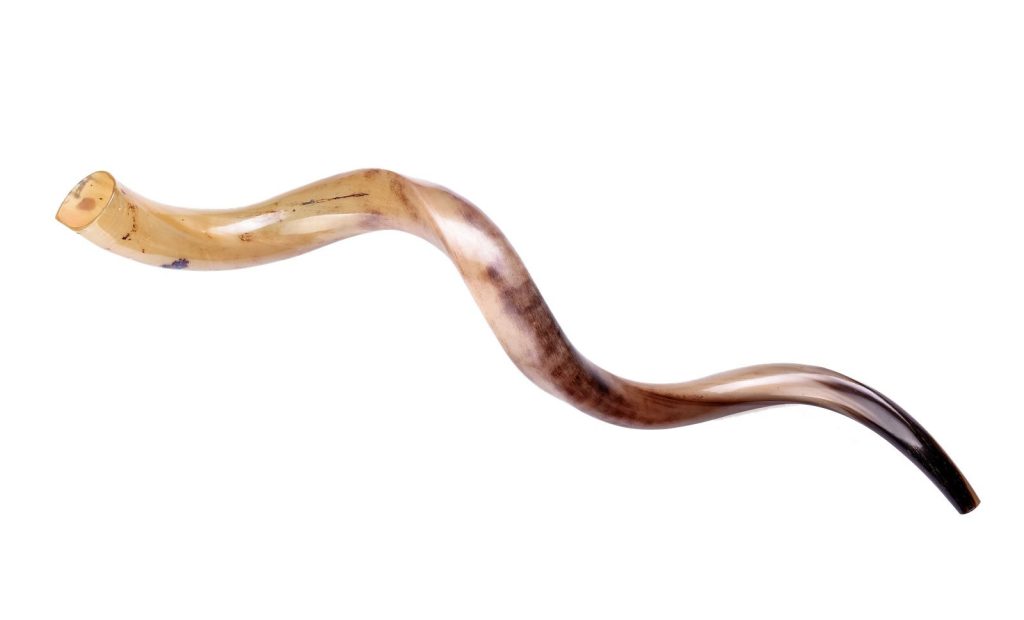
On Rosh Hashana we are commanded to hear the sound of the shofar. The sound of the shofar expresses the cry of the Jewish heart to its Creator. The Rebbe explains that sometimes a person expresses his cry in words; sometimes, since he cannot express his cry in words, he emits a simple sound that emerges from his throat; and sometimes a person cannot express his cry at all, because it has no external expression – this is the cry of the heart. The sound of the shofar, which is not a human voice but rather a sound emanating from an animal’s horn, expresses that same inner voice that cannot be heard.
The sound of the shofar emerges directly from the breath of the heart and contains something of simplicity and primordialness. It faithfully expresses the feelings of the heart, as distinct from a verbal description of them which might be said from a distant position that observes them but does not express their full depth. While words can reveal inner, hidden worlds, they can equally conceal them.
The sound of the shofar is the language that Hashem chose to awaken the connection between us and Him, a language He revealed only to us. A language in which we express our deep longing for Him and even call upon Him to return to reign over us and direct us with a new light that has never illuminated the world since the days of Creation. The Alter Rebbe writes in the Tanya: “And in each and every year, a new and renewed light descends and illuminates from the supernal wisdom that has never before illuminated the upper world, for the light of each and every year withdraws to its root every Erev Rosh Hashana when the moon is covered, and afterwards through the blowing of the shofar and tefillos, a new supernal light is drawn down from a higher dimension.”
Hear Our Voice
In practice, throughout all the days of the year in the Shemone Esrei we ask Hashem to hear our voice: “Hear our voice, Hashem Elokeinu, compassionate Father have mercy upon us, and accept our prayer with mercy and favor, for You are Hashem who hears prayers and supplications, and from before You our King do not turn us away empty-handed, for You hear the prayer of every mouth. Blessed are You, Hashem, who hears prayer.” We ask Hashem to hear our inner voice, the voice that exists beyond the words of tefilla and flows from the depths of our heart.
During the Aseres Yemei Teshuva we even deepen the request and recite Tehillim 130: “A song of ascents. From the depths I have called You, Hashem. Hashem, hear my voice, let Your ears be attentive to the voice of my supplications.” The Alter Rebbe explains that we call to Hashem from depths, in the plural, meaning from “depth within depth.” We ask Hashem to hear not only our inner voice that exists beyond words and flows from the depths of our heart, but also what is hidden beyond it, in the depth within depth, the voice that flows from the place where we and He are one. In this request lies an infinite longing for an inner connection beyond words, beyond voice, beyond anything that can be defined and expressed, to the place where Hashem and we are one.
The Voice of the Kalla
The Alter Rebbe explains in his maamar on the seventh bracha of the sheva brachos, “May Hashem Elokeinu speedily cause to be heard in the cities of Yehuda and in the streets of Yerushalayim the voice of joy and the voice of gladness, the voice of the chassan and the voice of the kalla,” that one of the characteristics of the Geula is hearing the voice of the kalla, who symbolizes Knesses Yisrael and womanhood. In galus, the voice of the kalla is not heard. For example: under the chuppa, when the chassan sanctifies her with the words “Harei at mekudeshes li b’tabaas zu,” she does not respond to him at all, she remains silent, her silence is considered consent.
The Shemone Esrei too, which expresses the devotion and connection of Jewish souls with Hashem is said in a whisper, without raising the voice, with mere movement of the lips. And even more than that, at the beginning of the Shemone Esrei we turn to Hashem and ask Him to help us make our voice heard in a whisper: “Lord, open my lips and my mouth will declare Your praise,” because without His help we cannot even do this.
In conclusion, I have written about the sound of the shofar and about the voice of tefilla through which we make our inner voice heard, even the voice that cannot be heard, before Hashem. In the Geula, the kalla, Knesses Yisrael, will sound forth a new voice as well. Consider: what do you think is the new voice that will be heard in the Geula? What will it succeed in expressing beyond the voice we sound forth in galus?
Beis Moshiach #1477 • pp. 64-65
© 2026 Beis Moshiach Magazine. All rights reserved.
This article originally appeared in Beis Moshiach #1477. You are welcome to share it with friends and family by email or in print, provided that you do not change, add to or omit any part of it, you credit the author and Beis Moshiach, and you include a link to archive.bmoshiach.org (written out in full in printed copies).
To republish this article in a newspaper, magazine, book or website, please request permission in advance at [email protected].