Climbing As High As Possible
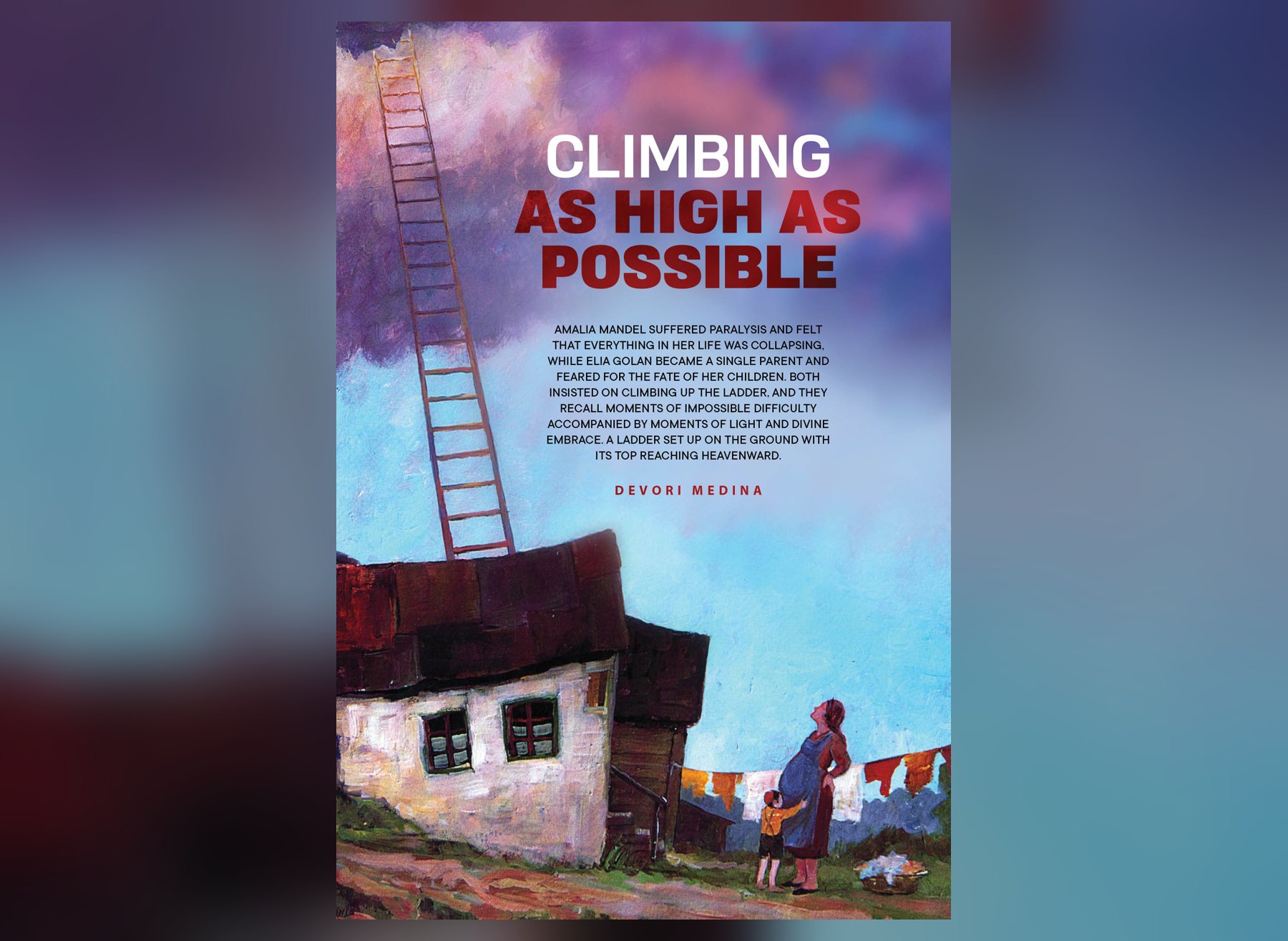
Amalia Mandel suffered paralysis and felt that everything in her life was collapsing, while Elia Golan became a single parent and feared for the fate of her children. Both insisted on climbing up the ladder, and they recall moments of impossible difficulty accompanied by moments of light and Divine embrace. A ladder set up on the ground with its top reaching heavenward.
They have been climbing up the ladder for years, step by step. Breathing heavily, holding on with all their might. The burden in their backpacks is heavy, but they insist on continuing their arduous journey of ups and downs, refusing to give up.
Sometimes, it seems to us that we are at the bottom, and it’s unclear how we can raise ourselves. Then, the Aibishter sends us strength, and we start moving. This is the choice we have made, to grow, literally step by step.
How do we do it? How do we find the strength to continue rising, growing from the struggle of life’s crises?
Let’s get some strength from those who have been through it and became more steadfast as a result. They were determined not to stay down, ascending one stage after another.
Amalia, a twenty-seven-year-old mother of three, is dealing with a serious illness that has spread throughout her body, as she produces artistic drawings with her mouth. Elia, a divorcee raising five children on her own and a teacher at a school for at-risk youth, has created a kit that improves relationships between parents and children. They will share with us the process they went through.
The Experience
You have been through some difficult trials in your life…
Amalia: Two and a half years ago, my life changed completely, and I went from being a functioning and active mother and pastry chef to a quadriplegic under constant nursing care. I endured numerous attempts at rehabilitation, but unfortunately, they were unsuccessful and my condition only worsened… Despite the enormous difficulty surrounding my illness and the challenges along the way, I have found an opportunity in my disability to appreciate what I have.
It all started at the end of my pregnancy with our youngest child. I suffered a minor stroke that led to the outbreak of a rare and incurable genetic disease, which I was apparently born with, a very challenging and difficult disease.
I had been an active and energetic woman, a lively mother who rolled in the sand with her children. I was a successful pastry chef, and I also ran workshops for children in sculpting with modeling clay. Today, I am disabled and dependent on others twenty-four hours a day, seven days a week, unable to swallow or receive food, water, or medication directly into my stomach. Regrettably, all attempts at rehabilitation were unsuccessful, and today I am paralyzed in all four limbs to varying degrees of severity. I move around in a motorized wheelchair and wait every morning for a personal miracle.
Elia: I went through a difficult divorce. Many personal upheavals accompanied me throughout this period. And so, one day in the middle of my life, I found myself raising my children alone. Thus, when Shabbos came, I suddenly had to run the Shabbos table by myself, reading worksheets on the weekly Torah portion and concepts in Chassidus. Doing all this with the children’s difficult emotional frame of mind served as the coping mechanisms that led to their future growth and development.
How do you cope with the new situation?
Amalia: At the beginning of my illness, when my hands were still functioning, I started making jewelry. My hands were weak and shaky, but that didn’t stop me from continuing to create my artwork. I made a lot of pieces and participated in sales before Pesach. I did some sales at home and began dreaming about opening a small jewelry business. Since I was confined to a wheelchair, this dream gave me a renewed sense of hope. I hired a professional photographer and we took pictures of all the jewelry on a mannequin, ordered equipment, and printed up leaflets. However, just as I was about to start advertising my business, my hands stopped functioning permanently…
I was depressed and didn’t want to see anyone! I felt as if my whole world had collapsed and crumbled to pieces… Then, I decided that I wasn’t going to give up. With great pain, I put aside what I didn’t have, closed my eyes, thought about what I did have, what did function, and what I could work with. That’s how I came to start drawing.
Elia: While it was hard for me, I realized that the atmosphere of the Shabbos table is engraved on the hearts of our children and they will pass it on; their Jewish identity depends on it. If they just eat and go to sleep – that’s all they’ll remember. However, if there’s a festive family atmosphere at the Shabbos table with Torah discussions and singing melodies, they’ll enjoy the experience and want to pass it on to their children as well. When I observed this, I decided that I would invest all my efforts in this experience and not give it up for a moment.
On The Path Of Ascent
What gave you the strength to reach higher?
Amalia: The strength to grow came from the beauty around me, and I will explain what I mean.
Near my house there is a beautiful garden, full of blossoming flowers. One day, I was driving in my chair and thought sadly about the beautiful life I used to have and my sad situation now, as I drive my chair along the path instead of walking on it. I looked around at the flowers and the magical nature bathed in beauty and color that no human hand could create. And so, as the tears streamed down my face along the path, I stopped and said to myself: “Wait, who made all this beauty? Who is it that returns a soul to the body every morning? Who gives us the ability to get up, eat, run, and speak? Alm-ghty G-d, the Creator of the World.
“And if Hashem made all this beauty and continues to revive us at every moment, tell me, is it a problem for Him to make me walk, talk, and eat? No. He can restore it all to me in an instant.”
So, if that’s the case, I don’t worry anymore. I draw my strength from the small and beautiful things this universe has to offer, contemplating on all the good things and the fact that the Creator of the World is All-powerful. This is what gives me the strength to raise my head with a big smile for another challenging day.
The understanding that the Aibishter revives and creates the world at every moment and can restore everything to me right now in an instant gives me the strength to grow.
Elia: It was important for me to invest in the Shabbos table, while also helping my children with their emotional difficulties. I understood that discussing emotions with parents is important for their children, and how children can develop with their parents a deep and attentive emotional dialogue.
Here’s a story that gave me much inspiration and strength to reach higher and higher: There was a family in which one of the sons left home and abandoned all connection to Yiddishkeit. His mother came to the Rebbe to ask for advice and a bracha, and the Rebbe told her to invest in the Shabbos table, which they did with greater fortitude. One of this boy’s brothers shared with him that the house had changed considerably, and the Shabbos table was something far different from what he remembered. He came to get a peek at Shabbos at home. This was followed by another Shabbos and another until he eventually returned home. The change in the atmosphere at the Shabbos table had caused the boy to return to his parents’ house.
In addition, the thing that helped me most of all was giving to others. During that time, I increased my Mivtza Neshek activities at the local Grabski Rehabilitation Center, and gave more classes to women in Chassidus. It was all this influence on my immediate environment and giving to others that helped me most of all not to break down or fall. The main thing is to keep moving forward.
Climbing To One’s Destination
After you have found the strength to climb, what is your destination? What is the place you have reached or are striving to reach?
Amalia: Baruch Hashem, I find the good in everything and do not give up on the possibility of creating more and more.
With the help of a volunteer from the ‘Milbat’ non-profit organization, I began to create artwork from scratch and drew my first mandala using my mouth. In addition to the fact that it is fun to draw, doing so with my mouth is like air for my lungs, and every dot on the canvas gives me an abundance of strength to raise my head for another challenging day and to know that despite everything, I can still make something myself, using my mouth. Knowing that I have the ability to do something meaningful gives me a lot of confidence and strength.
Elia: I made an educational kit for the Shabbos table. Composing a discussion on each of the weekly Torah portions with accompanying emotions, I called it “Crossroads” (available on the Hidabroot Shopping website). The kit contains flash-cards for each parsha. Each card has a section on the Torah portion and three questions that open a dialogue about some emotion in the personal experience of those sitting around the Shabbos table. Even those who do not answer the questions and only listen to what is being said develop emotional dialogue and emotional listening. The kit helps in developing an emotional conversation within the family unit, so that the children will not seek attention in strange and inappropriate ways.
A Divine Embrace
Can you tell us about a special moment in your life’s journey when you felt that Hashem was with you?
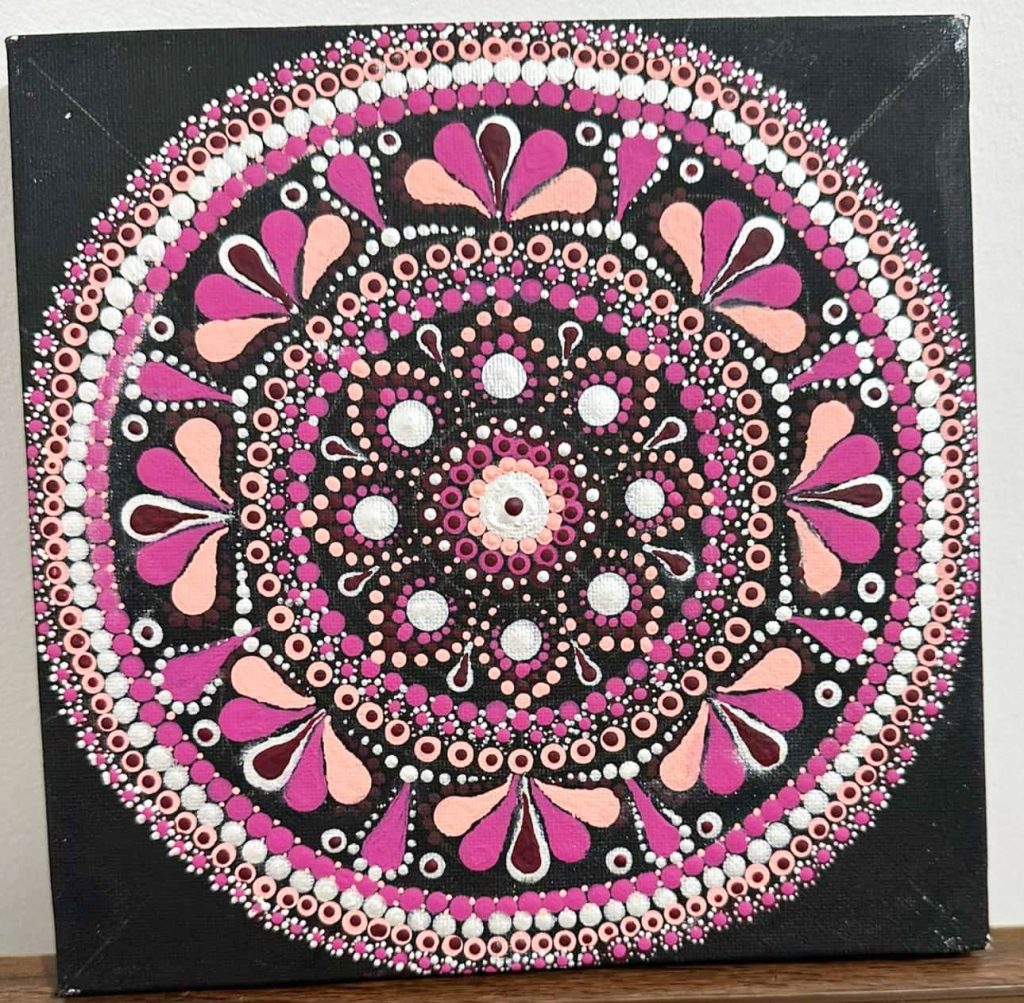
Amalia: To be honest, every moment. I always feel how the Aibishter is with me, accompanying me every step of the way.
Elia: The moment when I realized that, Baruch Hashem, I was able to connect the children to Yiddishkeit and Chassidus in the most authentic and genuine manner possible was when I felt that Hashem was with me. My children no longer accept the classical image of children of divorced parents and they are connected to their Yiddishkeit in a positive atmosphere.
A final word.
Amalia: We all go through things – whether it is in our own private sphere of influence or in broader forums. I say, take a moment, try to find the beautiful and good things that are around you and draw from them the necessary strength to deal with the crises you encounter along the way.
If you wanted something and it did not come out as you planned, do not give up and try a different course, perhaps in a slightly unconventional manner. It may take more time, but it will happen! Don’t despair, always try to focus on what you have, what works, and what functions. Appreciate it, be grateful for it, and do something with it.
Elia: The Rebbe gives us the opportunity to stand up and make an impact. The Rebbe’s instructions are truly life-saving, we need to stick to them both when everything is good and beautiful, and when things are difficult.
Beis Moshiach #1482 • pp. 40-43
© 2026 Beis Moshiach Magazine. All rights reserved.
This article originally appeared in Beis Moshiach #1482. You are welcome to share it with friends and family by email or in print, provided that you do not change, add to or omit any part of it, you credit the author and Beis Moshiach, and you include a link to archive.bmoshiach.org (written out in full in printed copies).
To republish this article in a newspaper, magazine, book or website, please request permission in advance at [email protected].