Shlichus on a Chicken Farm
Previously: Reb Yankel Lipsker survived Soviet Russia and WWII, keeping Shabbos always. The Rebbe Rayatz sent him in 5708 (1948) to a failing New Jersey chicken farm – not to farm, but to inspire struggling Jews and draw them close to Yiddishkeit
One hot summer before Shabbos in the beginning of 5709 (1949), five bachurim reached the Lipsker farm; three others got lost and spent Shabbos elsewhere. Leading the group was Tzvi Hirsh (Heishke) Gansburg. He came straight to Yankel with a clear message.
“We were called into Merkos,” Hershke said, still catching his breath. “A specific instruction – from the RaMaSh, from his shver. I was called into the Rebbe’s office and given a mission. I must find out the full Hebrew name of Moshe Greenberg.”
Yankel didn’t ask why. He nodded, set places for the guests, and said, “We’ll help you find it after Shabbos.” The bachurim smiled, spread out their sefarim, and the farmhouse felt alive.
* * *
“Moshe Greenberg?” Yankel rubbed his hands, thinking. “I don’t know anyone by that name – anywhere. And I’m pretty sure I know all the Yidden around here.”
He went over to the gabbai. “Hey, Mr. Shatz – Moshe Greenberg. Does that name ring a bell?”
Mr. Shatz squinted. “Yeah. I know the guy. Morris. Never comes to shul.”
“Yeah,” said Yankel, half‑smiling, “I never heard of him.”
“He doesn’t even come on Yom Kippur,” Mr. Shatz added.
“Never?” Yankel asked.
“Never,” said Mr. Shatz.
He leaned in, eyes wide. “Weirdest thing, though – he’s here now. And it’s not Yom Kippur. Go figure.”
Yankel blinked. “Now?”
“Now,” the gabbai nodded, pointing toward the back.
Yankel glanced at the bochurim. “Let’s go meet ‘Morris.’”
Yankel felt like he knew him… Wait. From where?
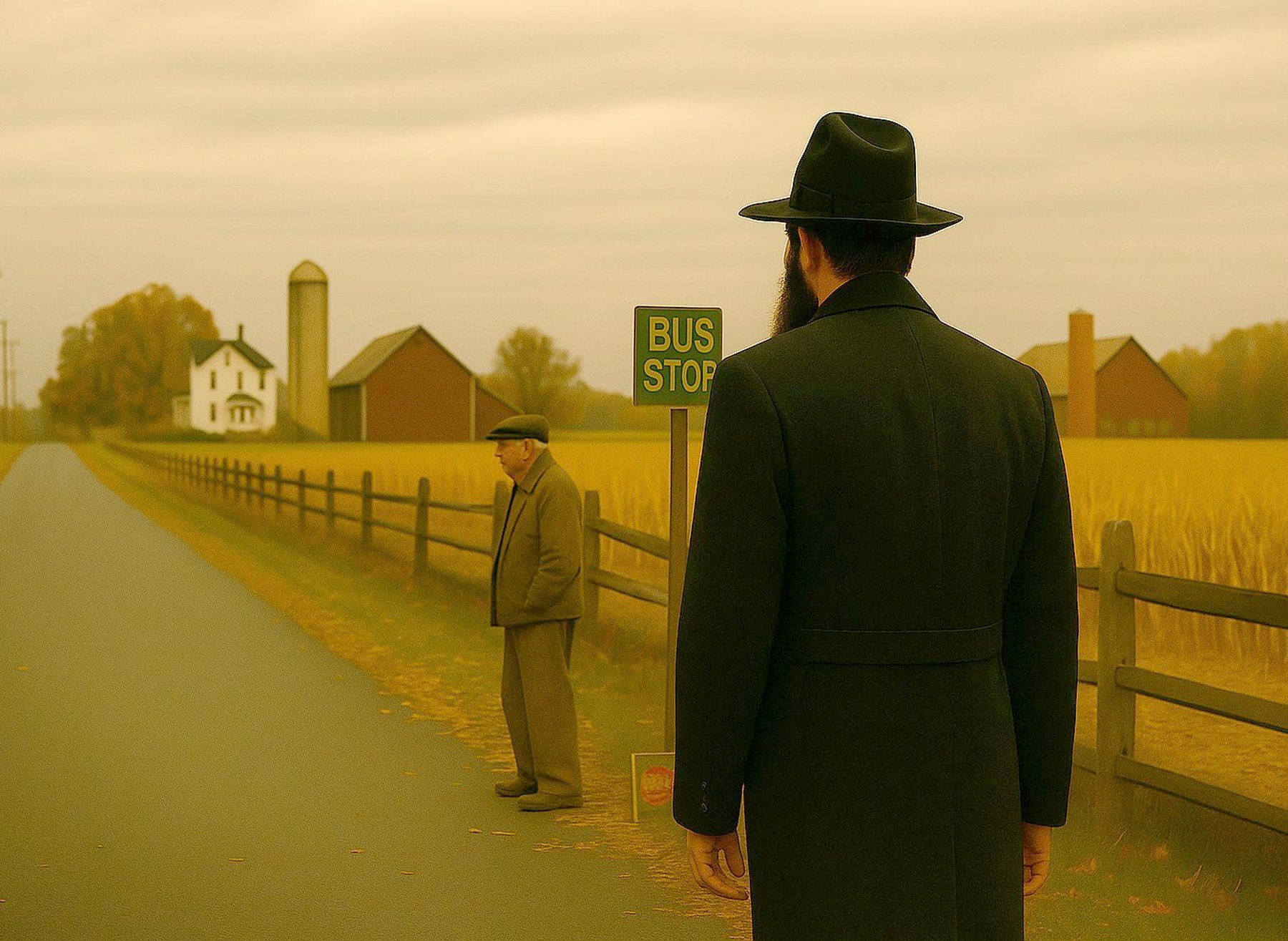
The bus stop! Yankel remembered. The bus stop man! Every single Shabbos, as Yankel made the long walk to shul, he saw a man at the bus stop, waiting for the express train to Jersey City. He smoked his cigar and tapped his foot. Moshe Greenberg was the bus-stop man!
Tzvi Gansburg, the bachur, would somehow have to find out Moshe’s full Jewish name over Shabbos without scaring him away. They knew his name was Moshe, but they needed to find out his mother’s name. That’s how you daven for people. Moshe ben …?
“Want me to help?” Yankel asked Rabbi Gansburg. This was something Yankel could do.
“Sure,” said the bochur. “Work your magic!”
Shabbos afternoon came. The shul crowd sat around on benches and passed around some crackers and herring and Lechaim. Yankel stood up and said, “Friends, let’s make a l’chaim for my mother’s neshama. Today is her yahrtzeit! Her name was Bas-sheva!”
“L’chaim, l’chaim.”
“And Morris, what was your mother’s name?”
“Sarah.”
Ka-ching, mission accomplished!!!! Yankel winked at the bachur: Moshe Greenberg’s mother’s name was Sarah. They could tell the Rebbe Raytz.
Yankel went on talking like nothing ever happened. Nobody knew why he slipped that question in, except the bachurim.
* * *
Motzoei Shabbos the bachurim went back to 770 and gave the Rebbe the name: Moshe ben Sarah. Why did the Rebbe need it? Likely to daven for his neshama – to pull a Yid back home. Moshe – called “Morris” here – rode buses on Shabbos, never came to shul, and had married a non‑Jewish woman. The Rebbe cared – and he acted.
The next Shabbos, as Yankel passed the bus stop, Morris wasn’t there. Not the week after, or the week after that. “Do you know what happened to Morris Greenberg?” Yankel asked Mr. Shatz.
“You and everyone else,” the gabbai chuckled. “Neighbors, coworkers, even his family – no one knows. After that Shabbos with the bachurim – he was just gone.”
No one in town ever solved the Morris mystery. Maybe he went to start over – somewhere he could live as Moshe ben Sarah.
* * *
Life on the farm stayed hard. The flock was small. Money was tight. Yankel sold eggs to a route driver, but it wasn’t enough. To feed the chickens, he took a side job at a nearby mill, schlepping bags of chicken feed. Twice a year the government sent potatoes “for each cow.” Their cow, Betsy, got the peels; the children got the potatoes. For bread, Yankel bought day‑old loaves – but only from bakeries closed on Shabbos.
He didn’t stop helping Yidden. A local pharmacist resisted closing for Shabbos. On Simchas Torah – after a few l’chaims – he told Yankel his heart was weak and he was scared.
“Close on Shabbos,” Yankel said quietly. “Hashem will send you a refuah.”
The man tried it. Weeks later, the pain faded. In time he became fully frum, moved to a stronger community, and all three of his daughters married Lubavitcher Chassidim.
When a bachur needed a clean summer away from the streets, the Rebbe sent him to work at the farm. Yankel couldn’t afford to pay him, so the Rebbe had Merkos cover a small salary. The Rebbe kept sending bachurim to bring sefarim and simcha to the farms.
Taibel and Yankel still longed to live near the Rebbe. Yankel asked several times for permission to leave the farm; each time the answer was no – the Rebbe Rayatz had sent him there to make frum Yidden. On weekday farbrengens, Yankel stood near the Rebbe; on Yom Kippur he stayed in Crown Heights with his older boys and brought the warmth back home to New Jersey.
* * *
One Motzoei Shabbos, a phone call: “The Rebbe passed away.” It was Yud Shevat 5710 (January 28, 1950). Yankel froze. Could it be the Frierdiker Rebbe? He rang Mr. Shatz – “Is the Rav of Roosevelt okay?” “All fine.” Trembling, he called 770. Rabbi Rodshtein answered: “יענקל, קום צו פֿאָרן – Yankel, come.”
Yankel took his oldest, Avremel, and drove to Crown Heights. By sunrise Anash filled the shul; the Rebbe Rayatz’s place was empty, his shtender taken for the Aron. At 9 a.m. a minyan went to Montefiore to help dig the kever. The RebbeRayatz was laid to rest. Back on the farm the work went on – feed, water, coops – with a heavier heart and a quiet promise to keep his shlichus alive even without the Rebbe to physically guide him.
A year later, on Yud Shevat 5711 (1951), the RaMaSh accepted the nesius and became the Lubavitcher Rebbe. For Yankel it felt like the same road – now bright with sunrise. They already knew each other from Paris; the Rebbe trusted his care with kashrus and quiet errands. Now that trust became guidance.
On 9 Kislev 5712 (1951) the Rebbe told the chevra in 770 to say l’chaim because “Yankel Lipsker had a baby boy.”
Many times Yankel asked to move back to Crown Heights; the Rebbe told him to stay on shlichus, explaining that the Rebbe Rayatz had sent him to make frum Yidden there. This steady guidance continued until 5714 (1954), when in yechidus the Rebbe said, “Nu, that’s enough. It doesn’t have to be a farm. Move back to the city.”
* * *
“Where should we go?” Yankel asked.
“Crown Heights,” said the Rebbe. “And buy a business there.”
Yankel began right away – but the farm wouldn’t sell. Buyers came and went. He wouldn’t even keep the usual $100 “non‑refundable” deposit; he returned it. One day he told the Rebbe, “It seems from above they don’t let me sell it.”
The Rebbe lifted a hand. “Vos tut zikh l’maalah, veis men. Fahr gezunterheit un farkoyf der farm – What goes on Above, we know. Go in good health and sell the farm.”
When Yankel came home, a man was waiting at the door. That very night they closed the deal.
* * *
They moved back to the Rebbe. First as guests in someone else’s house, then a rental that later had a fire, and finally their own home in Crown Heights. The Rebbe told Yankel to buy a grocery on Kingston and Union (Today: Kahan’s Superette) from an elderly owner who was retiring. The man offered “tips”- like sneaking extra charges onto a bill or pressing a finger on the scale so the number looks heavier and the customer pays more. That’s cheating.
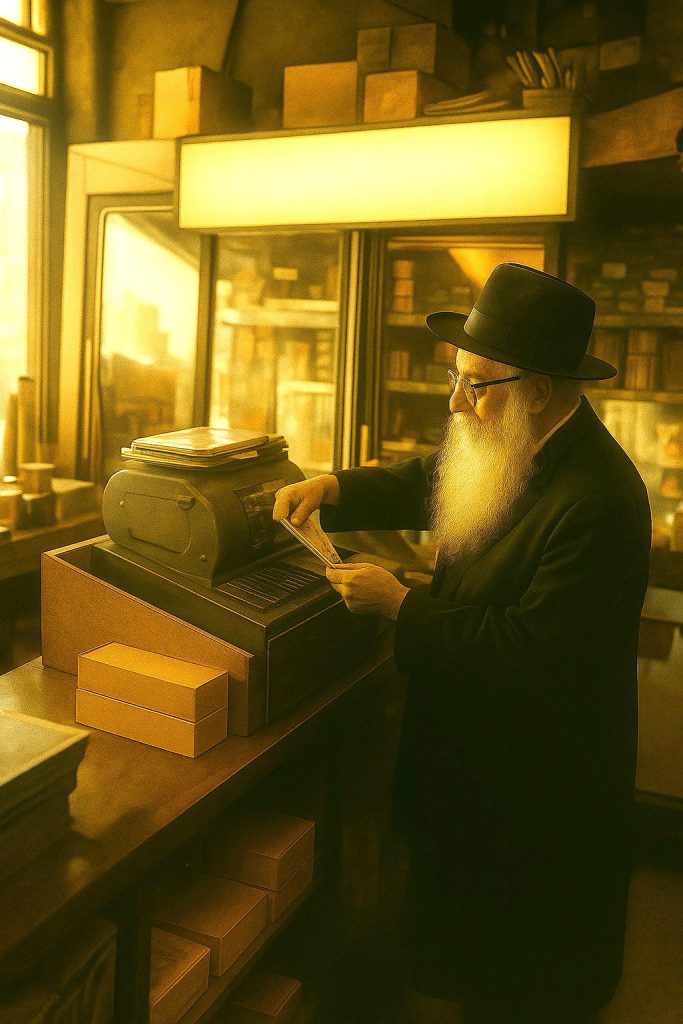
“Not in my store,” said Yankel. He did the opposite – adding a little extra after weighing, just in case he had charged too much. There was already a grocery in the neighborhood – Mr. Stilerman’s. When he heard the Rebbe told Yankel to open a second grocery in Crown Heights, he worried. Two stores on the same street can mean fewer customers for each one, less money to pay bills, and stress about feeding a family. The Rebbe reassured him he wouldn’t lose parnassa – that his livelihood wouldn’t shrink because a second store was opening.
Their Crown Heights home became what their farm had been trying to be: an open house for guests, farbrengens, and simchas. People came for bread, for a bracha, for a place at the table. Yankel still wore his work smile; Taibel still asked for news from 770 – every detail.
* * *
If you passed their old farm at dawn, you would have seen a Chassid in muddy boots humming a niggun and counting eggs on the fields of New Jersey. If you passed the grocery on Kingston, you would have seen the same Chassid giving an extra roll into the bag and a warm “Good Shabbos.” Different places. Same mission.
Once, long before on the farm, the Rebbe had told him, “I didn’t send you to be a farmer. Many others can be farmers. I sent you to make frum Yidden.”
That is what he did.
Source: Archives of the Shmukler Family
Beis Moshiach #1483 • pp. 56-59
© 2026 Beis Moshiach Magazine. All rights reserved.
This article originally appeared in Beis Moshiach #1483. You are welcome to share it with friends and family by email or in print, provided that you do not change, add to or omit any part of it, you credit the author and Beis Moshiach, and you include a link to archive.bmoshiach.org (written out in full in printed copies).
To republish this article in a newspaper, magazine, book or website, please request permission in advance at [email protected].