Bringing Tanya to Lakewood
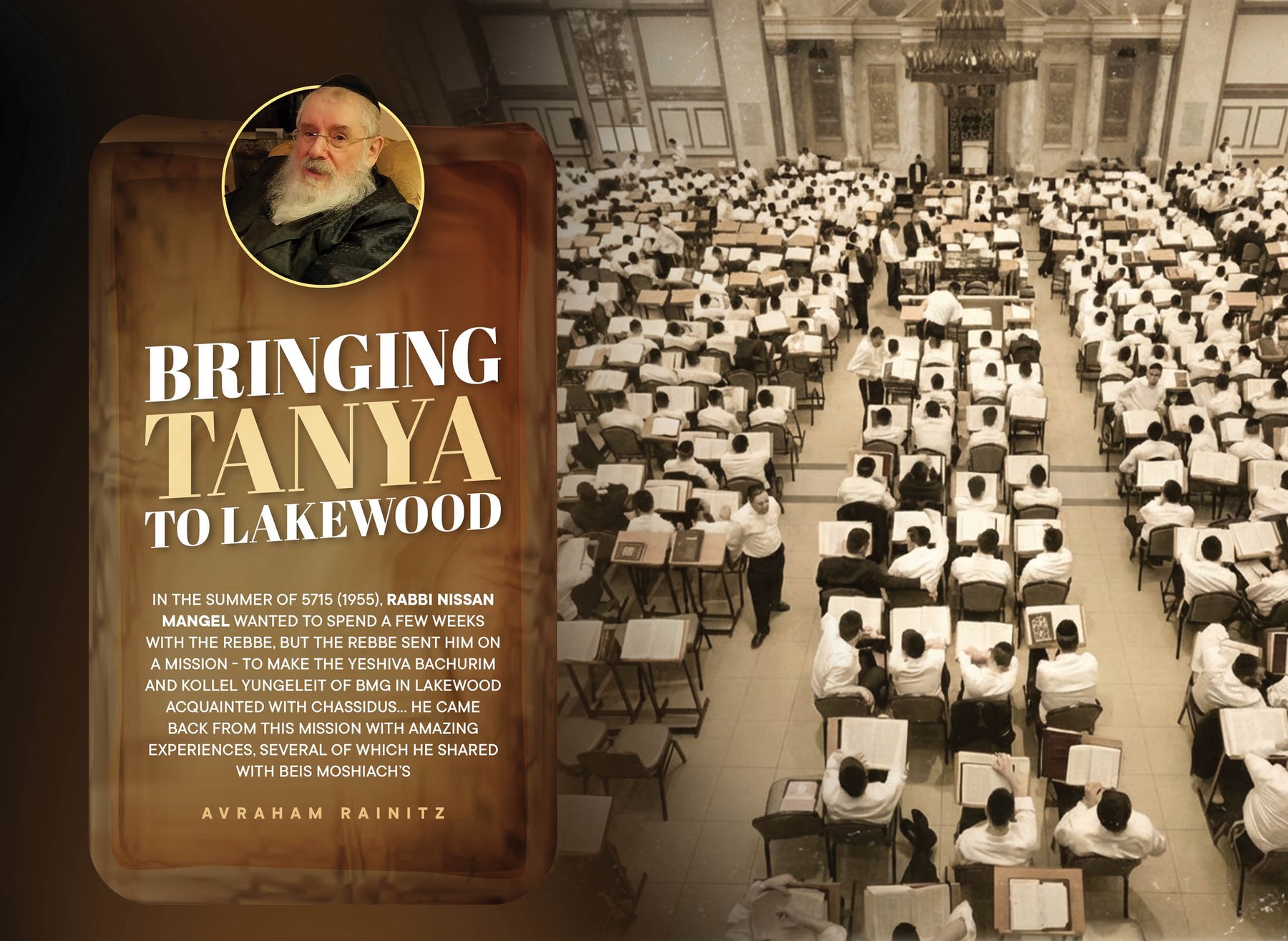
In the summer of 5715 (1955), Rabbi Nissan Mangel wanted to spend a few weeks with the Rebbe, but the Rebbe sent him on a mission – to make the yeshiva bachurim and kollel yungeleit of BMG in Lakewood acquainted with Chassidus… He came back from this mission with amazing experiences, several of which he shared with Beis Moshiach.
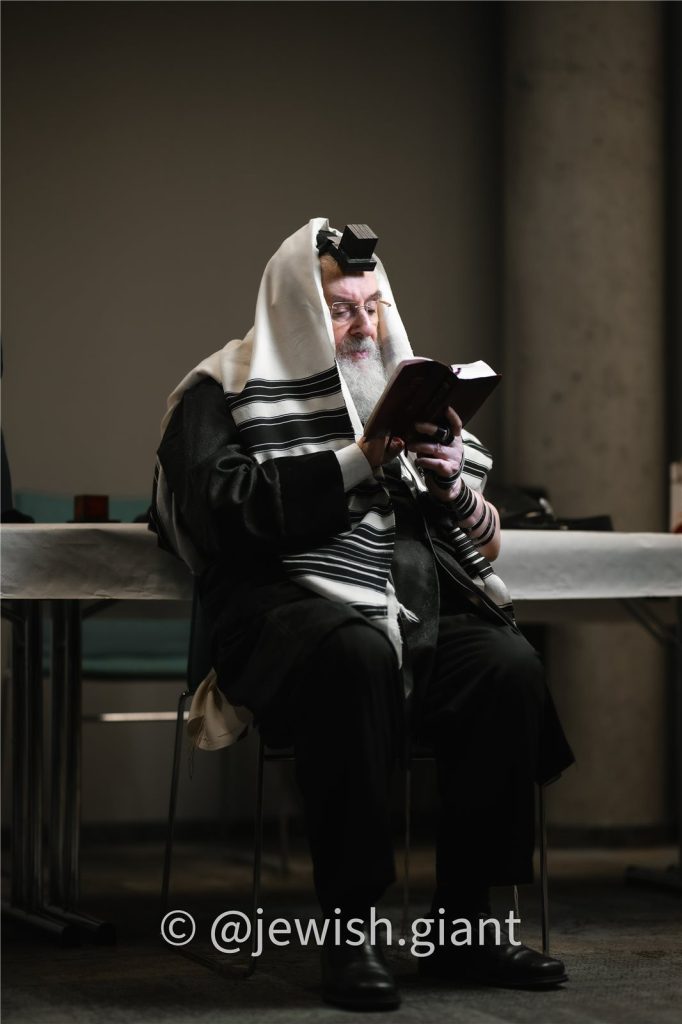
When sitting down for a conversation with the Gaon, the Chassid Rabbi Nissan Mangel, one of the distinguished Chabad rabbanim, rav of the ‘Ksav Sofer’ shul in Crown Heights and one of the respected members of the community, it doesn’t matter what the topic of the conversation will be, it will be fascinating and full of revelations. All the more so when Rabbi Mangel wishes to speak about the greatness of learning Tanya, about which he heard special instructions and expressions from the Rebbe.
As a brief introduction to the stories below, it is important to note that in the summer of 5715 or 5716 (1955 or 1956), Rabbi Mangel wanted to learn for several weeks by the Rebbe, until the end of bein ha’zmanim. However, when he had yechidus and expressed his wish, the Rebbe told him: “No, you will go to Lakewood…”
At that time, Lakewood was a stronghold of opposition to Chassidus, mainly due to the Rosh Yeshiva, Rabbi Aharon Kotler, who expressed sharp opposition to the Rebbe’s approach. Rabbi Mangel knew that in order to influence them in Chassidus, he first needed to impress them with expertise and sharpness in Gemara. When he arrived at the yeshiva, he asked what they were learning, and when he heard “Hamachlif Parah B’Chamor,” he began to deliver a pilpul on the topic.
Within a short time, dozens of bachurim gathered around him, and after he won their hearts with an explanation according to Nigleh, he explained the topic in the way of Chassidus. He approached the Rosh Yeshiva himself in the same manner and engaged in pilpul with him, and the respectful attitude of the Rosh Yeshiva influenced the talmidim to value the words of Chassidus. When he returned to New York and had yechidus, he gave the Rebbe a report and mentioned the pilpul – and great joy was evident on the Rebbe’s holy face.
Learning a Chapter of Tanya Daily – A Segula for a Shidduch
Rabbi Mangel went to 770 for Sukkos. On Chol HaMoed, the day after the big farbrengen that the Rebbe held for bnei ha’yeshivos, Rabbi Groner told him that Rabbi Chodakov was looking for him. He went to his office, and Rabbi Chodakov said that the night before, the Rebbe told him that he saw him at the farbrengen, and wondered “What is he doing here? He’s supposed to be in Lakewood!”
Rabbi Mangel said to Rabbi Chodakov: “I wasn’t here all of Tishrei, I only arrived on Erev Sukkos and was at only one farbrengen. And now you want me to go to Lakewood?” Rabbi Chodakov gave him a sharp look and replied: “Are you arguing with the Rebbe? The Rebbe said to go to Lakewood, so go there!”
Of course he nullified his will before the Rebbe’s will, and asked Rabbi Chodakov how long he should stay in Lakewood. And he answered that the Rebbe said until Shemini Atzeres – meaning, to return to Crown Heights on Hoshana Raba. And then Rabbi Chodakov added: “In addition to the dalet minim, take hoshanos with you, maybe you won’t be able to find such hoshanos mehudaros there.”
Immediately after davening he traveled by bus to Lakewood, and this time too he was well received, however the place was relatively empty, as most of the bachurim had gone home for Yom Tov. Those who remained were members of the kollel who lived there. At night they celebrated Simchas Beis HaShoeiva with the participation of the Rosh Yeshiva and his son, the distinguished kollel students, and Rabbi Mangel. The Rosh Yeshiva was present at Simchas Beis HaShoeiva for about an hour, and went home. In his presence Rabbi Mangel reviewed several topics in Nigleh, but after he left, he began to farbreng with the kollel members, and elaborate on explanations b’derech ha’Chassidus. The yungeleit were captivated, and every night they held a Simchas Beis HaShoeiva farbrengen until 4-5 in the morning!
Hoshana Raba night arrived. Rabbi Mangel was exhausted after several consecutive nights of farbrengens with almost no sleep. In the huge Beis Medrash sat Rav Aharon Kotler and his son, and another small group of kollel yungeleit, and Rabbi Mangel sat in the back, reciting Chumash Devarim. When he finished, he began to say Tehillim. The group sitting at the front of the Beis Medrash was debating about the kashrus of the hoshanos. As you may recall, Rabbi Chodakov instructed him to take hoshanos with him because in Lakewood there was a problem finding beautiful ones.
At two in the morning a yungerman entered the Beis Medrash, one of the local kollel members. He approached Rabbi Mangel, gave him “shalom aleichem” and asked if he was a Lubavitcher. After he answered affirmatively, he asked if he could do him a favor: to come to his home and talk with him. Rabbi Mangel agreed, but – he told him – only in fifteen minutes, when he finishes reciting all of Tehillim.
The yungerman waited for him and they went to his home. It was 2:30 in the morning. What was his request? Could Rabbi Mangel study a chapter of Tanya with him! He wanted to ask why they couldn’t study there in the Beis Medrash, but the yungerman anticipated him and explained that they could study in the Beis Medrash, but Rav Aharon Kotler was there, and he was a tremendous opponent of Chassidus, of Tanya and of the Rebbe. “If he saw me studying Tanya, he would throw me out of the yeshiva. That’s why I asked you to come to my home.”
Rabbi Mangel was tired from a week of consecutive farbrengens until dawn, but the Rebbe sent him here to teach, and this person was asking to study a perek of Tanya. This was the very purpose for which the Rebbe sent him here. He began to study an entire perek of Tanya with him slowly, word by word, line by line, in a clear manner. The learning lasted about forty-five minutes, while in his mind he was planning how to catch a short nap soon. However, despite his plans, the man asked him for another favor. And what was it? To study another perek of Tanya with him!…
At this stage he felt how his eyes were closing, but he continued and studied another perek of Tanya with him, slowly, without rushing and without just going through the motions, despite his great fatigue, because the Rebbe sent him specifically to Lakewood. And this took another forty-five minutes.
After he finished the second perek, the man asked him to do one more favor… He couldn’t function anymore, but he studied a third perek with him, which they finished after dawn, when they saw the sky beginning to brighten.
Only then did that young scholar reveal to him why he wanted to study Tanya. And this is what he said:
He was no longer a young bachur, and had not succeeded in shidduchim, so he went to Rav Aharon Kotler for a bracha and… the bracha wasn’t fulfilled. He continued on his way to all the gedolei Yisrael in the United States, and also in Eretz Yisrael, and still hadn’t gotten engaged. So then he decided that despite being a devoted talmid of Rav Aharon Kotler, who opposes Tanya, opposes Chassidus, opposes Lubavitch and the Rebbe – since he was desperate, he had to get married and needed a bracha from a true tzaddik. He would therefore go to the Lubavitcher Rebbe for a bracha.
He went to the Rebbe the previous summer, and the Rebbe told him to begin studying a perek of Tanya every day, and he would get a good shidduch soon. Since then he had been studying a perek of Tanya every day, and just that day he became engaged. “As gratitude to the Rebbe I wanted to learn – not one perek of Tanya, not two perakim, but three perakim”…
After he finished his story, he asked if Rabbi Mangel could do him another favor… He already feared he would want to study another perek of Tanya, but no, he wanted to write a letter to the Rebbe, and asked whether Rabbi Mangel was willing to take the letter to the Rebbe for him. Of course, he agreed.
During davening the young man gave him a letter for the Rebbe. In the afternoon, Rabbi Mangel traveled to New York, and arrived at 5 PM at 770. He hurried to the mikva, and then went to Rabbi Chodakov and gave him the letter. He had no idea what was written in it.
After Yom Tov, he had yechidus and when he walked in and the Rebbe saw him, the Rebbe began to smile a big, radiant smile, and asked: Wasn’t that talmid afraid to learn Tanya? Rabbi Mangel told the Rebbe that he learned three perakim of Tanya with him, and he was indeed afraid, and therefore didn’t learn in the Beis Medrash, but in his own apartment…
The Rebbe: Study a Perek of Tanya Every Day and Know that Tanya is ‘Nishmasa D’Oraysa’ (the Soul of Torah)!
On his first visit to Lakewood, he met a bachur who lived in Montreal, so he already had an acquaintance with him. After conversing with him several times about inyanei Chassidus, he saw that he was still full of opposition to the Rebbe and to Chassidus. Rabbi Mangel said to him: You are, after all, a ben Torah. How can you have an opinion about the Rebbe, without having heard him? Come to a farbrengen of the Rebbe, and afterwards you’ll decide. He was evasive.
Once Rabbi Mangel went to the Rebbe for Shabbos Mevorchim Elul, because he wanted to have yechidus on a private matter. He sent him a postcard, and wrote that he would be very happy if he would also come for Shabbos to Crown Heights, so that he would also participate in the farbrengen with the Rebbe, and he would also arrange yechidus for him on Sunday.
To his delight, the bachur came. Rabbi Mangel arranged a place for him to stay at the home of Rabbi Mordechai Groner, and during Shabbos the bachur was very influenced by the Rebbe’s persona, and especially by the deep sichos he heard at the farbrengen.
On Sunday morning, Rabbi Mangel approached Rabbi Chodakov and asked to arrange yechidus for the evening hours, both for himself and for the friend who was one of the top talmidim in Lakewood. Despite the short notice, thanks to the good connections with Rabbi Chodakov, usually he would allow him to enter for yechidus the same day. But this time a surprise awaited him…
Rabbi Chodakov responded with a serious, stern look: Nissan, don’t you know that today is Erev Rosh Chodesh, and the Rebbe doesn’t have yechidus on the night of Rosh Chodesh?!
Rabbi Mangel was embarrassed, and said: I promised my friend that I would arrange yechidus for him, and now I’ll come out a liar…
Rabbi Chodakov was not impressed by his argument, and said: What can I do? It doesn’t depend on me. The Rebbe doesn’t receive people for yechidus on the night of Rosh Chodesh…
Rabbi Mangel dared to say: Perhaps we could go in before Maariv, so it wouldn’t be considered ‘the night of Rosh Chodesh’…
Rabbi Chodakov didn’t like the idea and he rebuked him: Nissan, you want to establish new practices?! Tonight the Rebbe doesn’t receive people for yechidus!
Rabbi Mangel returned to his friend, dejected…
Since the original plan was to stay until after yechidus on Sunday night, the friend remained at Beis Chayeinu on Sunday, and Rabbi Mangel took advantage of the opportunity to study Tanya with him in depth. They sat for several hours and studied perek after perek. After they studied several perakim in depth, he surprised Rabbi Mangel with his question: Does Tanya have the status of ‘Torah’?
Rabbi Mangel couldn’t believe what he heard. “Does it occur to you that one can study Tanya without first reciting the birchos ha’Torah?,” he asked him, to make sure he indeed understood his question correctly.
After he answered affirmatively, Rabbi Mangel understood how far he was from the entire inyan of pnimiyus ha’Torah, to the point that it occurred to him that the Tanya is not part of the ‘Torah’…
“How does such a thing occur to you?!” and he began to explain with passion and at length that the Sefer ha’Tanya is pnimiyus ha’Torah, and this is ‘Nishmasa D’Oraysa’ (the soul of Torah). He clarified to him, that not only is Tanya ‘Torah’, but it is ‘the ikar of Torah’, and this is the “new Torah” that will be revealed in the time of Moshiach. He spoke this way for about two hours, until 7 PM.
Suddenly Rabbi Chodakov appeared in the small zal, and said: You can enter for yechidus now!
Since he had already despaired of the possibility of entering for yechidus, Rabbi Mangel hadn’t written his questions on a note, as was customary. He therefore told his friend to enter first, and by the time he came out – he would prepare his note.
The friend entered for yechidus, and when he emerged from the Rebbe’s room after several minutes, his face was red as a beet… Rabbi Mangel asked him what happened, but he was very agitated, and said: I can’t tell you now. We’ll talk later…
Rabbi Mangel entered for yechidus and submitted the note with his private questions. After the Rebbe answered his questions, the Rebbe began to speak with him about the bachur he brought from Lakewood, and asked: What is he planning to do now?
When he said that his plan was to return that night to Lakewood, on the bus that leaves at ten o’clock – the Rebbe told him: Tzach (the youth organization) is organizing a farbrengen [this was customary in those years, that on every night of Rosh Chodesh, Tzach organized a Chassidishe farbrengen in the small zal], make sure he participates in the farbrengen. Even though he will surely be pushed and ‘rubbed’ at the farbrengen, nevertheless – it’s very good.
When Rabbi Mangel came out of yechidus, the friend was waiting for him outside. He told him: Cancel your plans, you’re staying here! He told him that the Rebbe asked him to stay for the farbrengen, and made sure to tell him that at a Chassidishe farbrengen one doesn’t sit so comfortably, but it’s important and good for him.
Afterwards he couldn’t contain his curiosity, and asked him why he came out of yechidus with such a red face? And the bachur told him this:
Upon entering yechidus, the Rebbe asked him: Do you learn Tanya every day? He answered negatively, and the Rebbe asked: Who is to blame for this? Is it Nissan Mangel’s fault?… He immediately said: No, it’s my fault, not Mangel’s…
And then the Rebbe astounded him by saying: From now on you will study a perek of Tanya every day, and know: It is forbidden to study Tanya before reciting the birchos ha’Torah! And here the Rebbe began to repeat all the points that Rabbi Mangel had mentioned in their conversation about the importance of learning Tanya – pnimiyus ha’Torah, Nishmasa D’Oraysa, the essence of Torah that will be revealed in the future, etc.
He was stunned in the face of the open ruach ha’kodesh that he saw with his own eyes.
At that time he was looking for a shidduch, and after seeing the Rebbe’s ruach ha’kodesh, he decided not to take such a fateful step without the Rebbe’s bracha. After meeting a young lady whom he liked, he wrote about it to the Rebbe, and waited for the Rebbe’s bracha before finalizing. But the Rebbe’s bracha was delayed in coming…
After several weeks passed, he asked Rabbi Mangel what he should do. He told him: I don’t know what you need to do, but I wouldn’t go ahead with the shidduch without the Rebbe’s bracha.
Since he didn’t move forward, the other side understood that it wasn’t happening, and both sides continued to search for their zivug. He had several suggestions and dates, which didn’t work out. And then, two years later, they suggested to him the same young lady from two years earlier… He consulted with Rabbi Mangel, and he expressed his opinion that he should meet with her, and write to the Rebbe again.
Again, they liked one another, and again he wrote to the Rebbe. This time the Rebbe’s response came quickly, but not on the last letter, rather the Rebbe wrote his bracha for the shidduch on the first letter that was sent two years earlier!
He was very surprised. Why did the Rebbe wait until now? Rabbi Mangel told him that he doesn’t know the Rebbe’s thoughts, but it’s possible that he needed to hear all those suggestions he heard during the last two years (as is known the explanation of the Rebbe Rayatz on this), and only afterwards arrive at the right shidduch. And the proof is that throughout all those two years, the Rebbe held onto his first note, because he knew that he would eventually come to this shidduch!
After the wedding Rabbi Mangel arranged one of the sheva brachos for the couple in the yeshiva’s zal in Montreal. He asked the cook to prepare special food, and his yeshiva friends helped him arrange the hall beautifully, and so they sat for a sheva brachos and Chassidishe farbrengen with the Chassid, Reb Peretz Mochkin.
After the farbrengen the chassan said to him: Do you remember that you asked me to stay for the farbrengen after the yechidus, and you said it would be good for me? – It really was very good, because since then I stopped being a misnaged!
Learn a Perek of Tanya Every Day, and You’ll Succeed in Raising One Hundred Thousand Dollars!
The third story with learning Tanya occurred on Motzoei Simchas Torah. The Rebbe gave out kos shel bracha and Rabbi Mangel stood near the Rebbe and observed what was happening.
On that occasion, the Chassid Nachman Kovalsky from Baltimore, who was a very successful fundraiser, and collected money for Torah institutions in the United States, had the following dialogue with the Rebbe:
R’ Nachman said to the Rebbe: “I ask you for a bracha that this year I succeed in raising money totaling one hundred thousand dollars.”
This was about sixty years ago, and one hundred thousand dollars then was worth more than a million dollars today.
The Rebbe smiled broadly, and asked: “And what will I get from this?”
R’ Nachman said: “Rebbe, I will give maaser!”
The Rebbe replied: “I will give you one hundred thousand dollars, and you will give me ten thousand dollars?”
R’ Nachman answered cleverly: “Rebbe, you are giving me from Hashem’s money, and I am giving from my own money!”
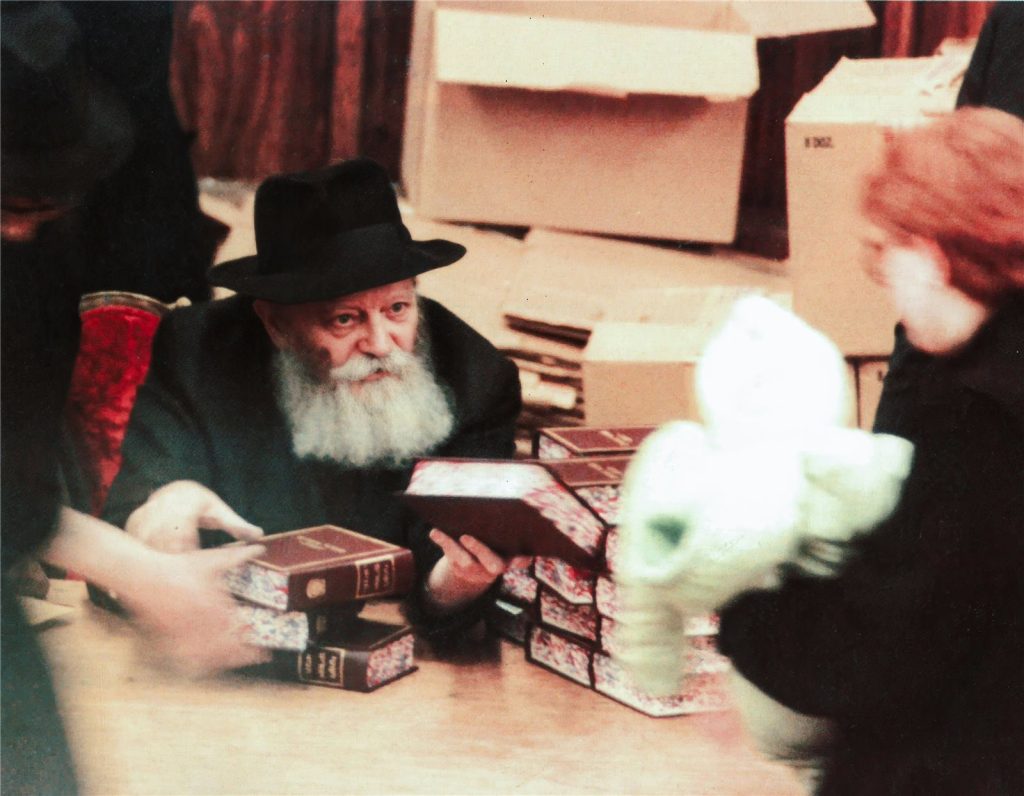
The Rebbe smiled and said: “I will give you a bracha, but you must learn a perek of Tanya every day before davening. And on Shabbos and Yom Tov, also learn a maamar – in winter from Torah Ohr, and in summer from Likutei Torah.”
And the bracha indeed was fulfilled, and that year R’ Nachman obtained donations in the enormous sum of more than one hundred thousand dollars!
Beis Moshiach #1489 • pp. 28-35
© 2026 Beis Moshiach Magazine. All rights reserved.
This article originally appeared in Beis Moshiach #1489. You are welcome to share it with friends and family by email or in print, provided that you do not change, add to or omit any part of it, you credit the author and Beis Moshiach, and you include a link to archive.bmoshiach.org (written out in full in printed copies).
To republish this article in a newspaper, magazine, book or website, please request permission in advance at [email protected].