Letters Transforming Lives
Strengthening our hiskashrus with the Rebbe MH’M, infusing it with passion and love, is a proactive process. Immersing ourselves in reading the Rebbe’s teachings keeps us spiritually “alive,” and is a sure way of getting us to implement them, with Chassidishe chayus, in our daily lives.
Finding Myself Reading About – Myself!
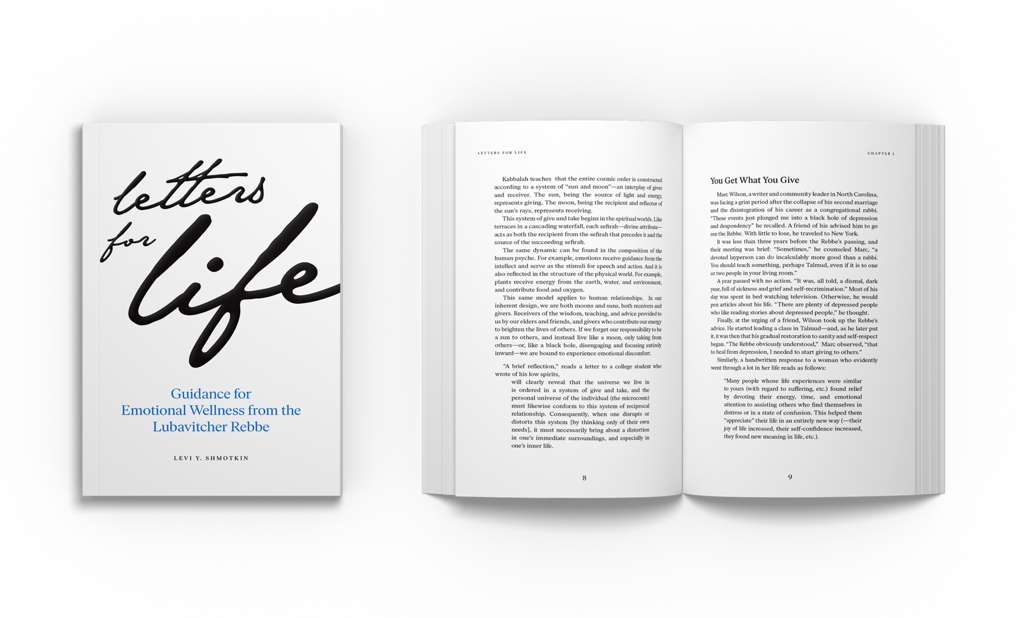
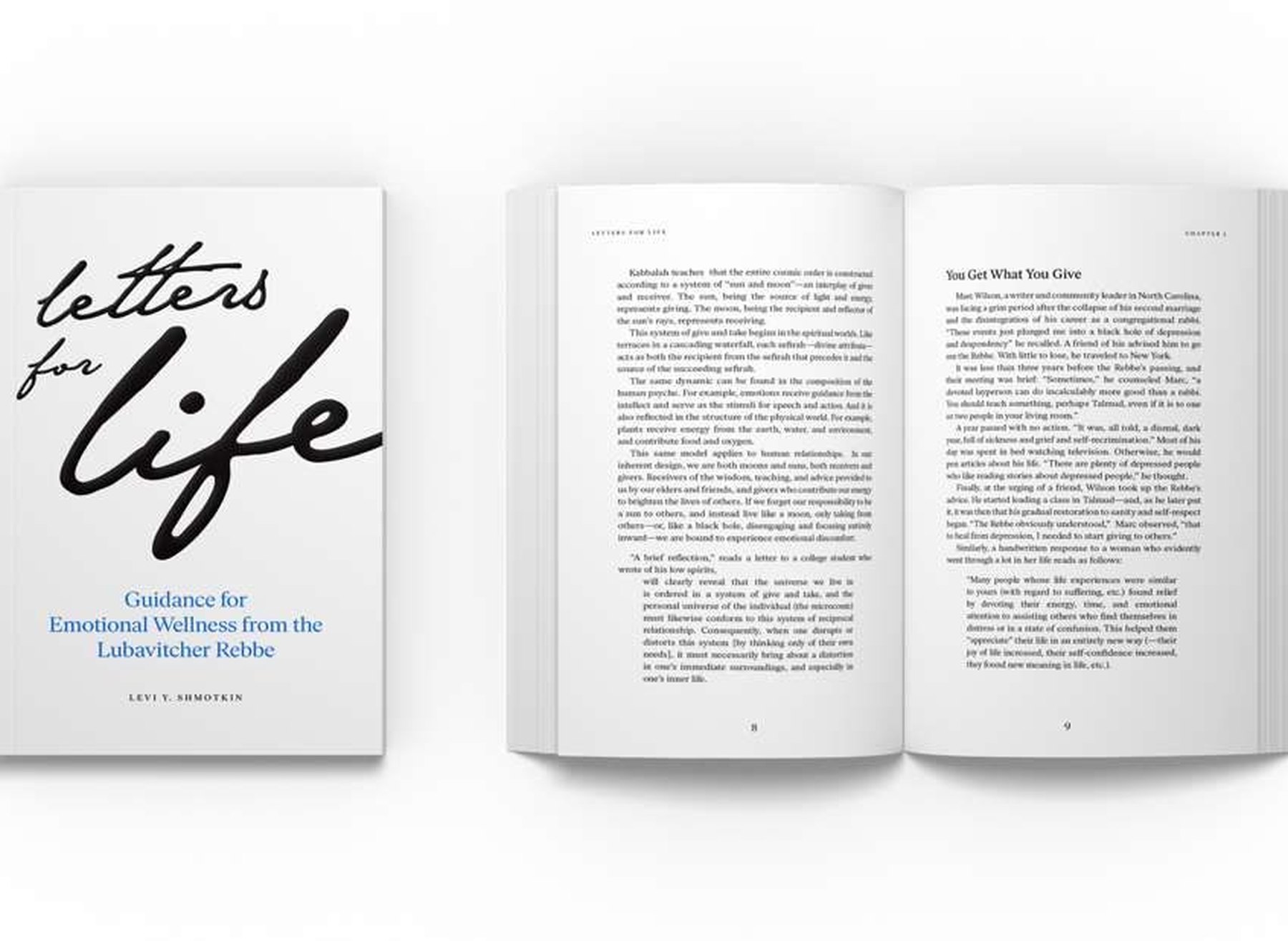
The title “Letters for Life” aroused my curiosity, and is what drew me to purchase Levi Y. Shmotkin’s newly-released book. I’m not exaggerating when I say that as soon as I opened it I couldn’t put it down! Reading one letter after another, I kept soaking in the Rebbe’s profound guidance for emotional wellness. The boundless empathy and understanding that the Rebbe has for heartbroken individuals is palpable. Every letter is overflowing with ahavas Yisrael, without any trace of being judgmental. I felt my emotions escalating with every page, yet I had no idea of what was about to happen next….
Lo and behold, I found myself reading the Rebbe’s letter – about me! (It was without identifying details.) Levi Y. Shmotkin discovered it among the thousands of letters of the Rebbe that he pored through in preparation for writing this book. I had to catch my breath, it was very overwhelming….
The letter was written over forty years ago, giving me guidance and emotional support in the most confusing period of my life. Suddenly a vision of my younger self appeared before me, sitting on a navy blue couch with my heart beating as I opened it. In the Rebbe’s response, which arrived almost immediately, he analyzes my nature and attributes in such an insightful way that even those closest to me would never have known. The Rebbe gives me sage advice, while showing deep concern for me, at a time when there was no one else who understood me.
Since then, whenever I’m in a dilemma or at the crossroads, I find my answers in the Rebbe’s letter. It’s etched deeply in my neshama. There are certain words that at first I regarded as superfluous. Years later I realized that the Rebbe purposely inserted them in order to give me the clarity that I’d need in the future.
I’m very grateful to Levi Y. Shmotkin for including my letter in his book, so that others in a similar situation can benefit from the Rebbe’s sound advice. Lately I’ve been finding beautiful collections of the Rebbe’s letters that were published only recently. New treasures become available when we need them most.
A Psychiatrist Astounded by the Rebbe’s Wisdom
I gave “Letters for Life” as a gift to my dear friend, Dr. Julia Sklar, a psychiatrist working in a day treatment program. The letters had a transformative impact on her, and she emailed me:
“The profound level of wisdom in the Rebbe’s letters is a beacon of light in dark times. The Rebbe tells people who feel lonely that, in truth, they are never alone, the Almighty is always with them. Those suffering from social isolation are encouraged to get outside of themselves by helping others in their community, while emphasizing that it’s the best way to relieve depression and anxiety.
“In chapter nine the Rebbe discusses self-worth by making a brilliant point about lashon hara. The idea that self-denigration is considered lashon hara was new to me. It shows how much the Rebbe wants people to have self-esteem. We have faults; no human being is perfect, but that doesn’t mean we should denigrate ourselves. It drains us of the time and energy that we need for positive action.
“There is a quote from a letter of the Rebbe (on page 155) that “any (denigrating) thoughts that deject you – you must throw them out!” On the next page the Rebbe responds to a man who criticized himself sharply, “Pointlessly dwelling on our faults and mistakes is an affront to our essential divine soul, which remains untarnished. We are denigrating it by our self-deprecation, even if it is true. All the more so that it is often our subjective mind and evil inclination deceiving us.”
“It’s remarkable the way the Rebbe always encourages a positive outlook, even in the most difficult circumstances. Sayings such as “think good and it will be good” appear that instill courage to change. This technique, “cognitive restructuring,” is central to Cognitive Behavioral Therapy. Identifying and changing irrational or negative thought patterns to more realistic and helpful ones has proven to be very successful in reducing emotional distress.
“Another recurrent theme in the Rebbe’s letters is the deep interconnection between the mind and the body. Meeting our most basic needs, such as adequate sleep and maintaining a daily schedule, is the best form of preventative medicine. The Rebbe is teaching us healthy habits, and much, much more!
“I’m so grateful that you got me this precious book!”
The Rebbe Belongs to the People
Several weeks later when I met with Julia she said, “What amazed me most is that every single person, in the entire world, can turn to the Rebbe for support and guidance! He’s always there for them, giving and giving, endlessly….
“At first I asked myself, ‘Doesn’t the Rebbe have his own needs?’ But the classes that I attend at Chabad gave me a better understanding of the Rebbe as the leader of the generation at his own expense. The Rebbe belongs to the people, and is committed to and concerned about each and every one of us. By living our lives in accordance with the Rebbe’s teachings we are bringing the Divine Presence down to the world.”
Beis Moshiach #1495 • pp. 40-41
© 2026 Beis Moshiach Magazine. All rights reserved.
This article originally appeared in Beis Moshiach #1495. You are welcome to share it with friends and family by email or in print, provided that you do not change, add to or omit any part of it, you credit the author and Beis Moshiach, and you include a link to archive.bmoshiach.org (written out in full in printed copies).
To republish this article in a newspaper, magazine, book or website, please request permission in advance at [email protected].