Your 24-Hour Assistant Has Arrived
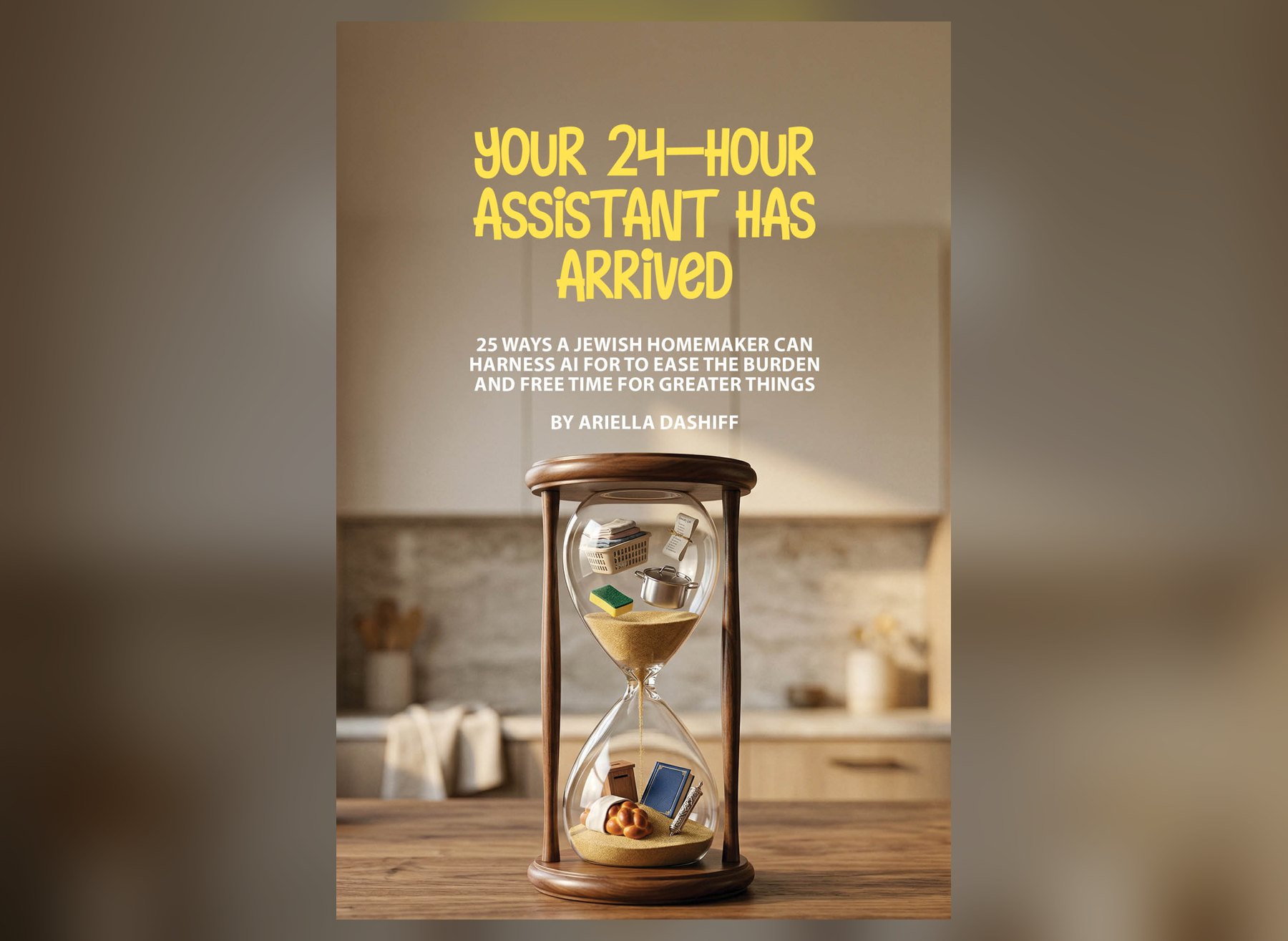
25 ways a Jewish homemaker can harness AI to ease the burden and free time for greater things
The Geula is here. The dream of a personal assistant available 24 hours a day has become a reality. True, it doesn’t mop the floors or wash the dishes yet, but we can already see that we’re truly in the days of Moshiach. Its name is “Artificial Intelligence” (AI), and despite the technical name, it has a place of honor – as long as you know how to use it correctly – even in the Jewish-Chassidic home.
Before we get to the practical tips, it’s important to understand the essence. In Chassidus we recognize the powers of the soul: Chochma (the initial flash, the spark), Bina (the development, expansion, and processing of details), and Daas (the emotional and inner connection). “Artificial Intelligence,” as its name implies, has tremendous power of bina. It knows how to take data, process it, and organize it at incredible speed. But – and this is critical – it has no daas. It has no soul, no emotion, and no yiras shomayim. It is purely a technical tool. Our role, as women and mothers, is to bring the daas – the soul and the intention – and to use the machine’s bina as a technical aid for running the home, freeing up time for what truly matters.
In this expanded guide I have compiled 25 ideas, tools, and tips to help you harness this technology for the benefit of your home, your family, and your nefesh. For each tip I’ve included a sample “prompt” – the instruction to write to AI in order to get the best results.
Part A: Home and Kitchen Management
1. Kitchen Creativity and Using What You Have (Bal Tashchis)
Sometimes the fridge looks empty, but it’s actually full of potential waiting to be discovered. Instead of throwing out leftovers or running to the store unnecessarily, AI can be your personal chef, conjuring gourmet dishes from “nothing.” This is a wonderful tool for being mehader in the mitzva of bal tashchis (not wasting) and for significant financial savings.
What to write: “I have three tired zucchinis, white cheese, eggs, and onions in my fridge. Suggest a recipe for a baked dish suitable for a light kids’ dinner that’s quick to make (up to 10 minutes of work).”
2. Planning a Calm Friday Schedule
A short Friday, especially in the winter, is a major management challenge. The pressure to finish everything before the siren can overshadow the joy of Shabbos. AI can serve as your project manager, breaking large tasks into small, logical steps, synchronizing chores, and ensuring you reach candle-lighting relaxed and at peace.
What to write: “Shabbos comes in at 4:30 PM. I need to prepare: fish (in the oven), chicken soup (in a pressure cooker), schnitzel, potato kugel, and three fresh salads. I want to finish everything by 1:00 PM so I can rest. I’m starting at 8:00 AM. Make me a minute-by-minute schedule, including when to put what in the oven to save electricity and time.”
3. A Personalized Cleaning and Organization Chart
Generic charts from the internet aren’t always effective because they don’t know your home or your children. AI can create a system that takes into account the children’s ages, abilities, and even their personalities, turning household chores into something (almost) fun. This is excellent before Pesach, but also for the routine of summer vacation or Fridays.
What to write: “Build me a chore chart for Friday house-cleaning for a family with four children (ages 6, 8, 10, 12). I want the division to be fair, each child to receive a task suited to their age, and for it to be framed as a ‘secret mission’ or challenge with points.”
4. Product Comparison and Smart Shopping
Before a big purchase we drown in a sea of information, reviews, and technical specs. AI knows how to scan existing knowledge and distill the bottom line. It’s (relatively) objective and can save you hours of browsing websites and deliberating.
What to write: “I want to buy a new mixer. I’m debating between [Model A] and [Model B]. My main uses are kneading challah dough (5 lbs.) and whipping egg whites for cakes. Make me a comparison table with an emphasis on long-term motor durability and ease of cleaning. What are the pros and cons of each for intensive family use?”
5. Smart and Economical Budget Planning
The cost of living is a concern for every household. Good financial management requires knowledge but also creativity in finding alternatives and solutions. AI can serve as your financial advisor, going over your shopping list and suggesting cheaper alternatives, or helping you build a weekly menu tailored to a set budget.
What to write: “We are a family of six and our weekly supermarket budget is $1300. Give me ideas for cheaper but healthy alternatives to expensive products (like branded cereals or snacks), and suggest a menu for school sandwiches that is economical and nutritious.”
6. Home Maintenance and DIY Troubleshooting
Before calling a professional and paying hundreds of dollars for a visit, the solution is often right under your nose. AI can guide you step by step on how to fix simple problems, remove stubborn stains, or maintain appliances so they last longer.
What to write: “My washing machine makes a strange noise when spinning and there’s an unpleasant smell. The model is [model name]. What are the common causes and how can I try to fix it myself before calling a technician? Give me clear safety instructions.”
Part B: Education, Children, and Family
7. Homework Help (Without Giving Away the Answers)
When a child comes with questions on material we’ve long forgotten, or that’s taught using new methods, AI is the most patient private tutor there is. The goal is not for it to do the homework instead of the child, but to explain the logic to you (or to them) so you can tackle the assignment yourselves.
What to write: “My daughter in 5th grade is learning about decimal fractions and struggling to understand how to convert a simple fraction to a decimal. Explain this to me in the simplest, most tangible way (maybe with an example using money or pizza) so I can explain it to her. Don’t just give me the formula – give me the logic.”
8. Screen-Free Activity Ideas
The great challenge of our generation: how to keep children occupied without sending them to a screen. AI is an inexhaustible source of creative ideas. It can invent games from objects found at home, trivia, plays, and crafts.
What to write: “It’s a rainy day and we’re stuck indoors with children ages 3, 5, and 7. Give me ten indoor movement games that will burn their energy but are suitable for a small living room, using pillows, chairs, and empty plastic bottles. Safety is important.”
9. Accessible Spiritual Content for Children
Conveying the weekly parsha or stories of tzaddikim in a way that captivates little ones is an art. AI can help you “translate” deep ideas into children’s language, create discussion questions for the Shabbos table, or even compose a family quiz. Note that it’s very important to review its output, especially on Torah topics…
What to write: “I want to tell the kindergartners about the current weekly parsha. Summarize the central idea of the parsha with an emphasis on the value of ‘Ahavas Yisrael’ or ‘hachnosas orchim,’ and add a short, catchy story that illustrates this idea from their everyday lives.”
10. Personal Event Planner
Bar mitzva, upsheren, grandmother’s birthday, or a surprise party for your husband – every event requires production. AI can help you build a concept, design invitations, plan a menu, and prepare a supply list so no detail is forgotten.
What to write: “We’re celebrating an upsheren for our son with close family at home. I want it to be themed ‘Sweet Letters.’ Give me ideas for decorating the table on a budget, ideas for refreshments related to the theme (besides a Torah-shaped cake), and a short activity suitable for both children and adults.”
11. Personalized Bedtime Stories
Sometimes a child needs targeted encouragement – overcoming a fear, accepting a new sibling, or coping with failure. You can ask AI to write a story where the hero deals with exactly that issue, in a Chassidic and uplifting spirit.
What to write: “Write me a bedtime story for a 6-year-old boy who is afraid of the dark. The hero should be a Chassidishe boy named Yossi, who learns to say Shema Yisrael and feel that Hashem is watching over him. The story should be calming and empowering.”
12. Original and Personal Gift Ideas
Finding a gift for the teacher, mother-in-law, or husband is always a project. AI can help you find original ideas suited to the budget and the recipient’s personality, beyond the standard “flowers or chocolate.”
What to write: “I’m looking for an end-of-year gift for my son’s rebbi. I want to spend around $35. He is an older man who appreciates sefarim but has everything, and greatly loves old Chassidishe music. Give me five creative and respectable ideas that will delight him.”
13. Conflict Resolution and Role-Play Simulations
Need to have an uncomfortable conversation with a school principal? Or perhaps bring up the noise issue with a neighbor? AI can help you practice the conversation, phrase your arguments assertively yet pleasantly, and anticipate objections.
What to write: “I need to ask my boss for a raise. I’m very shy. Help me formulate the request and give me a list of questions she might ask me and how I should answer them with confidence.”
Part C: Paperwork, Writing, and Time Management
14. Drafting Messages and Letters This is one of the most classic and effective uses. AI knows how to take the “mess” in our heads and compose it into a formal, polite, and clear letter. It saves enormous emotional energy and deliberation.
What to write: “Write an email to my daughter’s teacher. I want to say that my daughter came home hurt yesterday because she was laughed at during recess, and I’m asking the teacher to pay attention to this and speak with her gently, without revealing that I reached out. The tone should be very appreciative and respectful as well as clear.”
15. Summarizing Long Articles and Classes
Received a long file to read from work? Or perhaps a class summary you want to review but have no time for? AI can condense the text to key points in seconds.
What to write: [Paste the long text] then: “Summarize this text for me in 5 key points to remember. Highlight if there are any action items.”
16. Decoding Medical Documents
Blood test results arrived and you have no idea what all the abbreviations mean? AI can explain the terms in plain language (of course, this does not replace medical advice!).
What to write: “I received test results that say [copy the English term]. What does this mean in plain language?”
17. Writing Blessings and Speeches
Need a vort for the Shabbos table, a bracha for a bas mitzva, or a short speech for a parent assembly? AI is an excellent copywriter. It can incorporate pesukim, Chassidic sayings, and original ideas.
What to write: “Write me a short and moving blessing for a close friend who gave birth to twins, a boy and a girl. Weave in a brief idea connected to the current weekly parsha (Parshas Noach), and conclude with wishes for Chassidishe nachas.”
18. Translation and Language Editing
Need to send an email in Hebrew to relatives in Israel, or draft a notice for the community? AI translates at a very high level and can also correct spelling and grammar errors in text you’ve written yourself. You can even scan a printed document and it becomes editable text.
What to write: “I wrote the following paragraph in English but think there are errors in it. Correct it and make it more formal and professional: [paste your text].”
19. Planning Family Trips and Vacations
Going on vacation? AI can find hiking routes, places with kosher food and minyanim in the area.
What to write: “We’re traveling to Connecticut for two days with small children. Give me recommendations for three shaded, stroller-accessible hiking spots in the area, and a list of stores that carry kosher products.”
20. Learning a New Skill
Always wanted to learn how to use Excel for budget management, or how to knit a sweater? AI can be your personal instructor, at your own pace.
What to write: “I want to learn single-needle knitting. I’m starting from scratch. Explain the first step, what equipment to buy, and what basic techniques I need to practice.”
Part D: Personal and Spiritual Development
21. Diet and Personalized Nutrition
If you’re trying to maintain a healthy diet amid the pressures of home life, AI can build customized menus for you, taking into account constraints like kashrus, Shabbos, and Yomim Tovim.
What to write: “I’m trying to reduce sugar and carbohydrates. Give me five ideas for healthy, kosher snacks I can take to work that don’t require refrigeration.”
22. Personal Time Management
Mothers who work from home (or run the home) suffer greatly from distractions. AI can teach you time-management methods and help you implement them.
What to write: “I feel scattered and can’t get anything done. Explain how the Pomodoro time-management method works and give me an example of how to apply it on a day when I need to do laundry, cook, and work on the computer.”
23. Organizing Photos and Memories
Is your phone bursting with photos of the kids and you can’t find anything? AI can suggest digital organization and cataloging methods to bring order to your memories.
What to write: “I have thousands of photos on my phone. Give me a simple and effective method to sort them into folders, and ideas for how to back them up so they’re not lost. Maybe even an idea for creating an annual digital album.”
24. Mishloach Manos Ideas
Purim is approaching and your mind is blank? AI excels at original, affordable, and impressive ideas.
What to write: “I’m looking for a mishloach manos idea for neighbors with a Chassidishe theme, at a low cost but that looks respectable. Give me a list of items to include and an idea for packaging.”
25. Daily Encouragement and Positive Thinking
Sometimes all we need is a good word or an uplifting idea to start the day.
What to write: “Give me a short quote or uplifting idea from the Tanya or from the sichos talks, on the topic of simcha in avodas Hashem even when things are hard and busy, and something I can carry with me as a thought for the whole day.”
The Secret: Ask AI Itself!
What do I love most about AI? The way to learn it: How do you know which tools to use, what new features have come out, or what its limitations are? You simply ask it. And so too in our personal lives: if you have a question, usually the answers are already within you. You just need to develop the bina inside yourself, and with Hashem’s help, you will also reach daas and a good answer.
Don’t Be Afraid — Sanctify It (Carefully!)
To conclude, it’s important to remember the Chassidishe approach: “Everything that the Holy One Blessed Be He created in His world, He created only for His glory.” Some are afraid of technology, and that’s understandable. The approach of the Rebbe is not to run away, but to harness the powers for kedusha. If AI saves you time in the kitchen so you can daven calmly or smile at your children – you have fulfilled a shlichus through it!
Of course, with filters and clear boundaries. You don’t bring an “assistant” into your home without checking that she is suitable for the spirit of your home. Use protected and filtered tools, and consult with a rav or a mashpia regarding the guidelines for use. Technology is the servant; you are the queen of your home. Use it wisely.
Good luck!
Editorial Note:
This article should not be seen as a recommendation to use a smartphone. If you don’t have a smartphone – kol ha’kavod!
For someone who is already using one for business and shlichus, this article provides information on how you can use AI as a tool in avodas Hashem and shlichus.
It’s also important to remember that AI is just a “golem” and it does not replace a rav, mashpia or human friend.
Beis Moshiach #1497 • pp. 40-45
© 2026 Beis Moshiach Magazine. All rights reserved.
This article originally appeared in Beis Moshiach #1497. You are welcome to share it with friends and family by email or in print, provided that you do not change, add to or omit any part of it, you credit the author and Beis Moshiach, and you include a link to archive.bmoshiach.org (written out in full in printed copies).
To republish this article in a newspaper, magazine, book or website, please request permission in advance at [email protected].