The Rebbe Rayatz’s Apartment in the Second Floor of 770
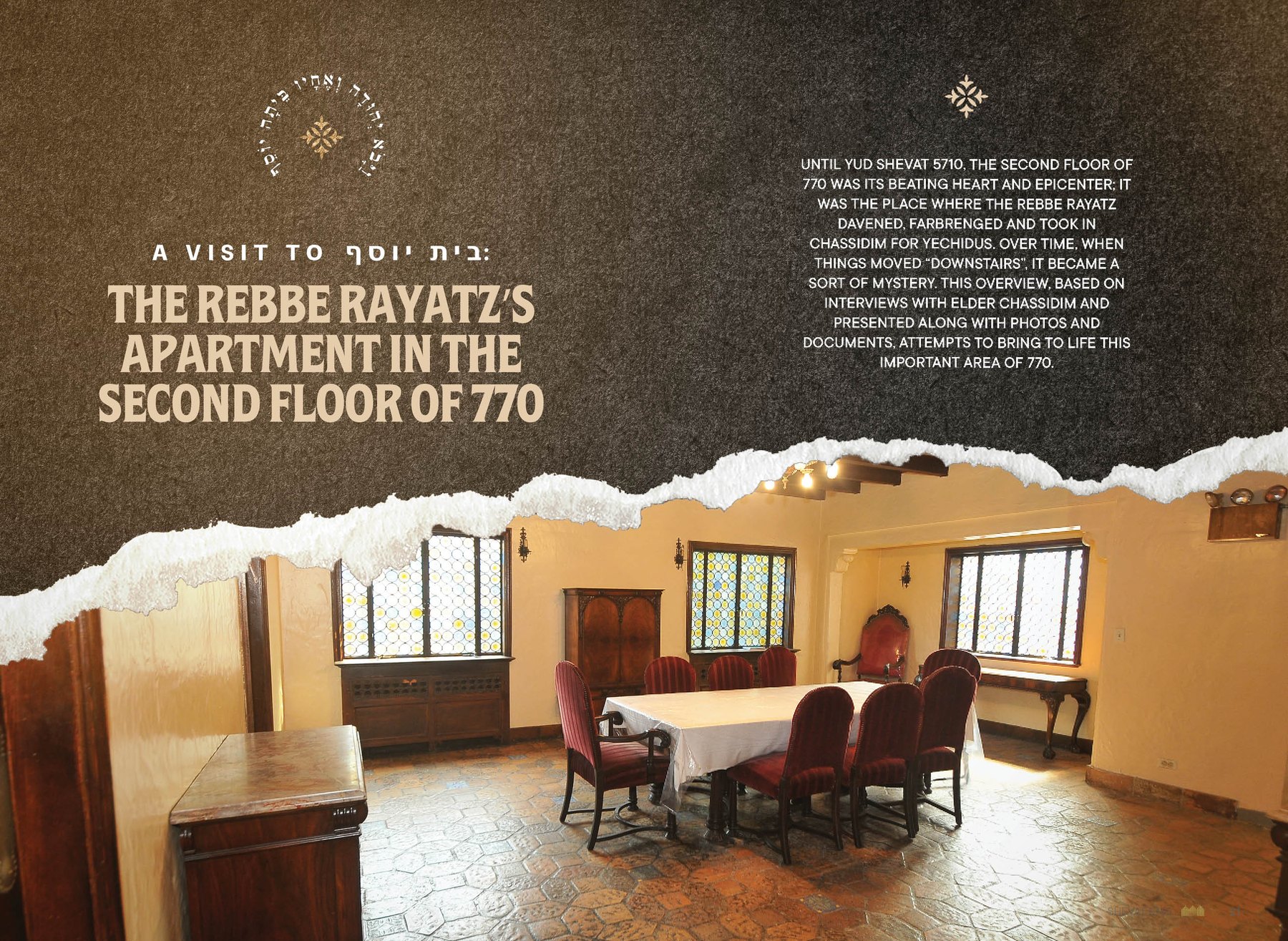
Until Yud Shevat 5710, the second floor of 770 was its beating heart and epicenter; it was the place where the Rebbe Rayatz davened, farbrenged and took in Chassidim for yechidus. Over time, when things moved “downstairs”, it became a sort of mystery. This overview, based on interviews with elder Chassidim and presented along with photos and documents, attempts to bring to life this important area of 770.
This happened a few years ago, on the afternoon of Rosh Hashana. In the midst of the recitation of Tehillim during one of the shifts that take place in 770 from the night of Rosh Hashana until the end of the holiday, one of my friends came over and whispered in my ear: “Now is the best time to visit upstairs.” I didn’t understand what he meant by ‘upstairs,’ but before I could ask, he continued: “Now it’s empty upstairs, and this is the time to go up and say Tehillim in the holy place, in the residence of the Rebbe Rayatz, where the Rebbe held the Yom Tov meals for more than two decades.” Now I understood he was referring to the residence of the Rebbe Rayatz located on the second floor of 770, and I hurried to follow him upstairs.
“Interesting,” I thought to myself, as I climbed the three flights of stairs separating the large shul from the second floor of 770. “I’ve been coming to 770 for many years, and until now, I didn’t know that the Rebbe Rayatz’s apartment is open to the public at any time of the year…”
Before I passed through the doorway, I paused for a moment. In my mind, I recalled the famous saying that the Rebbe quoted in connection with 770: “From the day the Beis HaMikdash was destroyed and the Holy of Holies was lost until Hashem will have mercy on us and send the righteous redeemer… and build for us Yerushalayim and the Beis HaMikdash with the Holy of Holies, behold, Lubavitch is our Yerushalayim, and the shul where the Rebbe davened is our Beis HaMikdash, etc.” Here I am about to enter one of the chambers of ‘our Beis HaMikdash,’ which is usually not accessible to the public, and now, specifically at the auspicious time of Rosh Hashana, it’s possible to enter and say Tehillim.
I entered a narrow hallway, whose overall appearance gave the feeling that time had stood still. The new wooden door blocking the right side of the hallway was probably the only item that had been added here in recent decades… When I questioned the strange location of the wooden door, one of the young men explained to me that beyond the door were the private rooms of the Rebbe Rayatz, including the room for private audiences, which are inaccessible to the public even on Rosh Hashana.
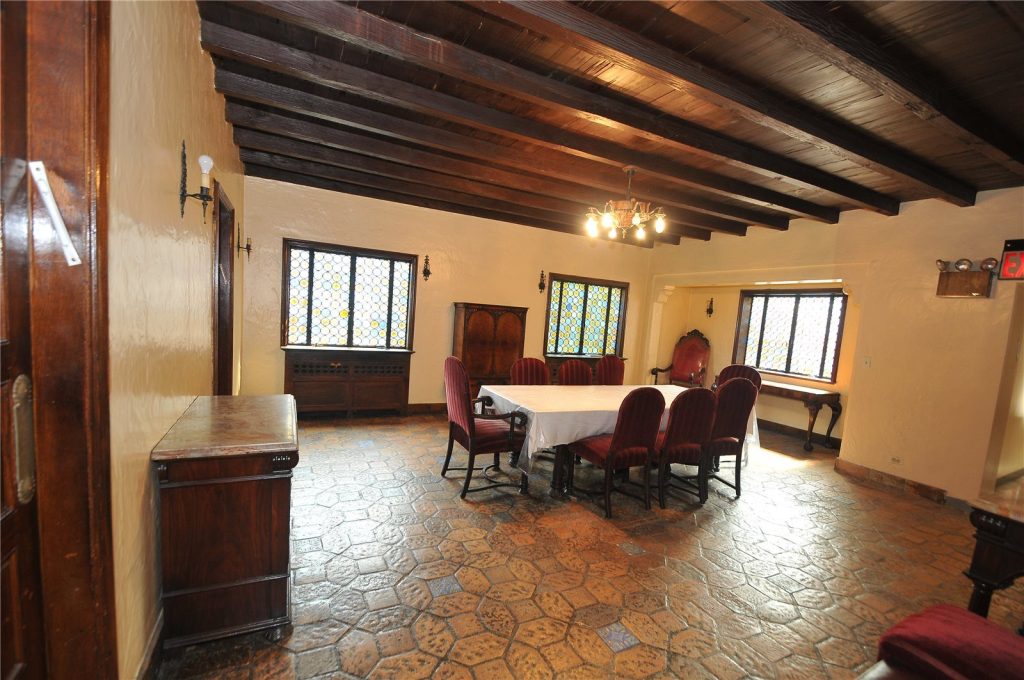
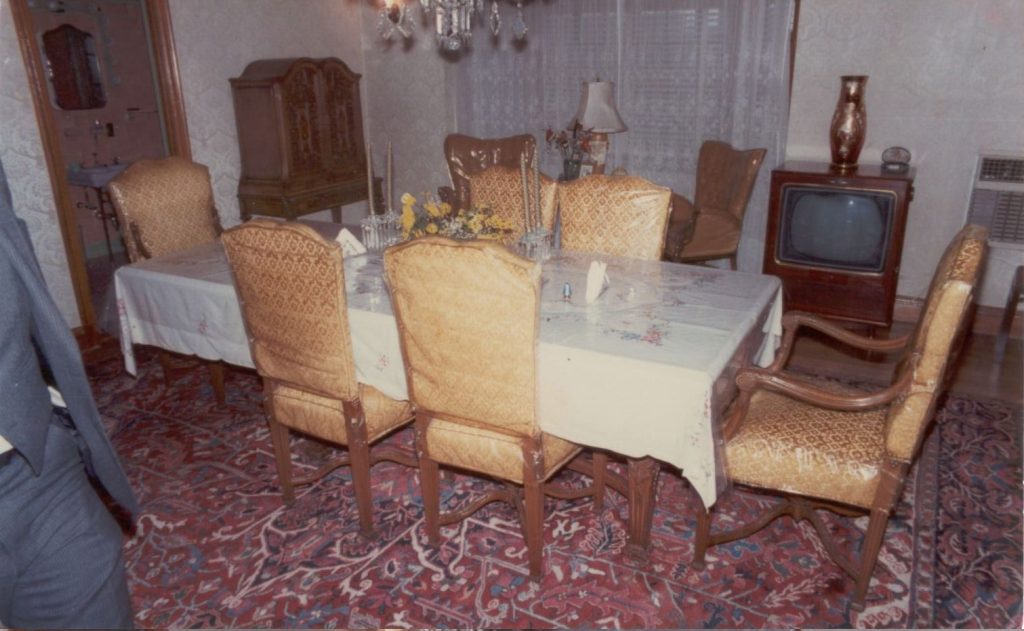
I crossed the long corridor, passed by more closed doors, walked under a small arch, and the large dining room came into view in all its splendor. In the center of the room stood a long table covered with a white tablecloth, with only two chairs around it – one at the head of the table and the other to its left. Later, I learned that the chair at the head of the table was for the Rebbe Rayatz, and the chair to his left was where the Rebbe sat during the meals. In recent years, all other chairs were removed from the room, and only these two chairs remained in place, in accordance with the idea that “holiness does not move from its place.”
An atmosphere of grandeur and holiness enveloped the room. It was in this room that the Rebbe would conduct the Yom Tov meals for more than twenty years. In this room, many of the customs of Chabad and Anash were clarified, based on the answers the Rebbe gave to those who asked, or based on his holy practices during the meal, the Seder night, etc. Here, the Chassidim had the opportunity to see the Rebbe in his “feasting” – in a more “heimish” mode of leadership, as it were.
Against the background of the great noise rising from the large shul below, the silence on the second floor was particularly profound, providing an excellent atmosphere for reciting Tehillim with a calm mind. For a long time, I sat and recited Tehillim with great emotion, and only the last rays of sunlight that streamed through the open windows reminded me that it was time to descend to the shul below for the great farbrengen with the Rebbe.
* * *
It was a special spiritual experience, during which I was introduced to another facet of “Beis Rabeinu she’b’Bavel.” After discussing this with friends and discovering that many of them had never visited the place, and even those who had visited were unfamiliar with it, I decided to investigate the matter further, to gather from the elder Chassidim what they knew about the upper floors of 770, and to write a comprehensive report on the layout of the house.
Since it’s not possible to conduct an actual tour of the Rebbe Rayatz’s apartment, I had to settle for a virtual tour, using architectural maps and consulting with some of the long-time residents of Crown Heights, as well as other Chassidim who had the privilege of visiting the upper floors of 770 many times. During the virtual tour, I learned about the purpose of each room and corner, along with stories of events that occurred there. These memories, even if not directly related to the topic of the article, will serve to add a living, breathing touch to the fascinating tour of the upper floors of “beis chayeinu” – the house that we all feel is ours, but only a few know the secrets of its entrances, halls, and rooms.
The Second Floor – General Overview:
The history of the second floor is generally divided into three periods:
* From the end of the year 5700 (1940) – when the Rebbe Rayatz moved into 770 – until his passing on the 10th of Shevat, 5710 (1950).
* From the year 1950 until the passing of Rebbetzin Nechama Dina a’h, wife of the Rebbe Rayatz, on the 10th of Teves, 5731 (1971).
* From the year 1971 to the present day.
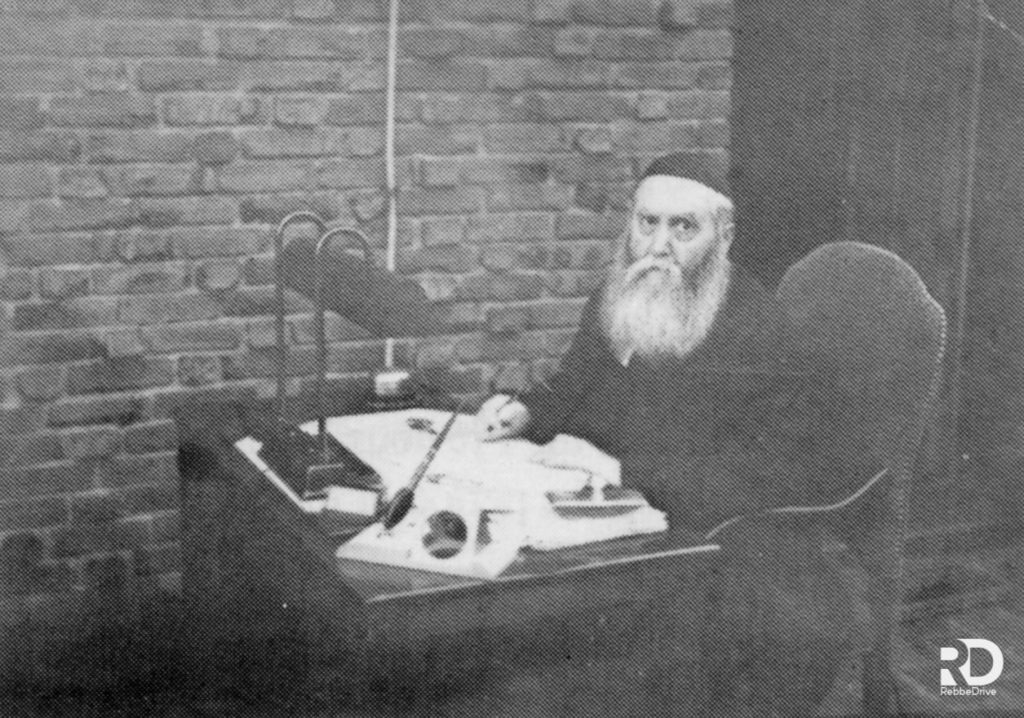
In the first period, the second floor served as the private residence of the Rebbe Rayatz. During this time, this floor was the ‘center’ of 770, as the Rebbe Rayatz spent most of his time in his private apartment (due to health reasons) – he davened there, held farbrengens there, and received people for private audiences there.
In the second period, after the passing of the Rebbe Rayatz, the second floor remained the residence of Rebbetzin Nechama Dina, wife of the Rebbe Rayatz.
From this time on, this floor was closed to the general Chassidim, and only the Rebbe’s family and the personal aides (mashbakim=meshamshim ba’kodesh) were allowed to enter. On special occasions such as Yud-Tes Kislev and Yud Shevat, the Rebbe would hold a special farbrengen with some of the senior Chassidim before the larger public event. During these special farbrengens, they would say ‘l’chaim’ and sing several niggunim, and after a few minutes, the Rebbe would go down to farbreng with the broader public. During the Yom Tov meals as well, several senior Chassidim were privileged to receive special approval to participate in the meals together with the Rebbe. In the early years, when the crowd of Chassidim was smaller, everyone was allowed to stand in the room and participate in the farbrengen. However, rumors circulated that the Rebbe was not pleased with the presence of outsiders – other than those invited – during the meals, except during the Pesach Seder.
In later years, when the crowd of Chassidim grew, entry began to be restricted.Even during the Pesach Seder, only members of the ‘Kevutza’ (bachurim from Eretz Yisrael who were in 770 for only one year) were permitted to enter.
In the year 5729 (1969), when the first shluchim returned from Australia, they were also allowed to join the Rebbe’s Seder. One of the shluchim, Rabbi Shloma Majeski, recounts that on the first night, the Rebbe turned to some of the shluchim and asked if they had eaten the afikoman. They replied affirmatively, but they understood that it would be better to wait with eating the afikoman the following night. The next night, the shluchim came again, this time before eating the afikoman, and when the Rebbe asked them if they had eaten the afikoman, they said, no.
The Rebbe took his afikoman and gave each of the shluchim two small pieces. He then asked the servers to ensure they had seating at the table. The following day, at the daytime meal, Rabbi Shmaryahu Gurary (Rashag) asked the Rebbe what the source was for the custom the Rebbe had established of giving pieces of the afikoman to the bachurim. The Rebbe responded that it is explicitly written that the afikoman should be distributed to the members of the household. Rashag replied, “If that is the case, then all the bachurim are ‘members of the household.’” The Rebbe answered, “True, all the bachurim are ‘members of the household,’ but these have traveled to distant lands…”
After the passing of Rebbetzin Nechama Dina in the year 5731 (1971), the Rebbe stopped eating the Yom Tov meals on the second floor and began holding them in his home on President Street. Since then, the second floor has remained unchanged, and only the employees of the Agudas Chassidei Chabad library are permitted to enter. On Rosh Hashana, it is opened to the public so that they can daven in the dining room of the Rebbe Rayatz, in accordance with the directive of the Rebbe.
Unlike the first floor, the second floor of 770 has hardly undergone any renovations or changes, such that it remains virtually identical to the way it was when they moved in, in 1940.
The Yechidus Room
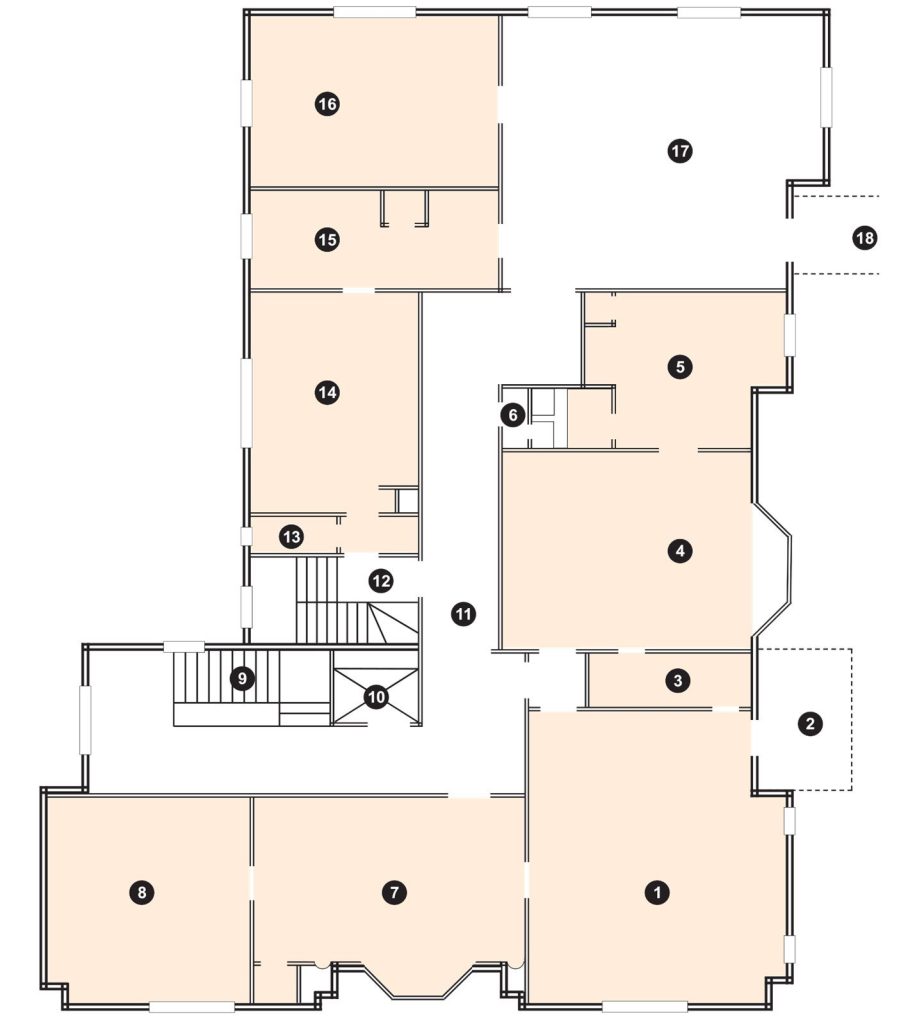
We’ll begin our virtual tour of the second floor at the stairs ascending from the first floor across from the small zal, marked on the map as number 12. These stairs were called by the household members ‘the iron stairs,’ to distinguish them from ‘the wooden stairs’ that will be described later.
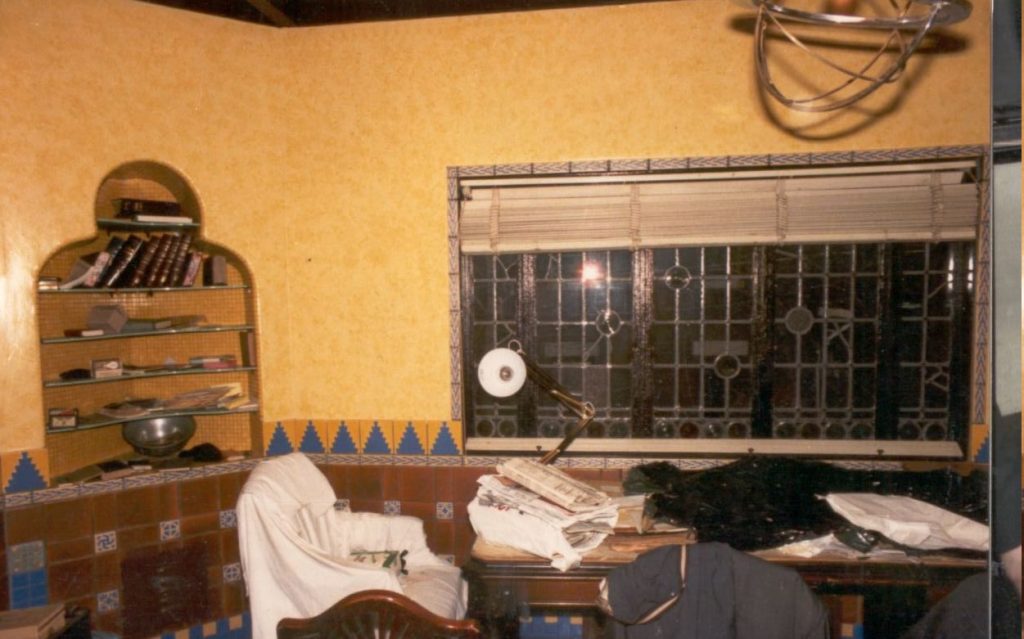
We are standing in front of the door to the second floor. To our left is another door, leading directly to the kitchen (14). We’ll enter through the main door, into a long corridor (11) that extends to our right and left, then turn right in the corridor and reach a large vestibule connecting several rooms. Opposite us is the room of Rebbetzin Shterna Sarah – mother of the Rebbe Rayatz (7). On the right are the elevator (10) and the wooden stairs (9), and on the left – a small vestibule, leading on the right to the Yechidus room of the Rebbe Rayatz (1) and on the left to the bedroom (4).
Besides the entrance door to the Yechidus room, there are three more doors in the room: one faces the sukka (2), the second leads to an inner corridor connecting the Yechidus room with the bedroom (3), and the third leads to Rebbetzin Shterna Sarah’s room (7), where after her passing – in 1942 – the minyan was held for the Rebbe Rayatz, as will be described later.
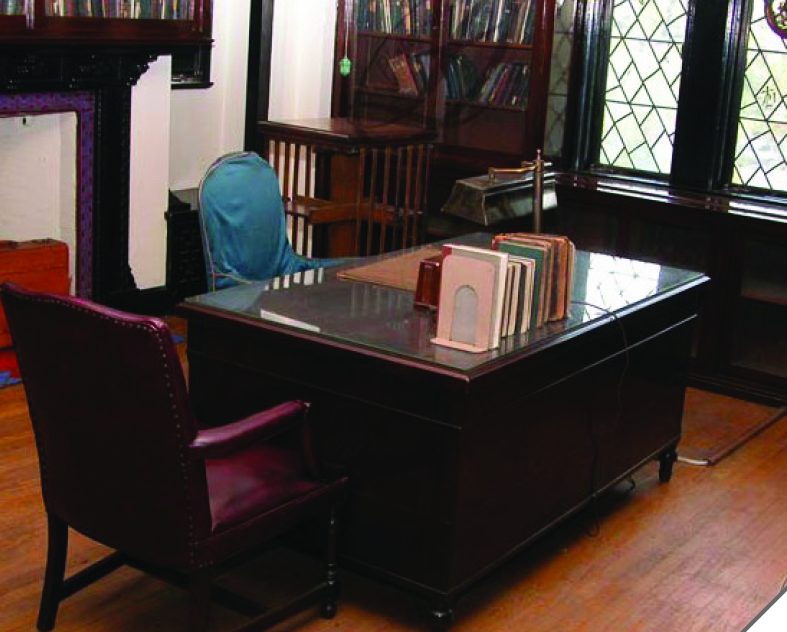
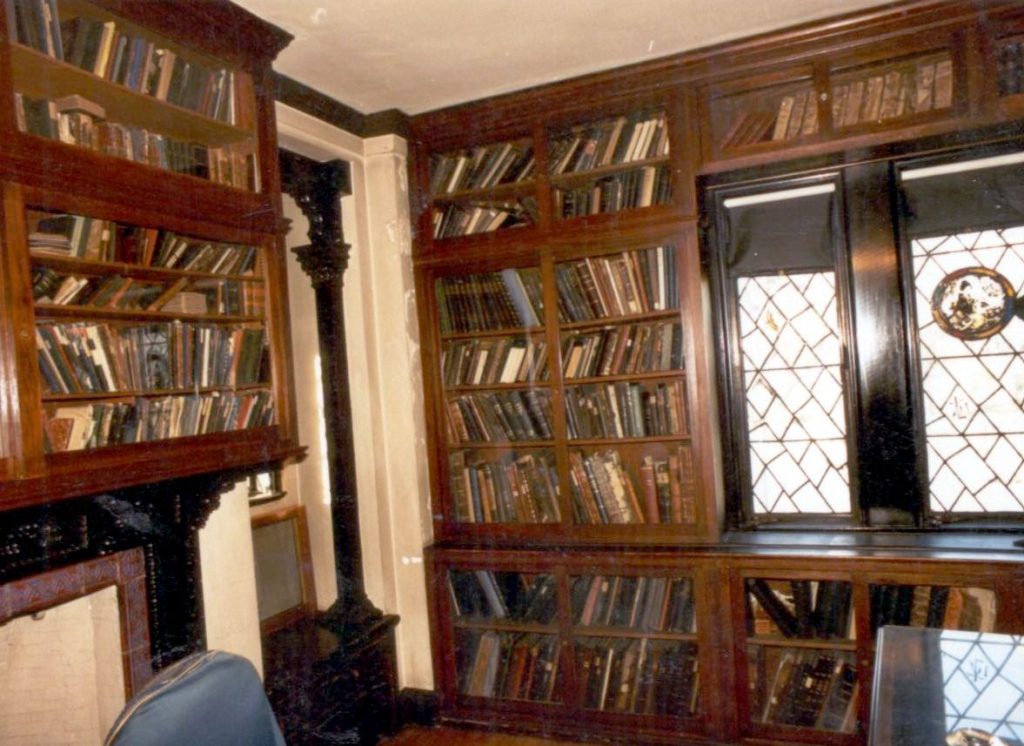
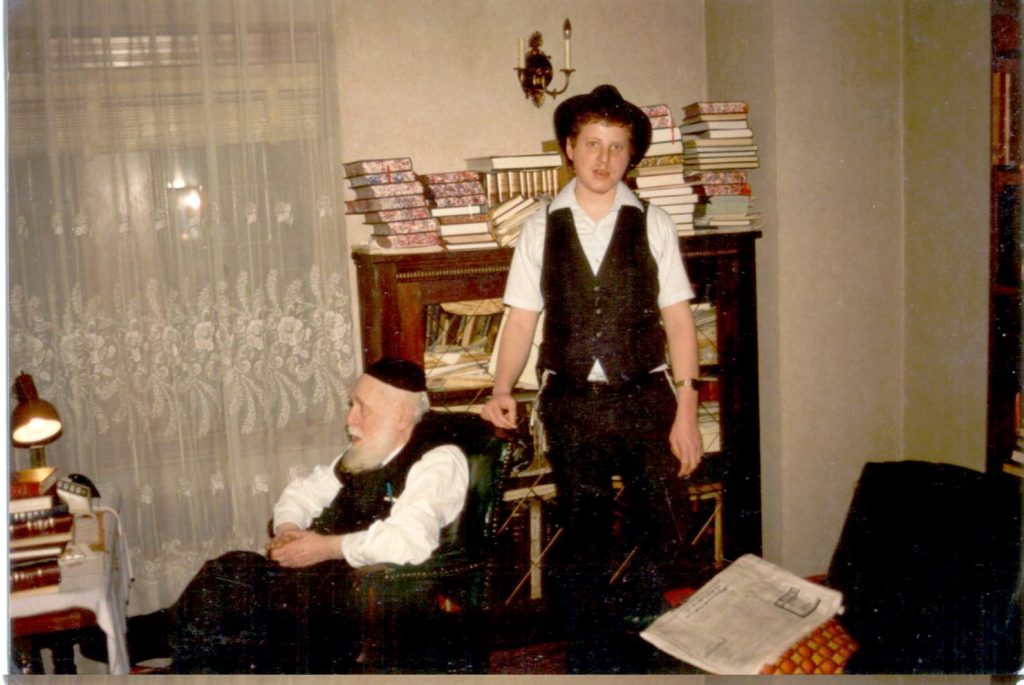
The Yechidus room is the largest room in the house (except for the salon/dining room). Upon entering, we find ourselves surrounded by bookcases filled with books attached to all four walls of the room. Glass doors were installed on the bookcases after the passing of the Rebbe Rayatz. Elder Chassidim who merited to enter for Yechidus with the Rebbe Rayatz remember the special bookstand that was placed in the room for the Rebbe Rayatz’s convenience.
In the center of the room – inclined toward the north side stands a large black wooden desk, similar to the table in the room of the Rebbe Shlita. The table’s surface is covered with a sheet of glass. Here, piles of books that the Rebbe Rayatz studied would accumulate, and on this table thousands of letters were written and signed, sent to all corners of the world since 1940. In one of the table’s drawers lay the tefillin of the Rebbe Rashab, which the Rebbe Rayatz would put on every Erev Yom Kippur. Next to the table stands the Rebbe Rayatz’s chair, and across the table stand several additional chairs.
In the corner between the sukka (2) and the inner corridor connecting the Yechidus room to the bedroom (3), there was a small closet room where the Rebbe Rayatz’s shtreimel was kept along with various other items. Along the wall parallel to the sukka, toward the north, stand two chairs. About these chairs, R’ Shlomo Reinitz, who served as an attendant between 1964-1968, relates: “During the years I merited to serve as a ‘mashbak,’ I noticed these two chairs standing in a very unusual location, just there by the wall. One day I placed my coat on one of the chairs and moved it slightly. When Rebbetzin Nechama Dina saw this, she was very displeased, and explained that this was where they performed the tahara of her husband (the Rebbe Rayatz), and so that no one would stand in this place, she placed these two chairs.”
It seems that the chairs were not always there, as some elder Chassidim who participated in Sukkos meals, when they would eat in the sukka and enter through the Yechidus room, related that it sometimes happened that one of the guests would walk through the place of the tahara and when the Rebbe noticed this, he would look displeased. The Rebbe, when entering the Yechidus room to access the sukka, would walk around the place where the tahara was performed, being careful not to step on that spot.
As mentioned, this room served as the Rebbe Rayatz’s Yechidus room from 1941 until 1950. Due to his weak health condition, the Rebbe would daven in the Yechidus room, and during kerias ha’Torah, he would enter Rebbetzin Shterna Sarah’s room (7), where a special minyan was held.
As is known, Chassidim called the Yechidus room “Gan Eden HaElyon,” and the waiting room “Gan Eden HaTachton.” The waiting in those days took place in the corridor before the Yechidus room. Our tour takes the elder Chassidim back sixty years, to the days when they would schedule their Yechidus appointment with the secretary, Rabbi Eliyahu Yachil Simpson a’h (in those years, one could still get an appointment within a week or two). Since it was very difficult to understand the Rebbe Rayatz’s speech, Rabbi Simpson would stand to the Rebbe’s right during Yechidus and repeat the Rebbe’s words to people. In general, there were few people who fully understood the Rebbe Rayatz’s words during that period, such as the Rebbe, Rabbi Mordechai Mentlick a’h, and Rabbi Simpson.
On erev Rosh Hashana 1950, it was decided that due to the Rebbe Rayatz’s health, that that year the Rebbe would not receive the ‘Panim’ (pidyonei nefesh=requests for blessings) in his holy hand, but rather those passing by would place their Panim on a special table that was positioned near the corridor connecting the Yechidus room to the bedroom and sukka. The Rebbe Rayatz sat beside this table and watched each person passing by. The secretary Rabbi Yehuda Leib Groner relates that he was among the last to enter to give the Pan, and when the line ended, he saw the Rebbe MH’M taking his Pan from his suit pocket and placing it on his father-in-law’s table.
After the passing of the Rebbe Rayatz, the latest sefer published by the ‘Merkos L’Inyonei Chinuch’ would be placed on the table. Whenever a new book was printed, they would bring a copy to Rebbetzin Nechama Dina, and she would go to the Yechidus room, move aside the previous book, and place the new book on the table in its place, while standing and talking with her husband for several minutes!
During the mourning period for the Rebbe Rayatz, a minyan was held in this room, where the Rebbe and the Rashag davened throughout the year. In subsequent years, the Yechidus room remained locked except for special days during the year: on Rosh Hashana and Yom Kippur, when a minyan would be held in the room, and Rebbetzin Nechama Dina and her daughter would daven with this minyan. And on Sukkos, when the Yom Tov meals were eaten in the sukka adjacent to the room. During meals on Sukkos, buckets of water would be brought to the Yechidus room, so that the diners wouldn’t have to trouble themselves to go all the way to the kitchen service room (15) to wash their hands. When the Rebbe would wash his holy hands in this room, he would look around in all directions.
Use of the Room
After the passing of Rebbetzin Nechama Dina in 1971, the Rebbe stopped eating in the Rebbe Rayatz’s sukka, and the room was only opened on Rosh Hashana and Yom Kippur for the special minyan.
During the court case over the sefarim, after some books were stolen from the table in the Yechidus room, the minyan in the Yechidus room was discontinued, and the entire floor was locked and sealed. After the victory in the court case, when the books were returned, the Rebbe instructed to place the books on the Yechidus table, keep the room locked, and hold the Rosh Hashana and Yom Kippur minyan in the farbrengen room. During the trial, the Rebbe wanted the kollel students to move to study in the Rebbe Rayatz’s apartment, but for various reasons, this did not materialize.
Only once, in Elul 1989, did the Rebbe instruct to open the Yechidus room to the general public. For two days, the room was open, and masses of Chassidim took advantage of the opportunity to pour out their hearts in this holy place during this auspicious time.
What’s a Sukka Got to Do with a Mezuza!?
Let’s cross the Yechidus room and pass through the door to a small balcony built on pillars. In front of us, we can see the ‘Library of Agudas Chassidei Chabad’ building, and to our right, busy Eastern Parkway. Below us is the area where the large guests’ sukka is built every year. This balcony – on the second floor – is not original to the building but was added after its purchase, before Tishrei 1941. On this balcony, they would build the sukka where the Rebbe Rayatz would eat the Sukkos Yom Tov, as did the Rebbe until Shemini Atzeres 1971.
An interesting question regarding mezuza laws was connected to the balcony door: The door opens inward toward the room, so according to the rule of “heker tzir” (deciding which way is the main function of the door based on the direction that the door hinge swings open), the mezuza should be placed on the right side when entering from the balcony into the room. However, this raised a question: since the balcony has no additional entrance, should we say that in such a case, the mezuza must be placed on the right side when entering from the room to the balcony?
The question was brought to the Rebbe Rayatz, who ruled that even in such a case, the rule of “heker tzir” applies. This ruling was established for generations and was written in Sefer HaMinhagim p. 81 in the section on mezuza: “Placement… heker tzir: Even in a balcony entrance that has only one entrance – as in the apartments of my father-in-law the Rebbe – according to his instruction (noted by the Rebbe Shlita).”
The secretary, R’ Yehuda Leib Groner, tells an interesting story that happened with his father during Sukkos 1950: R’ Groner’s father, Rabbi Mordechai Groner, entered with his two sons – Leibel and his brother Moshe – into the Rebbe Rayatz’s sukka during one of the meals. Upon entering, the Rebbe Rayatz requested that wine and mezonos be brought for R’ Mordechai so he could make the bracha ‘leisheiv ba’sukka.’ When they brought it, he asked: “What about the sons?” And they brought for the sons as well. They made the bracha aloud and the Rebbe Rayatz answered “Amen.” Meanwhile, R’ Mordechai Groner remained standing, and since he was one of the elder Chassidim, the Rebbe said to him: “Either sit down, or hide your beard” [so they won’t see that you’re an older person!] R’ Mordechai – who had never sat in the presence of the Rebbe Rayatz – hid his beard in the corner of his coat, and the Rebbe Rayatz laughed heartily.
The Bedroom of the Rebbe Rayatz
We’ll exit the sukka and return to the Yechidus room, turn right into a small corridor (3), continue to its end and turn right again; this is the bedroom of the Rebbe Rayatz (4).
In the room are two beds – the bed closer to the Yechidus room belonged to the Rebbe Rayatz, and the one closer to the dining room (17) was Rebbetzin Nechama Dina’s bed. Both beds stand near the wall between the corridor (11) and the bedroom. On the southern wall near the wall closet (6) was a low dresser with drawers.
This room reminds the elder Chassidim more than anything of the events of Yud Shevat 1950. R’ Mordechai Leib Kalmenson recalls: “During that period, we lived in Brownsville, where there was a Chabad community. On Shabbos morning of 10 Shevat 1950, the young bachur Zushe Posner (who was still a boy then) came and announced that the Rebbe Rayatz wanted to see everyone. This was an unusual request, and we all hurried to 770. Even Rabbi Mordechai Mentlick ran with all his might (which was known to be unlike him). When we arrived at 770, we understood the meaning of the announcement…
“The Rebbe lay covered on his bed in the bedroom… The shock and devastation were unbearable. We stood in the corridor and said Tehillim for several hours. Around 3:30, the Rebbe Shlita arrived and said that since it was Shabbos, everyone should go home to eat their Shabbos meal. On the way back to Brownsville, Rabbi Mentlick said that the Rebbe Shlita is the Rebbe…”
After Shabbos, they moved the Rebbe Rayatz to the Yechidus room, where they performed the tahara and afterward placed the Rebbe Rayatz near the wall close to the bedroom (to the left of the entrance) where all the Chassidim passed by to ask mechila. The Rebbetzins sat shiva in the bedroom.
The bedroom has three doors: one to the corridor connecting to the Yechidus room (1), another to the bathroom and shower (5), and a third leading to a small room from which we entered the Yechidus room.
Rebbetzin Shterna Sarah’s Bedroom
Let’s exit the bedroom and return to the vestibule leading to Rebbetzin Shterna Sarah’s bedroom, mother of the Rebbe Rayatz (7). Before entering, we’ll glance toward the end of the vestibule to our right, which reaches the internal stairs – wooden stairs – as they were called by the house residents (9). The Rebbe Shlita would use these stairs to go up to the second floor, as they were close to his office.
Rebbetzin Shterna Sarah’s bedroom (7) served her until her passing in 1942. From then until 1950, the room served as the Rebbe Rayatz’s tefilla room. In the center of the room stood a small bima where they would read the Torah, and in the corner of the table on the south side, the Rebbe Rayatz would sit and read the Haftora.
On Yom Kippur 1950 – recalls R’ Leibel Groner who merited to be present at this event – an interesting incident occurred that left an impression on everyone there. Usually, the minyan in this room would wait until the Rebbe – who would be sitting in his room – would signal to begin the tefilla. That day, the tzibbur waited for Mincha, but the Rebbe gave no signal. Time passed, and still no sign from the Rebbe to begin. Only about twenty minutes after the time for Mincha had already passed, one of the household members entered and said that the Rebbe Rayatz would daven Mincha in his room, and he wanted only a minimal minyan of ten people to enter his room, including the Rebbe himself, the Rebbe Shlita, Rashag, the baal keria, a Cohen, a Levi, the regular Mincha chazzan, and three more Chassidim. He instructed that the door between the rooms remain open.
When they began Mincha, the Rebbe Shlita asked the tzibbur to hurry through the davening, so the Rebbe wouldn’t have to fast longer than necessary. However, the Rebbe Rayatz asked one of the household members to convey in his name that they should daven unhurriedly. When they reached Neilah and Maariv, the Rebbe said that the Shver only meant Mincha should be said unhurriedly, but Neilah should be quick. The chazzan began to speed up the davening, but when the Rebbe Rayatz noticed this, he again sent one of the household members to instruct in his name that they should daven unhurriedly. When they reached Napoleon’s March, the Rebbe Rayatz requested that they sing slowly, and each person should sing as loudly as they could.
After the davening, the Rebbe Rayatz said that “seeing the face of one’s Rebbe – that’s something entirely different.” When they went downstairs, the Rebbe explained that apparently the Rebbe Rashab had visited the Rebbe Rayatz in his room, which is why he didn’t want to leave the room immediately, and also why he wanted as few people as possible to enter.
The Kitchen
As we exit Rebbetzin Shterna Sarah’s bedroom, we see in front of us the elevator wall (10), which was installed in the building and was used frequently by the Rebbe Rayatz when he went up and down between floors.
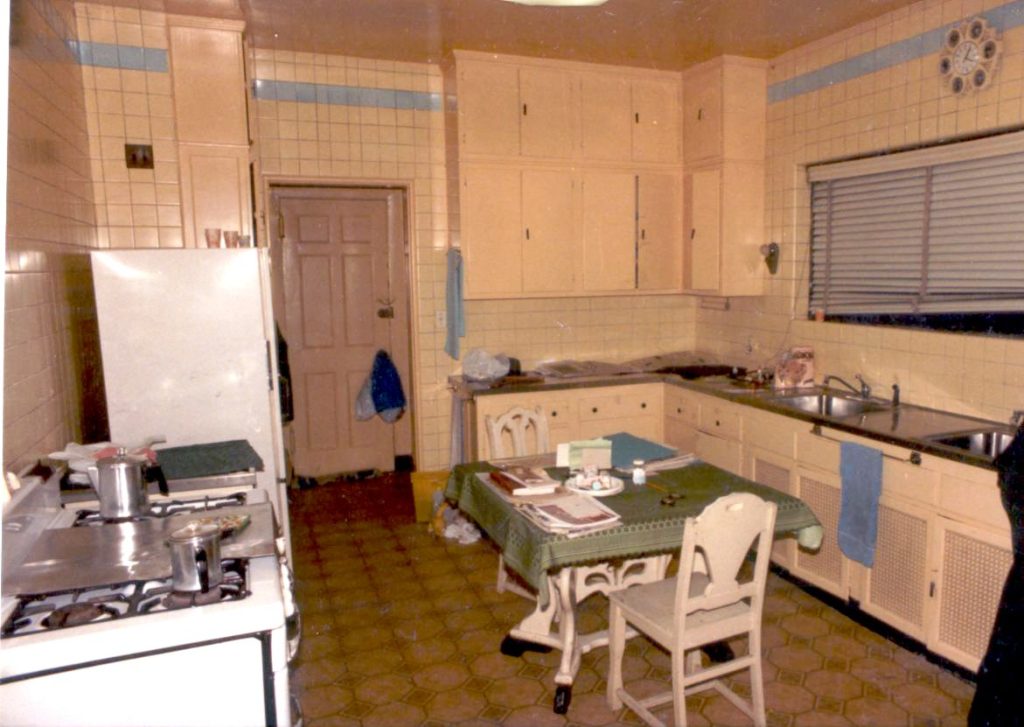
We return to the corridor, turn toward the iron stairs (12) and enter the kitchen (14). To the right of the entrance stands a refrigerator, and at the end, adjacent to the service room (15), stood a stove with a shelf above it. The sinks were attached to the left wall.
Rebbetzin Nechama Dina managed the kitchen with a firm hand, supervising the cooking and various tasks. The food was cooked by the Rebbetzin’s helper, and from there the attendants would take the portions and serve them in the dining room (17). R’ Shlomo Reinitz, who as mentioned, served as a mashbak in the ‘Beis HaRav,’ tells about the strict adherence to kosher standards practiced in the kitchen: “Rebbetzin Nechama Dina would constantly move around the kitchen supervising that everything was conducted according to the highest and most exacting standards of halacha. Occasionally she would declare to me: ‘You need to be very careful and cautious. You didn’t know ‘Bubbe Rivka’ (the Rebbetzin, wife of the Rebbe Maharash), she was extremely particular, I want everything here to be conducted like in her house…’
“Once the cook raised a question about the kashrus of a certain piece of meat. When Rebbetzin Nechama Dina heard there was a question about the meat, she instructed me to ask the view of the ‘house Rav,’ Rabbi Shmuel Levitin. R’ Levitin immediately ordered to dispose of the entire pot’s contents. Seeing my bewilderment, he explained: ‘Although according to halacha there’s no problem, since you came to ask, I declared the pot non-kosher, because in the Rebbe’s house – a ‘question’ means it’s treif!’”
Let’s cross the kitchen and enter the service room (15). Here stood a small stove that was apparently for meat, and cabinets with dishes. In the corner of the room – near the outer wall – was the sink where the Rebbe Shlita would wash his hands for meals during Yomim Tovim, followed by the other diners. The procedure was that the Rebbe would make Kiddush, and everyone would listen. Afterwards, the Rebbe would go to wash his hands, and then the other diners would make Kiddush.
“Once,” recalls Rabbi Reinitz “when the Rebbe finished Kiddush and was preparing to go wash his hands, he noticed that one of the elderly guests was washing his hands. The Rebbe, who apparently didn’t want to cause him discomfort, stopped in the room and waited until that person finished washing. When I noticed what was happening, I started running toward that person to tell him that the Rebbe was waiting because of him. In a split second, the Rebbe noticed my running and extended his hand, and I, not having time to notice this, collided with it forcefully. The Rebbe looked at me and smiled broadly…”
The Dining Rooms
We’ll exit the service room and pass through the Rebbe Rayatz’s dining room (17) to the Rebbetzins’ dining room (16). Here the Rebbetzins would eat their Yom Tov meals. Before the Rebbe would make Kiddush, he would look toward the entrance of this room to see if Rebbetzin Chaya Mushka was listening, and only when he noticed that she was listening would he make the Kiddush quietly.
Let’s return to the Rebbe Rayatz’s dining room (17). From 1950 onward, this room became the central room on the second floor, as the Rebbe would have his meals in this room.
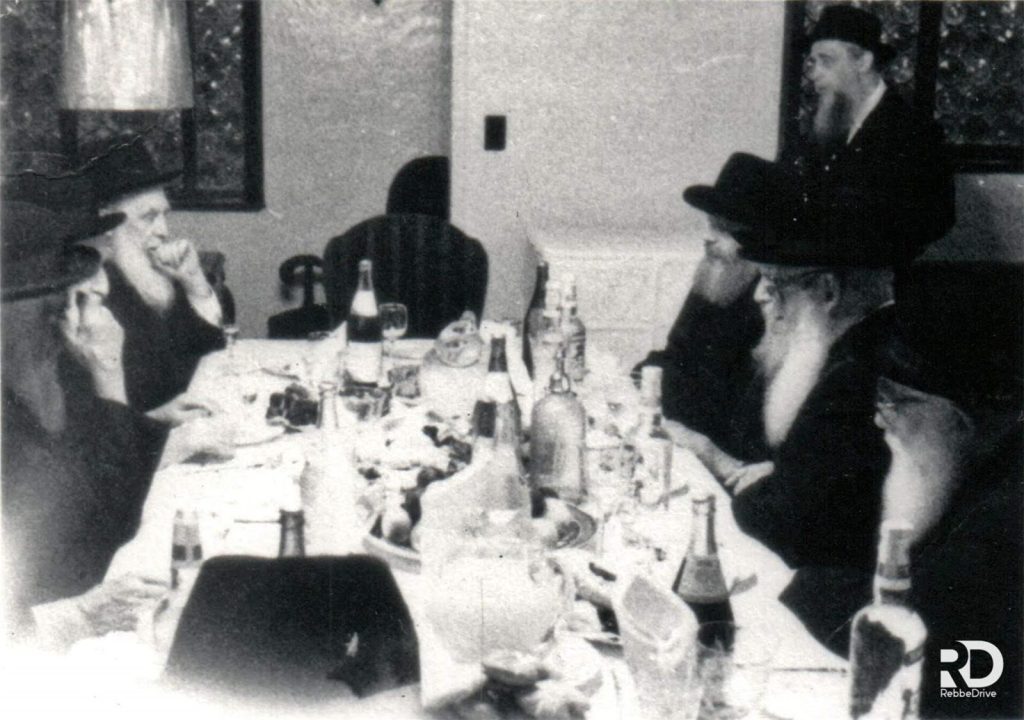
The room’s layout remained almost the same throughout the years. In the center of the room stood a large table from east to west. At the head of the table – facing the Library building – sat the Rebbe Rayatz, to his left the Rebbe Shlita, and to his right Rashag. R’ Shmuel Levitin regularly sat to the left of the Rebbe Shlita. The other attendees did not have fixed places.
Until 1950, the Rebbe Rayatz would hold farbrengens in this room. From here, a loudspeaker descended to the small zal where it was mounted above the lectern. Since the Rebbe Rayatz’s speech wasn’t clear in later years, mainly sighs were heard through this speaker…
R’ Meir Harlig related that at one of the farbrengens there was strong pushing. When the pushing intensified, the Rebbe Rayatz looked toward the Rebbe Shlita to do something, and the Rebbe gently pushed one of those present. After the farbrengen, that person complained to the Rebbe that he hadn’t been pushing. The Rebbe answered that he had no choice since the Shver expected him to do something. “In any case” – the Rebbe told him – “if you don’t deserve it for this time, you deserve it for another time…”
During the times when the Rebbe Rayatz would hold farbrengens, elder Chassidim and select individuals would be present in the room. Toward the end of the farbrengen, the entire crowd was permitted to pass before the Rebbe, say ‘l’chaim,’ and satisfy their yearning to behold the glory of the Rebbe’s holy countenance, as due to his health condition he was not seen in public on regular days.
From 1950 until 1971, the Rebbe continued to hold Yom Tov meals in this room. The seating arrangement remained exactly as it had been in the days of the Rebbe Rayatz, as did the Rebbe’s conduct. The Rebbe would sit quietly and seriously, and occasionally would turn his gaze to the Rebbe Rayatz’s place. When people would ask the Rebbe a question, he would answer with submission and self-nullification as one standing before his teacher.
The attention to maintaining everything exactly as it was during the Rebbe Rayatz’s lifetime extended to the smallest details. The Rebbe Rayatz’s place was set with a plate, cutlery, challos, etc., exactly like the other participants. “Once,” recalls R’ Shlomo Reinitz, “there wasn’t enough ‘lechem mishneh’ for all the participants, and it was a Yom Tov that fell on Shabbos so I couldn’t bring additional challos. Having no choice, I took the challos that were placed at the Rebbe Rayatz’s place and put them where they were needed. Before the Rebbe came up for the meal, Rebbetzin Nechama Dina came to see if everything was properly arranged. When she discovered the missing challahs, she immediately asked me: ‘Where are my husband’s challos? Put challos at his place right away!’”
On the second day of Pesach 5727 (1967), during the meal with the Rebbe, there was a discussion about the reason for maintaining the details as they were during the Rebbe Rayatz’s lifetime. The transcript of the conversation appears in HaMelech BiMesibo Part 1, page 147:
Rashag: What is the virtue of arranging things as they were during his lifetime?
The Rebbe: It helps us remember what was.
Rashag: What’s special about his table?
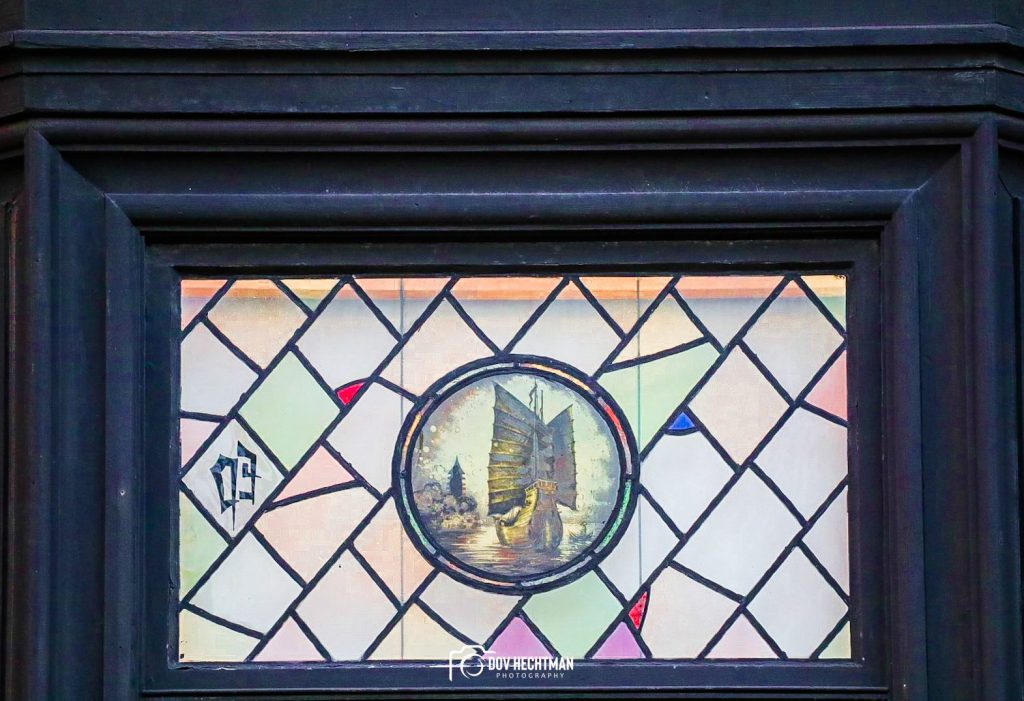
The Rebbe: A table is like a Mishkan, and even a regular Jew’s table where he studied and performed mitzvos – this affects and refines the physical wood of the table. Especially the table of the Rebbe [Rayatz] who would study there day and night, and conducted all his affairs there… (See also Likutei Sichos Vol. 32, p. 24 and on.)
Although the Rebbe spoke little during meals, over the years much material was collected documenting the conversations during meals. From these conversations, many Chabad customs were clarified, which the Rebbe either confirmed or said he himself practiced. Many topics in both Nigleh and Chassidus were also discussed (much of this material was published in the set HaMelech BiMesibo, which was published in two volumes.)
Usually, Rashag or one of the invited elders would ask a question or clarify a certain custom, and the Rebbe would respond. From reviewing the ‘notes of what was said,’ it appears that Rashag constantly tried to ‘draw out’ from the Rebbe various customs he personally practiced and different sources for his statements. Sometimes, the bachurim would send questions through the Chabad elders. Once, after Rashag asked a question on behalf of the bachurim, the Rebbe inquired at the next meal whether they were satisfied with the answer…
Only select individuals from among the Chabad elders and pre-invited guests would come to the “King’s Feast,” i.e. the Rebbe’s meal. Sometimes more bachurim would enter, and the space would be too cramped to contain the many guests, resulting in strong pushing. Once the Rebbe addressed the pushing, and this is what happened (as recorded in HaMelech BiMesibo, Part 1, p. 65):
Rashag asked the Rebbe about the meaning of the phrases that the Alter Rebbe brings in Likkutei Torah: “It was common in the holy mouth of the Maggid” and “The holy Maggid would commonly say…”
The Rebbe replied that these were teachings that the Maggid would say periodically, similar to teachings that our Rebbeim would say periodically to purify the air.
Then the Rebbe turned to those present and asked: “Does anyone know? [And added] This is already printed in ‘Hayom Yom’ [with a smile]: I’ve already had time to forget…!”
One of the bachurim began to recite quietly, and the Rebbe said to him: “Don’t be embarrassed, if you know – say it…!”
Afterward, looking toward the bachurim standing there, he said: “If you don’t know – why are you pushing!?”
R’ Meir Harlig relates: “In 1969, Rebbetzin Nechama Dina wasn’t feeling well. The Rebbe went upstairs, and they wanted to take her to the hospital, but the Rebbe said this was a matter for her daughters, and sent me to call for the Rebbetzin. In the end, they did take Rebbetzin Nechama Dina to the hospital.
“On the following Simchas Torah, since Rebbetzin Nechama Dina wasn’t in the apartment, the attendant R’ Sholom Ber Gansburg locked the apartment. When the Rebbe came up for the meal, he knocked on the door and asked why it was locked. When they told the Rebbe that Rebbetzin Nechama Dina wasn’t in the apartment, the Rebbe said that since the ‘door watchman’ isn’t here, they should open the apartment and everyone could enter. And so it was.”
A Place for the Outpouring of the Soul
After the court case over the sefarim, in Nissan 5750 (1990), the librarian of the Lubavitch Library, Rabbi Shalom Dovber Levin, was involved in a renovation plan for the second floor of 770. This concerned the internal renovation of the rooms, and in connection with this he asked the Rebbe what should be the purpose of the apartment:
Should it be turned into a museum with rotating exhibitions according to the following plan:
a) In the two dining rooms and bedroom of Rebbetzin Shterna Sarah (16, 17, 7), glass cases would be built on tables etc. for exhibitions.
b) The Yechidus room and bedroom (1, 4) would be closed with glass doors that could be viewed through glass windows from outside.
c) The kitchen (14) would be closed and would store valuable items, photo collections, etc.
Or perhaps it would be better to dedicate the entire apartment, particularly the Yechidus room and the room where the Rebbe Rayatz davened daily (1, 7), not as a museum, but as a place of tefilla and for pouring out one’s soul for anyone needing salvation, and perhaps also for some study – this would be the main use of the apartment.
The Rebbe crossed out the first option and emphasized approval of the second option. He also crossed out the words “perhaps for some study” and added: “and reading of Pa’n” (pidyon nefesh – written prayer requests).
After receiving the Rebbe’s answer, R’ Levin asked if they should implement the plan immediately, and the Rebbe answered that they should do so after the construction is completed.
Indeed, from 1995, the apartment was opened to the public for tefilla in the dining room during the Yomim Noraim, and numerous visitors could go up to recite Tehillim to hasten the Geula. In recent years, the place has been closed even during the Yomim Noraim.
The Bridge
During one of the farbrengens in the summer of 1990, the Rebbe spoke about how the Rebbe Rayatz’s library began in the 770 building, but due to lack of space, the library is located in the adjacent building (which was purchased during the 1980s), and therefore they should connect the buildings.
Following this instruction, the special bridge connecting the buildings was built, creating the contiguous complex of Agudas Chassidei Chabad Lubavitch of Lubavitch.
The Third Floor: Rashag’s Apartment
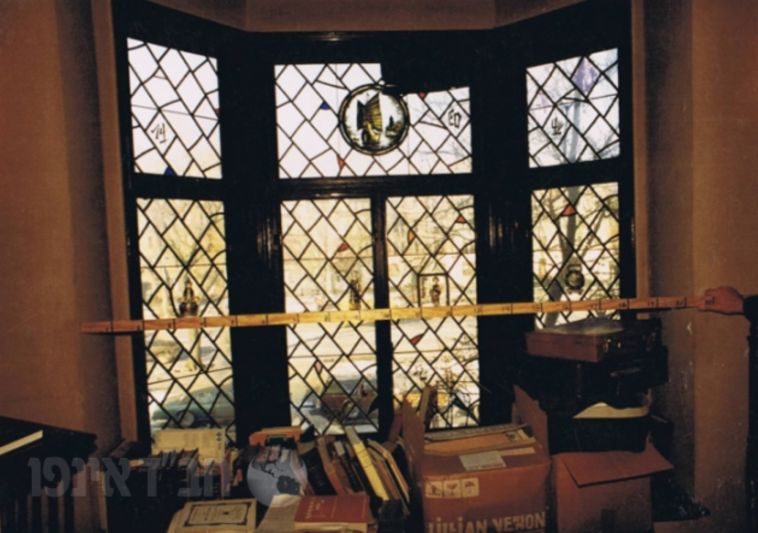
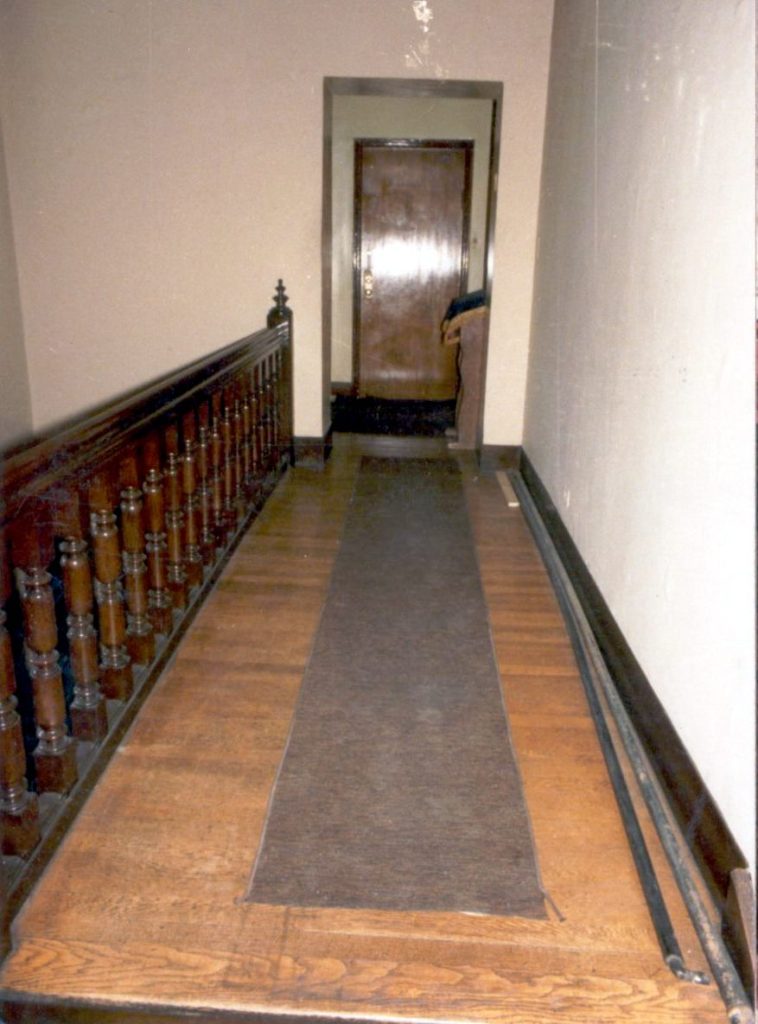
The third floor was originally designated as the apartment of Rashag (Rabbi Shmaryahu Gurary) – the Rebbe Rayatz’s elder son-in-law, and served as his personal office and the offices of the Central Yeshiva Tomchei Tmimim which he managed. After Rashag’s passing, the floor was transferred to the Library, which made various renovations to the floor’s structure to suit the library’s purposes.
Very few people are familiar with this floor from Rashag’s time, since it served as his private residence. Even the Rebbe visited there only a few times, during shiva calls to Rashag after the passing of his mother and sister.
We enter the floor from the outside stairs (iron stairs – 12). We turn right in the corridor, passing by the elevator (13). We are in a small lobby with three doors. Opposite – the bathroom (2), on the right – the Central Yeshiva Tomchei Tmimim office, and on the left – the entrance to Rashag’s office (3), where his books and various items associated with Tomchei Tmimim were kept. Small signs indicating the rooms’ purposes were posted on the doors.
Between Rashag’s room (3) and the apartment’s living room (5) there is an access corridor. During the shiva for his mother and sister, Rashag sat in the living room (5), and that’s where the Rebbe came to comfort him.
Rabbi Chaim Lieberman, the Rebbe Rayatz’s secretary, slept in the guest room (10) for a certain period.
In the south of the building there is a large balcony (8). The Rebbe Rayatz would occasionally go up to this balcony to breathe fresh air and engage in holy work. Rashag’s sukka was built on this balcony every year. After 27 Adar 5752, the Rebbe came up to this balcony several times to perform Kiddush Levana and similar rituals.
The Library’s Use of the Third Floor
After Rashag’s passing, R’ Shalom DovBer Levin wrote to the Rebbe that many books had arrived at the library, and there was a severe shortage of space for books.
The Rebbe’s answer was: “Look into arranging a committee for an additional building (and soon) for the library in the area of 770 and its vicinity.”
R’ Levin spoke with Rabbi Shneur Zalman Gurary and Rabbi Shlomo Cunin and established with them the ‘Building Committee.’ On motzoei Shabbos, the committee reported about its establishment, and the Rebbe answered: “With great success.”
The next day, on Sunday, the Rebbe gave R’ Levin a dollar and said: “The building will need money too, presumably. This will be the beginning.”
On Tuesday, 2 Adar, the committee wrote to the Rebbe: “Yesterday on Monday, RaBaSh Cunin arrived here to bring the building plan to fruition quickly. After detailed discussion with him and RaShaZ Gurary, we decided that the most suitable plan is to buy RaM Itkin’s house, which is connected to the library building… he is willing to sell his house… after receiving the Rebbe’s consent.”
The Rebbe responded: “The discussion is about expanding the library – there’s no need to make ‘revolutions’ now and the like – and they should find a plan along ‘regular’ lines: small expansion, small expenses, and the like.”
A week later, the committee wrote to the Rebbe that an opportunity arose to buy the house of one of the neighbors behind 770, who had reached an agreement with Mr. Chase regarding the sale of the house.
The Rebbe answered: “Obviously, this takes precedence.”
In practice, the purchase was not completed. The discussions about the location and building plans continued for about eight months, but the Rebbe rejected the committee’s proposals one after another.
At the end of Tishrei, R’ Levin wrote a letter to the Rebbe with additional proposals. The Rebbe didn’t address the written proposals, and surprised them with a new instruction: “Build within the area of 770 – and better yet – add to the 770 building in a way that won’t undermine the building’s structure.”
In response to this answer, R’ Levin wrote to the Rebbe: “In accordance with the Rebbe’s answer regarding building the library, the most suitable approach seems to us:
a) To dedicate the two upper floors of 770 to the library, where valuable books, manuscripts, and work rooms for the editors of the manuscripts will be located [leaving the Rebbe Rayatz’s apartment as is, and rebuilding the third floor rooms in a way suitable for the library.]
b) To add a storage area in 770’s courtyard (under the sukka courtyard) that will connect the book storage areas in 770 and 766 (library building.) If all of this is aligned to the Rebbe’s wishes, we will contact an engineer to verify the possibility of this construction.”
The committee members immediately contacted an architect to prepare the plans, and when completed, they submitted them to the Rebbe. The answer was: “May it in a good and auspicious time, I will mention it at the Ohel. Return [the plans to us]. Certainly don’t write to me such details as I am not an architect, and if needed, find such [professionals].”
It should be noted that afterward the building plans were changed, and it was decided to turn Rashag’s rooms into a reading hall. The renovation of the third floor was completed in early winter 5750 (1989/90).
In Shevat 5750, a proposal was raised to use the space for an exhibition, and the Rebbe answered: “The time is not suitable for this,” to wait until the construction is completed.
Towards 21 Elul, the day of the ‘chanukas ha’bayis’ for 770, there was a plan to conduct a ‘chanukas ha’bayis’ for the expanded library, to which the Rebbe responded:
“Regarding the ‘chanukas ha’bayis’ – we will revisit in the future to decide on this matter.”
The construction was completed at the end of 5752 (1992), and the exhibition hall opened about two years later, during which time the place was used to store various medical equipment for use by the Rebbe’s doctors.
May it be His will that immediately we merit the revelation of the Rebbe Melech HaMoshiach, and we merit to celebrate the inauguration of the expanded library together with the inauguration of “Beis Rabeinu she’b’Bavel,” speedily in our days, mamosh.
Yechidus room of the Rebbe Rayatz
sukka (built – on beams made of iron pipes – after the purchase of the house)
Corridor connecting the Yechidus room to the bedroom
Bedroom of the Rebbe Rayatz
Bathroom, bathtub, and shower
Wall closet
Bedroom of Rebbetzin Shterna Sarah (mother of the Rebbe Rayatz). After her passing in 1942, the room served as the ‘davening shtiebel’ (prayer room) of the Rebbe Rayatz.
Bathroom, bathtub, and shower
Inside Stairs
Elevator
Corridor
Outside Stairs
Bathroom
Kitchen
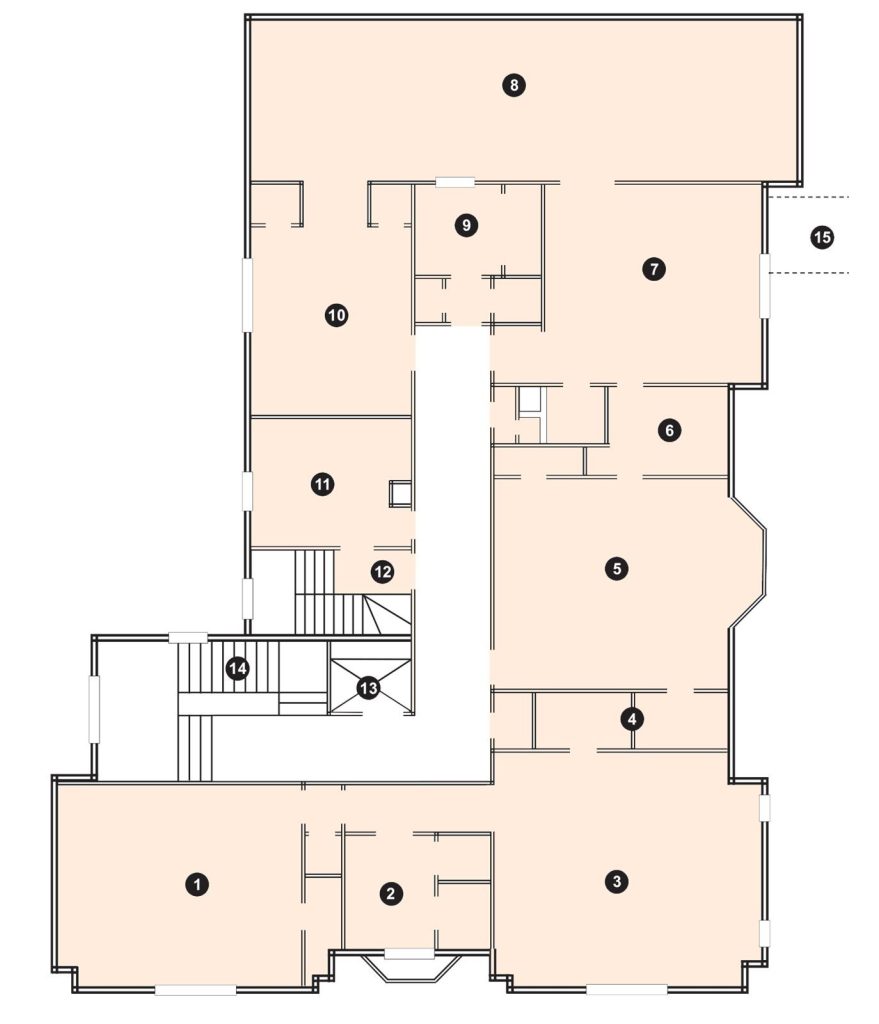
Service Room
Dining room of the Rebbetzins
Dining room of the Rebbe Rayatz (From 5710 until 5731, the Rebbe held the Yom Tov meals in this room)
Bridge that was built about thirty years ago between 770 to the Agudas Chassidei Chabad Library located in the adjacent building.
Offices of the Central Yeshiva Tomchei Tmimim Lubavitch
Bathroom, bath, and shower
ffice of Rabbi Shmaryahu Gurary (Rashag), director of Central Yeshiva Tomchei Tmimim
Closet rooms
Living room
Bathroom
Rashag’s bedroom
Balcony (after 27 Adar 5752/1992, the Rebbe went up there several times to perform Kiddush Levana)
Bathroom
Kitchen
Guest bedroom
Outside stairs
Elevator
Inside stairs
Bridge built about thirty years ago between 770 and the Agudas Chassidei Chabad Library located in the adjacent building
Note: After the passing of Rashag, rooms 3-4-5-6-7 were combined into one large hall, and in recent years, the Agudas Chassidei Chabad Library exhibition has been located there.
HaTomim #15 • pp. 20-41
© 2026 Beis Moshiach Magazine. All rights reserved.
This article originally appeared in Beis Moshiach #1446. You are welcome to share it with friends and family by email or in print, provided that you do not change, add to or omit any part of it, you credit the author and Beis Moshiach, and you include a link to archive.bmoshiach.org (written out in full in printed copies).
To republish this article in a newspaper, magazine, book or website, please request permission in advance at [email protected].