Science Searching For The Creation
How The Numbers All Add Up…
By Prof. Shimon Silman
On the 13th of Iyar, the yahrtzeit of Rabbi Yisroel Aryeh Leib Schneerson, we held our annual conference, as we have been doing (with the blessing of the Rebbe MH”M) since 1992. The conference was held in Beer Sheva, Israel, with one speaker (me) participating via Zoom from Crown Heights. This article is based on the proceedings of that conference.
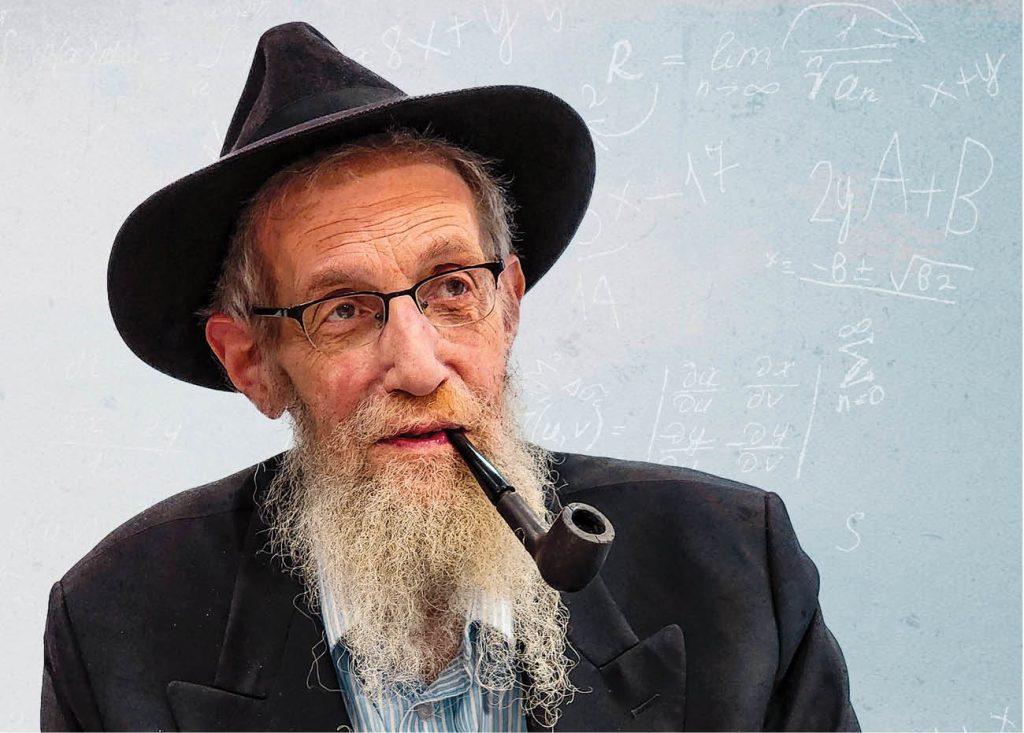
The theme of the conference was “The Creator, Miracles and Science in the Messianic Era.” Wow! Could we really cover all that in one evening? No, but we did our best. We also spoke about Rabbi Yisroel Aryeh Leib himself, as the event was on his yahrtzeit, in his memory and was a project of the institute named for him, the RYAL Institute for Moshiach and Science Research. He was a fascinating personality—an “independent character,” as the Rebbe MHM called him—who was known throughout his life for his diligence in learning Chassidus, and his expertise in mathematics in which he published several high-level papers.
We will return to discuss this “independent character” later in the article, but what about the theme of the conference itself?
Searching for the Creator
Last year I published an article titled “Searching for the Creator” in Beis Moshiach magazine (27 Teves, 5783). In it, I spoke of famous scientists who were actually searching for the Creator. For example, Albert Einstein once said, “I want to know how G-d created this world. I am not interested in this or that phenomenon… I want to know G-d’s thoughts. The rest are details.” (By the way, after Einstein died, they found a pair of tefillin in his apartment.)
The search for G-d seems to have begun in the scientific world in the mid-1800s. It was at that time, as explained by the Rebbe in a famous sicha (Likutei Sichos vol. 15, p. 42), that science began developing unifying theories that showed that apparently disparate phenomena were really parts of the same thing. For example, James Clerk Maxwell showed that electricity and magnetism—both of which were known to the world for some time, and were thought to be unrelated phenomena—were actually two different expressions of the same thing. He called this electromagnetism and worked out the mathematical equations for it.
So, the winds of unity began blowing in the scientific world which, as the Rebbe explains in that sicha, is a preparation for the Messianic Era when the Absolute Unity of G-d will be revealed. But it seems that this search went on mostly in the minds of the great thinkers, the great scientists.
This changed in the 1990s when the Rebbe announced that “The time of your redemption has arrived.” The door of unity swung wide open. Many regular scientists began speaking openly of their belief in G-d, the Creator. Scientists who thought this way in earlier times had to keep it to themselves. To talk about it in a scientific context was “unscientific.” From the 1990s they not only blended their belief with their scientific investigations, but actually published papers on this. (Prof. Aryeh Gotfryd has documented much of this.)
Professor Richard Feynman, perhaps the greatest scientist after Einstein, once said (in the 1980s), “The fact that there are rules at all… is a kind of miracle; that it is possible to find a rule, like the inverse square law of gravitation, is some sort of miracle.”
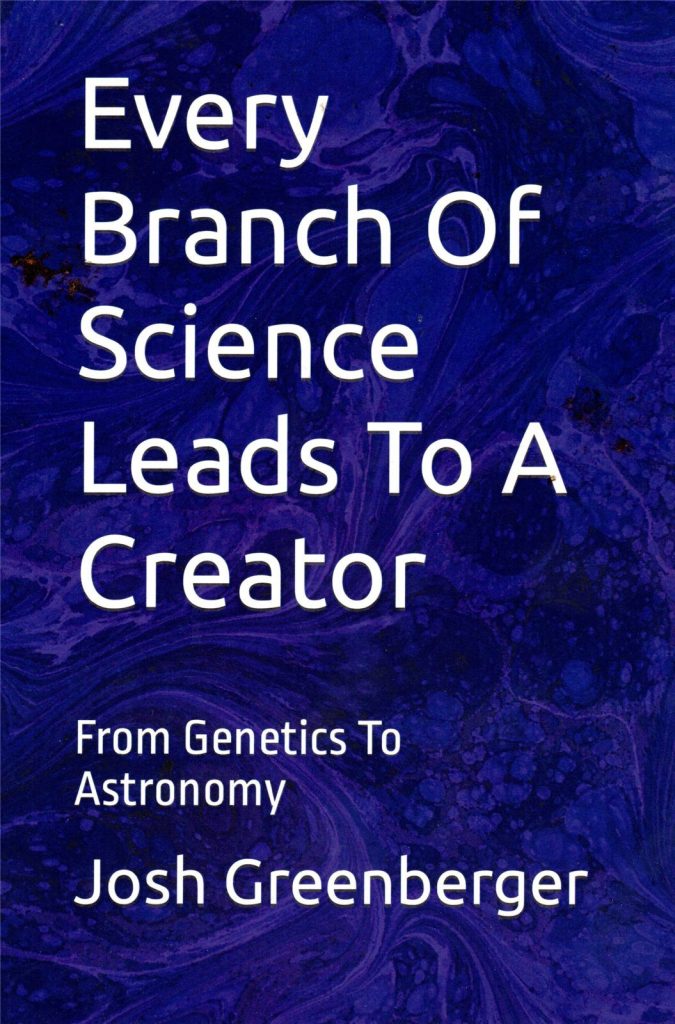
A high point in this search occurred with the publication of a book by an engineer named Josh Greenberger. The title of the book speaks for itself: Every Branch of Science Leads to a Creator.
So, the scientists are climbing higher and higher on the “Mountain of Faith.” What is the mountain of faith? There is a parable about a mountain called the mountain of faith. On top of the mountain sit the believers—those who believe in G-d and always have. At the bottom of the mountain are the scientists—atheists, agnostics and those that didn’t care either way. But the scientists attempt to climb this mountain. It’s a long, hard climb with ridges to scale, slippery slopes and many large rocks in the way. They have many failures and often slip on the slopes…
Finally, they reach the top of the mountain and find the believers. They are so happy and excited that they call to them loudly, “We made it. We are here!” But the believers just laugh and say, “Well, we’ve been here all the time!”
That’s the parable. But, as we shall see, we can extend their conversation. But first, we will need some new concepts.
Guarding Animals—and the Mind
In a maamar (Kuntrus 18 Nisan, 5751), the Rebbe notes that there are two kinds of corrals, one with a roof and one without a roof. What’s the difference? A corral without a roof is adequate for guarding horses, cows and similar animals. But it’s not adequate for guarding birds—they’ll just fly away. To guard birds, the corral has to have a roof also. Now, superficially this seems strange: To guard big, strong animals all we need is an enclosure. But to guard small, delicate birds, an enclosure is not good enough—it needs to have a roof also.
But on a deeper level, it’s all clear. The big coarse animals represent the ‘animal soul’ (nefesh ha’bahamis). Since they are animalistic, they need to be confined so that they don’t go off in the wrong direction. But the delicate birds represent the ‘intellectual soul’ (nefesh ha’sichlis.) Just like birds by nature, try to fly higher and higher, so too the human intellect is always looking for something higher—it tries to find higher concepts, including concepts of origin. This really has to be guarded! It has to have a “roof” over it to make sure that it doesn’t “fly off.” The human intellect has to know that 1) it cannot understand everything; intellect and logic are limited, and 2) even if it comes to understand something spiritual, it must realize that it cannot possibly understand it fully because spiritual reality is infinite and, again, intellect and logic are limited. (Note that Rambam says at the end of Mishneh Torah that in the Messianic Era, the Jews will “comprehend the knowledge of their creator as much as is possible for a man.”)
We can add another point—that the Tzemach Tzedek says about faith and intellect (in Haamonas Elokus). He says essentially that there is an upward spiral. We reach as high as we can with our intellect to understand Hashem. Above that, faith takes over and we have to believe higher level facts that we don’t understand. But we have to try to bring that too into our intellect, and when we do, the next highest level of faith (emuna) becomes our new level of belief.
Now, based on this new information, we can complete the parable. The scientists said that they were so happy to reach the top of the mountain of faith. The believers say that they’ve been there all along…
Now the scientists can say to them, “You believe in the Creator, but we know that there is a creator, having gone through all the research and investigation.”
Then the believers say back, “Yes, but faith reaches higher than intellect.”
To which the scientists reply, “So, let’s work together to see if we can raise the roof that’s over our heads somewhat.”
Understanding Creation
So, the scientists are searching for, and finding, the Creator. In fact, it’s natural for scientific thought to search deeper and deeper—higher and higher as we said before—to try to find the event of creation and the Creator. But how much of the event of creation from nothing (creation ex nihilo, as it’s called in philosophy) can the human mind actually comprehend?
In Chassidus it is explained that the human mind can comprehend the fact that creation occurred from nothing (יש מאין), but it cannot comprehend how the universe was created from nothing.
So, what exactly are we looking for if we know that the human mind can’t understand how creation ex nihilo took place? We are looking for some terminology to describe what happened—we are looking for a “mathematical model.”
Now, don’t get scared off by the math. We’ll try to keep it simple. We will start with what the Alter Rebbe says in the first chapter of Shaar HaYichud V’Haemunah (Part 2 of Tanya). We know the fact that Hashem created the universe. What exactly did He do? Well, He started by saying, “Let there be light,” followed by 9 more such statements. So, the Alter Rebbe says that the letters of the words of these 10 creative statements are what Hashem did to create the world. Do we have the “ex nihilo” part yet? Read on…
When we hear “letters” we think of numbers. Especially in Hebrew, the letters represent numbers: א = 1, ב = 2, and so on. So the best we can do is start with a digital description of creation. Not surprisingly, many scientific papers have been written along these lines. One of the best (in my opinion) is a paper titled “Spontaneous Creation of the Universe Ex Nihilo” by Prof. Avi Weiss of the University of Haifa. I’ll quote a section from his paper:
In general, any model of the Universe creation that involves preliminary conditions or requires an initial state is incomplete since it lacks an explanation of what created these initial conditions… The emphasis of the paper and its main goal is proving how the Universe creation could occur Ex Nihilo in information terms.
Definition of Numbers
In order to define numbers, we need a few concepts from Mathematical Set Theory:
Definition: A set is a collection of objects. The objects are 1) listed and 2) enclosed in special braces { }, to define it as a set instead of just a list.
Example: x, y, z is a list of 3 objects; {x, y, z} is the set containing those objects.
There is also a “0 set” containing no objects, denoted by ∅. It is called the “empty set.” It represents emptiness, nothingness.
The modern mathematical definition of numbers is based on the Axioms of Set Theory: Numbers are sets.
There, that wasn’t too hard, was it? Now, watch how numbers are defined as sets:
0 = ∅
1 = {∅}. This is a “set of another set,” not the same thing as ∅ alone.
2 = {∅, {∅}} = {0, 1}
3 = {∅, {∅}, {∅, {∅}}} = {0, 1, 2} and so on…
Note that 1 has one member, 2 has two members,…
Creation From Nothing
So, the universe can be represented digitally, by numbers. Numbers are all based on the empty set, and the empty set represents nothingness.
Thus, the universe is based on NOTHING!
This is our model—Creation Ex Nihilo, יש מאין.
[This is a developing theory. If you have questions or comments, please contact me at: [email protected]]
Man with a Mission
We return now to the hero of our story, Rabbi Yisroel Aryeh Leib himself. I have often asked myself, “What was it about this man? What did he want, what was he after?” He had such intense diligence in studying Chassidus and on working on high level mathematics throughout his life. (He was also known for his boundless, exuberant joy on Simchas Torah.)
In fact, he had a powerful effect on me. I was a graduate student in mathematics when I first heard of him. I, too, had to work intensely on math, and I learned Chassidus as much as I could. That’s why his life had such an influence on me. I felt pulled in two opposite directions. In him I saw the unification of both.
So, what was he after? One day it hit me. In the sicha of Parshas Emor, 5751, one week after Rabbi Yisroel Aryeh Leib’s yahrtzeit, the Rebbe MHM continued talking about ways of transforming gola into Geula, which he had begun speaking about on the previous Shabbos. In footnote 73 of the sicha, he says that the 3rd and highest level of this transformation, which brings us to the level in Torah known as pe’le (wonders) is achieved only by elevating (בירור) the wisdom of the world. This would mean elevating the sciences in a way that they would be used for Torah, or even become part of Torah (as Rambam did in his Laws of Kiddush HaChodesh.)
I believe that this is what Rabbi Yisroel Aryeh Leib was after. If one looks at the glowing titles with which the Previous Rebbe, in his letter of 17 Kislev, 5708, addressed Rabbi Yisroel Aryeh Leib, this would be no surprise.
The Rebbe MHM’s blessing
We conclude with the bracha that the Rebbe Melech HaMoshiach gave to a conference of religious Jewish scientists in Shevat, 5750. (This has only recently been published, and I received a copy of it on the day before our conference.)
In the letter he writes, “It should be in a good and successful time, primarily in everyone fulfilling their mission to serve their Master, and regarding you [the Jewish scientists] in particular, to be a living example of how all wisdom is for Hashem’s glory through our Holy Torah…I will mention it at the Tziyun.”
I hope that we, at RYAL Institute, are fulfilling this and helping to bring the world to the state described at the end of Rambam’s Mishneh Torah: “The world will be filled with the knowledge of Hashem, as the water covers the sea.”
Beis Moshiach #1412 • pp. 26-31
© 2026 Beis Moshiach Magazine. All rights reserved.
This article originally appeared in Beis Moshiach #1412. You are welcome to share it with friends and family by email or in print, provided that you do not change, add to or omit any part of it, you credit the author and Beis Moshiach, and you include a link to archive.bmoshiach.org (written out in full in printed copies).
To republish this article in a newspaper, magazine, book or website, please request permission in advance at [email protected].