From the Dugout to the Classroom

Rabbi Reuven Mizrachi has come to believe that in the game of life
Throughout his journey from college baseball to Chassidishe chinuch, Rabbi Reuven Mizrachi has come to believe that in the game of life, no student ever strikes out.
Rabbi Reuven Mizrachi did not grow up imagining himself in a classroom. For most of his youth, the goal was baseball.
He worked his way onto a high-school team, was recruited to play in college, and for a time seriously considered pursuing the sport professionally. But as that dream began to lose its hold, another search opened up - one that took him surprisingly far into the world of Eastern spirituality before eventually bringing him back to Yiddishkeit and to a more personal question: what did Hashem want from him?
The answer, eventually, led him somewhere he had never expected: chinuch.
In this conversation, Rabbi Mizrachi reflects on the path from college baseball to the classroom, the experiences that shaped his approach to teaching, and why he came to see chinuch not simply as a profession, but as his shlichus.
From Caracas to the Ballfield
MK: Tell us a little about yourself. Where did you grow up, and what was your childhood like?
RM: I was born in Caracas, Venezuela. The Jewish community there was mostly traditional and very close-knit, and Venezuela in those days was a very warm, lively place. It was actually known for years as one of the happiest countries in the world. After the communists took over in 1998, the country changed dramatically, and while I was still young my family moved to Florida.
And growing up there, my world became pretty simple. There were really only two things I cared about: friends and baseball.
I had almost no interest in school. I don’t think I even read a book until I was over twenty years old. I wasn’t thinking about what I wanted to study or what kind of career I was going to have. As far as I was concerned, I was going to play baseball. I wanted to become a professional baseball player, and that was what I was working toward.
The funny thing is that I wasn’t naturally such a gifted baseball player. It wasn’t something that came easily to me. I just worked harder than everybody else.
And because of that, I kept getting further than I thought I would.
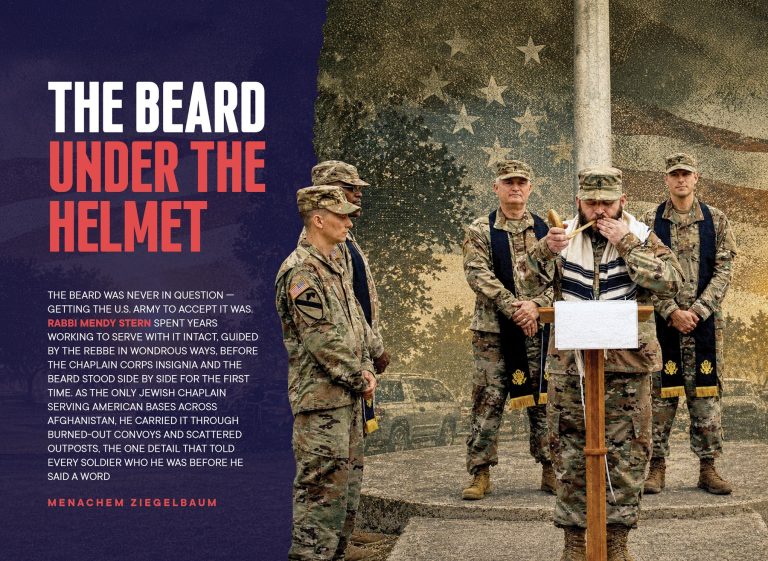
I made the high-school team, and eventually colleges started recruiting me. At one point I was ranked the number-one hitter in the state of Florida, Eventually I was recruited to play Division II baseball at Alfred State College, and during my first year there I was ranked seventeenth in the country.
I never looked at myself and thought, of course I’m going to become a professional baseball player. But each time I reached a level I hadn’t expected to reach, the next one started to seem possible. I hadn’t thought I would make the high-school team, and I did. I hadn’t thought I would make it to college baseball, and I did that too.
So I figured that if I kept working the same way, maybe I could keep going.
When the Dream Started to Crack
MK: So what changed? At what point did you begin to realize that baseball might not actually be what you wanted?
RM: Eventually I had to ask myself a very basic question: Why am I doing this?
If I was going to become a professional baseball player, I knew I had to want it with everything I had. I wasn’t the kind of player who could coast on natural talent. I had gotten as far as I had because I was completely consumed by it. So if I was going to keep going, I had to be sure this was really what I wanted.
And once I began seeing what the career actually looked like, I wasn’t so sure.
You’re constantly traveling with a group of guys who are your teammates, but they’re not necessarily people you would ever choose to spend all your time with. Some of the guys I was living and traveling with were simply not people I wanted to build my future around.
I was also a starting pitcher, which means you generally pitch once every five games. So I started looking at it very practically: four games out of five, I’m traveling around and sitting there watching baseball.
I love playing baseball. I didn’t want to spend my life watching baseball.
And then there was the future. One day, b’ezras Hashem, I wanted to get married and have children. Did I really want to be away from my family for six months of the year? And if I actually became successful, then there was the fame on top of it - the idea that you couldn’t necessarily just go somewhere with your family without being recognized.
Suddenly, the dream looked very different when I pictured what it would actually mean day to day.
But there was something else that bothered me even more.
Baseball was something my father and I had always shared. He was a huge fan, and a lot of my love for the game came from him. So I would finish a game after doing really well, and the first thing I wanted to do was call him. I wanted to tell him what happened and hear that reaction: “Wow! Amazing!”
But sometimes I would call and he was busy, or he hadn’t seen the game. I would tell him how well I had done and he would just say, “Oh, nice job.”
And I remember thinking: That’s it?
I had just had this great game. On paper, I had succeeded. I could sit there afterward and look at my statistics again, remind myself how well I had done, and maybe get another little high from it.
But it wasn’t enough.
I had spent years imagining that success in baseball was going to give me something. And now I was actually succeeding, and I was beginning to realize that it wasn’t giving me what I thought it would.
So for the first time in my life, at around twenty-one years old, I allowed myself to seriously think: Maybe this isn’t for me.
The problem was, I had no idea what else was.
A Different Kind of Search
Around that same time, though, something else was beginning to open up in me.
After my first year of college, I went to Eretz Yisrael on Birthright. I had always had a spiritual side, and I had wanted to go to Eretz Yisrael for years. I remember feeling something very strong in Tzfas, but what really stayed with me happened on the last day, when we went to the Kosel.
I stood there and just broke down crying.
I must have been there for three and a half hours. I can’t really explain exactly what happened. I just felt this very deep connection, something very pure. It was almost like the best part of me suddenly came to the surface, and all I could think was: Hashem, I want to be good. I want to be good.
It wasn’t that my life was falling apart. I wasn’t coming from some terrible place. But I was living the normal college life - parties, all of that - and suddenly I felt very clearly: I don’t want this. There’s something dirty about this, and I want something better.
I was crying so much that between the tears and the summer heat, the paper I was writing on was literally starting to fall apart.
Then I went back to college for my second year, and it was almost like I had these two different worlds inside me at the same time.
On the baseball side, I was coming back after a very successful first year. Now I was a captain, I had status on the team, people looked at me differently. But at the same time, I had this new feeling from Eretz Yisrael that I didn’t really know what to do with.
I remember I started doing little things that, for me, felt almost ridiculous. I would try to go to sleep on time and read a book before bed. I had basically never read books, so even that felt to me like, Okay, now I’m being a good person.
And then that year became a mess.
I got mono and was sick for a long time. I remember Yom Kippur came out during baseball, and even though I was too sick to play - and I was fasting - they still required me to be there. So my Yom Kippur was basically sitting in the dugout for two games.
The team itself started falling apart. My coach got fired. A whole series of things happened, and meanwhile I was already asking myself why I was doing any of this.
Eventually I decided I was done. I moved back home to finish my degree.
And now the question became much bigger than baseball.
Chasing Spirituality in the Wrong Places
For the first time, I really had to ask myself: What am I supposed to do with my life now?
By then, I was very open spiritually. I was finishing college, and almost by accident I took a world religions class.
Until then, Judaism in my mind was very basic. It was the stories I had grown up with - Avrohom, Moshe, the things you learn as a kid. But in that class we started talking about Hinduism, Buddhism, meditation, mysticism, ideas about the soul and spirituality, and I remember thinking: Whoa. This is what I’m looking for.
So I started exploring it seriously. I read a lot, got involved in meditation and yoga, visited ashrams, and eventually went pretty deep into that world. I was looking for something real, something spiritual, something that would tell me what I was supposed to be doing with my life.
For a while, I thought I had found it.
My father, though, was very uncomfortable with the direction I was going in, and eventually he convinced me to sit down with the local shliach.
I told the shliach everything I was doing. He listened, and then he said something that changed everything for me.
He told me, “Even though this path may be doing you good - and probably not as much good as you think - I don’t believe it is fulfilling your neshama.”
I can’t really explain what happened when he said that. It was like a gunshot. My heart was pounding, and I didn’t even know why those words had affected me so strongly.
Was he actually touching something true? Or was this just part of me resisting the path I was on?
That one sentence sent me into more than a year of searching. I kept asking Hashem: What do You actually want from me?
Around that time, I joined a Sinai Scholars program in college. We would learn every week, and toward the end of the program we spent a Shabbos together.
And I remember being surprised by how much I loved it.
There was something about doing mitzvos that felt very pure and very right. At the same time, I still felt that there was a certain depth I was looking for and hadn’t yet found. So for a while I was still searching, still trying to understand where all of this was leading.
Eventually I remembered that the shliach had suggested that I go to yeshiva, and I decided to spend a couple of months at Mayanot in Yerushalayim.
That was where things started coming together.
For the first time, I began learning Chassidus seriously, and I remember thinking: Wait. This is here too.
All of this depth, all of this spirituality that I had gone searching for somewhere else - I had simply never known that Yiddishkeit had it.
For the first time, I began realizing that what I had been looking for elsewhere might have been inside Yiddishkeit all along.
The Rebbe’s Push Toward Chinuch
MK: How did you end up in Chinuch? That seems like a very different direction from where you started.
RM: Interestingly, even before I was frum, I had this idea that if you really want to change the world, you have to work with the next generation.
I remember once meeting a homeless man. He had a sign that said, “I don’t want money. I want to eat,” so I took him out for food and we started talking. At some point I told him that I wanted to help people like him, and he looked at me very seriously and said, “Forget about us. We’re already messed up. Focus on the next generation.”
And that stayed with me. Maybe he was a malach, I don’t know. But something about that sentence stuck.
Years later, after yeshiva and kollel, I got my first opportunity to teach. When that ended, though, I was actually very excited about a different possibility: Hadar HaTorah. I loved the whole idea of working with baalei teshuva. I could see myself going there, becoming a maggid shiur, getting involved with the guys, really throwing myself into the place. I had this whole picture in my head of what I could do there, and I was very into it.
So after Shavuos, I wrote to the Rebbe. I shared a bunch of good news and hachlatos I had taken on, and then I asked about what I should do next.
The answer I opened up to in the Igros Kodesh first thanked me for the good news. And then, in response to my question, it spoke about how understated it is just how important it is to work with children before bar mitzva.
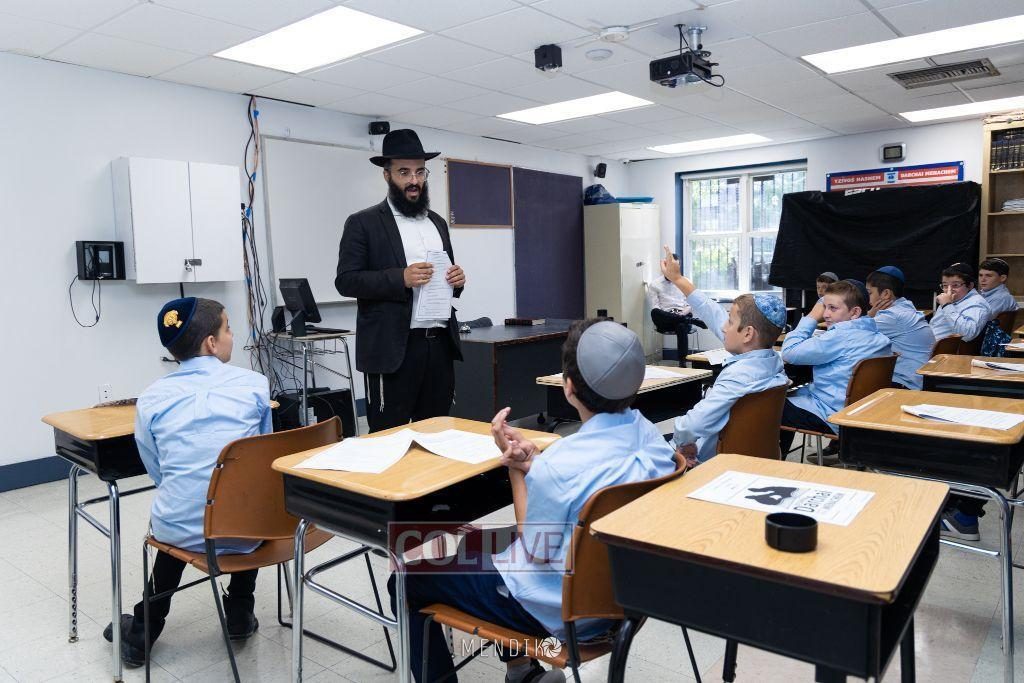
And I was like: Okay. I got the message. Soon afterward, I was offered a position teaching sixth grade. Before bar mitzva. So I took it.
And since then, this keeps happening. I’ll write to the Rebbe, and nine times out of ten it almost doesn’t matter what I’m asking about - the answer somehow comes back to chinuch. I can be asking one thing, thinking about something completely different, and again the answer is about chinuch. The importance of chinuch, the responsibility of a mechanech, what the work demands from you.
Again and again.
So to me it’s very simple: the Rebbe sent me here. And ever since, I feel like the Rebbe keeps pushing me in the same direction - chinuch, chinuch, and more chinuch.
Teaching With Your Whole Being
MK: If you see chinuch as the place the Rebbe sent you, what does that mean for the way you actually approach the job?
RM: I feel that a mechanech has to teach with his whole being. Chinuch can’t just be something you do from nine to four, where you walk into the classroom, give your lesson, and then go home. If this is really your shlichus, then it has to occupy you.
I feel this very strongly with the Rebbe. There are times when I’m exhausted, a kid has been giving me a hard time for a week, and then he comes over: “Rebbi, can I show you something?” My natural reaction is, Not now. Please, not now. And somewhere in the back of my head I feel the Rebbe saying: Give him attention. He’s standing in front of you. Give him attention.
And for me it goes beyond what happens during class. If I go to sleep and I’m not prepared for the next day, I feel like I made a mistake. If there’s a student I should have called, or a parent I should have spoken to, or something in the class that isn’t working and I haven’t really thought through how to fix it, that bothers me.
You look at other professions where people understand that the work demands everything from them. A doctor, Hatzalah - people are working, they’re sweating, they’re giving it everything they have. Why should chinuch be approached with less seriousness? We’re dealing with children. We’re helping shape who these kids are going to become.
And that also means I don’t want to become comfortable. I have this thing where I’m almost allergic to simply recycling what I did last year. If I did a certain project with last year’s class, I don’t want to automatically pull it off the shelf and do the exact same thing again because, well, it worked.
Maybe I’ll do it again. But if I do, I want it to be because it’s right for this class.
To me, being alive in chinuch means that every year has to be a little different, because the children in front of you are different. If I’m just repeating myself because that’s what I did last year, then something has gone missing.
What He Wants the Children to Walk Away With
MK: With all that effort, what are you ultimately trying to give the children? What do you want them to walk away with?
RM: What I would love to see is that in every classroom there should be order, there should be a Torah-true education, the kids should be happy, and there should be love in the room.
And part of that, I think, is that we have to have confidence in what we’re giving them. Sometimes we sell children short. We think that if you simply tell a child, “We’re learning Torah because we want to connect to the Eibershter,” he’s going to look at you like, What are you talking about? Maybe the first time he will. But children can respond to that. You just have to believe it yourself first.
One example is prizes.
In my first year teaching sixth grade, I printed out a welcome packet for the class. By accident, the last page from the previous rebbi’s packet got mixed in with mine, and this page had this unbelievable list of prizes - a bicycle, a drone, all kinds of things.
So I’m standing there talking to the boys about how we’re here to learn Torah, we’re here to connect to the Eibershter, and suddenly one of them raises his hand.
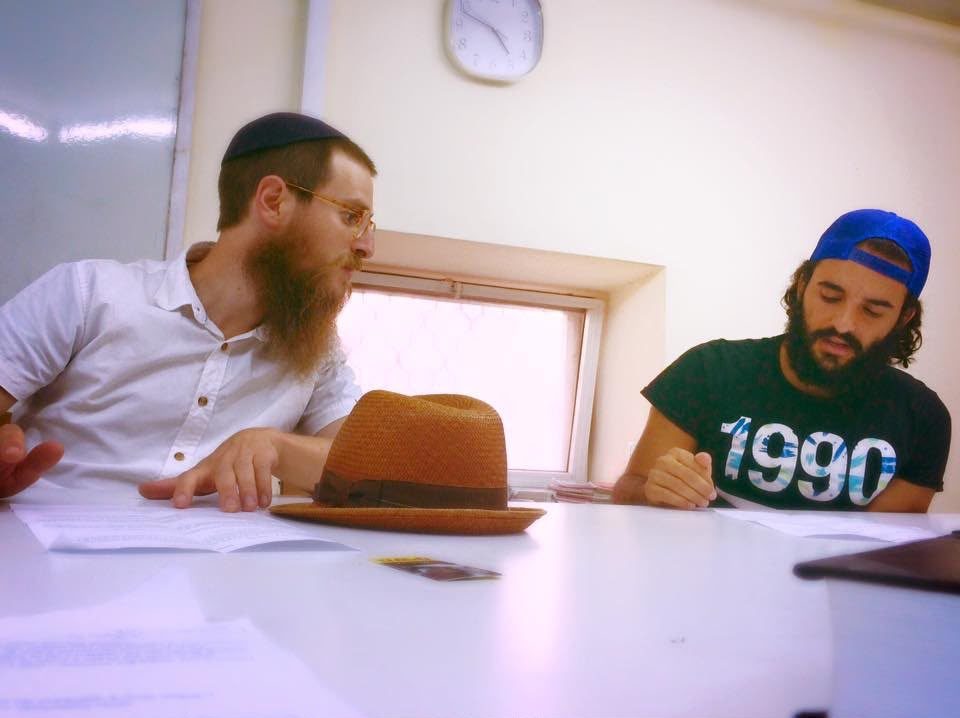
“Rebbi, what about the prizes?”
I said, “What prizes?”
He shows me the page.
I looked at it and said, “Okay, everybody take that last page, crumple it up, and throw it away.”
Because I didn’t want to begin from the idea that we have to bribe a child to learn Torah.
And later that year, one of the boys came over to me and said, “Rebbi, this is the first time in our lives that we haven’t been bribed to learn Torah.”
Then, on the last day of school, another boy told me to look inside his desk. He had written something on a piece of paper and taped it inside for the boy who would have that desk the following year.
He wrote: “Torah iz di beste schorah.”
He was twelve years old, and that was the message he wanted to leave for the next class.
So I really believe we can teach children this way. We don’t always have to assume that Torah itself isn’t going to speak to them, or that we have to offer them something else in order to get them interested.
But first of all, you have to believe it yourself.
Why Caring Isn’t Enough
MK: You’ve spoken a lot about keeping chinuch rooted in Torah. At the same time, you’re very involved with Igud HaMelamdim and you put a lot of emphasis on professional training for teachers. Why is that so important to you?
RM: Because I learned very quickly that caring is not enough.
My first year in chinuch, I thought I could basically rely on my natural abilities. I’m a pretty social person, I connect well with people, and I figured that if I cared about the kids and had a good relationship with them, I would be fine.
I got eaten alive.
The class was very rowdy, and I realized that there were basic things about running a classroom that I simply didn’t know. So that summer I took the Igud HaMelamdim course, particularly the training with Rabbi Rottenberg, and for me it changed everything.
What he gave me was a framework. How do you set up a classroom properly? How do you establish expectations? How do you prepare so that you’re not spending the entire year reacting to problems after they happen? These are practical skills, and once I started applying them, it gave me the wings to fly. The following year was completely different.
That’s why I became so passionate about this kind of training. I’ve seen what it can do, not only for me but for other mechanchim as well. I know teachers who were really struggling, who took the training, applied what they learned, and came back the next year almost like different teachers.
And one of the biggest things it changes is preparation.
This year, for example, I came into the school more than a week before classes began because I wanted to start getting ready. I figured I would probably be the only person there.
There were already two other rebbeim in the building.
All three of us had taken the Igud HaMelamdim training.
That tells you something. School hadn’t started yet, nobody was forcing us to be there, but we were already thinking about the year - setting up the classroom, preparing, trying to anticipate what the kids were going to need before they walked through the door.
To me, that’s a big part of being a serious mechanech. You can have all the right intentions in the world, and obviously the foundation has to be Torah and the way the Rebbe looks at chinuch. But you also have to know how to do the job.
A mechanech needs both.
Beis Moshiach #1523 • ז׳ תשרי תשפ״ז • pp. 10-18
© 2026 Beis Moshiach Magazine. All rights reserved.
This article originally appeared in Beis Moshiach #1523. You are welcome to share it with friends and family by email or in print, provided that you do not change, add to or omit any part of it, you credit the author and Beis Moshiach, and you include a link to archive.bmoshiach.org (written out in full in printed copies).
To republish this article in a newspaper, magazine, book or website, please request permission in advance at [email protected].