When The Rebbe Smiled, All of 770 Was Happy…
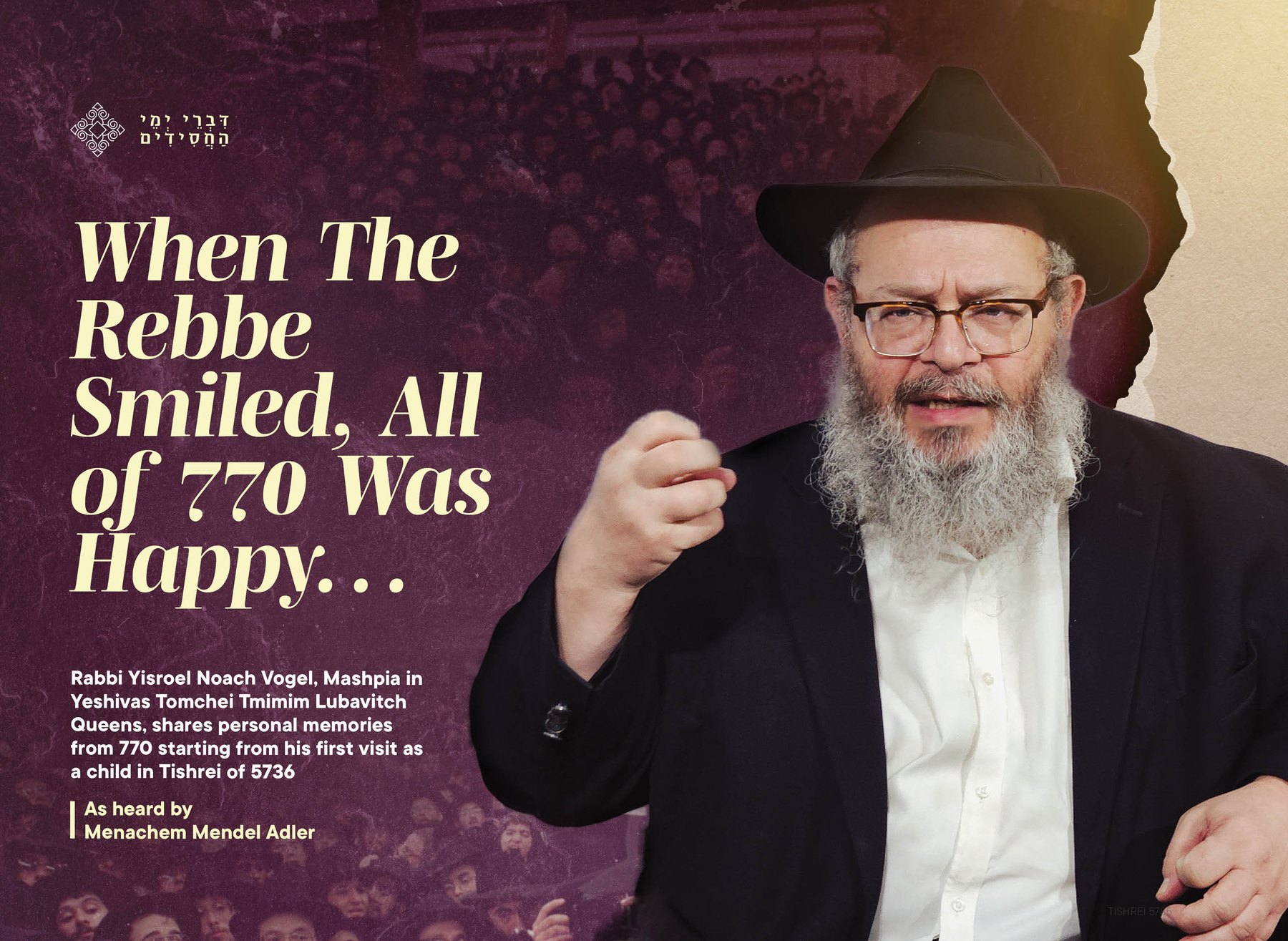
Rabbi Yisroel Noach Vogel, Mashpia in Yeshivas Tomchei Tmimim Lubavitch Queens, shares personal memories from 770 starting from his first visit as a child in Tishrei of 5736.
I went to the Rebbe for the first time the day after Yom Kippur 5736. My father, R’ Eliyahu Vogel, and I flew from London on Laker Airways and arrived in New York around eight in the evening. A few Lubavitchers flew with us.
On the way to Crown Heights, they told us that the Rebbe went to the Ohel that day and had already davened Mincha and Maariv and went home so we couldn’t see the Rebbe that day. We took our luggage and deposited it with the family we were staying at and went to daven Maariv in 770.
It was dark already so we didn’t see 770 from the outside in its full glory, in addition to which a string of lights, that were put up for a chuppa taking place there, concealed the front of the building.
The big shul downstairs was bigger and different than I expected; only the Rebbe’s place was familiar to me from the pictures I had seen. Still, it was moving to finally see 770 for the first time. I remember that I walked about in great excitement.
When the Rebbe Was Happy, All of 770 Smiled
The following day, as we waited for the Rebbe to come in for Mincha, my friends told me, “The Rebbe worried about you all night (they decided that the Rebbe was worried since he still didn’t get a report that we had arrived safely). Go and stand where the Rebbe can see you.”
I moved forward (not to the front of the shul but to a place from where the Rebbe could see me as he entered). When the Rebbe entered, I saw him for the first time. His face was serious though glowing. He walked to the front of the shul and touched the paroches before going up to the platform to daven Mincha. I was so happy about the zechus of davening with the Rebbe and I davened slowly and deliberately.
At the end of davening, the Rebbe came down from his platform. As he turned left to leave, he smiled broadly at the photographer, R’ Levi Yitzchok Freidin, who came that year for the first time to photograph the Rebbe.
As he passed the bima where the Torah is read, he suddenly stopped near one of the tables and spoke to someone. Immediately, everyone jumped and tried to get closer to hear what the Rebbe was saying, but within seconds the Rebbe was on his way. I heard people say afterward that there was a bachur there who took a picture of the Rebbe and the Rebbe stopped to ask him how much Tanya he knew by heart.
(Actually, the Rebbe spoke about this eight years later, on Chof Cheshvan 5744. The Rebbe said that he once saw a bachur taking a picture and he asked how much Tanya he knew by heart. The Rebbe said that the bachur didn’t know what to say, because what connection was there to Tanya by heart? This can be done at a time that is neither day nor night…)
That evening there was yechidus for guests (this was the last time there was yechidus between Yom Kippur and Sukkos). My father asked the secretary whether we could also go in for yechidus and the secretary said, “You just arrived and you want yechidus?!” Years later I heard that the custom among Chassidim was that when going to the Rebbe, you first hear Torah from him and only then do you have yechidus.
Since yechidus took time, Maariv was later. Usually, the Rebbe would come out for Maariv in the middle of yechidus, some time before midnight, at 12:45.
I Felt Eyes Upon Me
The next day, 13 Tishrei, when I went to 770 for the minyan of yeshiva bachurim at 9:30, I heard people say that perhaps the Rebbe wouldn’t come to the Torah reading of the regular minyan because after yechidus, the schedule was different and the Rebbe would arrive at one and not at the usual time.
That’s what happened. When the minyan reached kerias ha’Torah at 10:00, they waited a bit and when they realized that the Rebbe would arrive later, they read from the Torah.
Most of the guests who came said the ha’gomel blessing in this minyan, but Yossi Tiefenbrun told me that if I waited, I could say it in the Rebbe’s minyan.
I left the minyan and when the Rebbe arrived at 770 at twelve, there was a minyan for kerias ha’Torah. One of those present had a baby girl and they called him to come up to the Torah instead of a kohen. The Rebbe was called up for shlishi, as usual, and then all those who had to say ha’gomel went up. I went up too and since this was the first time I was reciting ha’gomel, I said it from a siddur.
Suddenly, in the middle of the bracha, I felt eyes fixed upon me. I looked up and saw the Rebbe staring at me. The Rebbe was standing close by on the side of the bima while I stood nearby.
This meeting of our eyes had me freeze in place and I couldn’t remove my gaze from the Rebbe. I can’t describe the fear and awe that I felt in this moment. The word, she’gemolani was hard for me to say and with the Rebbe looking at me… It seems I repeated the word six or seven times; the word got stuck. Finally, the Rebbe looked down and I looked back in the siddur and finished the bracha. I felt my stomach turning over. Then I first understood what the pasuk means, “and his knees knocked together.” My knees literally trembled and knocked together.
Later that day, the Rebbe went to the Ohel and returned only after dark. Rabbi Groner, who was in the year of mourning for his mother, was the chazan for Mincha and the Rebbe returned to his office. A few minutes later, a short farbrengen was announced.
They Told Me to Say L’chaim to the Rebbe
My friend, Yossi Tiefenbrun told me that I can stand next to him during the farbrengen. He had a good spot at the edge of the middle table, facing the Rebbe.
I heard the famous signal, “Shaaaa,” which indicated that the Rebbe was coming in. Upon arriving at his place he sat down and nodded to R’ Yoel Kahn who stood below on the right side, as a signal to start the Niggun Hachana for the maamar.
An old man who sat in the row behind the Rebbe, got up and began to lead the niggun with his hands. They told me he was the Chassid, R’ Hendel Lieberman who always conducted the niggunim. (I heard that once he decided for some reason to stop conducting the niggunim and the Rebbe motioned to him to continue).
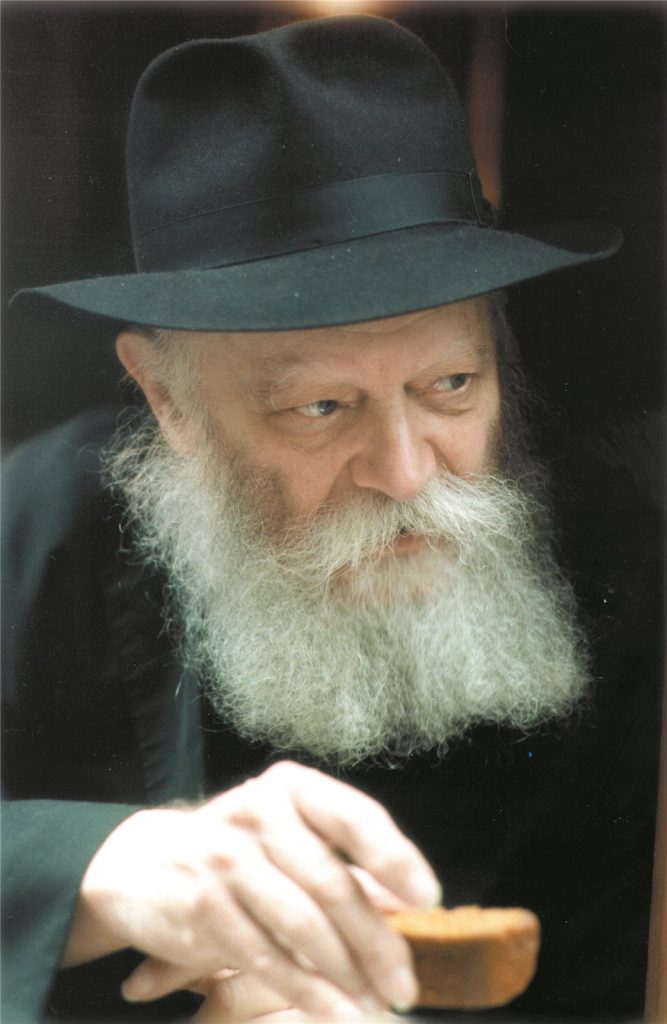
After the niggun, we heard the Rebbe begin, “Ba’Sukkos Teishvu Shivas Yamim.” The maamar was edited afterward by the Rebbe.
After the maamar, they told me to say l’chaim to the Rebbe. I raised my cup and saw the Rebbe nodding in my direction. Since I wasn’t sure about whether the Rebbe nodded at me, I waited and then the Rebbe nodded again. I still wasn’t sure and continued to wait. The Rebbe smiled and I somehow sensed it was connected to me. Everyone turned around to see who the Rebbe was smiling at…
During the farbrengen, the Rebbe spoke about going out of town on Chol HaMoed to bring joy to other Jews and emphasized that guests from various countries, especially from Eretz Yisrael, needed to go too, to show that Jews are balabatim over the entire world and therefore, they feel comfortable wherever they are.
The Rebbe asked that we sing some happy niggunim and motioned to whistle. After everyone stopped whistling, only Yossi Tiefenbrun continued to stand with eyes closed and whistle with all his might. The Rebbe looked at him and smiled.
Toward the end of the farbrengen, the Rebbe said that all the tankistim should come forward to receive dollars to give out to all. I also approached the Rebbe even though it wasn’t easy. I received a bundle of bills from the Rebbe and moved on. Someone who saw I was new explained that first I should take one dollar and then give out the rest.
At the end, the Rebbe stood up and clapped to the song, “Ki B’Simcha Seitzei’u.”
Yechidus ‘on the Go’
The Rebbe went to the Ohel on Isru Chag Sukkos. This was the first time that the Rebbe went on Isru Chag and after that, it became a regular thing. That being the case, we didn’t know about it, so we didn’t have yechidus before we returned home to England, as is customary, because we couldn’t push off our tickets.
A friend of my father suggested that we stand in the hall after Mincha and wait for the Rebbe to return to his office. “Maybe the Rebbe will say something to you.” We did so, standing there together with another one or two people.
The Rebbe exited the stairwell and saw us. R’ Leibel pointed toward us and said something to the Rebbe. The Rebbe stopped near us and said, “May you travel in a good and successful time; may it be a year of success and a Torahdiker year.”
You could say it was a sort of yechidus since the Rebbe usually only blessed with the words, “travel in good health.” We noticed that when the Rebbe said “a year of success,” he looked at my father and when he said, “a Torahdiker year,” he looked at me, probably because I was a yeshiva bachur.
Since I didn’t have yechidus, my father sent me back the following year.
Chana, Why Do You Cry?
Rosh Hashana 5737 fell out on Shabbos. I remember that when the haftorah of the first day was read, when the Rebbe reached the words, “Chana, why do you cry,” he burst into tears.
On the second day of Rosh Hashana, the Rebbe walked quickly to the bima in order to say Kaddish after the Torah reading for his sister-in-law, Rebbetzin Shaina, H’yd. The secretaries practically ran after him with the bundles of pidyonei nefesh, wrapped in brown paper and tied with white thread.
After the haftorah, the gabbai, R’ Moshe Pinchas Katz, announced that everyone should stand in place and that nobody should stand on benches or crates, etc. and we should know where we stand and before Whom we stand.
It was so moving to hear the Rebbe begin to say “Lamenatzeiach” in a loud voice, followed by the roar of the crowd repeating the words. Unlike most years in which the Rebbe raised his voice from pasuk to pasuk, this year, the three pesukim after the tekios were said in the same tone.
At the farbrengen of 6 Tishrei, I was standing near one of the tmimim when he suddenly asked me whether the Rebbe would say a maamar on 6 Tishrei. I said, no. At that moment, I saw the Rebbe motion to R’ Yoel Kahn to sing the Niggun Hachana for a maamar. The Rebbe said the maamar, “Shuva Yisrael.” During the maamar, one could see that the Rebbe had a very bad cold.
At the farbrengen on that Shabbos, Shabbos Shuva, the Rebbe spoke about a topic he addressed often during the previous summer, Operation Entebbe. I remember the Rebbe shouting, “At a time that the Aibishter asks, seek Me, it is said about Jews that ‘they don’t have a share in the G-d of Israel!’”
Lofty Moments During Neila
A frightening thing happened a day or two before Yom Kippur. Arab ruffians from Chevron entered the chamber of Yaakov in the Meoras HaMachpela, tearing up the place as they desecrated Sifrei Torah, tefillin and the hundreds of sifrei kodesh there.
When R’ Gershon Ber Jacobson, editor of the Algemeiner Journal received lekach from the Rebbe erev Yom Kippur, the Rebbe asked him to call Eretz Yisrael to get the details of what happened before Yom Kippur began there.
During chazaras ha’shatz of Neila, I noticed some children had gone up on the Rebbe’s platform. The Rebbe had motioned something toward some children. R’ Dovid Raskin, who saw this, asked all those standing in the area near the chazan to clear the space, saying, “The Rebbe said they should leave.” The Rebbe, seeing this, said, “I didn’t say that,” and he had only indicated that the children should go up on his platform.
Usually, the Rebbe would motion to start a niggun with a bang of his left hand. When the shatz reached the words, “Ata Vechartanu,” he motioned as usual with his left hand but also began strongly encouraging the singing with his right hand in the direction of the children.
After “Sim Shalom,” the Rebbe asked the chazan to wait and asked that all children under bar mitzva who know how to daven should go up. A commotion ensued in the shul in the attempt to get all the children to the front.
Later on, I heard from one of the children who stood on the platform that the Rebbe sobbed the entire time. The boy, who saw the Rebbe crying, began to cry too. When the Rebbe noticed this, he turned around to him and smiled.
I heard in the name of R’ Leibel Groner that he had never seen the Rebbe cry like that. He cried for about five minutes, nonstop.
By the end of Neila, the children completely filled the platform. R’ Groner pulled the shtender left in the direction of the chazan to give the Rebbe room to stand without the children surrounding him on all sides. Then R’ Groner moved the chair to the edge of the platform and put it with the back of the chair to the crowd. The Rebbe motioned to him to turn the chair around so he could get up on it for the March.
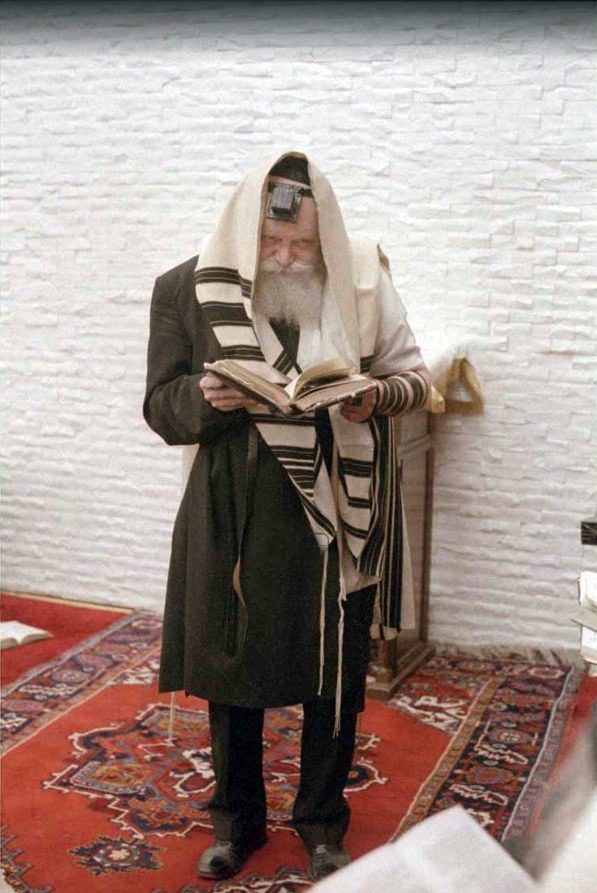
When order prevailed in 770 once again, the Rebbe motioned with his left hand to sing, “Avinu Malkeinu,” and this time too, he strongly encouraged this with his right hand, two times, toward the children. I think they sang “Avinu Malkeinu” several times. The atmosphere in 770 was in the stratosphere. Next to me stood a group of baalei teshuva who were bawling.
When the March began, the Rebbe motioned with his left hand on the shtender to sing and then the Rebbe began arranging his tallis on his shoulders for some time. To me it looked as though the Rebbe wanted to postpone his going up on the chair. After perhaps a minute or two, the Rebbe went over to the chair, put his right hand on the shtender and slowly got up on the chair. The Rebbe did not clap; he just encouraged the singing with his right hand. That took two minutes and then he came down.
‘all Should Have Nachas from You’
I had yechidus at the end of the month. Before that, they guided me to knock on the door, to say “shehechiyanu” out loud, to kiss the mezuza, etc. but in my tremendous fear I forgot everything.
As I entered the room, I noticed the Rebbe lift himself up a bit, ostensibly to hold out his hand and take the pidyon nefesh from me, but it was apparent that he wanted to rise up a bit. Afterward, I heard from other people that in their first yechidus too, the Rebbe rose up a bit.
The Rebbe took the pidyon nefesh from me, put his glasses on the end of his nose, and began to read. In the note, I had written that I want to learn in Paris (Brunoy) and I was asking for the Rebbe’s consent and blessing. I had also written the names of my family members and asked for a bracha for them.
The Rebbe took a pencil and made a horizontal line under the subject of learning next year; then he made a vertical line near my name and another line near the names of my family.
The Rebbe began speaking while still looking at the note. “Regarding what you write,” and then he looked up at me and asked, “Do you understand Yiddish?” It was hard for me to verbally respond and I nodded.
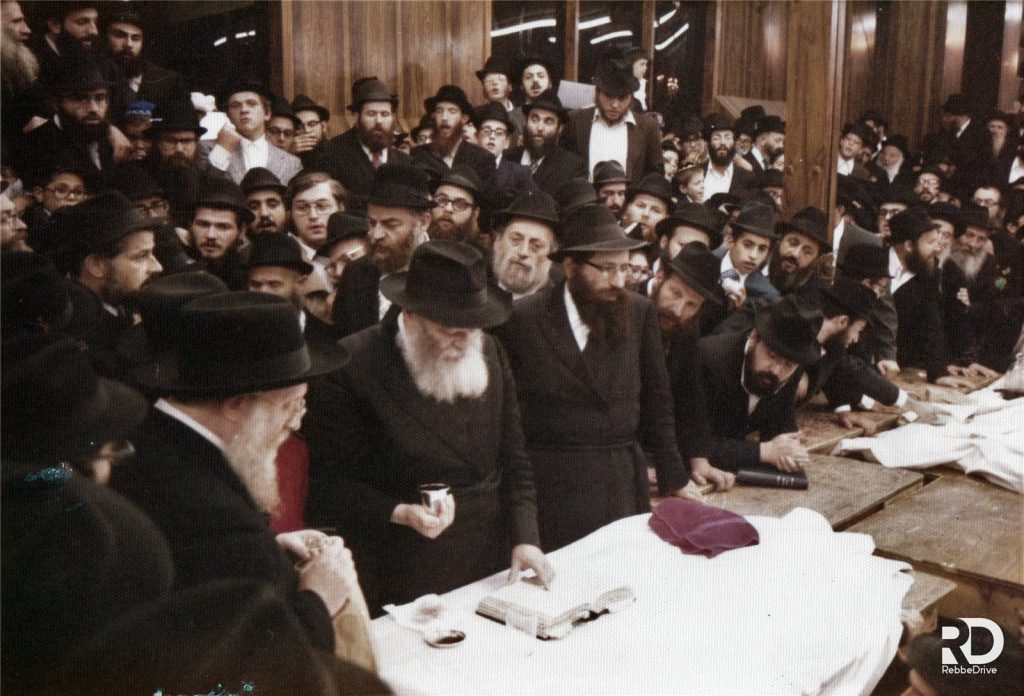
The Rebbe went on. “Regarding what you write about a place to learn you need to discuss the reasons with the hanhala.” Then the Rebbe asked me, “Did you receive dollars at the farbrengen?” I nodded. The Rebbe opened a drawer and took out a dollar and said, “I will give you another dollar that you should exchange for francs if you go there, or wherever you go – exchange it for the money of that country, and add another dollar and give it to tzedaka.”
The Rebbe then began to bless me, “The Aibishter should bless you,” using the wording I had used in my note, “to be a Chassid, yerei shamayim and lamdan,” and more. The Rebbe went on, “You should learn with diligence; your father and mother should have Chassidishe nachas from you and everyone should have nachas from you.”
I understood the last words as the Rebbe’s response to my request that I give nachas to him.
Throughout all this, the Rebbe held a dollar and at this point, he handed it to me. From the moment I took the dollar until I left the room, I don’t remember anything. The excitement and awe I felt affected my brain and I don’t remember leaving the room.
5740 – the Happy Rosh Hashana
Rosh Hashana 5740, was called the “happy Rosh Hashana” by everyone since the Rebbe’s conduct that Rosh Hashana was different than usual and reminiscent of Simchas Torah.
It was such a happy Rosh Hashana that the first night, at the end of the davening, the Rebbe turned around to the crowd and loudly said, while waving his arm, “Gut Yom Tov.” The crowd repeated it after him, three times. Then the Rebbe loudly said, “L’shana tova tikaseiv v’seichaseim!” and he began to sing and encourage the niggun of “Ata Vechartanu” and wave his hand the whole time as he walked through the zal until he left.
The joy after that was enormous! For half an hour after the davening, the crowd in 770 still continued to dance.
Another chiddush that year was that until then, they sang “Avinu Malkeinu” before all the tefillos, even when Rosh Hashana was on Shabbos, but this year, the Rebbe did not encourage or instruct to sing it, and they didn’t sing. It was only the following year, at the farbrengen of erev Shabbos that went into Shabbos, when they wanted to sing “Avinu Malkeinu” that the Rebbe said, “It’s Shabbos.” So they understood that we don’t sing “Avinu Malkeinu” when Rosh Hashana is on Shabbos.
At Shacharis the following day too, there were many joyous happenings and niggunim. At the singing of “HaAderes V’haEmuna” the Rebbe continued to encourage the singing of the stanza three times, and he also instructed to sing “Ata Vechartanu” and “Hu Elokeinu” two times.
The Rebbe had the aliya of maftir in the Sefer Torah written by the brothers from Slavita, and the Rebbe said the haftorah clearly and slowly, word by word, without tears. At the end of davening, he began singing the niggun “Ata Vechartanu” on his own when he left, and so it was at all the other tefillos.
On the second day, after the haftorah, the Rebbe remained at the bima standing for some time lost in thought. Afterward, he took the tallis and spread it over the bima and over the pidyonei nefesh that were on the bima (there were three bundles) so that the Rebbe wrapped himself together with the panim. He stood there that way for some time.
Suddenly, one could hear the Rebbe saying, “Lamenatzeiach” with his face completely covered. The roar of the crowd repeating this went from wall to wall and right afterward, the seder tekios began. The Rebbe said the pesukim while covered in his tallis and afterward rolled up the tallis behind his left ear and began saying the brachos.
At the farbrengen that took place toward evening, they sang many niggunim and there were two sichos and a maamar. One could see how the Rebbe was in a very uplifted mood. For example, usually, the Rebbe said havdala in an even tone. From the recording of the havdala at the end of the farbrengen that year, one can hear the Rebbe saying havdala in a very loud tone, with unique up notes and in a unique flavor.
During the distribution of kos shel bracha too, he was very joyous. The distribution did not last too long because many Chassidim did not go over because of the Rebbe’s heart attack in 5738, but the Rebbe encouraged the singing of all the niggunim (except for one niggun) with unusual vigor so that the crowd did not stop dancing. It was a big simcha. I heard from those who went over to receive kos shel bracha from the Rebbe that they heard the Rebbe singing along with the crowd, which I don’t think ever happened before.
I remember two niggunim in particular from that event. The first niggun is the tune for which they later composed the words, “Didon Notzach.” The Rebbe began encouraging this with such intensity that the crowd went all out. The Rebbe really made the crowd rejoice and all of 770 jumped to its feet.
The second niggun around which there was a whole drama is the niggun which has become the custom to start singing at “Sim Shalom” (on special joyous days). The Rebbe asked the chazan, R’ Moshe Teleshevsky to compose a song to the words, “Uv’Yom Simchaschem.” After some failed attempts, the Rebbe told him that just like in the Selichos, some repeat the refrain “ulai yerachem,” and after every few words again, “ulai yerachem,” here too, at the end of each part he should add the words, “uv’yom simchaschem uv’moadeichem,” and he added, “You are a composer.”
They gave him a microphone and he tried composing a tune to the words but each time he almost succeeded and the crowd began to join in, the Rebbe immediately began encouraging this and once again, the crowd began to jump and sing what they were used to singing, and once again everything got confused time after time.
Finally, R’ Dovid Abba Zalmanov put the words, “Uv’Yom Simchaschem” to the tune now used for “Sim Shalom.” The Rebbe suddenly put down the cup and began to forcefully clap. Usually at a farbrengen, the Rebbe would use one form of encouragement but here, it was like Simchas Torah; the Rebbe clapped and waved his hands in circles and then clapped again. The joy went through the roof as the crowd went completely out of all limitations. The simcha that there was then was incredible… such an elevated mood on motzoei Rosh Hashana.
After kos shel bracha, many of Anash and the tmimim stayed and danced, deep into the night.
The rest of the week as well, the Rebbe came into tefillos in a smiling mood and the bachurim too felt a special atmosphere.
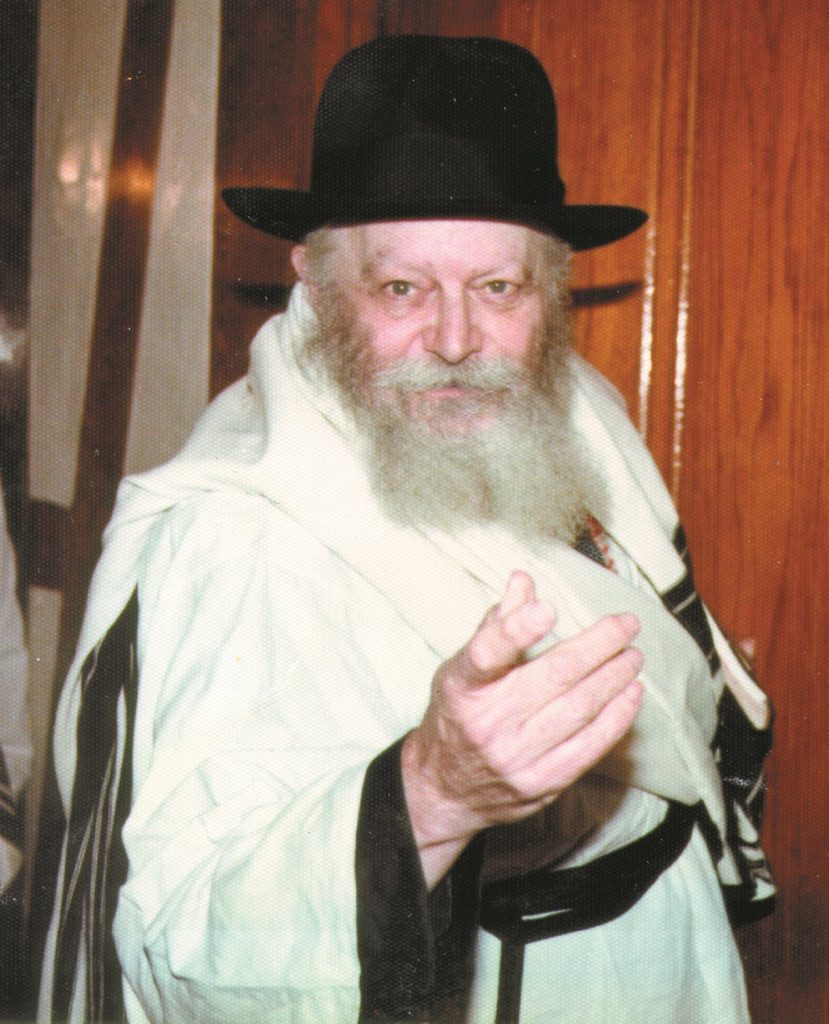
When the Rebbe left after Mincha on 4 and 5 Tishrei, he began to sing “Hu Elokeinu,” as he motioned with his hand to intensify the singing.
A Father Blessing His Children
On Sunday, erev Yom Kippur, we went to the small zal for the blessing of the tmimim. They removed the bookshelves between the rooms and a window was created so that we could see the Rebbe even from the inner room. They arranged a place on an elevated table for the Rebbe, on which they put a carpet and shtender.
Starting in 5737, the Rebbe allowed a microphone but it was hidden. In 5744, someone put a microphone out openly and the moment the Rebbe saw it, even before he went up on the platform, he stopped and made a surprised motion with both hands and they took it away.
Back to 5740; the Rebbe usually came in at candle lighting time. That year, nearly ten minutes went by and the Rebbe still hadn’t come in. One of the tmimim shut the microphone in concern that if the Rebbe would go a long time with his bracha, it would be Yom Tov already.
The Rebbe came in ten minutes after candle lighting and someone rushed to the broadcasting room and brought a tape recorder so there would be a hanacha of the sicha. He stood in the hallway with his hand inside the small zal. Afterward, he said that the Rebbe finished the bracha about two and a half minutes before sunset.
This was the only time that the bracha wasn’t typed and printed on the wall before Yom Kippur.
The way it worked was they opened the small zal only a quarter of an hour before the bracha so people wouldn’t stand for hours to hold their place and not eat the seuda ha’mafsekes.
Since there were so many bachurim, in 5739 they made a rule that only chassanim, the talmidim of the outgoing Kevutza and tmimim above age 23 would enter the zal. In the second room were the talmidim of the incoming Kevutza and bachurim above 22. All the others were outside, in the yard or the foyer or hall. Despite this, it was very crowded and there was terrible pushing. In the yard were bachurim who lay on the sukka boards overhead and nearly fell. There were loud screams.
In the middle, as the Rebbe said the birkas kohanim, a terrifying scream could be heard from the yard. The Rebbe stopped for a second and cried a lot during the bracha. He also changed a word in the birkas kohanim.
Yechidus
At the end of that Tishrei, before I had yechidus, they said not to write anything on the note being submitted to the Rebbe except for your name and mother’s name. I asked the secretary whether I could add the names of family members and he agreed. I wrote my name in big letters and my family’s names underneath.
The yechidus for bachurim usually lasted 35-45 seconds. I went in and gave the note to the Rebbe. He began to bless me with, “may you be a yerei shamayim and lamdan” and gave me a dollar, saying that when I got home, I should give it to tzedaka. Although I was going to yeshiva, I went there via home and I put the dollar in a pushka at home.
At the end of the yechidus, the Rebbe pointed at all the names I had written and said, “Hashem’s blessings should also come down on all the names stated in this note.”
HaTomim #14 • pp. 20-31
© 2026 Beis Moshiach Magazine. All rights reserved.
This article originally appeared in Beis Moshiach #1428. You are welcome to share it with friends and family by email or in print, provided that you do not change, add to or omit any part of it, you credit the author and Beis Moshiach, and you include a link to archive.bmoshiach.org (written out in full in printed copies).
To republish this article in a newspaper, magazine, book or website, please request permission in advance at [email protected].