The Cantonists:
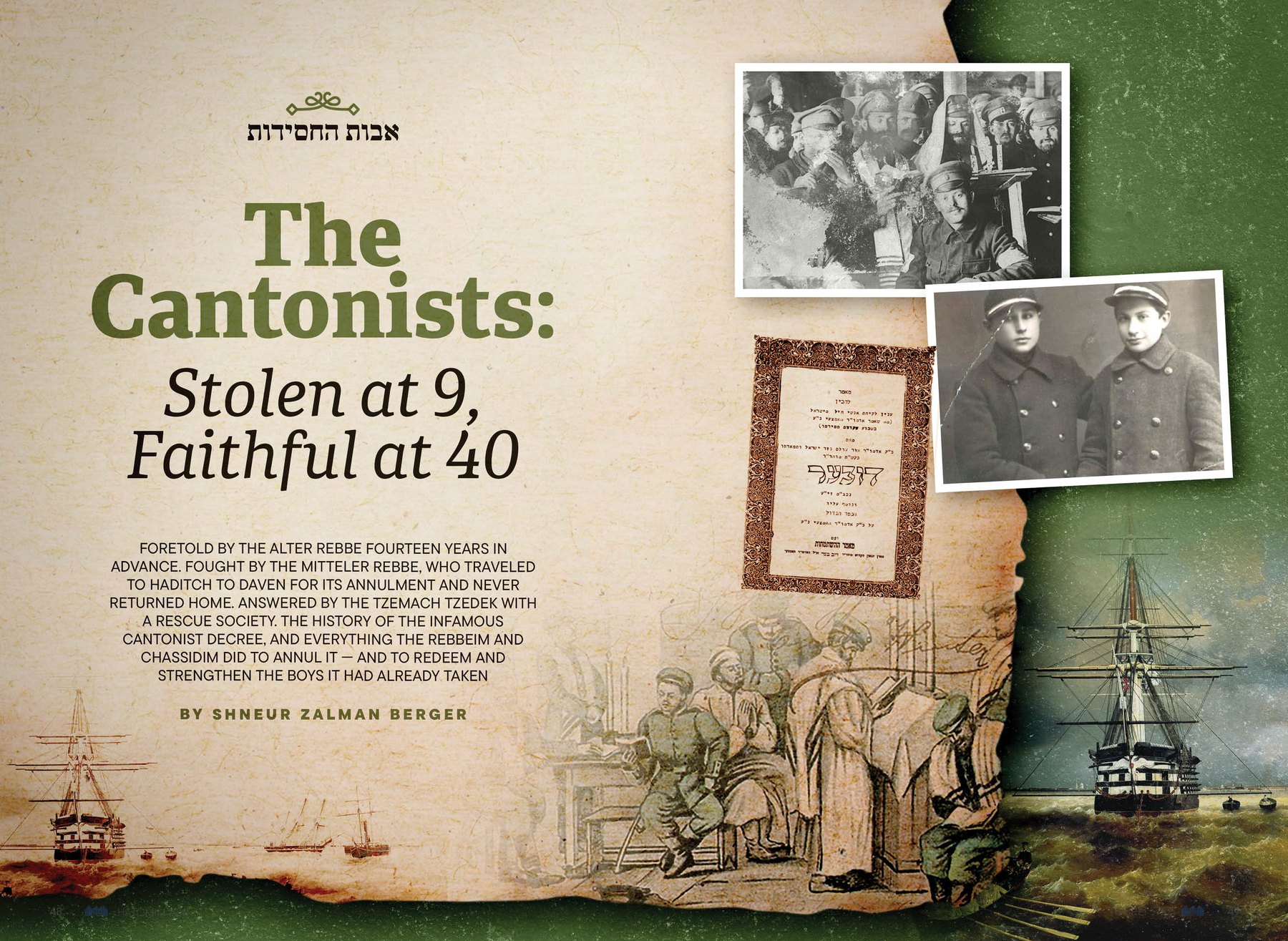
Foretold by the Alter Rebbe fourteen years in advance. Fought by the Mitteler Rebbe, who traveled to Haditch to daven for its annulment and never returned home. Answered by the Tzemach Tzedek with a rescue society. The history of the infamous Cantonist decree, and everything the Rebbeim and Chassidim did to annul it – and to redeem and strengthen the boys it had already taken.
200 years have passed since the Cantonist decree promulgated by Czar Nicholas I, a tyrannical ruler known as the “Iron Czar.” Nicholas was known as an autocratic ruler. He forcefully suppressed any call for liberalism or reform within the empire. He believed that absolute rule was the best form of government, and from this he concluded that “re-education” of the Jews was necessary.
About thirty years earlier, the Third Partition of Poland had taken place, and millions of Jews were annexed to the territory of the Russian Empire. Following this, a law was passed allowing them to receive exemption from compulsory conscription in exchange for a tax payment. The Jewish population was one of the few populations in the empire that enjoyed this privilege. This arrangement passed easily since the army itself opposed conscripting them anyway, believing that young Jewish men were unfit to serve as soldiers.
The situation changed in 5587 (1827), when Czar Nicholas I, a devoted militarist, decided to cancel the exemption for the Jewish people except for notables such as rabbanim, wealthy merchants, and community heads. His motives were to strengthen equality among his subjects and his desire to assimilate the Jews among the Russian population. He also expected that the young conscripts would become economically useful after completing their military service.
In addition, his hatred for the Jewish people played a role, as he sought to convert the young Jews to Christianity and educate them to be loyal to the rule of the Russian Czar.
Upon the publication of the initiative and the beginning of the conscription plan, spiritual leaders, along with Jewish community activists, were called upon to fight fiercely against the terrible decree that had descended upon them. Rabbanim and askanim everywhere worked, both in Russia and in other countries around the world, in various ways to nullify the evil decree.
Rabbanim everywhere treated the decree with great severity. In many communities, the rabbis instructed community members to save 75 percent of their expenses, in order to send funds to the central fund of those working to annul the decree, for the purpose of paying bribes and gifts.
After great efforts, 200,000 rubles were collected for this fund, an enormous sum, and most of it was transferred to Senator Novosiltsev, who was responsible for the legislation.
The efforts bore no fruit. Czar Nicholas was intent on his goal and he bypassed the accepted legislative system, deciding unprecedentedly to intervene personally and issue the terrible order to conscript the youths against their will.
According to the government order, the duty of conscription fell upon the leadership of the Jewish communities in the settlements, and they were required to conscript the Jewish boys and send the quota set for that community to the Russian army.
Since the Jewish parents opposed sending their sons to the army and hid them during conscription periods, the community leaders were forced to abduct Jewish children in order to fill the conscription quota. For this purpose, the community hired people from within the community (called “chappers”—“catchers”) whose job was to kidnap children and hand them over to the Russian army. When the kidnappers failed to lay their hands on young boys designated for conscription, they would kidnap and hand over to the authorities even children under 12, declaring that they were older.
These men raided Jewish homes and hiding places known to them and kidnapped young boys from there. Some were kidnapped while innocently walking in the street and their families never had the chance to say goodbye to them.
The kidnapped children were transferred to some building in the city or town for a waiting period until the quota was filled and their transport to the army camps was organized.
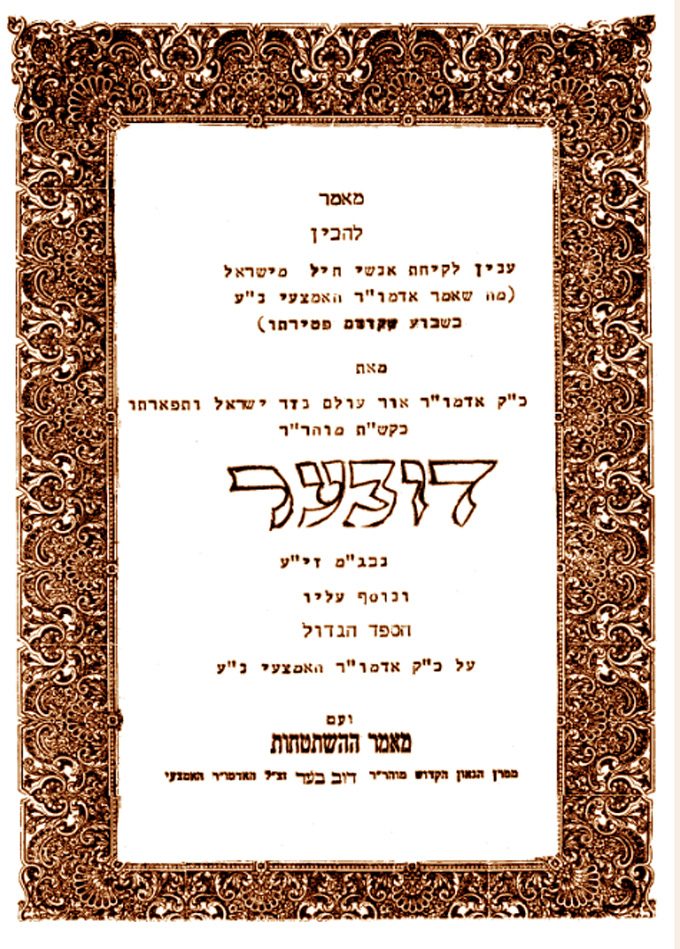
Every kidnapping became a terrible tragedy. Wails and screams of family members, as well as of the boys themselves, pierced the air. Often, parents and family members accompanied the kidnappers with their abducted child all the way to the building where they were held. Every single day, family members came to the place of detention, crying and weeping without respite, but to no avail. On the day the children were taken out en masse, all the families came to accompany the convoy of the abducted. And the cry of the Jewish families rose to the heavens.
Initially it was determined that the boys’ age would be 12 and up, but eventually the age was lowered even further (see sidebar). The decree set the term of service for the Cantonist soldiers until they reached the age of 43.
From the very beginning, the abducted children were sent for “re-education” to Christian villagers who were instructed “to re-educate them.” In these homes they suffered hardships and were forced to work on Shabbos and eat non-kosher food. Their tender souls could not bear all of this.
As if that were not enough, these young boys were conscripted for a period of 30 long years while army commanders made sure to completely sever them from the Jewish communities or their families.
Mesirus Nefesh of Children
Initially, the conscripted children were not required to convert and they were even promised that they would be allowed to observe their faith. However, beginning in 1843, army commanders began processes of forcing the Cantonists to convert. Many of the children refused adamantly, and the order given was to force them even if it involved severe cruelty, such as submersion in river water or being tied inside a sack. Sadistic actions were taken against the boys. Some managed to withstand the scheme, but many could not endure the cruel torture and converted under duress.
Those who still refused to convert despite all the harsh torture suffered a campaign of abuse from their commanders. At the same time, the commanders offered financial bonuses to those who agreed to convert.
A Heavenly Revelation Before the Histalkus
The terrible decree began already in the days of the Mitteler Rebbe, but the one who led the main struggle against the terrible decree was the Tzemach Tzedek.
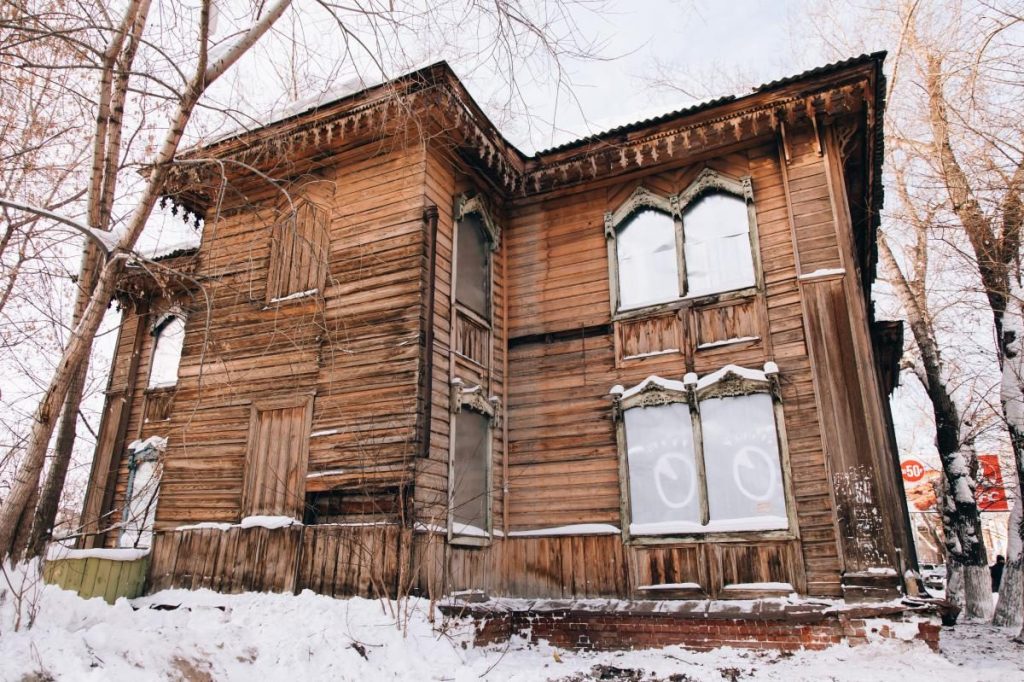
In fact, the Alter Rebbe had already prophesied this decree some fourteen years before it was issued. In a letter the Alter Rebbe sent to Rabbi Moshe Meizlish during the Napoleonic War, he hinted at this with a harsh prophecy: “And this shall be a sign for you, that within a short time the delight of your eyes shall be taken,” hinting here at his own passing, and immediately afterward he added: “and they will begin to take soldiers from among our acheinu Bnei Yisrael.”
The decree went into effect toward the end of the Mitteler Rebbe’s nesius. In the days when they began forcibly conscripting boys, the Mitteler Rebbe traveled to the tziyun of his father, the Alter Rebbe, in Haditch, where he prayed for the annulment of the decree. On his way back to Lubavitch, he fell ill and stayed in the city of Niezhin.
A truly awe-inspiring, trembling sight occurred about a week before his passing. The doctors who examined him saw him lying lifeless and wondered how he was even alive. One of them, a perceptive man, said that if he were permitted to speak words of Chassidus, he would immediately rise with new chayus…
And indeed, as soon as the doctors permitted it, he rose with a burning face and asked that a place be arranged for him to sit. The Chassidim gathered until the house was completely full. “Now I will tell you news I have never revealed before,” said the Rebbe—but then, as if by some maaseh satan, an incident occurred that disrupted everything. The hat of one of the Chassidim standing near the Mitteler Rebbe suddenly fell upon the Rebbe. At that very moment, the Rebbe stopped speaking words of Chassidus, seeing in this a sign that Heaven did not want him to reveal what he had intended to reveal…
The Rebbe therefore stopped the maamar he had wanted to say, and began instead to speak about the fact that that very week they had begun taking soldiers from among the Jews for the army.
“I knew this seven years earlier, when I was at the grave of my father [the Alter Rebbe]. I saw then a great accusation against the youths who are ‘haters of Israel’ [a euphemism referring to the Jewish people], and my spirit was broken within me. I understood and knew that this would certainly come to pass. Later, at the time of my daughter’s wedding, many people gathered around me—elders and youths, learned and understanding—to hear words of Chassidus, and I rejoiced with them with very great joy until the light of morning. I thought then that the decree had been annulled.
“Afterward, when I went to rest a little, my father [the Alter Rebbe] came to me and said: ‘Why are you rejoicing over these young people who have gathered around you? Did you not know of the accusation that is growing stronger?’ Immediately my spirit broke within me, [knowing] that he certainly meant the taking Bnei Yisrael as soldiers.”
The Mitteler Rebbe suddenly closed his eyes in deep concentration and began to say a Chassidic maamar that opened with the words, “To understand the matter of taking soldiers from Israel by the hand of gentiles.” In this maamar, the Mitteler Rebbe explained that when there is such a decree and nevertheless a Jew manages to perform a mitzva with mesirus nefesh, this brings about tremendous nachas ruach from the fulfillment of that mitzva.
The “Resurrection of the Dead” Society Springs into Action
As mentioned, the Mitteler Rebbe passed away shortly after the beginning of the decree, and the spiritual as well as material burden of the struggle fell upon the shoulders of the Tzemach Tzedek.
As a leader standing at the burning front line, the Tzemach Tzedek stepped forward to lead the campaign, whether through spiritual or practical means, to annul the terrible decree, or at least to reduce the scope of the conscription. He even spoke sharply about Czar Nicholas I, calling him “a kelipa that forgot it was created.”
The Tzemach Tzedek established a committee called “Chevras Techiyas HaMeisim” (“Society for the Resurrection of the Dead”), which worked to reduce conscription quotas as well as to free children who had already been kidnapped, through bribery. The society also worked to free children by registering them in army records as having died.
Among those involved in rescuing the kidnapped children was Rabbi Chaim Yehoshua of Kalisk, a merchant in the city of Kazan, who managed to befriend the local officials. For eight years he worked to rescue children and succeeded in redeeming hundreds of Jewish children, until they managed to track him down through a Jewish merchant who posed as his friend. In this way they managed to incriminate him, and he was thrown behind bars.
In addition, the society worked to send shluchim to places where the kidnapped children were gathered, in order to encourage and strengthen them to remain faithful to the observance of Torah and mitzvos. The fact that the army commanders did everything to sever the boys from their communities and families made this encouragement all the more like dew of life sprinkled upon the children.
Over the years, as conditions for the Cantonists eased somewhat, some soldiers managed to reach Lubavitch and be received for yechidus with the Tzemach Tzedek. The Rebbe, for his part, encouraged and strengthened them, and blessed many of them with long life and years.
Throughout those years, halachic questions concerning the sensitive situation of the Cantonists were brought before the Rebbe, and in this area too he sprang into action to provide halachic answers to remove doubts. In the responsa of the Tzemach Tzedek, several questions relating to these matters are discussed, but the answers were written in hints and codes out of fear of Russian censorship.
The authorities, to put it mildly, did not like the Tzemach Tzedek’s activity on behalf of the soldiers. Because of this, they made sure to station a senior government official in the town of Lubavitch whose purpose was to monitor the Rebbe’s activities.
In 5602 (1842), the Rebbe’s activities came to the attention of the governor of the Vitebsk district, and together with the aforementioned official they consulted with each other and decided to bring him to a conference of rabbis in S. Petersburg in order to trap him in his own words, making it easier for them to brand him a rebel against the king and remove him.
The Cantonists Jumped Into the River
The Rabbinical Conference held in S. Petersburg took place in 5603 (1843), and was convened by the Russian Minister of Education and the Minister of the Interior. Leaders from all streams of Judaism were invited to the conference with the intent of forcing all participants in the assembly to sign their agreement to substantial changes in laws concerning the Jewish people, such as an absolute prohibition on the study of Chassidus, imposing a requirement for Jewish children to study general subjects according to a government curriculum, and more.
Not many rabbis were invited to the conference, only one representative rabbi from each stream of Russian Jewry: the Tzemach Tzedek from the Chassidic stream; Rabbi Yitzchok of Volozhin from the Lithuanian stream; Mr. Betzalel Stern, a school principal in Odessa representing the Maskilim; and Mr. Israel Halperin, representing the merchants. Participation in the conference was not optional but mandatory.
During the conference, the Ministers of the Interior and of Education attempted to make changes to the Jewish religion according to the demands of the Maskilim. They did not shy away from any means to carry out their scheme, despite the protests of the gedolei Yisrael.
Beneath the surface, the authorities schemed to keep the Rebbe in S. Petersburg permanently, so that he would be far from the important Jewish communities, in order to limit or perhaps even prevent his influence on Jews throughout Russia. However, it was precisely the Cantonists who caused the authorities to order him to leave the city immediately.
And here is what happened:
At that time, a large group of Cantonists was stationed at the naval base camp in Kronstadt, near St. Petersburg. When they heard of the Rebbe’s arrival in S. Petersburg, they approached their commanders with a request to be allowed to invite the Rebbe to speak before them.
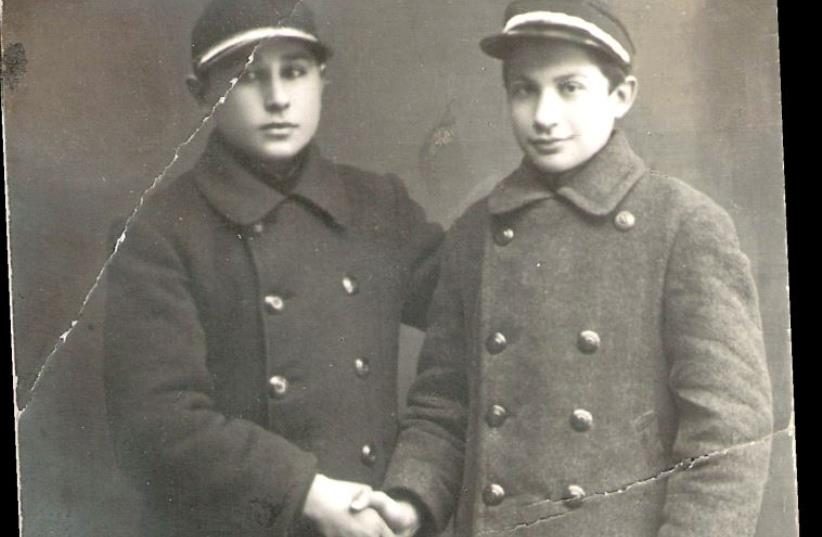
The commanders forwarded the request to the Minister of War, who, for some reason, decided to approve it. He passed the request on to the civil authorities, who also agreed to grant it, believing that the great honor the Rebbe would receive on that occasion would “buy him off” into doing as they wished…
The Rebbe, who never missed an opportunity to strengthen the Cantonists, immediately replied that he was willing to fulfill the soldiers’ request on any weekday to be set for it. The permits were arranged, preparations were made, and on one of the first days of the month of Menachem Av 5603, the Tzemach Tzedek arrived, accompanied by about fifty Chabad Chassidim, at the army camp in Kronstadt.
Since it was close to the month of Elul, the Rebbe took the opportunity to speak to the soldiers about the theme of teshuva. He quoted teachings of Chazal from the Medrash on Eichah and explained it to them in Yiddish, emphasizing the self-sacrifice of the Jewish people for their faith and Torah. He also encouraged them with words of inspiration and strength for the observance of mitzvos, and concluded by saying that it is every person’s duty to pray for the peace of their homeland and its leaders.
The Cantonists were deeply moved by these special words and were strengthened by them. Only a few weeks passed before they requested that the Rebbe come to them a second time. This time, Cantonists from other locations joined the request as well, and the army authorities agreed to this request too.
Meanwhile, a high-ranking government official came to the Rebbe’s residence and told him that his appearance before the Cantonists had caused a great scandal in the army, and that from then on, the government ministers were “keeping an eye” on his actions. The warning was transparent. Nevertheless, the official informed the Rebbe, when the Cantonists arrived, they would gather in the square inside the Peter and Paul Fortress [the very place where the Alter Rebbe had once been imprisoned], and there he would speak to them.
Indeed, at the beginning of the month of Elul, about six hundred Cantonist soldiers gathered at the fortress in a moving assembly. They came dressed in their pressed uniforms, polished shoes, and military caps on their heads. The Rebbe delivered a maamar Chassidus in a style they understood well, and it aroused tremendous emotion in them. Many of them, considered tough soldiers, wept upon hearing the words.
The Rebbe concluded his words with the following moving statement: “When the question arises of conversion, chalila, every Jew must give up his very life, and even when the Czar himself commands conversion, one must be moser nefesh and not obey him!”
Given the warning the Rebbe had received, these words were extremely harsh, essentially directed against the king and the monarchy itself. Yet the Rebbe did not flinch!
When the Rebbe finished, fifteen men stepped forward from the crowd and said in a bitter voice: “Rebbe, we are beaten and afflicted Jews. We cannot learn and we know nothing. We cling only to faith, and know only the words of the weekday, Shabbos, and Yom Tov tefillos, the Birkas HaMazon, and a few chapters of Tehillim.”
The Rebbe looked warmly at the hundreds of soldiers standing before him and said:
“A Jew who believes in the blessed G-d, Creator of the world Who watches over His creatures, Who gave us Torah and mitzvos, and who prays, blesses, and recites the words of the tefillos and chapters of Tehillim, is truly a strong and healthy Jew. Be healthy in body and soul, and may the blessed G-d return you healthy to your homes.”
When he finished speaking and wished to return to his lodgings, dozens of soldiers asked their commanders for permission to accompany the Rebbe, and they were granted it. The soldiers felt a sense of closeness to the Rebbe and wanted to warm themselves a little more by his great light. Thus arose the remarkable scene of the Rebbe walking from the fortress courtyard to his lodging, deeply moved, accompanied by dozens of Jewish soldiers who had been kidnapped from their homes as tender children and forced to serve for long years in the Czar’s army.
In the evening, several distinguished Chassidim gathered to visit him and hear his impressions of the soldiers, who, even after decades of service in the Czar’s army, had not extinguished the Jewish spark in their hearts.
The Tzemach Tzedek began and said: “The Cantonist decree is similar to the war of the Greeks, which was also a spiritual war. It is impossible to fathom the preciousness and importance of the tefillos and Tehillim that they recite, whose level is immeasurably higher than those who pray according to the kabbalistic intentions of the Arizal. Their avoda is done with mesirus nefesh and simple faith, without any admixture of intellectual considerations.
“When Moshiach Tzidkeinu comes, he will take special delight in these Jews, baalei mesirus nefesh. The greatest scholars, like Rambam, who attained emuna through intellectual comprehension, will be amazed at how these simple Jews attained such elevated spiritual powers.”
The Rebbe’s tremendous influence over the Cantonists led the authorities to the conclusion that they must prevent his influence on the soldiers. Because of this, they informed the Rebbe that he must leave S. Petersburg within a few days and return to distant Lubavitch…
Five years later, the Russian Czar visited the naval base at Kronstadt. During that visit, Cantonist soldiers who had heard the Rebbe’s words at the time were presented before the Czar, and they demonstrated their military skills before him. When the Czar asked for their names, their commander began listing them, all distinctly Jewish names. The Czar’s face flushed with anger. He realized that his outstanding soldiers were Jews who had preserved their Jewish identity, including their Jewish names. He ordered the soldiers to convert immediately.
Several of them approached the Czar and said: “Our lord the king, may his glory be exalted! About five years ago, the Rebbe of Lubavitch visited us, and he told us that it is forbidden to convert, even if the Czar himself commands us to do so. The Rebbe told us to give up our lives if we are forced to convert!”
The Czar did not have time to react, and before his astonished eyes, the Jewish soldiers leapt into the river flowing nearby, and drowned …
The Survivor, Father of the Wilschansky Family
Every child who was abducted and forced into military conscription represents an entire world, he and his offspring, and his offspring’s offspring, forever. One need only look, as a single example among many, at the distinguished Wilschansky family, which includes roshei yeshiva, shluchim, and askanim, all descendants of one of the Cantonists who was abducted.
Rabbi Betzalel Wilschansky a’h (grandfather of Rabbi Yosef Yitzchok a’h), told the story:
“When my grandfather was a small child, he was seized along with the other Cantonists. They were all placed in a small, dark room that no light entered. His mother, who was short in stature, dressed herself in an extra layer of clothing and went to the authorities in tears. She said she wished to say goodbye to her son before he was taken away for decades.
“The official’s heart was moved with compassion for her, and he allowed her to enter the room where the children were being held against their will. She went inside and dressed her son in the girl’s clothing she had been wearing, wrapping his head in a kerchief. Since he had no trace of a beard yet, he left with her while it was still dark outside. He looked like a girl, and the guards did not recognize him as one of the abducted children. In this way she managed to smuggle him away from the cruel fate awaiting him in the Russian army.
“Without delay, she traveled immediately to the Tzemach Tzedek, and asked his advice on how to escape further. The Rebbe instructed that they travel with him to the end of the Dnieper River, and they indeed traveled to Kherson (located near where the Dnieper flows into the Black Sea). He stayed at the home of a relative, and remained there until his marriage.”
The child who was saved grew up and married, and a son was born to him, Rafael Wilschansky, who later became one of the prominent Chabad Chassidim in Kherson, the great-grandfather of the Wilschansky family.
Another son who was saved from the fate of the abducted children was Moshe Leib Laine, head of a large Chassidic family. He was born around the year 5585 (1825) in the town of Beshenkovich. His family name was later changed as a result of the Cantonist decree.
The law stipulated that an only son to his parents, as well as in certain other exceptional cases, would be exempt from army conscription. There were Jews who managed to register their son as belonging to a different family in order to obtain an exemption.
During the abduction campaign, the child Moshe Leib was also seized by force, but his family members claimed to the officials that the child was not a biological son but an adopted one, and as proof of this they presented a document showing that his family name was “Laine” and not “Chein” [the document was altered as follows: the Russian letter “Ch” (Х) looks like this: X. Whoever was responsible for the forgery erased the upper tips of the letter, making it look like the Russian letter “L”: Λ, and thus his family name was changed from “Chein” to “Laine”].
The officials accepted the claim, and little Moshe Leib was released to go on his way; from then on, his family name remained “Laine.” Later, his son Chaim Dovid Laine asked the Rebbe Maharash whether it would be worthwhile to restore the original family name to “Chein,” a name attributed to greater sanctity, going back centuries. The Rebbe Maharash replied: On the contrary, since a miracle had been performed for his father through the change of name to “Laine,” they should continue to hold onto it as their family name forever.
‘A King Who Puts to Death’ and the Decree Was Annulled
For nearly thirty years, this terrible decree persisted, casting a heavy shadow over the lives of Russian Jews. Throughout this entire period, the Tzemach Tzedek worked in every possible way to have the decree annulled and to support all efforts, whether in evading conscription or in helping soldiers who had already been conscripted.
The decree continued until shortly after the death of the Czar. Regarding the death of Czar Nicholas I, who initiated and carried out the Cantonist decree, the following is told:
In the month of Adar 5615 (1855), the well-known Chassidim Rabbi Hillel of Paritch and Rabbi Peretz Chein had yechidus with the Rebbe, the Tzemach Tzedek. R’ Hillel told the Rebbe that in that particular year, three conscription dates had been set, unlike other years in which there were only two. R’ Peretz interjected, saying, “We have a Rebbe [who can help].” They remained in the Rebbe’s room as he stood to daven Maariv and when he reached the words “a King who puts to death,” he said them aloud.
A short time later, they heard the ringing of bells coming from the nearby streets, and they understood that something unusual had happened.
The Rebbe asked several times: “What is heard in the street?” Later they heard that Czar Nicholas I had been killed.
In the summer of 5616 (1856), his successor, Czar Alexander, announced the annulment of the decree. Nevertheless, those who had already been conscripted continued to serve until the end of their allotted term. But even then, the Tzemach Tzedek continued to work on behalf of these soldiers. After his passing in 5626 (1866), his son and successor, the Rebbe Maharash, continued the work on behalf of the Cantonists.
Czar Nicholas I’s main goal had been the “re-education” of Russian Jewry, but this did not produce the results he had hoped for. On the contrary, the decree only stirred up Jewish resistance against the Russian government.
Shuls of the Soldiers
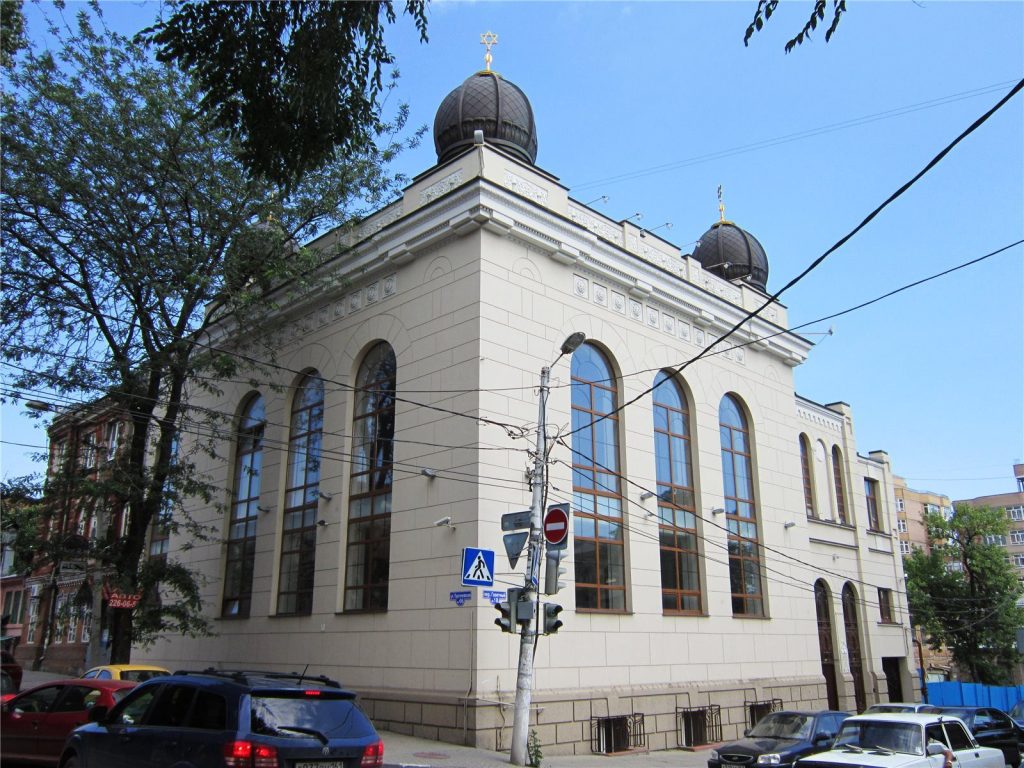
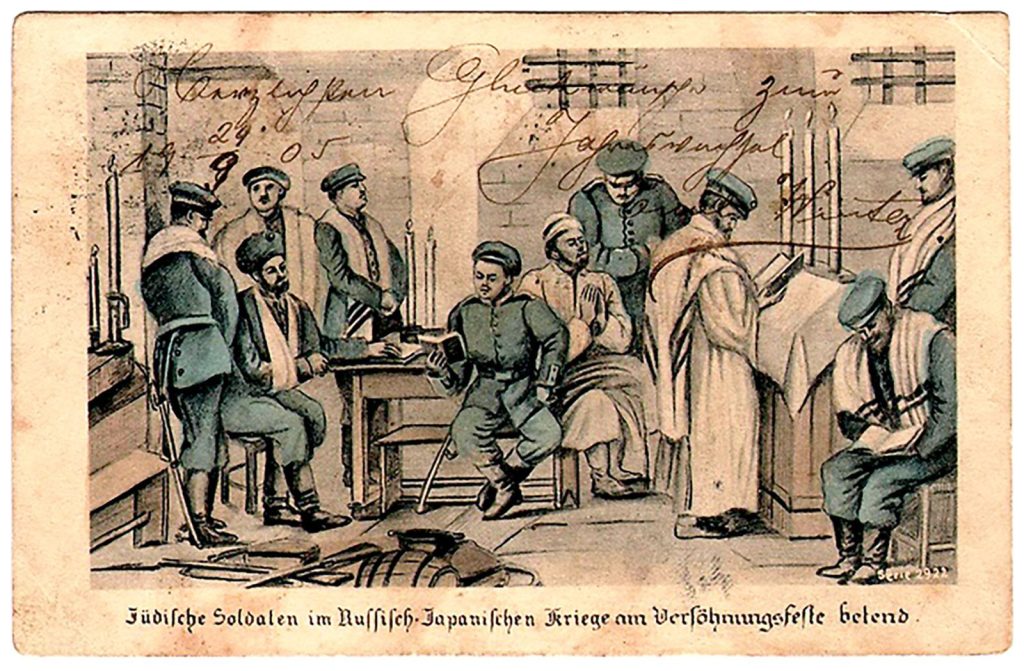
The Russian authorities granted special rights to Cantonist soldiers who had completed their military service. This allowed them to live in the large cities where Jews were otherwise forbidden to reside. Thanks to this, communities of discharged Cantonists developed in Russia’s large, central cities. In several places, they even built magnificent shuls for themselves.
The Rebbe Maharash worked in unique ways to strengthen the communities of discharged Cantonists. Over the years, Chabad minyanim also developed within these shuls. Just recently, the authorities in the city of Tomsk informed the Jewish community, headed by the shliach, Rabbi Levi Kaminetzky, that the authorities would take care of restoring and renovating the local shul that had been established by the Cantonists.
Sources: Igros Admor HaZaken, Beis Rebbi, Toldos Admor HaEmtza’i, Toldos Admor HaTzemach Tzedek, Likutei Sippurim, Chasdei Yisrael, Toldos Chabad B’Petersburg.
Even Today There Are Cantonists
The Rebbe MH’M related in a farbrengen on 13 Nissan 5745, about the influence of the Rebbe, the Tzemach Tzedek not only on the Cantonists themselves, but even on the Russian government of that time:
Although all the affairs of the Tzemach Tzedek are eternal and contain lessons for every single Jew until the end of all generations, nevertheless, there is a special significance to the story of the Tzemach Tzedek’s influence in the matter of education. And within this itself, as mentioned, it is a story that contains something novel and exceptional even compared to other Nesiim.
In the days of the Tzemach Tzedek, the government issued the “Cantonist decree.” They seized young children from their parents and conscripted them into military service for 25 years or more, with the intention of thereby completely severing them from Jewish life.
These Jewish soldiers, even though they received no Jewish education and for many years were distanced and cut off from anything related to Torah study and mitzva observance, had tremendous mesirus nefesh to remain faithful to the Jewish religion, and even during their military service managed to arrange various religious matters.
The early Chassidim related (some of it heard directly from the Rebbe Nasi Doreinu) that during the Tzemach Tzedek’s stay in Petersburg (the capital city in those days) at the well-known assembly of rabbis, a company of Jewish soldiers stationed in the city of Kronstadt (a fortress city near Petersburg) learned of this, and they approached their commanders with a request to be permitted to invite the Tzemach Tzedek to address them.
The army commander granted the soldiers’ request and sent to ask the Tzemach Tzedek to fulfill it, and of course the Tzemach Tzedek agreed. The Tzemach Tzedek visited them and delivered a maamar before them. [It may be suggested that the maamar he said to them at that time is the very Yiddish maamar of the Tzemach Tzedek (beginning with the words “Machisi” and “Shema Yisrael”) that we still have today.]
In this story we see the Tzemach Tzedek’s “authority” over that country, despite it being a mighty state and one that oppressed the Jewish people, far more than other countries, in a manner for which we find no parallel even with the Alter Rebbe or the Mitteler Rebbe.
With the Tzemach Tzedek, the order was reversed: the Tzemach Tzedek did not have to petition the military commanders for permission to visit the Jewish soldiers; rather, the opposite. The military commanders came to him with a proposal and request that he visit the Jewish soldiers and address them.
In other words, not only was there no persecution on the part of the government against the saying of Chassidus, but on the contrary, the government itself took an active interest in the spreading of Chassidus, and this specifically among soldiers under its own command, under military discipline and obedience, which is far more strict than the kabbolas ol found in civilian life.
Furthermore, through the delivery of this maamar, this teaching was revealed in this lowly physical world in an open manner that endures until the end of all generations, for this maamar is still studied to this very day.
And all of this was accomplished in a manner of freedom, at least relative to the standing and condition that prevailed in those days (and certainly relative to the situation faced by the Alter Rebbe and the Mitteler Rebbe).
* * *
Indeed, we live in lands of comfort and live amid prosperity and nevertheless, there are Jews who, for various reasons, find themselves in the condition of “Cantonists” r’l, with regard to their Yiddishkeit, enslaved to their evil inclination.
And in fact, their situation is far worse since, in their own view, they are “free,” while in truth they are “Cantonists”… How great is the enslavement when “servitude is dressed up as freedom”!
And from this, the lesson from the above story of the Tzemach Tzedek is:
We must know that even these “Cantonists,” from the inner depths of their souls, “request” that someone come and explain to them matters of Torah and Yiddishkeit… for this is the essential nature of a Jew, and because of this, regardless of his outward conduct and visible condition, he is a fitting vessel for the loftiest matters of Torah.
A Wondrous Dream and a Moving Yechidus
One of the elderly Jewish residents of Moscow was Reb Yitzchok Lebedov who, as a child, had been a Cantonist and endured harsh torments because of his faith in Hashem.
At the mere age of nine, he was torn from his parents’ home in Polotsk, in the Vitebsk region, and brought to the Cantonist camp in Smolensk. The journey by which he, along with dozens of his companions, was transported from Smolensk to Vladimir took an entire year. For ten years, he and dozens of his companions were tortured with the harshest afflictions in order to force them to convert. About half of the children could not endure it and died. He survived.
After his release from the army, decades later, he arrived in Moscow and found Jews from his hometown of Polotsk and from Vitebsk. He began learning to read and understand Lashon HaKodesh and after about a year he was able to understand a passuk of Chumash on his own.
In time, a Chassid of the Tzemach Tzedek, Reb Nosson the Melamed, came to the city. He was a warm-hearted Jew who was accustomed to davening at length, and who found favor in the eyes of the community in Moscow through his classes in Chassidus and his chassidic melodies.
Many years later, in the year 5657 (1897), during a Chassidishe farbrengen in Moscow, Reb Yitzchok related his remarkable story to those present: “Reb Nosson showed special affection toward the Cantonists, and he would tell us stories from the Gemara and the Medrash, which we greatly enjoyed. Reb Nosson knew my father, Reb Shlomo the Pot-maker, who knew all six Sedarim of the Mishna by heart and who would recite Mishnayos while standing in the marketplace with his pots. He likewise knew my grandfather, Reb Chaim Elya the Baker, who was a Chassid of the Alter Rebbe. Once, Reb Nosson said to me: ‘Listen, Itche! It is such a great pity for the souls of your father and grandfather—they were great scholars and Chassidim, and you are an am ha’aretz (ignoramus)!’
“These words touched my heart deeply, and I wept greatly. When I came home, I took a Tehillim and throughout the entire night I recited Tehillim with a broken heart and copious tears. Toward morning I fell asleep and saw my father in a dream, saying to me: ‘Go to the Rebbe, and it will be good for you; Itche, go to the Rebbe!’
“When I told this to Reb Nosson, he told me not to tell anyone, and to hasten to fulfill my father’s words. A few weeks later I set out for Lubavitch to the Rebbe and I told him everything, that I had been a Cantonist and that we had been subjected to many torments. Upon hearing this, the Rebbe sighed and his eyes filled with tears.
“‘I knew your grandfather Chaim Elya the Baker and your father Shlomo the Pot-maker well,’ said the Rebbe. ‘Both of them were great Chassidim. May Hashem help you become a Chassid as well. Study each day the daily portion of Chumash with Rashi, and also the Kav HaYashar, and recite Tehillim with the Maamados.’ And the Rebbe blessed me with length of days.
“When I told Reb Nosson what the Rebbe had said, he instructed me that no one should know of it. And from then on he began to teach me Chassidus.”
(From the book “Lubavitch, Ha’Ayara shel Chabad”)
HaTomim #20 • pp. 48-63
© 2026 Beis Moshiach Magazine. All rights reserved.
This article originally appeared in Beis Moshiach #1522. You are welcome to share it with friends and family by email or in print, provided that you do not change, add to or omit any part of it, you credit the author and Beis Moshiach, and you include a link to archive.bmoshiach.org (written out in full in printed copies).
To republish this article in a newspaper, magazine, book or website, please request permission in advance at [email protected].