Sweeter Than Honey
Our reporter wore gloves and protective goggles to harvest honey from a bee hive. Stung by angry bees and holding sweet honey, he came back to tell us about this sweet liquid and about the industrious workers who manufacture it.
Out of the Strong Came Something Sweet
You dipped the apple in honey, twisted the sticky fluid around, said a bracha and then a “Yehi Ratzon” and finally got to it. Tens of thousands of hardworking creatures toiled for that one sweet moment. With their little wings and their persistence they turned the tiny bits of nectar in the wildflowers into sweet honey.
When we hear about honey, we immediately think about Hashem’s promise to the Jewish people that He would bring them to a land “flowing with milk and honey.” In Sefer Bereishis, we learn that Yaakov Avinu sent a gift to Yosef in Mitzrayim that included honey.
Our Chachamim explain that the honey that we read about in pesukim mostly does not refer to bees’ honey but to fruit nectar. Rashi writes “all fruit sweetness is called devash,” and it usually refers to date honey which today is called silan. The honey listed in the seven minim that Eretz Yisrael is blessed with refers to dates.
But at least in one place, the honey the Navi speaks of is bee honey. When Shimshon ripped the lion as one would rip a kid goat, he goes back there later on and discovers bees in the carcass as well as honey. Shimshon made a riddle out of this when he asked the Pelishtim, “Out of the eater came food; out of the strong came something sweet,” and they couldn’t figure out what he meant.
Chazal explain that although the rule “what comes out of something impure is impure,” and materials made by non-kosher animals cannot be eaten, honey is permissible because it doesn’t come out of the body of the bee. The bee just collects the nectar from flowers. “Why did they say that bee honey is permissible, because they put it into their bodies and don’t excrete it from their bodies.”
ALWAYS SWEET
As we have seen, bees’ honey was known to man thousands of years ago. Honey was the only ingredient used for sweetening food because sugar was discovered later, just a few hundred years ago. In Britain, for example, honey was so widespread that when Canaanite sailors went there, they called it “the Island of Honey.”
Honey lasts for many years when it’s well sealed. About 150 years ago, archaeologists in Egypt found a large jar of honey and the taste was excellent despite it being thousands of years old.
When Spain conquered Central America, they found that the local Indians knew of honey.
Many medicinal qualities are attributed to honey. In many ancient remedies, honey is an important ingredient. Our Chachamim say, “One who is overcome with ‘bulmus’ (a ravenous hunger that is life threatening) should be fed honey and all sorts of sweets, for honey illuminates the light of a person’s eyes.” On the other hand, one should be careful not to eat too much honey, as Shlomo HaMelech warned in Mishlei, “If you have found honey, eat enough for you, lest you become sated with it and vomit it.” It’s never a good idea to overdo it with any good thing.
THE BUSY WORKER BEE
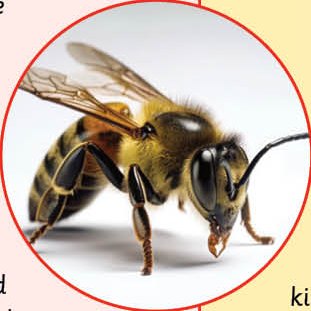
Honeybees prepare food for themselves for the cold season when they cannot find flowers. They love to eat pollen and nectar which contains a high amount of glucose. Fresh nectar is a transparent liquid and its taste and components vary according to the flowers and the seasons and other factors. In Eretz Yisrael, for example, there are100 types of flowers from where bees collect nectar.
For half an hour every day, a bee collects nectar from dozens of flowers, all of the same type. On every trip, the bee brings about 50 milligrams of nectar (less than 2/1000th of an ounce).
Bees have a keen sense of direction. They know how to return to the place where the flowers that suit them are located, and they even know how to tell their fellow bees where it is by doing a special dance.
A bee sucks on the nectar through a long tube and it’s collected in a special stomach in its body (called a honey stomach or a crop), where it is digested and becomes the honey familiar to us. The honey has a special role in the hive. The bees feed the the honey to the larvae, so they grow up to become bees.

When the bee reaches the hive, it puts the honey into a cell of the honeycomb, a special structure made of wax which the bees make to store honey and pollen and raise their young.
The honey needs to go through a drying process. A worker bee holds drops of nectar in its mouth which dries in the open air and turns from runny nectar to thick honey. At the entrance to every hive are worker bees who fan their wings in order to generate a flow of air into the hive to dry the nectar.
Think about it: to make one kilogram (2.2 pounds) of honey requires the work of over a million bee flights to collect nectar. When the honey is ready and the cell of the comb is full, the bees seal the cell with wax and this preserves it for a long time, to provide food for the hive during times that flowers are more scarce.
HARVEST
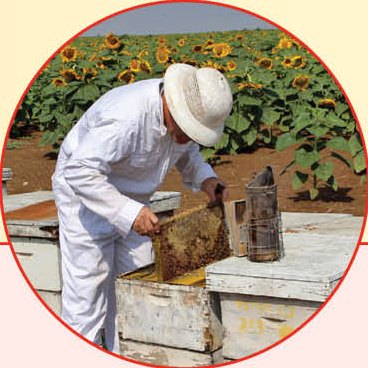
Taking honey from the hive is called harvesting. To do this, you need to get the bees away from the hive which is done mostly by smoke, and then take the honeycomb (in a modern hive it’s in a special drawer) and break it apart with a tool that separates the wax and the honey. The workers who harvest the honey are often stung by angry bees which don’t want to have the food they worked so hard to make taken away.
In order not to harm the bees, some of the honeycomb is put back in the hive with a little bit of honey in it. The bees are then able to repair the damaged combs and manufacture new honey.
It’s best not to heat the honey so the nutritional and health benefits are preserved. Real honey which was not heated will crystallize while honey that was heated will preserve its liquidity.
An average hive produces forty kilograms (about 88 pounds) of honey every year. About a billion tons of honey are produced every year.
Honey is an important sweetener and its medicinal qualities are known. Because of its sweetness, Torah is compared to it, as it says in Tehillim 19, “They are to be desired more than gold, more than much fine gold, and are sweeter than honey and drippings of honeycombs.”
In the Medrash it says that in Yemos HaMoshiach, Hashem will make “rivers, rivers of honey… and all the mountains will drip juice and all the hills [will drip] honey and milk.” Amen, kein yehi ratzon!
RAISING BEES AT HOME
A stinging and somewhat strange hobby is becoming popular, that is, raising bees in one’s yard, or on the porch or roof. It seems that a person can set up a hive at home, buy a colony of bees and enjoy homemade honey without much effort.
TOXIC HONEY?
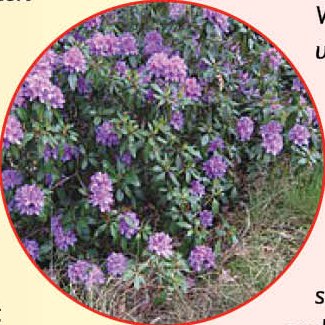
Honey made out of rhododendron flowers can be toxic for humans. The nectar of this flower is not dangerous for bees but is dangerous for animals and people. A person who eats honey made from these flowers can suffer stomach and heart problems and even die!
When the Roman army under the command of Pompey went to war against Pontus, King Mithradates the Sixth laid out trap honeycombs on the roads. The famished Roman soldiers guzzled the honey and became sick.
DON’T STING ME!
A person can be allergic to honey. Touching honey or eating it can cause many unpleasant results. Much more dangerous and more common being allergic to bee stings.
A bee sting hurts but someone who is allergic to it can suffer a severe reaction called anaphylaxis which can be life-threatening. Those sensitive to bee stings carry something they can inject as first aid for this. Today, there is even immunotherapy against bee stings.
SILAN
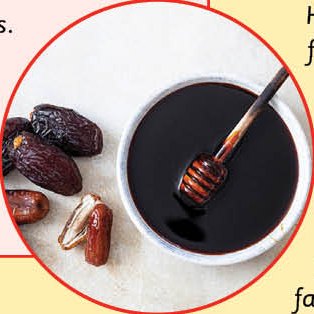
The honey mentioned in the Torah is usually date honey although it’s possible to make honey from many fruits: figs, carobs and grapes. Silan is made by cooking dates and straining them. This makes a liquid, sweet honey.
COLORFUL HONEY
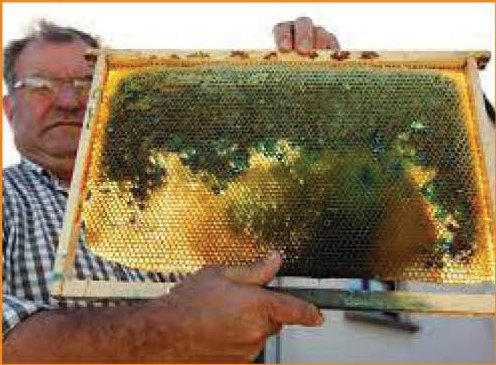
Honey manufacturers from France thought something was wrong with their vision when they found that the honey in the hives was blue and green. After doing research, they discovered that the bees were attracted to the candy coating on the waste containers from a plant that processed waste from an M&M’s factory and were collecting it instead of pollinating flowers. The colors from the candy seeped into the honey.
MANUKA HONEY
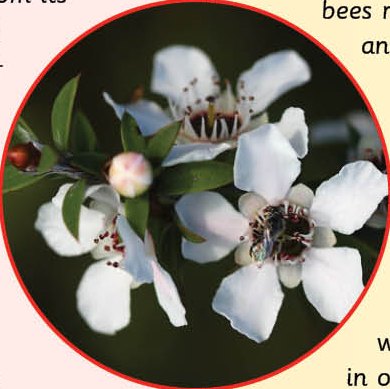
The Manuka tree grows in Australia and New Zealand and the honey produced from its flowers is antibacterial and has antiviral, anti-inflammatory, and antioxidant benefits. Its color is darker than typical honey and it has a strong flavor. In order for Manuka honey to be considered genuine, it has to be labeled by the agricultural board of New Zealand. Since Manuka honey is expensive, there are many fakes. Only 1700 tons of Manuka honey are manufactured but, amazingly, over 10,000 tons are sold every year…
ANCIENT HONEY
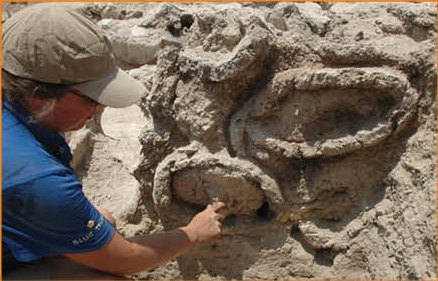
Honey is sometimes found on archaeological digs. At digs in Tel Rechov, which is in the Beit Shaan Valley, an ancient apiary (where bees are kept) was found with three rows of beehives and more than thirty beehives in each row. The hives were made of clay and it is estimated that each hive could produce about five kilograms of honey.
BEE PRODUCTS
In addition to honey, the worker bees in the hive manufacture other useful materials. Out of the wax used to make the honeycombs is produced pure beeswax; the pollen that sticks to the bees’ feet is considered to have medicinal qualities; the propolis which is a mixture of tree sap, wax and saliva can be used as “bee glue,” i.e. a sealant for the hive and as “royal jelly” – special food that the bees use to feed the larvae.
There is a dispute regarding the kashrus of royal jelly and propolis, whether it’s considered like honey and can be eaten or whether it contains parts of the bee.
A HIVE WITH A FAUCET
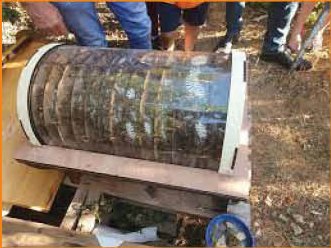
Harvesting honey is a complicated and sometimes painful process. An industrious beekeeper invented a hive that is designed with faucet, called a “flow hive.” When you open the faucet, fresh honey flows. The hive has an artificial honeycomb made of plastic and the movement of the faucet presses on the cells which push the honey out.
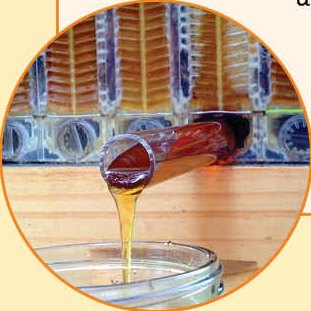
This reminds us of the rocks in Mitzrayim from where the Jewish babies sucked honey and oil as told in Gemara Sota on the pasuk in Devarim, “And He would suckle them with honey from a crag and oil from a flinty rock.”
THE HONEY BADGER
It’s not only people who like honey; many animals are crazy for this sweet liquid and they try any way they can to get it. This is why Hashem gave bees a stinger. On the other hand, certain animals are equipped with thick fur which protects it from bee stings. A honey badger, for example, is a carnivorous animal in Africa and found very rarely in Eretz Yisrael. The honey badger is wild, strong and tough and can rob many hives in a single night.
The bees biggest enemies are wasps, especially the Asian Giant Hornet which kills bees and steals their honey.

SWEET AS HONEY
The minhag is that when a child goes to cheder to learn alef-beis, honey is placed on the letters for him to lick off, so he learns that learning the letters and Torah is sweet.
Salute #1430 • pp. 8-13
© 2026 Beis Moshiach Magazine. All rights reserved.
This article originally appeared in Beis Moshiach #1430. You are welcome to share it with friends and family by email or in print, provided that you do not change, add to or omit any part of it, you credit the author and Beis Moshiach, and you include a link to archive.bmoshiach.org (written out in full in printed copies).
To republish this article in a newspaper, magazine, book or website, please request permission in advance at [email protected].