The Lulav Protection, The Esrog that Saved
From the TzaddikStory.org collection
I love Sukkos! It’s such a special time of year!
But there was a time when Sukkos wasn’t so peaceful.
Have you heard of the Yom Kippur War? It’s called that because it started on Yom Kippur in 5734 (October 1973). Israel has always been surrounded by enemies, and that year, Egypt and Syria had planned a surprise attack.
On Yom Kippur, while most people were davening in shul, Egypt attacked from the south and Syria from the north, at the same time! It was a huge surprise. The soldiers quickly had to leave their shuls, many still fasting, and rush to defend the country.
But the war didn’t end on Yom Kippur. It went on for many days, all the way through Sukkos and a little while after. While families were preparing their sukka and waving the lulav and esrog, many Israeli soldiers were still on the battlefield, fighting to protect the land.
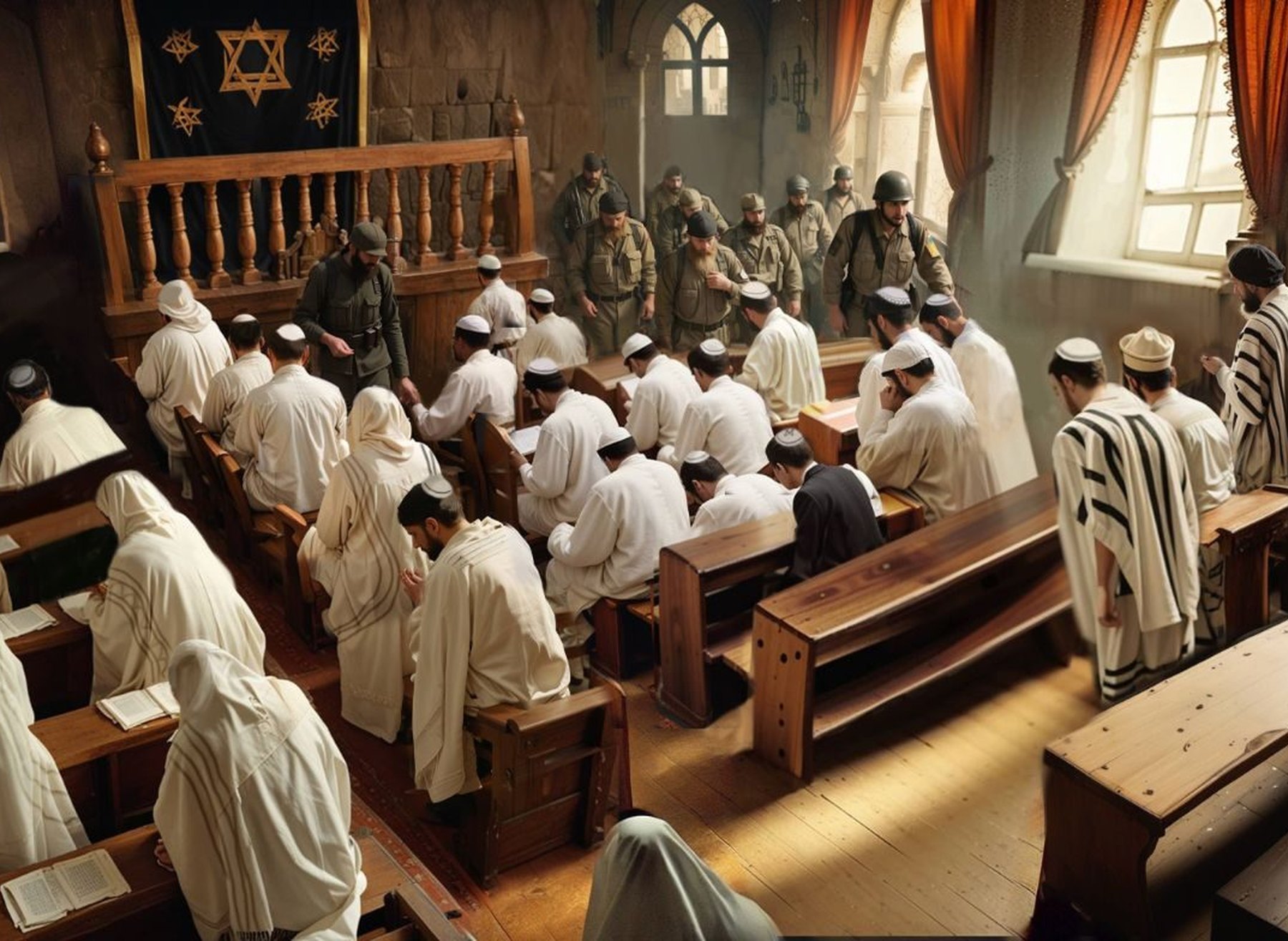
One of those soldiers was Meir Freiman from Kfar Chabad – During davening, Meir, a young husband and father, stood next to his father in shul. Suddenly, Meir noticed something unusual outside. Jeeps with soldiers were pulling up in front of the shul, a mess of green uniforms storming into the quiet shul, right in the middle of Musaf.
The army generals quickly spoke. “We need soldiers – now!” The war had begun! Egypt and Syria had launched their attacks, and the young men were needed on the front lines.
“You, you, and you – get in the truck!” the soldiers shouted. There was no time to waste. They had to protect the lives of the Yidden. The young men hurried into the dirty army vans, squeezing together on hard benches that bounced as the trucks sped off. They were still dressed in their Yom Tov clothes, and since they weren’t permitted to wear leather shoes on Yom Kippur, many were even stuck wearing slippers!
“What’s happening? Where are we going?!” people asked, but there was no time for questions. It was the holiest day of the year, and they had to pick up their weapons and fight.
Once they arrived at the army base, the soldiers waited in a long, boring line to be sent to their posts, so while he waited, Meir finished the words of Mincha without a machzor. Before he knew it, he was driving a massive tank, his radio blaring with orders and directions, rumbling over rocks and dirt toward the South of Eretz Yisrael.
* * *
There weren’t many happy days ahead. Sadly, Meir watched some of his fellow soldiers fight and lose their lives. Friends he’d grown close to were gone, and when they were taken away to be buried, Meir couldn’t stop the tears. But he had to keep fighting, even though it felt like he was trapped in a long, scary nightmare.
But Sukkos was coming. What will Sukkos feel like if I don’t get to shake the lulav? he worried to himself, his heart hurting. He missed his family – his wife, children, mother, father, sisters, and brother in Kfar Chabad, all probably worried sick about him. How could they stay happy during this time of joy, with the war going on? He remembered the rows of esrog trees in Kfar Chabad, their fresh, citrusy smell filling the air. Meir closed his eyes, picturing his father carefully choosing the most beautiful esrog.
One evening, as he sat with his fellow soldiers, he finally shared what was on his mind. “I wish I could get a set of Arba Minim for Sukkos.”
* * *
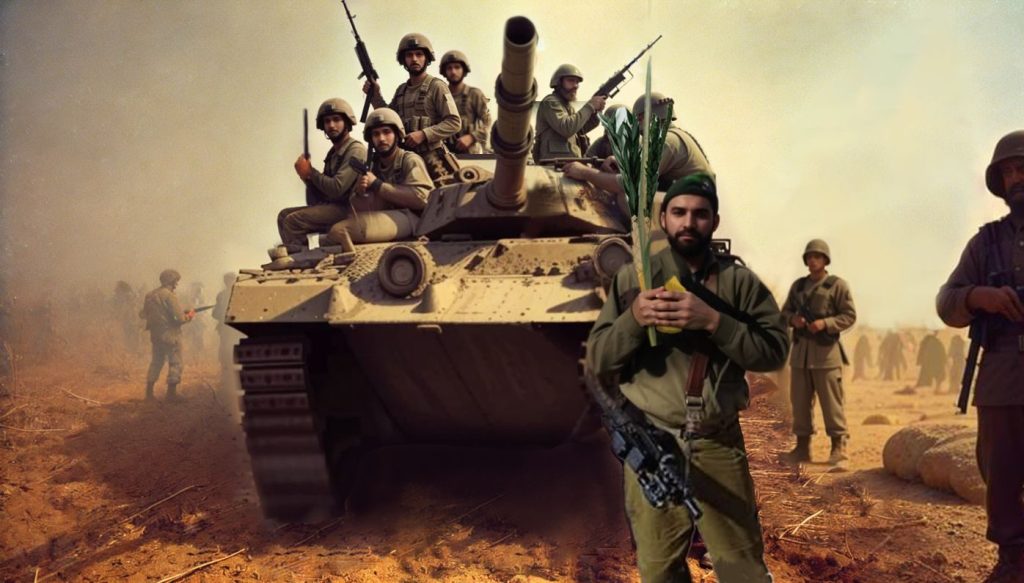
The first day of Sukkos came and went, and still no Arba Minim. Meir was disappointed, but he tried to stay positive. The very next day, something changed. A special delivery reached the front lines. As soon as Meir heard the news, he jumped out of his tank, running as fast as he could. He stumbled, tripped, got back up, and scrambled to the dusty truck that held the package with his name on it.
His heart beat fast as he carefully opened the white box and unwrapped the wet towel inside. There it was – a lulav and esrog. Meir stood tall, holding the lulav and checking the tip. He felt the bumpy surface of the esrog, familiar in his hand. Taking a deep breath, he said the brachos, more focused than he’d ever been. As he said the Shehechiyanu – Blessed are You, Hashem, King of the Universe, who has given us life, kept us going, and brought us to this moment—the words felt more real than ever before.
He looked at the desert sand all around him, smelled the gunfire, and felt the sweat on his skin from days of fighting. But right then, none of that mattered.
He was alive. And saying the bracha brought up memories of home, of Sukkos, in Kfar Chabad. For a brief moment, he felt normal again… even brave. The lulav was his sword, and the esrog his shield – Hashem, his commander. He danced and waved the lulav and esrog in all directions as the other soldiers watched, amazed.
* * *
BOOM! Tuk, Tuk, Tuk – BOOM! Explosions were everywhere. And then came the silence. It’s Sukkos! he thought suddenly. What about eating in a sukka? He imagined his family back home, sitting in their sukka together. But here, in the middle of a war? Meir sighed. There has to be something I can do, he thought. Then, an idea popped into his head.
He dusted off his hands on his thick, heavy uniform and thought, What if I offered my friends a chance to shake the lulav and esrog? Mivtzaim, just like the good old days.
Meir turned to his friends and said, “Hey – how would you all feel about shaking the lulav and esrog…? It’s Sukkos after all!”
One of the soldiers smiled in a confused sort of way. “Really? Right here?”
“Why not?” Meir smiled back. “It’s still Sukkos, no matter where we are!”
His friends, knowing how much Meir loved doing mitzvos, nodded to support him. “Okay, let’s do it,” one of them said.
One by one, they all lined up, shaking the lulav and esrog with big smiles on their faces. It wasn’t exactly like being home, but for a moment, it made everything feel alright.
On to find more Jewish souls! It didn’t matter that he was risking his life – Meir again started walking, a few hundred yards away to the next tank. He spotted the commander, standing up in the open lookout, scanning the enemy positions with a serious look on his face.
“Chag Sameach!” Meir called out.
No response. The commander lowered his binoculars, giving Meir an angry look. Was he annoyed? Meir wondered.
“Hello! Chag Sameach!” Meir tried again, louder this time. “Would you like to shake the lulav? It’s a big mitzvah today!”
The commander just stared at him, confused or maybe disinterested. Meir felt his confidence start to slip, but he tried to keep his hopes high.
“Which chag are you talking about, exactly?” the commander asked, like he was making fun of him. Meir knew the type. Sadly, even in Eretz Yisrael, there were people who grew up in families that never learned Torah. This man probably hadn’t been taught about mitzvos at all.
In any other situation, the commander – likely from a kibbutz – would have sent Meir away with anger and yelling. But it was war, and they were all fighting on the same team. In their green uniforms, standing on the same battlefield, things were different.
Meir flashed his friendliest smile. “Oh, thanks for asking! It’s Chag Sukkot! You know, the holiday when we shake the lulav and esrog…?”
“What in the world are you talking about? Shaking? Lulav?” the commander shouted, his voice rising. “I really don’t have time for this – don’t just stand there! You could get blown up any second! Don’t you have any common sense?!”
Meir didn’t move. Instead, he took a deep breath and looked the commander in the eyes, hoping to break through.
Meir tried to stay calm and not lose focus. “Why not call the rest of your soldiers to give it a try?” he suggested. “The guys could use a little boost, and mitzvos bring positive energy, especially in times like these.”
With a genuine smile and a few more words, Meir saw something change in the commander’s face. Slowly, the commander agreed.
“Fine… let’s go, men,” the commander called out. “We’re marching over to Meir’s tank for an important side mission.”
The soldiers gathered, curious but ready. The commander was the first to hold the arba minim.
He carefully took the lulav in his hand and was just about to shake it when – POW – BOOOOOOOOOOM! A huge explosion shook the ground and rattled the walls of the tank. Everyone froze.
Meir and the soldiers looked outside. A thick, gray cloud of smoke was rising from the place where their tanks had been parked, just a short distance away.
“Could it be…?” one soldier whispered, his eyes wide.
Was this real? The soldiers stood in shock, staring at the destruction. The commander quickly checked his watch, compass, radio, and monitor. Then he looked out at the horizon, his face pale.
“It was an Egyptian rocket,” the commander said, his voice low. “A direct hit.”
The realization sank in. They had been saved – if they’d stayed by the tanks, none of them would have survived.
The commander turned to Meir, his face full of awe. “You saved our lives! This mitzva rescued us!”
Without warning, he grabbed Meir and hugged him tightly, lifting him up in the air. “I’m never letting go of this little esrog – that’s what it’s called, right?” he was holding it close to his chest. “It’s going to keep me safe! You hear me, Meir? If anyone wants to shake it tomorrow, they’ll have to come to me!”
The soldiers all laughed nervously, still startled but grateful. The commander looked at the lulav and esrog again, a mix of seriousness and relief in his eyes. “This little thing… a life saver,” he said again. “A real lucky charm, for sure.”
* * *
The Suez Canal is a very long, man-made river in Egypt that connects the Mediterranean Sea to the Red Sea. It’s like a big highway for ships, letting them travel between Europe and Asia without going all the way around Africa, which would take a lot longer.
In the Yom Kippur War, the Suez Canal was very important because it was the border between Egypt and Israel. On Yom Kippur, Egypt sent their army across the Suez Canal to surprise Israel with an attack from the south.
For Israel, stopping Egypt from taking full control of the canal was an important part to defending the land. The Egyptians had a very important base in a city called Ismailia, which was near the Suez Canal. This city was a big part of the war because it was where the Egyptians planned their moves and got their supplies.
On Shabbos Chol Hamoed, the third day of Sukkos and the seventh day of the war, Meir’s unit was getting close to crossing the Suez Canal. Baruch Hashem, they had pushed back many Egyptians after nearly a week of intense fighting. Now, Meir’s unit was near Ismailia, ready for the next part of their mission.
It was Shabbos, and Meir and his fellow soldiers were crouched in trenches – deep ditches they’d dug into the sand near the Suez Canal. Trenches help soldiers stay safe and hide from enemy attacks, and Meir’s unit was using them to avoid being seen or hit by the panicking Egyptians. Meir and his friends could only peek out between explosions. But somehow, in the middle of all this craziness, Meir had found himself a cup of wine.
The soldiers waited for the bombing to calm down. When it finally slowed, Meir saw his chance. “Let’s crawl out while we still can and honor Shabbos,” he told the boys next to him. “Guys, come on – I’m making Kiddush!” He smiled, trying to lift their spirits. “I don’t have a sukka, but at least we can make Kiddush for Shabbos.”
The tired soldiers looked up at Meir in the dark trench, unsure. Their faces were worn and blank, but Meir wasn’t giving up. “Come on, a little Kiddush and a mitzva never hurt anyone. Move around a bit – let’s do something good!”
Some of his friends were up for it, but others stayed put. Meir could have gone without them, but he was determined to lift everyone’s spirits. “Come on, don’t look so down. Let’s go! All of you!”
Even though they were exhausted, the rest of the soldiers joined him. They dragged themselves over to a nearby tank, which would have to be their table. No tablecloth, no fancy setup – just a tank, a single cup of wine, and Kiddush. Meir raised the cup and began, “Yom Hashishi … Ki Vanu Bacharta–”
–BOOOOOOOOOOOM! Another explosion rocked the ground. This time, the Egyptian missile had hit even closer. Their teeth chattered, and their heads ached from the noise. The explosion had landed directly on the trench they’d been lying in just moments ago.
The soldiers stared at each other, wide-eyed and scared. Where they’d been hiding, just five minutes before, was now nothing but debris.
“You saved our lives, Meir! Again!” one of the soldiers cried, hugging him. The rest of the group began dancing and crying. They were shaking from fear and excitement, unable to believe what had just happened.
Meir smiled shyly. “It wasn’t me,” he said softly. “It was the mitzvos that saved us.”
* * *
After a lot of serious fighting, Israeli forces crossed the Suez Canal on Chol Hamoed Sukkos, changing the course of the war for Egypt. Israeli tanks and soldiers moved quickly, surrounding parts of the Egyptian army, cutting off their supplies, and heading towards Cairo, the capital of Egypt.
At the same time, Israeli forces were fighting hard against Syria in the north, pushing back the Syrian army and taking back control of much of the Golan Heights – parts of Eretz Yisrael that are crucial for the safety and security of Eretz Yisrael.
After heavy losses, the United Nations stepped in, and a ceasefire – meaning both sides agreed to stop fighting—was called on October 25, 1973, just one day before Rosh Chodesh Cheshvan. The war ended without a clear victory, something the Lubavitcher Rebbe was very upset about – he always said Israel should have gone all the way. But Israel did defend itself, and with Hashem’s amazing miracles, allowed the world to see how Hashem always will protect his precious children!
Source: Sichat Hashevua
Salute #1430 • pp. 17-21
© 2026 Beis Moshiach Magazine. All rights reserved.
This article originally appeared in Beis Moshiach #1430. You are welcome to share it with friends and family by email or in print, provided that you do not change, add to or omit any part of it, you credit the author and Beis Moshiach, and you include a link to archive.bmoshiach.org (written out in full in printed copies).
To republish this article in a newspaper, magazine, book or website, please request permission in advance at [email protected].